How The Trump Administration Should Reform SBA Lending To Empower Entrepreneurs
 It would only take a few small changes to help make the American dream achievable for more small business owners.
The only things certain in life are death, taxes, and the permanence of a government program. But what happens when a private company turns its agenda into a government program?
You cannot build a more financially secure business model than permanence. That helps explain why OpenAI is now reportedly in discussions with the Trump administration about a possible public equity stake in the company.
Unlike the dot-com bubble, whose infrastructure later supported real economic growth, rotting data centers will not leave behind comparable public value.
After all, what else is a company with $1.4 trillion in obligations and only $14 billion in revenue supposed to do?
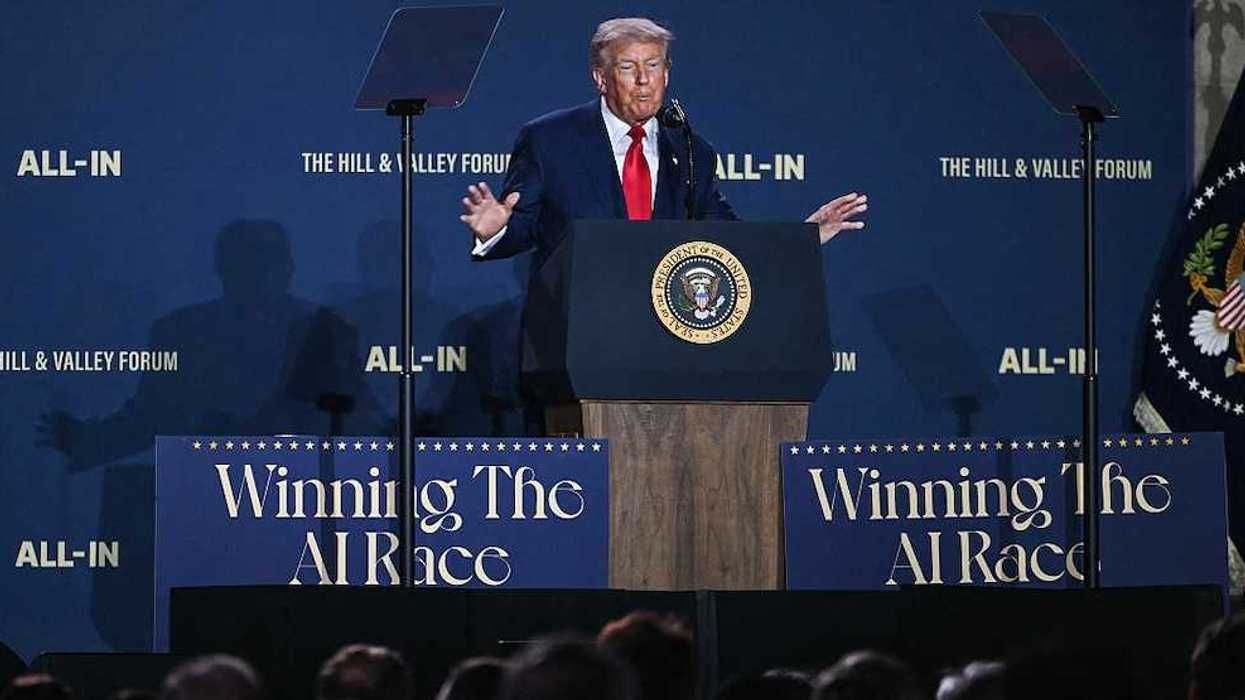
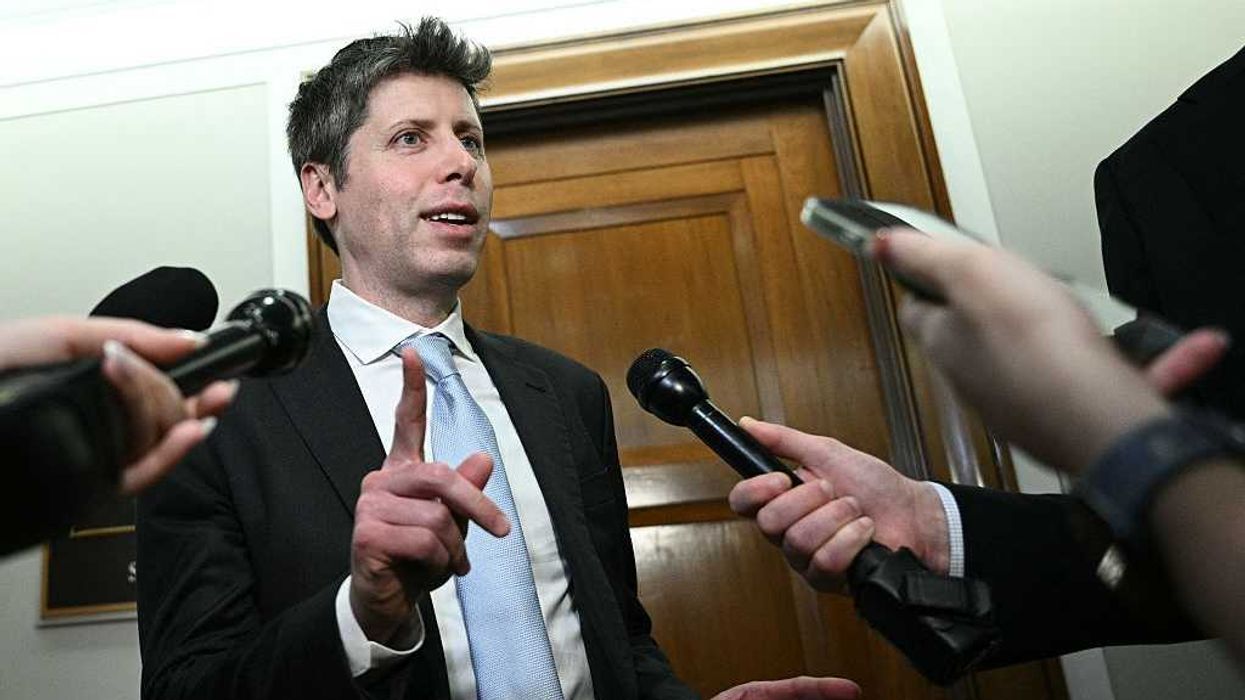
Why was OpenAI CEO Sam Altman on Capitol Hill last week? According to the Financial Times, he was effectively selling Americans the rope to hang themselves. The plan proposed by OpenAI and other companies would reportedly create a sovereign-wealth-style fund into which AI companies would contribute equity so that the public could share in the sector’s soaring valuations.
That sounds generous until one remembers that this is still a loss-making sector built on staggering capital demands.
What is the rationale? Asked about equity stakes on Air Force One, President Trump suggested that “pieces” of AI companies could be “given to the American public” to quell growing alarm over the rapid rollout of the technology.
In other words, Americans are being asked to surrender farmland, neighborhood continuity, and the reliability of the electric grid to cloud-based, surveillance-enabling chatslop. In return, they may receive the honor of owning the losses from an insolvent business model.
The president confirmed the idea at a press conference on Wednesday, saying he would soon meet with “the top 12 or 15 executives” about “giving back something to the public.” He promised that “the public will become very rich.”
That promise should terrify everyone.
Once generative AI becomes a public project, the industry will move beyond “too big to fail.” Whatever happens to the companies or the broader sector, their success will become artificially and inextricably tied to the economy. Every government favor, subsidy, guarantee, and bailout will then be justified as necessary to protect the public’s stake.
RELATED: The AI boom is turning public meetings into crime scenes

Last November, OpenAI’s chief financial officer let the cat out of the bag when she said the company would need the government as a “backstop” for its business model. Sarah Friar later denied seeking a bailout. But a leaked 11-page letter from OpenAI to the Office of Science and Technology Policy urged the government to provide “grants, cost-sharing agreements, loans, or loan guarantees” to build America’s AI industrial base — all, naturally, to “compete with China.”
Fast-forward six months, and “backstop” now appears to mean a public “stake” in the company.
Everyone knows OpenAI’s generative AI model is unsustainable. It is built on unfathomably expensive capital expenditures for every token of AI usage.
Companies such as JPMorgan are reportedly finding that employees, after being pushed to use generative AI platforms such as ChatGPT and Claude, are spending more on tokens than their individual salaries. Uber’s chief technology officer said last month that the company burned through its entire 2026 budget for Claude Code and Cursor in just four months. In the irony of ironies, Microsoft itself reportedly told engineers in a major division to stop using an AI coding tool because the cost-to-utility ratio was not there.
The reality is that AI would work better through localized edge computing with low latency than through cloud-based hyperscale data centers that require unsustainable amounts of land, capital, resources, and power while causing other harms. China is producing cheap open-source AI. America is pouring concrete.
But the scale of that concrete — and all the materials, inputs, and power needed to support it — is unsustainable. Everyone knows it. Google, Amazon, Meta, Microsoft, and Oracle issued 47% more debt in the first five months of this year than they did from 2020 through 2024 combined. Total spending per capita now exceeds spending on the railroads in 1859, which at least served a clear public need that could be monetized over time.
RELATED: After fierce debate, Trump opts for federal controls in AI development
There is no amount of monthly household or business subscription fees that will make this investment break even. The costs will only increase because the model depends on a resource-stripping industrial footprint and GPUs that have few other useful functions and depreciate within a few years.
Unlike the dot-com bubble, whose infrastructure later supported real economic growth, rotting data centers will not leave behind comparable public value.
The tech companies, land developers, and venture capital firms understand that this is a Ponzi scheme. They are racing to take these companies public so that they can be folded into indexes, ensuring that trillions in pension funds are funneled into an unsustainable business model. Once that happens, even if a more efficient approach to AI becomes obvious, the economy and government will already be too dependent on the data center model to let it fail.
That is why these companies are also seeking federal land for their projects, a favor not extended to ordinary industries. SoftBank, the Japanese investment company trying to underwrite much of OpenAI’s speculative build-out, is reportedly pushing for a federal land project in Ohio to reduce costs. But banks are already balking at these ventures after SoftBank failed to secure a $6 billion loan for OpenAI.
Green energy taught us a simple lesson: When the only path to profitability runs through government favors, we should not start down that path.
OpenAI does not need a public stake. It needs public skepticism.
Americans should not be asked to subsidize a speculative industry, sacrifice land and power, and then call the bailout wealth creation. If AI companies cannot survive without government backstops, loan guarantees, public land, and pension-fund capture, then they are not building the future.
They are building the next permanent government program.
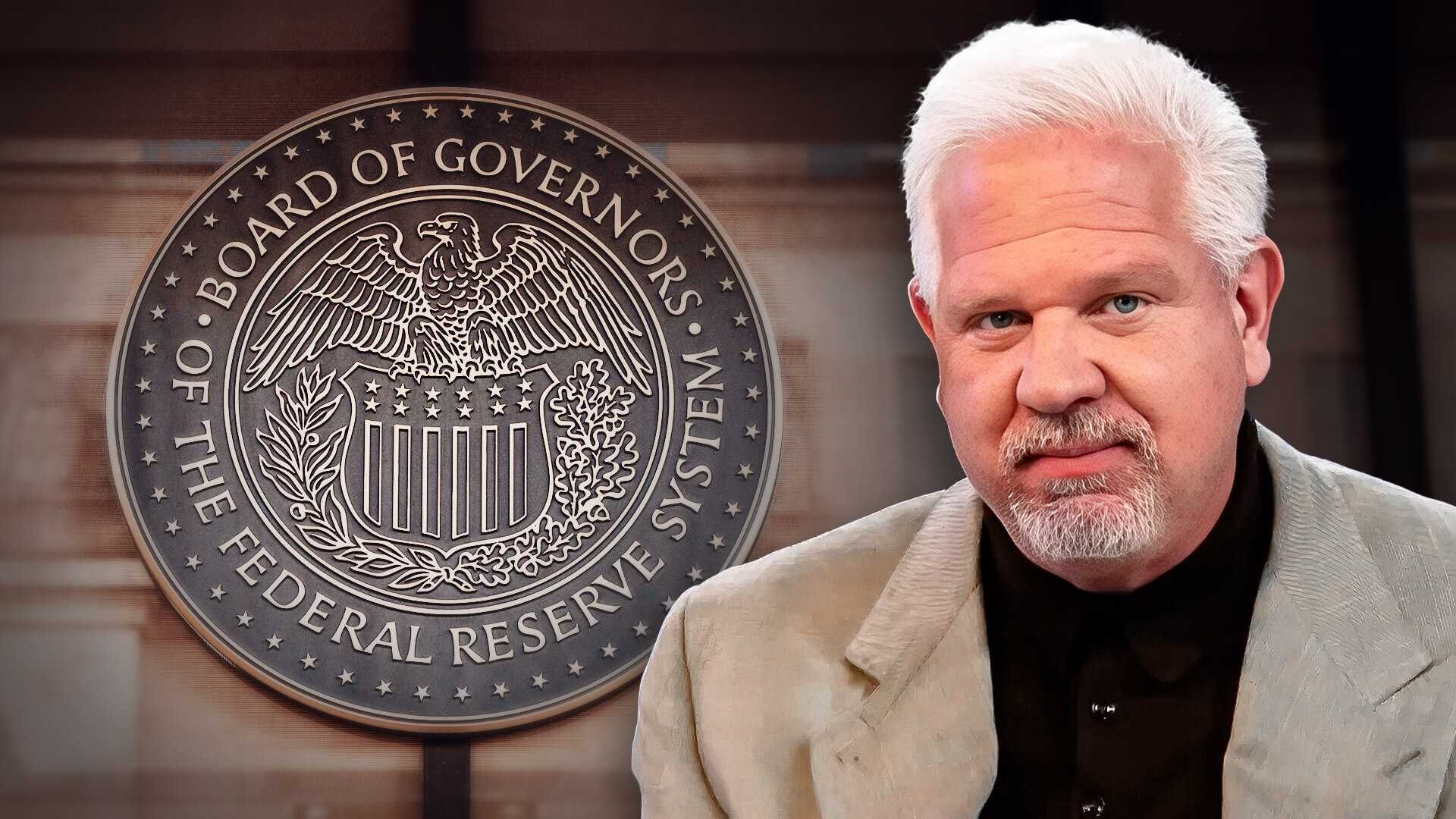
For years, Glenn Beck has called for the abolition of the Federal Reserve, arguing it’s nothing more than a private banking cartel that enables endless government spending, devalues the dollar through inflation, and secretly steals wealth from Americans via corrupt monetary policies.
But new evidence that just surfaced proves the problem is even worse than he thought.
To explain what’s been happening behind the American people’s back, Glenn gives an analogy.
“Imagine the U.S. economy is like one giant, never-ending house party that’s been raging for years, and the Federal Reserve is the bartender in charge of the punch bowl. The punch bowl, that’s liquidity, easy money flowing through the banks and the markets and the businesses,” he begins.
For years, the “punch” was overdistributed, making partygoers drunk and willing to make poor decisions. “This is when stocks and houses get wildly overpriced. Companies borrow stupid amounts ... and everybody starts to do stupid things,” Glenn says.
That’s exactly what happened in 2022 when the Federal Reserve “just printed a whole buttload of money,” he says.
But when things “got ugly,” it suddenly reversed course and announced an initiative called “quantitative tightening,” which essentially “drained the whole punch bowl.”
The Federal Reserve “needed to get rid of $2.3 trillion worth of bonds that they owned, and they said, ‘We’re just going to let them expire,”’ Glenn explains.
“In theory, this drains the money out of the system, makes it harder for you to get loans and everything else. Borrowing is more expensive. The bubbles will pop. It forces the economy to sober up.”
But this was just a ruse, Glenn says.
Instead of actually stopping the flow of “punch,” the Federal Reserve during the COVID-19 pandemic quietly redirected it instead.
“A lot of it ended up in a giant backroom keg called the overnight reverse repo facility. ... These are money market funds, big investors, big banks,” Glenn says, “and they parked about $2.5 trillion in for safekeeping, and they were earning a safe interest rate from the Fed.”
But then the backroom keg finally ran dry.
“By 2023, something had changed. The short-term Treasury bills (super safe government IOUs) started paying higher interest than the keg in the back room, so the big investors said, ‘Why are we letting all the alcohol sit in the keg? We can have a party elsewhere,”’ Glenn says. “So they started draining the backroom keg $100-$200 billion every single month, and they poured that money right back into stocks and bonds and lending.”
What was the result?
“More punch than we started with in the first place!” Glenn exclaims.
“That’s why the Dow Jones keeps hitting new highs, government keeps funding huge deficits. ... The bartender was pretending to cut off the drinks while secretly letting the elite guests go into the back room and get the hidden stash.”
These still-drunk elites, Glenn says, continue to “make stupid, dumb bets,” which just makes the “hangover worse” for the normies.
“Look out, gang — you’ve been lied to yet again,” he cautions, calling the Federal Reserve a “criminal organization” that is “stealing from the American people.”
“End the Fed,” he pleads.
To enjoy more of Glenn’s masterful storytelling, thought-provoking analysis, and uncanny ability to make sense of the chaos, subscribe to BlazeTV — the largest multi-platform network of voices who love America, defend the Constitution, and live the American dream.
You may not know Steve Eisman’s name, but you should. He was the investor who bet against Wall Street in 2008 and won big — to the tune of $800 million, with a current net worth in the neighborhood of $1.5 billion. If you saw “The Big Short,” Steve Carell played him as Mark Baum.
Americans are past living paycheck to paycheck. They’re living loan to loan.
These days, Eisman hosts “The Real Eisman Playbook” on YouTube. And like in 2007, he’s warning again — this time about the fragile state of the American consumer.
He isn’t alone. In a recent episode, Eisman spoke with Lakshmi Ganapathi of Unicus Research, who shares her grim view of the U.S. economy. Their conversation, combined with the data, paints a picture more alarming than most headlines dare admit.
“If you deduct the AI expenditures,” Eisman said, “... the U.S. economy is not even growing, really, 50 basis points, outside of AI.” In plain English: Without the artificial-intelligence boom, growth would be nearly flat at around 0.5% growth — likely even lower — not the 3.8% the Bureau of Economic Analysis reported for the second quarter of 2025.
Ganapathi didn’t mince words either. “Consumers are broke,” she said. “The monthly budget math no longer works.”
That’s what happens when Washington spends decades pretending math doesn’t matter. During COVID, federal “stimulus” checks poured roughly $800 billion into households. The cash wave briefly made millions look creditworthy — even as the underlying economy collapsed.
“Subprime consumers became prime,” Ganapathi explained. With reporting on student-loan and credit-card delinquencies suspended, millions suddenly looked like perfect borrowers. Credit scores soared to 700 and 800.
“They got a check that made them look richer than they actually were,” Eisman noted.
Banks then bundled those inflated loans into asset-backed securities — the same shell game that fueled the 2008 meltdown. The illusion of “prime credit” returned, this time wrapped in COVID relief and moral hazard.
Ganapathi described auto loans now stretching to 84 months — seven years — at 22% to 23% interest, which is credit-card territory. Americans collectively carry $1.2 trillion in card debt and $676 billion in car loans.
Add mortgages and student loans, and the numbers turn grotesque. Americans owe $20.83 trillion on homes, with an average interest rate of 6.37% on a 30-year note, and $1.81 trillion on student loans. We pay roughly $1.6 trillion a year in interest alone.
And since Washington nationalized student lending under Obama, it can now garnish wages indefinitely. “If you file for bankruptcy,” Eisman said, “your student loan stays with you.” A debt you can never escape — courtesy of your government.
The federal government owes $38 trillion but somehow pays a third less in interest. Fairness, D.C.-style.
Ganapathi noted that 90-day-plus credit-card delinquencies have doubled since 2021. Consumers are defaulting on car loans. Banks, desperate to avoid repossession losses, simply “modify” the loans and call them current — the same can-kicking that defines Washington’s budget process.
At this point, 69% of Americans live paycheck to paycheck. Nearly a quarter of them now use “buy now, pay later” services to pay for their groceries.
RELATED: Jerome Powell proves the Fed’s ‘independence’ is a myth
Yes — groceries.
Eisman spelled it out: People are literally financing food. They buy a week’s worth of groceries, then spend the next two or three months paying for them — often at interest rates that can hit 36% after a single missed payment.
Americans are past living paycheck to paycheck. They’re living loan to loan.
This is the real economy hiding beneath Washington’s sunny numbers — an economy where debt props up demand and borrowed time props up debt. It’s 2008 in slow motion, but this time it’s ordinary households, not hedge funds, holding the toxic paper.
When the middle class needs “by now, pay later” to eat, the “strong economy” line collapses into farce.
America’s consumers are tapped out, overleveraged, and fresh out of illusions. The only question left is how long the lenders — and leaders in Washington — can pretend otherwise.
The news out of New York this week should outrage anyone who believes in the rule of law. The state’s appellate court tossed out the obscene half-billion-dollar penalty imposed on Donald Trump by state Attorney General Letitia James, yet it still clung to the claim that he committed “fraud” by overstating his real estate portfolio.
From the beginning, this case was political lawfare disguised as “justice.” It criminalized the very elasticity of property valuation that defines high-stakes real estate.
If America tolerates this ruling, the day will come when the crime isn’t fraud at all — it’s being the wrong person with the wrong politics at the wrong time.
Anyone who has bought or sold a home knows “value” isn’t some sacred number. A property is worth only what someone will pay, and until that moment, its worth floats in a haze of market analysis, comparable sales, zoning quirks, and fickle buyer demand. That’s why developers hire licensed professionals — because even they can’t pin down “true” value in advance.
Trump, like every major builder, relied on staff and advisers to draft annual financial statements for lenders and insurers. James labeled his optimistic estimates “fraud.” That leap should terrify every business owner.
New York’s civil fraud statute doesn’t require proof of harm. No bank cried foul. Deutsche Bank and other institutions profited, collecting interest and repayment in full. As even Reuters admitted, sophisticated lenders conducted their own underwriting and discounted Trump’s numbers before loaning a dime. Yet James waved off reality, claiming the real harm was to the “system” — a conveniently nebulous principle that gave her license to weaponize her office against her state’s most famous political enemy.
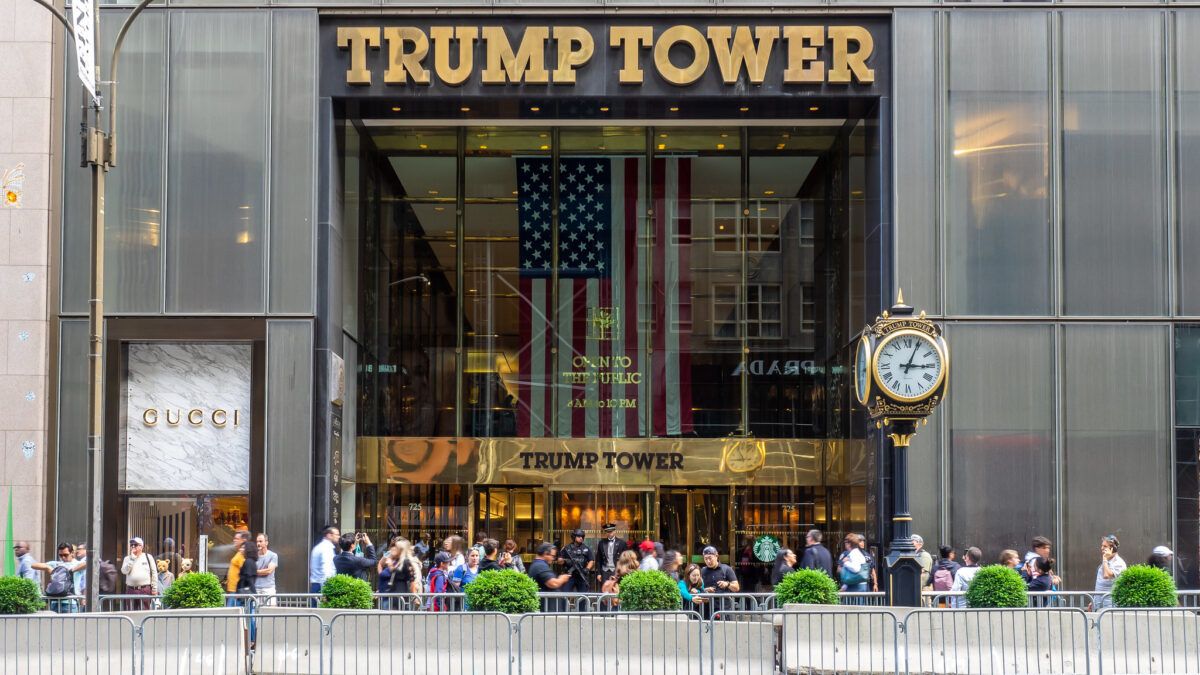
The trial spotlighted Trump Tower’s penthouse, once valued as if it were three times its actual size, and Mar-a-Lago, valued as if it could be sold tomorrow as a private estate despite deed restrictions that limit it to club use. But what the press rarely notes: Every statement carried disclaimers telling banks to do their own due diligence. That’s not fraud; that’s called salesmanship. What made it criminal, apparently, was Trump’s name.
RELATED: Pot, meet kettle: Is Letitia James guilty of the EXACT SAME fraud she went after Trump for?

The trial court swallowed James’ theory whole, slapping Trump with a penalty that swelled past $500 million with interest. The appellate court rightly found the punishment excessive under the Eighth Amendment. Punishing a man for hundreds of millions when no bank lost a penny was not justice — it was confiscation. Even then, the majority kept the fraud finding alive, while dissenting judges argued liability was never proven, and one urged outright dismissal.
Trump may have dodged financial annihilation, but James’ poison seed remains. If prosecutors can retroactively decide your numbers looked “too rosy,” then every loan application in America becomes a potential indictment. This case was never about protecting banks. It was about showing that the state can destroy anyone it chooses, facts and damages be damned.
And here’s the warning every American should feel in their gut: If the state can do this to a billionaire with armies of lawyers and accountants, imagine what it can do to you. One overly confident estimate on your house, one set of books a bureaucrat decides to “reinterpret,” and suddenly you’re a fraud. Your life’s work? Gone in the name of “justice.”
That isn’t the rule of law. It’s tyranny weaponized through balance sheets. If America tolerates this, the day will come when the crime isn’t fraud at all — it’s being the wrong person with the wrong politics at the wrong time.
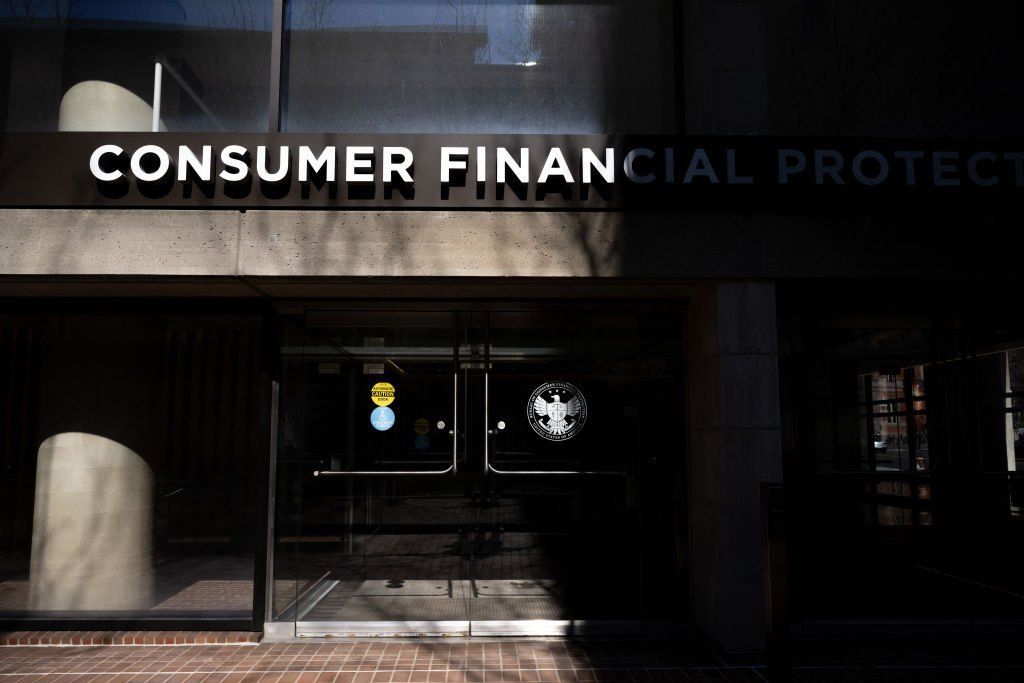
With accountability and spending restraint more urgent than ever, Congress should shut down the Consumer Financial Protection Bureau for good. Eliminating the CFPB would mark a decisive move to protect taxpayers from another bloated, unaccountable government agency. If Republicans, Congress, and President Donald Trump want to keep their promise to rein in Washington’s runaway bureaucracy, they must ensure this agency stays dead — and buried for good.
The CFPB’s unchecked growth and regulatory overreach have raised red flags for years. Born out of the 2008 financial crisis, the agency operates with minimal oversight and has long avoided serious scrutiny. Its expanding budget and vague authority continue to spark legitimate questions about fiscal responsibility and constitutional limits. Closing down the CFPB would end a failed bureaucratic experiment and send a clear message: Every federal agency answers to the taxpayers. No exceptions.
Consumers deserve clear, commonsense policies — especially after years of market confusion driven by the CFPB’s heavy hand.
The CFPB was built to operate independently, beyond the reach of Congress or the president. Lawmakers granted it broad, vague authority — allowing unelected bureaucrats to meddle freely in the U.S. economy. Beyond its track record of economic failure, the CFPB’s structure flatly contradicts the American model of representative government.
President Trump and the Department of Government Efficiency, led by Elon Musk, acted quickly. They made high-impact decisions to show Americans they were serious about cutting waste, reducing overreach, and eliminating redundancy across the federal bureaucracy. When the CFPB came up for its DOGE review, the administration halted its operations and dismissed hundreds of staff.
That move triggered criticism from the usual quarters, but consumers and lawmakers should look deeper. Ending the CFPB isn’t just about cost-cutting. It signaled a broader plan to streamline the federal government and promote efficiency across every agency.
Still, even the DOGE can’t finish the job without Congress. Only Congress can repeal the statute that established the CFPB — and only Congress can shut the agency down for good. Lawmakers must do so.
The CFPB currently controls its own funding, bypassing the regular appropriations process and evading critical checks and balances. Reclaiming those dollars would help reduce the deficit, and redistributing the CFPB’s limited useful functions to other agencies would ensure continued consumer protections under proper oversight.
The Federal Reserve and other agencies already handle key aspects of financial regulation and could easily absorb the CFPB’s remaining duties. Congress must finally draw the line: no more duplicative mandates, no more unchecked authority, and no more mission creep. If consumer protections matter — and they do — then Congress must deliver them through a structure that answers to the people.
RELATED: Congress claps back at Biden’s 'junk fee' crusade
Fortunately, the CFPB has begun scaling back some of its overreach. Earlier this month, the agency dropped its lawsuit against Credit Acceptance Corporation, an auto lender. That move signals a step in the right direction — away from regulatory overreach and toward a more balanced role in the economy.
Every unnecessary enforcement action piles compliance costs on businesses, stifles innovation, and hampers economic growth. Reassessing these missteps marks progress toward a regulatory approach that defends consumers without punishing industry.
Consumers deserve clear, commonsense policies — especially after years of market confusion driven by the CFPB’s heavy hand. They also deserve policies shaped by accountable officials, not by bureaucrats operating in defiance of congressional oversight. Credit access remains essential for Americans seeking financial stability in times of need. Crafting sound regulations — and eliminating those that never made sense — protects both their financial futures and the broader economy.
Consumers also deserve protection they can trust. Creditors need clear, consistent rules to serve their customers without facing unpredictable regulatory entanglements. Any reform bill must address these concerns directly and distribute the CFPB’s remaining legitimate duties across existing, accountable agencies.
As these changes take shape, stakeholders must stay engaged. Reforms should be implemented deliberately and effectively — promoting economic growth while preserving oversight where it’s needed. If President Trump wants to cement his legacy as the president who dismantled the administrative state, he must make sure the CFPB doesn’t just get paused. It must stay gone for good.


 It’s long past time for taxpayers to stop subsidizing woke indoctrination that doesn’t make students smarter — or richer.
 America’s youth are being pushed into a one-size-fits-all college track that saddles many with debt — without preparing them for careers.
 After seeing Biden's illegal loan forgiveness scheme, can anyone blame the would-be jihadis on campus for their entitlement to break the law?
 Engoron overvalues Trump’s alleged savings and profits to such a preposterously false extent, it should be a crime itself.
 www.theblaze.com
 thefederalist.com
 www.theblaze.com