![]()
“I’ve taught people a lot about China,” says President Donald Trump. “China and the threat it poses to America.”
The president is guiding me on a brief tour of his Palm Beach home, Mar-a-Lago.
“China has been ripping us off for many, many years, and nobody ever did anything about it,” says Trump. He went on:
Whether it was because they were intimidated, or whether it was for other reasons, China has taken advantage of us, and we, through corruption or incompetence, have allowed that to happen. We have been losing hundreds of billions and even trillions of dollars to China over a period of many years. A steady stream of $500 billion a year and more in the trade deficit alone. Our wealth has been shattered.
Secret Service agents follow the president as he checks in with aides. I meet one woman who unfurls a 30-yard-long printout of all the emails sent to Trump in the last 24 hours. “They’re all Americans writing President Trump to thank him for what he’s done,” she says.
Americans chose him, among other reasons, to defend them from China and a predatory U.S. ruling class whose ties to the Chinese Communist Party had become the source of its wealth, power, and prestige. Trump had identified the problem decades before his 2016 run for president.
“Though we have the upper hand, we’re way too eager to please the Chinese,” he wrote in his 2000 book “The America We Deserve.” The book continues:
We see them as a potential market, and we tend to curry favor with them even at the expense of our own national interests. Our China policy under Presidents Clinton and [George H. W.] Bush has been aimed at changing the Chinese regime by incentives both economic and political. The intention has been good, but it’s clear to me that the Chinese have been getting far too easy a ride.
What it looked like on the ground for working Americans was ruin and misery. But according to the men and women Americans elected to protect their peace and advance their prosperity, there was nothing to be done about it. Even the president of hope and change said he was helpless when it came to China.
President Barack Obama was referring to Trump when he said, “When somebody says [...] that he’s going to bring all these jobs back, well, how exactly are you going to do that? What are you going to do? There’s no answer to it. He just says, well, I’m going to negotiate a better deal. Well, how exactly are you going to negotiate that? What magic wand do you have?”
Returning the jobs to America that the ruling class had exported to China was the core promise of Trump’s 2016 campaign.
The truth was plain to see: Beijing hadn’t outplayed the top lawyers that White House after White House sent out to negotiate against the Chinese; the U.S. establishment had just sold out America. It was to the advantage of the movers and shakers from Capitol Hill and Wall Street, Silicon Valley and Hollywood, media and the fashion industry, and they didn’t care how it hurt their countrymen and elevated foreigners.
So middle-class Americans hired an outsider who promised to take on China. Trump moved quickly. He invited Xi Jinping, the president of the People’s Republic of China and the general secretary of the CCP, to meet him here at Mar-a-Lago in April 2017.
“Until the China virus came, I liked and greatly respected Xi,” Trump says. “I got along with him very well. But they had this slogan, ‘China 2025,’ and I said to him that it’s a very unfriendly term. I said, ‘I really don’t like that term because you’re basically saying that you’re going to dominate us by 2025, and I don’t believe that’s going to happen.’”
Half a year after their U.S. meeting, Trump visited Xi in Beijing and described it in a speech he gave a few days later in Vietnam:
I recently had an excellent trip to China, where I spoke openly and directly with President Xi about China’s unfair trade practices and the enormous trade deficits they have produced with the United States. I expressed our strong desire to work with China to achieve a trading relationship that is conducted on a truly fair and equal basis.
He continued:
The current trade imbalance is not acceptable. I do not blame China or any other country — of which there are many — for taking advantage of the United States on trade. If their representatives are able to get away with it, they are just doing their jobs. I wish previous administrations in my country saw what was happening and did something about it. They did not, but I will.
From this day forward, we will compete on a fair and equal basis. We are not going to let the United States be taken advantage of any more. I am always going to put America first the same way that I expect all of you in this room to put your countries first.
“We had 164 million people working,” Trump tells me. He considers it one of his greatest achievements as president — to get Americans jobs.
“We had everybody from every segment doing well — poor, rich, middle class, it didn’t matter. African-Americans, Hispanic-Americans, Asian-Americans, women, men, people with degrees from MIT and the Wharton School of Finance, people [who] didn’t have a high school diploma. There wasn’t one group that wasn’t doing great. Welfare was way down. Everything was going good. Food stamps were down because people had great jobs and they were happy; they were thrilled.”
It was evidence that Trump had kept his word. Returning the jobs to America that the ruling class had exported to China was the core promise of his 2016 campaign.
Kissinger and the globalist age
In office Trump and his aides came to understand that this meant taking on a vast network of American elites keen to protect their relations with China, a multigenerational matrix of public- and private-sector interests from the political, corporate, and cultural establishments that occupied the space carved out more than a half-century ago by Henry Kissinger when he served as President Richard Nixon’s national security adviser. With his secret trip in 1971 to prepare for Nixon’s historic visit, he opened China to the world again — Kissinger was the Marco Polo of the globalism era.
“Henry Kissinger was a smart man,” says Trump. In October 2017, he visited Trump in the Oval Office. “Mr. President, I didn’t expect this opportunity,” said Kissinger. “It’s always a great honor to be in this office, and I’m here at a moment when the opportunity to build a constructive, peaceful world order is very great.”
“He wasn’t helpful or unhelpful,” Trump says of Kissinger, who died in November 2023, revered as one of the “wise men” of Washington. “But he loved China. He loved China for a reason.”
Kissinger became the model for the new American establishment, a network of political, corporate, academic, cultural, and media elites that profited personally from the US-China relationship.
The opening to China was celebrated by the foreign policy elite as well as the cultural establishment, high and low, from sports to high art, including an opera called "Nixon in China" and a famous series of Andy Warhol paintings of Mao Zedong. Nixon later came to reconsider the wisdom of the opening to China. But for Kissinger, it became the cornerstone of his historical legacy as a statesman and then as a corporate leader.
His post-government career coincided with the rise of globalism, the new world order that saw national borders and even national sovereignty as hindrances to free trade. China, with an enormous pool of cheap labor, often slave labor, was seen as the centerpiece of the new system. And as the statesman who opened China to the West, Kissinger became the model for the new American establishment, a network of political, corporate, academic, cultural, and media elites that profited personally from the U.S.-China relationship.
RELATED: Chinese SIM farms are radicalizing Americans and destabilizing society, intel experts say
![]() Photo by Bettmann/Getty Images
Photo by Bettmann/Getty Images
They made money by doing business with China, by opening doors for others to profit there, too, and by paving the way for China to enter what they euphemistically called the rules-based international system. The result, according to forecasts delivered by U.S. policymakers throughout the 1980s and 1990s, would be China’s eventual democratic evolution.
Instead, Beijing’s techno-autocracy rubbed off on American elites. Thus, what they meant by “international system” was just a series of political and economic arrangements through which communist elites became further entrenched, thanks to the money they and their U.S. partners accumulated on the back of Chinese labor and at the expense of the American workforce.
Kissinger became the role model for a networked U.S. elite regularly scrambling to hide China’s depredations from plain view and thereby protect their riches while avoiding blame themselves. Whether it was after the People’s Liberation Army air force brought down American planes in the South China Sea, or Trump declared a trade war with the PRC, or the PLA lied about its role in a pandemic that killed hundreds of thousands of Americans, turned millions more into paupers, and left the U.S. economy in ruins, the former top diplomat stepped forward to make Beijing’s case.
He built communist China the biggest and costliest lobby in world history, consisting of the ruling establishment of the most powerful country in world history. Everyone on the inside was in on it. All they had to do was make sure China stayed open for business.
In the early 1980s, Kissinger started Kissinger Associates, a consultancy whose roster over the years included former secretaries of state, treasury, and energy, national security advisers, ambassadors, and CIA officers.
Kissinger managed to avoid having to register as a foreign agent because even though he lobbied openly on behalf of China for 40 years, he wasn’t paid directly by the Chinese. Rather, he drew his income from the major U.S. industries that he vouched for in Beijing, under the tacit agreement that in return for access to China, they would make the calls and demand the meetings with D.C. lawmakers and the White House to lobby for China. It’s a loophole that serving U.S. officials never dreamed of closing, since they saw it as a useful paradigm to pursue their own post-government ambitions.
The list of former officials from Democratic and Republican administrations who have run strategic advisory firms, managed think tanks, or otherwise emulated Kissinger to profit from promoting U.S. ties with China reads like a “Who’s Who” in Washington of the last half-century, comprising both Democrats and Republicans. The list includes President Ronald Reagan’s Secretary of State Alexander Haig, a former Kissinger aide; President George H.W. Bush’s national security adviser, Brent Scowcroft, and Secretary of State Lawrence Eagleburger, also both former Kissinger aides and then employees; Bill Clinton’s Secretary of State Madeline Albright, his Defense Sec. William Cohen, and his national security adviser Sandy Berger; George W. Bush’s Treasury Sec. Henry Paulson and U.S. Trade Representative Robert Zoellick; and former President Barack Obama aide and President Joe Biden aide Kurt Campbell; as well as Biden’s Secretary of State Antony Blinken, Director of National Intelligence Avril Haines, and CIA Director William Burns.
RELATED: China rules the resources we need to build the future. Now what?
![]() Photo by liu mingzhu via Getty Images
Photo by liu mingzhu via Getty Images
To support the industry he built to advance the U.S.-China relationship, Kissinger curated the intellectual apparatus to ensure that his heroic version of the opening and all that came after dominated the narrative as the mainstream account. Centers and institutes were named after him, like the Wilson Center’s Kissinger Institute on China and the United States and the Henry A. Kissinger Center for Global Affairs at the Johns Hopkins University; chairs bear his name at the Library of Congress, the Council on Foreign Relations, and the Center for Strategic and International Studies, as well as fellowships given at Johns Hopkins and Yale.
Kissinger’s central role as éminence grise of the U.S.-China relationship made him something like a dark-mirror version of Gandalf, the sage wizard in J.R.R. Tolkien’s “The Lord of the Rings” trilogy, who guides a band of searchers on their quest. Except, where Gandalf’s charges were tasked with destroying a ring of absolute power that corrupted all who touched it, Kissinger’s charges — corporate titans, Wall Street bankers, leading politicians, university presidents, sports stars, and Hollywood moguls — wanted the ring of power forged in the Middle Kingdom for themselves.
Naturally, they became corrupted by it and brought devastation and ruin to their own country. Because Trump’s mission was to break the spell Kissinger had cast, the forces from every sector of the political and corporate establishment that over two generations had coalesced around it fought back. They joined China’s long war against America.
China class fights Trump
It’s not surprising that China turned its weapons on Americans immediately after the revolution. Washington had supported Chiang Kai-shek’s Nationalist forces against Mao, and Mao won. To contain the spread of communism, the U.S. fought PRC allies in Asia, where the Chinese killed and aided in the killing of 37,000 Americans during the Korean War and more than 58,000 in the Vietnam War.
The long war against America continues, through subtler means. The Chinese are responsible for the manufacture and distribution of fentanyl, which is illegally pushed across our southern and northern borders and typically kills as many as 75,000 Americans yearly. More than 1 million Americans died during the COVID-19 pandemic, which originated with a leak from a Chinese government lab in Wuhan, where the PLA runs biowarfare programs.
Leaders from the political, corporate, cultural, academic, and media establishments have gotten rich by making China rich.
Though no evidence confirms that the pathogen was leaked intentionally, China’s lies about COVID’s origins, lethality, and transmission are evidence that Beijing opportunistically used it as an instrument in an information warfare campaign to weaken its Western rivals, primarily America.
China’s depredations are typically ignored thanks to the efforts of a well-funded propaganda machine. Beijing pours money into various American intellectual institutions, including universities, think tanks, and media. It also pays U.S. academics directly, as well as social media influencers on all the major platforms, Twitter, YouTube, and Facebook, to smear America and dismiss reports of China’s human rights abuses of its own population, particularly minority groups such as the Tibetans and Uyghurs. The CCP also cultivates ties with subnational actors, including American minorities, mostly but not exclusively African-American, as well as state and local governments, to undermine U.S. interests.
But far and away the most powerful asset deployed by the PRC is what I call the China class, leaders from the political, corporate, cultural, academic, and media establishments that have gotten rich by making China rich. Virtually all of what the PRC now makes, from state-of-the-art high tech to advanced military hardware, has either been stolen by them or transferred to them by American elites in exchange for future favors.
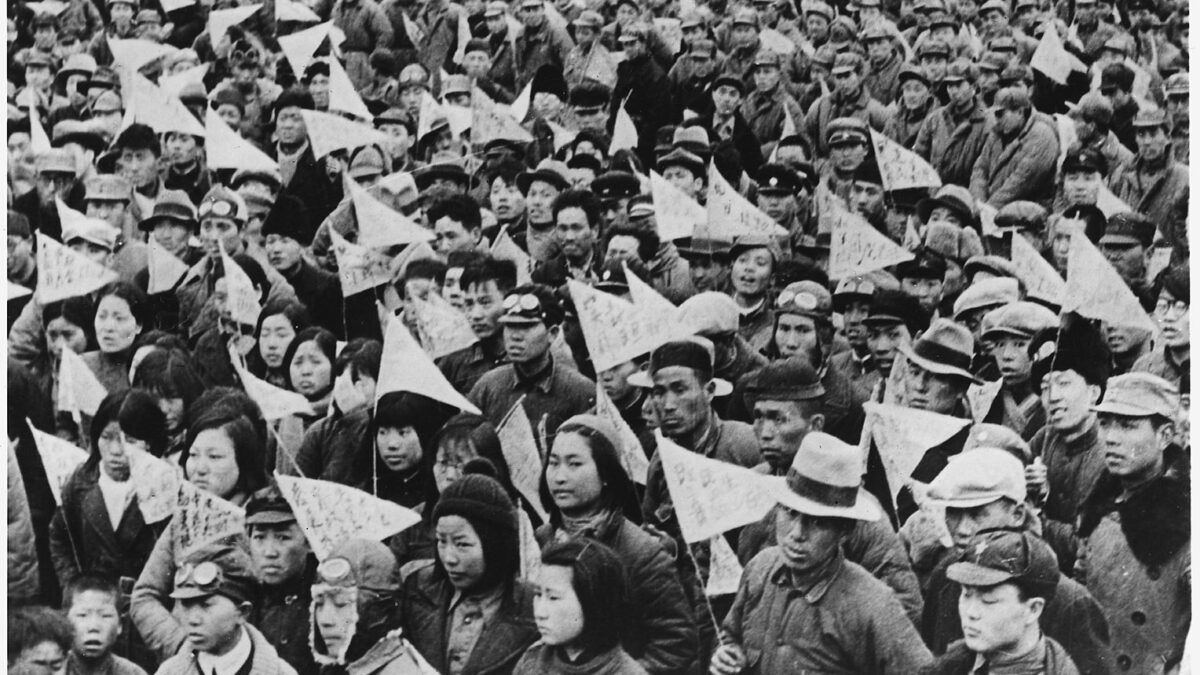
China’s leaders, from Mao to Xi Jinping, are typically credited with raising hundreds of millions of peasants out of poverty — an economic miracle like nothing before it, say admirers. But the reality is that it was the policies of the Chinese Communist Party that plunged the Chinese into misery and poverty in the first place.
RELATED: Trump’s tariffs are a tool, not a temper tantrum
![]() Photo by Chip Somodevilla/Getty Images
Photo by Chip Somodevilla/Getty Images
It wasn’t Beijing that built China’s prosperous new middle class. The Chinese are hardworking and intelligent people, but the type of people who have risen to the top of the communist regime have crawled over corpses to get there — over 70 million Chinese killed under Mao alone. It was America’s political and corporate elite, the China class, who, largely through trade and financial instruments, made this murderous regime what it is today — a peer adversary of the country they call home. And they did it to augment their own wealth, power, and prestige at the expense of impoverishing the American middle class.
The China class appeared at first to be a random assortment of personalities from various industries and institutions who seemed to have little in common, outside the fact that the newly elected president excoriated them. But Trump’s resolve to take on China, and his relentless attacks on them, gave the elites collective self-awareness, or what Marxists call class “consciousness.” Together, they saw that they represented a nexus of public- and private-sector interests that shared not only the same prejudices and hatreds, cultural tastes, and consumer habits, but also the same center of gravity, the U.S.-China relationship.
Connections that might have once seemed tenuous or nonexistent became lucid under the light of Trump’s scorn and the reciprocal scorn of the elite who loathed him and the Americans who elected him to fight on their behalf.
A decade ago, for example, no one would have put NBA superstar LeBron James and Apple CEO Tim Cook in the same family album. But there they are, linked by their fantastic wealth owing to cheap Chinese manufacturing. Miramax Films and Harvard’s Kennedy School? They both produced propaganda that assisted the PRC’s rise to global primacy. The Black Panthers and Goldman Sachs? Both hitched their fortunes to Beijing’s ascendancy.
Some did warn about the dangers of China. Labor unions were against admitting China to the World Trade Organization. In 2000, AFL-CIO President John Sweeney called “the fevered rush to admit China to the WTO a grave mistake.” And four years later, the AFL-CIO submitted a petition, arguing that China’s labor practices, including the suppression of workers’ rights, were unfair trade practices that harmed American workers.
Human rights groups like Amnesty International, Human Rights Watch, Freedom House, and pro-Tibet activists swam against the tide of pro-China sentiment. Sometimes they were joined by famous celebrities, like actor Richard Gere, and even U.S. policymakers, like former House Speaker Nancy Pelosi (D-Calif.), who, as a young California congresswoman, attended a rally at Tiananmen Square two years after the 1989 massacre there and waved a banner in support of the victims of the PLA’s depredations.
The type of people who have risen to the top of the communist regime have crawled over corpses to get there — over 70 million Chinese killed under Mao alone.
U.S. Rep. Dick Gephardt (D-Mo.), who ran for president in 1988 and 2004, opposed granting China permanent normal trade relations status, also known as most favored nation status, because it would hurt American workers, while ignoring China’s human rights abuses. “Only when there is real progress that addresses our concerns,” he said, “PNTR should be granted.”
One of the most vocal critics of U.S. trade policy was Ronald Reagan’s onetime deputy U.S. trade representative, Robert Lighthizer. “Giving China most-favored-nation treatment for trade,” Lighthizer said, “was a tragic mistake.” Lighthizer served as U.S. trade representative during Trump’s first term and provided perhaps the most critical piece in Trump’s China policy.
And there was Trump himself. “I think we need to take a much harder look at China,” he wrote in 2000. He was critical not only of China’s trade practices but also its human rights abuses — and he knew the corporate establishment was protecting China:
There are major problems that too many at the highest reaches of business want to overlook. There is, as I mentioned, the human-rights situation. Abuses included torture and mistreatment of prisoners, forced confessions, and arbitrary and lengthy incommunicado detention. Prison conditions remain harsh. The government continues severe restrictions on freedom of speech, the press, assembly, association, religion, privacy, and worker rights. All public dissent against the party and government was effectively silenced by intimidation, exile, the imposition of prison terms, administrative detention, or house arrest.
He had pinpointed the source of corruption in our elite, the reason for the impoverishment of the middle classes, and the threats to our peace. But even he was surprised to find how bad it was when he first came to office.
“They’re partners with China on virtually everything,” Trump tells me. “I mean, they just drop to their knees when China speaks. I’ve never seen anything like it. And they may be afraid of China. It’s not just business. It seems like they’re afraid of China.”
Among other things, they’re afraid of forfeiting the financial benefits. “I know one man who was very opposed to China,” Trump says. “All of a sudden, he comes in and he’s talking to me, and I said, ‘Whoa! What happened?’ He’s talking so positively about China. I said, ‘I’ve never seen anybody go from being so brilliantly against something to being so brilliantly in favor of it.’ I said, ‘They’re paying you, aren’t they?’ He said, ‘Yeah, they paid me a ton of money.’ They pay people a fortune.”
Even if it wanted to, the China class can’t cut itself off from its life source. “It’s like a fix,” says Trump. “And China knew that I was willing to get off the fix. It’s like drugs.”
So they fought Trump on China. They fought him on trade and the tariffs he imposed on Chinese goods during his first term and again when he tariffed China at the start of his second term. And they fought him on national security issues related to China. They fought him when he ordered restrictions on travel from China after a virus swept out of a city hosting a Chinese government lab funded by America’s biodefense czar, Anthony Fauci, in the fall of 2019.
America poisoned
COVID was the real-world manifestation of a decades-long truth; the metaphor employed to describe the relationship merging U.S. and Chinese elites had come to life: China’s communist party had poisoned America. The pandemic dramatized just how profoundly the relationship had transformed the country’s ruling class, now employing the same tactics as the CCP and mirroring its cruelty.
COVID became an instrument to demoralize Americans and imprison them in their homes; lay waste to small business; leave them vulnerable to rioters free to steal, burn, and kill; keep their children from school and the dying from the last embrace of their loved ones; desecrate American history, culture, and society; and defame the country as systemically racist in order to furnish the predicate for why ordinary Americans deserved the hell that the elite’s private-sector militias like Black Lives Matter and Antifa and the FBI and other intelligence services had prepared for them.
U.S. political and corporate elites used the pandemic to disintegrate American norms, including election laws that were unconstitutionally altered to favor a candidate whose financial ties to CCP elites were uncovered a month before the election. But like Communist Party censors, dozens of U.S. intelligence officers arranged with social media platforms and prestige press outfits to block reports of Joe and Hunter Biden’s corrupt relations with Chinese officials.
The election of Biden represented the hegemony of an American ruling class that sees its relationship with China as a shield and sword against its own countrymen. To those most dispirited and demoralized, it resembled the installation of an occupation government ruling on behalf of a hostile power. With Trump gone, there was nothing impeding the political and business establishment from restoring its cozy relations with Beijing and accelerating the betrayal of American sovereignty.
RELATED: China imposes COVID-like quarantine over new breakout of viral disease
![]() Photo by Lang Bingbing/Xinhua via Getty Images
Photo by Lang Bingbing/Xinhua via Getty Images
During a trip to Vietnam in September 2023, Biden explained: “I don’t want to contain China.” He continued: “I just want to make sure that we have a relationship with China that is on the up and up, squared away, everybody knows what it’s all about.”
It was a far cry from Trump’s Vietnam speech nearly six years earlier, when he asserted he would pursue the interests of the voters who made him president. Biden was most concerned to soothe Chinese anxieties — and U.S. donors with a portfolio staked to China’s success. “It’s not about isolating China. I want to see China succeed economically,” he said. “We’re not looking to hurt China. ... We’re all better off if China does well. ... We’re not looking to decouple from China.”
He immediately began rolling back Trump initiatives to keep China in check. For instance, he ended the Trump Justice Department’s China Initiative to root out CCP espionage. After the PRC’s foreign ministry complained that it was racist, Biden compliantly shut it down.
And he made Americans more vulnerable to China. When Biden reversed Trump’s border policy, among the millions who entered illegally were large numbers of PRC nationals who, according to a former U.S. intelligence official, are attached to a special PLA unit.
With America’s borders open, fatal overdoses of fentanyl peaked at over 112,000 deaths. Other drug problems got worse, too. Chinese gangs with ties to the PRC government are responsible for much of America’s illicit marijuana trade. Chinese organized crime, say Oklahoma law enforcement authorities, has “taken over marijuana in Oklahoma and the United States.” According to one report, Chinese mobsters “illegally [move] money overseas for the Communist Party elite and spy on and intimidate Chinese immigrant communities.”
And the Biden administration failed to secure the drugs that keep Americans alive. The pandemic showed how reliant America had become on Chinese-made pharmaceuticals, with the United States importing $2.1 billion in pharmaceutical products. After Biden had three years to reshore pharmaceuticals, by 2024 imports had more than tripled, with the U.S. spending more than $7.8 billion on drugs manufactured in China.
In the early winter of 2023, a PRC spy balloon entered U.S. territory over Alaska. After a week during which it traversed the continental United States, it was shot down off the South Carolina coast. The fact that it was carrying U.S.-made technology, including a satellite communication module, sensors, and other sophisticated surveillance equipment, only underscores how American corporations prioritize profits over national security. It also showed how China controlled an administration led by a president whose family had clear ties to Beijing.
America’s political and corporate elite, largely through trade and financial instruments, made this murderous regime what it is today — a peer adversary of the country they call home.
As president, Biden continued to make the Chinese richer and Americans poorer. He revoked tariffs worth $8.5 billion that Trump imposed on Chinese solar panel manufacturers. One study showed that Biden’s 2022 Inflation Reduction Act — legislation pushing the climate agenda — showed that Chinese manufacturers could earn up to $125 billion in tax credits. Further, by hiking energy prices to satisfy climate ideologues and lobbyists, Biden made the United States less competitive and China stronger by comparison.
On the national security front, Biden’s withdrawal from Afghanistan gave China Bagram Air Base, a listening post where the United States kept tabs on Beijing’s military activities. “We would have kept Bagram because of China, not because of Afghanistan,” says Trump. “This is one hour away from where China makes its nuclear weapons.” Biden, says Trump, damaged the U.S. alliance system to help China.
“Their stupidity with Saudi Arabia was unbelievable,” he says of his predecessor’s White House. Trump had defended the Saudis when he was pressured to relinquish the decades-long relationship with the world’s top oil producer. But he fought back: Saudi Arabia kept oil prices low, which is good for global markets, and invested in the United States, which is good for American workers.
“They treated Saudi terribly,” Trump says of the Biden team. “They pushed them right into the hands of China.”
While Riyadh flirted briefly with Beijing, Saudi Arabia did not realign with the Chinese — or else it would have risked not only the long-standing alliance but also one of the pillars of the post-World War II order that has made the United States the wealthiest, most powerful country in world history.
Undoing Kissinger’s spell
Because of the Biden administration’s recklessness, many began to wonder if the United States was on the verge of losing its dominant position. After all, the dollar’s status as the world’s reserve currency is owing among other things to the arrangement Washington policymakers made with the Saudis at the end of World War II: The world buys American bonds and invests in U.S. real estate because the United States is the chief guarantor of security around the world, a large component of which is making sure that Persian Gulf oil gets safely to market.
Among other dangers in that strategically vital region is the anti-U.S. terror regime in Iran, which has joined forces with China and Russia. “Biden forced China and Russia together, and now they have Iran,” Trump tells me. In March 2024, the three conducted joint naval exercises in the Gulf of Oman. “How could Biden have let so many things get so bad?”
From Trump’s perspective, the long line of American presidents dating back over half a century are all responsible for the carnage.
When Trump first took office in 2017, he was hopeful that his administration could force some distance between Beijing and Moscow, but Trump’s domestic opponents made that impossible. The Hillary Clinton campaign’s dirty trick, smearing the 2016 GOP candidate as a Russian agent, was retooled by Obama’s spy chiefs and turned into a weapon to undermine Trump’s presidency.
With false allegations of Trump’s ties to Moscow, the “Russia collusion” narrative had effectively become an instrument to redirect the public’s attention away from China, Trump’s priority. Russiagate protected China and its U.S. partners from scrutiny and prevented Trump from shaping a more comprehensive foreign policy to deal with the threat from Beijing. Instead, says Trump, Russiagate “put us into a hostile environment with a powerful country.”
Who knows if the Trump team would have succeeded in isolating China with a U.S.-Russia partnership, but the Russia collusion narrative obstructed the policy of the man elected to conduct U.S. foreign relations.
“We might have had a good relationship with Russia,” he says. “Russia has very valuable land with minerals and things that we could have used, and we have things that they were desperate to have. And I said to Putin, ‘You probably know.’ And he said, ‘I do know without you even saying it.’ He said, ‘It’s virtually impossible for you to do anything with us.'”
From Trump’s perspective, Russiagate was a geopolitical disaster with the final bill yet to come. “One of the things that I learned very early on from a lot of very smart people is don’t let Russia and China get together,” Trump says. But the Americans fighting Trump helped force them together. “They pushed Russia to China.”
That formula is an inversion of how the U.S.-China relationship began more than 50 years ago, with Kissinger’s secret July 1971 trip to Beijing to prepare the ground for Nixon’s state visit. Nixon and Kissinger set about leveraging China against the Soviet Union. They called it “playing the China card,” but it was among the worst bets American leaders ever made, for their strategic gambit evolved into the devastation that Trump was elected to repair.
From Trump’s perspective, the long line of American presidents dating back over half a century are all responsible for the carnage.
“They were all really bad,” Trump says of his predecessors’ records on China. “But Richard Nixon is the one who opened up China. It was a terrible mistake. A lot of people praise him for opening up China. But I think they’re stupid people, too. It was a very bad day for the United States. He let them in, and other people let China take advantage of us.” There were other presidents who followed and other presidents who allowed the rape of the United States to go on and on. But it was Nixon and Kissinger who initiated it.
“The worst thing Nixon did wasn’t Watergate,” says Trump. “It was allowing China to take advantage of this country. He and Kissinger are the ones who opened up China. And it was a terrible mistake. It didn’t have to be this way.”
This is the story of the U.S. ruling class’ deadly pact with China. It shows how the career of one man, Henry Kissinger, shaped the world as well as the country we live in today. And it’s the story of the man twice elected to undo Kissinger’s spell. Trump and Kissinger, antagonist and protagonist, are the two poles around which this epic account of the last 50 years of American politics, culture, and society revolves.
Editor’s note: This essay has been adapted from Lee Smith’s new book, “The China Matrix: The Epic Story of How Donald Trump Shattered a Deadly Pact” (Center Street).
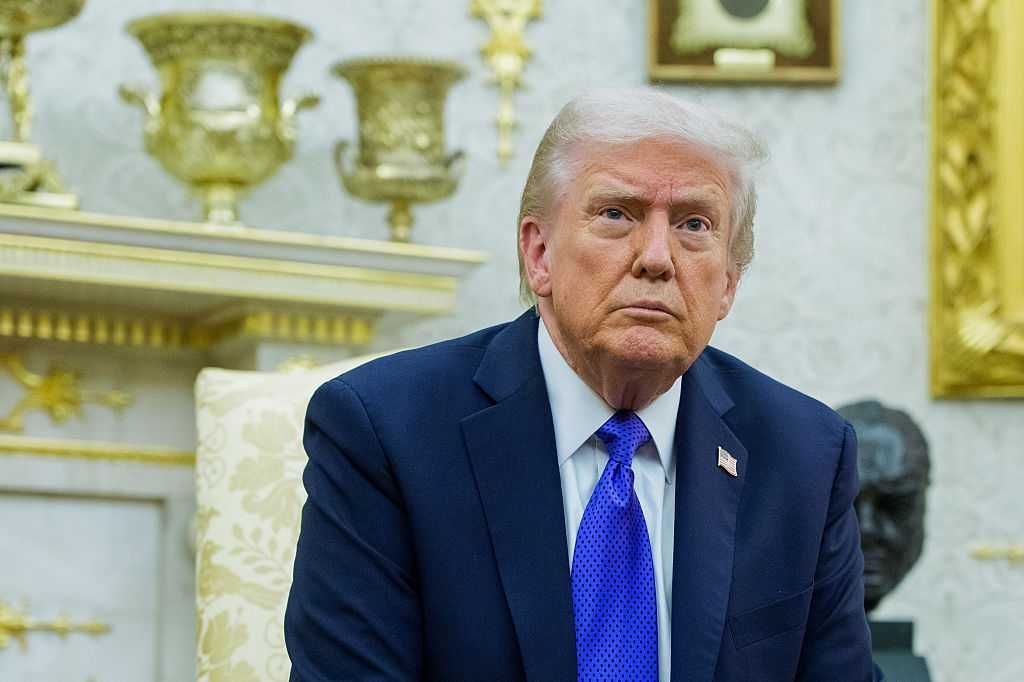
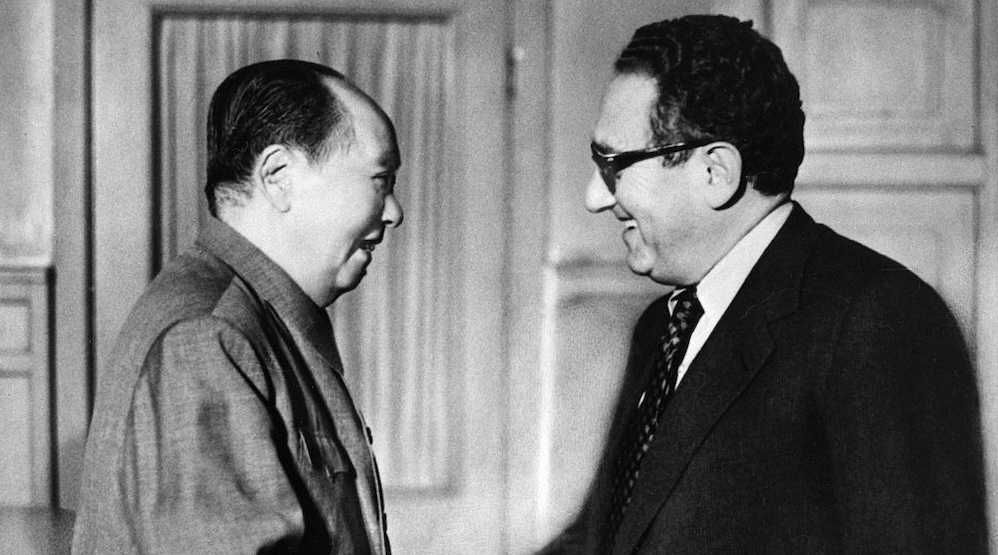 Photo by Bettmann/Getty Images
 Photo by liu mingzhu via Getty Images
 Photo by Chip Somodevilla/Getty Images
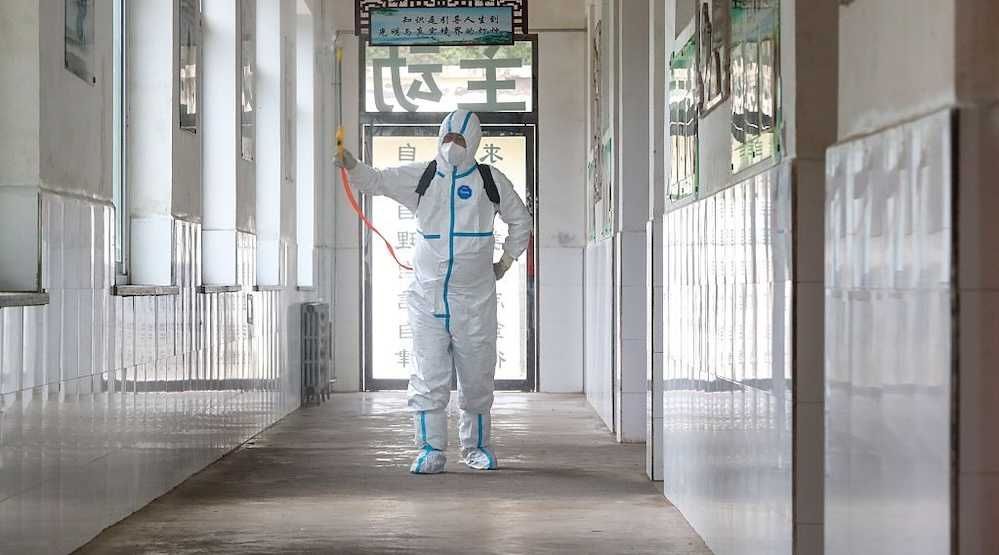 Photo by Lang Bingbing/Xinhua via Getty Images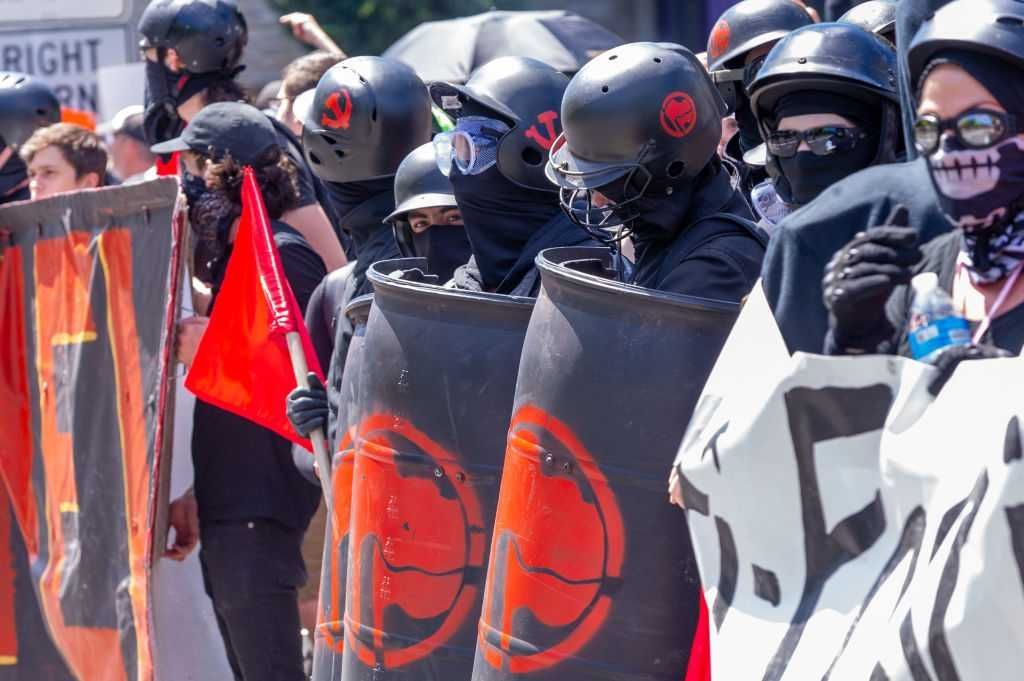
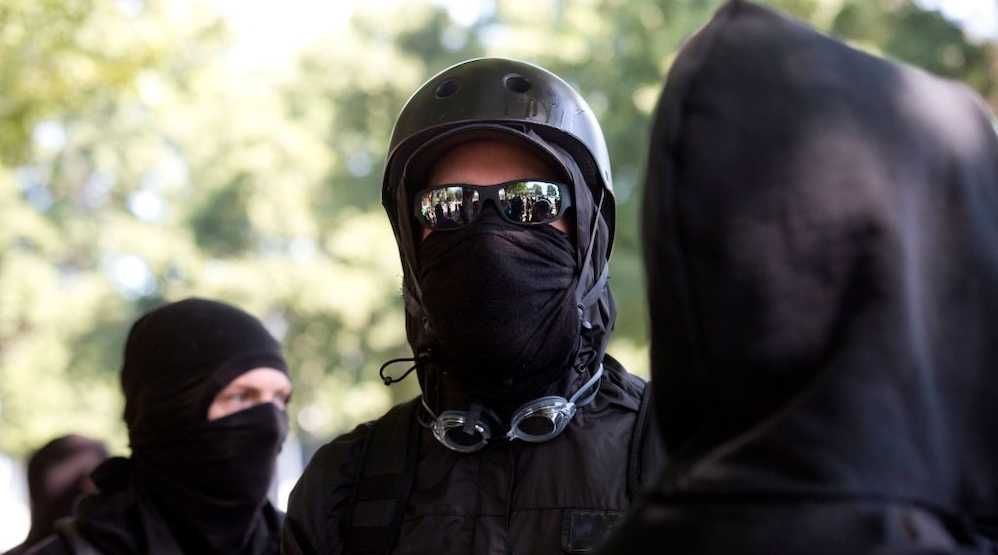 Photo by NATALIE BEHRING/AFP via Getty Images
 'There are lots of Chinese Cultural Revolution survivors in this country, but The New York Times has no courage and no objectivity to talk to us.'
 Do the mysterious removals of cabinet ministers and generals signal weakness? Paranoia? Or something else?

 www.theblaze.com
 thefederalist.com
 www.theblaze.com
Is our administration taking notes from Vladimir Lenin? THESE facts suggest so
One of the best ways to destroy society is to completely rewrite history.
Mark Levin is afraid America’s heading down that path.
“The effort at censorship today is something we’ve never even seen or experienced as a people,” he says.
This was on full display after COVID-19, when governors were “conducting themselves like fascists” and deciding who could earn a living and who couldn’t. The American people weren’t allowed to question the “science” but were instead told to trust it.
“Wasn’t even about science. The iron fist came out and you got a taste of it,” Levin adds, noting that the notorious dictator Vladimir Lenin did the same thing.
“So not only do they project on top of non-Democrats, Republicans, and others their own sickening, murderous bloodlust of a history, but they try to destroy it in the classroom,” he continues.
The 1619 Project is a perfect example. It was written by a Marxist and pushed by the New York Times.
Levin notes that the New York Times covered up the Holocaust and did FDR’s bidding and now does the bidding of the Democrat Party.
“1619 Project is a lie, it’s a joke. But it’s in thousands and thousands of school districts and classrooms with the support and the resources of the New York Times,” he says, adding that the media pushes it all, including critical race theory.
“The Democrat Party is the monopoly party in this country. The Democrat Party is about more than winning elections; it’s about making sure that there’s no opposition. It’s okay if there’s another party running, as long as they lose,” Levin says.
And the Democrat Party is going even farther to ensure there is no opposition.
Through the educational system, the state is obsessed with indoctrinating children into a Marxist set of beliefs. “This is the effort that’s not really focused on the child,” Levin says, but rather on “destroying the relationship between the parent and the child.”
“If we’re going to control the state, the kids become either directly or indirectly the property of the state,” he continues. “And you see, this is exactly the track the Democrat Party is on.”
Want more from Mark Levin?
To enjoy more of "the Great One" — Mark Levin as you've never seen him before — subscribe to BlazeTV — the largest multi-platform network of voices who love America, defend the Constitution, and live the American dream.