Meet The Fertility Org Funding Dystopian Embryo Experiments Across America
 ASRM has a quiet but heavy influence and financial hand on assisted reproductive technology protocols in the United States.
No drug is as sacrosanct in today’s sexually “liberated” culture as oral contraceptives. But the proliferation of the birth control pill since the 1960s has fostered a number of grave consequences for our society: hook-up culture, delayed marriage, and the destruction of the nuclear family.
None of this would surprise Margaret Sanger, the founder of Planned Parenthood. In the early 20th century, she promoted contraception as the mechanism for female emancipation. “Birth control is the first important step a woman must take toward the goal of her freedom,” she wrote. “It is the first step she must take to be man’s equal. It is the first step they must both take toward human emancipation.”
Though the perceived benefits of birth control pills are loudly and publicly celebrated, their costs need to be fully exposed.
Feminist author Betty Friedan agreed, asserting that the pill gave women “the legal and constitutional right to decide whether or not or when to bear children” and established the basis for true equality with men.
Because oral contraception has been touted as a cornerstone of women’s equality and freedom, its health repercussions are rarely called into question. Even Health and Human Services Secretary Robert F. Kennedy Jr., who regularly wades into controversy by calling for investigations into seed oils and food dyes, remains relatively silent on oral contraceptives.
This is to the detriment of women across the country. As Dr. Sarah Hill demonstrates in “This Is Your Brain on Birth Control: How the Pill Changes Everything,” birth control has had numerous repercussions on women, relationships, and society. She shows that women at the peak of their cycle feel sexier, more outgoing, and more confident with the natural increase in estrogen. And men find them more attractive at that time, too.
As Hill points out, birth control pills do more than just prevent pregnancy: They affect a woman’s hormones more generally — hormones that affect everything from her brain to her fingertips and her overall emotional, mental, and physical health. Many of the women Hill interviewed described feeling emotionally blunted, or as if they were moving through life in a fog, while on the pill.
A woman’s menstrual cycle is often known as the fifth vital sign, and a disruption signals a concern to be addressed, not to be masked.
Birth control is, in fact, “medicated menopause.” While it can be a difficult reality for many to face, studies show that women who no longer menstruate are not as attractive to men, which is why trying to find a mate in the latter years of life can be challenging. The drive to partner up and reproduce is diminished, making marriage less of a necessity and mere companionship more of the goal.
Studies comparing women who use contraception with those who do not reveal that the pill lowers libido, can lead to mood swings or depression, disrupts natural cycles, can cause infertility after discontinuation, interferes with the endocrine system, and can lead to bloating and a gain of nearly five pounds on average. Other studies have found that estrogen-containing pills raise the risk of venous thromboembolism and, to a smaller extent, strokes and heart attacks.
European countries have conducted many tests that demonstrate such effects. A nationwide Danish cohort study of over one million women found higher rates of first antidepressant use and first depression diagnosis among users of contraceptives than nonusers. Another large Danish study found that women who were currently or recently on hormonal contraception were more likely to attempt suicide or die by suicide than women who had never used it.
A Finnish study and a Swedish one produced similar results. A British database shows that the first couple of years of being on the pill brought an increased risk of depression and that women who began using the pill in their teens sometimes had a lasting higher risk.
Few, if any, comprehensive American studies have been conducted, even though about 15% of American women between 15 and 49 use oral contraceptives.
Potential problems are not limited to those who ingest the hormones. Synthetic estrogen, an endocrine-disrupting compound used in oral contraceptives, makes its way from America’s toilets to the water supply. Wastewater treatments can reduce, but never fully remove, such psychoactive drugs from drinking water.
U.S. regulators and scientists treat these as “contaminants of emerging concern.” The Environmental Protection Agency and the United States Geological Survey publish methods for measuring the prevalence of such hormones in wastewater and waters used for our drinking supply.
RELATED: Women’s infertility is Big Pharma’s cash cow
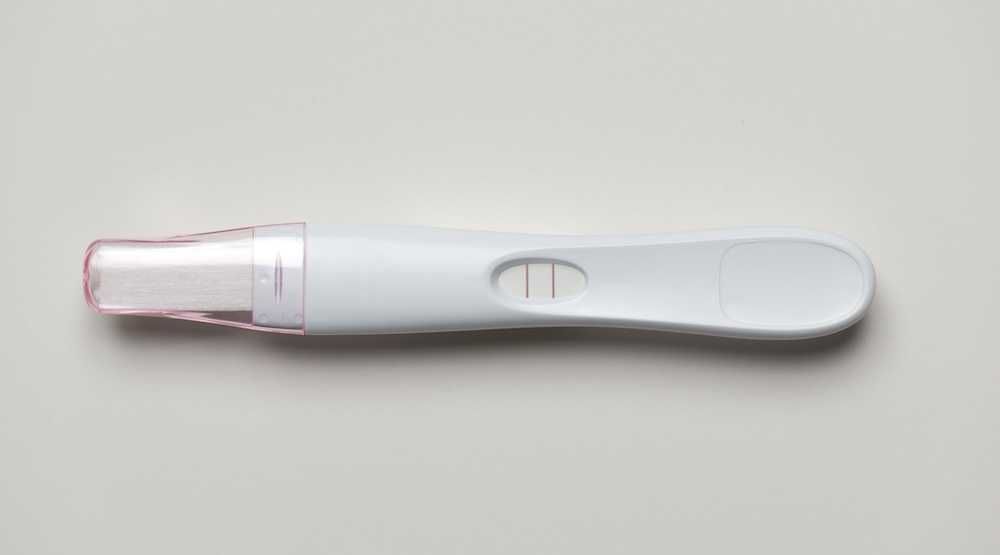
Male fish begin growing female genitals, and fish populations collapse in water containing the synthetic estrogen from birth control, according to some studies. As RFK Jr. has mentioned, boys are “swimming through a soup of toxic chemicals today, and many of those are endocrine disruptors.”
Though some studies show that typical concentrations of synthetic estrogen in drinking water pose negligible risks to women, perhaps the cumulative exposure to endocrine disruptors affects the sexual development of young males.
RFK Jr. promised to “follow the law regarding access to birth control” during his confirmation process. That could include commissioning the National Institutes of Health to conduct “gold standard science” on oral contraception, as he has sworn to do for other food additives and pharmaceuticals, studies that many European countries have already done.
While calling for restrictions on birth control pills would likely cause a frenzy among many, informed consent is a paramount health priority. Though the perceived benefits of birth control pills are loudly and publicly celebrated (women, you too can have sex like a man!), their costs need to be fully exposed if we are going to restore human health and flourishing among both sexes.
Editor’s note: This article was published originally at the American Mind.
Charlie Kirt, who is completely unrelated to Charlie Kirk, is back doing what he loves most — debating college students about politics on their campus.
Kirt, who is also known as Alex Stein of “Prime Time with Alex Stein,” was approached by several young women who explained that they wanted to discuss the topic of abortion. “You don’t want this smoke,” one of them challenged, kicking off a passion-fueled debate that will go down in history as a meeting of some of the greatest minds.
“I want all the smoke,” Kirt fired back. “They say it’s a woman’s reproductive right to get an abortion. I think that it should be outlawed. I don’t like the death of little children. A lot of people say that it’s a fetus and that it’s not a human. That’s the farthest thing from the truth.”
“We were all fetuses, and with a little bit of time, we all became the beautiful lady that you are standing right in front of me,” he continued. “So I think abortion is terrible.”
The college students then brought up abortion in cases of rape, but Kirt didn’t let it knock him off his game.
“I don’t know of any states, if you do get raped, where you can’t get an abortion. In Texas, you can get an abortion if you get raped,” Kirt answered, before bringing out the big guns.
“Let me tell y’all something real quick, and y’all are young African-American ladies. If you notice, the predominant place that Planned Parenthood is put is in urban areas.”
“And why do they do that? Because the woman that created Planned Parenthood was a woman named Margaret Sanger. And she didn’t like African-Americans. And so she wanted African-Americans to actually kill their children,” he continued. “It originally started to take advantage of young African-Americans.”
“Now, I understand people don’t have the financial means to raise a baby, but that shouldn’t be an excuse, because you did have sex. You did not use protection. You made about four or five decisions to get here, and now you’ve got a baby. You’ve got to deal with it,” he added.
“What if, for instance, they were using protection, but the condom breaks, and then it’s like now you have to deal with the kid?” one of the women said, in a Hail Mary attempt to save their argument.
“It was your choice to buy an off-brand condom. Go buy a real Trojan condom. Don’t use the free condom that you got at the nightclub, you know, in the VIP lounge, or in the one you put a quarter in the bathroom. Go use a Trojan condom,” Kirt responded.
“And really, honestly, don’t be busting nuts like that. Don’t be busting nuts like that,” he continued. “If you don’t bust nuts like that, you don’t have babies.”
To enjoy more of Alex's culture jamming, comedic monologues, skits, and street segments, subscribe to BlazeTV — the largest multi-platform network of voices who love America, defend the Constitution, and live the American dream.
The Food and Drug Administration approved America's first commercially produced contraceptive pill in 1960. Although Planned Parenthood's eugenicist founder Margaret Sanger touted it as a "magic pill," in the intervening 63 years, it has afflicted women with a multitude of side effects.
A new study published Monday in the peer-reviewed scientific journal "Epidemiology and Psychiatric Sciences" revealed that the so-called magic pill threatens women with an increased lifetime risk of depression.
Women who began using the pill as teenagers were found to have had a 130% higher rate of depressive symptoms compared to so-called never-users. Women who began taking oral contraceptives as adults suffered a 92% higher rate of depressive symptoms than their pill-free peers.
This adverse effect can prove to be fatal, especially among teens.
A 2020 study published in the journal "Psychological Medicine" indicated that young women using oral contraceptives may be at increased risk of suicidal behavior.
This population-based cohort study, conducted by Swedish researchers at Uppsala University, was based on data from 264,557 women in UK Biobank, a large long-term biomedical database and research resource. 80.6% of the study population were OC users, where the median time from first initiation to last use of OC was 10 years, and the median age of initiating and discounting use was 21 and 32 years, respectively.
Researchers found that the first two years of OC use were associated with a higher rate of depression compared to never users.
While the "increased risk declined with continued OC use ... the lifetime risk associated with ever OC use remained significantly increased." Women who used OCs during adolescence, in particular, remained at a heightened risk even after they discontinued.
The researchers theorized that the depression may be resultant, in part, by "hormonal fluctuations induced by OC initiation, which can affect women who are particularly sensitive to changes in the levels of hormones and their metabolites, such as allopregnanolone."
The study also found "higher depression rates in the first years after discontinuing OCs. This may reflect that women who get mood-related problems discontinue OC use, but are not diagnosed with depression until after cessation."
Researcher Therese Johansson of the Department of Immunology, Genetics and Pathology at Uppsala University, told ScienceDaily, "Although contraception has many advantages for women, both medical practitioners and patients should be informed about the side-effects identified in this and previous research."

 In a moral and just world, culling embryos deemed 'less than' would be illegal. Instead, it is celebrated, and monetized.
 Feminism fundamentally changed the way Western civilization thinks about biology, language, and law.
 A report’s underlying conclusion was subtle and horrific: that the expansion of minority populations is a problem in need of a solution.
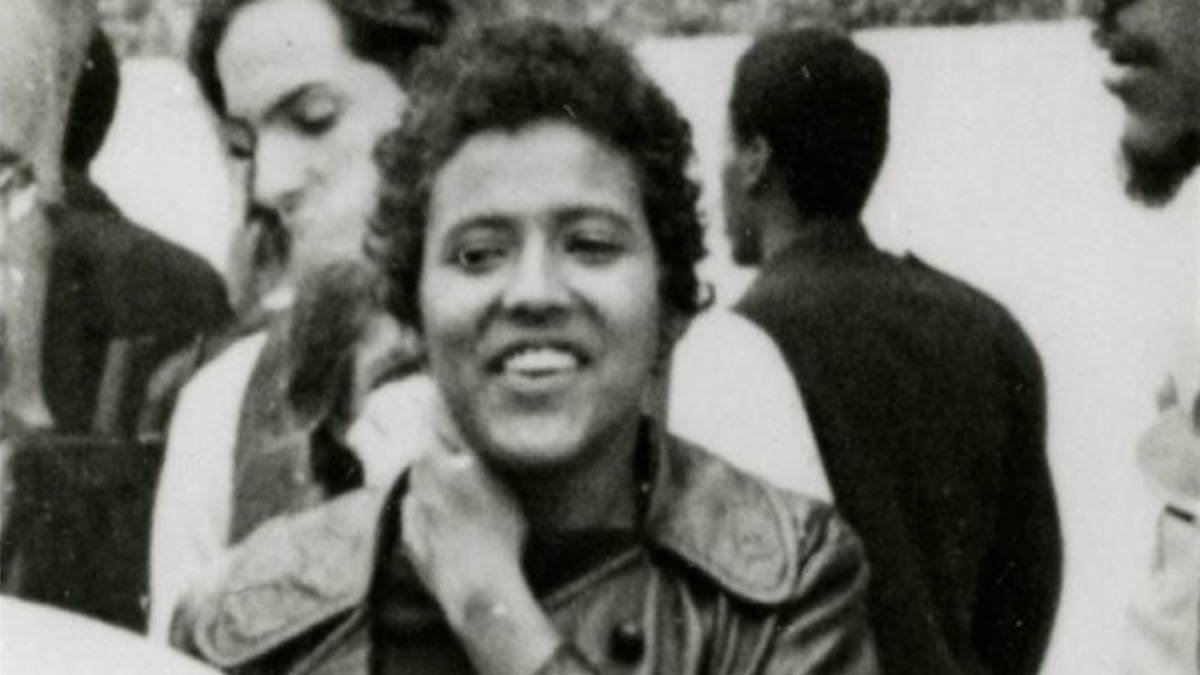 Black people are disproportionately affected by abortion, a thinly veiled genocide.
 A resurfaced clip from a 1957 interview between Margaret Sanger and Mike Wallace exposes the depravity of Planned Parenthood’s founder.
 www.theblaze.com
 thefederalist.com
 www.theblaze.com