Dallas Cowboys owner Jerry Jones reveals there's one billionaire he's 'open' to selling to
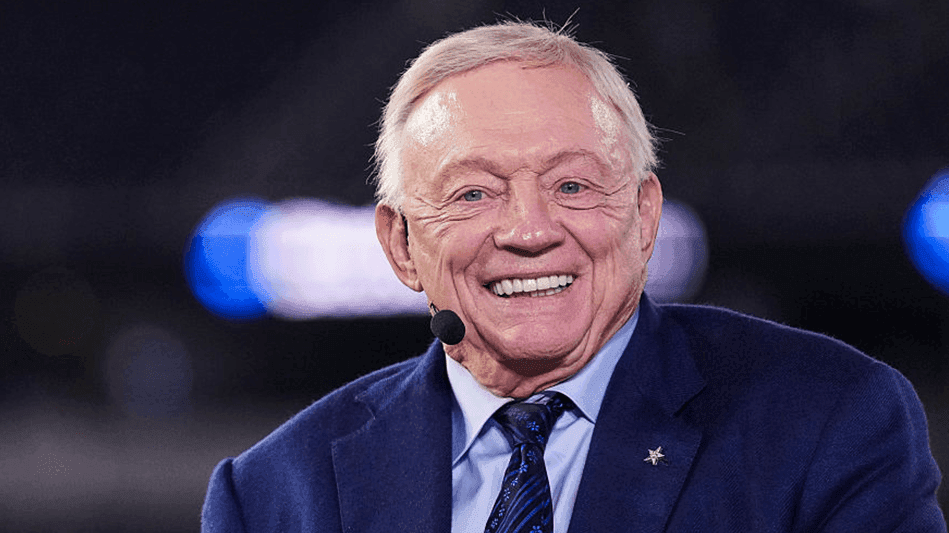


Thanks to some new rules, Jerry Jones may finally be open to selling.

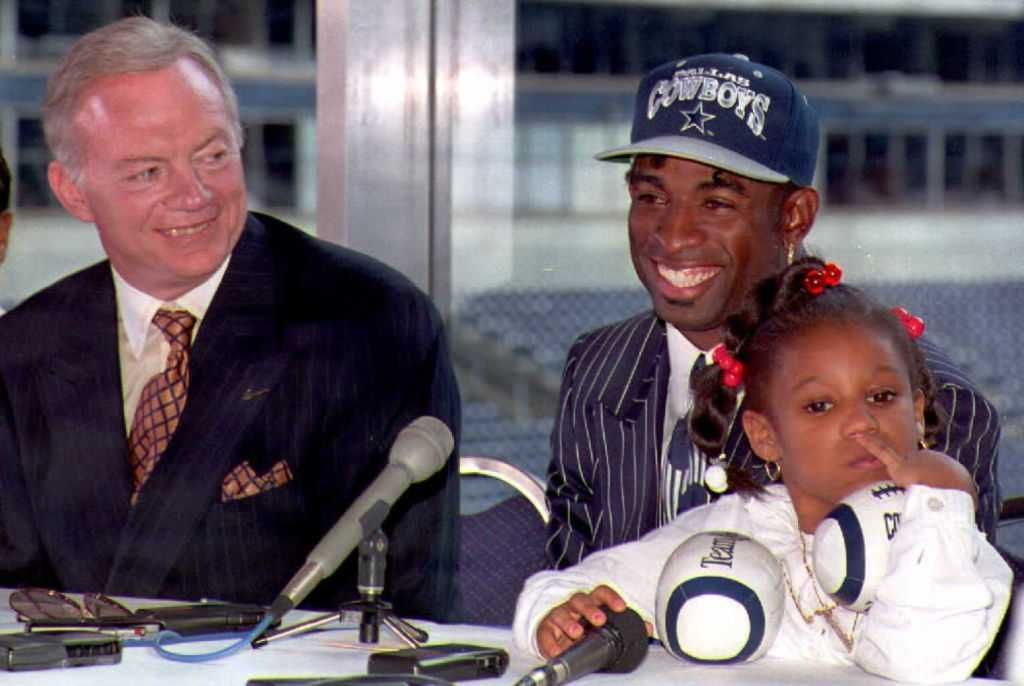
Jones, who purchased the Dallas Cowboys in 1989, opened up recently about being willing to talk about changes in ownership, but he named only one person who he is open to having the conversation with.

'We wouldn't rule it out.'

Jones has been at the head of the table for about 37 years, winning three Super Bowls in the first half of the 1990s. However, after those near immediate successes, the trophy case has remained empty for the last three decades.

Ownership has always stayed within the family, but changes made by the NFL has Jones finally examining the possibilities. Since 2024, the NFL has allowed teams to sell upwards of 10% of ownership stakes to private equity funds.

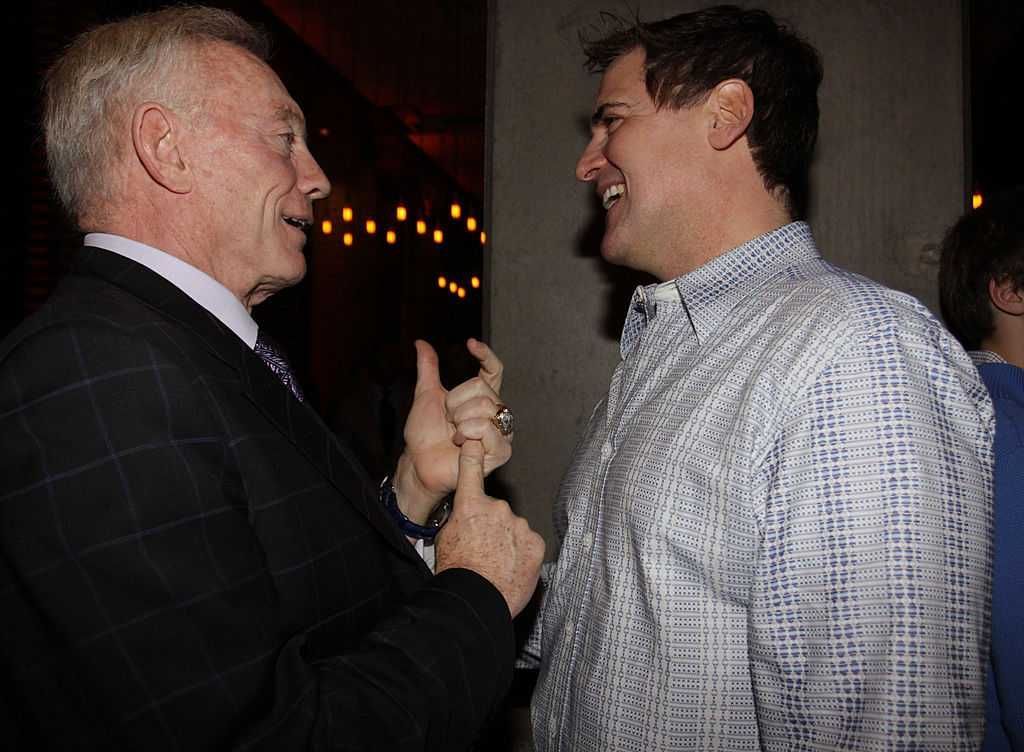
To that end, Jones told the Dallas Morning News that even though his family isn't necessarily looking to sell any equity, he would be open to discussing the idea with one man: billionaire Mark Cuban.

"That's exactly why if you’re me, you would be open to that ... because of the man," Jones said. "I have all the respect in the world for him, and I know what he did for the Mavericks and what he's done for basketball."

Jones continued, saying that in addition to financial backing, Cuban is the type of person you want on your side.

"You want to associate with the highest quality of [a person] who loves the game and then also at the same time wants to do something about it. Mark leads the way in that."
RELATED: 'That absolute coward': Aaron Rodgers goes scorched-earth on 'criminal' Anthony Fauci as fans go ballistic

Johnny Nunez/WireImage

Cuban told the Dallas Morning News in response, "I'm sure our Harbinger fund would be open to it."

Cuban helped create Harbinger Sports Partners in 2025 and recently raised $450 million specifically for investments in "mature" and "profitable" U.S. sports franchises, Yahoo reported.

The revelation comes just days after Jones' son Stephen — co-owner, executive vice president, and CEO of the Cowboys — gave similar sentiments during a radio interview.

"We wouldn't rule it out," Stephen Jones told 105.3 The Fan. "But we'd also be very particular in who we would bring in as a partner in terms of that. But yes, it was designed when [the NFL] passed that rule that you could have private equity involved in the NFL and you could have minority partners, you know. It made sense for a lot of different reasons, and every owner who chooses to go that path can speak for themselves in terms of why they're doing it. But it does, I think, it's a great tool."

RELATED: Former NFL player deported after allegedly threatening an Uber driver with hatchet
PAUL K. BUCK/AFP/Getty Images

The NFL's ownership rules dictate that while teams can sell stakes to multiple funds that total up to 10%, each stake must be for at least 3%.

At the same time, one fund can hold stakes in up to six teams at once but must disclose these facts.

Jones further commented that the NFL can only be at its full potential "if it attracts capital," and the league is making that possible.

"It's a very big positive," Jones reiterated. "It's very positive for the quality of the games where you call it positive for our fans. And we'll just continue to improve what the NFL has been.”

The Cowboys are worth $13 billion, according to Forbes. A 10% stake would equate to $1.3 billion.

Like Blaze News? Bypass the censors, sign up for our newsletters, and get stories like this direct to your inbox. Sign up here!
HOT STOCK: SpaceX IPO is making even its welders rich


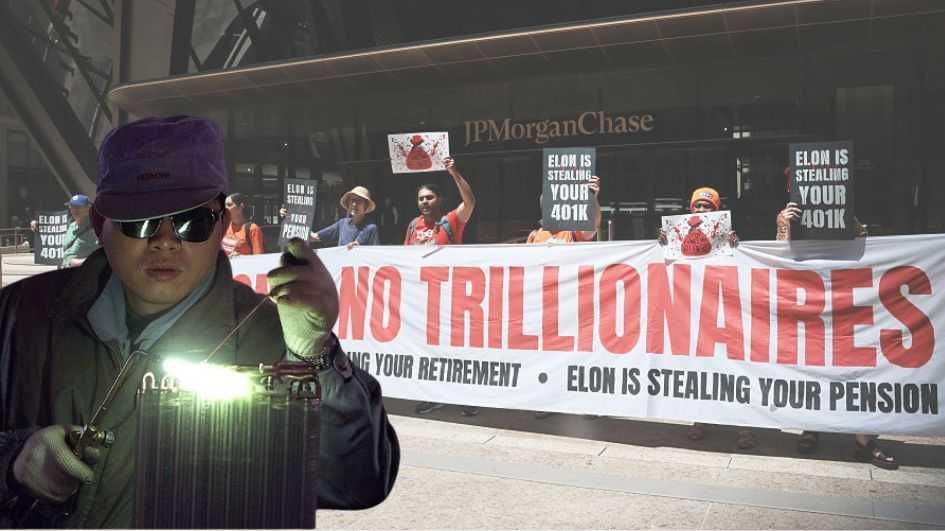
A welder named Juan Hernandez joined SpaceX in 2015 at $28 an hour. He took stock instead of a fatter paycheck. The day the company was listed, those shares were worth about $880,000.

He has company. More than 4,000 current and former SpaceX employees became millionaires when the company began trading on the Nasdaq at $135 a share. The valuation hit $1.77 trillion, the seventh-largest public company and ahead of Tesla. It was the biggest IPO ever recorded. About 400 of those workers now hold stakes above $100 million, and some of them ladle soup in the cafeteria.

The teenager weighing a coding boot camp against welding school should study the leaderboard in Brownsville.

Learn to weld

That last part flips the usual script. Rank-and-file employees have struck gold in stock debuts before, but most often they were the ones writing code or creating marketing decks

This time it’s very different.

SpaceX handed equity down to welders, machinists, and line workers at Starbase, many of whom took below-market pay for shares. The bet looked reckless a decade ago, back when SpaceX still lost rockets on the launchpad. Today, the only thing still exploding is their net worth.

The setting makes it stranger. Brownsville sits near the bottom of every income chart in Texas, and SpaceX put more than 3,000 jobs there. Home prices in Cameron County have more than doubled since the rockets arrived, climbing from around $131,000 in 2014 to over $281,000.

Critics call that unaffordable, but the complaint misses who is doing the buying. The new money was earned in the county, by people who lived there before SpaceX showed up. When a poor town's home values double on the back of local paychecks, the residents hold the deeds. Rising prices turn dangerous when wages sit still. Brownsville got richer faster than it got expensive.

Deskbound

Now for the mandatory dread about machines coming for our jobs and, in the more ominous forecasts, our throats. But now automation is a white-collar problem. AI can draft a deal sheet or pass the bar exam. What it can't do is snake a wire past a joist or seal a fuel tank that holds at cryogenic temperatures without splitting. The jobs vanishing first are the ones done sitting down. Paralegals should sweat. Plumbers can light up a cigarette and relax.

In April, a humanoid robot built by the phone maker Honor finished a Beijing half-marathon in 50 minutes and 26 seconds, quicker than any human has run the distance. A year before that, at the first such race, one machine toppled at the start and another walked into a barrier, and every robot needed a human handler jogging beside it like a parent at a toddler's first steps. Ask one of those to fish a cable through a finished wall and find the live wire before something ignites. Fine motor control and sound judgment still belong to people. The robots can run, but keep them away from your breaker box.

So the trades have an opening, and it widens if manufacturing returns. A factory needs hands long before it needs a wellness coordinator. The teenager weighing a coding boot camp against welding school should study the leaderboard in Brownsville.

RELATED: The first trillionaire: SpaceX goes public — and it's not just Elon Musk who's striking it rich

Marvin Joseph/Washington Post/Getty Images
Elon earned it

Then there is Musk. The IPO makes him a trillionaire, the richest man alive. Bernie Sanders, the millionaire who wrote a best-seller about the immorality of millionaires, calls the number obscene. Paul Krugman blames a "rigged system."

None of this started with the IPO. Attacking Musk has been a fixture on the left for years, somewhere between a hobby and a second income. The trillion-dollar number raised the stakes. The objections write themselves and skip the question worth asking first. How did he get there?

Plenty of fortunes start with a dead grandparent and end in an offshore account. But this one came from hardware that lands itself and flies again. Musk bet on factories and launchpads while easy money chased apps. He keeps hours that would bury most executives. He sleeps on factory floors when a launch date slips, a habit his critics conveniently ignore.

And he paid everyday Americans in stock when cash would have cost him less, allowing them to win as well.

Before wheeling out the guillotine and inviting Mark Cuban to drop the blade, separate the fortunes built on extraction from the ones built on output. Musk is a visionary, a builder of truly great things. He made the rocket cheaper and the cook richer. Capitalism has never looked so hard to hate.

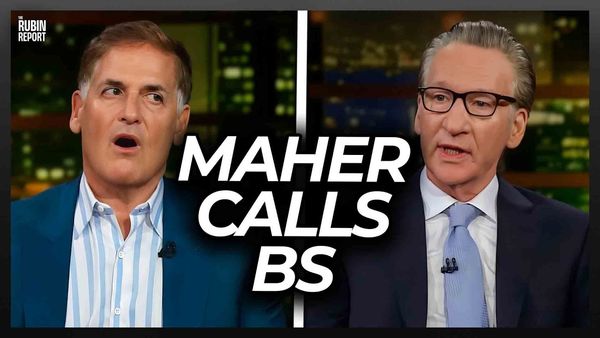
‘The View’ melts down over TrumpRx drug plan to lower prices: 'We're all going to die'


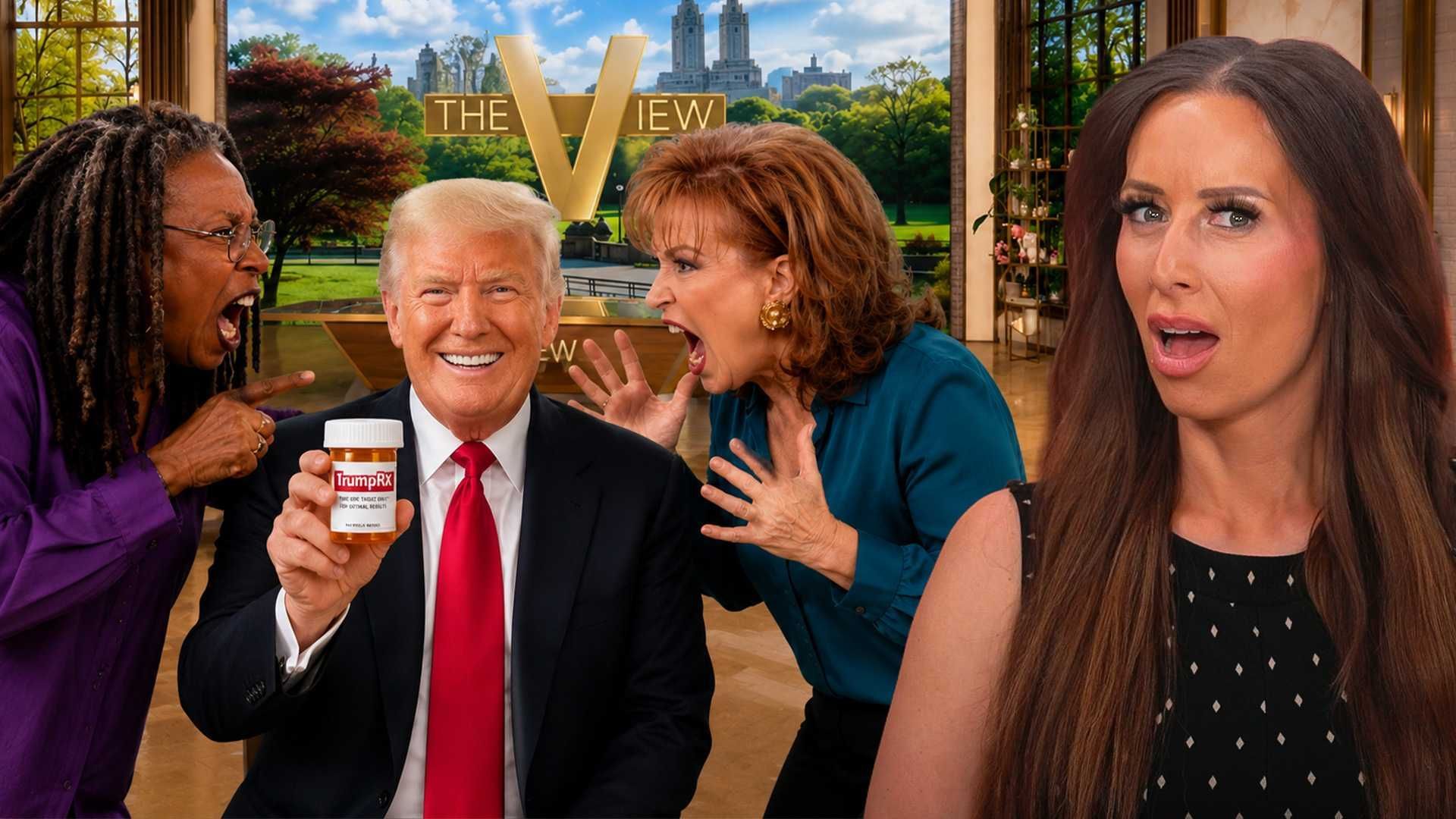
President Trump’s latest effort to lower prescription drug prices is drawing fierce criticism from the hosts of "The View," even after the administration partnered with billionaire Mark Cuban on the TrumpRX.gov initiative.

“I think honestly, by this point, President Trump could cure cancer and Democrats and crazy libs would still be against it. They’d be like, ‘But let me tell you why cancer is good, actually,’ because they’re just so unhinged,” BlazeTV host Sara Gonzales comments.

“Like they have terminal cases of TDS,” she adds.

After billionaire Mark Cuban and President Trump teamed up to promote TrumpRX.gov, Joy Behar called the president a “dog.”


“First of all, you lie down with dogs, you wake up with fleas,” Behar said.

“And you know, I like Mark Cuban,” she continued. “I’ve always liked him, but this is a mistake. And once Trump puts his name on prescriptions, we’re all going to die, OK?”

“He is a failed businessman,” Sunny Hostin chimed in. “And if you heard what he said, he said, ‘We both want to make people wealthy.’ He didn’t say, ‘So I should pay 10 times more.’”

“It means, to me, that there’s something in it for him. This is not a well-intentioned person,” she continued, explaining that he’s only doing it “to make money.”

Behar then interjected to compare the Scandinavian health care system to America’s.

“I don’t understand how people watch this unironically. Like, how do people show up in the middle of the day or whenever the hell this is filmed and unironically spend their time going and listening to these dumb b****es talk over each other?" Gonzales comments.

“‘Donald Trump is the devil,’” she mocks, adding, “like, oh my gosh.”

Want more from Sara Gonzales?

To enjoy more of Sara's no-holds-barred takes on news and culture, subscribe to BlazeTV — the largest multi-platform network of voices who love America, defend the Constitution, and live the American dream.

Government bias and billionaires shouldn’t decide who gets affordable medicine


The Louisiana Pharmacy Benefit Manager Monitoring Advisory Council met last month with an unusual guest — one who came with a clear conflict of interest.

Dr. Alex Oshmyansky, founder and CEO of the Mark Cuban-backed Cost Plus Drug Company, was invited to brief the council on PBMs. But his company directly competes with them. No PBM representatives were invited to speak or respond. What could have been an informed policy discussion turned into an unbalanced promotional session for a single competitor — and that does not serve patients.

The one-sided hearing

Pharmacy benefit managers have long been in Mark Cuban’s crosshairs. He claims PBMs create “an inefficient market” and lack transparency. Those complaints underpin his partnership with Oshmyansky to form Cost Plus Drug Company, a business designed to bypass PBMs entirely.

If Louisiana’s leaders want real reform, they must start by restoring fairness — and remembering who the system exists to serve.

At the hearing, Oshmyansky presented his company’s views on PBMs without challenge or rebuttal. The absence of PBM voices left the council with a distorted view of the system it’s supposed to oversee.

That imbalance creates two serious problems.

First, it deprives the council of a complete understanding of how PBMs work — what services they provide, how they negotiate lower drug prices, and how Louisiana’s new PBM regulations are already being implemented. Without hearing from the industry itself, policymakers risk forming conclusions based on partial information and advocacy, not evidence.

Second, when public bodies accept one-sided testimony, patients lose. PBMs manage drug coverage for millions of Americans, ensuring access to affordable medicines and stable pharmacy networks. When their perspective is ignored, regulations may raise costs, reduce access, or disrupt care for the very people the state claims to protect.

Political hostility and government bias

The broader political context in Louisiana makes this even more troubling. Gov. Jeff Landry (R) has pushed to ban PBMs entirely — an extreme measure that would upend how prescription coverage operates in the state. Meanwhile, Attorney General Liz Murrill has sued CVS, one of the nation’s largest PBMs, for warning consumers about the potential fallout of such a ban.

These moves reveal a pattern: State leaders are treating PBMs not as partners with critical expertise but as enemies. That approach replaces policymaking with politics and undermines public confidence in fair regulation.

RELATED: The maligned and misunderstood player that Big Pharma wants gone

cagkansayin via iStock/Getty Images

Reform through balance, not bias

The PBM industry isn’t above reform. Greater transparency and accountability are necessary. But good policy starts with balance. The council should convene a second meeting — this time with PBM representatives at the table alongside Cost Plus Drug Company. The proceedings should be public and transparent.

Patients deserve policies based on facts, not billionaire-backed bias. Regulation shaped by evidence, not resentment, is how states protect health, affordability, and trust.

If Louisiana’s leaders want real reform, they must start by restoring fairness — and remembering who the system exists to serve.

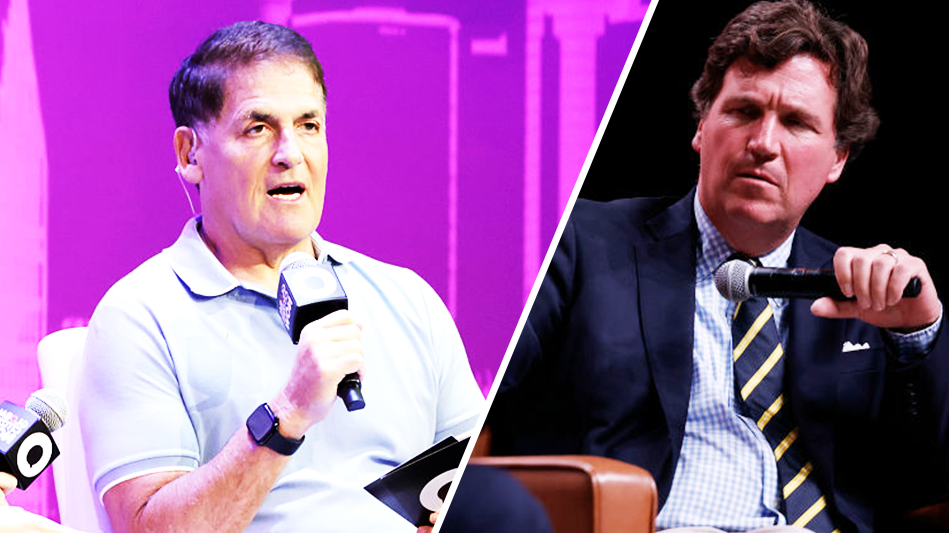
Tucker Carlson clashes with Mark Cuban over Ukraine stance: 'How much money have you sent?'


Former talk-show host Tucker Carlson and businessman Mark Cuban had an uncomfortable exchange over the topic of the Russia-Ukraine war earlier this week.

The two stars appeared at the All-In Summit on Monday, hosted by the "All-In" podcast, a business and technology show hosted by entrepreneurs Chamath Palihapitiya, Jason Calacanis, David Sacks, and David Friedberg.

'Forcing other people to help is not charity. It's vanity.'

Cuban appeared first, with the panel jumping into the topic of fixing America's health care. This led Cuban to bring up his latest venture, a pharmaceutical website that sells drugs at cost, with the URL getting at least eight mentions in about 15 minutes.

When Carlson appeared on stage, he immediately mocked the consistent plugs.

When asked how to identify the line between "democracy" and "pandering," Carlson offered a hilarious answer.

"Where is the line? I mean, I can identify it: It's at costplusdrugs.com," Carlson said, poking fun at Cuban's business.

Less than 10 minutes passed before Sacks, the White House AI and crypto czar under President Trump, asked Cuban about "whether we should be sending money to Ukraine or not."

"Were you in favor of that?" Sacks inquired.

"Honestly, I don't have a good answer," Cuban replied. "I can make an argument both ways, and half my family is Ukrainian, from my grandparents. Personally, I think we should help, but I don't have a studied answer for you."

This led to the most contentious part of the show, with Carlson cornering Cuban on his position.

RELATED: Mark Cuban says Americans 'aren't ready' for transgender athletes yet: 'You can't just force it down people's throats'

"How much money have you sent to Ukraine?" the former Fox News host asked the billionaire.

"None," Cuban revealed.

This did not stop Carlson's questions.

"Oh, so what do you mean by 'we'?" Carlson continued. Cuban was silent, responding only with a shoulder shrug.

"You're the one whose family's from Ukraine. Like, why don't you send them a billion dollars?" Carlson piled on.

"Because I'm trying to fix health care," Cuban retorted.

Tucker, not standing down, then asked, "Why don't you fix their health care if you're, like, so deep? If you think we need to help, why don't you start? How about you first? I noticed that's never even an option for anybody."

The crowd erupted in applause in support of Carlson's rhetoric.

"It's like, 'We need to help!'" the podcaster added. "That's not what charity is. Forcing other people to help is not charity. It's vanity."

Calacanis then jumped in and saved Cuban with comments about the war and joked that President Trump was going to turn a profit from all the chaos in Eastern Europe.

RELATED: How Tucker Carlson vs. Ted Cruz exposed a critical biblical question on Israel


Much of Carlson's commentary on the panel was focused on population replacement in Western countries and the unaffordability of homes, which is stagnating population growth.

Other highlights included Carlson being asked if he is anti-Semitic, if Jeffrey Epstein was a spy, and if Russian President Vladimir Putin is a war criminal.

Like Blaze News? Bypass the censors, sign up for our newsletters, and get stories like this direct to your inbox. Sign up here!

Drug middlemen launch attacks against MAGA allies pushing for health care reforms


Pharmacy benefit managers like CVS are going after President Donald Trump's allies who are seeking meaningful health care reforms for their constituents.

Arkansas Gov. Sarah Huckabee Sanders (R) and Louisiana Gov. Jeff Landry (R) have become the primary target of PBMs, which are threatened by their push to implement reforms in drug costs. Threatened by MAGA allies, PBMs have now escalated these conflicts to legal disputes.

'These massive corporations are attacking our state because we will be the first in the country to hold them accountable.'

RELATED: Who is bankrolling the anti-MAHA movement?

Photo by Andrew Harnik/Getty Images

In April, Huckabee Sanders signed legislation banning PBMs from "engaging in anticompetitive practices" by owning pharmacies. PBMs are tasked with negotiating drug prices between pharmacies and insurance companies, but by buying up pharmacies, they are able to take advantage of the health care system and inflate the cost of pharmaceuticals, pushing competitors out of business, according to Huckabee Sanders' press release.

“For far too long, drug middlemen called PBMs have taken advantage of lax regulations to abuse customers, inflate drug prices, and cut off access to critical medications," Huckabee Sanders said in a statement. “Not any more. These massive corporations are attacking our state because we will be the first in the country to hold them accountable for their anticompetitive actions, but Arkansas has never been afraid to be a conservative leader for America.”

The Pharmaceutical Care Management Association promptly retaliated and filed a lawsuit challenging the legislation, calling it a "fundamentally flawed law" that they say "could shutter pharmacies, restrict access to critical medications for patients and families, increase health care costs, and eliminate jobs."

RELATED: Pharmacy middlemen didn’t break health care — the feds did

Samuel Corum/Sipa/Bloomberg via Getty Images

Landry has become involved in his own legal disputes with PBMs. Landry, alongside Louisiana Attorney General Liz Murrill, filed three separate lawsuits against CVS in June for allegedly interfering with legislation that also would have prevented PBMs from owning and simultaneously operating pharmacies.

"PBMs are not health care providers," Landry said. "They are corporate profiteers inserted into the most intimate part of your life and your health."

Although several of Trump's allies have been targeted by PBMs, criticism of the pharmaceutical industry is generally bipartisan.

Mark Cuban recently called out Democratic Sen. Elizabeth Warren of Massachusetts for claiming that Big Pharma is responsible for high drug costs when, he says, PBMs are the real culprit.

"It's because PBMs corrupt healthcare," Cuban said in a post on X. "Big Pharma wishes they could set their own pricing. They don't. PBMs control formularies and manipulate prices, in exchange for providing pharma access to patients. It's how they maximize rebate revenue. In fact, 3 PBMs NEGOTIATE MORE THAN 90% OF REBATES for commercial insurance plans. That's your area of expertise, and you have done nothing."

Cuban's criticisms promptly earned the unlikely praise of some of the most prominent voices in MAGA world.

"Didn’t think I’d be RTing Mark for a while, but he’s 100% right on this issue," Donald Trump Jr. replied in a post on X.

Like Blaze News? Bypass the censors, sign up for our newsletters, and get stories like this direct to your inbox. Sign up here!