
Ketanji Brown Jackson mocked after discussing need for justices to appear neutral — while on OBAMA's podcast
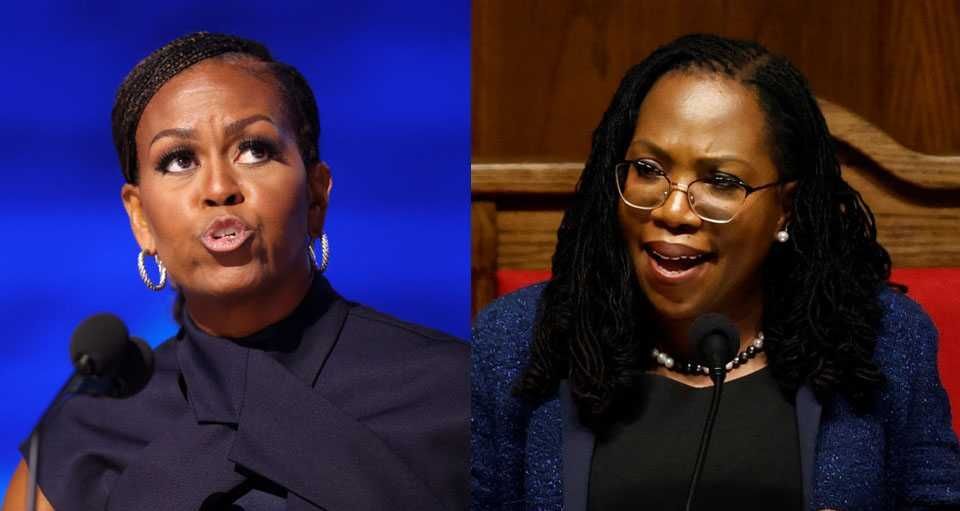
This week, U.S. Supreme Court Justice Ketanji Brown Jackson discussed with Michelle Obama, of all people, the importance of justices appearing impartial — and so far, the reactions to their conversation have been just about what you'd expect.
She told the hosts on the Wednesday episode of "IMO with Michelle Obama & Craig Robinson" that "we all have to believe that there is a judicial system that is going to be fair, that is going to be neutral, that when you bring your dispute to the court, that judge doesn't have any pre-existing stake in the particular issue."
'Can't make this up.'
It's a surprising take, considering Jackson's background.
For one thing, former President Joe Biden explicitly chose Jackson for the Supreme Court on the basis of her race and sex, though she said during her confirmation hearing that she could not define "woman" because she's "not a biologist."
Jackson has also made a habit of penning bias-saturated jeremiads that have in some cases been extreme enough to raise the eyebrows of even other liberals on the bench. For instance, she:
- insinuated in her lone dissenting opinion in Trump v. American Federation of Government Employees that President Donald Trump was some sort of power-hungry menace and that those on the bench who failed to stop his "wrecking ball" were sycophantic enablers whose decision was both "hubristic and senseless";
- claimed in her dissenting opinion for Trump v. CASA Inc. that the Trump administration's request to address universal injunctions — which the high court found "likely exceed the equitable authority that Congress has given to federal courts" — amounted to a request "to engage in unlawful behavior";
- accused her colleagues in Students for Fair Admissions v. Harvard of "let-them-eat-cake obliviousness" for their colorblind approach and claimed that race-based college admissions address "the well-documented 'intergenerational transmission of inequality' that still plagues our citizenry" to the "benefit of us all"; and
- echoed LGBT ideologues in her lone dissenting opinion in Chiles v. Salazar, claiming that "a robust professional consensus now acknowledges that sexual orientations and gender identities range widely" and that reality-affirming therapy for trans-identifying kids was ineffective and harmful.
Despite these opinions, Jackson and Obama seem to believe that Jackson has been a relatively neutral jurist.
RELATED: Platner's replacement in Maine is a family man — just not in the way voters might expect
Obama pressed Jackson about whether she has to closely monitor her exposure to news, media, and other content "so that there isn't a bias."
After noting that certain individuals employed at the court screen her invitations for various appearances and events "to make sure that there are no ethical conflicts," Jackson replied that "there are lots of limits on what judges can do, and I try to be very, very mindful and scrupulous with respect to that because, as you say, our obligation is to be unbiased in our approach."
"And, so, you have to then navigate all the sources that could make for an appearance of partiality, which you want to avoid," the Biden nominee continued. "So there are lots of things that I end up not accepting for that reason. News sources, I think, you know, I don't have a lot of time — unfortunately, you know — but I do, you know, the normal, general media sources are made available, and I think it's harder when you're talking about — there's so much social media now."
Jackson's expression of concern about bias and perceptions of bias while in the company of a rank partisan like Michelle Obama struck some critics as insincere or at the very least tone-deaf.
House Republican Conference Chairwoman Lisa McClain (R-Mich.) highlighted the cognitive dissonance, writing, "Justice Ketanji Brown Jackson says SCOTUS must avoid even the appearance of political bias ... while appearing on Michelle Obama's podcast."
Sen. Marsha Blackburn (R-Tenn.) wrote, "Ketanji Brown Jackson finds a way to inject political bias into just about everything she does. Whether it's attending the Grammys, joining Michelle Obama's podcast, or refusing to define the word woman, she couldn't care less about remaining impartial."
"DEI hire justice Ketanji Brown Jackson says she's careful about which public engagements she accepts because she has to be impartial ... As she appears on MICHELLE OBAMA's podcast," Libs of TikTok tweeted. "Can't make this up."
Like Blaze News? Bypass the censors, sign up for our newsletters, and get stories like this direct to your inbox. Sign up here!
Alleged UFC 250 assassination plot targeted Republicans — and the Trump DOJ names suspects
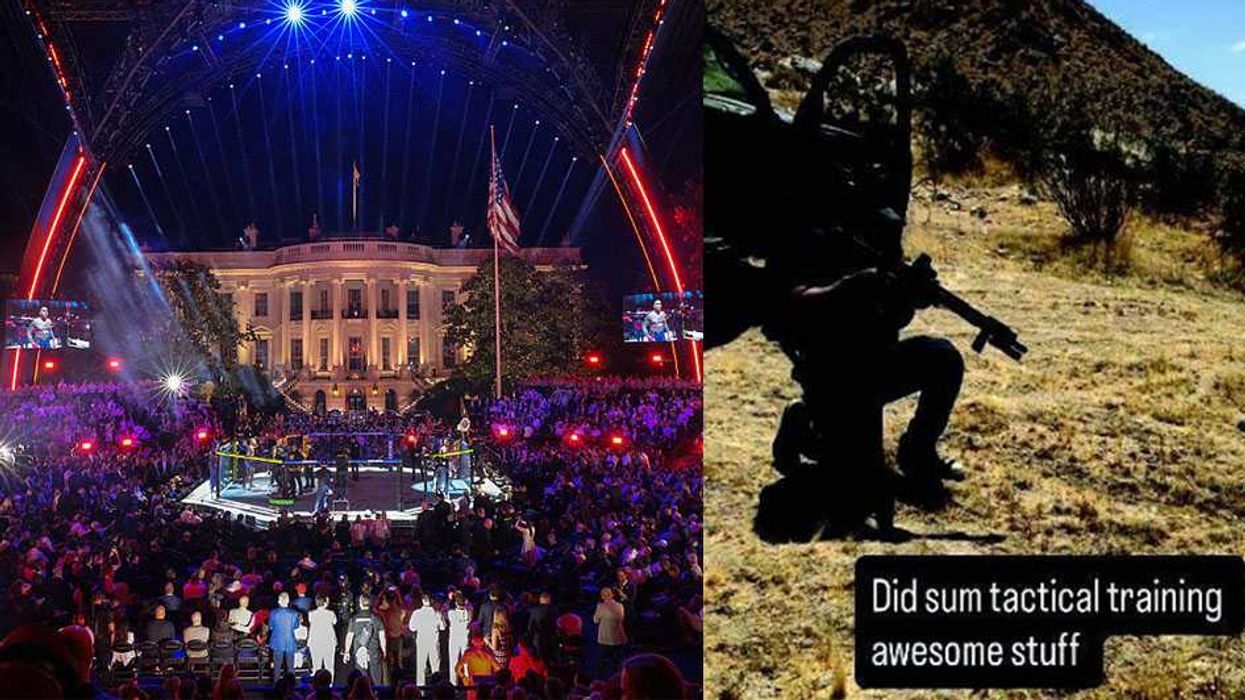
A Democrat-aligned lawfare outfit filed a lawsuit on behalf of a pair of anti-Trump protesters earlier this month in the hope of shutting down the UFC Freedom 250 event on the White House South Lawn last Sunday.
Evidently, the Public Integrity Project and activist plaintiffs were not the only ones keen to rain on President Donald Trump's parade.
'The landscape has changed.'
The FBI announced on Tuesday that an alleged assassination plot targeting the UFC event was uncovered on June 10 and ultimately thwarted thanks to a timely phone call from a concerned mother and the rapid action of local and federal law enforcement agencies.
Five men have been charged in the alleged plot to assassinate "high value targets" at the UFC event: Tycen C. Proper, 19, of Danville, Ohio; Bryan Omar Roa, 24, of Calimesa, California; Michael Alan Thomas 32, of Pinon Hills, California; Daniel K. Eskridge, 32, of Kidder, Missouri; and Abraham Hermosillo Alvarez, 31, of Omaha, Nebraska.
According to the Justice Department, the suspects' plan consisted of two parts: First, they would use explosive drones in and around the event to prompt an evacuation; and second, they would deploy snipers to assassinate specific individuals within the fleeing crowd. In addition to the estimated 4,300 people present for the invite-only event on the South Lawn, there were roughly 85,000 additional people gathered nearby during the back-to-back fights.
One of the suspects, Michael Thomas, allegedly discussed the four "tiers" of this anti-government plot: the first being the gunmen on the ground; the second being the drivers and drone operators; the third being logistical suppliers; and the fourth being social media suppliers.
In addition to allegedly advocating for jail breaks for surviving tier 1 members in the aftermath of the planned attack, Thomas allegedly underscored the need for suspects to train for "gorilla [sic] style warfare."
Another suspect, Daniel Eskridge, allegedly proposed that they form "5 teams of 3 each team consisting of 1 sniper, 1 tier one operator as support/ look out, [and] one drone operator."
RELATED: James Comey-style 'threat' against Trump apparently etched into National Mall grass

Another suspect, Alvarez, allegedly suggested that snipers could escape to the Potomac River after taking their shots and identified an old church in Nebraska as a potential safe house.
Multiple federal complaints filed in relation to the case across the country allege that Tycen C. Proper told investigators that the ball got rolling on the plan around March. While there were apparently more individuals involved in the discussions at the outset — roughly 19 — Proper allegedly claimed that the more serious plotters migrated their conversations to an encrypted chat app.
The FBI alleged beyond amassing firearms, ammunition, and tactical gear at his Ohio home, Proper identified multiple targets, including multiple members of Congress and business executives.
According to an affidavit submitted with Proper's complaint, the Ohio suspect proposed the following lawmakers as targets: Republican Senators Marsha Blackburn (Tenn.), Jim Justice (W.Va.), and Shelley Moore Capito (W.Va.), and Republican Representatives for West Virginia Carol Miller and Riley Moore.
The targets were allegedly chosen in part because of their perceived coziness with the Israeli lobby.
Trump, Vice President JD Vance, and Elon Musk's names were also allegedly floated as targets in the suspects' conversations.
The affidavit indicates that the alleged plot — the purpose of which was to "jumpstart" a revolution in the United States — was foiled thanks to the vigilance of Proper's mother, who called law enforcement on the evening of June 10, expressing concerns about her son's recent conduct, including his firearm purchases and communications online.
The Knox County Sheriff's Office and Danville Police Department arrived 20 minutes later and soon learned from Proper's father that the teen, who lived at home, was allegedly planning "recons" with individuals he met online; planning to leave to meet up with those individuals on the weekend of June 13; had spent roughly $3,000 of his graduation money to purchase camping gear, firearms, ammunition, plate carriers, and food; and had quit his job recently in preparation for his big excursion.
The following day, the Knox County Sheriff's Office got the FBI involved.
If convicted of conspiracy to commit murder, each of the defendants faces a maximum of life in prison and a $250,000 fine. They each face an additional five years in prison apiece if convicted of conspiracy to commit violence on the White House grounds.
"The FBI, our law enforcement partners and our U.S. attorneys did what they do every day to make America safe through quick response and vigilance in investigating, disrupting, and dismantling this alleged plan before it could be carried out," said acting Attorney General Todd Blanche.
"Protecting the president of the United States and the White House grounds is priority number one for the U.S. Secret Service,” said U.S. Secret Service Director Sean Curran. "The landscape has changed, and as a result we have seen a dramatic rise in threats against our protectees."
Like Blaze News? Bypass the censors, sign up for our newsletters, and get stories like this direct to your inbox. Sign up here!
Congress takes aim at online harms — and misses the center mass

On December 11, 18 child online safety bills took a significant step toward becoming law. The package — each bill addressing, in some way, the harms children face online — passed out of a House subcommittee on a mostly party-line vote. The legislative bundle is, overall, a somewhat milquetoast mix of meaningful wins and frustrating defeats for child safety advocates. Still, it represents real progress. For those who have long pushed for action, the ball has finally moved down the field.
The bills vary dramatically in scope. Some, like the Assessing Safety Tools for Parents and Minors Act, would simply mandate an analytical report on the efforts technology companies are making to protect children. Others, such as the App Store Accountability Act — which would require app stores to determine whether a user is a minor and, if so, prohibit downloads without parental consent — are far more consequential, fundamentally changing how app stores operate.
Advancing 18 bills signals that one of the longest-standing objections to action — whether social media actually harms children — has effectively collapsed.
There are also bittersweet elements. The most well-known and controversial bill, the Kids Online Safety Act, is included in the package — but in a significantly watered-down form. The original version, introduced by Sen. Marsha Blackburn (R-Tenn.), passed the Senate with more than 90 votes. But House GOP leadership raised constitutional concerns, arguing that the bill placed undue pressure on social media companies to regulate speech.
House Majority Leader Steve Scalise (R-La.), one of the bill’s most prominent opponents, warned that it would “empower dangerous people.” Other critics likened KOSA to the British Online Safety Act — a far more draconian law than its American counterpart. (The most recent Senate version of KOSA focuses on disabling addictive features and restricting minors’ access to dangerous content.)
These concerns forced substantial revisions. Most notably, the bill now includes a sweeping pre-emption clause barring states from regulating anything that “relates” to KOSA — effectively nullifying existing and future state-level efforts to protect children online.
Equally disappointing is what failed to make the cut.
Some excluded proposals were undeniably radical, such as the RESET Act, which would have barred minors from creating or maintaining social media accounts altogether. But another bill left behind — the App Store Freedom Act — was critical to restoring competition and accountability in the app ecosystem.
That legislation would have challenged the Apple-Google duopoly, which controls more than 90% of app store purchases in the United States. As long as those two companies dominate the marketplace, meaningful reform will remain elusive. Unsurprisingly, both firms opposed the bill, arguing that it would “endanger” children by allowing downloads from unvetted third-party stores.
Rep. Kat Cammack (R-Fla.), the bill’s sponsor, blasted that claim, noting that Apple has long permitted minors to download TikTok — a platform run by a Chinese company with well-documented national security concerns.
RELATED: Schools made boys the villain. The internet gave them a hero.
Despite its importance, the App Store Freedom Act was removed from the package. Even so, the remaining legislation still marks a major victory for those focused on protecting children online.
Here’s why.
First, advancing 18 bills signals that one of the longest-standing objections to action — whether social media actually harms children — has effectively collapsed.
For years, lawmakers debated whether digital platforms were the problem or whether other factors deserved the blame. A steady stream of studies, headlines, and internal leaks showing that social media companies knew their products damaged adolescent mental health helped put that question to rest.
Second, the breadth of the package ensures that something will happen. Even the weakest provisions — those requiring studies or reports — will energize advocates and help bring order to what remains a digital Wild West for children and families.
The legislative fight is far from over. The bills must still clear committee, pass the House, and survive the Senate. But momentum is clearly shifting toward reform.
It’s time to finish the fight.

New Docs Reveal Jack Smith Intentionally Violated Congressional Republicans’ Constitutional Rights
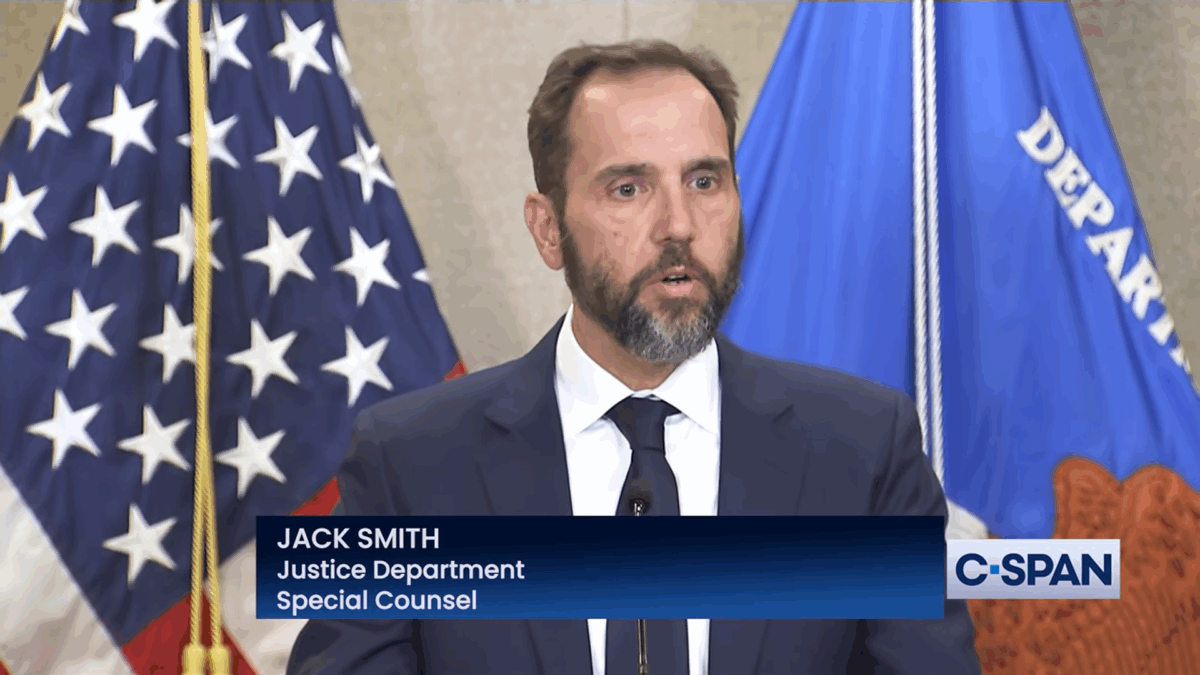 Smith never should have approved the subpoenas since they violated the congressional Republicans’ clearly established rights.
Exclusive: Sen. Blackburn introduces bill that would bar military 'leftists' from disrespecting Trump in key way

Republican Sen. Marsha Blackburn of Tennessee introduced key legislation on Friday to ensure that military bases respect their commander in chief.
Blackburn introduced the Respect the Chief Act in response to reports of military bases failing to display portraits of President Donald Trump, Vice President JD Vance, and Secretary of War Pete Hegseth. In response to the bases and military officials who may be motivated by ideology rather than tradition, Blackburn's legislation would formally require the portraits to be displayed, according to bill text obtained exclusively by Blaze News.
Rather than allowing this tradition to be carried out at the discretion of commanders, who sometimes may be 'leftists,' Blackburn decided to take matters into her own hands.
“The president of the United States is the Commander in Chief, and chain-of-command boards at America’s military bases should reflect current leadership,” Blackburn told Blaze News.
“The Respect the Chief Act would ensure military bases continue this long-standing tradition and prevent leftists from disrespecting the chain of command.”
RELATED: Exclusive: Republican senator introduces bill slashing funds to anti-American governments

Blackburn's legislation came in response to the suspension of Colonel Sheyla Baez Ramirez, a commander at Fort McCoy who failed to install photos of Trump, Vance, and Hegseth at the base back in April.
Following the scandal, Blackburn recognized the lack of formal federal statutes and regulations that require these customs to be upheld. Rather than allowing this tradition to be carried out at the discretion of commanders, who sometimes may be "leftists," Blackburn decided to take matters into her own hands.
RELATED: Democrat senator makes stunning admission about Obamacare failures
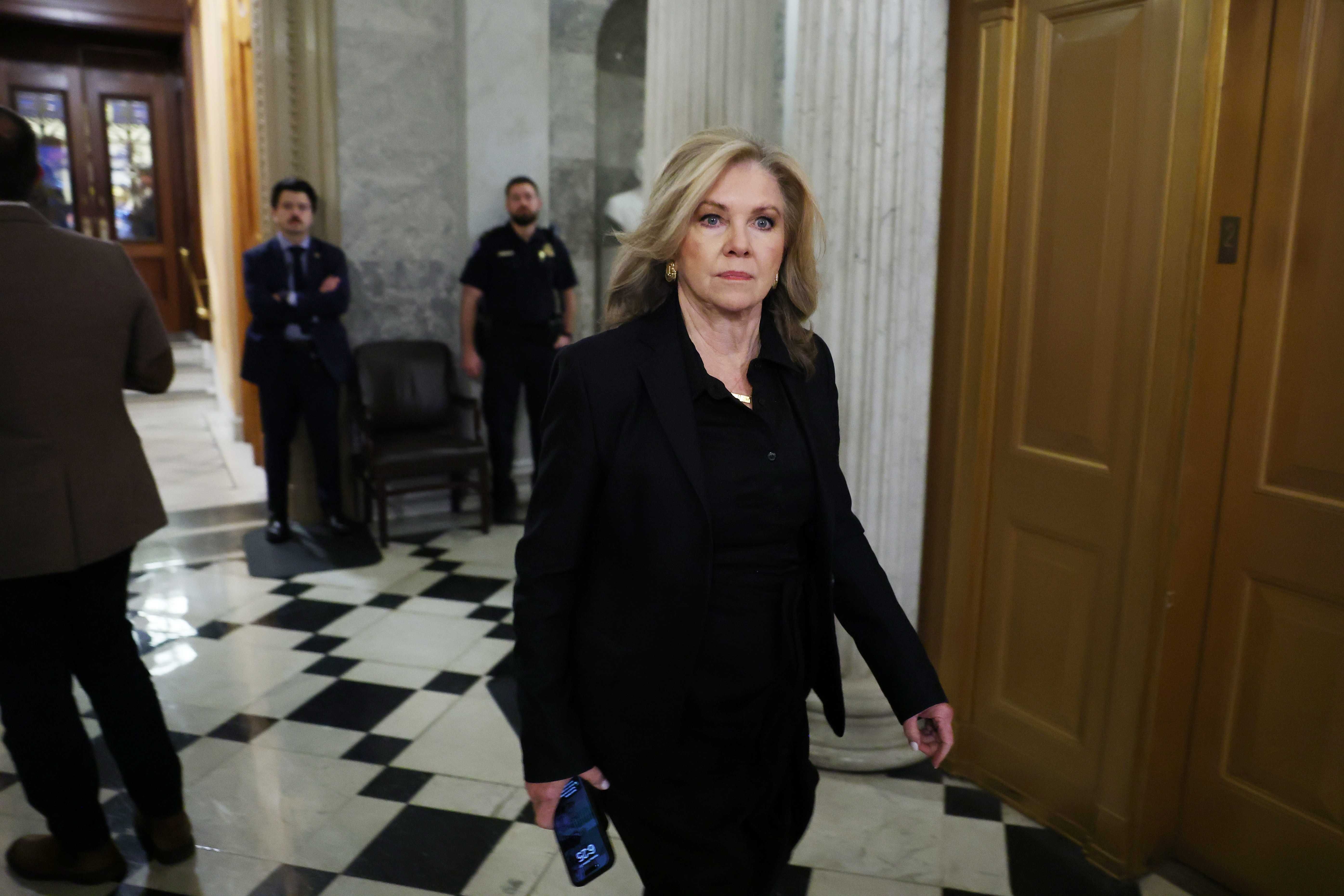
In addition to mandating the display of the portraits of the president, vice president, and secretary of war, Blackburn's bill would require the separate military branches within the Department of War to submit reports to the executive branch confirming that all displays of leadership reflect the current chain of command.
Like Blaze News? Bypass the censors, sign up for our newsletters, and get stories like this direct to your inbox. Sign up here!
 www.theblaze.com
 thefederalist.com
 thefederalist.com