When Archie Comics found Jesus: Strange artifacts from a once-Christian culture
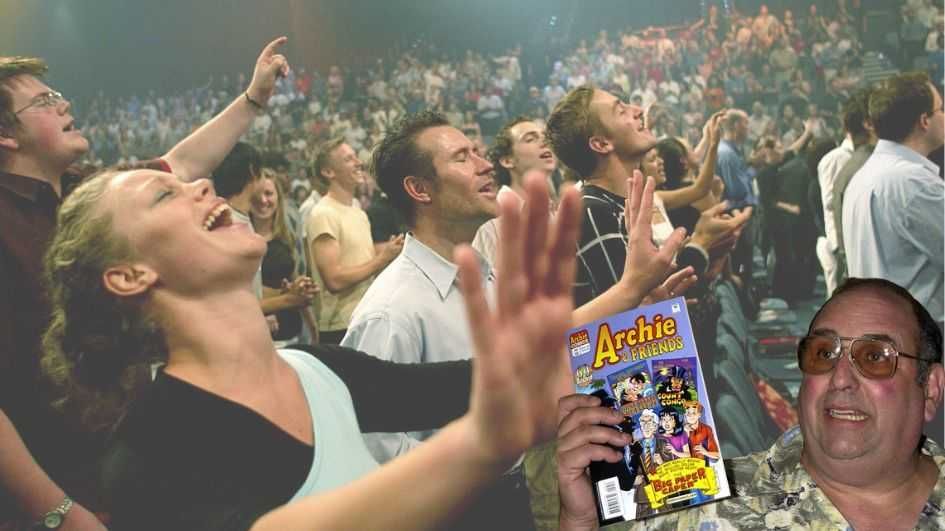


Winn the barber ran a tidy, one-chair shop in an office park off Route 222. That meant a wait — especially since my mother usually brought my two younger brothers as well — but I didn't mind.

Like Winn, who always wore a starched white coat and slicked his hair back with Brylcreem, I was a creature of habit, and I had a ritual for these bimonthly visits. I'd plop down into one of the vinyl-covered seats and catch up on the adventures of Archie Andrews and the rest of the Riverdale High gang.

In the 1970s, evangelical Christianity may not have been culturally dominant, but it was culturally permissible.

Normally, I stuck to more serious fare — "Batman," "Daredevil," maybe the odd "Sgt. Rock" if the spinner rack was looking particularly picked over. But Winn exclusively stocked his waiting room with Archie Comics.

Revival in Riverdale

Sophisticated cineastes will cry at "The Notebook" if they watch it on an airplane — something about the altitude. And something about Winn's place — the fake wood paneling on the walls, the smell of Barbicide mingling with the eerie "easy listening" music wafting from a hidden speaker somewhere — lowered my critical defenses. I couldn't get enough of these soothingly repetitive teenage misadventures.

Then, one afternoon I picked up an issue that seemed off. Entitled "Archie's One Way," the cover featured Archie and friends in his "jalopy" — comically overheating and leaking fluid everywhere — getting yelled at by a cop for ignoring the obvious street sign. "Do you know this is ONE WAY?"

So far, so good. Typical Archie setup. But instead of a wisecrack from Reggie or Jughead, we get Betty piping up from the back seat, arms raised in joyful celebration: "This is cool! The officer is WITNESSING to Archie!"

Huh.

A new creation

I opened the cover and read with a kind of dawning horror, like the lone survivor in a body snatchers movie. The art, the lettering, the bright colors were exactly the same, but somehow, when I wasn't looking, the wholesome yet wholly secular teens I'd come to know and love had been swapped with evangelical Christian duplicates.

I had encountered one of the licensed line of Archie issues put out by Spire Christian Comics from 1973 to 1982.

The idea came from longtime Archie artist Al Hartley, who'd had a born-again experience in 1967 and thought Archie would make a great way to spread the gospel. Although he was Jewish, John Goldwater — who had created Archie along with partner Louis Silberkleit some 30 years earlier — agreed.

The regular Archie books continued unchanged. These proselytizing stories lived in their own lane, distributed through Christian bookstores and churches — although often making it out into the wider world, as I and other unsuspecting readers can confirm.

RELATED: The night of the gun was never-ending — until the day I surrendered to Christ

Old Man in Prayer by Workshop of Rembrandt van Rijn, circa 1629. Barney Burstein/Corbis/VCG/Getty Images

'Divorce Any Style'

The message wasn't subtle: In that same issue, the gang ends up in what appears to be Riverdale's never-before-seen version of Times Square, recoiling at marquees advertising movies like "Divorce Any Style" (rated X), "Crime Pays," and "Sex Sex."

In another, Betty helps an injured hippie classmate (a great kid, notes Archie, before she "got into the drug scene") accept Christ into her heart after a bad car accident.

The idea of Archie Comics as Jack Chick tract seems strange now. But is it any stranger than the recent TV series "Riverdale," the requisite "bold" and "subversive" take that turned its Anytown, U.S.A., into a hotbed of conspiracies, crime, and gothic melodrama?

What's really strange to contemplate from today's vantage point is that Archie's conversion didn't inspire any kind of national uproar. Granted, before the internet, it was much harder for outrage to spread; most people not in Spire's audience probably didn't know these comics existed.

But I think it was also something else.

Negative world

Writer Aaron Renn has described American culture as moving from a “Positive World,” in which Christianity carried social legitimacy, to a “Neutral World,” and now to a “Negative World,” where public Christian identity can carry reputational cost. However one draws the lines, the Archie–Spire experiment clearly belongs to an earlier era.

In the 1970s, evangelical Christianity may not have been culturally dominant, but it was culturally permissible. Just as even liberal Democrat Jimmy Carter could speak of committing adultery "in his heart" (in Playboy magazine, of all places) and still get elected, a mainstream publisher could allow its most recognizable teenager to kneel in prayer and trust that the sky would not fall.

The moment was not confined to Riverdale — or Protestantism. In the '80s, Marvel produced comic book biographies of Pope John Paul II and Mother Teresa.

As late as the early '90s, Marvel launched a joint venture with Christian publisher Thomas Nelson to publish the adventures of the Illuminator — a superhero with explicitly God-given powers — as well as adaptations of "The Pilgrim's Progress" and C.S. Lewis' classic "The Screwtape Letters." The imprint was shut down after only two years.

'Nuff said?

In 2000, Marvel founder Stan Lee approached Episcopal priest Peter Wallace about creating comics based on a "biblical worldview" for his new online venture Stan Lee Media. In a 2023 article, Wallace recalled his pitch:

This approach would promote belief in God, the example of Christ’s life, the reality of supernatural conflict, strong moral values, and an altruistic lifestyle. Our stories would be fully compatible with the Bible and religious tradition, but without painting ourselves into a corner theologically. The goal of this approach — a goal that’s urgently needed today — is to open young minds to the reality of God, to build a strong case for faith and morality by example, without being preachy or dogmatic. It can help launch youth of all ages on a quest for truth and a personal relationship with God.

When SLM went bust along with many other first-wave internet start-ups, the idea was forgotten.

Also in 2023, Archie Comics introduced its first transgender character, more than a decade after Riverdale's first gay student made the scene. The "queering" of Archie was probably inevitable; comic books, like movies and TV, have embraced 21st-century America's religious zeal for "LGBTQ representation," among other modish concerns loosely falling under the category "woke."

But in his 85-year history, Archie Andrews has seen a lot of trends come and go — from the jitterbug and acid rock, to MTV and even crypto. As the "peak woke" of the Trump/Biden/Trump era recedes, we're apparently seeing a bit of a religious revival among the young. Who's to say our favorite red-headed, perpetual 16-year-old won't get caught up in the spirit too?
Prolific comics writer explains why woke Marvel despises the Punisher and similar characters: They are 'blue-collar superheroes. They are average guys driven to extremes.'


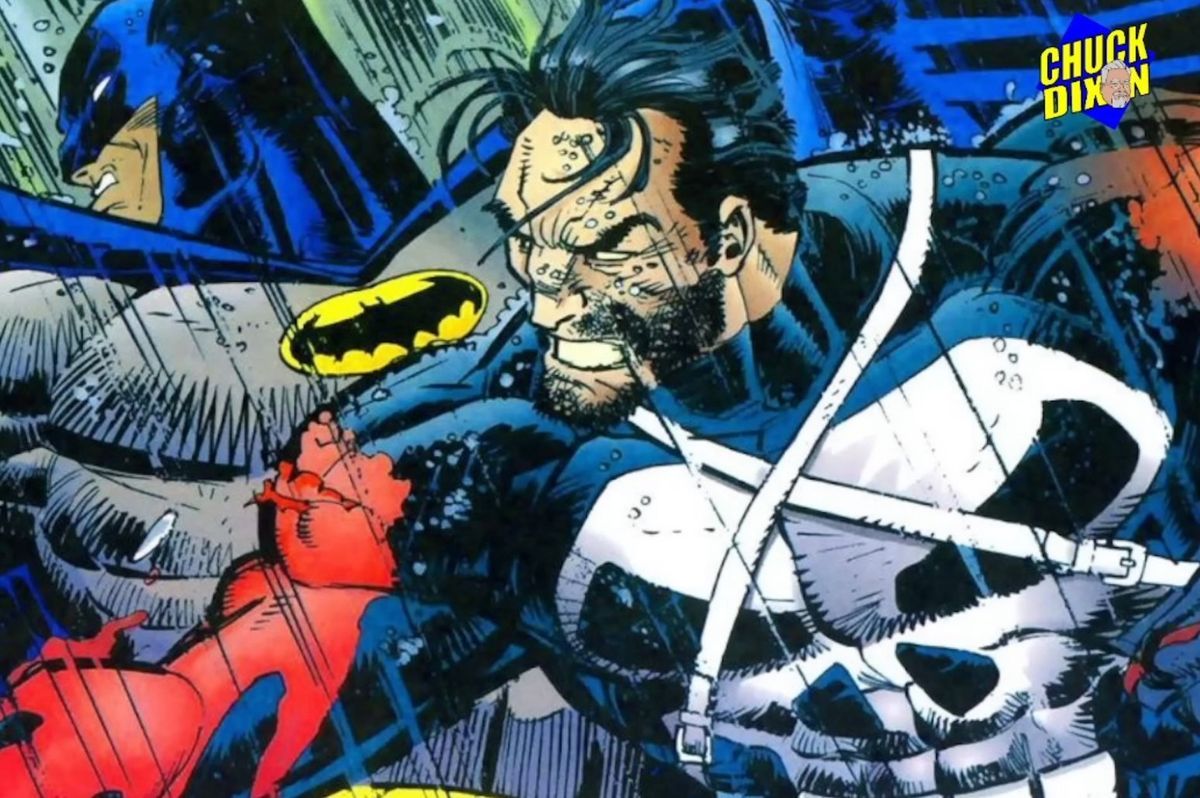
Legendary comics writer Chuck Dixon recently revealed why Marvel and the woke gatekeepers in the industry's mainstream despise the Punisher and other characters like him: "they hate their fans."

Dixon has worked on hundreds of comics, including Marvel's pre-woke "Punisher" titles and various "Batman" titles for DC Comics. He also recently collaborated with BlazeTV contributor Eric July on his Rippaverse Comics.

Afforded decades' worth of insights into the art and the industry, Dixon fields questions from fans and comics aficionados on his YouTube series, "Ask Chuck Dixon."

On an episode of the show last month, he read a letter from a fan that said, "Chuck, I have been a fan of the Punisher since I was a kid, I've always wanted to ask: Do they hate the Punisher because he doesn't fit into their vision? Or do they hate him because of the idea and the fans liking the idea that refutes most of their 'heroes don't kill' argument?," reported Bounding into Comics.

To the questioner's point, there has been a concerted campaign in recent years to snuff out the Punisher — or at the very least chase away undesirables among his fan base.

In a 2017 Gizmodo piece entitled "There's Never Going to Be a 'Right Time' for The Punisher TV Series," Charles Pulliam-Moore wrote, "[I]t’s impossible not to see how he’s also a celebration of the kind of gun culture that makes actual mass shootings possible," warning that to "make the Punisher the star of his own TV show is to valorize his character."

Newsweek's associate editor Jon Jackson wrote in 2021, "Marvel has a popularity problem with one of its B-list characters: the Punisher, aka Frank Castle, a troubled ex-Marine turned vigilante who metes out lethal justice to the corrupt and criminal ('The people I kill need killing'). Right now he's too popular with the wrong people."

Jackson stressed that the "wrong people" could be found "among the MAGA hats, Don't Tread on Me Flags and Trump 2024 banners."

Jon Bernthal, the actor who played the character on Netflix's "The Punisher," canceled in 2019, suggested that the rightists amongst the character's following "are misguided, lost, and afraid. They have nothing to do with what Frank stands for or is about."

Gerry Conway, one of the character's co-creators, told Newsweek, "I could definitely see it might be time for him to step back for a bit. Not because there's anything necessarily wrong with the character, but given where we are right now in our society."

Conway, a leftist, previously attempted to take the Punisher skull symbol "back from the right," claiming "[The skull] should be a symbol for Black Lives Matter," reported the Guardian.

Conway was reportedly apoplectic that police should use the symbol, claiming their usage had left the character "completely defiled."

Marvel, similarly antipathetic to the Punisher's un-woke fans, has finally put the nail in his coffin.

In what might be the final Punisher series, woke Marvel writers transmogrified the titular character into something pathetic and intentionally unlikable, ditching the skull for a devilish Asian insignia and his guns for swords.

Screen Rant reported that in the finale, he ends up in the custody of the Avengers. After long punishing the criminal underworld following his wife's murder, Frank Castle ends up in a confrontation with his undead wife who chastises him for killing "in her name." Afterward, an all-but-gelded Punisher essentially kills himself.

Responding last month to the question about why the Punisher is so hated, Dixon dismissed the suggestion that Frank Castle was exceptional in that he kills bad guys, noting that "we see other comic book heroes, superheroes who kill. It's hard to believe Captain America didn't kill a lot of Nazis. ... To single out Frank Castle because he kills people — you know, if that’s their argument it’s an inaccurate one."

The real reason Marvel and leftist critics don't like the Punisher, suggested Dixon, is who his fans are.

Dixon suggested that the anger over the Punisher's popularity with the "wrong people" parallels blue-collar Americans' embrace of the character Archie Bunker in the 1970s sitcom "All in the Family" — a character the writer Norman Lear intended for audiences to hate and whose ultimate fans he meant to lampoon.

Similarly, when Marvel went woke, Dixon said those running the show were "just embarrassed about everything about the Punisher, particularly his audience. They didn't like the Punisher and they didn't like the people who liked the Punisher."

"Most comic book characters are either brainiacs, mutants, scientists, you know, whatever. There's very few superheroes that have blue-collar origins," continued Dixon. "Frank Castle and Guy Gardner are blue-collar superheroes. They are average guys driven to extremes. And a lot of readers respond to that because a lot of readers aren’t brainiacs, mutants, or scientists. They’re driving a truck, or stocking shelves, or, you know, working for a paycheck."

"People respond to these characters because ... they have blue-collar origins. When they’re written correctly, they say stuff and do stuff that other comic book characters won't," said Dixon.

Dixon said the final straw for the Marvel bigwigs and liberal critics was when American police and soldiers began wearing and/or displaying the Punisher symbol.

"'Cops are wearing the symbol, ewww! Our soldiers are wearing the symbol, boo!'" Dixon said, mocking the thinking at Marvel. "'We're going to take the Punisher, and we're going to mangle him and we're going to destroy him. We're going to do what no other entertainment company ever has done. We are going to ... tear it to the ground.' And that's what they did."

"Any other lofty reason they give is B.S.," emphasized Dixon. "The main reason they wanted to get rid of the Punisher is because they hated the Punisher and they hate you for liking it. It's that simple."

Ethan Van Sciver, an American comics artist who worked as an artist on numerous DC Comics and Marvel titles, appears to have reached a similar conclusion.

Sciver noted on Twitter, "It's not so much that Marvel Comics hates The Punisher. They were happy to cash in on merchandise, media, apparel and comics featuring him for decades. They hate YOU. And they hate that you love The Punisher. So this is for you, Conservative comics fan, with a big Go F*** Yourself from Disney."

Ask Chuck Dixon #152 Why Marvel hates the Punisher and hates you. And life in the Rippaverse!youtu.be

Like Blaze News? Bypass the censors, sign up for our newsletters, and get stories like this direct to your inbox. Sign up here!

BlazeTV contributor Eric July's Rippaverse Comics puts woke Marvel and DC to shame with jaw-dropping sales


Just one day after the official launch of BlazeTV contributor Eric July's independent comic book company Rippaverse Comics, pre-order sales for its debut series, "Isom #1," have blown past expectations and put the comic book industry on notice.

With an initial pre-order campaign target of $100,000 in sales, total sales revenue for July's first comic series has already approached $1 million in just one day — and there are still 74 days left before the campaign ends.

It's an astounding success that July believes shows how many comic book fans are ready to support a "parallel economy" that will challenge the industry's "old guard."

\u201cWhat a way to start the day! THANK YOU!!! #rippaverse #isom #WeWillWin #comicbooks\u201d
— Rippaverse Comics (@Rippaverse Comics) 1657630972

In recent years, legacy publishers like Marvel Comics and DC Comics have taken a leftward turn that has alienated some readers. Controversies over sudden and dramatic changes to long-standing characters — like making Batman's sidekick Robin bisexual — have divided the fan base, with some embracing the push for diversity and others lamenting that good storytelling has been undermined by "woke" industry activists.

July, a content creator, musician, and lifelong comic book fan, is among those who do not like the direction the industry has taken.

"Between changing all of these characters and you have this ridiculous kind of push for social justice, insulting the audience and all of that — and I was like, you know what? I am going to be a solution to the problem," July told TheBlaze in an interview.

Supported by hundreds of thousands of followers on social media, July told TheBlaze he founded Rippaverse Comics to tell good stories. His company is guided by a code of ethics that prioritizes respect for the customer, a streamlined canon and continuity to avoid the excesses of other convoluted comics stories, and a comprehensive timeline that will "keep reboots to a minimum" and allow readers to easily grasp and enjoy the stories from the Rippaverse.

But at the heart of this endeavor is July's desire to tell stories about heroes who can serve as role models, who understand the difference between right and wrong, and who will entertain and inspire readers by being relatable.

"The Flash was a character that was my first favorite comic book character. Why? Because he ran fast and I was a fast kid. You know, you do the Field Day thing, and people that know me, I went all the way through the collegiate level as a track and field athlete. And that's why it resonated with me," July said. "But as I got older, it was like Batman and some of the experiences that he had, basically growing up without a father being present and all those sorts of things I resonated with as I got older."

"We're not writing down to the audience," he added. "I'm not in the business of lecturing people and telling people exactly how to live their lives. But there are universal truths that I will acknowledge and I think that's what's sort of missing, because people have, unfortunately, definitely in comic books these days, put other stuff at the forefront, and telling a good story is secondary. Acknowledging those universal truths are secondary, if they are ever acknowledged at all."

Rippaverse Comics' first series, "Isom," tells the story of Avery Silman, a common Texas rancher who gains superpowers and becomes the superhero Isom. After walking away from the superhero life, Silman is called back into action to confront an old friend who has since become one of the most feared men in his city.

The story was written by July, illustrations done by artist Cliff Richards, and the coloring done by Gabe Eltaeb, a former DC Comics colorist who quit last year after expressing disgust with out-of-character changes to Superman's character.

\u201cWelcome to the Rippaverse\u201d
— Rippaverse Comics (@Rippaverse Comics) 1657292401

Pre-orders for the series launched on Monday, July 11, and by Tuesday afternoon, total revenue for Isom #1 was more than $984,000 and growing, with over 10,000 total purchasers. July said that initial plans to distribute about 12,000 graphic novels have changed after massive demand "destroyed expectations." He estimates Rippaverse will sell close to 100,000 graphic novels now.

July said that customers demoralized by the "old guard's" left-wing politics are flocking to Rippaverse Comics, whose innovative sales model was responsible for the series' unexpected success.

"These people that are demoralized want to believe that the old guard that stands right now, because they stand right now, they have to always be there. They've existed for years ... and I think that they underestimate the power that we have, even just with the internet," July said.

He explained that the internet and social media give Rippaverse Comics "a direct line of sight" to connect customers with "a project that people want to buy."

\u201cWe do not need the Old Guard. That\u2019s what this pre-order campaign highlights. \n\nTheir model is archaic. We had No inorganic mega-corporate push or placement. All the promo has been from our amazing corner of the internet. \n\nParallel economy.\u201d
— Eric July (@Eric July) 1657598823

Rippaverse Comics will also be a place where content creators, artists, writers, and anyone else in the comic book industry who feels alienated by big corporations can come and tell their stories without fear of censorship or judgement, July said.

"There are a lot creative people that are in our space, on our side of the line of thinking, in support of the value of liberty. No matter whether you are conservative, libertarian, or whatever, and they're just undiscovered. They're in hiding because they have to work for the old guard," he said.

"What feels good is that I get to reach out to them first or that's the pool that we have to choose from. Before I start doing external stuff, I get to point to our community. I get to point to people that are in our space and say, 'Hey,' or put that call out at — 'Hey, we're looking for this. We're looking for that' — and give these guys well-paying jobs to be able to create or be part of something that is fresh, that is new, but also that they know doesn't hate them."

Pre-orders for Isom #1 are available now from Rippaverse Comics' website. Parents should be advised the series is appropriate for teens or older readers.

Sam Raimi’s ‘Doctor Strange 2’ Is An Anti-Woke Masterstroke

A masterpiece in superhero storytelling, 'Doctor Strange in the Multiverse of Madness' is the best MCU film since 'Endgame.'
‘Thin Blue Line’ Writer Mike Baron Talks Comics, Police, And Woke Politics

Marvel and DC Comics legend Mike Baron discusses his new pro-cop comic and the sad state of comics today.

Why Gay Superman Needs Rescuing From The Leftists

Another day, another comics character is gay. Yet conservatives don’t seem to care. If a character as American and conservative as Superman isn't worth defending, then who is?

Making Batman’s Robin Bisexual Is A Weak Attempt At Relevance As U.S. Comics Fade

Western comics are a dying industry with one single trick left in its bag – to turn an established popular character into a shallow and more diverse, woke version of itself.

Chris Pratt Honors Fallen Soldiers Who Fought For Those Who ‘B*tch And Moan About America’

"Criticism is a right and necessity in amending the flawed systems of man. But never forget your right to free expression is paid for in blood."

The Marvel Multiverse Makes Its Debut On ‘WandaVision’

On the latest episode of 'WandaVision,' our favorite superhero sitcom couple grapples with rapidly accelerating childrearing trials.