If 1 In 5 Fairfax Residents Is Illegal, We Need Mass Deportations In Virginia Immediately
 Contra enthusiasts for lawlessness, a great way to improve American neighborhoods would be to arrest, detain, and deport all illegal aliens.
Trump needs to denounce the Dignity Act
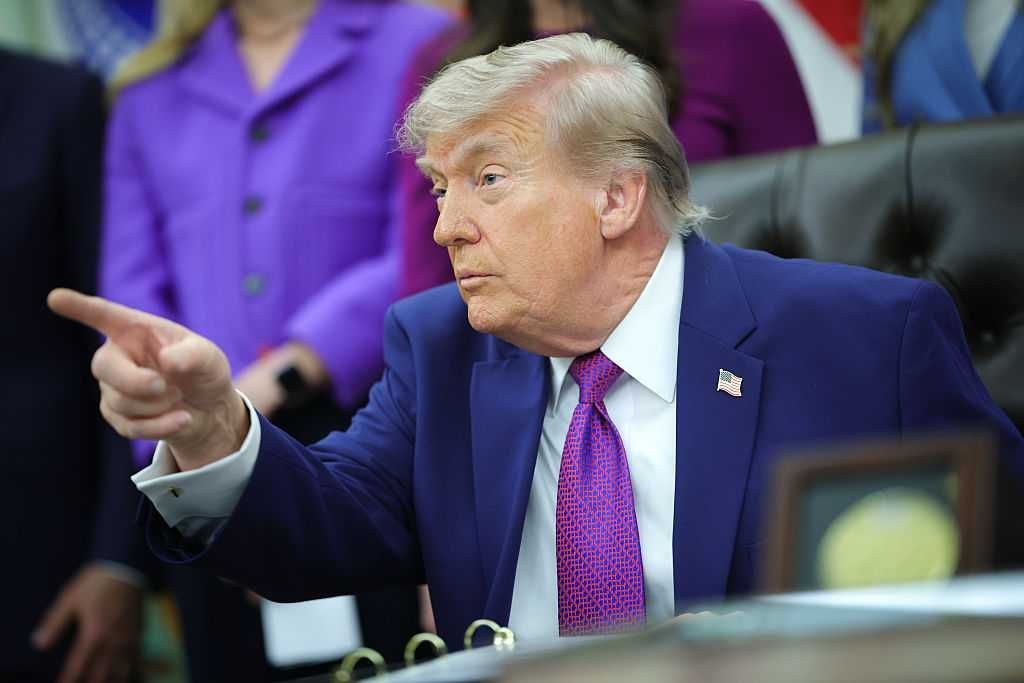
Florida Rep. Maria Salazar (R) and her some 20 Republican co-sponsors of a massive amnesty bill have put President Trump in a terribly awkward position. In truth, it is more than just awkwardness; it is political malpractice.
The fanfare around the amnesty bill, the Dignity Act, has begun a process of division and distraction going into a crucial midterm cycle.
Merely floating the idea of amnesty results in more illegal immigration to the US border.
The Dignity Act is dominating conversations surrounding the trajectory of immigration enforcement under the Trump administration and forcing the question of whether the administration supports it.
Last week, CBS News peppered border czar Tom Homan with loaded questions about the supposed need for providing legal status for illegal aliens in the United States. After trying to put the question away, Homan responded, “There’s discussions going on. I’m involved with some and not others, but I’m not going to get ahead of the president on this.”
Discussions of amnesty in the Trump administration? The internet exploded, and it’s largely still exploding. Given the low level of deportations conducted to date, some 340,000 in FY2025 according to recent estimates, many political observers are starting to question whether the mass deportation program will be fulfilled at the scale advertised.
This low number, in addition to the lack of explicit opposition to the Dignity Act from the Trump administration, has led many people to reasonably believe that amnesty discussions are on the table. Republicans pushing amnesty is nothing new, after all. Additionally, the co-sponsors of the Dignity Act largely are all endorsed for re-election by President Trump.
What we are witnessing appears to be strategic ambiguity. Salazar and her allies are hitting the media circuits claiming that somehow the Dignity Act is not amnesty. That claim has rightfully been ridiculed, but they remain insistent that a square peg is a circle.
RELATED: The Dignidad Act is a complete betrayal of Republican voters

Meanwhile, the White House has carefully avoided criticizing the bill by name, instead choosing to rule out amnesty of any type. Take another Homan quote, for example: "I said from day one, I’ll say it again ... President Trump said amnesty is off the table. I support that. I don’t think amnesty should be on the table.”
Having known Homan for years, I know that he genuinely opposes amnesty. But in this environment, supporters of the president’s promised immigration agenda need to hear that the White House considers the Dignity Act to be amnesty. Without that explicit rejection, the ambiguity will be perceived as tolerance.
Of course, it is not the White House’s job to denounce every last bill that pops up in Congress. But the unfortunate truth is that the Dignity Act is out there and has captured enough attention that it is a subject of an intense debate that, if left untended to, will only dampen midterm turnout.
That’s one reason why what Salazar and her ilk have done is so damaging. Shilling for amnesty will be taken seriously unless explicitly denounced, putting the White House in a position it should not be in.
Salazar’s damage gets worse. Take for example what Homan said during his CBS interview that did not receive any meaningful attention: “I would love Congress to do some things. My concern right now is that a lot of the successes we’ve had, unprecedented success, is based on executive orders, which can certainly be turned around by the next president.”
What Homan was referring to are border security laws to prevent a future Democrat administration from doing the exact same thing that Biden did and demanding amnesty in exchange for turning off another invasion.
How do I know? Well, I worked with Homan to help put together H.R. 2, otherwise known as the Secure the Border Act of 2023, during the Biden years. That bill was purely defensive in nature. It closed loopholes that the Biden administration weaponized to let 10 million plus cross the border.
RELATED: Funding is useless if Democrat judges can still hold ICE hostage

While it is true that President Trump didn’t need new laws to secure the border, it is also true that President Newsom, Ocasio-Cortez, or Comey won’t need new laws to open it again. We could find ourselves in the exact same negotiating posture as before: trade border security for amnesty, the very same trick that President Reagan fell for in historic fashion.
Any serious person who has worked in the immigration space knows that merely floating the idea of amnesty results in more illegal immigration to the U.S. border. During the Obama years, illegal aliens were flowing across with smiles on their faces and bragging about the “permisos” they had to cross due to Obama. As Biden readied to enter the White House, illegal aliens flooded the border for the same reason.
With news emerging that the U.S. border may not be as completely zipped tight as we hoped, Salazar’s advertising for amnesty can predictably result in more illegal aliens deciding to roll the dice and head north.
For all these reasons and more, the wise thing for both political and national sovereignty reasons is for the Trump administration to respond to Salazar’s push with an explicit and unmistakable denunciation.
A skeptical base needs to see strength on the immigration issue. Clearing up any confusion on this matter would go a long way toward restoring trust and keeping the president’s strongest base of supporters together going into the midterm elections.
Funding is useless if Democrat judges can still hold ICE hostage

The Trump administration refused to allow FISA Section 702 to lapse for even one day, calling it a vital tool for counterterrorism. However, when it comes to ensuring Immigration and Customs Enforcement has the necessary tools to remove alien criminals without enduring endless lawfare by sanctuary judges, there seems to be no such reservation.
Simply throwing more money at ICE in the budget reconciliation bill without changing policy will not alter the current landscape of failed deportation promises.
Trump has won numerous cases from the Supreme Court on issues pertaining to due process, detention, and bond hearings, yet the lower courts continue to defy those rulings.
On the same day House Republicans, at the behest of the White House, rushed passage of the FISA reauthorization, they passed the Senate budget reconciliation bill, which offers ICE and U.S. Customs and Border Protection $75 billion in mandatory funding for the remainder of the presidency.
It is understandable why Trump would want to use his last party-line bill to front-load ICE funding in the face of Democrat opposition, but what is the purpose of funding ICE if it can’t even deport violent illegal aliens without lawfare? Why is the White House opposing efforts from House conservatives to expand reconciliation?
Sadly, the Trump administration has signaled that it is largely done with mass deportations and seeks to focus on what it refers to as "the worst of the worst." So we will certainly remove all of the criminal aliens before his term expires, right?
Wrong!
Bryan Rafael Gomez, a Dominican illegal alien who was released into the country in 2022, was arrested by ICE Boston on April 4, following a warrant for murder charges in his home country. Yet Judge Melissa DuBose, a radical Biden appointee, ordered him released and claimed his detention was unlawful.
Cases like this one are occurring on a daily basis, and despite the unambiguous language of statute and endless Supreme Court victories stating that ICE is permitted or even required to apprehend, detain, and remove these people, radical lower court judges just come back with slightly different plaintiffs and rule the same way.
As of February, illegal aliens have filed more than 18,000 habeas petitions during Trump’s second term challenging their detention in federal courts. It’s more than the number of such challenges filed over the last three administrations put together.
What these filings are designed to do is remove cases from immigration courts and bring them into Article III courts where American rights are often erroneously applied to people litigating their way into status after final removal orders.
RELATED: The founders gave us the remedy for rogue state judges: Impeach

The entire purpose of a habeas petition was to give people a safety valve if they have a prima facie claim of being a citizen or a case of mistaken identity. But illegal aliens are now using habeas to block every removal, no matter how clear it is that the person is here illegally and even when they have a criminal record.
Earlier this year, U.S. District Judge John deGravelles granted habeas petitions and ordered the immediate release of four illegal aliens from ICE custody at Louisiana State Penitentiary, despite final removal orders. Who were the cast of characters?
- Ibrahim Ali Mohamed (Ethiopia): Convicted of sexual exploitation of a minor (child sex crime/pedophilia). Entered/released into the U.S. under Biden policies; removed order issued September 2024.
- Luis Gaston-Sanchez (Cuba): Convictions for homicide, assault, resisting an officer, concealing stolen property, and two counts of robbery. Removed order from 2001.
- Ricardo Blanco Chomat (Cuba): Convictions for homicide, kidnapping, aggravated assault with a firearm, burglary, robbery, larceny, and selling cocaine. Removed order from 2002.
- Francisco Rodriguez-Romero: Convictions for homicide and a weapons offense. Removed order from 1995.
Three months later, these individuals, with convictions of rape, murder, assault, and robbery, remain in the country indefinitely.
In March, U.S. District Judge Susan Richard Nelson ordered the release of Carlos Antonio Flores-Miguel, a confirmed MS-13 gang member, from ICE custody. He had multiple illegal re-entries/deportations and was initially released into the U.S. under Biden policies in 2022.
ICE arrested him in Minneapolis on January 20, after he violently resisted (punching/kicking officers and grabbing an ICE officer’s gun holster).
Trump cannot spend the remainder of his term counting the number of the worst of the worst being deported on one hand, and even having many of those deportations hampered.
The time has come to use budget reconciliation to defund any federal court case granting a habeas petition to illegal aliens unless there is a claim the individual is a citizen or of mistaken identity. Why has Trump never supported Texas Republican Rep. Chip Roy’s effort to include this in reconciliation?
RELATED: How Republicans have failed to defund sanctuary cities for a generation
To the extent this provision was ignored in last year’s bill, it is indefensible not to include it in this year’s bill now that we see deportations being ground to a halt.
Even if Trump or congressional Republicans are squeamish about applying this to every case, at a minimum they must block review of cases involving criminal aliens — at least for lower courts.
The notion that we can rely on the Supreme Court is absurd. Trump has won numerous cases from the Supreme Court on issues pertaining to due process, detention, and bond hearings, yet the lower courts continue to defy those rulings.
Years after the Trump v. Hawaii ruling made it clear the president can suspend immigration and visas from various countries, a new lower court judge issued an injunction against it. The same thing is happening with judges granting Temporary Protected Status despite Supreme Court rulings to the contrary.
So far, in neither Trump term has there been an effort from the White House to use reconciliation or any other must-pass bill to defund sanctuary cities, change any immigration laws, or jurisdiction-strip the courts.
These are all fiscal provisions that should be included in reconciliation. What is the point in throwing funding at ICE if it is legally hampered and the White House continues to abide by lawless lower court orders?
Then again, as we saw with FISA reauthorization, Trump seems to fight for what he wants. Perhaps if conservatives reallocated the defunded monies from sanctuary cities and judges to an ICE ballroom, it would get the attention of the man who promised 10 years ago to end illegal immigration.
How Trump can deport 1 million illegal aliens in 2026
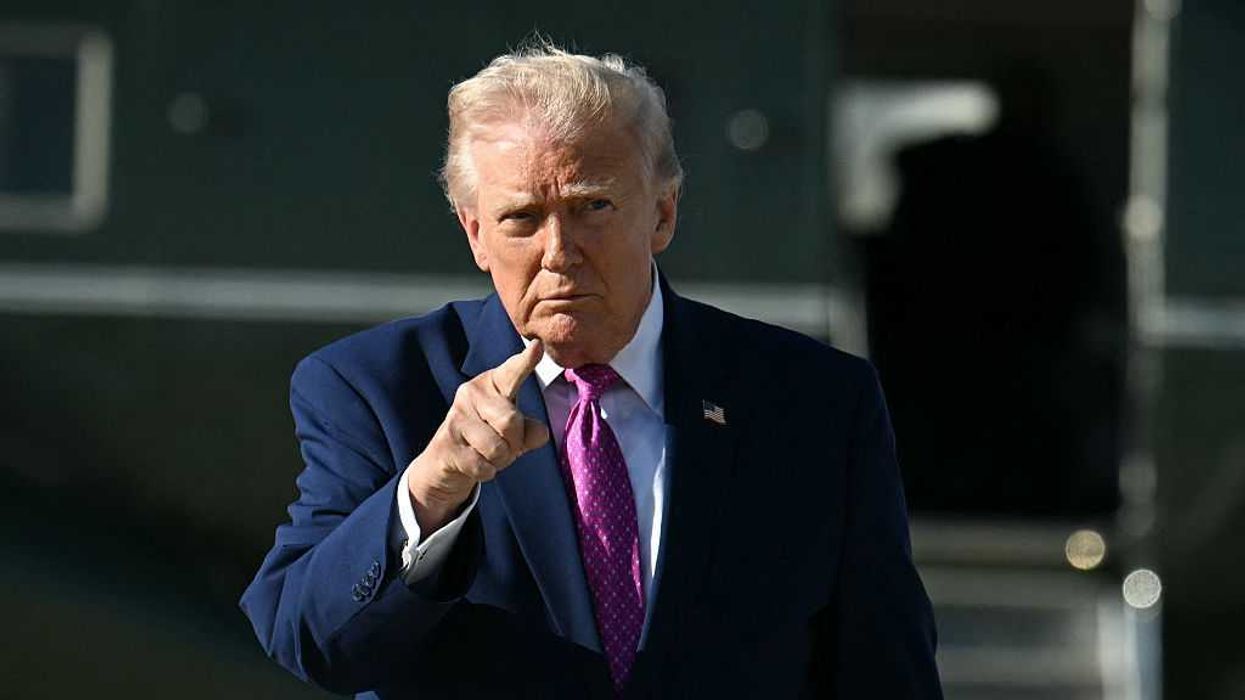
When Donald Trump accepted the GOP’s nomination for president in 2024, he stated that “the Republican platform promises to launch the largest deportation operation in the history of our country.” It was music to the ears of tens of millions of Americans who lived through the Biden border invasion.
Finally, a political leader had the gumption to say, “Enough is enough,” and proclaim that it is time for millions of illegal aliens to go home.
Unfortunately, the second Trump administration has not lived up to the promises made in that July 2024 speech in Milwaukee. It has instead prioritized removing the worst criminal illegal aliens, prioritizing quality over quantity. But this is a misguided attempt to assuage the concerns of a radical — but sizeable — number of Americans who do not believe in borders or in sovereignty.
Carrying out a true mass deportation operation requires immense resources to screen millions of cases, locate and apprehend individuals, detain them, and transport aliens out of the country.
The American public has witnessed widespread obstruction of immigration enforcement, record violence targeting ICE agents, and significant resistance by state and local governments in Democrat strongholds. Democratic Party elected officials and their left-wing base are very clear that the tolerable number of deportations is zero.
But what about the tens of millions of Americans who do support President Trump’s promised deportation agenda?
The administration’s prioritization of the “worst first” has unintentionally created a de facto enforcement amnesty for aliens unlawfully present in the United States who have not committed a subsequent crime. DHS data indicates that in 2025, ICE deported fewer than 350,000 illegal aliens. This is not the mass deportation agenda the American people voted for.
President Trump deserves credit for securing the southwest border and all but stopping the flow of illegal aliens into the United States. But much more needs to be done on interior enforcement to effectuate an actual mass deportation agenda.
Enter the Mass Deportation Coalition. This coalition was organized in February 2026 in response to political, operational, legal, and physical attacks on deportation operations. Our purpose is to support President Trump’s signature campaign promise to carry out the largest deportation operation in American history.
The Mass Deportation Coalition is composed of immigration law and policy experts, former senior and rank-and-file law enforcement officials, advocates, and supporters of immigration enforcement. We are growing and regularly adding new members to the coalition.
Last week, the coalition published its Playbook, a comprehensive menu of policy, operational, and logistical options that would allow the Trump administration to carry out a minimum of 1 million deportations in 2026. The coalition has five key principles.
1) Moving from the phase I “worst of the worst” interior enforcement prioritization to phase II mass deportations, with a focus on populations that are easier to remove, such as deportable aliens with final orders of removal and visa overstays.
2) Significantly ramping up worksite enforcement.
3) Utilizing a whole-of-government approach (including tax and banking tools) to leverage existing authorities in multiple federal agencies to increase the number of removals and self-deportations.
4) Providing the American public with complete data transparency on immigration numbers.
5) Coming to a shared understanding of what counts as a deportation.
The playbook makes policy and operational suggestions based on the assumption that Congress will not change U.S. immigration laws. For decades, Congress has been unable — or unwilling — to pass meaningful legislation to address the immigration crisis in America, and it would be dishonest to assume it could do so in today’s political climate.
RELATED: Does the DHS meme strategy actually work?
The coalition’s playbook is drawn from combined decades of experience in federal law enforcement, military logistics, government contracting, and large-scale transportation operations.
Carrying out a true mass deportation operation requires immense resources to screen millions of cases, locate and apprehend individuals, detain them, and transport aliens out of the country within the time frame this campaign demands.
The centerpiece for accomplishing this goal is an aggressive worksite enforcement campaign. President Trump frequently cites the successful interior enforcement operations of the Eisenhower administration as a model for his mass deportation agenda.
That administration aggressively targeted worksites that employed illegal aliens, ultimately removing a sizeable percentage of illegal aliens then living in the United States.
Conservative estimates suggest there are between 10.8 and 11.1 million illegal aliens currently working in the United States. For decades, ICE worksite arrests of illegal aliens have been in the hundreds or low thousands of individuals annually.
Historically, worksite operations have produced arrests that were not followed by timely deportation, undermining both deterrence and public confidence.
Ramping up worksite enforcement would accomplish multiple goals simultaneously. First, it would curtail the main incentive of illegal immigration by foreclosing economic opportunity for illegal aliens.
Second, robust worksite enforcement accompanied by an aggressive employer sanctions program would send a message to employers who employ illegal labor that there are significant consequences for violating the law.
Finally, since it is well known which industries employ illegal labor, worksite enforcement is an operationally low-risk use of resources, likely leading to a high number of interior removals.
Other playbook recommendations include significantly expanding immigration detention, reforming and streamlining asylum cases, de-banking illegal aliens, modernizing and standardizing data collection, and aggressively prosecuting lawbreaking and fighting back against left-wing lawfare.
RELATED: The Dignidad Act is a complete betrayal of Republican voters

Mass deportations and major elements of the playbook are immensely popular with the American people. Members of the coalition commissioned a poll of likely voters and found widespread support (66%) for deporting migrants who enter the country illegally. The poll also found overwhelming support for the idea that the United States has an obligation to enforce the immigration laws enacted by Congress.
A similar number of Americans support aggressive immigration operational tools, including enhanced worksite enforcement, penalizing employers who hire illegal labor, the widespread use of E-Verify, and regular audits of businesses that knowingly employ illegal labor.
As we approach our country’s 250th birthday, the central question for American citizens is whether they want to preserve America for Americans, with fidelity to the Constitution and the rule of law.
Decades of mass illegal migration have upended labor markets, caused cultural and civil fragmentation, overwhelmed local schools and hospitals, and brought crime and disorder to American communities.
President Trump promised mass deportations to the American people. The Mass Deportation Coalition Playbook provides the road map for the his administration to fulfill its core campaign promise.
Editor’s note: This article was originally published at the American Mind.
Here Are The 8 Most Insane Things In The ‘DIGNIDAD’ Amnesty Bill
 I read the bill. And frankly, it might be worse than just amnesty.
Does the DHS meme strategy actually work?

Growing up, Republicans treated deportations like a topic that required careful handling. Under presidents such as George W. Bush, the language was softened, the messaging was restrained, and the emphasis was placed on policy rather than persuasion. The assumption was that if the argument was sound, the public would eventually come around to it.
That assumption turned out to be wrong.
The goal is not to explain policy in a traditional sense, but to normalize it through repetition, familiarity, and shareability.
Consider the sympathetic yet stern immigration pivots Republicans such as former Texas Governor Rick Perry had during the 2012 GOP primary. Back then, the media and liberal pundits painted Perry as hardcore and extremely right-wing. Compared to Republicans in office now, however, he would be considered passive and extremely soft on the issue.
The assumption that the independent and flip-voter public would buy in to the GOP stance was not because the policy case for enforcement lacked merit, but because the conversation was happening somewhere else entirely.
Opinions were not being decided based on press briefings or white papers. They were being shaped on TV screens, social media feeds, comment sections, and viral content ecosystems where tone and format mattered as much as the substance.
Jeremy Knauff, founder of the PR firm Spartan Media, puts it this way:
Public relations plays a far larger role in policy than most people realize. It’s not enough just to educate the public any more — today, lawmakers need to engage in a more direct effort to influence public perception. The government has always done this to some degree, but the left has been significantly more active and effective in this regard. But now we’re starting to see a measurable shift from the right.
What we are seeing now from the Department of Homeland Security’s social media team represents a break from that old model. Simply put, they’re playing to win.
The kids want memes
The DHS, along with the White House and ICE, has been using memes, viral audio, and internet-native content to promote deportation policy and immigration enforcement. This includes Christmas-themed deportation memes, TikTok-style videos set to trending music, and stylized content designed to travel well beyond traditional government channels.
Keep in mind that Millennials (roughly ages 27-42) spend an average of nearly three hours per day, or approximately 17 to 20+ hours per week, on social media.
These aren’t your father’s government employees figuring these things out on the fly, looking sloppy and rushed. The content they’re putting out isn’t just quality; it is the type of content you would see on the feeds of the most viral social media content creators. They’re in the major leagues of viral political content.
One viral video posted by the DHS, captioned 'Gotta Catch ‘Em All,' showed ICE agents blowing in doors and handcuffing and leading away undocumented immigrants to the theme song from the "Pokemon" cartoon. It certainly tugged on Millennial heartstrings, because that clip alone has been viewed 75.5 million times.
The backlash has been as immediate and intense as you would expect. Critics say this approach is dehumanizing, that it trivializes serious issues, and that it reflects a level of insensitivity that should not be associated with government communications.
CNN has gone so far as to claim that "underlining" DHS recruitment posters "are undertones that historians and experts in political communication say are alarmingly nationalist — and fraught with appeals to a specifically White [sic] and Christian national identity.”
Supporters see it as effective and long overdue after years of what they view as overly cautious messaging from the right.
RELATED: The case against ‘principled conservatism’

Focusing only on whether the memes are appropriate misses the larger point. What is happening here is not primarily about humor or tone; it is about control over how the issue is framed and where the framing takes place.
Knauff says, “The people who are criticizing this approach are only doing so because they can see that it’s effective. And their complaints are disingenuous because it’s the exact same thing they’ve been doing for decades.”
The cool kids in control
For the better part of the last decade, conservatives did not lose the immigration argument on substance. They lost it on distribution. They had policies and data on their side, but they failed to communicate those ideas in the environments where younger voters and low-information audiences were actually forming opinions.
Put plainly, they were boring and unwilling to defend their position with the same passion as liberals.
The polling makes the gap impossible to ignore. Multiple 2026 surveys show that younger Americans are far less supportive of Trump’s immigration policies than older voters, especially Boomers who largely consume cable news.
A February PBS/NPR/Marist poll found that just 18% of voters under 30 approved of the administration's approach to deportations, while 69% disapproved. A CBS/YouGov survey in mid-January similarly found that 60% of respondents under 30 believed Trump was doing “too much” to deport illegal aliens.
This issue isn’t cut and dry. Trump was delivered a mandate in 2024, but now that optics are changing, the question is whether to keep the foot on the pedal or not.
The picture is clear though: Younger voters are not instinctively aligned with the administration’s immigration agenda, even if they support individual enforcement measures in isolation. So what to do? Keep the memes coming.
The current strategy appears to be an attempt to close that gap by meeting the audience where it already is. Instead of trying to pull younger users into formal policy discussions, the DHS is embedding its messaging inside the formats the youth consume on a daily basis.
The goal is not to explain policy in a traditional sense, but to normalize it through repetition, familiarity, and shareability.
Propaganda? Only call it that if it's boring.
RELATED: Why I support ICE as the son of an immigrant

It’s all about virality
What we’re seeing represents a significant shift in how the government communicates. In the past, agencies relied on press releases, official statements, and media intermediaries to convey their message carefully and cautiously. Now, the message is being delivered directly to the public in the same formats used by influencers, creators, and online communities.
The distinction between political communication and internet culture is becoming increasingly blurred.
There are clear risks to this approach. When complex policies are reduced to highly shareable clips, the conversation can quickly become polarized.
At the same time, the old model was not getting the job done. Staffers with communications degrees did not win over younger audiences, did not reshape cultural perception, and did not prevent immigration from becoming one of the most emotionally charged issues in our society today.
Backtracking to a more restrained style of messaging would not solve anything. It would only surrender the digital battlefield once again.
What makes this moment notable is not just the content itself, but what it signals about the future of political communication. The DHS is operating less like a government agency and more like a savvy political campaign, prioritizing reach, engagement, and narrative control over neutrality.
Weapons of meme destruction
The DHS’ use of memes is an indication that the rules of engagement have shifted. Political power is no longer exercised solely through policy decisions or legislative victories, but through the ability to shape perception at scale.
Republicans spent years trying to win arguments in spaces that fewer and fewer people were paying attention to. Now, they appear to be adapting to the environment as it actually exists. Whether that approach proves sustainable or backfires politically remains to be seen.
Knauff explains it like this:
I believe this strategy will not only continue to be effective, but also become more effective as time goes on. Right now, it’s novel and exciting, but as the new car smell wears off, the impact will remain — if we have the discipline to stick with the mission. Public relations requires time to create the desired outcome. It’s not something you can rush. The left had decades to slowly leverage this strategy, so the right needs to be just as patient in their execution.
If the GOP maintains its majority in Congress, Republicans might joke about how the memes saved them. If they lose, expect the old guard to say the memes were too mean.
What is clear is that the next phase of political communications will not be conveyed primarily through speeches, press conferences, or media panels. It will be fought through content and the side that understands that reality will have a decisive advantage.
May the side with the best memes win.
Senate Republicans tried to cave on Trump's agenda
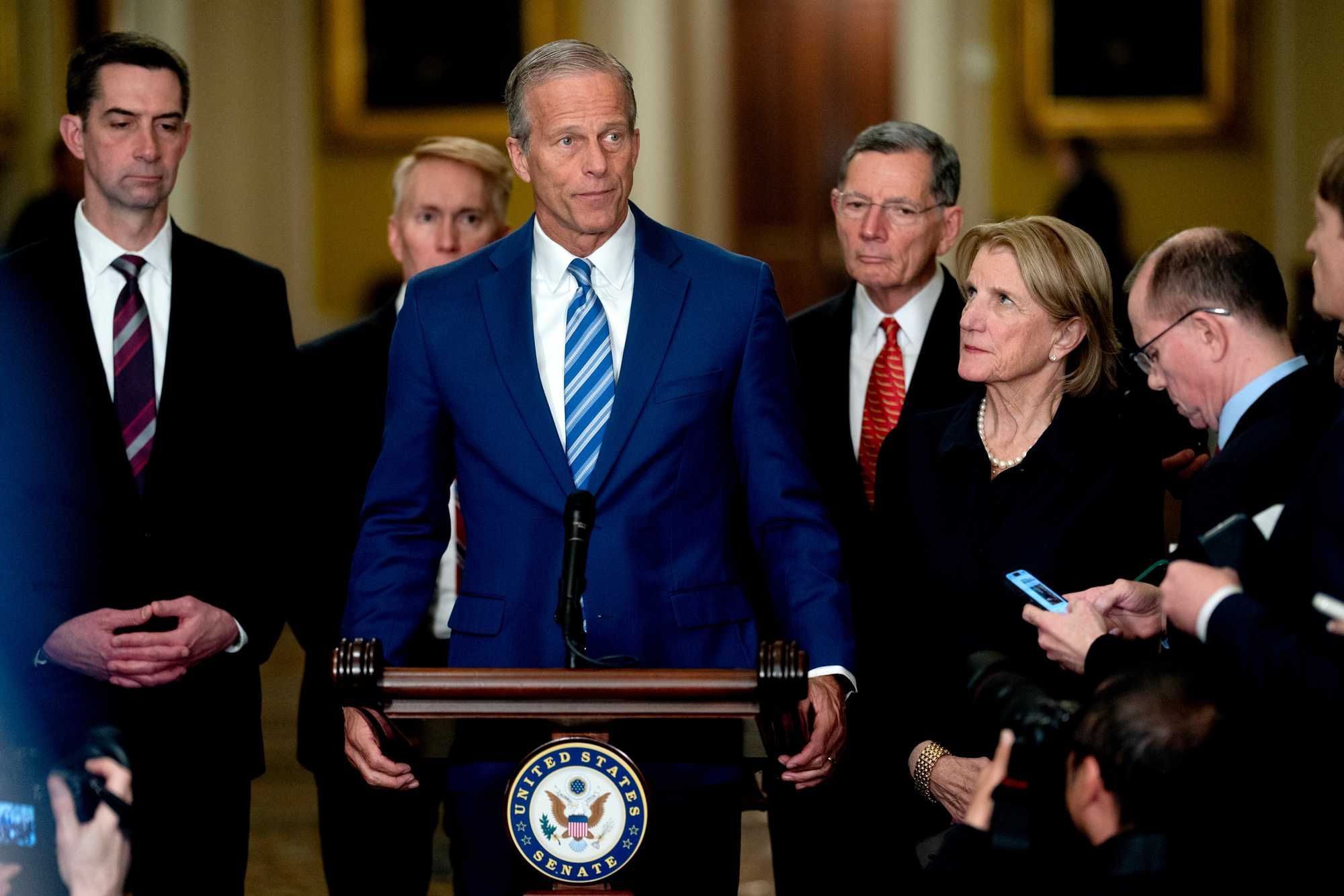
White House official James Blair telling House Republicans to stop talking about mass deportations was the noise. Senate Republicans cowing to Democrats and putting Immigration and Customs Enforcement funding in serious jeopardy was the signal. No one should be surprised that weak-kneed Republicans took their cue from the White House's wishy-washy stances on the topic.
Too many elected Republicans actually want the opposite of mass deportation, and the White House gave them the political space to do just that.
There is no massive corporate or mega-donor coalition rallying behind the cause of national sovereignty, but there most certainly is one bankrolling the cause of cheap labor.
What the Senate did in the dead of night last week was a grievous mask-dropping moment — equally objectionable in both its form and substance. Senators thought they had cover from the White House to cave to Democrat demands to split off ICE and Customs and Border Protection funding from the larger Department of Homeland Security funding bill.
Whether Republican Senators actually had that blessing from the White House, or whether they were simply reading the tea leaves from months of creeping separation from the mass deportation promise, remains unclear. Nevertheless, in the dead of the night, Republicans threw ICE and CBP under the bus by sending the House a funding bill covering all of DHS except those two agencies.
Senate Democrats immediately declared victory — as they should have — and Senate Republicans headed to the airport. Sen. Lindsey Graham (R-S.C.) would be spotted at Disney World shortly after.
What happened next is when things started getting good. The Trump base, for lack of a better term, freaked out on the internet. By the time House Republicans woke up, they realized they had a massive problem on their hands. The White House saw the writing on the wall as well, abandoned any implicit or explicit support for the Senate bill, and pulled the proverbial rug out from under Majority Leader John Thune (R-S.D.) and his colleagues.
Speaker Mike Johnson (R-La.) announced and secured opposition to the package and had the House return a 60-day continuing resolution to the Senate that restored funding levels across the entire Department — including ICE and CBP.
Now we wait. The Senate is on a two-week vacation and has given no indication it will return early to deal with the bill, or that it would even support the House version. The clock ticks, the agencies hang in limbo, and the people who engineered this mess have retreated to their beach houses and theme parks.
RELATED: The SAVE America Act won’t be enough to save the GOP from a midterm bloodbath

Trump voters who sent the president back to the White House based on his signature promise to "carry out the largest mass deportation in American history" can enjoy a temporary victory. The retreat on the cause had seemed to be in full swing. For a brief moment, the tide appears to have reversed, but a single funding skirmish won is by no means the end of the war.
How can a president who sailed back into the White House on the promise of mass deportations — a cause still supported by the majority of Americans — and armed with a legislative package investing more than $40 billion in that cause, now find himself in a situation where ICE funding is placed in jeopardy?
Mind you, mass deportations haven't even meaningfully begun, with only some 350,000 deportations occurring in 2025 against a backdrop of over 10 million illegal crossings during the Biden years. There are two main reasons for this gap between mandate and execution.
First, a great many elected Republicans are wildly out of step with their own voters. Elections aren't always about winning votes, they're often about winning donations to fund the grift and graft attendant to a system where arguably the most important thing in politics is the size of a war chest.
There is no massive corporate or mega-donor coalition rallying behind the cause of national sovereignty, but there most certainly is one bankrolling the cause of cheap labor. The sensibilities of many elite donors are offended by the very topic of enforcement. They are far more comfortable debating marginal tax rates or trading in lofty foreign policy abstractions than confronting the basic question of who gets to live in this country and on whose terms.
Second, the president, either by perception or by reality, has distanced himself from the campaign promise of mass deportation. That distance has issued a permission slip to those who want to buck the cause. It has given cover to the opportunists, the corporate-minded, and the quietly resistant.
President Trump could clear up that confusion in an instant if he so wished with a single unambiguous statement, a sustained public push, an explicit demand that Congress fall in line.
RELATED: The Democrats unconditionally surrendered the shutdown — the GOP might screw it up anyway
In the aftermath of the anti-ICE riots in Minneapolis, a senior elected Republican told me that Democrats were going to be unable to resist the temptation to reignite their "defund ICE" plank, just as they overstepped post-BLM with "defund the police." I smiled and nodded and resisted the urge to point out the obvious: that while that was correct, they would have more than a few Republicans along for the ride.
That is the uncomfortable reality that too many Trump supporters have been slow to fully reckon with. The opposition to this agenda does not live only on the left side of the aisle: it lives in Senate Republican conference rooms and in the calculated silences of members who have perfected the art of sounding like conservatives while voting like Democrats. The mask slipped last week, and it is worth keeping it off.
It is important to sustain the momentum and public expectations that this funding fight has dragged to the forefront of the national political conversation. Trump supporters saw the opposition drop its mask, and it had an (R) next to its name.
Many in Thune's caucus have long benefited from only privately opposing key aspects of President Trump's mandate, speaking in the right accent on the right issues just long enough to evade detection. That racket depends entirely on operating in the dark. Keeping the spotlight on is the path forward.
They do not have a viable political option in openly opposing mass deportation, and the moment the base makes that cost explicit, the calculus changes. Make it explicit.
Americans Shouldn’t Need The House To Save Mass Deportations From Weak Senate Republicans
 The larger concern is not whether ICE and CBP can be funded, but whether Democrats will be allowed to set the conditions.
 www.theblaze.com
 thefederalist.com
 thefederalist.com
 www.theblaze.com
 www.theblaze.com