My 6-point plan to make American customer service great again


Whenever I see or hear the phrase "customer service," I have to roll my eyes. Customer service? In the United States? No such thing.

There used to be. I remember it because I experienced it as a customer and I practiced it as a retail staffer.

The unspoken but obvious ethos is: 'The customer is always wrong, and also he is oppressing me, a poor proletariat worker.'

We can get it back, but that requires understanding how we lost it. It also requires laying out the unspoken assumptions that drive the current “the customer is always wrong” attitude.

McDonald’s, Best Buy, Home Depot — sub in your favorite — all of them operate on these unspoken assumptions, and that’s why the “service” at all these places is nonexistent at best and hostile too often.

Service with a stare

First, let’s describe the problem with two anecdotes.

1. I walked into Tractor Supply. I asked the 19-year-old girl slouching against the counter where the kerosene was kept. “If we had any it would be, like ... over on one of those aisles,” she said, waving her hand in a direction.

I said, “Are you able to check your system to find out where and if you have any in stock?”

She responded: “I can’t leave the register.”

That’s not what I asked. A second employee walked me to the aisle after (wait for it) logging into the register and checking the stock list. When I told him about the lazy response from his front-counter worker, he immediately defended her, with no apology: “Yeah, but she’s new.”

2. I went to a “casual dining” restaurant. It was the kind of local place that sells burgers for $19 along with local beer on tap. The waitress took our order, dropped the food on the table, and walked away. There was no silverware. No napkins. No salt and pepper. No plates for the shared dishes. It didn’t even occur to her.

When I asked, “May we have some silverware, please?” she stared at me with that blank look, turned around, got the silverware, and set it down. Yes, I’m saying she gave me the silent treatment; it’s common these days.

Communicating contempt

I’m going to stop at those two stories; they stand in for hundreds of similar transactions over the past 10 years or so. It doesn’t matter if it’s a chain restaurant or a corporate outlet store. Any time the staff are younger than about 40, this is what happens.

Several decades ago, I was a young staffer in my teens and 20s. I worked mall retail, then spent about a dozen years as a busboy, waiter, and barback. From my first job at 15 to my last retail job at 28, I would have been fired on the spot if I had behaved the way those employees did.

Why? Because it’s incompetent. It’s lazy. It’s not doing your job; it’s standing there getting paid while neglecting your work. And worst of all, it communicates contempt for the customer.

How did we get here?

I suspect we got here by the same means that brought us young adults who can’t do arithmetic, can’t write a topic sentence for a paragraph, and can’t sound out the word silhouette. That route can be called “lack of parenting” and “lack of teaching in public school.” Examining that is for a different article.

Whatever the reason, this is where we are today. It’s something we need to fix — and can fix, if we decide to.

Workers of the world ... be polite!

When I was in retail, there was a too-hard bias toward the idea that “the customer is always right.” Too often, staff were expected to tolerate abusive behavior from customers — name-calling, lying to get free food, and so on — while the manager handed them their order for free.

But over the past decade or so, the pendulum hasn’t merely swung back toward protecting workers from abuse. It has swung toward a deeper assumption: that the customer himself is the problem.

Now we’ve reversed it in the other direction. The unspoken but obvious ethos is: “The customer is always wrong, and also he is oppressing me, a poor proletariat worker.”

The Marxist lens of “oppressed/oppressor” has seeped so far into our cultural fabric that restaurants openly admit they pay waiters low wages, then guilt customers into “remembering” to tip. If I had even hinted at that message when I was a waiter, I would have been clocked out and sent home permanently.

RELATED: The four Americans who just restored my faith in 'customer service'

Bloomberg/Getty Images

Going off-script

Along with the customer-hostile attitude, modern retail tries to lock down employees’ actions with rigid steps. Maybe it’s fear of liability; maybe it’s not wanting to pay competent managers; maybe it’s something else. But the reason every customer-staffer transaction feels robotic is because it is. Businesses no longer allow staff to exercise judgment. You can hear it when the cashier works hard to recite the script verbatim. You can tell they’re not allowed to think, because if you ask a question the script hasn’t anticipated, they get flustered — and that part isn’t their fault.

Compare today with this McDonald’s training video from 1992.

- YouTube

First, marvel at how much emphasis they put on making sure employees are pleasant to customers.

But more surprising, the trainer in the video explicitly encourages staff members to use their own judgment and alter what they say based on context. That happens around the 1:47 mark: “I was talking to [an employee] a little bit earlier, and he said that he was feeling really stiff having to say, ‘Welcome to McDonald’s, welcome to McDonald’s,’ over and over again,” she said. “So I told him what we tell our people all the time: Say what feels natural. But say it with a warm, sincere smile.”

Customer feedback

Sound crazy? It used to be normal. And we can bring it back if we make that choice. Customer-employee interactions don’t have to be fraught and robotic; the business world chose this.

Here are some guidelines every retail establishment should return to, none of which cost a single cent:

  1. Make eye contact with every customer who approaches you.
  2. Greet every customer, and do it pleasantly.
  3. Prepare your workstation before customers arrive. Put down your phone; that’s not for work time. Think like a customer and figure out what they’ll need.
  4. Do not write verbatim scripts for employees. Walk them through customer service basics and answer their questions. Act it out. Role-play.
  5. Encourage employees to use reasonable discretion. Tone and personality vary from person to person; successful customer service depends on adapting to the person in front of you.
  6. If you don’t trust your staff to have the wiggle room to modify the exact words they use with customers, you’re either hiring bad people or you don’t know how to run a business. If that’s the case, find another trade.

This is a taller order for employers in 2026, because it’s sadly true that a large percentage of young staff today are badly socialized — or not socialized at all. Employers shouldn’t have to do what parents failed to do, but they’re going to have to if they care about the quality of their service. Good luck.
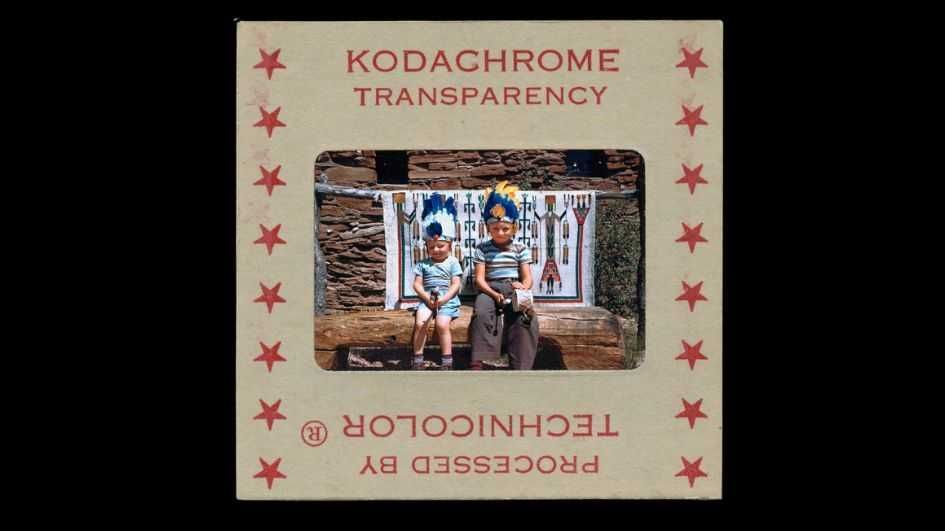

Kodachrome and 4 other things I want back from the 20th century


Buckle up, Boomers and Gen Xers, because I’m going to serve you up some nostalgia bait. Stop at the concession booth to pick up your complimentary rose-colored glasses, and don’t feel shy.

Generation X was born between 1965 and 1980. We are the last generation who experienced the real, physical world the way most humans have experienced it. We came along when generational transitions were gradual. We knew our Boomer parents’ music and movie stars, and we know our Silent Generation grandparents’ music and movie stars. As a kid, I knew who the Andrews Sisters were, and I could sing along because my grandmother played their records.

There will be Slant Six engines running in good health long after I’m dead, just as God intended.

Compare to today: The average Gen Z kid has no idea who Michael Jackson, Madonna, or Lucille Ball are. Starting with Millennials, a chasm opened up between generations. People a generation younger asked who some of the most world-famous stars were when they were working and alive just 20 years earlier.

With Gen Z it’s even starker. They were given digital poison in the form of smartphones in their tender years, and the entire cultural landscape fragmented into a billion bespoke Balkan states.

It’s hard to convince young people that some of the technologies from the bad old world of analog were actually superior to what we have today. They don’t believe that phone calls on copper wire were clear and never dropped (it’s true, though). Hilariously, they think film photography was always blurry and little better at capturing detail than an Impressionist painter.

Well, some of these things were better. And I want them back.

1. Kodachrome film

Smith Collection/Gado/Getty Images

I trained as a photographer in college, and that was going to be my career. But then digital came along. I was in romantic love with the hands-on craft that was film photography. When computers took over, I packed it all away because I was in love with silver gelatin emulsions, not silicon chips.

The loss of Kodachrome color slide film was the worst, and I shed real tears when Kodak pulled the plug. There was no color film in history that reproduced color as well as Kodachrome did; there’s a reason Paul Simon wrote the song. He was right.

Kodachrome was actually a black-and-white film with no built-in dyes like all other color films. Instead it captured the blue, red, and green light on three layers in the film separately. The color dyes were added during the wet chemical processing, and those dyes were richer and more time-stable than ordinary color film. This is why a Kodachrome slide from the 1940s looks like a high-quality photograph taken today — there’s no fading or washed-out colors like many of us see in old color photos in our family albums.

It was also the sharpest film with the highest resolution. A scene taken on Kodachrome was reproduced in such detail that looking at the slide was nearly like looking at real life through a window.

Because you’re reading this on a computer screen, you and I can’t see what the slide “really” looks like. It’s mediated by an electronic screen. But you can still see the rich color and fine detail that no other film could achieve.

2. Three-strip Technicolor

People today talk about bright hues looking like “Technicolor,” but few people understand what that really meant. For decades in Hollywood, the patented Technicolor film process was different from every other color film technology, and it reined supreme. Motion pictures shot in Technicolor were brighter and more vivid than any other process. They made real life look like the Land of Oz.

The quality came at a price. Like Kodachrome, Technicolor used black-and-white film, adding stable, rich color dyes later during processing and printing. This made the shooting process difficult. The film was “slow,” requiring so much light on set that actors sometimes got eye damage. They certainly sweat a lot.

Technicolor cameras ran three separate strips of black-and-white motion picture film through the camera at the same time. A “beam splitter” separated the light into red, green, and blue, directing one color only to each of the three strips of film. The cameras were heavy and needed to be sound-baffled during a shoot.

Striking the final print for projection required precision machines that could line up each of the three strips of film in perfect registration to lay down cyan, yellow, and magenta dyes. It took precision-machining, skill, time, and money. That’s why the process was abandoned when cheaper, easier all-in-one color motion picture film became available.

But that’s also why the Technicolor process was so beloved that songs were written about it. This is from the Technicolor production "Silk Stockings" with Janis Paige singing to Fred Astaire.

3. Air-cooled Volkswagen engines

I went outside to play in 1978 and came upon my stepfather on his knees behind the 1967 beige VW bug that was our family car. “God — son of a *@^%!” he cussed as the engine cranked and cranked and wouldn’t fire up. He was trying to gap the points in the distributor, a job he was never good at. I learned to do it decades later from a classic butch lesbian, and it didn’t seem that hard to me.

My stepdad was doing this because that’s what normal people did in those days. You tuned up your own car. Most dads had a toolset and the know-how to do car maintenance at home. Repairs were less expensive, and you didn’t have to have a computer technician “scan” your engine to figure out what the bloody computer thought was wrong with it.

Sure, the old VWs were simple and had few features. The heaters were so bad that winter driving required an ice scraper for the inside of the windscreen. The bugs were tiny compared to modern cars, but you could get a surprising amount in there if you were clever.

Sure, they were light (some people call them death traps), but that was great when my mother went off a snowy road in Upstate New York, and four boys from the local college fraternity just picked it up out of the ditch and set it back on the road.

I’d give anything to hear that musical, metallic tinkle of the exhaust pipes on America’s roads today.

4. The Chrysler Slant Six engine

If you know, you know. America never built a more durable engine than the famous Chrysler Slant Six. The engine got its name because the designers tilted it 30 degrees to fit the block under the lower, sleeker hoods that became stylish in the early 1960s.

This six-cylinder may not have had the raw horsepower of a big block V8, but it produced a surprising amount of oomph for its size, and it was an engine that never died. If you’ve owned one, you can hear the sewing machine-like purr and tick in your mind.

We had two Slant Six-powered family cars growing up. As an adult, I’ve had a Dodge Dart and a Plymouth Belvedere powered by this motor. There’s no better way to spend an afternoon than adjusting the valves on a Slant Six while it’s running. I miss how easy it was to work on these engines, made in the days when you could move around under the hood and adjust something without taking off 15 components just to get enough room to put a finger in the engine bay.

There will be Slant Six engines running in good health long after I’m dead, just as God intended.

RELATED: My 1966 Plymouth Belvedere let her 225 Slant-6 do the talking

NBC/Getty Images

5. Customer service

This is a social technology that needs to make a comeback. My first jobs as a teenager were running the cash register at a Wegman’s grocery store and bringing burgers to tables at a Big Boy restaurant. Friendly, efficient customer service was mandatory. It was expected by every customer and every employer.

You were to greet customers with a friendly hello and an offer to help. Smiles were either compulsory or strongly encouraged. If a customer needed to find an item, you found it for them and walked them over to the right aisle.

What do you get today when you walk into any retail store? Dead-eyed, silent stares from any staff younger than 35. Need to find a pipe fitting in a big store like Lowe’s? Try asking. You’ll get, “Um ... a what? If we had any, they’d be, like, over there,” as “Jonas” waves in a northeasterly direction.

Surprisingly, a young clerk at my local McDonald's reminded me of the good old days of customer service last week. Like so many places, McDonald's is making its restaurants hostile to humans. In addition to the ugly, gray, brutalist “updated” architecture, the lobbies are crammed with touch-screen kiosks, while the staffed registers have been reduced to one or two maximum. As recently as 15 years ago, McDonald's had a reputation for employing staff that were neater, tidier, and friendlier than the competition.

That’s gone now — except for this one young man at my local McD's. I walked past the kiosks and up to the register, expecting to be ignored for five minutes as is now McDonald’s standard. “Jeff” was about 22. His shirt was tucked in. He was neatly groomed. He smiled at me and said, “Welcome to McDonald's; how are you today?” He meant it. He was looking me in the eye. I was so pleasantly surprised I thought I was dreaming, and I made a point to thank him for being human and polite.

The other day, I saw this old early '80s commercial for McDonald’s Shamrock Shake. Take a look, and try not to tear up. If you’re 35 or under, you probably think the chipper and upbeat tone looks “fake.” You may not believe anyone ever acted that way. You might even find this level of cheer “cringe.”

Well, it was like that. I was there. And I want it back.

Unhinged 49-year-old female caught on video tossing coffee on McDonald's worker enters her plea in court


A 49-year-old female who was caught on video tossing coffee on a Michigan McDonald's worker in November entered her plea in court last week.

Casharra T. Brown appeared beside attorney Paul M. Purcell before Saginaw County District Judge Elian E.H. Fichtner and pleaded guilty to assault and battery, MLive reported, adding that the misdemeanor is punishable by up to 93 days in jail and a $500 fine.

'F**k you, b***h! Catch that hot-a** coffee!'

On the morning of Nov. 4 at the McDonald's at 3700 Dixie Highway in Buena Vista Township, Brown wanted a refund for two sandwiches after placing an online order, Buena Vista Township Police Detective Russ Pahssen told MLive in a previous story.

The outlet said the McDonald's manager gave Brown a coffee and tried to de-escalate the situation, while Brown claimed she had been there for more than an hour. The interaction reached an impasse, MLive said, and the manager told Brown to have a great day as she turned and walked away from the counter.

The female customer removed the lid from the coffee cup, threw the contents at the manager, and yelled, "F**k you, bitch! Catch that hot-ass coffee!" as she exited the restaurant, according to video of the encounter without redacted audio. The manager can be heard screaming after the hot coffee struck her body.

The following video report about the incident aired before Brown surrendered to authorities.

RELATED: Female caught on video tossing cup of scalding coffee on McDonald's manager, who suffers burns

Brown appeared before Saginaw County District Judge M. Randall Jurrens more than a week after the incident for arraignment, and he freed Brown on a $5,000 personal recognizance bond for the misdemeanor. MLive previously reported that police submitted paperwork to the Saginaw County Prosecutor's Office requesting a felonious assault charge against the suspect.

While police at the time told MLive that the restaurant manager suffered minor burns, the outlet said police later indicated that she was wearing enough layers to prevent her skin from being burned.

Judge Fichtner last Monday referred Brown to the Probation Department for an interview, the outlet said, which will help the judge fashion "an appropriate sentence." The judge warned Brown not to skip the interview, as it will not be rescheduled, MLive added.

RELATED: Unhinged female accused of tossing hot coffee on McDonald's manager finally appears before judge

Before last week's hearing ended, Brown's defense attorney asked that her bond be amended to let her leave Michigan and return to Georgia, the outlet said.

Turns out, Brown was visiting family at the time of the coffee-tossing incident, and her attorney said she has remained in the Saginaw area ever since due to a bond condition prohibiting her from leaving the state, MLive reported.

The travel restriction caused Brown to miss a court date over a traffic infraction in Tennessee, her attorney added, according to MLive.

Judge Fichtner modified Brown's bond to allow her to leave the state, the outlet reported, adding that the judge reminded Brown she must return to Michigan and be physically present in her courtroom for sentencing, or she will issue a warrant for Brown's arrest.

Brown replied she would be in court, MLive said. The date of her sentencing is pending.

Like Blaze News? Bypass the censors, sign up for our newsletters, and get stories like this direct to your inbox. Sign up here!

McDonald's team admits workload on hated AI Christmas ad 'far exceeded' live-action shoots


Another advertiser wants consumers to know how hard people worked on its artificial intelligence-driven ad.

Sweetshop Films is behind the recently pulled McDonald's Christmas commercial that appeared on YouTube but lasted only about four days before being dropped like a hot Christmas coal.

'The results aren't worth the effort.'

The ad was generated entirely by AI for McDonald's Netherlands, which took ownership of the fact that it was poorly received.

"The Christmas commercial was intended to show the stressful moments during the holidays in the Netherlands," the company said in a statement, per the Guardian.

"However, we notice — based on the social comments and international media coverage — that for many guests this period is 'the most wonderful time of the year,'" they added.

Sweetshop Films defended its use of AI for the ad. "It's never about replacing craft; it's about expanding the toolbox. The vision, the taste, the leadership … that will always be human," said CEO Melanie Bridge, per NBC News.

Bridge took it one step farther, though, and claimed her team worked longer than a typical ad team would.

“And here's the part people don't see," the CEO continued. "The hours that went into this job far exceeded a traditional shoot. Ten people, five weeks, full-time."

These statements were not met with holiday cheer.

RELATED: Coca-Cola doubles down on AI ads, still won't say 'Christmas'

X users went rabid at the idea that Sweetshop, alongside AI specialist company the Gardening Club, put more effort into producing the videos than a typical production team would for a commercial.

The Gardening Club reportedly made statements like, "We were working right on the edge of what this tech can do," and, "The man-hours poured into this film were more than a traditional Production."

"So all that 'effort' and they still managed to produce the ugliest slop [?] just goes to show how useless gen AI is," wrote an X user named Tristan.

An alleged art director named Haley said she was legitimately confused by the idea of the "sheer human craft" claimed to be behind the AI generation.

"What craft? What does that even look like outside of just clicking to generate over and over and over and over again until you get something you like?" she asked.

Another X user name Bruce added that "AI users are like high schoolers who got good grades because they tried hard, then are shocked to find at university they get judged on results, not effort. I have no doubt they try hard. But the results aren't worth the effort."

RELATED: 'Unprecedented': AI company documents startling discovery after thwarting 'sophisticated' cyberattack

Photo by Tim Boyle/Getty Images

The Sweetshop CEO did indeed express that the road to the McDonald's AI ad was a painstaking endeavor, claiming that "for seven weeks, we hardly slept" and "generated what felt like dailies — thousands of takes — then shaped them in the edit just as we would on any high-craft production."

"This wasn't an AI trick. It was a film," Bridge said, according to Futurist.

The positioning of AI generation as "craftsmanship" is exactly what Coca-Cola cited for its ad in November, when it said the company pored through 70,000 video clips over 30 days.

The boasts resulted in backlash akin to what McDonald's is receiving, which included reactions on X like, "McDonald's unveiled what has to be the most god-awful ad I've seen this year — worse than Coca-Cola's."

Like Blaze News? Bypass the censors, sign up for our newsletters, and get stories like this direct to your inbox. Sign up here!

Unhinged female accused of tossing hot coffee on McDonald's manager finally appears before judge


A female accused of tossing a cup of hot coffee on the manager of a Michigan McDonald's earlier this month finally gave herself up and appeared before a judge.

Casharra T. Brown, 48, of Saginaw surrendered to police last Friday on an outstanding warrant authorities had issued for her nine days earlier, MLive.com reported.

'F**k you, b***h! Catch that hot-a** coffee!'

That same Friday, Brown appeared before Saginaw County District Judge M. Randall Jurrens for arraignment on one count of assault and battery, the outlet noted.

The charge is a misdemeanor punishable by up to 93 days in jail and a $500 fine, MLive reported. The outlet previously reported that police submitted paperwork to the Saginaw County Prosecutor's Office requesting a felonious assault charge against the suspect.

Jurrens freed Brown on a $5,000 personal recognizance bond, the outlet said; one bond condition is that she's barred from entering McDonald’s restaurants.

On the morning of Nov. 4 at the McDonald’s at 3700 Dixie Highway in Buena Vista Township, Brown wanted a refund for two sandwiches after placing an online order, Buena Vista Township Police Detective Russ Pahssen told MLive.

The outlet said the McDonald's manager gave Brown a coffee and tried to de-escalate the situation while Brown claimed she had been there for more than an hour. The interaction reached an impasse, MLive said, and the manager told Brown to have a great day as she turned and walked away from the counter.

The female customer removed the lid from the coffee cup, threw the contents at the manager, and yelled, “F**k you, b***h! Catch that hot-a** coffee!” as she exited the restaurant, according to video of the encounter without redacted audio. The manager can be heard screaming after the hot coffee struck her body.

The following video report aired before Brown surrendered to authorities.

RELATED: Woman allegedly tossed coffee at mom and her infant over dog leash dispute — and is now facing deportation

Pahssen shared video of the assault on Facebook to gain the public’s help in identifying the assailant, MLive said, adding that the detective said Brown was identified as the culprit within minutes.

While Pahssen at the time told MLive that the manager suffered minor burns, the outlet said Pahssen later indicated that the McDonald’s manager was wearing enough layers to prevent her skin from being burned.

MLive said it contacted defense attorney Paul M. Purcell about the case, but he declined to comment.

Like Blaze News? Bypass the censors, sign up for our newsletters, and get stories like this direct to your inbox. Sign up here!

Female caught on video tossing cup of scalding coffee on McDonald's manager, who suffers burns


A female was caught on video tossing a cup of scalding coffee on a McDonald's manager in Michigan earlier this week — and the manager suffered burns as a result, MLive reported.

The incident took place Tuesday morning at a McDonald's at 3700 Dixie Highway in Buena Vista Township, the outlet said. Buena Vista Township is a few miles east of Saginaw.

'F**k you, b***h! Catch that hot-a** coffee!'

Buena Vista Township Police Detective Russ Pahssen told MLive that the female manager called 911 saying an angry customer assaulted her.

More from MLive:

The customer had placed an online order and sought a refund for two sandwiches, Pahssen said. Another patron recorded the last two minutes of the interaction at the restaurant’s front counter.

The manager handed the customer a coffee and tried pacifying her, while the customer claimed she had been there for more than an hour, the footage shows. The conversation reaching an impasse, the manager told the customer to have a great day and turned to walk away.

The female customer removed the lid from the coffee cup, threw the contents at the manager, and yelled, “F**k you, bitch! Catch that hot-ass coffee!” as she exited the restaurant, according to video of the encounter without redacted audio.

The video also shows the McDonald's manager screaming after the coffee hits her body.

Pahssen told MLive the manager suffered minor burns; the outlet noted that the coffee burned her back and left arm.

Pahssen shared video of the assault on Facebook and asked the public to help identify the assailant, the outlet said.

“I must have gotten about 100 tips,” Pahssen noted to MLive. “Within about two minutes, we had her identified.”

The following is video of the encounter with redacted audio; the coffee toss takes place toward the end of the clip just after the 1:45 mark:

However, Pahssen said officers weren't able to locate the 48-year-old suspect, MLive reported, adding that police have submitted paperwork to the Saginaw County Prosecutor's Office, requesting she be charged with felonious assault.

Investigators did not name the woman Thursday because she had not been arraigned on any criminal charges, WJRT-TV reported.

Like Blaze News? Bypass the censors, sign up for our newsletters, and get stories like this direct to your inbox. Sign up here!

Florida sheriff defends McDonald's worker who shot customer in the neck: 'It was just a McMess'


A late-night food run escalated into a stand-your-ground shooting at a McDonald's when two Florida men caused a "McMess," according to police.

Polk County Sheriff Grady Judd said a McDonald's got overwhelmed by orders after several events in the area ended early in the morning of Oct. 12.

'What do these goober smoochers do?'

Yoan Soto — a 21-year-old employee at the McDonald's in Davenport, the sheriff's office said — was working an overnight shift.

Two men — 20-year-old Peter Story and 18-year-old Nicholas Jones — pulled into the drive-thru to order food. However, there was reportedly a long wait.

According to Judd, Soto told Jones and Story, "Hey, sorry guys, but we’re way behind ... our online orders are overwhelming us."

However, the two customers allegedly became furious.

Judd said, "They threatened to attack the man who just told them, ‘We’re busy, we can’t take any more orders,’ and he did that because the manager told him to."

Sheriff Judd said the two customers threatened Soto with violence.

"We're going to hang out here," the pair allegedly told Soto, according to Judd. "When you get off, we are going to beat you up."

Judd added, "What do these goober smoochers do? They park their vehicle, and they come into the restaurant."

Sheriff Judd said Soto and the two customers began "jawing" and "having a McArgument in the McDonald’s over McHamburgers, or lack of McHamburgers."

The 22-year-old McDonald’s manager reportedly told Story and Jones to leave because they were trespassing.

Judd said the two customers threatened to commit a "mass shooting" at the McDonald's, which allegedly had other customers inside the restaurant.

Surveillance video shows Soto walking out of the back of the restaurant with a gun and pointing it at the unruly customers — and Judd backed Soto's actions as self-defense.

"And [Soto] comes into the lobby to confront these guys who've threatened him and threatened the store and threatened to shoot the place up," Judd said. "And now he's trying to get them out of the store."

Jones and Story are seen swinging their hands in an apparent attempt to take Soto's gun.

Judd noted that "as they try to grab his gun, [Soto] pulls the trigger, and he shoots Peter Story in the neck."

Jones then drove Story to a local hospital.

"It's a blessing that it was a very minor wound," Judd said.

RELATED: Florida couple charged with manslaughter after 3-year-old died while 'rotting in the bed,' sheriff: 'I have never, ever seen anything as sad, as bone-chilling, and as sickening'

Judd said Soto retrieved the bullet casing and projectile from the floor and fled the McDonald's.

Authorities allegedly convinced Soto to return to the scene of the crime, and he cooperated with police.

Soto was charged with tampering with evidence, which is a felony.

Story and Jones were charged with trespass after warning and disorderly conduct.

"Listen folks, it’s never OK to threaten a mass shooting," Judd stressed. "It’s never OK to threaten to beat people up at a business. And it’s never OK to grab your ammunition and your firearm and run after a shooting."

Judd again backed Soto's self-defense attempt: "He has a right to stand his ground and protect himself, and these guys are threatening to do violence after they’ve already threatened on the outside of the store and came inside."

Judd said of the two customers, "They created a well-founded fear in him and the store manager. It was just a McMess, but we’ll sort it out because we are McGood at investigating McCrime."

Neither McDonald's nor the Polk County Sheriff's Office immediately responded to Blaze News' request for comment.

Like Blaze News? Bypass the censors, sign up for our newsletters, and get stories like this direct to your inbox. Sign up here!

One Year After Trump Worked the Fryer at McDonald's, There's Still No Evidence Kamala Ever Did

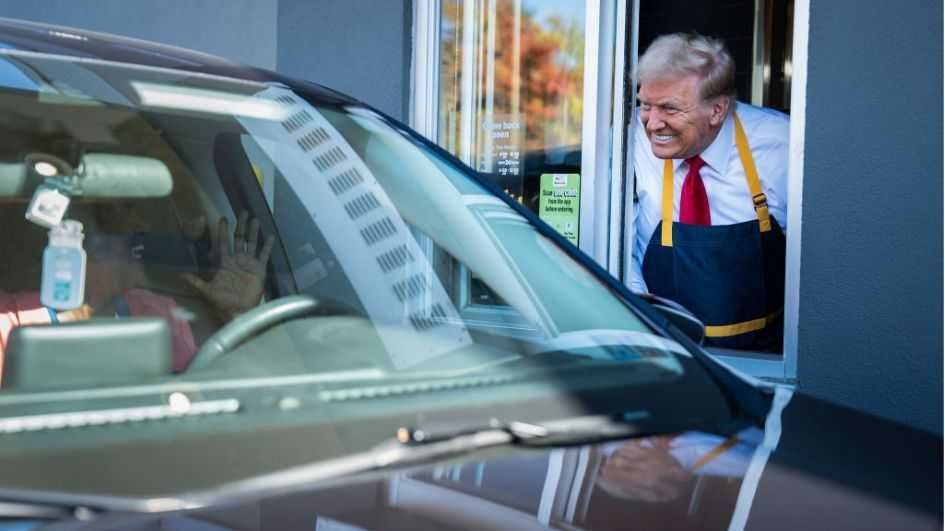
On Oct. 20, 2024, Donald Trump performed one of the finest acts of campaign trolling in the history of American politics by working the fryer and serving meals at a McDonald's franchise in eastern Pennsylvania. "Now I have worked at McDonald’s," he told reporters while wearing an employee apron and leaning out the drive-thru window. "I've now worked for 15 minutes more than Kamala, she never worked here."

The post One Year After Trump Worked the Fryer at McDonald's, There's Still No Evidence Kamala Ever Did appeared first on .

The 'rebranding' brigade's war on beauty


American business has lost the last shred of the plot.

Cracker Barrel’s bone-headed “rebranding” — more on this below — is only the ne plus ultra of a long, stupid march through formerly beloved brands toward a joyless, millennial-gray final destination.

These are choices we’re making. Bad choices. Anti-beauty choices. Anti-human choices.

Look around you. What do you see? Alleged restaurants that look like industrial warehouses. Businesses that we used to call bakeries — everything is just a “store” now in modern corporate-speak — now decorate their interiors according to surgical sterile-field protocols.

Everything is hard, not soft. Everything is gray, not green. Everything is fluorescent, not incandescent. Everything is aluminum, not velvet.

Hamburglaring our history

You know what I mean because you see it everywhere. The built world has been drained of color, curve, ornamentation, and whimsy. The desiccated architectural corpses of abandoned Pizza Huts with their distinctive step-peaked roofs litter the suburbs. I found these sad to look at until I realized that Pizza Hut is in a better place now, where there’s no more pain.

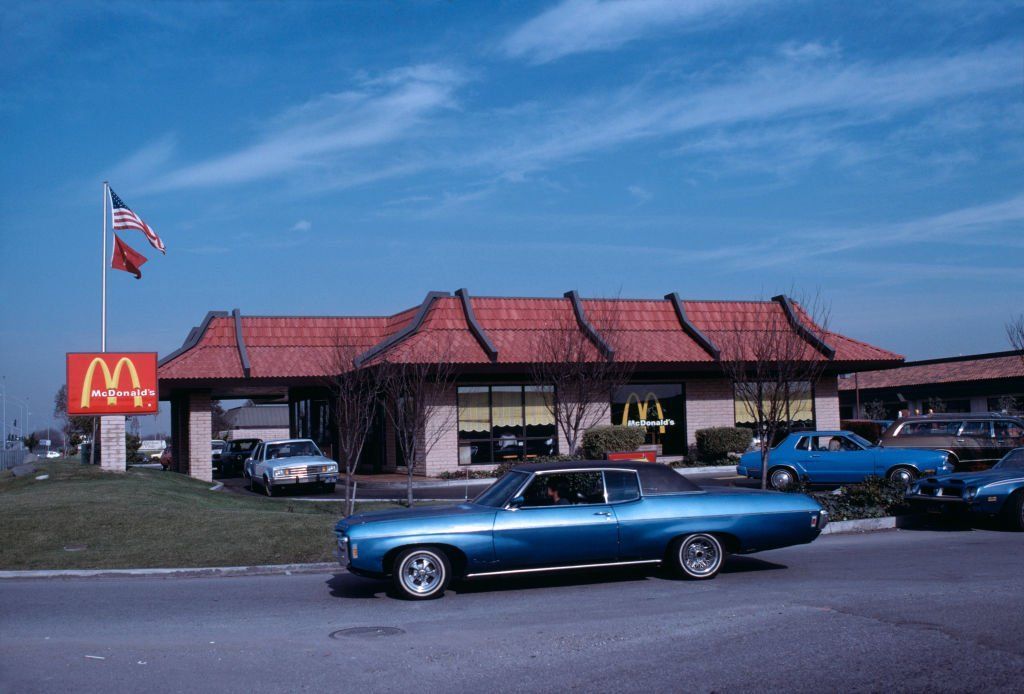
It’s McDonald’s we need to worry about. Cast your mind back to your childhood when you first met Ronald, Grimace, and Mayor McCheese. Most McDonald's restaurants had a playground for kids with colorful characters. The buildings themselves promised fun and piqued your imagination. Like Pizza Hut, McDonald's roofs had angles and character. They were painted bright red with French-fry-yellow accents.

Francois Lochon/Getty Images

Observe a McDonald's today. The buildings are the best representation of the Brutalist revival taking over modern architecture.

Bloomberg/Getty Images

At best, they’re abstract, cubist boxes that offer the eye no rest. Hard edge overlaps hard edge. All ornamentation is stripped. Color is canceled. You get gray and brushed aluminum, and you better damned well like it.

The worst part is how the company has kept one bit of color — the famed golden arches. Stuck on these industrial boxes as an afterthought, you’d be forgiven for thinking McDonald's is making a joke at our expense: “Look what we took away from you. Lol. Lmao.”

These buildings aren’t restaurants; they’re wholesale crematories at the back of an industrial park.

Auto pilot

Automobiles are the same.

No, dear reader. Let me stop you before you start typing that comment. All cars don’t look exactly the same “because aerodynamics, and this is the optimal shape, and they have to do it to meet emissions standards.” That’s the “well, it’s not really as bad as you say” excuse.

It’s just not true (and it is as bad as I say). If it were true, then every single car would be exactly the same as every single other car. But they’re not. There are SUVs, for example. If “they have to do it for aerodynamics” were true, this size and shape of vehicle would not exist. Oversized, elevated rectangular boxes, by their nature, are un-aerodynamic. A Chrysler Airflow from 1934 has a much higher aerodynamic rating than any modern “luxury truck” and still manages to be pleasing to the eye.

It’s not “because they have to because government.” It’s because there’s something wrong with us. We’re sick at heart and sick in the soul, and our emptiness finds three-dimensional expression in the sea of white, black, gray, and silver cars that all look precisely the same as every other maker’s car in that vehicle class.

Crimes against coziness

These are choices we’re making. Bad choices. Anti-beauty choices. Anti-human choices.

You’ve likely heard of the recent kerfuffle over the “rebranding” of the Cracker Barrel restaurant chain. Cracker Barrel is a chain of down-home restaurants that serve unfussy American food like your grandmother used to make. Created in 1969, the founders wanted to offer a restaurant that would remind people of the comfortable general stores and wayside diners that once dotted the American rural landscape. Nothing fancy, just plain food cooked well and served in an atmosphere that invited you to sit down, take a load off, and have supper with other good people.

Staff would travel to flea markets and estate sales to pick up real Americana to stick up on the walls. There were framed pictures of famous boxers and lacrosse sticks, big kerosene lamps that used to light and heat the general stores. The effect was a combination of grandma’s attic and grandpa’s work shed, with a little bit of Christmas thrown in.

Take a look at how Cracker Barrel used to look.

Jeff Greenberg/Getty Images

Now, take a look at the “refreshed” Cracker Barrel.

From your grandparents’ house to the prison commissary.

RELATED: Bud Light insider reveals what led to Dylan Mulvaney controversy

Scott W. Grau/Icon Sportswire via Getty Images

A woman's touch

Who makes these decisions? What kind of person takes a beloved restaurant brand and sticks up her middle finger to the customers? A middle-aged, corporate, almost certainly liberal-woke-Karen type. And here she is, Cracker Barrel CEO Julie Felss Masino, cackling on breakfast television behind oversized look-at-me glasses, telling the audience how much everyone just SUPER LOVES what we’ve done, and we’re doing it all out of LOVE 4 U!!!!!

American business apparently learned nothing from the Bud Light fiasco. In that case, a younger Karen named Alissa Heinerscheid sent the company’s profits into the toilet by making fun of her own brand’s “frat boy” image and slapping the face of a demented drag queen on the cans.

Keep the curves

America, we have to come back to our senses. The world doesn’t have to conform to Karen’s diktats. Karen hates us and hates the things we like, which is why she punishes us. But we’re not her children (do say a prayer for them), and we don’t have to listen to her.

God gave us a world of curve, color, romance, and beauty. For thousands of years, men have tried to follow this example by piling up stones and locking logs together in pleasing shapes that ennoble us and make our souls sing. The deracination of the beautiful and the divine started long ago with churches. We don’t build anything worthy of the name “cathedral” any longer; instead, we put up Brutalist boxes and stick a Mary-on-the-halfshell on the lawn.

The sickness that compromised matters spiritual is now devouring things temporal.

Beauty is our patrimony and our birthright. Let's take it back.