Trump pardons MLB legend and 'Celebrity Apprentice' cast member for 30-year-old tax fraud charges
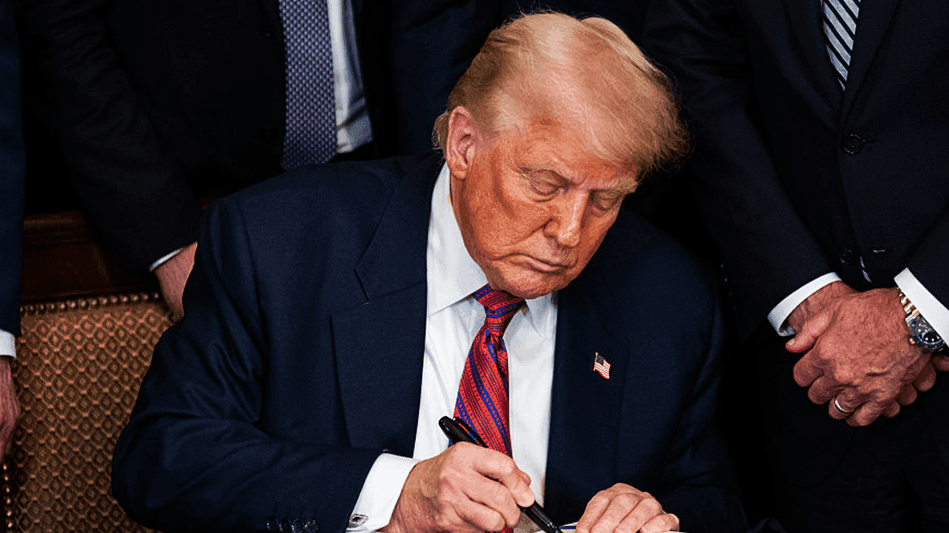


President Trump has granted a pardon to a cast member from his hit show "Celebrity Apprentice" for the second time this term.

In February, Trump pardoned former Illinois Gov. Rod Blagojevich (D) after commuting the politician's 14-year prison sentence in 2020.

The new pardon again extinguishes charges laid against a member of the Season 3 cast of Trump's hit reality show, this time for a legendary baseball player.

'Mr. Strawberry found faith in Christianity and has been sober for over a decade.'

"President Trump has approved a pardon for Darryl Strawberry, three-time World Series champion and eight-time MLB All-Star," a White House official told the New York Post.

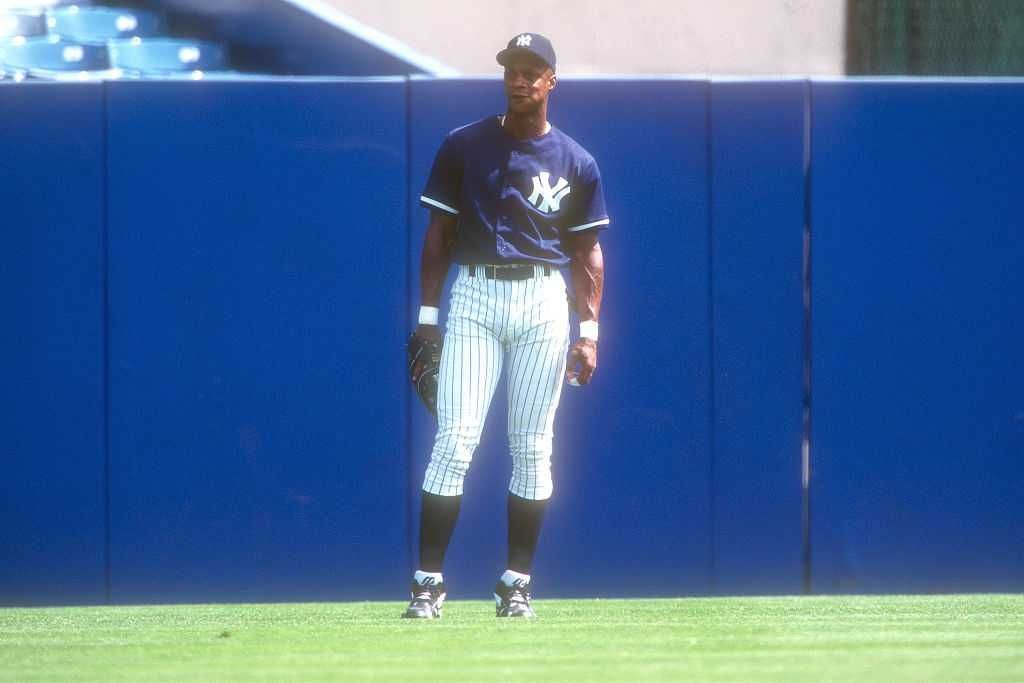
Strawberry had an iconic 17-year career in the majors, spending 13 seasons with teams in New York. He came into the league with the New York Mets and finished his career with the New York Yankees.

Back in 1995, Strawberry pleaded guilty to a single count of tax evasion over a failure to report nearly $500,000 in income from baseball card shows and autograph signings between 1986 and 1990.

As UPI reported at the time, Strawberry was sentenced to three years of probation in April 1995, along with six months of home confinement and $350,000 in restitution for tax evasion

At just 32 years old, Strawberry was also battling substance problems that cost him some opportunities in MLB.

RELATED: Pete Rose still might never get inducted into the Hall of Fame. Here's why.
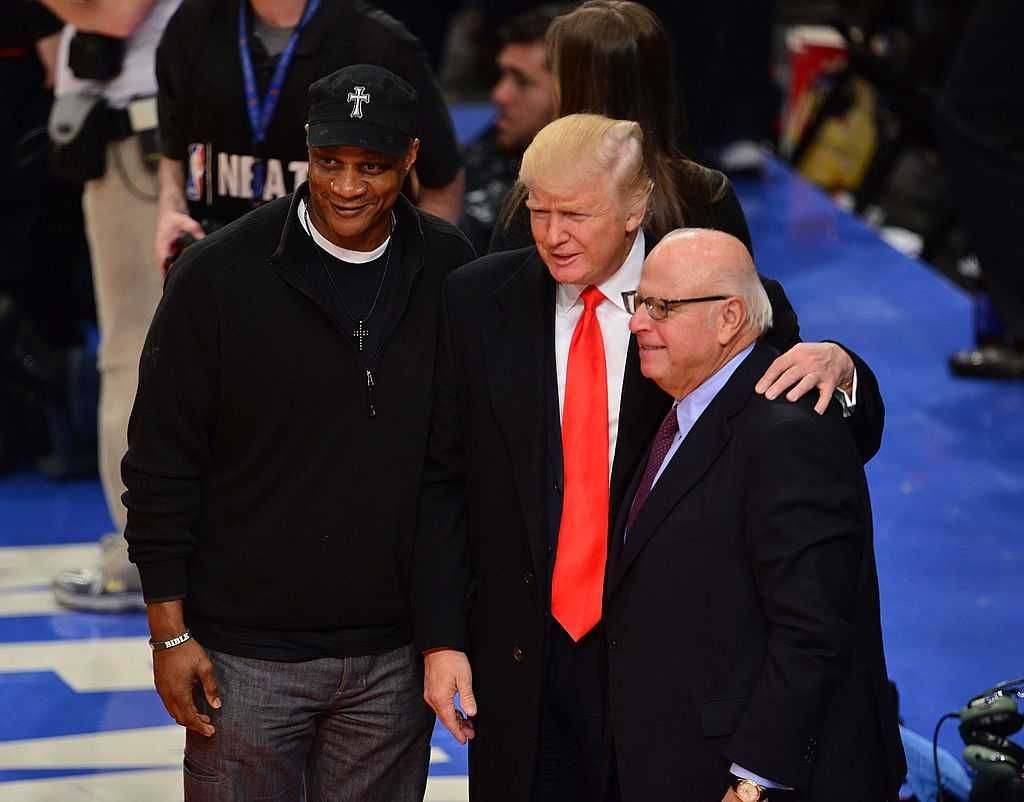
Photo by James Devaney/WireImage/Getty Images

Strawberry was beloved as a member of the Mets and was hilariously immortalized in the iconic episode of "The Simpsons" titled "Homer at the Bat."

However, the trouble started after he moved back to his home state of California to play for the Los Angeles Dodgers. Following an All-Star campaign in 1991, the outfielder never played a full season again.

Just three days prior to appearing in front of a federal judge for the tax evasion charges in 1995, Strawberry was suspended by MLB and released from his new team, the San Francisco Giants, over his continued use of cocaine.

Months later, Strawberry signed with the Yankees and played well, but only appeared in 32 games. He retired from baseball after the 1999 season.
RELATED: DOJ pardon attorney doubts validity of Biden autopen pardons as nullification campaign picks up steam

Photo by Mitchell Layton/Getty Images

"Mr. Strawberry served time and paid back taxes after pleading guilty to one count of tax evasion," the recent White House comment added.

"Following his career, Mr. Strawberry found faith in Christianity and has been sober for over a decade — he has become active in ministry and started a recovery center, which still operates today."

Strawberry has been praised in recent years for overcoming his drug-abuse problems and turning to God, and he now preaches alongside his wife.

"There's nothing too hard, there's nothing too big for God," Strawberry was recorded telling a group of prisoners in 2024.

"There's nothing too hard, there's nothing too big for God to fix in your life right here, right now," he preached, as the men rejoiced. "God has not forgot about you. You're not a mistake to God. We've all made mistakes. We have all fallen short. The Bible didn't say some of us. The Bible says all of us have fallen short."

Strawberry concluded, "So you gentlemen need to know that today I stand up here; there's nothing great about me. I was a liar. I was a cheater. I was a womanizer. I was an alcoholic. I was a drug addict, and I was a sinner, saved by grace."

Like Blaze News? Bypass the censors, sign up for our newsletters, and get stories like this direct to your inbox. Sign up here!
Couch: The ‘boo back’ might be the new high five and symbol of the growing rift between athletes and fans


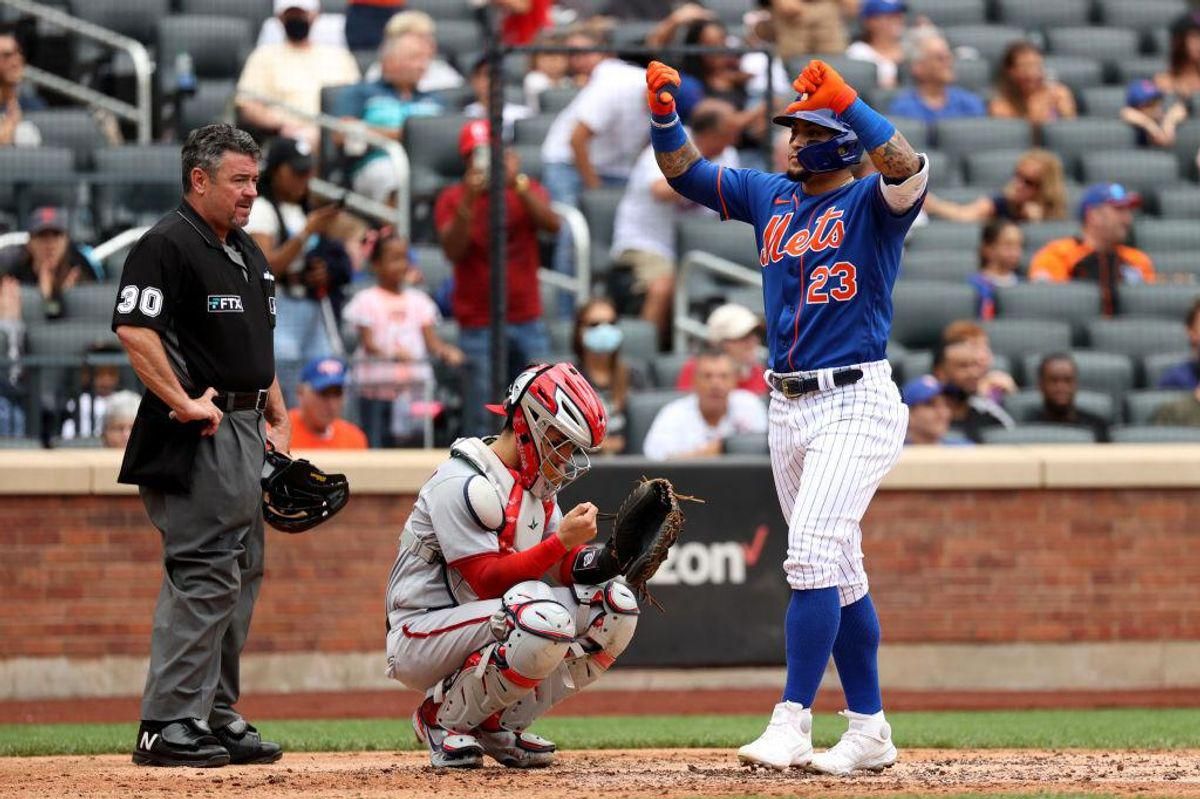
Javier Baez and the New York Mets might be on to something here, no matter how badly they're being crushed for it. They're rather unapologetic about it. In the past few days, they have introduced something new to the sports world. We'll call it the "boo back."

The Mets are in a late-season collapse, and their fans have taken up the time-honored sports tradition of booing. Baez, a $5-million-a-year second baseman, is the face of the players' unique response to fan frustration. He's leading the Mets and Major League Baseball in the boo back.

When the Mets hit a home run or get a big hit, the players hold both hands over their heads and give their fans the thumbs-down. The Mets are effectively booing back at their fans.

"To let them know when we don't get success, we're going to get booed, so they're going to get booed when we have success," said Baez, who was recently traded to the Mets from the Chicago Cubs. "We're not machines. We're going to struggle seven times out of 10."

In Baez's case, it's eight out of 10. He's hitting .210 as a Met.

"It just feels bad when I strike out and get booed," he said. "It doesn't really get to me, but I want to let them know that when we're successful, we're going to do the same thing to let them know how it feels. In my case, they've got to do better."

The fans have to do better? What a concept. Apparently, the players think fans are there for them and not the other way around. If Baez says it "feels bad" when he's booed for striking out, he thinks the solution is to stop the booing, not the striking out.

Baez and the Mets have been clobbered over this entitlement by one reporter after another and one nervous Mets executive after another. They keep noting that paying fans have the right to boo. Baez would agree. The question is whether the Mets players have the right to boo back.

I can't tell for sure if this is an entitled generation thing, a pampered millionaire athlete thing, a COVID temper thing, or just a typical New York thing. It's probably all of those added together.

It's also a sign of the growing disconnect between athletes and fans. Colin Kaepernick polarized fans and athletes by taking a knee for the national anthem, turning that relationship into a political debate. Athletes lead lives the typical American sports fan dreams about, but athletes are now seen as some of America's harshest critics.

The boo back could be the new high five, a symbol of unity among athletes in their disconnect from the fans.

The high five has several different origin stories. Magic Johnson once seemed to take credit for it. The most accepted story is that it started in 1977, when Dusty Baker of the Los Angeles Dodgers hit a home run off Houston Astros pitcher J.R. Richard. Baker rounded the bases, and his teammate met him at home plate with his hand over his head. Baker, not knowing what to do, slapped it. Baker is now the Astros' manager.

The high five grew into the mainstream, of course. And the boo back might be next.

I'm thinking about Naomi Osaka, who pulled out of two major tennis championships this summer, including Wimbledon, because she didn't want to have to answer reporters' questions. She somehow turned it into a discussion of mental health, when really it was about wanting complete control over all messaging and not feeling she should be subjected to criticism, which makes her feel bad.

This is a generation that has spent too much time looking at themselves, thinking about themselves, and talking about themselves on social media. With some of the world's most successful athletes from this generation, they haven't had to deal with the concept that something they've done might not be deserving of a friend, like, or thumbs-up.

The Mets can't comprehend that the fans aren't just there to tell them how great they are. The fans, the press. Why are they so mean?

Osaka melted down over this, and her career as one of the world's great tennis players might be in jeopardy.

Osaka should boo the media next time she doesn't like their questions. Maybe the boo back will give her the release and voice she needs.

The world is clearly in a different head space now than it was pre-COVID. Fans are fighting more in the stands, traffic deaths from road rage are at record highs, and there is just this palpable sense of anger.

Years ago, the movie "Network" had people opening windows and screaming, "I'm mad as hell and I'm not going to take it any more." Isn't the boo back more civil?

My daughter, Jenny, is an actor and also a server at a restaurant near Wrigley Field in Chicago. She texted me a few nights ago that four customers had sat at a table for two hours having eight cocktails, four bowls of ramen, and three appetizers, racking up a $215 bill. And then they left a $5 tip.

I told her what Baez, one of her favorite ex-Cubs, and the Mets had done. Isn't that terrible?

"Hahaha," she replied.

But isn't the customer always right? Should actors on stage boo back when an audience is upset? Could you justify following your customers out the door when they leave a bad tip, booing them?

"I wish I did," she said. "The customer is frequently extremely rude, too, and doesn't seem to realize that staff are people, too."

Yes, but the staff is being paid. And if the staff's performance — or Baez's and the Mets' batting average — isn't worth the cost of what customers are paying for it, then the customers want to express that.

"It's not as if Baez is heckling the fans," she said. "It's just a thumbs-down."

The look-at-me generation has finally invented something useful. In a time when people are angry and impatient, mad as hell and trying to make up for lost time, the boo back is just a peaceful protest. It's a real-life emoji.

Woke Springs Infernal

In the summer of 2016, National Journal reporter Josh Kraushaar stumbled upon the scoop of the century. Nationals left fielder Jayson Werth's seven-year $126 million contract appeared to contain an unknown perk: His own private security force dedicated to protecting his fragile, fragile ego. These Blackwater-esque foot soldiers patrolled the stands under cover of regular old ushers to neutralize the threat of "WEEEEEEERTH-LEEEEESSSS" chants.

The post Woke Springs Infernal appeared first on Washington Free Beacon.

Remembering Tom “The Franchise” Seaver — The Greatest Met Ever

The N.Y. Mets have had many pitchers after Tom Seaver, but none match his dominance and presence. The likes of The Franchise will not be seen again.