Democrats Aim To Win Rural Voters By Lying About ‘Moderation’
 Democrats in general, and the Democratic Socialists of America in particular, are paying a lot more attention to rural America.
President Donald Trump was in high spirits and made sure everyone else was too as he slammed Democrats and reminded voters of Republican accomplishments as the midterm convention drew to a close.
Trump took the stage Thursday night to Lee Greenwood's "God Bless the U.S.A." after a well-received speech by Vice President JD Vance. The president promptly launched into a laundry list of his second-term accomplishments.
'If the Democrats get in, they'll destroy everything we've built.'
"I want to thank our great vice president, who did a fantastic job tonight," Trump began.
"This place is packed. It was packed last night," said Trump, who also addressed the convention on Wednesday. "But even more important is the spirit. ... I'm seeing a spirit like we haven't seen in this country in a long time."
The president dated that spirit back to the popular mandate he received in the 2024 election.
“Less than two years ago, the American people gave us a mandate to save America," Trump said. "In the last 19 months, I’ve delivered on every promise we made, and I think I’ve delivered on far more.”
Trump reminded the crowd about chaos at the country's border under former President Joe Biden and asked them to remember that chaos when they were deciding whether to go out and vote.
According to the White House, releases at the border have been at zero for 15 months and net migration turned negative in 2025.
“[Democrats] gave us wide-open borders, with 25 million people pouring in from all over the globe," Trump said. "We took that dark age of America and turned that into the golden age of America.”
From there, he ran through highlights of his second term.
“We delivered the largest tax cuts in American history, the largest regulation cuts in American history, the largest investment in our military in the history of our country, and made our country the energy and military superpower of the world," Trump said.
He also reminded the crowd of drastic reductions to prescription drug prices as well as Democrats' pro-transgender politics, exhorting his supporters to rally their friends and families to the polls in November.
“Get out and vote, please," Trump said. "Get out and vote."
The president then reminded the crowd about the signature proposal from his Wednesday speech: the Trump dividend.
“If we win the midterms ... we’ll provide a Trump dividend: $5,000 for every adult citizen in this country," Trump said. "We can do that because we’re doing so well as a country. We’re taking in trillions of dollars.”
RELATED: Trump promises $5,000 checks for all — if Republicans win the midterms
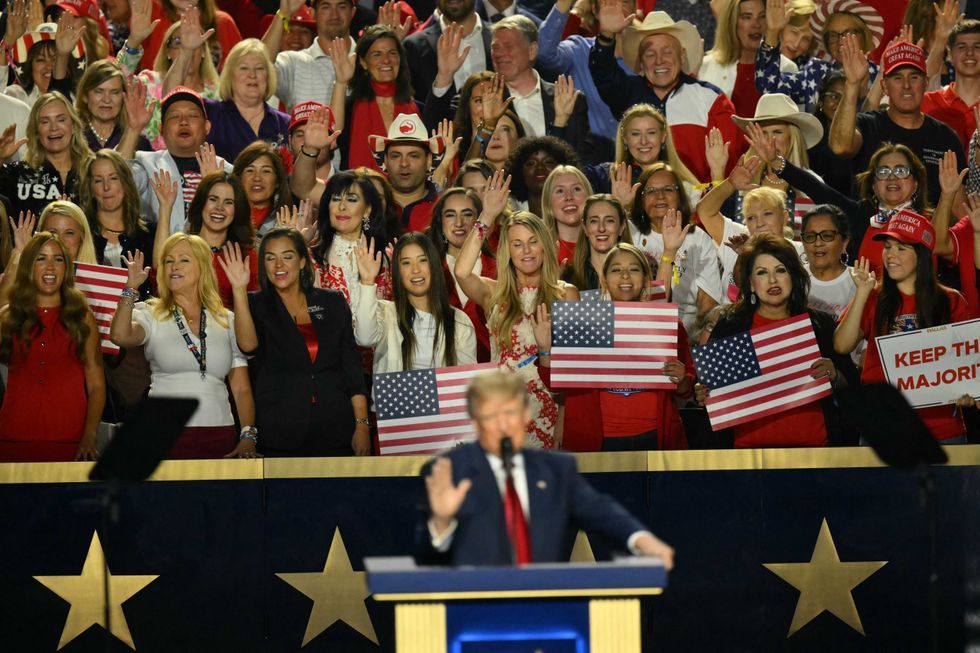
Trump asked the room to vote as if he were on the ballot, citing turnout woes for Republicans when he isn't at the top of the ticket.
“I’m not on the ticket. You gotta pretend. You gotta do me the biggest favor you’ve ever done me," Trump said with his signature sense of humor. "You gotta pretend I’m on the ticket. I’m on the ticket — I’m on the ticket!”
He reminded the crowd of the stakes.
“If the Democrats get in, they’ll destroy everything we’ve built," Trump said. "So on November 3, you’ve gotta do me a favor and vote like I’m on the ballot."
As he closed his remarks, Trump had the crowd raise their right hands and pledge to get out and vote.
“I pledge to the greatest president in the history of the United States, that loves us so much he can’t even breathe, that I am going to go out and get my friends and family, and we are going to vote on November 3 or vote before that!"
“So help me God,” Trump said. “You know what happens if you don’t vote, right? You go to hell. I don’t want that to happen to you, so go out and vote!”
Like Blaze News? Bypass the censors, sign up for our newsletters, and get stories like this direct to your inbox. Sign up here!
Democrats in the toughest midterm races can’t put enough distance between themselves and former Vice President Kamala Harris.
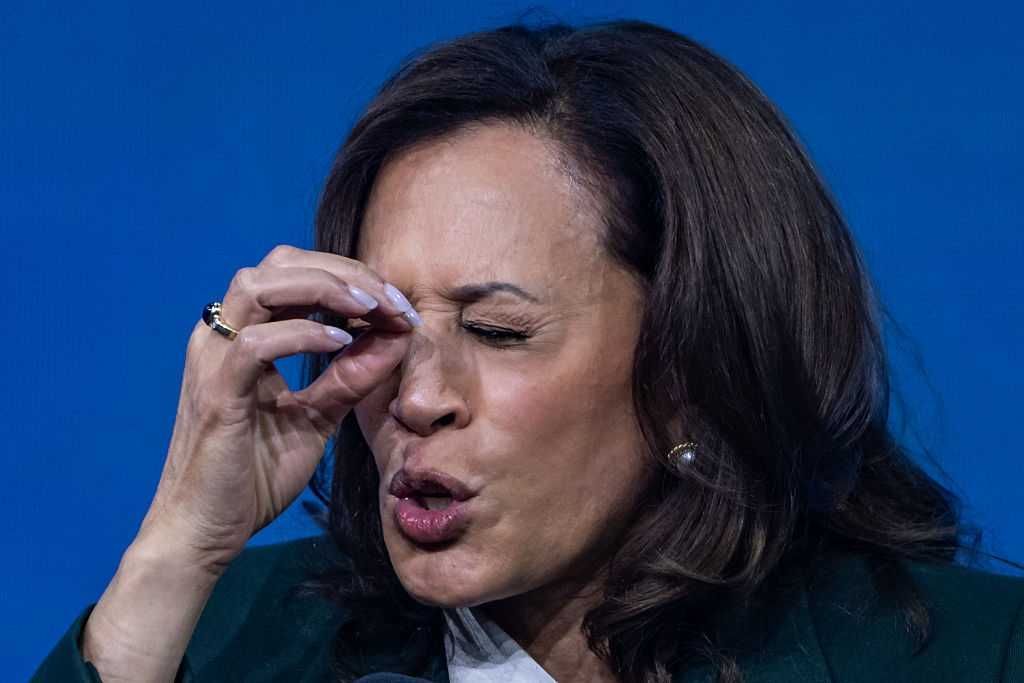
A string of Democratic candidates campaigning in red states have rejected Harris’ support both before and after it was offered. From Alaska to Kansas, Harris’ king-making ability appears nonexistent.
'Having someone from California come in and try to tell Kansans who they should vote for is a pretty bad idea.'
“It’s all good,” Harris spokesman Eduardo Negron told Politico. “Vice President Harris will continue to raise money and travel on behalf of candidates in races where she can help make a difference.”
Harris might not be doing much traveling.
Alaska’s Mary Peltola went out of her way to snub a fundraising assistance offer from Harris in August.
“Mary isn’t seeking endorsements from anyone from the Lower 48 — her focus is and always will be Alaska,” a Peltola spokesperson told local outlet KTUU.
The former congresswoman also refused to endorse Harris in 2024, though she clarified in a social media post at the time that she wasn’t voting for President Donald Trump.
RELATED: Is the DSA about to scalp another establishment Democrat?
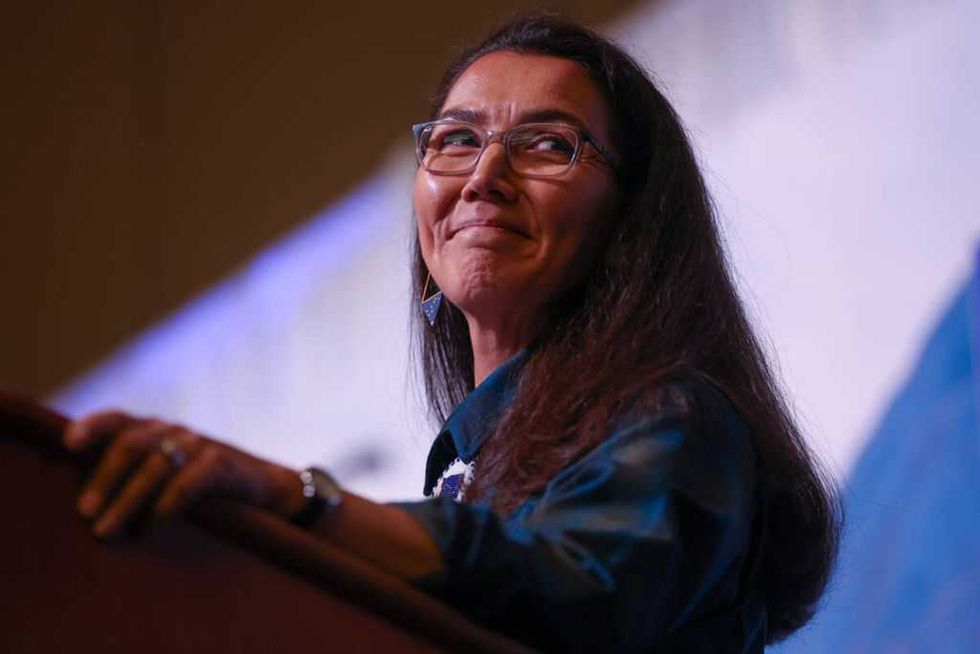
“Mary Peltola stood by as Kamala Harris restricted Alaska’s energy production, including ANWR, and she’d shutter Alaskan energy and jeopardize jobs once again if elected,” National Republican Senate Committee press secretary Bernadette Breslin told Blaze News when asked about Peltola’s move.
Harris isn’t finding takers across the Midwest either.
“I received 9,000 more votes than Harris in 2024,” Democrat candidate for Wisconsin’s 3rd Congressional District Rebecca Cooke said in a statement to Politico. “I don’t need anyone to come and campaign with me in my district. I do the work of building relationships — including across the aisle — on my own.”
Though Cooke is distancing herself from Harris now, she was an outspoken supporter during the 2024 presidential election.
Cooke previously and unsuccessfully ran for the same congressional seat in 2022 and 2024.
Iowa Democratic Senate nominee Josh Turek gave a flat “no” when asked if he wanted the former vice president’s help on the campaign trail. Rob Sand, the Democrat running for governor of Iowa, provided Politico a similarly unenthusiastic response.
“Nope,” Sand said. “Let’s move on.”
Kansas Democrat Adam Hamilton, who is also running for the U.S. Senate, shooed the former vice president away from his race a bit more diplomatically.
“Having somebody from California come in and try to tell Kansans who they should vote for is a pretty bad idea,” the Methodist pastor told Politico.
Hamilton’s campaign is widely considered a long shot. Kansas hasn’t sent a Democrat to the Senate since 1932, and he’s lagging several points behind Sen. Roger Marshall (R), even in Democrat-leaning polls.
Though Hamilton may be trying to draw a line between Harris’ West Coast wokeness and his Midwest moderation, his track record suggests there isn’t much daylight between the two. The Methodist pastor admonished his congregation and called on them to scrutinize their white privilege in 2020.
Hamilton’s Resurrection church also touts extensive LGBTQ+ programming, and he has repeatedly landed in hot water for his unorthodox theological views.
Though she's striking out in the heartland, Harris is finding some purchase with Southern Democrats.
Former North Carolina Gov. Roy Cooper, now running for Senate, accepted a Harris endorsement in October 2025 and previously called the former vice president as “my friend Kamala.”
Georgia Sen. Jon Ossoff is also quietly embracing Harris as he tries to win another term. The pair held a closed-door “Women for Ossoff” tele-rally in August, which was quickly slammed by his Republican challenger, Rep. Mike Collins.
Harris faces uneven terrain looking ahead to a 2028 run. Many in her own party would like her to just go away already, but a few stalwart supporters could make it to the Senate this November.
Either way, Democrats' tumultuous rebrand isn't over yet.
Like Blaze News? Bypass the censors, sign up for our newsletters, and get stories like this direct to your inbox. Sign up here!
By now, most Americans have figured out that the push for the SAVE America Act is performative — perhaps even more than the usual Washington standards.
Republicans have a closing window of unified control of the House, Senate, and White House. Yet the structural advantages Democrats spent decades building remain largely untouched outside temporary executive action. The SAVE America Act is one way to answer that problem with basic election rules such as voter ID and limits on mail-in voting.
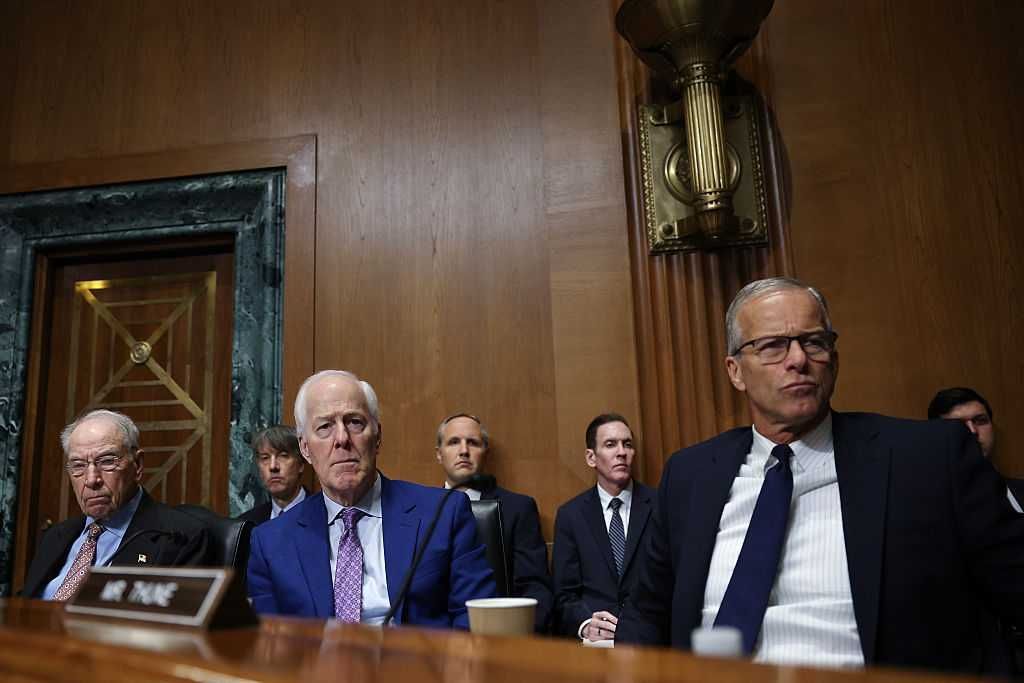
John Thune understands leverage perfectly well. It is time for Republicans who say they want this bill to pass to prove they do, too.
Elections remain vulnerable to the same disputes over identification, mail voting, and administration that Republicans have spent years denouncing, while other institutional fights — immigration enforcement and reform of the FBI among them — remain unfinished. If Republicans lose unified control without locking in durable changes, a future Democrat administration can reverse much of what has been done by executive order.
Despite what the D.C. consultant class says, Republican success in the midterms will hinge on base motivation. Voters need something to vote for. Democrats are already portraying Republicans as the party of their own DEI: data centers, the Epstein class, and the Iran war.
Fair or not, those are political anchors. Without a positive agenda, the charge will stick.
The consultant class responds with the usual sermon about unity, which in practice means: Get in line and do what leadership says. But voters do not want WWE. They want UFC.
The Republican Party is already in an internal fight over what it will become after Trump, and only one side seems willing to use leverage. Some will call that destructive infighting. But the fight is already happening, and it will shape the party for decades. The question is not whether Republicans should have an internal struggle. It’s whether conservatives intend to participate in it as effectively as the senators and institutions working against them.
Recent Senate fights make the point. Republicans have held up ICE funding to block an Anti-Weaponization Fund and delayed Attorney General Todd Blanche's confirmation. Lisa Murkowski (R-Alaska) used leverage to extract millions for Alaska nonprofits.
Politics is, at bottom, the acquisition and use of leverage. The Senate's left-wing Republicans understand that. The right too often makes threats it will not carry out — and loses.
The real show is not on the Senate floor. It is in the bank accounts.
The money controlled by Majority Leader John Thune (R-S.D.) and the National Republican Senatorial Committee, led by Tim Scott (R-S.C.), explains more than another ideological taxonomy ever could. Hundreds of millions of dollars flow through leadership-aligned committees and outside groups from interests that want something from Washington. That money becomes both carrot and stick: protect friendly incumbents, discipline troublesome ones, and keep conservative senators talking rather than acting.
RELATED: Drain the swamp? Meet the refill.

That’s how Thune and Scott can go on television praising the SAVE America Act while the leadership machine supports senators who stand in its way. My friends and I call this the head pat: Give conservatives a little rhetorical affection while making sure nothing they want actually happens. And it works. All the time.
The same network is lining up behind Senator Darline Graham Nordone (R-S.C.), rather than original SAVE America Act co-sponsor Ralph Norman. The scale is enormous. As of June 30, the Thune-aligned Senate Leadership Fund reported $238 million cash on hand, while its allied network, including One Nation, said it had raised more than half a billion dollars for the midterms. Those are obscene sums for a party that increasingly presents itself as the vehicle of working-class voters.
More important, the money is not politically neutral. It is a mechanism for deciding which senators get protected, which challengers get starved, and which legislative priorities receive serious attention.
Some of that war chest will protect senators most resistant to the SAVE America Act. Leadership gives them money and political lifelines while they deny the bill a vote. Those dollars do not come with strings attached for Republican voters. They come from donors and industries that need things from the Senate.
That is the leverage SAVE America Act supporters have ignored. If leadership can use money and floor time to reward compliance, conservatives can make leadership pay a price for blocking their priorities. Until they do, they have not begun to fight.
The absence of pressure is itself revealing. If leadership truly regarded passage of the SAVE America Act as a must-have priority, it would be using every institutional tool at its disposal to find votes and impose costs on holdouts. It is not.
The Senate made the problem obvious on August 8. Instead of forcing a vote on the full SAVE America Act, it took up a narrower photo-ID bill from Senator Jon Husted (R-Ohio). It failed 52-46. Then, that same morning, Thune filed cloture on the CLARITY Act crypto bill — a leadership priority that could consume much of the Senate's limited September floor time before the midterm campaign takes over.
Thom Tillis (R-N.C.), one of four Republicans who refuses to back the SAVE America Act, said the quiet part out loud: Unless its supporters find 60 votes, “they know it’s dead, and so all this is theater.” Thune says the Senate is “bound by arithmetic.” But arithmetic is not an alibi. Leadership chooses where to spend its money, floor time, and pressure.
So stop asking nicely.
RELATED: How Kamala Harris accidentally sold the SAVE America Act
Senate leadership routinely holds unrelated priorities hostage to get what it wants. Republicans who actually want the SAVE America Act should do the same. When the Senate returns in September, it will face a college sports bill, Thune's CLARITY Act, and the National Defense Authorization Act. Those are leverage points.
A team sport works only if everyone is playing the same sport, wearing the same jersey, on the same field. Senate leadership is not behaving like it is on your team. Treating it as though it is only guarantees another round of speeches, cable hits, and failure.
The base needs to see a cage fight. Give the people what they want.
Refuse to hand leadership what it wants until the SAVE America Act gets an up-or-down vote at a 51-vote threshold. That is the same kind of hostage-taking the Senate’s left flank uses successfully. Thune understands leverage perfectly well. It is time for Republicans who say they want this bill to pass to prove they do, too.
 The rebates will only go to unsubsidized enrollees in 30 states.
 Almost a year ago, Missouri Gov. Mike Kehoe signed a new congressional map into law. The lawsuits began almost immediately.
 Trump may not literally be on the ballot, but his accomplishments and future victories are.
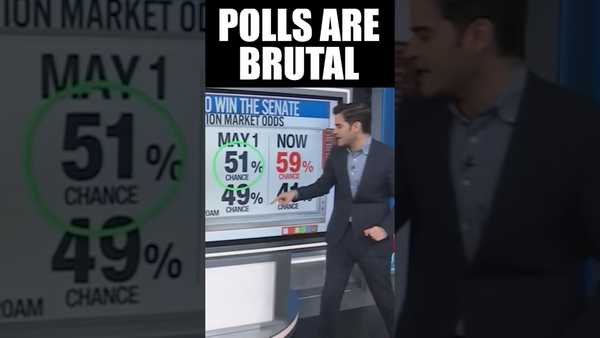
 The obstruction from anti-Trump GOP senators is severely threatening Republican chances in the upcoming midterms.
 www.theblaze.com
 www.theblaze.com