Deion Sanders proves why racial idolatry destroys teams


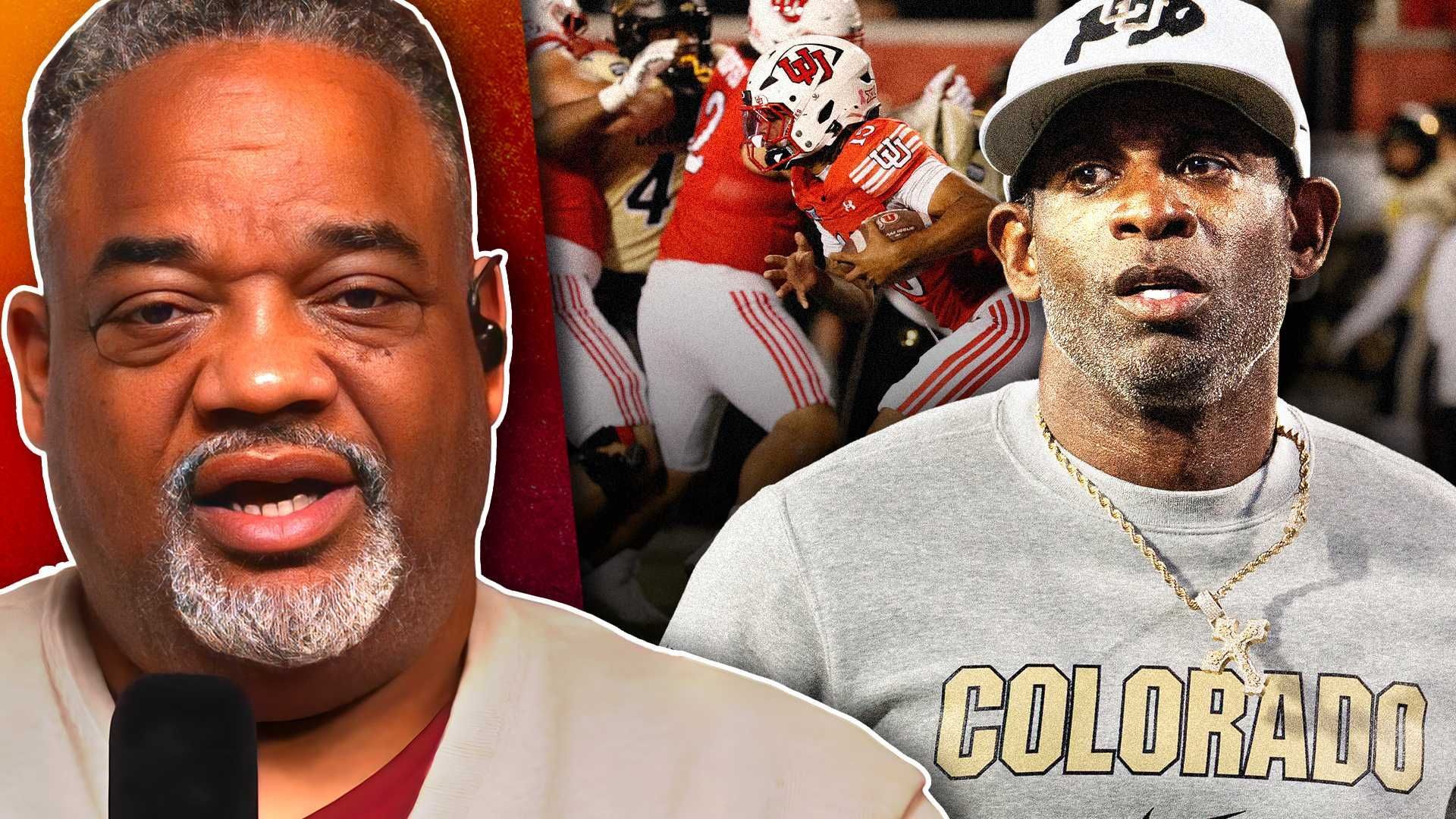
In a shocking defeat that left Colorado coach Deion Sanders dumbfounded, his team suffered an embarrassing 53-7 loss to Utah — but unlike everyone else, BlazeTV host Jason Whitlock isn’t surprised.

“Deion Sanders is who I thought he was and who I said he was. And the reason I’m celebratory of this is because Deion sets a bad example. He leads through racial idolatry. He leads through a victimhood mentality,” Whitlock says.

“Deion definitely loves to play the race card. Deion definitely sees himself as a victim. Deion definitely wants to be a race soldier,” he continues, likening Sanders to Pittsburgh Steelers coach Mike Tomlin.


“They’re lathered in so much over-the-top praise. They’re lathered in so much idolatry and people rallying around them and people excusing any and everything about their coaching that it undermines their success,” he explains.

Whitlock also points out that after Sanders’ winning streak last year, people like Stephen A. Smith were ”running around pretending like Deion Sanders has set the world on fire.”

“He can get all the money without putting in the same level of effort as other coaches. They’ve been running around with Deion Sanders on these Aflac commercials with Nick Saban as if Deion Sanders is the second coming of Eddie Robinson. Deion skipped over everybody, and the next thing you know he’s right next to Nick Saban,” he says.

“He’s not on that level, but we gave him all the rewards as if he had,” he adds, pointing out that this is common in the black community.

“There’s a burden to being black in America that black people have participated in and helped create. The removing of standards, the lowering of standards is crippling black Americans. And you can see it in football,” he says.

“You can see what’s happening at Colorado with Deion Sanders where he was anointed and appointed and celebrated as this great coach even though it hadn’t been earned. And now we’re seeing the proof of it,” he adds.

Want more from Jason Whitlock?

To enjoy more fearless conversations at the crossroads of culture, faith, sports, and comedy with Jason Whitlock, subscribe to BlazeTV — the largest multi-platform network of voices who love America, defend the Constitution, and live the American dream.
Whitlock: Tampa coach Todd Bowles rejects media’s racial script


Mike Royko inspired my journalism career. He looked nothing like me or anyone in my family. Royko wrote a syndicated column for the Chicago Tribune. His columns badgering local politicians and ridiculing American presidents and celebrities earned him the 1972 Pulitzer Prize for commentary and worldwide acclaim.

I wanted to be like Mike.

It did not matter that he was old, white, and Polish and that I was young, black, and fat. As a freshman at Ball State University in 1985, I switched my major to journalism with the desired goal of being the sportswriting version of Mike Royko.

His columns rocked. I discovered them around the age of 12 while reading the Indianapolis News, my hometown’s afternoon newspaper. The News ran two Royko columns per week. I never missed them. They made me laugh. They angered me. They broadened my view of the world.

I wanted to be like Mike.

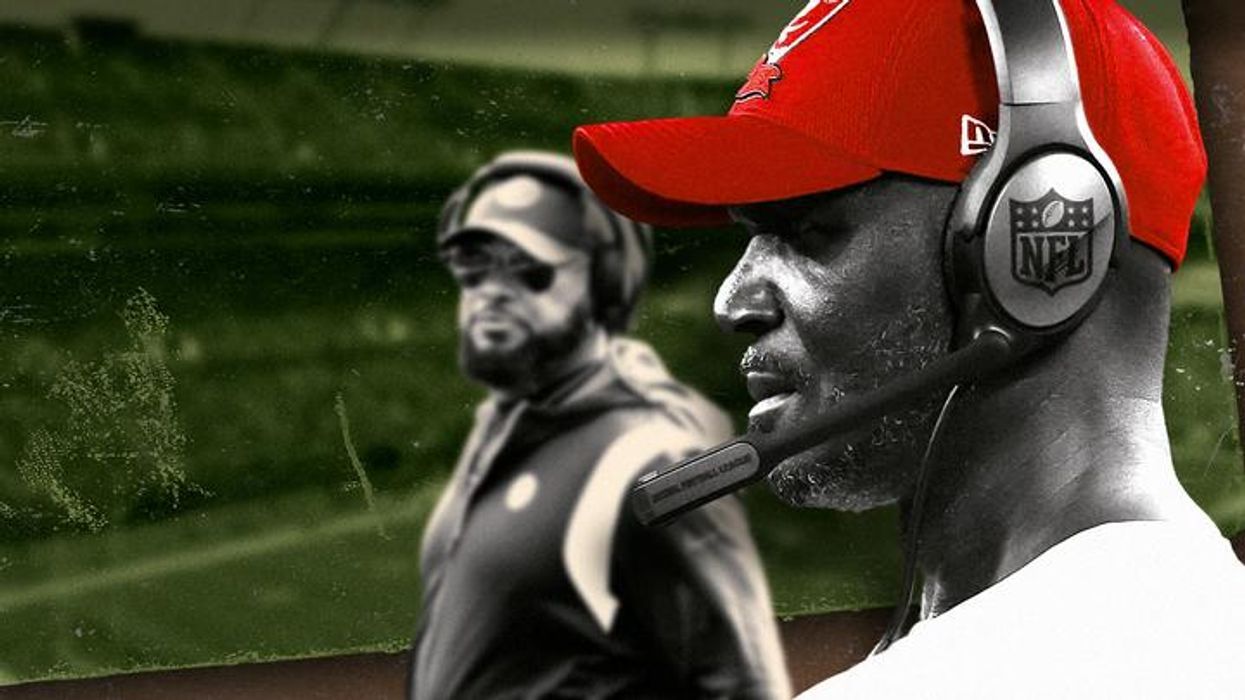
I thought about Royko on Thursday when a clip of Tampa Bay Buccaneers head coach Todd Bowles went viral. Reporters peppered Bowles with questions about his upcoming matchup with Pittsburgh head coach Mike Tomlin. Bowles and Tomlin are both black. Corporate media believe the Tomlin-Bowles clash has additional significance because of their shared dark skin. Bowles rejected the notion.

“I have a very good relationship with Tomlin,” he said. “We don’t look at what color we are when we coach against each other. I have a lot of very good white friends that coach in this league as well.”

Unsatisfied with his answer, another reporter told Bowles: “You also understand that representation matters, too, right? And that when aspiring coaches, or even football players, they see you guys, they see someone who looks like them, that grew up like them, that has to mean something.”

Bowles rejected that notion, too. He argued that the question made black coaches seem like “oddballs.”

“I think the minute you guys stop making a big deal about it, everybody else will as well,” he said.

Thirty-seven years ago, I set my sights on being the next Mike Royko. It never crossed my mind that I couldn’t do it because of my skin color or Royko’s. I saw a man having phenomenal success in an industry I wanted to enter. I thought I could do it, too.

What has changed in the last four decades?

Barack Obama wanted to be president of the United States. Did he need to see another half-black man become president before realizing he could do it?

You know what matters more than “representation”? Belief in yourself. The foundation for self-belief, aka self-confidence, is belief in God, a belief that you are made in God’s image. Skin color loses relevance when you authentically believe we were all created by the same higher power.

The secular worldview undermines self-confidence. It reduces people to skin colors, genders, and sexual preferences.

Todd Bowles probably wants to be the next Bill Belichick, the most successful coach in NFL history. That should be the goal of every NFL coach. Bowles doesn’t want to be the best black head coach. He wants to be the best. He believes he’s capable of being the best.

The reporter telling Bowles that black coaches “grew up like each other” is naive and foolish. She has no idea whether Tomlin and Bowles had similar childhood experiences. It’s all speculation, driven by the assumption that black Americans have a shared upbringing.

My roommate in college, Todd Finnell, grew up in the house his college-educated parents owned. I grew up in apartments. My parents divorced when I was 5 years old. My dad didn’t graduate high school. My mom was a factory worker. He grew up Catholic. I grew up Baptist. He attended a private high school. I attended a public high school.

We were roommates for five years at Ball State. He’s like a brother to me.

I had more in common with Mike Royko. Royko’s family owned a neighborhood bar in Chicago that catered to white factory workers. Royko lived in an apartment above the bar. He grew up on a barstool. My dad owned a neighborhood bar that catered to factory workers. I grew up on a barstool listening to working-class black men and women socialize.

It wasn’t until he died in 1997 that I realized how similar my upbringing was to Royko’s. When he passed, I started collecting his books and many of the things written about his life and career.

Skin color is a superficial issue that corporate media want us to obsess about. The media point us away from the deeper things that tie us together.

It was inspiring to see Todd Bowles reject the racial manipulation commonplace in corporate media. Most people just instinctively tell reporters what they want to hear. Let’s hope Bowles isn’t punished for failing to follow the script.

Brian Flores’ Lawsuit Against The NFL Will Only Damage Black Head Coaches

Flores’ unfounded accusations against the NFL of ‘systemic racism’ will set back the relationship between owners and black coaching talent.