Lindsey Graham dead at 71
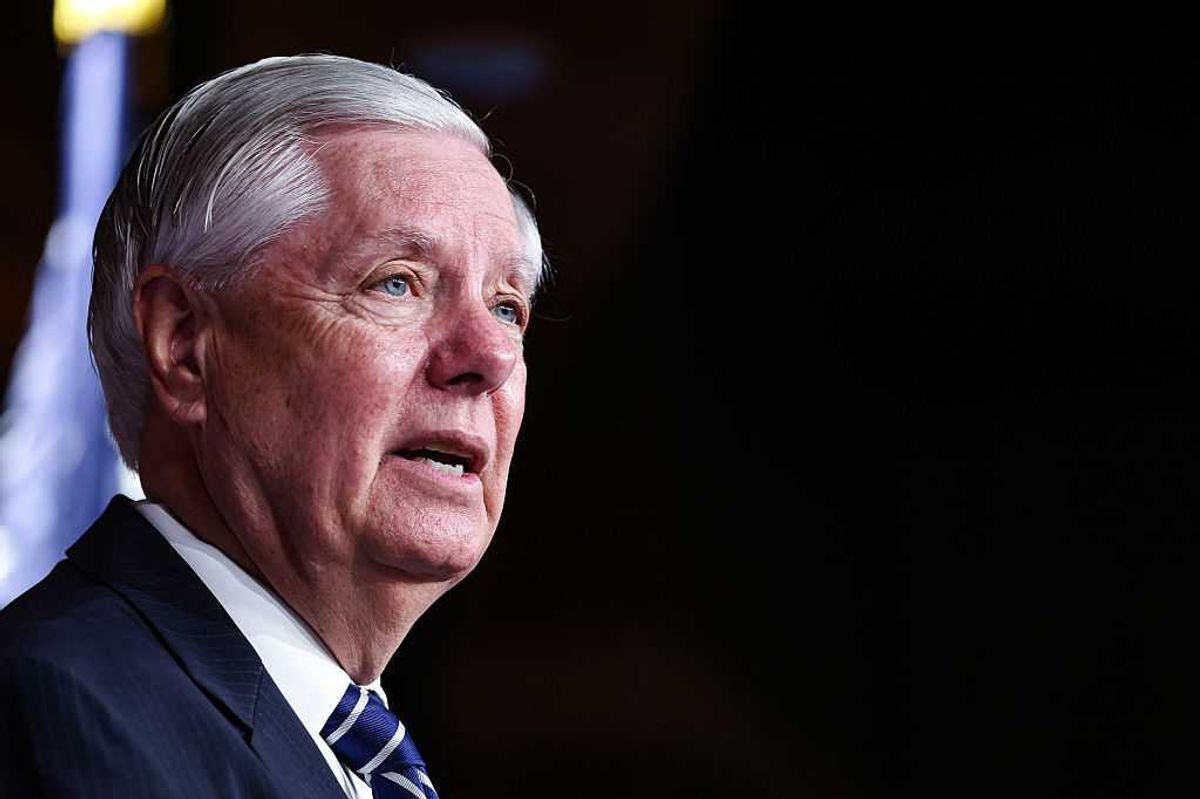


Republican United States Senator LIndsey Graham who turned 71 two days ago on July 9 and who served in the Senate for over two decades died overnight according to a statement from his office.

"On the evening of Saturday, July 11, U.S. Senator LIndsey Graham passed away from a brief and sudden illness," the statement read. "Senator Graham's family appreciates prayers at this time and asks for privacy during this incredibly difficult period."

'He was always working, and was a true American Patriot. Lindsey will be greatly missed!!!'

Graham, born in Central, South Carolina on July 9, 1955 and received a law degree from the University of South Carolina. In 1982, Graham joined the U.S. Air Force as an officer in the Judge Advocate General's Corps. He served on active duty until 1989, in the guard from 1989 until 1995, and as a member of the Air Force Reserve after that until 2015. He left the reserve having achieved the rank of colonel.

Graham served stateside during the first Gulf War in legal support of departing troops. He served in Iraq briefly during the war on terror in both Iraq and Afghanistan and received a Bronze Star for his service.

For most of his career, after leaving active duty military service, Graham has been involved in politics. He was first elected to the South Carolina House of Representatives in 1992 from Oconoee county. Shortly after, in 1994 he was elected to South Carolina's third congressional district.

After four terms in the house, Graham was elected to replace Strom Thurmond (R) as the U.S. senator from South Carolina. Thurmond had been in office since 1954.

Graham was a strong supporter of an interventionist foreign policy. He was an advocate for U.S. financial support for Ukraine in its war with Russia and had visited the nation shortly before his passing. Graham was also a proponent of military intervention all across the Middle East, including the recent conflict with Iran.

Graham was a longtime friend of fellow Republican Senator John McCain of Arizona and supported his campaigns for president of the U.S..

After running for president himself in 2016, Graham became a staunch ally of his opponent in that race President Donald Trump.

Trump in a statement on Truth Social wrote, "Senator LIndsey Graham, one of the greatest people and Senators I have ever known, is dead! He was always working, and was a true American Patriot. Lindsey will be greatly missed!!!"

Graham was never married and leaves no children.
Pentagon floats ousting Spain from NATO, punishing allies for not toeing the line on Iran


The U.S-Iran conflict is unpopular at home with 58% of American adults signaling opposition in a recent Economist/YouGov poll, and surveys conducted both prior and immediately after the initial U.S.-Israeli strikes in late February revealed a general aversion to getting dragged into another foreign entanglement.

While the military intervention is unpopular in the U.S., the opposition to it is significantly greater in Europe, particularly in Spain, where such opposition has proven politically expedient for the ruling Socialist Party.

'No worries.'

In addition to criticizing the conflict, leftist Spanish officials have in recent months publicly underscored their unwillingness to materially assist the U.S., going so far as to refuse the U.S. to use the jointly run bases at Morón and Rota to strike Iran.

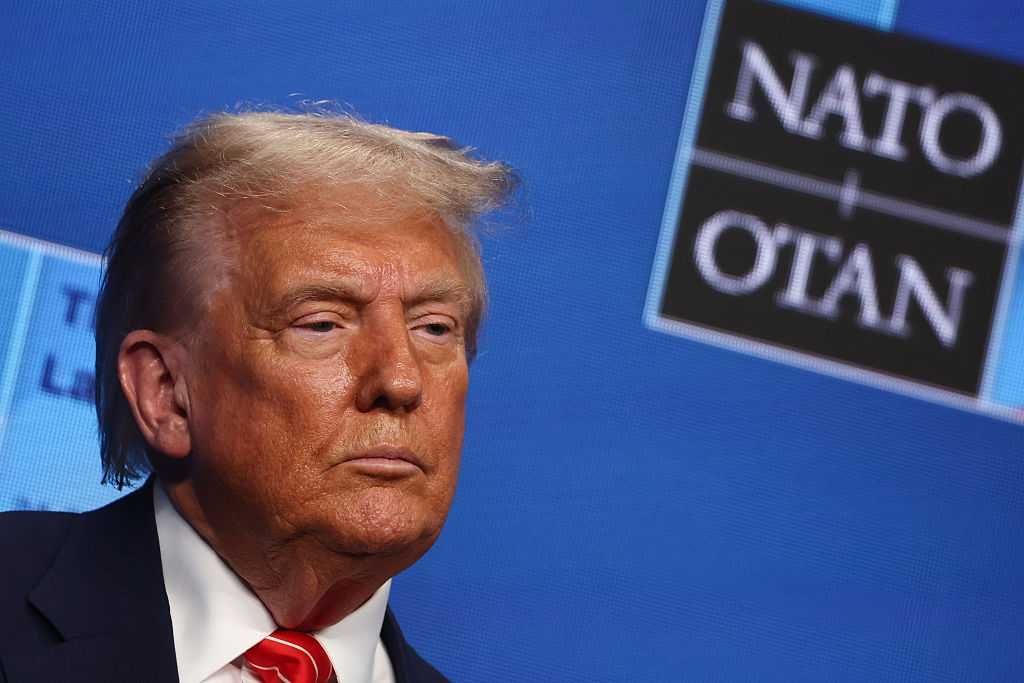
A U.S. official claimed to Reuters that, in an internal email, the Pentagon has floated the idea of pushing Spain out of NATO and punishing allies that failed to toe the line on the Iran conflict.

The email reportedly expresses annoyances over certain allies' reluctance or outright refusal to permit the U.S. access, basing, and overflight rights for the Iran conflict, which the official said were altogether described as "the absolute baseline for NATO."

RELATED: Navy secretary abruptly fired despite ongoing Iran blockade

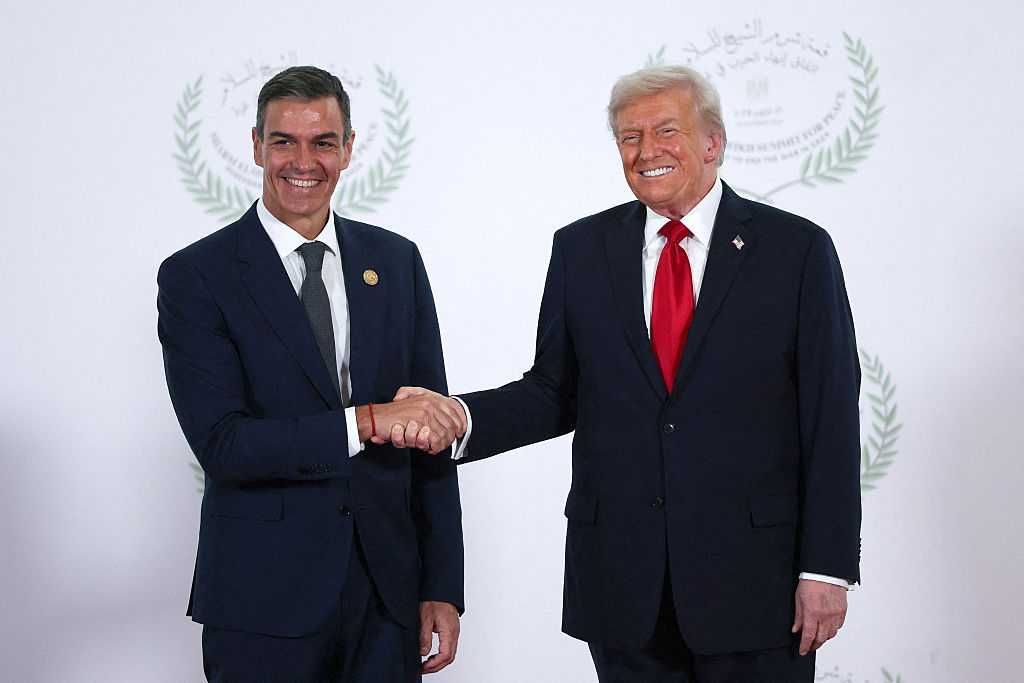
President Donald Trump and Spanish Prime Minister Pedro Sanchez shake hands. Suzanne Plunkett - Pool/Getty Images
The email identifies a number of sanctions for such noncooperation that might serve to "decreas[e] the sense of entitlement on the part of the Europeans," including suspending "difficult" countries from important positions at NATO, the official claimed.

While base closures in Europe were not among the proposed responses, ousting Spain from the alliance — a move the email said would be symbolic but have a limited impact on U.S military operations — is on the table, the official added. It's unclear how such an ouster would be accomplished given NATO's founding treaty does not contain a formal mechanism to eject a member.

The email reportedly also raises the possibility of rethinking U.S. diplomatic support for European "imperial possessions" such as Britain's Falkland Islands off the coast of Argentina.

When asked about the email, Pentagon press secretary Kingsley Wilson told Reuters, "As President Trump has said, despite everything that the United States has done for our NATO allies, they were not there for us."

"The War Department will ensure that the President has credible options to ensure that our allies are no longer a paper tiger and instead do their part," said Wilson. "We have no further comment on any internal deliberations to that effect."

President Donald Trump said in a March interview with the New York Post that Spain "is a loser" and "very hostile to NATO."

"Not a team player, and we’re not going to be a team player with Spain either," added Trump, suggesting elsewhere that the U.S. could just co-opt the Spanish bases and slap Madrid with a trade embargo.

Spanish Prime Minister Pedro Sánchez, whose country's defense spending has chronically fallen short of NATO targets, brushed off the email, telling Politico, "No worries."

"We are fulfilling our obligations toward NATO," said Sánchez.

"The Spanish government's position is clear: absolute cooperation with our allies, but always within the framework of international law," added the socialist prime minister.

Following the report about the Pentagon memo, a spokesman for the German government suggested that Spain's membership was safe, reported the BBC.

"Spain is a member of NATO. And I see no reason why that should change," said the German spokesman.

Italian Prime Minister Giorgia Meloni told NATO members on Friday to stick together, noting the alliance is a "source of strength."

"We must work to strengthen NATO's European pillar ... which must clearly complement the American one," added Meloni, who was recently criticized by Trump over her defense of Pope Leo XIV.

The Department of War did not respond to Blaze News' request for comment.

Like Blaze News? Bypass the censors, sign up for our newsletters, and get stories like this direct to your inbox. Sign up here!

'A piece of ice for world protection': Trump rules out military intervention in Greenland


Europeans breathed a sigh of relief after President Donald Trump ruled out using military intervention to acquire Greenland.

Trump took another victory lap Wednesday during his speech at the World Economic Forum in Davos, Switzerland, recapping all the successes of the first year of his second term. During these remarks, Trump clarified that he would not send boots on the ground in the "piece of ice" known as Greenland.

'I don’t have to use force.'

"We want a piece of ice for world protection, and they won't give it," Trump said. "We've never asked for anything else."

"They have a choice," Trump added. "You can say yes, and we will be very appreciative, or you can say no, and we will remember."

RELATED: Trump cites Nobel Peace Prize snub in latest push for Greenland takeover

Photo by Chip Somodevilla/Getty Images

Trump followed his ominous statement with a reassuring one, remarking for the first time publicly that the United States will not forcefully take Greenland.

“We probably won’t get anything unless I decide to use excessive strength and force, where we would be, frankly, unstoppable, but I won’t do that,” Trump said.

RELATED: 'Make America Go Away': Protests erupt in Greenland after Trump threatens tariffs on Europe

Krisztian Bocsi/Bloomberg via Getty Images

“That’s probably the biggest statement I made, because people thought I would use force. I don’t have to use force. I don’t want to use force.”

Like Blaze News? Bypass the censors, sign up for our newsletters, and get stories like this direct to your inbox. Sign up here!

Zelensky’s Groveling PR Offensive Hits The DC Uniparty’s Sweet Spot

The $100 billion poured into Europe’s most corrupt nation so far is both excessive and unrelated to direct American national interests.

Russia Squeezes Southern Ukraine, But Ukrainians Rebound In Northwest Battle Of Bucha

Recently reported Russian successes are discouraging, but not necessarily fatal to Ukraine’s cause.

The West Could Have Prevented The Russo-Ukrainian War, But Chose Not To

President Biden and our European allies closed every off-ramp for Russia while misleading Ukraine into thinking we would defend it.

In Opposing War With Russia, Tucker Carlson Champions The Hard-Won Truths Of Putting American Interests First

Reaction to Tucker Carlson’s monologue on Ukraine proves neither liberalism nor its cousin progressivism is compatible with the United States’ national interest.

Following Debacles In Iraq And Afghanistan, Failed Interventionists Are Now Agitating For Wars In Ukraine And Taiwan

The debate over Ukraine and Taiwan is actually a debate about whether American foreign policy should serve our interests, or everyone else's.

Afghanistan Was A Bipartisan Disaster, And We Must React Accordingly

There’s no nice way to say this, but somebody has to: There have been a lot of bad reactions on the right to the Afghanistan calamity.

Biden Made The Right Decision In A Disastrously Wrong Way, And There’s No Point In Pretending Otherwise

As the last of our troops leave Afghanistan despite U.S. citizens behind on the ground, bluecheck Twitter is feverishly disseminating an Atlantic essay explaining, per its Read More