Why Hasn’t Trump’s CDC Ditched This Rule That Punishes Neighborhoods For Being Too White?
 Race discrimination is illegal and unconstitutional regardless of 'equitable' motives.
'I'll get the heat': Milwaukee judge is now a convicted felon after violent illegal alien dodged ICE from her courtroom
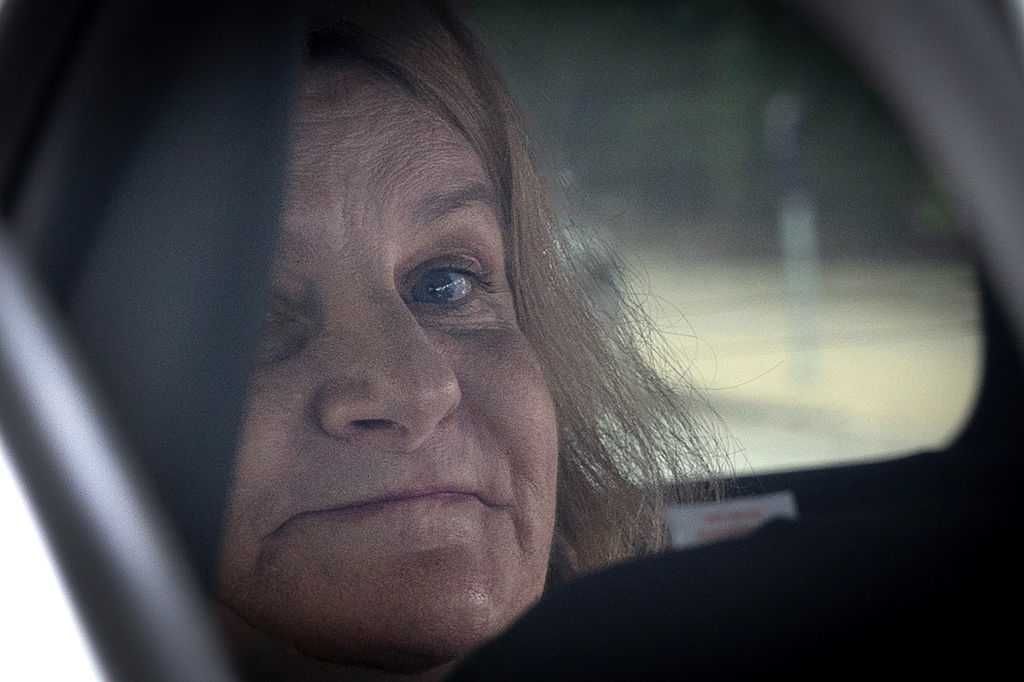
Milwaukee County Judge Hannah Dugan tried her best to avoid consequence for her role in Eduardo Flores-Ruiz — an illegal alien from Mexico who later pled no contest to one count of battery and guilty to re-entering the U.S. — briefly evading U.S. Immigration and Customs Enforcement.
Her best was evidently not good enough.
Dugan, relieved of her duties as a judge in April by the Supreme Court of Wisconsin, was found guilty on Thursday of obstructing federal agents — a felony. The jury did not, however, find Dugan guilty of the lesser misdemeanor charge of concealing a fugitive from justice.
'Dugan's actions to obstruct this violent criminal’s arrest take "activist judge" to a whole new meaning.'
"The defendant is certainly not evil nor is she a martyr for some greater cause," Brad Schimel, the interim U.S. attorney for the Eastern District of Wisconsin, told reporters after Dugan learned her fate. "We must all accept the verdict peacefully."
Schimel emphasized that "experience and common sense as well as the evidence presented in this case" demonstrate that the safest place to execute an arrest warrant is within a public area of a courthouse that has security screening — and that the 66-year-old judge's actions endangered multiple people.
"The defendant's actions provided an opportunity for a wanted subject to flee outside that safe courthouse environment, which led to a dangerous foot chase through automobile traffic and eventually to an agent taking the subject to the ground, which is always hazardous for both the officer and the suspect," said Schimel. "There was certainly potential for many other dangers as well."
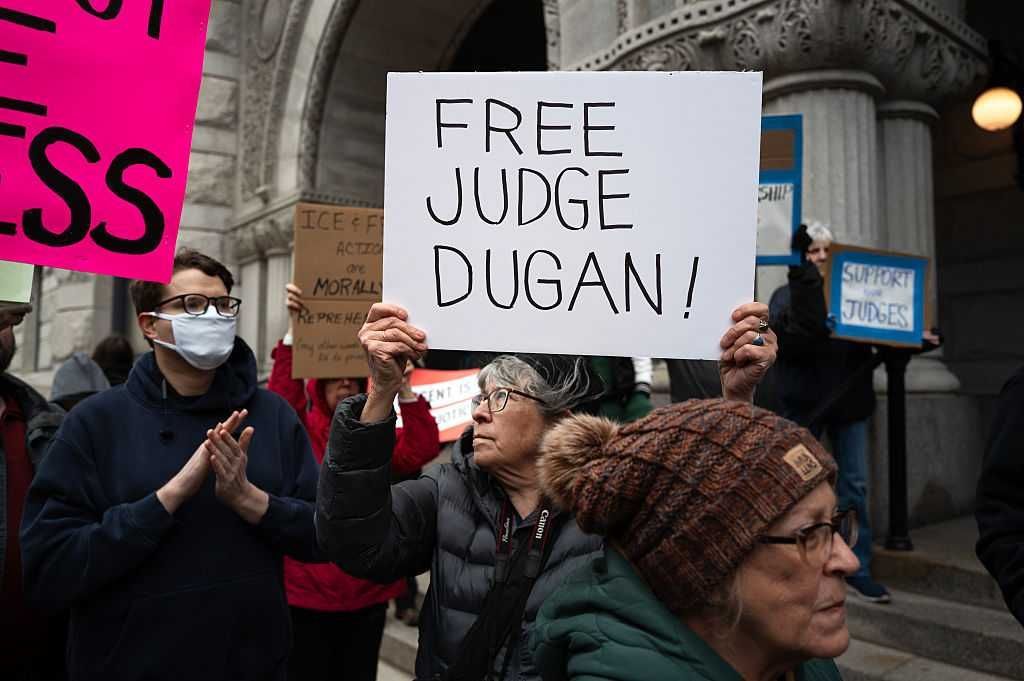
ICE agents accompanied by both FBI and Drug Enforcement Administration agents traveled to the Milwaukee County Courthouse on April 18, 2025, to arrest Flores-Ruiz, aware that the previously deported Mexican national was scheduled to attend a pre-trial hearing overseen by Dugan.
Upon learning of ICE's presence from an attorney, the now-felonious judge "became visibly angry, commented that the situation was 'absurd,' left the bench, and entered chambers" while Flores-Ruiz was seated in the gallery of the courtroom, according to the original FBI charging document.
The indictment claimed that Dugan proceeded to commit several affirmative acts to aid the illegal alien in evading arrest, including:
- confronting members of the ICE task force and falsely telling them they needed a judicial warrant to effectuate the arrest;
- directing the federal agents to go to the chief judge's office after she learned they had the required administrative warrant for Flores-Ruiz's arrest;
- dealing with Flores-Ruiz's criminal case off the record while the ICE task force was in the chief judge's office;
- directing the illegal alien and his counsel to flee the courtroom via a non-public jury door; and
- advising the Mexican's counsel that he could appear remotely for his next court date.
The judge's actions were observed by multiple witnesses and captured on film.
— (@)
With Dugan's help, the Mexican national ran out of the building. Federal agents were, however, able to catch up with him.
Flores-Ruiz was ultimately deported on Nov. 13.
Tricia McLaughlin, assistant secretary of the Department of Homeland Security, noted at the time, "Eduardo Flores-Ruiz, a previously removed illegal alien, has a laundry list of violent criminal charges, including strangulation and suffocation, battery, and domestic abuse. Judge Hannah Dugan's actions to obstruct this violent criminal’s arrest take 'activist judge' to a whole new meaning."
In the lead-up to the trial, Dugan's lawyers tried desperately to get her case dismissed, citing the U.S. Supreme Court's ruling in Trump v. United States and claiming that the radical judge was immune from criminal prosecution for judicial acts, that her prosecution violates the limits of federal power under the 10th Amendment, and that her indictment should be dismissed under the canon of constitutional avoidance.
Such efforts proved fruitless.
The jury saw and heard plenty of damning evidence during the trial that began on Monday.
They heard, for instance, an audio recording where Dugan told a court reporter that Flores-Ruiz could escape through a side door, reported the Milwaukee Journal Sentinel.
Although Dugan's court reporter volunteered to walk the illegal alien out, Dugan said she instead would do it: "I'll get the heat."
The jury also heard from numerous witnesses, including Milwaukee County Circuit Judge Kristela Cervera, who testified, "Judges should not be helping defendants evade arrest."
Cervera was the individual who escorted the federal agents to Chief Judge Carl Ashley's office.
For her felony conviction, Dugan could face up to five years in prison and a maximum fine of $250,000.
The disgraced judge's attorney, Steve Biskupic, indicated Dugan's team will file a motion with the Clinton-appointed federal judge overseeing the case, U.S. District Judge Lynn Adelman, asking to set aside the conviction.
"The case is a long way from over," said Biskupic.
While Dugan has been on administrative leave for several months, the New York Times indicated she has continued to collect her $174,000 salary.
Like Blaze News? Bypass the censors, sign up for our newsletters, and get stories like this direct to your inbox. Sign up here!
Deadly shoot-out between off-duty cop and male who pistol-whipped him caught on police dashcam video

Milwaukee Police on Monday released dashcam video showing a deadly shoot-out between an off-duty officer and a male who pistol-whipped him just prior to the shoot-out.
Police said the officer was involved in a minor car accident in the 4800 block of West Mill Road while on his way to work just before 8:30 a.m. Thursday.
Police said video of the incident was released to the public 'in the interest of transparency.'
Both drivers pulled over and exited their cars, police said, adding that as they were assessing the accident, the other driver approached the off-duty officer, pulled a gun, and struck the off-duty officer in the face with it.

The off-duty officer drew his department-issued firearm, police said, adding that they exchanged gunfire, and the 26-year-old male who struck the off-duty officer was shot and pronounced dead at the scene.
While no one else was struck by gunfire, police said the off-duty officer was taken to a hospital for treatment of injuries as a result of the incident.
Police said the off-duty officer is a 40-year-old male with over 21 years of service and was placed on administrative duty, as is routine in officer-involved shooting investigations.
Police said the Milwaukee Area Investigative Team is investigating the incident, and the West Allis Police Department is the leading agency.
Police said video of the incident was released to the public "in the interest of transparency," after regulations requiring police to give next of kin a chance to view relevant video within 48 hours of the incident and regulations requiring police to release relevant video within 15 days of a critical incident were met.
What's more, WISN-TV reported that the family of Elijah Wilks — the fatally shot male — wanted the video released early and called the shooting justified, as they believe the clip shows everything that occurred.
WISN added that the release of the video came after grainy surveillance video was posted on social media over the weekend.
Attorney B'Ivory LaMarr, who represents the family, told the station that "Elijah pulls out a firearm with his right hand, and ... he's essentially swinging it in the direction of the off-duty officer. One time. It's almost like a punch is what actually transpired."
Last Thursday, a neighbor said police pulled a 10mm bullet from his living room wall, WISN noted, adding that video indicates Wilks was facing that direction. Milwaukee police noted to the station that they don't have 10mm service weapons.
"What this family has done is made the difficult decision, while they're grieving, to put aside their privacy, put aside their grieving, to allow again the opportunity for accountability to actually exist where the public can see what they saw," LaMarr added to WISN. "And just try to move past the situation and heal this city."
Like Blaze News? Bypass the censors, sign up for our newsletters, and get stories like this direct to your inbox. Sign up here!
WI Republican Linked To Explicit Trans Account Was A Trump-Dissing RINO Who Pushed Leftist Election Rules
 Whitefish Bay businessman Bill Berrien -- who also had a past dalliance with the disastrously kinky election method known as ranked-choice voting -- has dropped out of the Badger State governor’s race.
The past is a nice place to visit, but I wouldn't want to live there

Recently, my wife and I spent a night in Milwaukee. I was there for work, and she came along just for the fun of it. We left the kids with our parents and had 30 peaceful hours all to ourselves.
When you are in the thick of raising young kids, getting away for just one night feels like a hard reset or some kind of meditative retreat that leaves you clear in both mind and spirit. It was a good trip, it was a fun trip, it was a reflective trip.
We sat outside on the roof at Benelux in the Third Ward imagining life if we never left. If we never had kids. If we never changed. If we just ... stayed.
We lived in Milwaukee for a few years before we had kids. We rented a big loft with concrete floors and high ceilings. It was just one big, barren, concrete room. The only walls were the ones separating the bathroom from the rest of the place. It was up on the eighth floor; we had a great view of downtown.
We used old shipping pallets to divide the room. We didn’t have any money back then. We still don’t, but we have more than we did. When we moved to Milwaukee, we didn’t have jobs. I convinced the landlord to rent us the apartment without proof of income or proof of employment. I don’t know if it was possible because things were just really different before, because she was just really nice, or because I was just really convincing. It was probably a mix of all three.
Cart blanche
A few weeks after we moved, we found a shopping cart abandoned by a bus stop. We took it home and used it every week at the grocery store. We would push it to store empty, buy our groceries, and then push it, now completely full, back to the apartment again, stowing it next to the front door until next week’s trip. It was efficient and worked well, and I am sure we looked absolutely absurd.
We had a great time there. Those few years in the concrete loft before we had kids gave us a lot of great memories and a great start to our lives together. But going back and visiting was odd. We hadn’t been back since we left years ago, and finding ourselves in the same places completely unchanged as people who have very much changed felt somehow wrong.
Don't look back
It felt like some strange corruption of memories or maybe like we were somewhere we weren’t supposed to be. Almost like someone might come up to us and ask, “What are you doing here?” It felt like we were taking a detour down some road that’s been blocked off and just looking around for a bit before getting back on the highway again. It was strange and surreal.
RELATED: A nearly perfect dinner in Door County, Wisconsin

Maybe it’s because life only goes one way. We can’t go back in time. We can’t change the past. We can’t revisit who we were. Maybe in some way, going back to where we lived before feels like attempting to do something we cannot do. It’s like building a replica of some old world city here in the new one. It’s just not right. It’s not as it should be. We can’t go back, and why would we want to anyway?
The path not taken
Well, I don’t want to go back and live life as it was. Walking around there, just us two, talking about how we were then and how we are now, all we could really say was that while we loved being there when we were there and that those memories are ones we treasure still, we are glad we are no longer there. I don’t just mean physically there, either. I mean mentally, spiritually, and situationally there. We very much like where we are now and wouldn’t change it for anything.
We sat outside on the roof at Benelux in the Third Ward imagining life if we never left. If we never had kids. If we never changed. If we just ... stayed. We could have very easily done all that. That kind of life could have happened to us if we let it. The years would have passed at the same rate, we would be the same age, but we wouldn’t be the same. And we both sat there together, slightly nostalgic for who we were — and grateful for who we are today.
Part of the plan
I think that’s how we are supposed to feel. All of it. We’re supposed to love those memories of youth, but we’re also supposed to cringe a little bit at our past feelings or opinions. We’re supposed to not quite respect our past selves. We’re supposed to laugh at how naive we were. It means we’ve grown and that’s a good thing. And we’re supposed to feel kind of weird going back to where we once lived. We’re supposed to feel a little out of step there in that foreign world of the past. We are no longer who we were, that’s the truth, and that’s OK.
The next morning, we left on the ferry to take us back. Watching Milwaukee disappear into the distance as we headed east across Lake Michigan, we were glad we had a day away, thankful for the lives we lived years ago, and happy we were going home to who we are today
Democrats crown judges while crying about kings

“In America, we don’t do kings.” That was the message of the leftist protesters who swarmed the streets nationwide on June 14 in opposition to President Donald Trump and his agenda.
“Trump must go now!” they chanted, waving signs that likened the president to a dictator and U.S. Immigration and Customs Enforcement agents to his “Gestapo.” Their complaint was alleged despotism. But if Democrats really opposed authoritarianism, they wouldn’t be celebrating its emergence in the courts.
There are no kings in the United States — just a bunch of black-robed activists who seem to have forgotten the difference between ‘Your Honor’ and ‘Your Majesty.’
When U.S. District Judge Indira Talwani brazenly overstepped her authority on July 7 to block Congress from stripping Planned Parenthood’s Medicaid funding through the budget reconciliation bill — a clear usurpation of the legislative branch’s power of the purse — the response from the left wasn't outrage. It was praise.
"Good," Senate Minority Leader Chuck Schumer (D-N.Y.) wrote on X. “Democrats will never stop fighting this backdoor abortion ban from the Republicans.”
— (@)
Schumer’s apparent admission that Medicaid funds abortions aside, his comments also belie his party's disingenuous indignation over supposed federal overreach.
Judges above the law
That selective outrage was on full display in April amid the arrest of a Wisconsin judge for allegedly escorting Eduardo Flores-Ruiz — an illegal immigrant who had previously been deported — out the back jury door of her courtroom to help him evade federal immigration authorities.
The ICE agents in question had a valid administrative warrant for Flores-Ruiz’s arrest, yet leftists railed against efforts to hold Milwaukee County Circuit Judge Hannah Dugan to account for her alleged obstruction.
"By arresting a sitting judge over routine courthouse management, the Trump regime has signaled its eagerness to weaponize federal power against members of the judiciary who do not align with its political agenda,” writer Mitchell Sobieski fumed in a Milwaukee Independent op-ed.
If impeding federal law enforcement now qualifies as "routine courthouse management," that's a big problem.
Meanwhile, Milwaukee Mayor Cavalier Johnson, a Democrat, complained that the Trump administration was “scaring people” by enforcing federal immigration law.
“They’re scaring people in this community; they’re scaring people in immigrant communities all across the United States,” Johnson told reporters.
Never mind the law-abiding U.S. citizens who remain scared that their daughters, sisters, or mothers could be the next Laken Riley, Jocelyn Nungaray, or Rachel Morin — all victims of murderers in the country illegally.
Apparently, their fears are irrelevant.
As for Dugan, her claim that “judicial immunity” precludes her from being prosecuted for alleged obstruction of justice is as monarchical as it gets.
Judges are but one facet of the American justice system, and as Democrats loved reminding us all 15 minutes ago: “No one is above the law.”
Democrats love activist judges
Of course, Democrats’ lack of interest in reining in the judiciary is nothing new. After all, the Democratic Party has long relied on activist judges to impose its will on the American public.
With Roe v. Wade in 1973, liberals leveraged a sympathetic U.S. Supreme Court to force nearly a half-century of unregulated abortion onto a country that was — and still is — deeply divided on the procedure.
In 2015, leftists used the same playbook to mandate same-sex marriage nationwide via Obergefell v. Hodges.
In the age of Trump, however, judicial activism has become an even more flagrant problem.
Last year, then-candidate Trump was frequently forced to split his time between the campaign trail and the courtroom as he fended off contrived criminal indictments and lawsuits, nearly all of which were conveniently presided over by liberal judges.
RELATED: Rogue anti-Trump judges obliterated by SCOTUS’ landmark ruling
At the same time, radical judges in Colorado and Illinois, along with Maine’s Democratic secretary of state, attempted to strip voters of their right to decide the presidential election by removing Trump’s name from the ballot.
Fortunately, the U.S. Supreme Court stepped in to quash that authoritarian plot. Unfortunately for the justices, it's a move they've had to repeat several times since the president’s inauguration in January.
In a line of cases challenging Trump’s policy pursuits, rogue district court judges have issued sweeping injunctions blocking him from implementing his agenda nationwide in cases without a class certification — a practice that the Supreme Court has lately admonished as “likely” judicial overreach.
Still, lower-court judges are finding other ways to overstep their authority. U.S. District Judge Brian Murphy, for example, appears to have decided that his court, not the nation's high court, reigns supreme in the land.
Monarchy reaches the highest court
Even after the U.S. Supreme Court lifted Murphy’s nationwide block on third-country deportations in June, Murphy continued to insist that the Trump administration allow six illegal immigrant defendants to challenge their removal before deporting them to a third-party country.
That move even rankled liberal Justice Elena Kagan, who had initially sided with Murphy.
“I do not see how a district court can compel compliance with an order that this Court has stayed,” Kagan wrote, concurring with the majority that the deportations could proceed.
Yet not even the top court is immune to political activism, it seems.
In her dissent from the court's ruling against blanket injunctions, Justice Ketanji Brown Jackson, a Joe Biden appointee, described the majority’s decision as “profoundly dangerous.” In her view, containing temporary judicial relief to those requesting it somehow grants the president “unchecked, arbitrary power” and “undermines our constitutional system.”
Jackson’s words were acrimonious enough that Justice Amy Coney Barrett included a stinging rebuke in the court’s ruling.
“We will not dwell on Justice Jackson’s argument, which is at odds with more than two centuries’ worth of precedent, not to mention the Constitution itself,” Barrett wrote. “We observe only this: Justice Jackson decries an imperial executive while embracing an imperial judiciary.”
An imperial judiciary, indeed!
No, there are no kings in the United States — just a bunch of black-robed activists who seem to have forgotten the difference between “Your Honor” and “Your Majesty.”
This article was originally published by RealClearPolitics and made available via RealClearWire.
 thefederalist.com