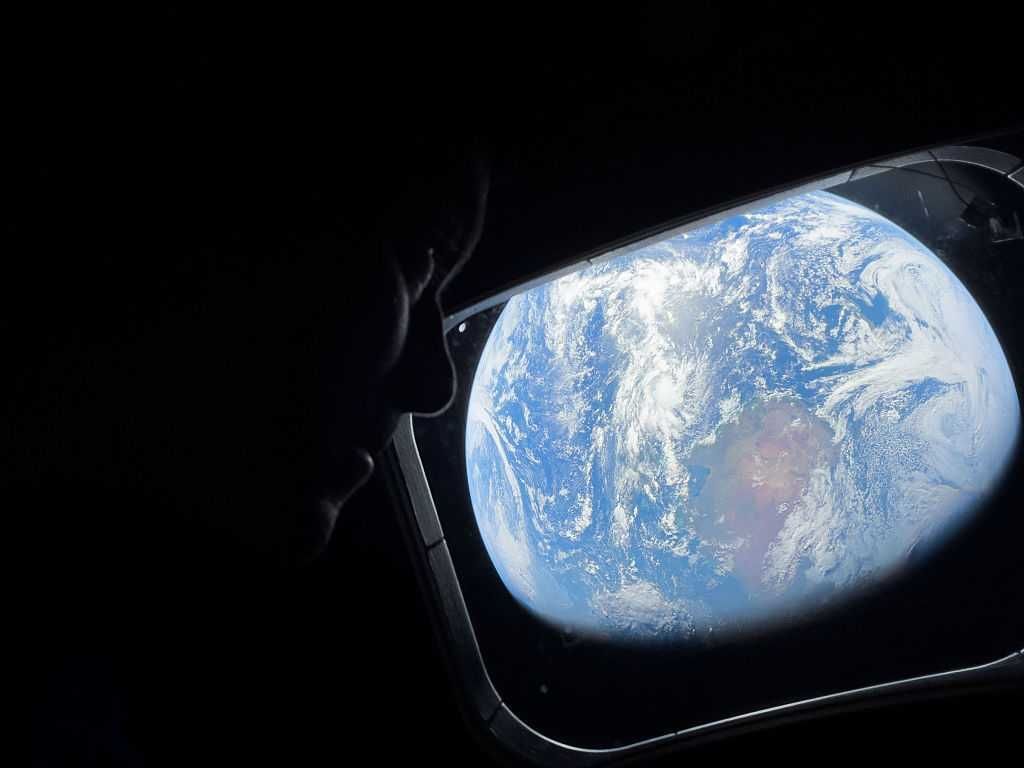
Artemis II commander reveals what happened when he saw a cross after his return to Earth


Less than a week after the Artemis II astronauts returned to Earth from their orbit of the moon, the crew members reflected on the profound wonders they saw on their mission — and upon their return.

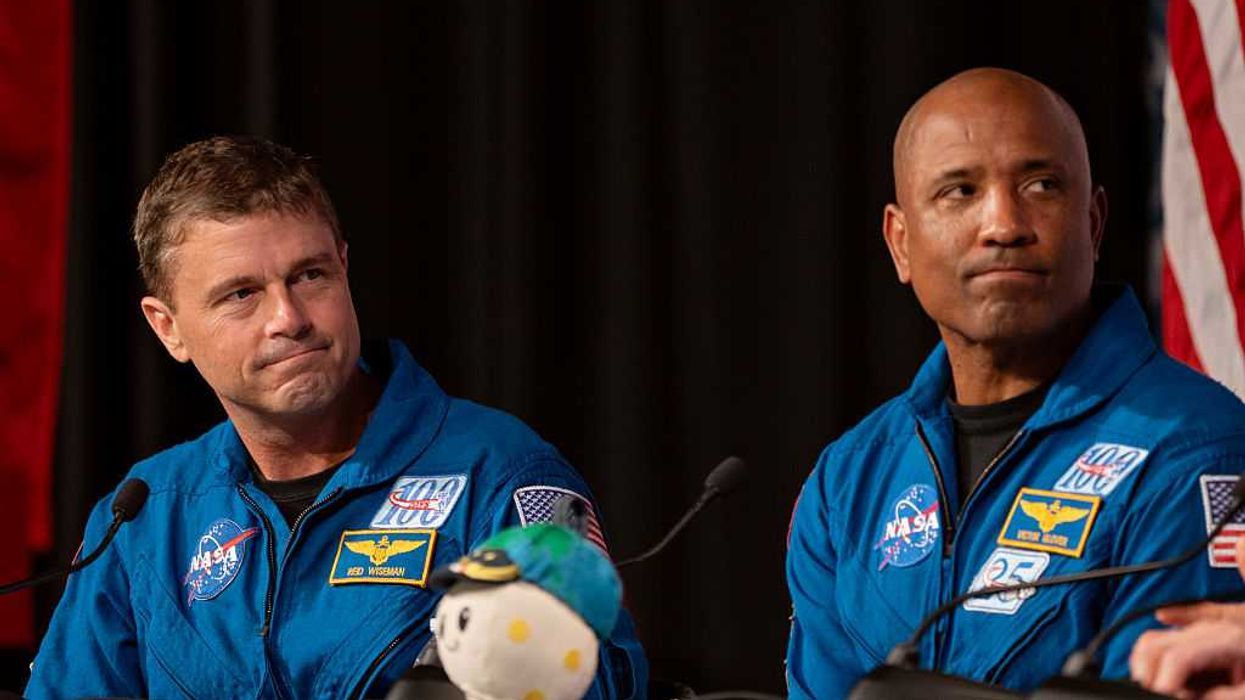
On Thursday, Artemis II astronauts answered questions about their mission, and Reid Wiseman, the commander of the mission, described a profound moment he experienced on the Navy ship shortly after their return.

'I saw the cross on his collar, and I just broke down in tears.'

"I'm not really a religious person, but there was just no other avenue for me to explain anything or to experience anything. So I asked for the chaplain on the Navy ship to just come visit us for a minute."

He went on to describe the inexplicable moment of their meeting.

RELATED: PHOTOS: See the first up-close images from Artemis II's flyby of the moon

NASA/Getty Images

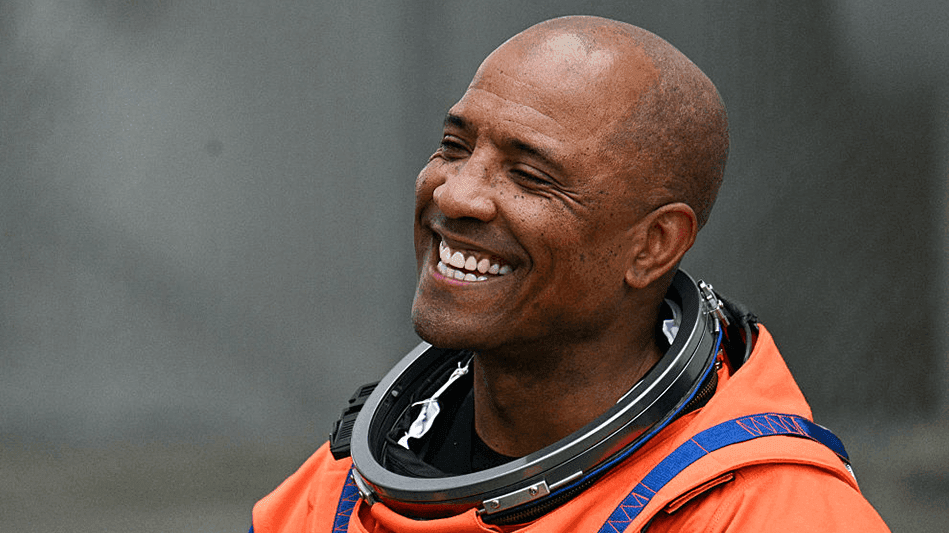
"When that man walked in, I had never met him before in my life, but I saw the cross on his collar, and I just broke down in tears," Wiseman explained.

Victor Glover, one of Wiseman's crewmates, said he was present when they met with the chaplain.

"The only thing I would add is I am a religious person, but everything else is the same."

Both Wiseman and Glover indicated they need more time to process all that they saw, since they have been remarkably busy in the days since they returned to the Earth's surface.

"We have not had that decompression. We have not had that reflection time," Wiseman said.

"There is something in there, and as we start to process, I'll have to tell you next week, but haven't had a chance to really unpack it all yet," Glover added.

Over the span of the clip, the two crewmembers also described an amazing moment of the mission: the eclipse of the moon and the sun.

"When the sun eclipsed behind the moon ... I turned to Victor, and I said, 'I don't think humanity has evolved to the point of being able to comprehend what we're looking at right now.' Because it was otherworldly. It was amazing," Wiseman said.

One of the two craters on the far side of the moon, not normally visible from Earth, now bears the name of Wiseman's late wife, Carroll. Carroll Wiseman passed away from cancer in 2020.

Like Blaze News? Bypass the censors, sign up for our newsletters, and get stories like this direct to your inbox. Sign up here!
NASA's Victor Glover shares gospel as he circles dark side of the moon: 'Love God with all that you are'


NASA's Artemis II pilot found time to speak about Christ and Christianity before circumnavigating the moon on Monday.

Before Victor Glover and his fellow crew members traversed the dark side of the moon, losing radio signal as they went out of Earth's line of sight, Glover said he wanted to remind Earth-dwellers about one of the "most important mysteries" in the world.

'We love you from the moon.'

In a message to NASA's mission control, with the radio transmission broadcasted live, Glover revealed he was talking about "love."

"Christ said in response to 'what was the greatest command' that it was to love God with all that you are. And he, also being a great teacher, said the second is equal to it, and that is to love your neighbor as yourself," Glover stated.

He concluded the transmission, marked at 6:44 p.m. ET, by saying, "And so as we prepare to go out of radio communication, we're still going to feel your love from Earth. And to all of you down there on Earth and around Earth: We love you from the moon."

After a pause, mission control responded: "Houston copies. We'll see you on the other side."

"We will see you on the other side," Glover affirmed.

RELATED: NASA astronaut gives very American response to DEI questioning

According to NASA's log, the crew had just witnessed an "Earthset" three minutes earlier, the moment Earth drops below the lunar horizon.

This marked the beginning of about 40 minutes of darkness as the astronauts traveled behind the moon, which blocks the radio signals from NASA's network.

The Artemis II crew reached 252,756 miles beyond our planet 18 minutes later, at 7:02 p.m., at a new human record for the maximum distance attained from Earth.

By 8:35 p.m., the crew entered a solar eclipse that lasted about an hour, before beginning their trip back home.

RELATED: UConn star Tarris Reed praises Jesus ahead of national championship: 'He changed everything about me'

Glover has been full of memorable and insightful quotes throughout the mission, including the remarks he made before Easter. Glover spoke on video alongside his crew members about "the beauty of creation" over the weekend, saying that from his perspective, he could see Earth as one whole, and it reminded him of Scripture.

"When I read the Bible and I look at all of the amazing things that were done for us who were created ... you have this amazing place — this spaceship. You guys are talking to us because we're in a spaceship really far from Earth. But you're on a spaceship called Earth that was created to give us a place to live in the universe — in the cosmos," Glover explained.

Astonishingly, without having prepared remarks, Glover delivered an extemporaneous motivational speech to all those listening.

"Maybe the distance we are from you makes you think what we're doing is special, but we're the same distance from you. And I'm trying to tell you — just trust me: You are special. In all of this emptiness — this is a whole bunch of nothing, this thing we call the universe — you have this oasis, this beautiful place that we get to exist together."

Like Blaze News? Bypass the censors, sign up for our newsletters, and get stories like this direct to your inbox. Sign up here!

PHOTOS: See the first up-close images from Artemis II's flyby of the moon


Artemis II made history on Monday night as it flew around the moon in the farthest manned flight from the Earth.

On Tuesday morning, NASA released some stunning photos from the historic flyby.

'On the far side of the Moon, 252,756 miles away, Reid, Victor, Christina, and Jeremy have now traveled farther from Earth than any humans in history.'

The White House and NASA posted some of the most stunning photos on social media, including a total eclipse from behind the moon:

RELATED: WATCH: Trump tells moon-looping Artemis astronauts what's next in out-of-this-world phone call

NASA

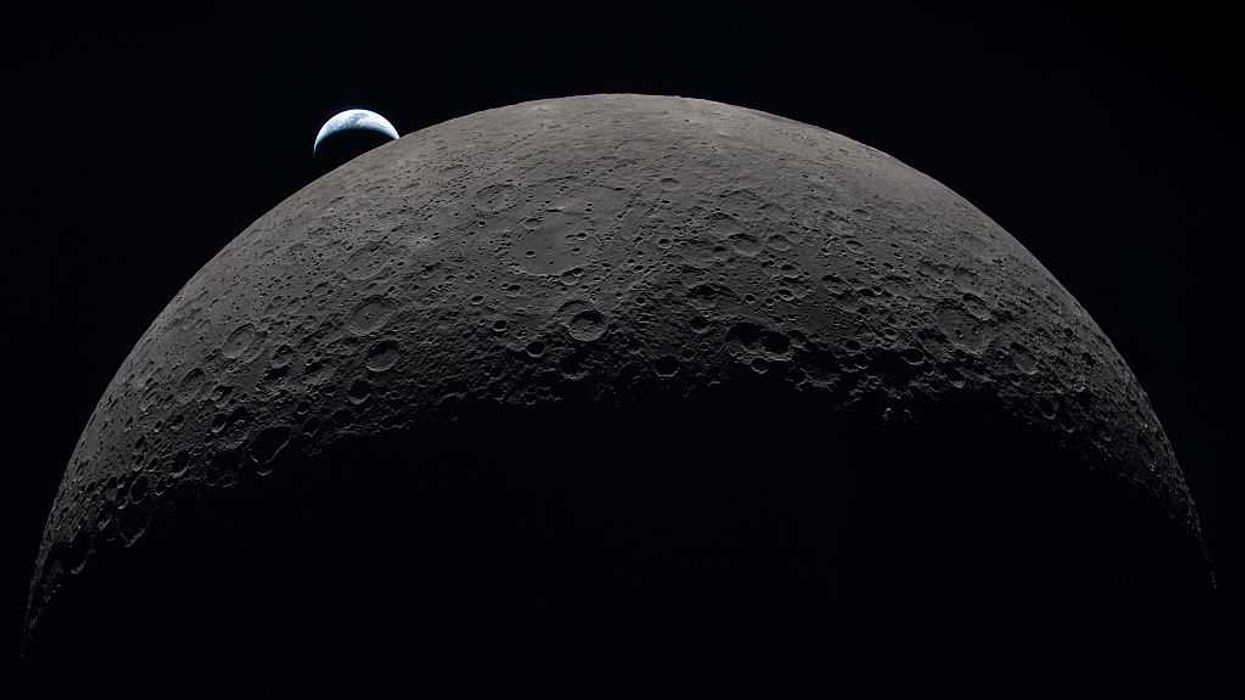
Reminiscent of the famous "Earthrise" photo taken by William Anders on the Apollo 8 mission, NASA also published a photo of "Earthset." According to NASA, this is the first photo from the far side of the moon ever taken.

NASA

NASA Artemis also posted a photo of the Orientale basin, most of which is not visible from Earth. This perspective will allow new discoveries to be made.

The account describes the photo and the new discovery: "The Artemis II crew captured this image showing the rings of the Orientale basin during their lunar flyby on April 6. At the 10 o’clock position of the Orientale basin, the two smaller craters — which the Artemis II crew has suggested be named Integrity & Carroll — are visible."

NASA

The flyby of the moon lasted several hours starting Monday afternoon.

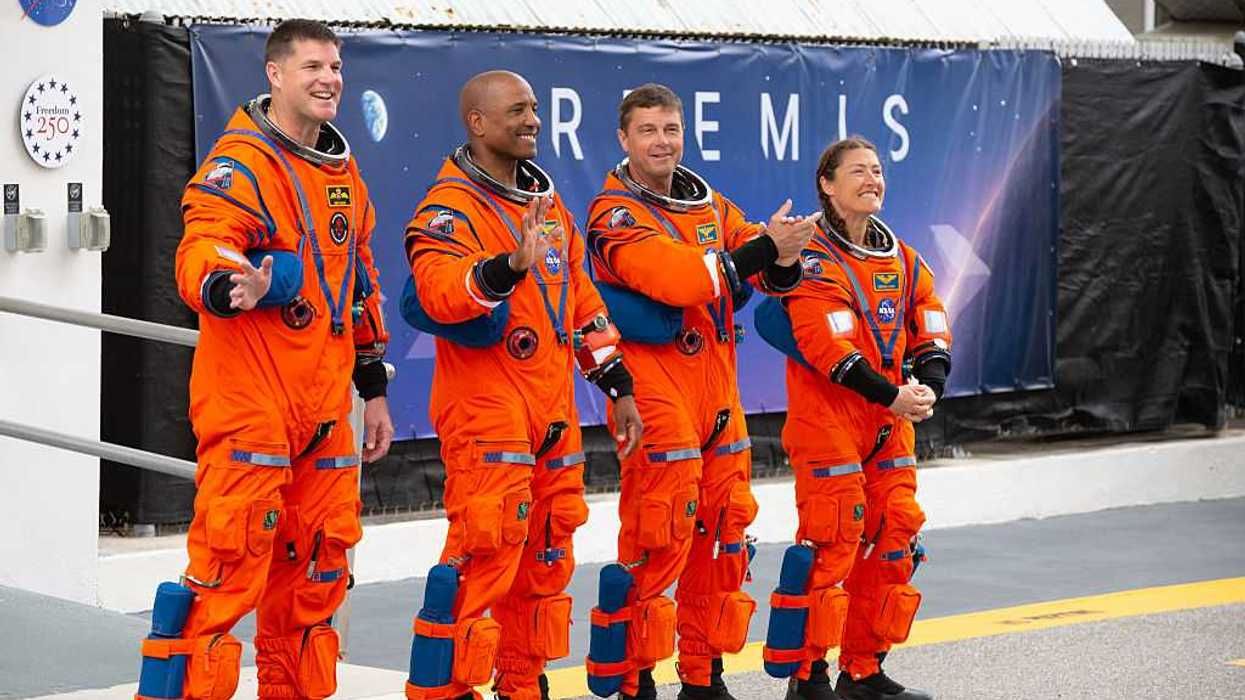
NASA Administrator Jared Isaacman celebrated the historic moment with an exciting update on Monday of the progress of astronauts Reid Wiseman, Victor Glover, Christina Koch, and Jeremy Hansen:

Artemis II has reached its maximum distance from Earth. On the far side of the Moon, 252,756 miles away, Reid, Victor, Christina, and Jeremy have now traveled farther from Earth than any humans in history and now begin their journey home. Before they left, they said they hoped this mission would be forgotten, but it will be remembered as the moment people started to believe that America can once again do the near-impossible and change the world. Congratulations to this incredible crew and the entire NASA team, our international and commercial partners, but this mission isn’t over until they’re under safe parachutes, splashing down into the Pacific.

Like Blaze News? Bypass the censors, sign up for our newsletters, and get stories like this direct to your inbox. Sign up here!

WATCH: Trump tells moon-looping Artemis astronauts what's next in out-of-this-world phone call


The Artemis II crew made history on Monday, putting more distance — 252,756 miles — between themselves and Earth than any previous human spaceflight. The previous record, 248,655 miles, was set by Apollo 13 in 1970.

NASA astronauts Reid Wiseman, Victor Glover, and Christina Koch and Canadian Space Agency astronaut Jeremy Hansen looped around the moon in their Orion spacecraft, flying as close as 4,070 miles on one approach and losing signal for roughly 40 minutes while passing behind the celestial body.

'We'll establish a permanent presence.'

In addition to breaking the distance record for human spaceflight and making "impactful science observations" of the far side of the moon, NASA said the crew also took a moment to "provisionally name" a couple of lunar craters.

As the Artemis II crew began their voyage back to Earth, NASA Administrator Jared Isaacman notified them that they had a call waiting.

"A very special hello to Artemis II," said President Donald Trump. "Today, you've made history and made all America really proud, incredibly proud. We have a lot of things to be proud of lately, but this is — there's nothing like what you're doing, circling around the moon for the first time in more than a half a century and breaking the all-time record for the farthest distance from Planet Earth."

RELATED: NASA astronaut gives very American response to DEI questioning

Manuel Mazzanti/NurPhoto/Getty Images

Trump also informed Hansen that his countrymen are proud of him, stating, "I spoke to your prime minister and many other friends I have in Canada. They are so proud of you."

Emphasizing that America is a "frontier nation" and that the Artemis II crew are "modern-day pioneers," the president noted that while such journeys are rare, "It's going to be more and more prevalent because we're going to be doing a lot of ... traveling, and then you're going to ultimately do the whole big trip to Mars."

Trump said that the Artemis II mission sets the stage for a return to the lunar surface "very soon," adding that "this time, we won't just leave footprints; we'll establish a permanent presence on the moon."

Commander Reid Wiseman, a Baltimore native, told Trump that his call was "certainly special to all of us."

Wiseman noted that two unforgettable parts of their journey were watching a solar eclipse and glimpsing Mars: "All of us commented how excited we are to watch this nation and this planet become a two-planet species."

Koch said her top highlight was seeing Earth again after passing around the far side of the moon.

"It really just reminds you what a special place we have and how important it is for our nation ... to lead and not follow in exploring deep space," said Koch.

The president said he plans to invite the astronauts to the White House after their return and to ask them for their autographs.

Like Blaze News? Bypass the censors, sign up for our newsletters, and get stories like this direct to your inbox. Sign up here!

WATCH LIVE: Artemis II crew to get first glimpse of the dark side of the moon


Artemis II is preparing to make history as it faces a very important milestone in the voyage's 10-day journey to the moon and back.

The lunar mission, launched on the evening of April 1, is preparing to fly by the dark side of the moon on Monday.

'The Artemis II crew is preparing for today's lunar flyby, when they will see the Moon's far side.'

Artemis II is preparing to set a new distance record from Earth, which was last set by the manned Apollo 13 mission in April 1970, according to NASA.

NASA said that Artemis II will surpass the previous record of 248,655 miles by about 4,105 miles. The astronauts are expected to travel a maximum distance of 252,760 miles from Earth.

RELATED: NASA astronaut gives very American response to DEI questioning

NASA

Live coverage of the flyby event will begin at 1 p.m. ET Monday and continue through 9:45 p.m. ET.

The seven-hour lunar observation period will begin around 2:45 p.m. ET, and the astronauts are expected to reach their closest approach to the lunar surface around 7 p.m. At their closest distance, NASA said, the moon will appear to the astronauts about the size of a basketball held at arm's length.

On Monday morning, NASA posted two photos of the inside of the spaceship with the caption: "Morning routine: Wake up, shave, make the bed, witness something that's never before been seen by human eyes."

"The Artemis II crew is preparing for today's lunar flyby, when they will see the Moon's far side," the caption continued.

NASA reported that the crew received a message from the late Apollo 8 and Apollo 13 astronaut Jim Lovell as they prepared for this historic day. The message, recorded before Lovell's passing last year, said:

Hello, Artemis II! This is Apollo astronaut Jim Lovell. Welcome to my old neighborhood! When Frank Borman, Bill Anders, and I orbited the moon on Apollo 8, we got humanity’s first up-close look at the moon and got a view of the home planet that inspired and united people around the world. I’m proud to pass that torch on to you — as you swing around the moon and lay the groundwork for missions to Mars … for the benefit of all. It’s a historic day, and I know how busy you’ll be. But don’t forget to enjoy the view. So, Reid, Victor, Christina, and Jeremy, and all the great teams supporting you — good luck and Godspeed from all of us here on the good Earth.

The Orion spacecraft is expected to depart the Moon's sphere of influence on Tuesday afternoon at a distance of 41,072 miles.

Like Blaze News? Bypass the censors, sign up for our newsletters, and get stories like this direct to your inbox. Sign up here!

Launch Of Artemis Moon Mission Kicks Off A New ‘Space Age’

Assuming the Artemis mission goes off without major complications, it would further prove U.S. companies can help us explore outer space.
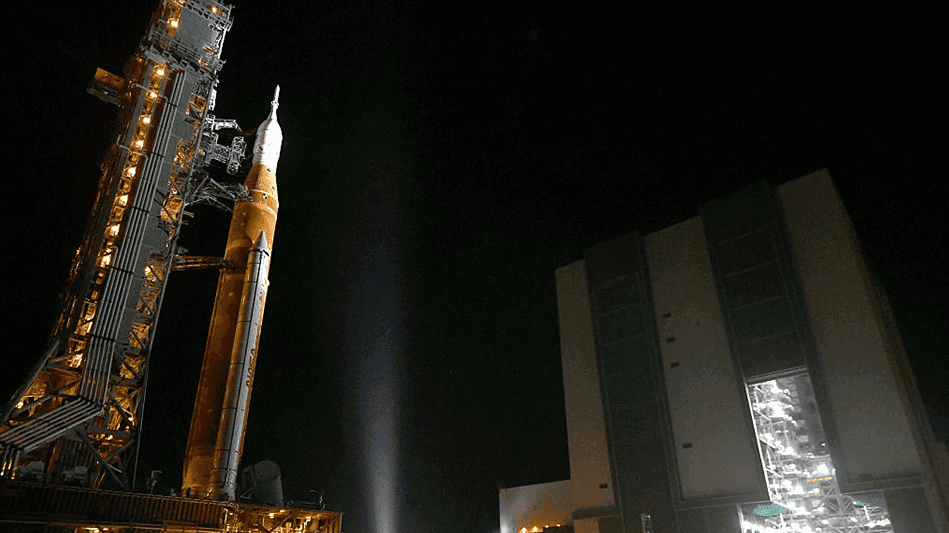
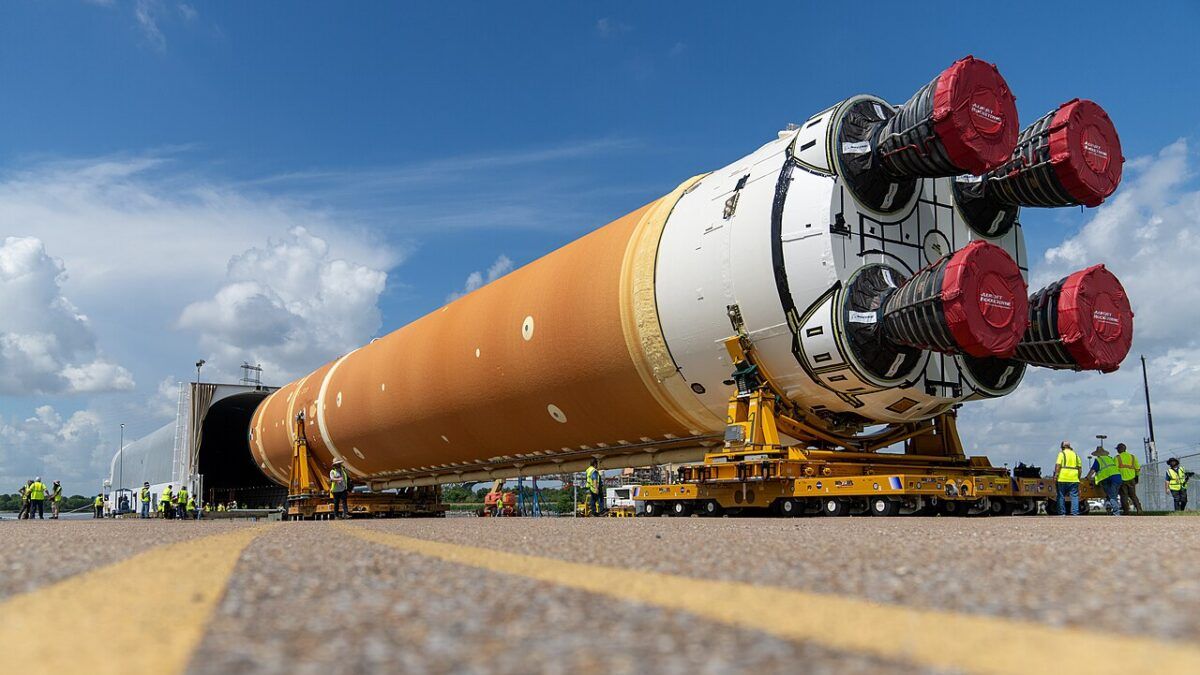
'Near-impossible': NASA reveals plans for moon and Mars landings


NASA announced it is shifting priorities to make sure it meets President Donald Trump's goals before the end of his term.

The announcement, part of NASA's "Ignition" event, declared that the space agency is "committed to achieving the near‑impossible once again."

'Returning to the moon and building a base will seem pale in comparison.'

NASA Administrator Jared Isaacman revealed the agency's new directive at the event, telling audience members that the new "National Space Policy" includes accelerating preparations for America's return to the moon.

First, this involves fulfilling missions that will establish an American base on the lunar surface.

"Return to the moon before the end of President Trump's term, build a moon base, establish an enduring presence, and do the other things needed to ensure American leadership in space," Isaacman said.

The administrator added, "If we concentrate NASA's extraordinary resources on the objectives of the National Space Policy, clear away needless obstacles that impede progress, and unleash the workforce and industrial might of our nation and partners, then returning to the moon and building a base will seem pale in comparison to what we will be capable of accomplishing in the years ahead."

That's not all, though. NASA's plan also includes nuclear-powered space exploration that will see new space helicopters used on Mars.

RELATED: Is real-life 'Star Wars' America's manifest destiny?

NASA said it will launch Space Reactor-1 Freedom, a "nuclear powered interplanetary spacecraft," on a mission to Mars before 2028. Once the craft reaches Mars, it will deploy another craft called Skyfall, which will then drop a group of new space helicopters, called the Ingenuity-class helicopters.

These tissue-box-size helicopters will then explore the surface of the Red Planet.

At the same time, NASA plans to launch a "nuclear-powered octocopter" in 2028, set for arrival at Saturn's moon Titan in 2034. This will be launched by Dragonfly, which, according to Gadgets 360, is another fully autonomous nuclear-powered craft.

These highly ambitious projects face an already strict timeline, as several of NASA's current lunar missions are years behind.

RELATED: America's historic return to the moon suffers ANOTHER setback

NASA's Artemis II mission, a crewed lunar orbit meant to test landing systems, has already missed its late 2024 window. However, NASA still says it will launch by April 1.

This mission delay has pushed Artemis III to mid-2027. That mission was originally meant to include a lunar landing; it no longer does. That job is left to Artemis IV, which has a launch date of early 2028. Artemis V is meant to be another lunar landing by the end of 2028, which NASA previously said is when it expects to "begin building its moon base."

The latest plan is set for three phases, with phase one sending "rovers, instruments, and technology demonstrations" to the moon for testing.

Phase two is meant to establish early infrastructure on the surface, with help from Japan's pressurized rover.

Phase three would reportedly get help from Canada's Lunar Utility Vehicle and Italy's "Multi-purpose Habitats" in order to establish a permanent lunar base.

Like Blaze News? Bypass the censors, sign up for our newsletters, and get stories like this direct to your inbox. Sign up here!

NASA Is Broken. It’s Time For A New One

One small step in restructuring NASA now could lead to one giant leap for the American space program in the years to come.