Too hot to handle: US government restricts next-gen AI model after troubling discovery



An AI model has reportedly exposed vulnerabilities in secure government systems as concerns over cybersecurity rage through top companies and government leadership alike.

The Associated Press reported that Mythos, an advanced Anthropic AI model, identified weaknesses in "sensitive and secure U.S. government computer systems during a testing exercise," citing a U.S. official.

'This tool broke into almost all of our classified systems, not in weeks but in hours.'

The official, who spoke on condition of anonymity, reportedly told the AP that the testing was conducted as a part of Project Glasswing, though the identification of the vulnerabilities does not mean that they were exploited.

Project Glasswing, which was announced on April 7, was described at the time as "an urgent attempt to put [the capabilities of frontier model Mythos Preview] to work for defensive purposes."

RELATED: $965 billion AI giant warns we need to hit the brakes — but will China?
Andrew Harnik/Getty Images

The project announcement noted that Anthropic would be partnering with several industry giants to identify the vulnerabilities on their platforms, with Anthropic even pledging "up to $100M in usage credits for Mythos Preview across these efforts, as well as $4M in direct donations to open-source security organizations."

The companies listed include Amazon Web Services, Anthropic, Apple, Broadcom, Cisco, CrowdStrike, Google, JPMorganChase, the Linux Foundation, Microsoft, Nvidia, and Palo Alto Networks.

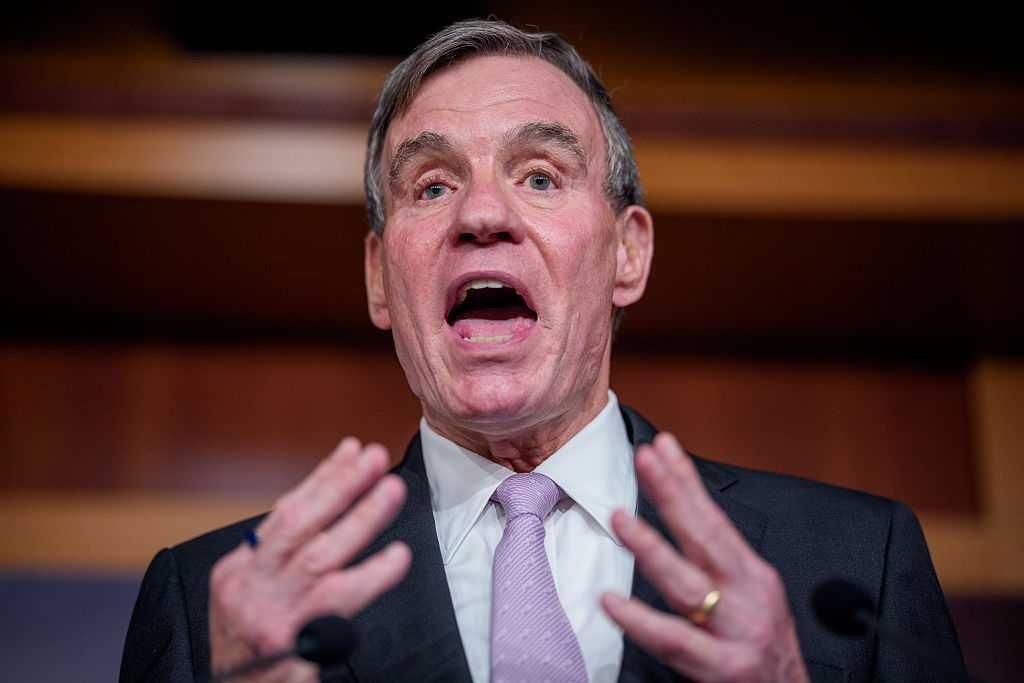
These defensive measures, including the testing performed by Mythos, was alluded to by Sen. Mark Warner (D-Va.) during a June 11 Senate Committee on Banking, Housing, and Urban Affairs hearing.

Mentioning Mythos and Anthropic by name, Warner said, “This tool broke into almost all of our classified systems, not in weeks but in hours.” Warner attributed this information to the head of the National Security Agency and U.S. Cyber Command, General Joshua Rudd.

The government limited access to Anthropic's latest models for foreign nationals just days after President Trump signed an executive order establishing a national security framework for AI, cybersecurity, and the regulation and classification of "frontier models." That directive resulted in the company disabling the model temporarily.

Blaze News reached out to the office of the National Cyber Director and Anthropic but did not immediately receive a response.

Like Blaze News? Bypass the censors, sign up for our newsletters, and get stories like this direct to your inbox. Sign up here!

Ain’t no scam: Bitcoin fixes the looming AI oversight fiasco


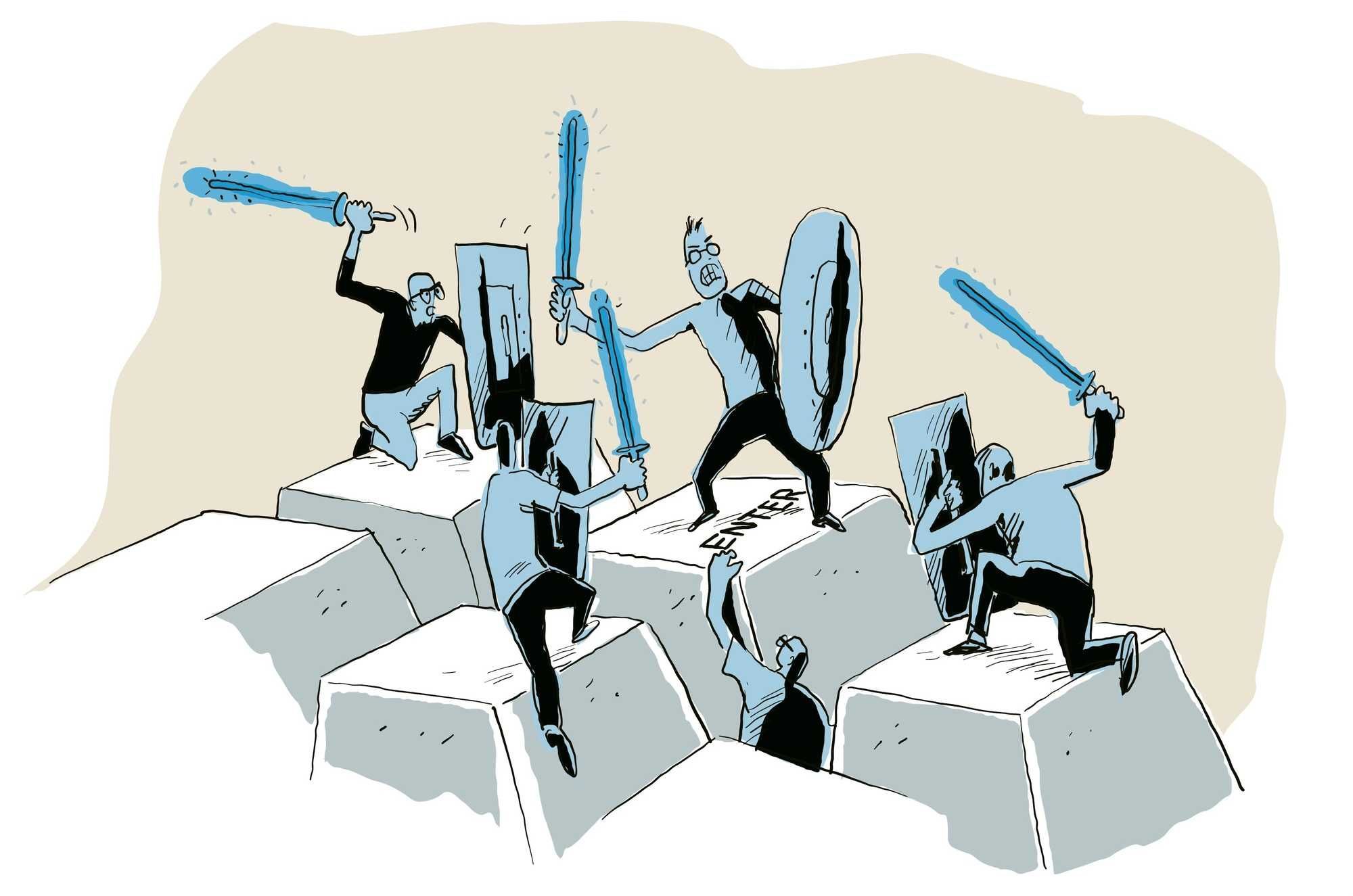
Welcome, America, to the Thunderdome of AI oversight.

President Trump has dropped his executive order, putting the onus on the federal government’s most secretive agencies to determine whether the products of private corporations are safe for public consumption. The National Security Agency is at the heart of the plan, with the intelligence community setting classified benchmarks, vetting, and gatekeeping new AI models within a 30-day window. Private-sector institutions and stakeholders, including AI companies themselves, must sit and wait, blind, for decisions to be handed down.

It can’t be said that this decision is strongly supported by conservatives, the “based community,” or even MAGA people more narrowly. The personal, private bid by former White House AI and crypto chief David Sacks to stop the Trump train on AI resulted only in a delay and a narrowing of the oversight window. On X, Sacks had to resort to emphasizing the things the order doesn’t do that he and the accelerationist wing of the right oppose.

Is there anything we can tell these machines to do that doesn’t tend to demote us as human beings?

That means even Trump’s inner circle will keep on duking it out among themselves.

Congress is wrestling with OpenAI’s approach, which relies on (deep breath) the National Institute of Standards and Technology’s Center for AI Standards and Innovation. In short, the idea is that oversight and testing should be carried out under the aegis of established and respected bodies that bridge government and industry through public-private partnerships. This approach allows AI companies themselves, plus other stakeholders and experts outside the intelligence community, to have a participatory role in testing and oversight of new models.

Yet Congress is sharply divided, and the upcoming midterm elections could alter the balance of power. Competing bills are already in the mix on Capitol Hill, with the leading piece of draft legislation, the bipartisan American Leadership in AI Act, hinging on outcomes in the rat’s nest of congressional politics — ranging from Louisiana Republican House Speaker Mike Johnson’s unwillingness to reauthorize the House AI Task Force to rank-and-file Democrats’ unfavorable disposition toward the draft bill.

Can both houses of Congress come to an agreement on AI model development as well as testing? One that Trump won’t veto? Probably not, but with anti-AI sentiment running hotter and hotter across the populist (and opportunist) wings of both parties, principled members and ambitious members alike are all but guaranteed to shoot their shot before November.

That means Americans won’t be looking to their elected representatives for clarity on AI.

RELATED: Why dystopian AI doomers need to get religion

The doomer delusion ArtMarie via iStock/Getty Images
And Pope Leo XIV, of course, has his landmark encyclical out there, insisting — along with many other Christians — that no law or regulation or basket of rules is enough to enable anyone, even the United States government, to get the kind of grip on AI that will ensure our sacred human being is no worse for wear.

But there’s no indication that America’s Christians, much less the world’s, are poised to throw down their doctrinal and ecclesiological differences and line up shoulder to shoulder with the pope’s presentation of things — or with the pope as a singular planetary spiritual authority on all matters AI and tech.

That means neither our leading political power players nor our leading spiritual authority figures will give Americans the kind of overall guidance they increasingly seem to crave.

Perhaps, however, we should all recognize that’s actually for the best, because the essence of the problem concerning AI is its risk, not of wiping out the human race, but of emptying the human race of all power and authority except for a tiny cyborg elite, one hell-bent on remaking all God’s creation, every single one of us included, in their monomaniacal image.

Paradoxically, responding to this risk by maximizing tech hate and consolidating all tech hatred into as tiny and powerful an elite as possible dramatically increases the risk of both wiping out the human race and deepening the would-be cyborg elite’s conviction that if they don’t achieve a radical and irreversible break with all to ever come before them, then they’ll meet a fate worse than death.

Back on our feet and back in charge

Given the dangers of over-centralized AI oversight on one hand and a regulatory war of all against all on the other, now is a good time to ask whether Bitcoin can offer ordinary people a more balanced, distributed, and practical path forward.

For all the noise and blather in the fractured crypto world, the case for Bitcoin in the AI age is simple: If we are not going to dismantle these machines — and if people will keep building more powerful ones — can we direct them toward anything that preserves rather than diminishes our human dignity?

The answer is obviously yes, but the combination of massive fear over techno-dystopia and massive resistance to “organized religion” leads many to paint themselves into a paralyzing psychological corner where no answer seems plausible or effective.

That’s a shame. Bitcoin is sitting right there, an advanced, mature technology that allows people with a minimum of new information or expertise to start creating and growing markets and institutions that benefit and protect themselves and their friends, families, and parishes, without having to rely on superintelligent machines or government financial systems.

Given that superintelligent machines and government financial systems have a clear logical and practical tendency to converge, becoming one system very well suited to enforcing a single, uniform, and servile existence worldwide, it would seem fairly urgent for people to consider the benefits of taking a few steps outside their zone of comfort or self-disempowerment and start to use Bitcoin at least a little with those they care about most.

That’s why I continue to offer my book on our tech reckoning, "Human Forever," only in Bitcoin. Piling up the digital currency and waiting for Nirvana just isn’t going to cut it, whether we face a societal collapse scenario, an age of mandatory pleasure and plenty, or a mutant future that somehow combines both into one waking phantasmagoria. Using Bitcoin needs to happen well beyond the realm of books, obviously. But being a writer, well — I’m putting my money where my mouth is.

Is it enough to solve all our problems, with our machines and with one another? Obviously, again, no. But it just might fix our attention on how we can preserve human ways of life that open the way not just to solutions, but to salvation.

Trump admin ousts NSA director in agency shake-up: Report


President Donald Trump’s administration on Thursday fired the director of the National Security Agency, Gen. Timothy Haugh, according to a report from the Washington Post.

Haugh’s civilian deputy, Wendy Noble, was reportedly removed from her position and reassigned a job with the Department of Defense’s Office of the Undersecretary of Defense for Intelligence and Security.

'This is called VETTING.'

The Post also stated that “at least five” National Security Council officials were terminated on Thursday.

The White House has not yet confirmed the reported firings, and therefore, the reasoning for the alleged actions is unclear.

However, Trump stated that he had ousted “some” NSC staffers, the Associated Press reported.

“Always we’re letting go of people,” Trump stated Thursday. “People that we don’t like or people that we don’t think can do the job or people that may have loyalties to somebody else.”

According to the AP, at least three terminated employees were “senior NSC officials” and the others were “lower-ranking aides.”

Pro-Trump activist Laura Loomer appeared to take credit for the alleged shake-up in a post on X, claiming that Haugh and Noble were removed because they were “disloyal” to the president.

She criticized Haugh as a “Biden appointee,” who was “HAND PICKED” by now-retired U.S. Army Gen. Mark Milley.

Loomer stated that Haugh was “referred for firing” as well as “his Obama loving protege, Wendy Noble.”

“This is called VETTING,” she declared.

Loomer reportedly advocated for the firings during a recent meeting with Trump.

“Thank you President Trump for being receptive to the vetting materials provided to you and thank you for firing these Biden holdovers,” she stated.

Following her meeting with the president, Trump told reporters, “Laura Loomer is a very good patriot. She’s a very strong person.”

“She makes recommendations of things or people, and sometimes I listen to those recommendations,” he stated.

Trump stated that during their meeting, Loomer “recommended certain people for jobs.”

He stated that Loomer had nothing to do with the fired NSC staffers.

However, in a separate post on X, Loomer appeared also to claim credit for those terminations.

“You know how you know the NSC officials I reported to President Trump are disloyal people who have played a role in sabotaging Donald Trump?” she wrote. “Because the fired officials are being defended by... Jen Psaki & Andrew McCabe on MSNBC & CNN RIGHT NOW.”

The White House did not respond to requests for comment from the Washington Post or the New York Post. The NSA referred the New York Post to the DOD, which also did not respond.

Like Blaze News? Bypass the censors, sign up for our newsletters, and get stories like this direct to your inbox. Sign up here!

Chat Logs Show Queer NSA Employees Discussing Perverted Acts At Work

The NSA said it will take action against employees who abused government systems to talk about their fetishes and mutilation surgeries.

Tucker Slams Newsweek Smear As Scheme To Restart Government Surveillance

Carlson called the report of his launching a show in Russia "completely absurd," adding that he had "never even heard of this channel."
How Did The Anti-Israel Guy Who Set Himself On Fire Get A Security Clearance?

Aaron Bushnell was assigned to the 70th Intelligence, Surveillance and Reconnaissance Wing at Fort Meade in Maryland.

The DOJ And Special Counsel Jack Smith’s Sordid History Of Weaponizing The Espionage Act

The record shows that the DOJ is adept at using the Espionage Act as a cudgel to punish its political enemies.