Soros-Backed Philadelphia District Attorney Larry Krasner Referred For Criminal Investigation
 Testimony showed that Krasner repeatedly complained about having his case taken over by 'Nazis.'
The United States armed forces are often parodied or serve as the inspiration for many Hollywood films, but it's typically not the other way around.
With the Space Force, for example, the entity saw a near-immediate parody after its founding in 2019, with actors like Steve Carell and John Malkovich tapped to do the deed.
'It's afraid.'
Five months after President Donald Trump and his administration founded the Space Force in December 2019, Netflix launched a comedy series based on the new agency.
Although "Space Force" portrayed members with their own unique dark-blue dress uniforms, this was a bit of creative license. In reality, Guardians have worn "modified Air Force uniform[s]" since the Space Force was established.
That has been changing. The Space Force unveiled a prototype of its own service dress uniform in 2021 and spent the following years refining the design. In January, the service formally introduced the finished uniform and outlined plans for its rollout.
Now Trump appears to have something else in mind.
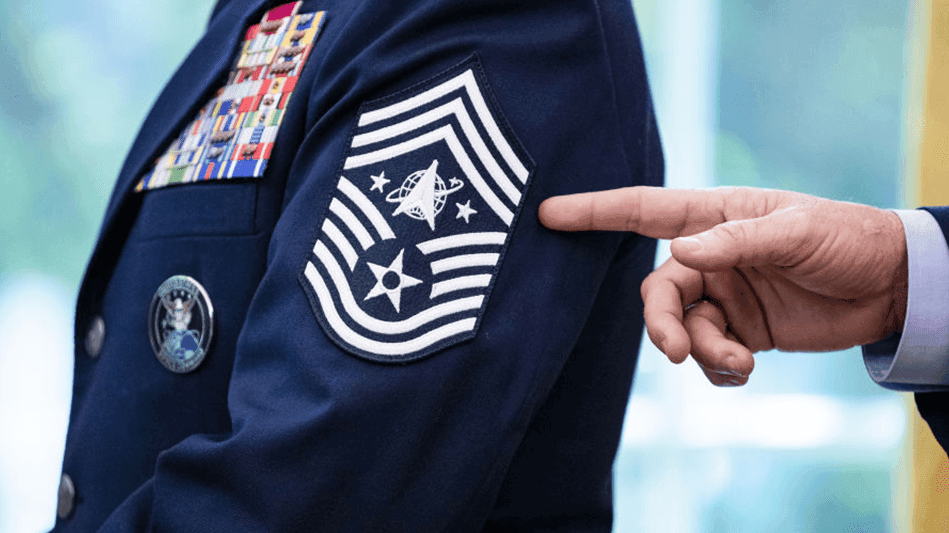
On Sunday, the president posted an image to Truth Social depicting a proposed “next generation” Space Force dress uniform.
“Inspired by the discipline and functionality of the Starship Trooper uniform,” the image read, “modernized for the Guardians of the Space Domain.” Its colors were identified as Space Gray, Midnight Black, Silver Gray, and Satin Black.
But the apparent inspiration for the design quickly attracted attention.
The reference is to “Starship Troopers,” Paul Verhoeven’s 1997 science-fiction satire, whose futuristic military aesthetic deliberately borrowed from Nazi imagery. Verhoeven has said he intended the film to depict a fascist society whose inhabitants did not recognize themselves as fascists.
Forbes was among the outlets to note the resemblance, calling the style "Sci-Fi Fascist."
RELATED: Deceptive slop is now junking up our favorite map apps. Don't be fooled.
"Starship Troopers" has developed a cult following, thanks in part to its bizarre humor, memorable lines, bloody action sequences, and hordes of giant alien bugs.
The film takes place in a distant future in which Earth is controlled by a single government known as the Terran Federation. Full citizenship — including the right to vote — is reserved for those who complete a term of federal service, which for the film's main characters means joining the military.
Citizenship also carries other privileges. At one point, a character says she wants to serve because it will make it easier for her to obtain a license to have children.
The society is deliberately depicted as an outwardly prosperous and harmonious but deeply militaristic regime, complete with government propaganda, constant appeals to sacrifice, and an enemy — the alien “bugs” — against which humanity can unite.
Director Paul Verhoeven told Interview magazine in 2017 that he “wanted these people to be like proto-Nazis, proto-Aryans.”
A year later, Verhoeven told the Guardian that he had deliberately borrowed imagery from Leni Riefenstahl's Nazi propaganda films, including “Triumph of the Will,” while filming the movie's propaganda sequences.
“I was using Riefenstahl to point out, or so I thought, that these heroes and heroines were straight out of Nazi propaganda,” Verhoeven said. “No one saw it at the time.”
“I thought Neil Patrick Harris arriving on the set in an SS uniform might clear it up.”
RELATED: Worse than Flock: Josh Hawley expands 'unprecedented national surveillance' investigation
Despite that satirical intent, the movie is perhaps best remembered by fans for its gleefully over-the-top propaganda sequences and endlessly quotable lines, including “I'm doing my part!” and “It's afraid!” For many, the film has become a beloved sci-fi action comedy whose militaristic excess is part of the joke.
The Space Force, meanwhile, continues with its years-in-development uniform roll out. An Honor Guard version, featuring distinctive light-blue accents, made its public debut last month.
It remains unclear where Trump's “Starship Troopers”-inspired design fits into those plans. While the president's post described it as a “next generation” uniform, it did not say when it would be introduced or whether it would replace the service dress uniform already being rolled out.
“Our service dress uniform represents the unique identity of Guardians, blending heritage with a modern design that reflects our unity and mission,” then-Chief of Space Operations Gen. Chance Saltzman said in January. “From the start, Guardian feedback shaped its design and fit. I know the force will wear it with pride.”
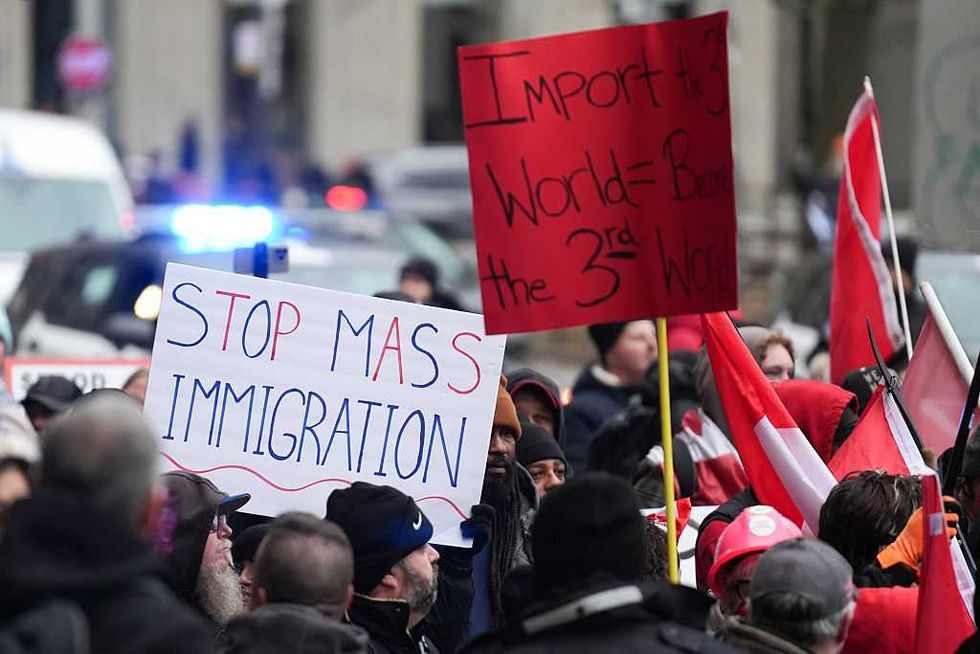
Authorities in Hamilton, Ontario, a city on the western tip of what is now being called Lake America, are desperate to prevent Canadian nationalists and international remigration activists from holding a conference.
Despite the ongoing public-private campaign to shut them up and drive them out of town, the Dominion Society of Canada is holding its ground and remains committed to holding its sold-out DomCon 2026 on Saturday.
'They could not stop us.'
The weeks-long "anti-hate" campaign to prevent the conference from happening largely relies on claims from a report issued by the Canadian Anti-Hate Network, a leftist organization chaired by Sue Gardner. Gardner is a liberal who previously served as executive director of the Wikimedia Foundation and as head of Canadian state media's English-language website.
CAHN — which plays the Southern Poverty Law Center's game of painting critics of mass migration, gender ideology, and LGBT extremism with the same brush as bona fide neo-Nazis — characterizes the DSC as a "white nationalist organization that uses propaganda and political campaigning to promote mass deportations on the basis of race, ethnicity, and religion."
The DSC alternatively refers to itself as a "nonpartisan advocacy group dedicated to promoting Canadian identity, heritage, and nationalism."
The organization is critical of multiculturalism and contends that "a Canadian is not anyone who simply arrives, fills out a form, and collects benefits." Instead, the group states that "Canadians are descendants of the brave pioneers who built this country" and that "Canada was uniquely forged through cooperation with our First Nations peoples."
RELATED: Diversity is our strength? Britain has to remind migrants: Don't rape kids

The group has drawn the ire of leftists for raising concerns about "replacement migration" and advocating for a total moratorium on immigration as well as mass deportations.
Daniel Tyrie, the founder and chairman of the DSC, told Blaze News, "Demographic change is the most pressing issue facing Canada and the Western world and yet our politicians and media refuse to address it. We built the Dominion Society and are hosting DOMCON26 to raise awareness and discuss the most important policy solution of our lifetimes: remigration."
At the beginning of the month, the taxpayer-funded Hamilton Anti-Racism Resource Center issued a guide for local businesses aimed at shutting down events held by so-called extremist groups.
The center, which noted that the DSC was planning to hold its conference in the area, called on "residents, businesses, institutions, and elected leaders to stand together in rejecting hate."
B'nai Brith Canada was among the groups that joined the censorship campaign, calling on federal officials to block "foreign extremists from entering the country to attend" the conference. The conference originally had Martin Sellner, the Austrian founder of the Remigration Institute, and Charlie Downes, a spokesman for Rupert Lowe's Restore Britain, scheduled to speak.
The Canadian Charter of Rights and Freedoms guarantees the freedoms of conscience, religion, thought, expression, various media of communication, peaceful assembly, and association, but police and political officials have proven more than willing to help shut down the DSC and its event.
"There is no place for hate and white supremacy in Hamilton," Pakistani-born Aslam Rana, the member of parliament for Hamilton Center, said in an official release. "This conference, and the organization hosting it, represent a racist and extremist ideology masquerading as a nationalist movement. I unequivocally condemn this event and the hateful ideology behind it."
Hamilton Mayor Andrea Horwath, the socialist who unsuccessfully ran for premier of Ontario four times, said in a statement to Blaze News, "I stand firmly and reject hateful, hurtful rhetoric and racist and discriminatory activities of all kinds. The City of Hamilton will not allow this conference to be held in any of our facilities and will continue to encourage privately owned and operated venues to do the same."
Horwath, who sent concern-mongering letters about the event to local businesses, added that she has shared her concerns about the event with the Hamilton Anti-Racism Resource Center and Hamilton Police Service.
The Hamilton Police Service, which did not respond to Blaze News' request for comment, stated online, "The messaging associated with DomCon is divisive and exclusionary and can negatively impact the sense of safety and belonging within our community. We have heard those concerns from members of the community and take them seriously."
The police made no secret that it has encouraged "venues to consider the impact this event and its messaging may have on the broader community when making decisions about hosting it."
After noting that a previous DSC booking had been canceled on Thursday, police implored residents to call their snitch line with any information regarding a potential alternate venue booking.
When Jason Willett of Wiretap Media called the snitch line and pressed Hamilton police about whether they were infringing upon Charter freedoms, an officer responded, "We're not infringing, we're not telling venues that they're not to book. We're just making venues aware of who they are booking with."
Canadian-based lawyer Eva Chipiuk noted, "If citizens are lawfully gathering, talking to one another, expressing political views, and engaging with their fellow citizens, that is not something for the police to be 'policing.' And when police solicit tips from the public about citizens engaged in otherwise lawful political expression and peaceful gathering, we should be asking some very serious questions."
"A free society requires citizens who are free to speak, gather, disagree, and participate without being treated like suspects for doing so."
Josh Dehaas, interim litigation director with the Canadian Constitution Foundation, noted, "Charter rights belong to all Canadians, not just those whose speech or ideas the police or mayor agree with."
Ontario Premier Doug Ford's office did not respond to Blaze News' request for comment.
Andrew Lawton, a Conservative member of the House of Commons, spoke out, however, stating, "I have significant issues with the Dominion Society but I am unaware of any criminal allegations against them or any credible suspicion their conference would be illegal. It is not for police to target venues who may wish to rent space out to a group who is breaking no laws."
"The establishment is doing everything they can to stop this event, because they know if people learn about our ideas they will catch on like wildfire," DSC Chairman Daniel Tyrie told Blaze News. "Local politicians and government-funded NGOs have smeared us. The mainstream media has published hit piece after hit piece. ... We have committed no crimes but now the police are going door to door pressing venues to cancel on us or refuse our booking in what can only be described as mafia-style intimidation tactics."
"But they failed!" continued Tyrie. "Despite their best efforts, they could not stop us. DOMCON26 will proceed as planned. It will be a pivotal moment in Canada's future."
Like Blaze News? Bypass the censors, sign up for our newsletters, and get stories like this direct to your inbox. Sign up here!
Rosie O'Donnell had never been a guest on "Jimmy Kimmel Live!" before she accepted an offer to host the show.
Replacing Jimmy Kimmel during his summer vacation, O'Donnell was brought on for a week with one simple goal: to upset President Trump.
'I don't know how she can live with herself.'
Kimmel said himself O'Donnell was being used as a "special treat" for the president, perpetuating the unlikely notion that, of course, the president is a nightly viewer.
O'Donnell told Variety that while she and Kimmel had never spoken in person, while saying they have an "adversarial relationship," she was happy to take the opportunity to stick it to Trump.
Particularly, O'Donnell took shots at Paramount Skydance CEO David Ellison — due to his apparent closeness with the president — for the pending takeover of Warner Bros. Discovery, which would give him control of CBS and CNN.
"It would be like Fox taking over all news channels. Imagine if Fox was not one outlier and Fox was the mainstay? That's what's happening with Hollywood now and the Ellisons, and it's tragic,” O'Donnell claimed.
"Look at what's happened to CBS News and '60 Minutes,' which was the gold star of their entire network, and they blew it up," O'Donnell declared.
Seemingly with no room for upward trajectory left on her insults, O'Donnell then alluded to the idea that CBS News editor Bari Weiss, who is Jewish, is siding with "Nazis."
"This Bari Weiss person, I don't know how she can live with herself. There are people who are sidling up to him and history will record all of their names, what they did, and who they stood next to," O'Donnell continued.
She added, "If you're in a room with 10 Nazis at a table and you're the only one who’s not, there’s a pretty good chance you're a Nazi."
RELATED: 'I wasn't invited to those parties': Kelsey Grammer mocks woke Hollywood hypocrisy
Calling Jewish people ‘Nazis’ is so disgusting, and such a pathetic line of attack that it makes me want @bariweiss and David Ellison to succeed in shaking up TV News as all the hateful trolls like O’Donnell will them to fail. https://t.co/LPtlj9BYA5
— Piers Morgan (@piersmorgan) August 18, 2026
Fellow television host Piers Morgan was one of the most vocal opponents of O'Donnell's Nazi comparisons.
Morgan said a day later, "Calling Jewish people 'Nazis' is so disgusting."
Morgan labeled the comments "such a pathetic line of attack that it makes me want [Bari Weiss] and David Ellison to succeed in shaking up TV News as all the hateful trolls like O'Donnell will them to fail."
The spite-based (temporary) return to hosting comes after O'Donnell revealed on a recent podcast that she got a tattoo to remind herself of her daughter's pronouns. O'Donnell said that her 13-year-old, who believes she is "nonbinary," became annoyed with her mother's inability to remember how to address her.
"They first told me that it was 'they/them,' I tried my best, but I kept saying 'she,'" O'Donnell said.
"And so they wrote on a cardboard paper 'they,' and then they would hold it up above their head every time I said 'she,'" O'Donnell laughed.
This led to a tattoo that says "they" on O'Donnell's wrist, so that she will "never forget."
RELATED: Rosie O'Donnell takes drastic measure to stop herself from 'misgendering' her 'nonbinary' teenager

O'Donnell also revealed that while she thought her tattoo was a loving gesture, her daughter was completely numb to the idea.
"I thought she'd be very touched, and she didn't give two s**ts. She could not care less."
O'Donnell has lived in Ireland since Trump took office in 2025, where she has pursued citizenship on grounds of her ancestry. It is unclear whether or not it has been awarded. On the other hand, Trump threatened to revoke O'Donnell's U.S. citizenship last summer.
As a talk show host, O'Donnell's "The Rosie Show" had one season in 2011-2012, while "The Rosie O'Donnell Show" had six seasons from 1996 to 2002.
Like Blaze News? Bypass the censors, sign up for our newsletters, and get stories like this direct to your inbox. Sign up here!
 Along with concerns over ownership versus licensing, there is the far wider and more disturbing issue of censorship by stealth.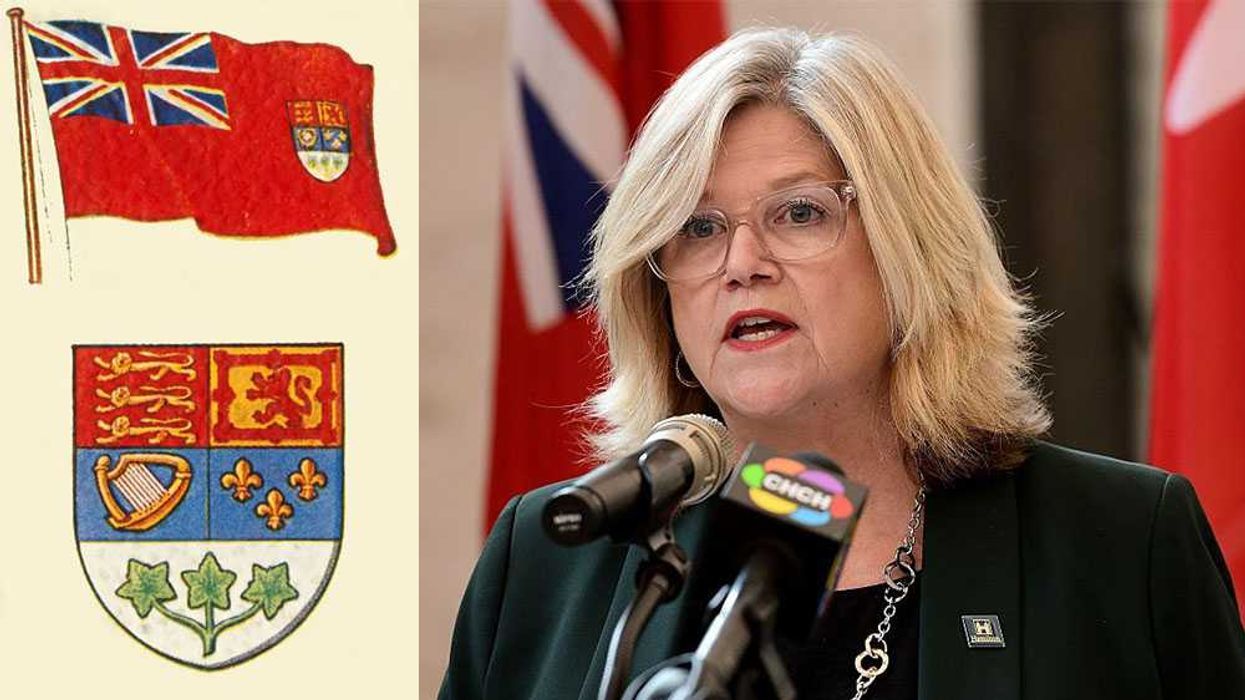
 The Clancy case raises a larger moral question: What happens when circumstances become the rationale for defending the unthinkable?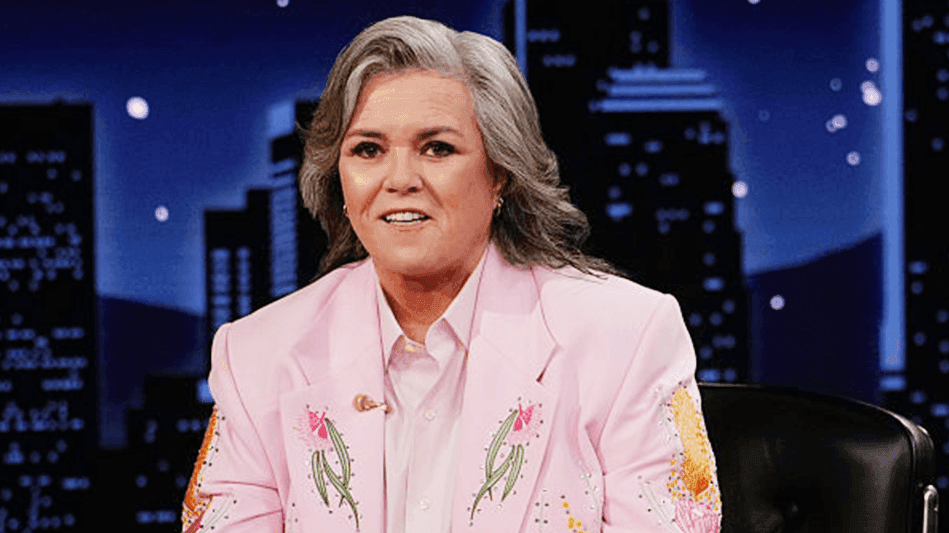
 www.theblaze.com
 thefederalist.com
Southern Poverty Law Center's BIG FAT MESS: 3 things to know about Heidi Beirich's indictment
While smearing law-abiding conservatives in recent years as "extremists," the Southern Poverty Law Center was seemingly getting into bed with bona fide Nazis — in one alleged case, perhaps quite literally.
Heidi Beirich, the former director of the SPLC's Intelligence Project who was indicted and arrested on Wednesday, is accused not only of getting romantically involved, cohabitating, and sharing bank accounts with a neo-Nazi informant whose work she oversaw, but also allegedly committing fraud along the way.
'The charity that supposedly fought Neo-Nazis actually funded Neo-Nazis.'
The second superseding indictment in the SPLC's criminal fraud case announced by the Justice Department on Wednesday sheds light on Beirich's various alleged improprieties as well as on the SPLC-linked activities of her alleged skinhead lover.
Quick background
The Alabama-headquartered smear- and fearmongering outfit was federally charged on April 21 with six counts of wire fraud, four counts of making false statements to a federally insured bank, and one count of conspiracy to commit concealment money laundering.
The SPLC — which has been credibly accused of bankrolling leaders and organizers in the Ku Klux Klan, the Aryan Nation, the American Front, United Klans of America, the National Socialist Party of America, and the National Alliance with millions of dollars in donor funds through fictitious accounts — pleaded not guilty in May to all counts.
RELATED: Klansman allegedly on SPLC payroll was 'true believer' white supremacist, not reformed infiltrator
On June 2, the DOJ filed a superseding indictment against the SPLC detailing some of the ways that field sources allegedly used SPLC donor money, including to grow existing chapters of extremist groups; make donations to extremist group leaders; host extremist rallies; purchase materials for cross burnings as well as for KKK robes and hoods; and publish extremist literature for recruitment purposes.
The June indictment also told the love story about a former Intelligence Project director and a field source referred to only as "F-9."
The second superseding indictment filed on Tuesday fills in some of the gaps in that love story — including the former director's name, Heidi Beirich — and paints her in a particularly unflattering light.
The SPLC, Beirich, and Beirich's attorney did not respond to Blaze News' requests for comment.
There are three core components to the case against Beirich, who has been personally charged with wire fraud conspiracy, conspiracy to submit false statements to a federally insured bank, and conspiracy to commit concealment money laundering.
1. Shell companies
Beirich is an anti-Trump liberal who served as director of the Intelligence Project from 2012 until 2019 and now serves as the chief strategy officer at the Global Project Against Hate and Extremism. In her latest capacity, she concerned-mongered before Congress in 2020 over the supposed problem of white supremacists in the military.
The indictment alleges that Beirich opened and/or modified a series of bank accounts in the name of numerous shell companies, including the Center Investigative Agency, Fox Photography, Tech Writers Group, and Rare Books Warehouse — and knowingly signed bank documents "containing false statements for the purpose of influencing banks" to open and maintain the accounts.
'I knew it was that fat, ugly hog Heidi Beirich.'
According to the indictment, the fictitious organizations Beirich allegedly helped stand up were never incorporated, conducted no legitimate business, and had no real employees.
Funds from SPLC donors — who were led to believe they were supporting the fight against extremism — were allegedly funneled through the identified shell companies to so-called informants, including Beirich's alleged lover, F-9.
2. Thick as thieves
Prosecutors allege that F-9 received millions of dollars in donor funds, primarily through the Tech Writers bank account, while helping the National Alliance "carry out its extremist activities."
RELATED: Federal judge REJECTS the victim narrative pushed by the criminally charged SPLC
Beirich allegedly oversaw the SPLC payments to F-9 while engaged "in a romantic relationship" with him, said the indictment.
Beirich is also accused of getting a taste of the action.
"During this relationship, BEIRICH and F-9 shared a house and two bank accounts," the indictment alleges. "Between 2015 and 2021, approximately $140,000.00 in donors' money flowed from the SPLC operating account, through the Tech Writers account, and was ultimately deposited into the joint bank accounts held by F-9 and BEIRICH."
The then-SPLC director allegedly used donors' money to pay for their shared living expenses, even though she does not appear to have been hard-pressed for cash. After all, when Beirich left the SPLC, she was reportedly earning $190,000 in salary and benefits.
Whether their alleged romantic relationship is ongoing is unclear.
3. Another use for the Nazi informant
According to the allegations, Beirich's informant broke into the National Alliance's headquarters in West Virginia in 2014 with her knowledge; stole 25 boxes of documents; transported those documents across state lines; and with Beirich's help, copied those documents before breaking back into the National Alliance headquarters to return the originals.
Prosecutors alleged that Beirich paid for the copies with donor funds and used the stolen material for a "story to solicit more donations."
The documents taken in the burglary appear to have served as the basis for Beirich's lengthy March 2015 "Hatewatch" article titled "Chaos at the Compound," where she discussed drama and mismanagement behind the scenes at the National Alliance.
Beirich then allegedly "paid approximately $6,000.00 in donors' money" to a different field source "to falsely take responsibility for the burglary."
After the June indictment came out and linked the SPLC to the burglary, William White Williams, National Alliance's 78-year-old chairman, told the New York Post, "I knew it was that fat, ugly hog Heidi Beirich."
Protest and condemnation
FBI Director Kash Patel said in a statement on Thursday, "The charity that supposedly fought the KKK actually funded the KKK. The charity that supposedly fought Neo-Nazis actually funded Neo-Nazis. Heidi Beirich supposedly dedicated her career to fighting neo-Nazis. The indictment alleges she helped FUND them."
Patel added, "The woman who supposedly fought hate allegedly helped pay the very people spreading it, used their activity to raise more donor money, and personally benefited from the scheme."
Beirich's lawyer denies she did anything wrong.
"Dr. Beirich is innocent, and this case is without merit," Beirich's attorney, Michael Proctor, said in a statement obtained by CNN. "We believe the charges against her and the SPLC are politically motivated, and Dr. Beirich has been targeted in this case because of the important work she has done to combat hate groups and extremists."
The SPLC has already tried and failed to get the case dismissed on the basis of the claim that the prosecution is politically motivated.
Judge Emily Marks of the U.S. District Court for the Middle District of Alabama, a Trump appointee, said in an order rejecting the SPLC's motion on Friday, "The SPLC has failed to offer some evidence tending to show animus on the part of the prosecutors involved in bringing this case and that such animus resulted in the prosecution."
Proctor added, "Dr. Beirich won’t be silenced or intimidated by the government’s false and politicized allegations now."
"The actions taken by the DOJ will not shake our resolve," the SPLC told CNN. "We remain steadfast in our fight for justice and in our commitment to ensuring the promise of the Civil Rights movement becomes a reality for all. We are confident in our position and look forward to presenting the evidence and making our case in court."
Like Blaze News? Bypass the censors, sign up for our newsletters, and get stories like this direct to your inbox. Sign up here!