Homeowners' associations weren’t supposed to replace civilization


Homeowners’ associations exploded across America beginning in the 1960s. No one describes HOAs as “popular,” and the horror stories of petty rules and bureaucratic neighbors are legion. Yet more Americans fight for the privilege of buying into them every year. The reason is simple: The HOA is the last legal mechanism Americans have to artificially recreate something the country once produced organically — a high-trust society.

People want neighborhoods where streets feel safe, houses stay maintained, and neighbors behave predictably. We call these places “high trust” because people do not expect those around them to violate basic standards. Doors remain unlocked, kids play outside, and property values rise. Americans once assumed this was the natural condition of ordinary life. It never was.

Everyone complains about HOAs, but they remain the only defense against the chaos modern culture produces.

High-trust societies are not accidental. They emerge only under specific cultural conditions. Trust forms when people can understand and predict the behavior of those around them. That requires a shared standard — how to act, how to maintain property, how to handle conflict. When those standards come from a common way of life, enforcement becomes minimal. People feel free not because they reject limits, but because the limits match their instincts and expectations.

Every social order requires maintenance, but the amount varies. When most residents share the same assumptions, small gestures keep the peace. A disapproving look from Mrs. Smith over an unkempt lawn prompts action. A loud party until 1 a.m. results in lost invitations until the offender corrects the behavior. Police rarely if ever enter the picture. The community polices itself through mutual judgment.

Several preconditions make this coordination possible. Residents must share standards so violations appear obvious. They must feel comfortable addressing those violations without fear of disproportionate or hostile reactions. And they must value the esteem of their neighbors enough to respond to correction. When those conditions collapse, norms collapse with them. As New York learned during the era of broken windows, one act of disorder invites the next.

American culture and government spent the last 60 years destroying those preconditions.

Academics and media stigmatized culturally cohesive neighborhoods, and government policies made them nearly impossible to maintain. Accusations of racism, sexism, or homophobia discourage the subtle social pressure that once corrected behavior. The informal network of mothers supervising neighborhood kids vanished as more women entered the corporate workforce. And as Robert Putnam documented, social trust deteriorates as diversity increases. Residents retreat into isolation, not engagement.

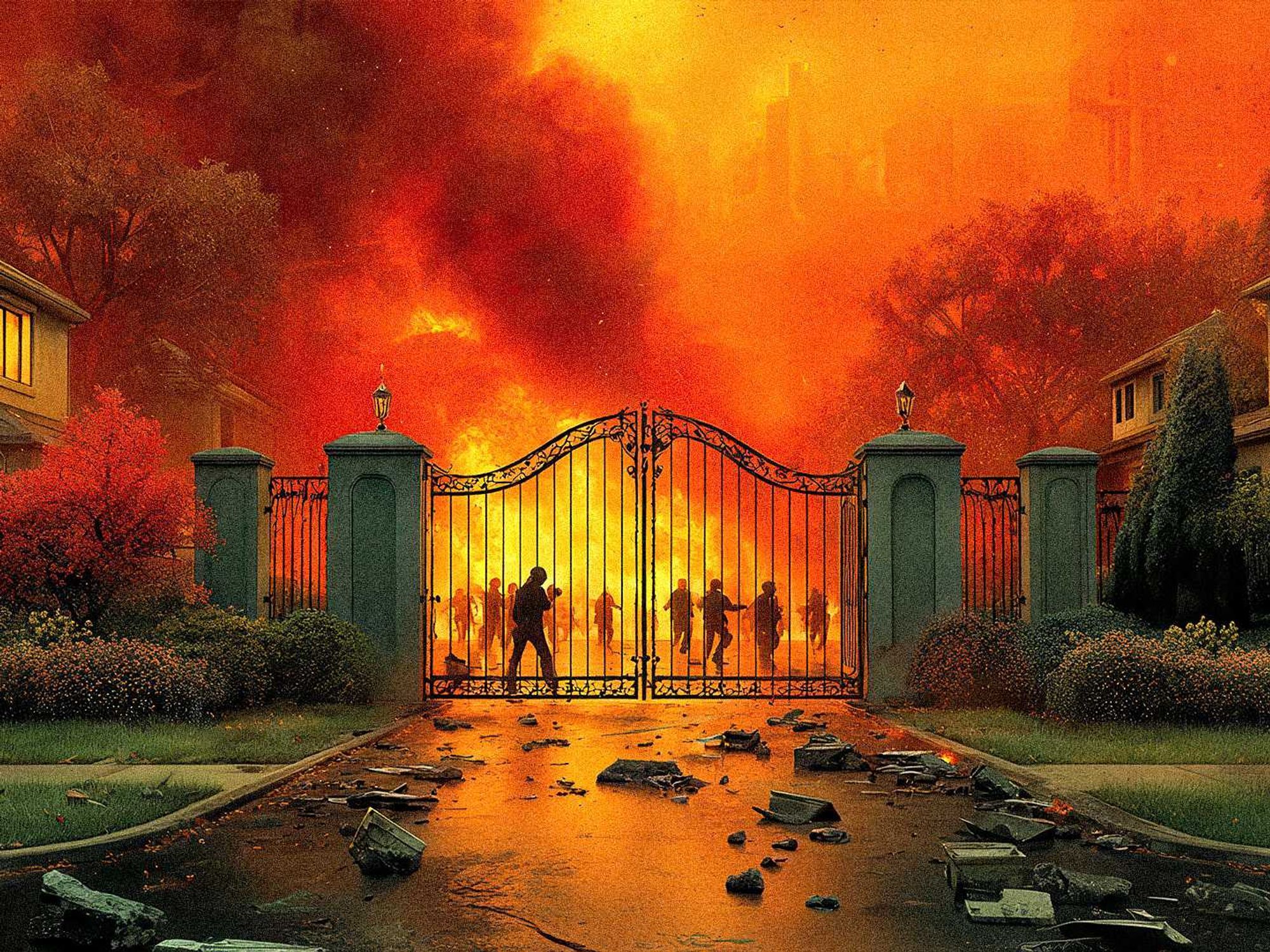
The HOA attempts to reconstruct a high-trust environment under conditions that no longer support it. Ownership, maintenance, and conduct move from cultural consensus to legal contract. Residents with widely different expectations sign binding agreements dictating noise levels, lawn care, parking, paint colors, and countless other micro-regulations. A formal board replaces Mrs. Smith’s frown. Fines replace gentle rebukes. Gates and walls replace the watchful eye of neighborhood moms.

What once came from community now comes from bureaucracy.

With home prices surging, families dedicate larger portions of their wealth to their houses. Few want to gamble on declining property values because their neighborhood slips into disorder. Everyone complains about HOAs, but they remain the only defense against the chaos modern culture produces. People enter hostile, artificial arrangements where neighbors behave like informants rather than partners — because the alternative threatens their largest investment.

RELATED: Do you want Caesar? Because this is how you get Caesar

Blaze Media Illustration

This analysis is not about suburban frustration. The HOA reveals a far broader truth: Modern America replaced a high-trust society with a trustless system enforced by administrative power.

As cultural diversity rises, the ability of a population to form democratic consensus declines. Without shared standards, people cannot coordinate behavior through social pressure. To replicate the order once produced organically by culture, society must formalize more and more interactions under the judgment of third parties — courts, bureaucracies, and regulatory bodies. The state becomes the referee for disputes communities once handled themselves.

Litigiousness rises, contracts proliferate, and coercion replaces custom. The virtue of the people declines as they lose the skills required to maintain trust with their neighbors. Instead of resolving conflict directly, they appeal to ever-expanding authorities. No one learns how to build trust; they only learn how to report violations.

The HOA problem is not really about homeowners or housing costs. It is a window into how America reorganized itself. A nation once shaped by shared norms and informal enforcement now relies on legalistic frameworks to manage daily life. Americans sense the artificiality, but they see no alternative. They know something fundamental has changed. They know the culture that sustained high-trust communities no longer exists.

The HOA simply makes the loss unavoidable.
11 Things To Know About Moving Cross-Country For A Better Life As Remote Work Becomes The Norm

Moving to flyover country was one of the best decisions we've ever made. It has been good for us financially, spiritually, and relationally.

Bengal tiger missing,  murder suspect owner caught after big cat got loose in Houston neighborhood


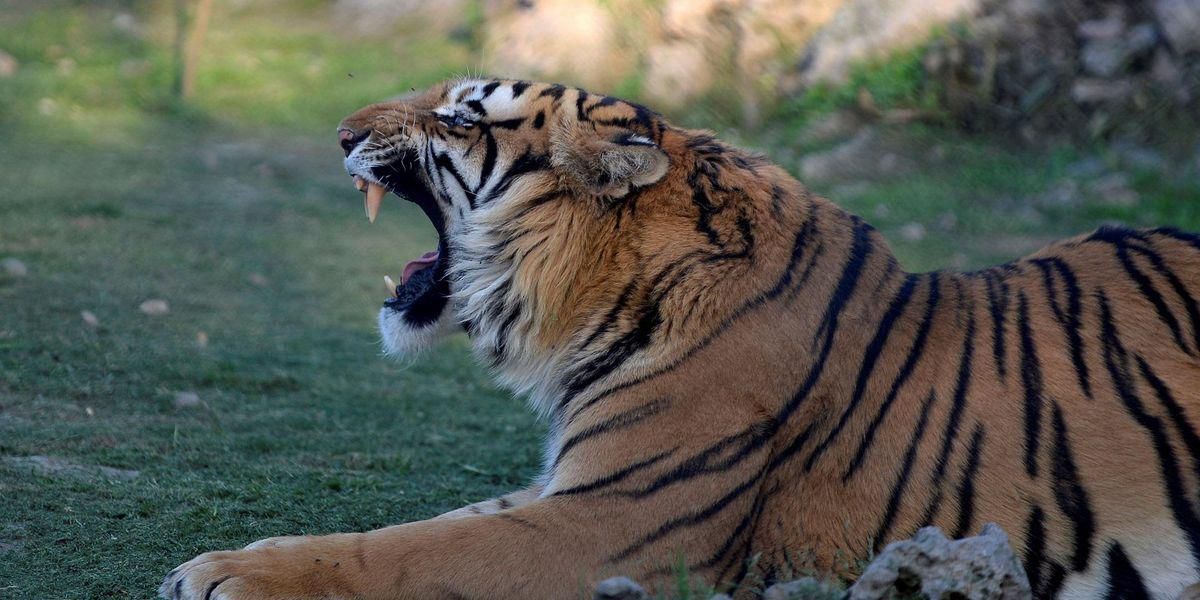
A murder suspect out on bond has been apprehended after going on the run with his pet Bengal tiger who was found running loose Sunday in a Houston neighborhood.

What are the details?

Several videos began circulating online from witnesses in a West Houston neighborhood, showing what one onlooker observed was an adult "freakin' Bengal tiger" crouched in a yard, wearing a collar.

@robwormald Here's another angle. https://t.co/bvl5g9kzYp

— Michael Schwab (@michaelschwab13) 1620621517.0

Multiple videos show a man wearing a black shirt — later reported to be an off-duty sheriff's deputy — holding a gun on the beast, poised to shoot, but he does not. In one, he tells the purported owner of the predator, "F*** you and your f***ing tiger. Get the f*** back inside."

But later video shows the presumed owner walking the tiger back to a residence as the deputy (with his gun lowered) yells repeatedly, "GET THE TIGER BACK INSIDE!"

In clips obtained by ABC News, a child can be heard asking, "There's a tiger in the neighborhood? Like, why would he even be here?"

Authorities are searching for a man whose tiger was found wandering around a neighborhood in Houston.An armed off… https://t.co/FE1AyqIBId

— ABC News (@ABC) 1620675985.0

Fox News reported that once deputies arrived, the owner of the tiger loaded the big cat into a white Jeep Cherokee and fled. Officers took chase, but the Jeep got away.

According to Buzzfeed News, Houston police later identified the tiger owner as Victor Hugo Cuevas, 26, who was out on bond after facing a murder charge from an unrelated incident in November.

The outlet noted that "fleeing from police and being in possession of the tiger could violate his bond terms." Tigers are not allowed within the city limits of Houston. Authorities are also seeking two monkeys Cuevas is believed to own.

"My main concern right now is focusing on finding him and finding the tiger because what I don't want him to do is harm that tiger. We have plenty of places we can take that tiger and keep it safe and give it a home for the rest of its life," Houston police Commander Ron Borza said during a news conference Monday.

"If that tiger was to get out and start doing some damage yesterday, I'm sure one of these citizens would have shot the tiger," Borza added. "We have plenty of neighbors out here with guns and we don't want to see that. It's not the animal's fault. It's the breeder's fault. It's unacceptable."

The landlord of the property where the tiger and monkeys are believed to have been kept reportedly told KHOU-TV that the tenants initially told him they did not own any pets, and he has begun the eviction process.

ABC News reported late Monday that Cuevas "is now in custody, according to Houston police, but the 'whereabouts of the tiger are not yet known.'"

VIDEO: Small plane crashes into neighborhood, hits SUV in street. Three dead — including 4-year-old boy who was in SUV with his mom.


Three people were killed — including a child — and one person was injured when a small plane crashed into a residential neighborhood in Pembroke Pines, Florida, Monday afternoon, WTVJ-TV reported.

What happened?

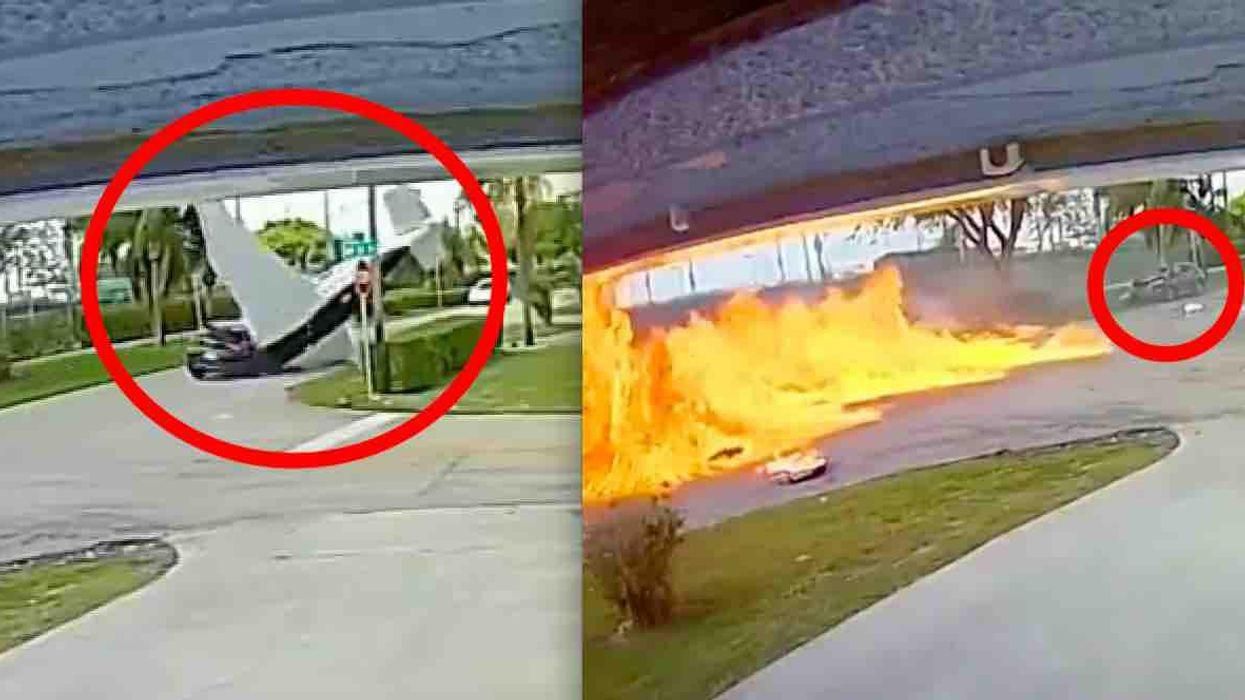
Surveillance video from a home just feet away captured the moment the plane hit the right side of an SUV before careening across a street and bursting into flames.

Image source: YouTube screenshot

Image source: YouTube screenshot

Image source: YouTube screenshot

After impact, the SUV ended up across the street facing in the opposite direction from which it had been traveling. Pembroke Pines Police told the station the crash occurred near Southwest 72nd Avenue and Southwest 13th Street.

Here's the surveillance video:

Surveillance Footage Shows Moment Small Plane Collides Into Vehicle in Pembroke Pines, Bursts...youtu.be

The two people on the plane were killed at the scene, fire rescue officials told WTVJ, while an adult and child in the SUV were taken to Memorial Regional Hospital in serious condition. The station, citing sources, said the adult was later released while the child died late Monday night.

Authorities identified the deceased child as 4-year-old Taylor Bishop, WPLJ-TV reported.

His mother, who also was in the SUV, was identified at a Broward School Board meeting Tuesday as Megan Bishop, WPLJ said, adding that she's a paraprofessional at Hollywood Hills Elementary School.

Authorities identify boy killed when plane strikes SUV in Pembroke Pinesyoutu.be

While Megan and Taylor Bishop were injured, Taylor was trapped and had to be extricated, WPLJ reported, adding that first responders said he was wearing a seatbelt.

Aerial footage showed firefighters spraying down the plane wreckage against an airport fence across the street from the residential neighborhood, WTVJ reported, adding that other pieces of the plane were scattered around the scene of the accident.

Federal Aviation Administration officials told WTVJ the single-engine Beechcraft Bonanza aircraft crashed shortly after takeoff from the airport around 3 p.m.

Witnesses told WPLJ they saw the plane circling back toward the runway before it took out a power line and crashed.

Annabelle Fernandez told WTVJ she was nearby when the plane went down.

"We heard a tremendous noise, and we went out and everybody was on fire, everything was bad," Fernandez said. "It got to the car. It was a mother with her kid, and we don't know what happened to them. The fire rescue came, and they got them."

The FAA and National Transportation Safety Board will be investigating the crash, WTVJ added.

Small Plane Crashes Into Car, Killing 2 in Pembroke Pines | NBC 6youtu.be