Gorsuch Abandons Originalism (Again) With Claims America Isn’t A Christian Nation
 Justice Gorsuch keeps insisting America was founded as a religiously neutral nation, but the founding-era record tells a very different story.
Fifteen months into Donald Trump’s second administration, and after repeated Supreme Court rulings affirming ICE’s authority to detain and deport illegal aliens, lower courts still overrule immigration law every week. The Supreme Court shows little urgency in stopping them.
Yet when a lower court finally follows the law and rules against the Department of Health and Human Services’ approval of a dangerous abortion drug by mail, the Supreme Court suddenly rediscovers its appetite for emergency intervention. Welcome to the vaunted 6-3 conservative majority, now better understood as a 7-2 majority against most conservative priorities — and against the court’s own recent precedents.
The so-called conservative majority increasingly looks like a bloc that exists to disappoint conservatives more politely than the left would.
We finally found a case in which the justices were eager to stay a lower-court injunction against a political policy. Last week, the Supreme Court paused a Fifth Circuit injunction against mail-order and telehealth access to the abortion drug mifepristone. The expansion of mifepristone to mail distribution was plainly unlawful, yet only Clarence Thomas and Samuel Alito would have left the injunction in place.
That tells you a great deal.
Start with the legal question, then consider the political implications and the court’s larger hypocrisy.
In 2023, several doctors opposed to abortion on moral and religious grounds challenged the FDA’s original 2000 approval of mifepristone. They argued that the agency had unlawfully approved the drug under Subpart H regulations meant for serious or life-threatening illnesses, on the absurd premise that pregnancy is an illness.
They also argued that the Biden administration’s later expansion of the drug to mail-order use and prescription without an in-person visit violated the Comstock Act. The statute explicitly bars mailing any “drug ... for producing abortion” and makes it a felony to use “any express company or other common carrier or interactive computer service” to ship “any drug ... designed, adapted, or intended for producing abortion.”
After the doctors won in a Texas district court and secured a partial victory in the Fifth Circuit against the mail-order expansion, the Supreme Court reversed and tossed the claim.
More recently, the Fifth Circuit sided with Louisiana in a separate challenge to mifepristone. The state argued that the entire mail-order abortion-pill regime violates Dobbs, which returned authority over abortion to the states. Under the FDA’s policy, a resident of a state such as Louisiana can still receive abortion pills in the mail even though abortion is banned there.
RELATED: Conservative SCOTUS justice restores access to abortion drug — for now
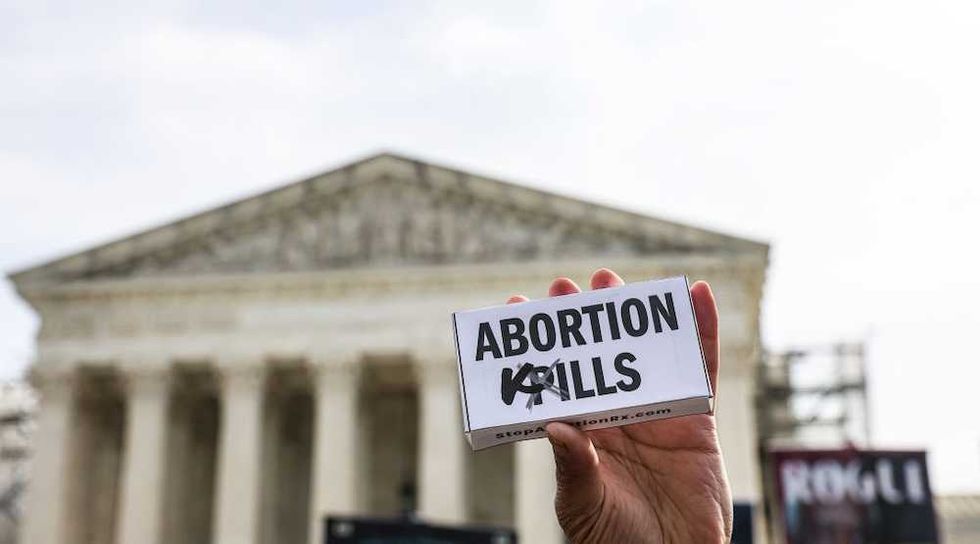
By staying that injunction last week, the three Trump appointees made one thing painfully clear: They will overrule conservative lower courts even when the law and recent Supreme Court precedent are on the conservatives’ side.
This is the classic Republican move: one step forward, one giant leap backward.
Planned Parenthood may be on the ropes in some states, but Trump’s own administration sided with the abortion lobby to preserve Biden’s expansion of the abortion pill. That dangerous drug has made Dobbs functionally hollow by turning every mailbox into an abortion mill. By 2023, 63% of all abortions were already chemical abortions, and that number has almost certainly risen since.
Republicans cannot celebrate the Dobbs decision while refusing to fight mifepristone. In Trump’s case, his administration is not merely refusing to fight. It is siding with the abortion industry. What they call “pro-life” politics is a gross exercise in sophistry and perfidy.
Then comes the broader hypocrisy of the Republican appointees, with Thomas and Alito the lone exceptions.
For the past 15 months, liberal district and circuit judges have nullified immigration law, invented new rights and due-process claims for illegal aliens, and ignored Supreme Court precedent. Yet the high court shows no comparable eagerness to slap them down.
Nearly every day, lower courts order ICE to release criminal aliens on bond, even though Jennings v. Rodriguez made clear that such claims violate the Immigration and Nationality Act. The Supreme Court stayed some injunctions against Trump’s cancellation of Temporary Protected Status for certain nationalities, but it has refused to issue a categorical ruling that would end the lower-court cat-and-mouse game. Earlier this month, another federal judge still managed to block Trump’s cancellation of TPS for Yemeni nationals.
The worst example may have come earlier this month, when U.S. District Judge Julia Kobick ruled against Trump’s travel ban, absurdly suggesting that the murder of a National Guardsman by an Afghan national was not enough reason to stop visas from similar countries. But Trump v. Hawaii already held that the plain language of the INA allows the president to suspend visas from any country whenever he deems it in the national interest. Courts are not supposed to second-guess that determination.
The same pattern holds elsewhere. The D.C. Court of Appeals ruled last month that the president must accept asylum claims at the border, despite his clear authority under Section 212(f) of the INA to suspend entry. Yet none of these lower-court judges gets the Fifth Circuit treatment.
The same goes for guns. After the Bruen decision, blue states still restrict where common firearms may be carried and what magazines may be owned, in plain defiance of the requirement that modern gun regulations align with the nation’s historical tradition. The Supreme Court refused to hear challenges to Maryland’s ban on common semiautomatic rifles and Rhode Island’s ban on magazines holding more than 10 rounds.
In both cases, Gorsuch joined Thomas and Alito in dissent. Kavanaugh and Barrett said nothing.
RELATED: Funding is useless if Democrat judges can still hold ICE hostage
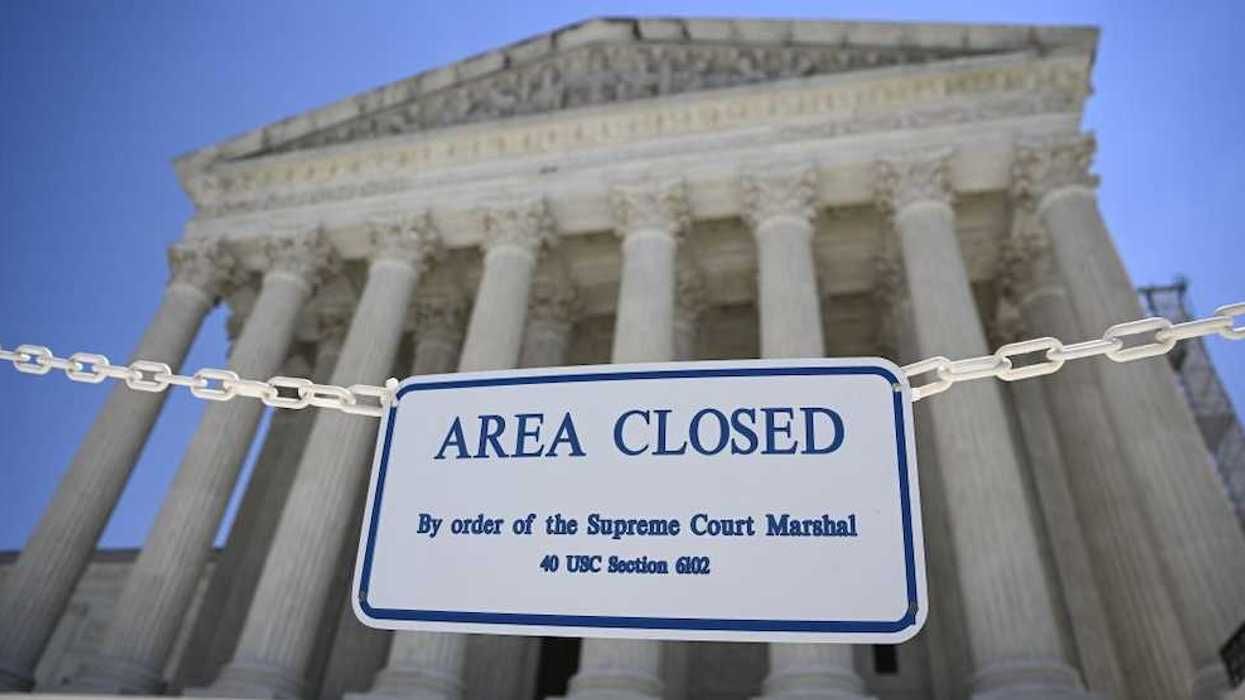
Remember the Harvard affirmative-action ruling that was supposed to end race-based admissions? Discrimination remains rampant, and lower courts keep blessing open bias against white and Asian students. In a 2024 dissent from denial of certiorari, Alito — joined, of course, only by Thomas — warned that the court had “twice refused to correct a glaring constitutional error that threatens to perpetuate race-based affirmative action in defiance of Students for Fair Admissions.”
No meaningful follow-up has come since.
So what, exactly, is conservative about this court? What is it trying to conserve?
It is not defending the rule of law. It is not disciplining rogue lower courts. It is not protecting states’ authority on abortion, border security, gun rights, or equal protection.
Thomas and Alito still understand the assignment. The rest of the so-called conservative majority increasingly looks like a bloc that exists to disappoint conservatives more politely than the left would.
 The Founders did codify 'ideas' -- but those ideas came from somewhere, and that somewhere was Christianity.
 In the post-judicial-filibuster world, intellectual adherence to textualism, in and of itself, is no longer sufficient for Republican Supreme Court nominees.
 Chief Justice John Roberts has long prided himself on being a judicial minimalist and proceduralist. He wants to preserve the image of the judiciary, and especially the Supreme Court, as an impartial arbiter of cases and controversies. Very often, when highly politicized cases connected to Trump have reached the court, Roberts has sought ways to […]
 Congress explicitly rejected Roberts' new feudalism in the same year the Citizenship Clause was ratified.
 'I hope, too, that one day soon this Court will choose to settle the question so that other Americans seeking to vindicate their civil rights do not suffer the same fate as those now before us.'
 The U.S. Supreme Court unanimously held on Thursday that the federal government’s use of a federal law restricting gun possession for certain unlawful drug users to be “inconsistent with the Second Amendment.” “The Second Amendment protects the right of ‘all Americans’ to keep and bear firearms for self defense,” the court’s “narrow” ruling reads. “Affording […]
 Until the Court addresses the flawed and non-textual nondelegation doctrine, federal agencies will continue to make laws — and pick winners and losers.
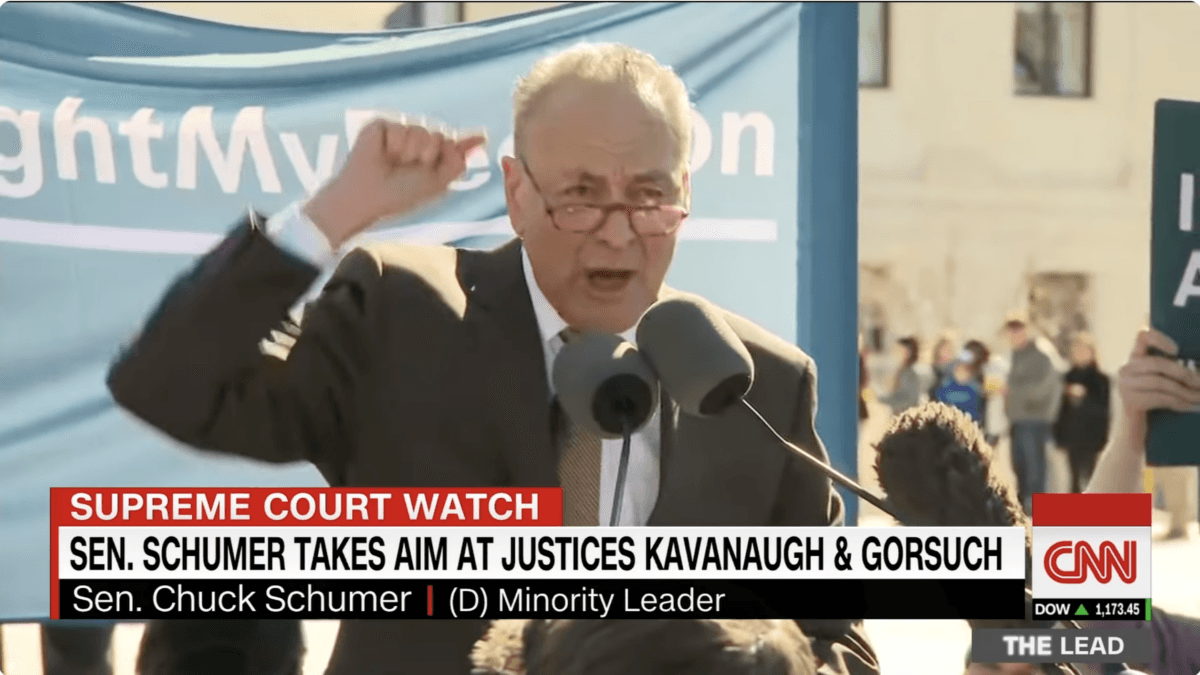 The dangerous 'swatting' attack is the most recent in a surge in leftist-led political violence in the Trump era.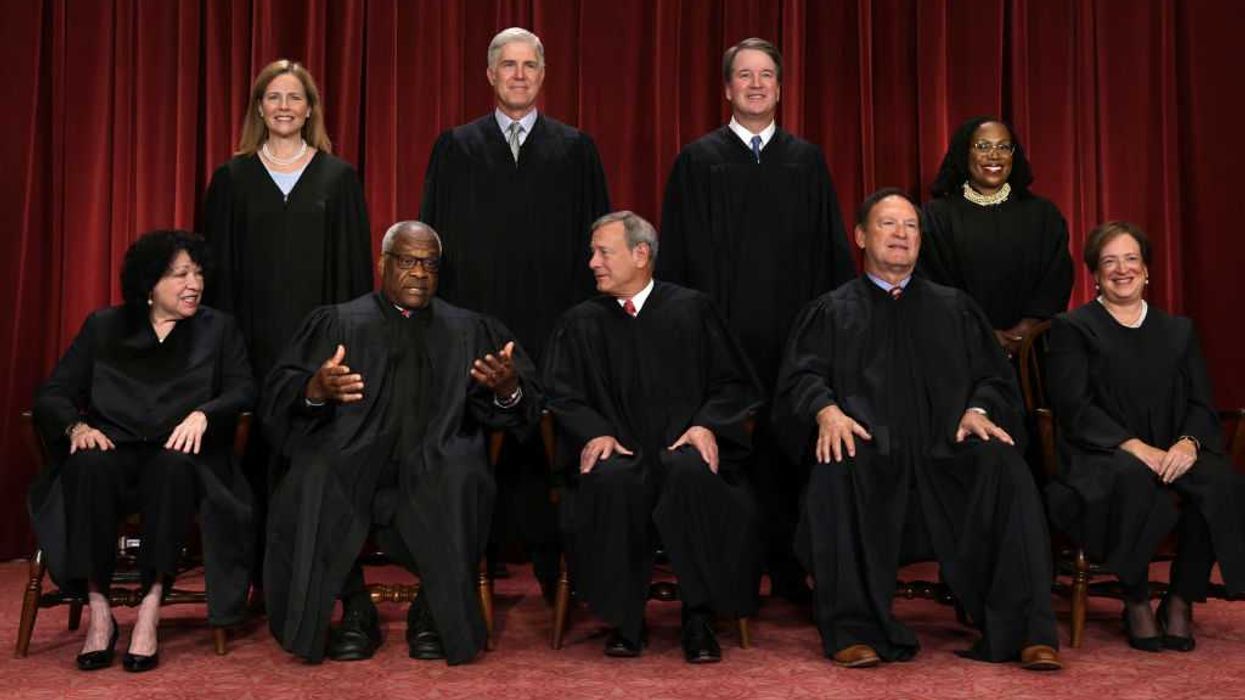
 thefederalist.com
 www.theblaze.com