James Lindsay Is An Op Who Should Be Mocked Into Oblivion
 He deserves the same fate as every other two-bit provocateur — to be relegated to the oblivion of complete and utter irrelevancy.
Frank Meyer’s fusionism combined free-market libertarianism and religion-friendly traditionalism to create the modern conservative movement. As a political alliance against the threat of communism, the movement served its purpose. But the principles that undergirded Meyer’s synthesis were not an adequate basis for attaining and sustaining national power.
The difference between the defeated Barry Goldwater faction and the victorious Ronald Reagan coalition was the vote of white Catholic Democrats alienated from their former party by its anti-anti-Communism and embrace of the three A’s: amnesty (for draft evaders), acid, and abortion.
We need a clearer, more uncompromising articulation of a pure MAGA doctrine that distinguishes our agenda from the libertarians and so-called principled conservatives.
Those former Democrats did not want smaller government, so Reagan preserved, for them and the country, Social Security, Medicare, and Medicaid, along with generating ever-larger deficits.
Meyer’s synthesis, however, was not as new as is often claimed: In important respects, it represented 19th-century Bourbon Democracy spruced up for the post-World War II era. What distinguished the Bourbons from the Republicans (and from the populist Democrats) was their commitment to smaller government, free trade, and cheap labor. That meant unfree labor in the 1850s and more-or-less free labor once the South was successfully “redeemed” from Republican rule and black civil rights enforcement after the Civil War.
What America needs today instead is fissionism. We need a clearer, more uncompromising articulation of a pure MAGA doctrine that distinguishes our agenda from the libertarians and so-called principled conservatives.
MAGA in foreign and security matters means using American power to secure American interests. Foreign policy is not the application of abstract principles, which are worse than useless in international relations. What were Franklin Roosevelt’s principles or Andrew Jackson’s or Teddy Roosevelt’s? Their guiding star in foreign policy was not principle but the ruthless pursuit of results.
As for draining the swamp, the trench warfare over DOGE and U.S. attorney appointments proves that deconstructing the administrative state requires a pro-Trump Senate. But the current Senate remains beholden to the uniparty. If you are happy with your “principled conservative” senator obstructing the president, then you are on the other side.
Against those screaming for lower taxes and less government at all costs, protective tariffs are core to MAGA — and for that matter, core to the Republican Party before it was taken over by Reagan, a former Democrat and fusionist. MAGA demands an economic policy geared toward national greatness. It means an end to regulations engineered to cripple the U.S. economy in the name of DEI, apocalyptic climate alarmism, or the latest elite neurosis.
Targeted regulations and tariffs to onshore our supply chains and rebuild the American industrial base? Absolutely. That has been Donald Trump’s consistent agenda since he first started commenting on public affairs in the 1980s. If the “principled conservatives” fail to recognize this, that exposes their own ideological blindness, not a flaw in the MAGA platform.
RELATED: Will Republicans fight for the SAVE Act — or fold again?
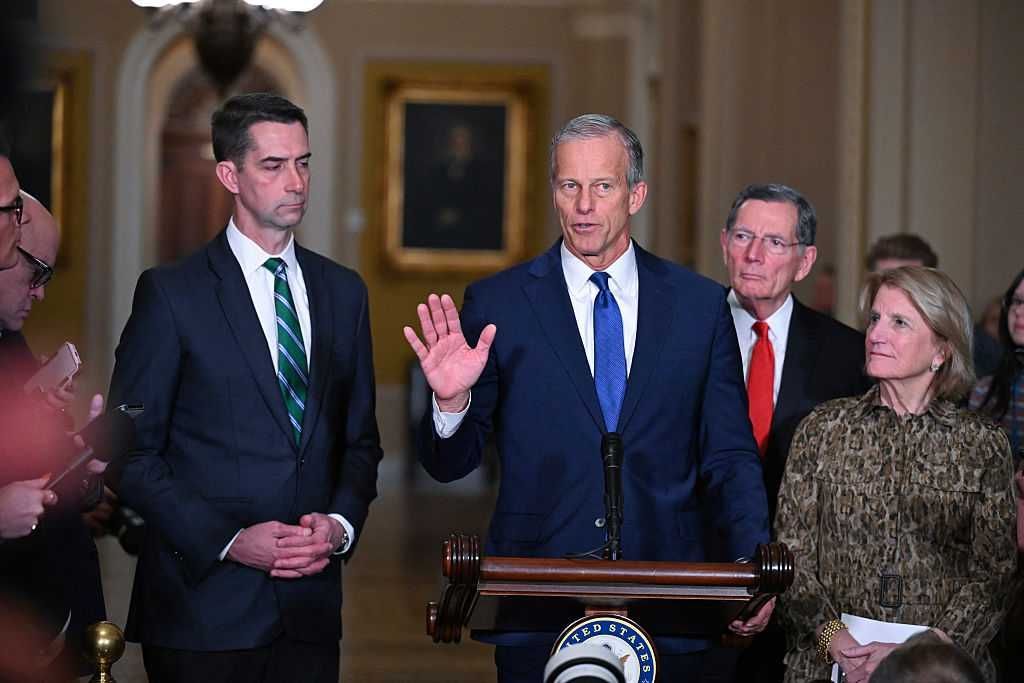
Fundamentally, “principled conservatives” don’t want America to be stronger and freer if it means traditional Republican governance. They prefer Bourbon Democracy: small government, cheap goods, cheap labor (citizens and noncitizens alike), and dependence on others — once Britain or the North, now China — for industry, including vital defense-related manufacturing. As for the world, China can do what it wants. Anything else would require the old guard conservatives to compromise their precious “principles.”
People who don’t want the United States to be reliant on China, as Mississippi was on Manchester in 1850, or Manchester, New Hampshire, in 1890, should see “principled conservatives” as political opponents — allies of the Democrats. They are helping to destroy Trump and everything the president stands for.
Does drawing clearer partisan lines mean shedding potential support required for electoral victory? That is a very real risk. The compensating benefit is that once we know what we want, we can accurately identify our allies and band together to address the crises of our time.
A “principled conservative” administration would have preferred Big Pharma to RFK Jr. and MAHA. A “principled conservative” administration would make no room for a Tulsi Gabbard, an Elon Musk, or any other heterodox defector who wants to restore American foreign and security policy and advance American power, national honor, and national freedom.
Fissionism means drawing clear battle lines, dividing what was once the “conservative movement.” The “principled conservatives” can keep their pristine — and currently useless — “principles.” I am on the side of America, which means the side of Trump.
Editor’s note: A version of this article appeared originally at the American Mind.
From the moment Donald Trump announced his run for president, the Republican establishment hated his guts. In 2016, the brash New York billionaire was treated like a joke — an embarrassment degrading the political process. But as Trump gained momentum, establishment figures faced a choice: Throw in with “NeverTrump” or pretend they’d seen the light.
Some bolted to NeverTrump outfits like the Bulwark or the Lincoln Project. Others stuck around, biding their time, waiting for a chance to reclaim the party from the populists. Now that Trump defines the GOP, they’ve shifted strategies. If you can’t beat MAGA, co-opt it.
MAGA has never been a cult, despite what the detractors may say. Supporters have stood by him because he fought for the things they care about.
Trump’s first term resembled an awkward arranged marriage. He won the heart of the base and created a movement mostly detached from the GOP machine. But he lacked the institutional infrastructure necessary to govern. Running the executive branch requires armies of staffers, bureaucrats, and loyal operatives — none of which MAGA had.
That vacuum was filled by GOP establishment swamp creatures, many of whom actively opposed the president and his agenda. Key officials undermined him. Military leaders lied to his face. Despite some major victories, Trump’s presidency was defined by a constant war against a hostile ruling class.
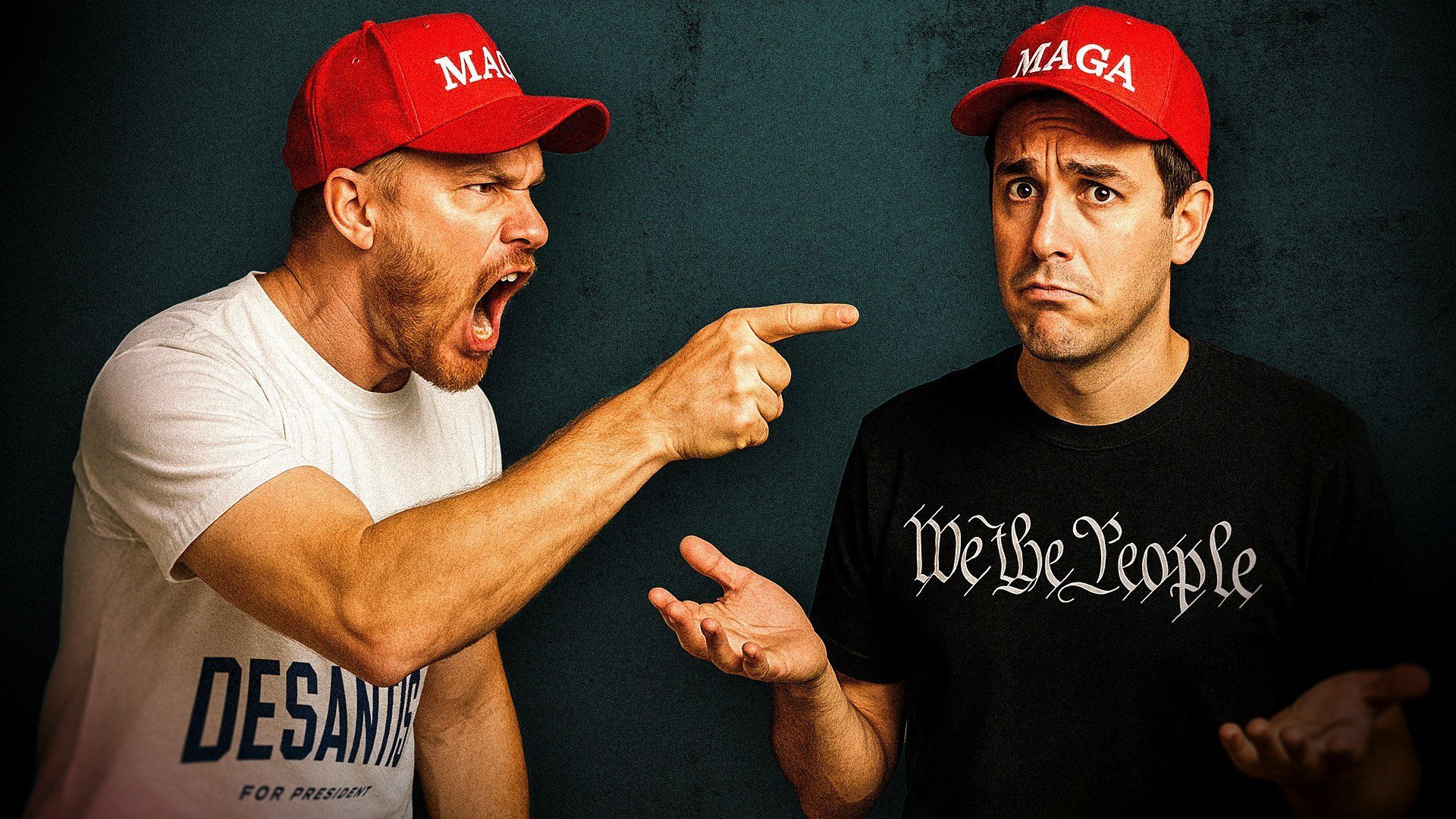
With outrageous legal attacks from the Biden administration raising doubts about Trump’s electability, Ron DeSantis was encouraged to step in. I like DeSantis — he’s my governor, and he has done an outstanding job, especially standing up to the COVID-19 insanity. But the truth is that DeSantis has never been a gifted campaigner. He barely scraped by in 2018 against a man later found doing meth in a hotel with a male prostitute.
Trump, whatever his flaws, is a force of nature on the campaign trail. Anyone paying attention could see that DeSantis was walking into a meat grinder.
Still, many Republicans who hadn’t declared themselves NeverTrump saw DeSantis as their chance to strike. He had a solid record and stuck closer to the establishment line. He was more disciplined, less prone to off-script rhetoric, and — most important — not under indictment.
So the donor class and the consultant class threw their weight behind him. The money flowed, the media declared him the future, and the campaign ... flopped. Hard.
After DeSantis’ inevitable loss, anti-Trump Republicans were left stunned, tending to their bruised egos and looking for a new angle. Trump had survived an assassination attempt and beaten Kamala Harris. It was clear: He was the party. The idea that he could be swapped out for a more polished Republican was delusional.
MAGA wasn’t going to be defeated by recycled talk about small government and lower taxes. The only remaining play was to redefine the movement from within.
Trump’s second term began with a burst of action: government agencies were shuttered, birthright citizenship was challenged, and deportations resumed. MAGA supporters were elated. Progressives were stunned. But the GOP establishment was left wondering how to reinsert itself into power.
Then came the cracks.
Trump ordered a strike on Iran at Israel’s request — only for Benjamin Netanyahu to blow off the president’s social media appeals to honor a ceasefire. Trump floated amnesty for illegal aliens working in agriculture and hospitality. The Justice Department and FBI dismissed any suggestion that Jeffrey Epstein had blackmailed elites, was murdered, or left behind a client list.
This was especially disturbing given that Attorney General Pam Bondi and FBI Director Kash Patel had built their MAGA reputations by promising to expose Epstein’s secrets. Suddenly, the story changed. The fabled “client list” did not exist after all. The “truckload” of evidence amounted to nothing. Cover-up? What cover-up?
The strain on Trump’s relationship with his base was real — and that was the opening establishment Republicans needed.
RELATED: Progressive castoffs don’t get to define the right

Out of nowhere, a new class of Trump supporter emerged: neo-MAGA. Most of these operatives were DeSantis die-hards last year. Now they claim to be Trump’s most loyal defenders. They spend their time lecturing actual Trump supporters for lacking faith in a man they previously ridiculed.
In their telling, MAGA never meant ending regime-change wars — it meant launching new ones in Iran. MAGA never meant deporting illegal aliens — it was just about gang members and drug traffickers. MAGA never cared about Epstein’s client list, so don’t worry about it. Just trust the process. Trust the staff. Trust the people who said the files were real and now insist they were imaginary.
The “trust the staff” line is especially rich, considering that many of these same influencers trashed Trump’s appointment of Steve Witkoff as a negotiator for not being sufficiently pro-Israel. Now they demand blind loyalty to the very people they attacked last week.
This isn’t about loyalty to Trump. MAGA has never been a cult, despite what the detractors may say. Supporters have stood by him because he fought for the things they care about: economic populism, national sovereignty, immigration, and a restrained foreign policy. When he delivers, they cheer. When he falters, they push back.
Neo-MAGA wants to replace that dynamic with a new one — one where dissent is heresy and the old GOP agenda returns under a different label. These operatives see a chance to ride the MAGA brand back into power, reshaping it into something safer, softer, and friendlier to the donor class.
But the base haven't forgotten. They remember who bolted. They remember who mocked them. They remember who told them DeSantis was the future. And they know that the same people now preaching unity were, until five minutes ago, rooting for Trump to fail.
Whatever disagreement exists between Trump and his base, both should beware of the interlopers trying to turn this moment into a reset for the GOP establishment. MAGA wasn’t built on loyalty to staffers or influencers. It was built on promises, and those promises still matter.
The recent clash between Tucker Carlson and Sen. Ted Cruz (R-Texas) over the Israel-Iran conflict isn’t just a Twitter skirmish. It’s a proxy battle highlighting a deeper divide within the MAGA movement. That divide cuts to the heart of competing worldviews, and I’ve spent much of this week on my show trying to make sense of it through a biblical lens.
This internal debate isn’t a problem. In fact, it’s a strength. You’ll see it across Blaze Media on a wide variety of questions. Glenn Beck champions critical thinking and challenging assumptions. We don’t all walk in lockstep — nor should we. On this issue alone, you’ll hear wildly different takes across the network. That diversity makes us better.
We live in a time that punishes discernment. Critical thinking doesn’t just get ignored — it gets attacked. And yet I’ve never seen so many people hungry for truth.
We’re also better off when we allow that debate to happen within ourselves.
When I first became a Christian, I devoured everything I could find about church history and theology. I loved Augustine. Then I read Calvin and agreed with him — even where he contradicted Augustine. Then I read Luther, who opposed both of them — and I agreed with him, too. What now?
That tension never goes away. Pick up a Tim Keller book, and the same thing happens. If he wrote it before 2005, it’s probably excellent. If he wrote it after, it probably isn’t. So is Keller good or bad? Right or wrong?
I care about truth more than just about anyone I know. But early in my journey, I learned a hard lesson — delivered, oddly enough, by one of my favorite childhood films “WarGames”: “The only winning move is not to play.”
So do I have to pick Tucker or Cruz? Do I have to vote someone off the island?
Nope. If someone’s right in the moment, I’m with them. If they’re wrong — even if they were right 10 times before — I’m not. It’s not personal. It’s principled. That’s the only way I’ve found to avoid losing my mind, becoming a tribalist, or slipping into flat-out idolatry.
We live in a time that punishes discernment. Critical thinking doesn’t just get ignored — it gets attacked. And yet, I’ve never seen so many people hungry for truth.
That hunger forces us to work with unlikely allies.
Take Naomi Wolf. For three decades, she belonged to a political world I deeply opposed. She worked for the Clintons and trafficked in feminist nonsense. But during COVID, when the lies were thickest, she told the truth. She fought the right fight, at the right time, on the right side. That mattered more than her résumé. That’s what discernment looks like. Personality cults don’t interest me.
RELATED: Which will it be, America? God, greed — or the grave?

Same with Donald Trump. In 2015, his campaign tried everything to hire me. I almost said yes. But then I did everything I could to stop him from winning. Yet the morning after his victory, I said something on my show that might be the most important thing I’ve ever said on-air: “The country has spoken. NeverTrump is dead and never coming back.”
I wanted what was best for the country. And at that moment, that meant helping Trump succeed. How could I help?
You won’t think that way if you’re obsessed with defending your narrative at all costs — especially if that narrative floats untethered from the Word of God.
You won’t love your neighbor. You’ll straw-man your opponents. You’ll never consider the possibility you’re wrong.
Look around. Just days ago, Israel versus Iran wasn’t on our radar. Now, people have already retreated to their corners and locked in their positions — on a conflict that could reshape the lives of millions.
Maybe we should stop. Breathe. Listen.
Maybe, before we harden into another round of generational mistakes, we should consult God — and one another.
Let’s reason together. It’s not weakness. It’s wisdom. And we need more of it.
The year 2025 marks the centenary of modern conservativism’s founder, William F. Buckley Jr. But given the takeover of the Republican Party by Donald Trump, whether conservative still means what it once did is an open question. In these times it’s natural to ask: What would Bill have to say?
The question is the flip side of the related allegation — deployed in conservative circles by those confused, troubled, or even irate over the Trump ascendancy — which begins: “If Bill Buckley were alive today, he’d …”
'Drain the swamp' grates on many a conservative ear. But it is a Buckley course of action. His end is indistinguishable from Trump’s beginning.
He’d … what? Be bothered? Upset about Trump’s impact on the movement in its current state? Allied with those who see the Buckley legacy as one that prioritizes civility?
Maybe. Or maybe not. It is not difficult to imagine that the man who once proclaimed he “should sooner live in a society governed by the first two thousand names in the Boston telephone directory than in a society governed by the two thousand faculty members of Harvard University” would think positively of the president-elect, and his populist tone, and his agenda, and even of what is becoming of conservatism, as the movement grapples with powerful influences and prolonged challenges, including those first faced during its Eisenhower-era infancy.
At the same time, a reasonable case can be made that Bill Buckley would cozy to conservative NeverTrumpism or find the 45th and soon-to-be 47th U.S. president wanting in other ways. Buckley wrote dozens of books, for example, while Trump boasts that he doesn’t even read books. And in a 2000 Cigar Aficionado reflection on presidential wannabes, WFB called the Queens developer a narcissist and demagogue, adding this zinger: “When he looks at a glass, he is mesmerized by its reflection.”
But there’s also evidence that the two men, in the Year of Our Lord 2024, might have proven more sympatico than not.
That evidence begins in Queens. Bill Buckley knew something of the place, along with the Big Apple’s other “outer boroughs.” And of their voters. A once-politician himself who challenged liberal Republican John V. Lindsay for mayor in 1965, Buckley — despite an Ivy League bearing that made him fodder for comedians and impersonators — connected with Bronx cops and Staten Island nurses and Brooklyn machinists. He was the enemy of their enemy.
So is Trump. In a few election cycles, the Buckley-backing chumps and deplorables of the 1960s hailing from outer boroughs and other places of elitist disdain would become better known as “Reagan Democrats.” Four decades later, their grandchildren would in turn become MAGA Republicans. The dots connecting Buckley 1965 and Trump 2016/2020/2024 are clearly there, if not always recognized.
The two men even had commonality in tone. In the inaugural issue of National Review, Buckley famously committed the magazine to fight the prevailing establishment’s destructive madness, declaring that his journal “stands athwart history, yelling Stop, at a time when no one is inclined to do so, or have the patience with those who so urge it.” Yelling is the stuff of bombast, distasteful to some patrician-bearing conservatives who prefer to sit athwart the sidelines and admonish leftism via quip or tweet or op-ed.
Worthwhile activities all. But insufficient if the march of leftist ideology through history is to be stopped. That work requires an agent of harshness, a disrupter, a doer of dirty work, brooking no accommodation, akin to John Wayne’s character, Ethan Edwards, in “The Searchers.” Such as Donald J. Trump.
Related to yelling is a more populist agitating, the kind Rush Limbaugh made famous for years as the principle American voice ridiculing the reigning culture and establishment, giving hope and encouragement and education to millions. Rush became America’s premier conservative. His style was not Buckleyesque, but then, whose is? Rush loved Bill and was beloved in return by the man who thrilled to see conservatism distilled broadly and convincingly through this radio maestro.
Rush, later, also championed Trump.
They’d have made a formidable Triple Entente.
About that National Review premiere: In it, Buckley highlighted “our convictions.” Seven decades later, his concerns remain au courant. An example: “The largest cultural menace in America is the conformity of the intellectual cliques which, in education as well as the arts, are out to impose upon the nation their modish fads and fallacies, and have nearly succeeded in doing so.” These and other thunderings are MAGA — spoken in a highbrow Buckley dialect.
Meanwhile, the enemies Buckley pointed to in 1955 — “social engineers” (“who seek to advance mankind to conform to scientific utopias”), “Fabian operators” (“bent on controlling both our political parties”), “Big Brother government,” “clever intriguers,” communists (their beliefs “satanic utopianism”), “union monopolies,” and “ideologues” (who “run just about everything”) — continue to run just about everything today.
“Drain the swamp” grates on many a conservative ear. But it is a Buckley course of action. His end is indistinguishable from Trump’s beginning. The two men are copacetic.
Narcissism aside, Buckley today surely would have compassion for the fellow entertainer (or did you never watch “Firing Line”?) over the relentless cries of “fascist,” “racist,” and “Hitler.” Long before a young Donald J. Trump could vote, WFB was being slurred as a “Nazi.” Gore Vidal infamously called him a “crypto Nazi” during a nationally televised debate. One can hear Buckley’s response — “I’ll sock you in your goddamn face, and you’ll stay plastered” — echoed in many ways a half-century later, addressed to smug, elite hate-purveyors.
Another similarity: On prioritizing Islam’s threat to the West, Trump — he of the decried “Muslim ban” –and Buckley would be of like mind. At the final National Review board meeting he attended, in 2006, Buckley charged the magazine’s editors with a special mission of concentrating on what he called “Islamofacism.” Check.
Whither WFB on the conservative movement? Is it sullied, even destined for collapse, because its political vehicle — the Republican Party — is in the hands of the man from Queens? Some say so. And some believe that William F. Buckley Jr. would agree were he alive today.
Then again, were he here, Bill might consider the latest election results as the heaving of tectonic political plates by once-enslaved voters who reject identity politics, which he deeply despised, and declare themselves no longer beholden to racial and gender blocs mandated by progressives and a neo-Marxist Democratic Party.
He might also conclude that fundamental things conservativism long hoped for and fought both for and against might best be advanced and maybe even achieved by an unlikely champion. By a jarring populist, short on etiquette, whose tongue was blunt instead of silver, who failed to get permission to lead, even by default, from the movement’s gatekeepers, but who was found to be appealing by the people in the telephone directory.
In Buckley parlance, one might say Donald J. Trump is immanentizing the conservative eschaton. About that, Bill would be yelling anything but stop.
Editor’s note: This article was originally published by RealClearPolitics and made available via RealClearWire.
 The same people who attacked Trump in 2016 are now attacking the vice president. They want the GOP back after Trump is gone.
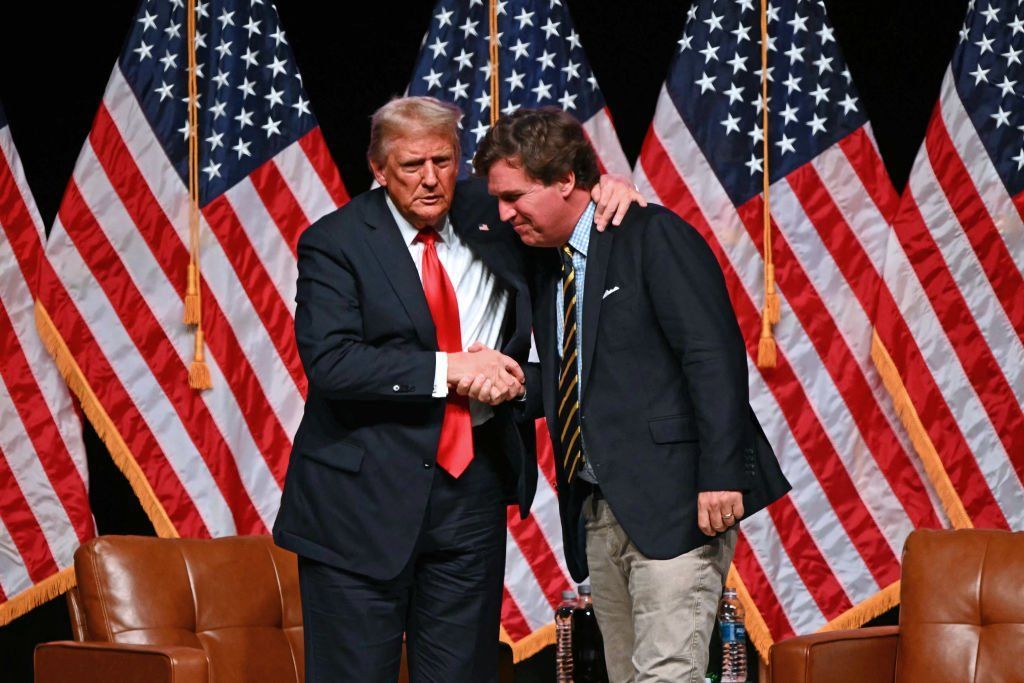
 Trump’s actions pave the way for Christians to live out obedience to God without the retribution guaranteed by the Biden administration.
 The media don't get to bounce back into the conversation and be taken seriously just by suggesting they've learned something meaningful.
 A year ago, it would have been unthinkable for me to say this, but in 2024, I’m supporting Trump — not because I endorse all that he says or does, but because he’s the only one willing to take decisive action to preserve America’s future.
 Thursday marks the four-year anniversary of Jonah Goldberg writing off the first Hunter Biden's laptop stories as election-year conspiracies.
 thefederalist.com
 www.theblaze.com