Nikole Hannah-Jones learned the hard way what ruins schools
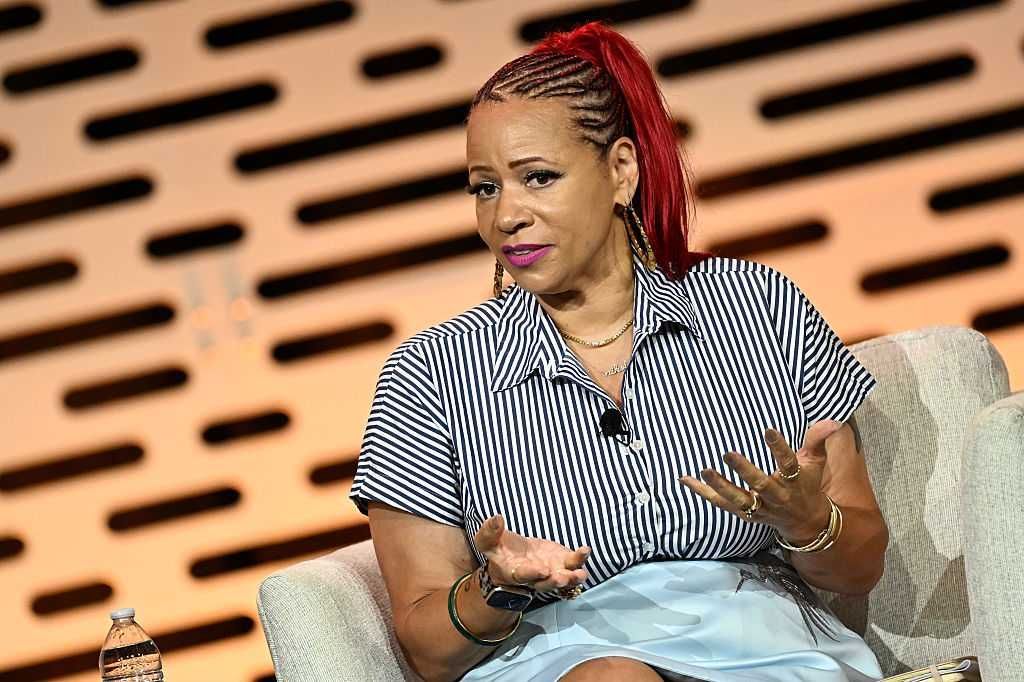


When it comes to educating your children, never go full woke.

Nikole Hannah-Jones, the New York Times writer best known for “The 1619 Project” and her work on school segregation, apparently learned that lesson the expensive way. In a lengthy New York Times Magazine essay, she recounts how she deliberately enrolled her daughter, Najya, in struggling Brooklyn public schools because she believed families like hers should live their integrationist principles instead of seeking out better schools.

Hannah-Jones deserves some credit for publishing an unusually candid account of what happened to her daughter. But that candor should lead somewhere.

The experiment did not go well for Najya. Hannah-Jones describes weak instruction, assignments that went ungraded, little homework, disorderly classrooms, and large gaps in basic math. Her parents paid for tutoring and repeatedly intervened on her behalf, but the academic deficiencies accumulated.

By eighth grade, Najya insisted on choosing her own high school. She selected a rigorous screened school, mostly white and Asian, and initially struggled because she had not received the same preparation as many of her classmates. With tutoring and help from her new teachers, she caught up.

Her verdict on the experience was brutal: “Sometimes I wish instead of always thinking about other kids, you would have thought about me. I never really got the education I wanted.” Hannah-Jones apologized. “I feel like you got cheated,” she told her daughter. She also wrote that, in the end, “I had not chosen her.”

So Hannah-Jones does recognize that she failed her daughter. What she does not abandon is the larger diagnosis that led her there.

Her essay still treats segregation, school choice, and the sorting of affluent and high-performing students as central explanations for why schools like Najya’s struggle. She closes by arguing that there is “no absolution” as long as families rescue their own children from failing schools while poor black children remain behind.

But her own story points toward a more basic problem: Schools do not become good because more high-performing children are assigned to them. High-performing families are attracted to schools that teach well, maintain order, set clear standards, and hold adults and students accountable.

Money does not explain away what happened, either. New York City Public Schools reports a $45 billion budget and $34,717 in per-student spending for fiscal 2026 — and that per-student figure excludes debt service, transportation, and food. Whatever else New York City schools lack, they are not operating on starvation rations.

The harder question is competence.

In my experience teaching high school English, failing schools are often terribly run. Principals avoid disciplining disruptive students, teachers lower expectations to keep everyone moving, grades cease to mean much, and administrators explain away poor results instead of correcting them. The result is a campus where good teachers burn out, serious students learn to keep their heads down, and everyone gets passed along.

RELATED: Portland schools turned one mom into a culture-war enemy

Lindsey Nicholson/Education Images/Universal Images Group/Getty Images

Hannah-Jones’ reporting describes many of those symptoms, yet she can’t seem to connect the dots. Najya said students received little homework, grades did not reflect mastery, and classrooms could be loud and chaotic. When Hannah-Jones played those complaints for Unison Principal Emily Paige, Paige cried and blamed the larger system: “This is the reality of a segregated system, and it’s not just segregation by race and class; it’s by ability. This is the reality of school-choice systems.”

That answer is revealing. If a school needs an influx of stronger students to make the classrooms function, then sorting may explain who attends the school, but it does not explain why the adults failed to teach the students already there.

To Paige’s credit, she also told Hannah-Jones something far more important: “It is important to not, in our pursuit of being antiracist, lower expectations. Because this is what happens, right? It’s racism under the guise of antiracism.”

That is much closer to the lesson Hannah-Jones’ story actually teaches.

Freddie deBoer, writing from the left, takes the argument in almost the opposite direction. In a response to the Hannah-Jones essay, he argues that schools and teachers have relatively little influence over a student’s long-term academic outcome and that prior performance and innate academic ability matter far more.

Yet Hannah-Jones’ own account makes that hard to dismiss as irrelevant. Najya entered high school with serious gaps in algebra and basic math. Intensive tutoring and direct help from teachers followed. By the end of the semester, she was earning mostly A’s and B’s and later passed the state algebra exam. Whatever one thinks about the size of school effects in the aggregate, instruction and intervention plainly mattered to this particular student.

RELATED: How to fix the woke teacher problem

H. Rick Bamman/Pioneer Press/Chicago Tribune/Tribune News Service/Getty Images

Mississippi offers another useful comparison. Since the state enacted its Literacy-Based Promotion Act in 2013, its fourth-grade reading score on the National Assessment of Educational Progress rose from 209 to 219, while the share of fourth-graders scoring proficient or advanced rose from 21% to 32%. In 2024, Mississippi ranked ninth nationally in fourth-grade reading.

Those gains did not come from simply throwing more money at schools or rearranging their racial composition. Mississippi combined early screening, teacher training and coaching, evidence-based reading instruction, intensive intervention, clear promotion standards, and retention for third-graders who could not meet the reading threshold, with exemptions for specified cases. The state now touts the nation’s largest fourth-grade reading gains since 2013.

The lesson is not mysterious. Schools that insist on order, competent instruction, meaningful grades, and high expectations give students a better chance to learn. Schools that make excuses for disorder and disguise failure with inflated grades do not.

Hannah-Jones deserves some credit for publishing an unusually candid account of what happened to her daughter. But that candor should lead somewhere.

If a child can earn honors grades without learning algebra, if parents must hire tutors to repair years of missing instruction, and if a principal’s first explanation is that the school lacked enough high-performing students, the problem is not that too many families exercised choice.

The problem is that the school was failing the children who were already there.

Man in Crisis: Nikole Hannah-Jones's Husband Needs a Wellness Check

Many people are talking about Nikole Hannah-Jones and the New York Times essay she wrote about why sending her daughter to a failing public school for political reasons was a major whoopsie.

The post Man in Crisis: Nikole Hannah-Jones's Husband Needs a Wellness Check appeared first on .

Woke Grad School Teacher Programs Help Explain Why The Kids Can’t Read

American kids lag behind those in many other peer nations thanks to the ideology pervading the schools that educate our teachers.

1619 Project founder sent her daughter to failing Brooklyn schools in the name of racial justice. Now she regrets it.


Nikole Hannah-Jones is a Pulitzer Prize-winning New York Times Magazine journalist best known for creating the 1619 Project — a New York Times Magazine initiative that aims to reframe U.S. history by treating 1619 (the year the first enslaved Africans arrived in Virginia) as the genesis of the American story and arguing that slavery’s legacy still shapes American institutions.

But it appears the principles that undergird Hannah-Jones’ initiative backfired in her personal life. Earlier this week, she published an essay expressing regret that she sent her daughter to struggling, predominantly black Brooklyn public schools as a political statement.

“[Hannah-Jones] said that white kids and rich kids went to the same school because it's much better, and that left behind other kids at the bad school,” says Glenn Beck, “so even though she could afford to send her child to the best school, she didn't, and everybody on the left praised her for that.”

But payment for this political stunt eventually came due. Now Hannah-Jones’ daughter — 16-year-old Najya — is complaining she’s been academically cheated.

“She has missed major years of education. She's so far behind in math now, and it's her favorite subject, she can barely catch up even with a tutor,” says Glenn.

He imagines what Najya is saying to her mother right now: “Mom, you put your ideology ahead of me. You were making all of this money, and you were so against privilege that you wouldn't use that money from supposedly your hard work to put me in a better school. You left me behind to make a point. You'll fight for all the kids, but you won't fight for me.”

Glenn, calling the story “terrible” and “devastating,” frames Najya’s undeserved fate as an example of what happens when parents “sacrifice their kids for the god of their ideology.”

By the time Nikole Hannah-Jones figured out that’s what she’d done to her daughter, “it was too late,” he says. “The damage was done; she had harmed her own child.”

Even still, Glenn doesn’t judge her.

“I don't know if I'm any different than she is because ... I sacrificed my time with my children, and I'm paying a heavy price,” he acknowledges. “All that praise that Nikole got from strangers, it didn't mean anything. Any of the praise I get from the audience, it doesn't mean anything.”

“The life of our children is the only thing that has meaning in the world — more meaning than any ideology,” he continues.

Unfortunately, we live in a world where ideology often ranks above the well-being of children.

“We have a generation of parents that is wrapped so tightly in the collective, they can barely see out,” says Glenn.

To hear more, watch the video above.

Want more from Glenn Beck?

To enjoy more of Glenn’s masterful storytelling, thought-provoking analysis, and uncanny ability to make sense of the chaos, subscribe to BlazeTV — the largest multi-platform network of voices who love America, defend the Constitution, and live the American dream.

The Failing School Where Nikole Hannah-Jones Sent Her Daughter Used The 1619 Project

Hannah-Jones' ideology did not just ruin her own daughter's academic potential by choice; it also poisons by force the educations of countless other students who attend the schools where the ideology has free rein.

Nikole Hannah-Jones Doesn’t Know What An Education Is Supposed To Be

In classical terms, the purpose of education is to impart not just knowledge but also virtue. For NHJ, it's just a credentialing mechanism.

Nikole Hannah-Jones’ Racism Is Why Her Daughter Can’t Do Math

Public schools are terrible because DEI absolves families of responsibility for their choices.

Nikole Hannah-Jones Sacrificed Her Kid For Race Communism. Imagine Her Plan For Yours

Hannah-Jones sacrificed her daughter at the altar of race communism for no reason. Imagine what Hannah-Jones and others like her would do to your children if given the chance?
The campus race racket finds another killer to defend


When I heard that a black female Howard University professor of “communication” had written a Substack piece supporting accused murderer Karmelo Anthony and attacking the victim’s family, I was not surprised.

I regularly research this genre of racialist academia, much of it grounded in grievance, paranoia, and moral inversion. So I reviewed my personal library of pseudo-academic studies for what I already knew I would find about the author.

Con men and grifters have more than their share of psychopaths. Unfortunately, this kind of behavior appears more frequently among academics than is comfortable.

Sure enough, there she was: Dr. Stacey Patton, a prolific spinner of race-driven commentary who monetizes narcissism and paranoia for a rarefied audience.

Patton is typical of blindered black academics who contribute to the myth of ubiquitous black oppression in American society, a myth that now boasts its own literature. Much of systematized black academia has long been characterized by racial paranoia and self-regarding grievance.

This creates a paradox on campus. Mental illness in higher education is rarely identified and treated. Instead, institutions often nurture and encourage various maladies, even celebrating “neurodiversity,” especially when it serves ideology. At the extreme, grievance-studies enclaves become magnets for the like-minded, creating self-sealing provincial communities where paranoia and narcissism harden into conspiracy theory.

Consider Patton.

She contributed to “Presumed Incompetent II,” a key text in the canon of “poor me” paranoia and grandiose narcissism. Her chapter is titled “Why I clap back against racist trolls who attack black women academics.” This is classic main-character narcissism. Yet in its biography of Patton, Howard University modifies the chapter title, perhaps to make it sound more academic: “How Right-Wing Media Outlets Are Fighting Real Diversity in Academe.”

For narcissistic academics like Patton, reality can be edited as part of the self-regarding method. If needed, they can simply make it up.

Patton is hardly alone. The racialist canon contains countless articles and books with titles such as “Racial Battle Fatigue in Higher Education,” “Racial Battle Fatigue,” “Racial Battle Fatigue in Faculty,” “Black Fatigue,” and “Toxic Ivory Towers.” Patton, a “communication” professor and self-described historian, is an active participant in this paranoid fantasy. She defends her racialism this way:

Can you imagine people saying that a cancer researcher focuses too much on cancer? Or how about a climate scientist is suspiciously obsessed with climate? How about somebody saying a theologian keeps bringing up god? They wouldn’t. But when Black scholars study race, suddenly our expertise is some kind of pathology.

RELATED: Howard University professor’s wild take: Austin Metcalf’s dad is the real villain

Claudio Caridi/iStock/Getty Images

Genuine scientists are questioned all the time, and they are held to strict standards of method. Patton is not. The chief difference is that she has no discernible expertise unless she claims “identity” itself as expertise. The entire genre of narcissistic racialism rests on confirmation bias, selection bias, erasure of the distinction between fact and fiction, Orwellian manipulation of language, made-up “composite stories,” postmodern relativity of truth, outright fables, and rescue hypotheses designed to protect racialism from disconfirmation.

Most troubling, these dysfunctions are rooted in codified paranoia — the core of the racialist myth.

In Patton’s Substack piece attacking the father of murder victim Austin Metcalf, she distinguishes herself as a purveyor of communal narcissism. The piece is nominally about Karmelo Anthony. In reality, it is another exculpatory exercise for bad behavior.

She writes from the ideological hotbox known as Howard University, where the maladies of “poor me paranoia” and grandiose narcissism find a distinct genre of faux scholarship, especially among black female academics.

Howard has become a sort of academic “Love Boat,” the final destination for fading intellectual celebrities who could not survive in the world of rigorous scholarship and sharp criticism. It is the last stop for Nikole Hannah-Jones of the error-riddled 1619 Project; Ibram X. Kendi, scandal-plagued author of “How to Be an Antiracist” and failed director of Boston University’s Center for Antiracist Research; and Ta-Nehisi Coates, author of multiple empty autobiographical meditations on an unaccomplished life.

So no one should be surprised that a purveyor of paranoia plies her trade there. Howard offers a communal home for professionalized narcissism, and the symptoms are obvious to anyone willing to look.

One of those symptoms is “virtuous victimhood,” in which people story-tell themselves into victim status, blame others, then seek compensation or “reparations” for their declared victimhood. I have written extensively on this psychological phenomenon. It is the de facto resource-extraction strategy for the diversity, equity, and inclusion movement, which I explore in “DEI Exposed: How the Biggest Con of the Century Almost Toppled Higher Education.”

Con men and grifters have more than their share of psychopaths. Unfortunately, this kind of behavior appears more frequently among academics than is comfortable.

The campus provides a kind of microbiology lab where mental illness can worsen, not encumbered by healthy introspection and certainly not by medical treatment. Here I refer specifically to the maladies of “poor me” paranoia and narcissistic personality disorder. Racialist oppression studies are grounded in both.

By “racialist,” I do not mean “racist” in the common sense, but rather in the neutral sense used by W.E.B. Du Bois. Racialists are consumed by race as the single explanatory factor and conduct their lives inside a race-driven fantasy. They view the world exclusively through the “lens” of race. When someone uses the term “racial lens” or “lens of race,” know that he is engaged in a resource-extraction con.

Patton monetizes her red-meat racialism on Substack, addressing a paid audience — a morally vacant fringe of black America, along with guilty white liberals — that is troubled, paranoid, easily duped, and easily led by grifters. The audience for this racialist niche literature is large enough for a quasi-academic to earn a good living. University of Pennsylvania professor John L. Jackson described this credulous audience in “Racial Paranoia.” Jackson, to his credit, survived Howard with his integrity intact.

RELATED: America is done buying bogus racial alibis

This does not mean racialists such as Patton lack passion, sincerity, intellect, or certitude. Of course they marshal facts, though often interspersed with claims that are doubtful at best and fabricated at worst. Evangelists for cults and extremist movements also exude passion, sincerity, charisma, and certainty. They weave fantasy and fact until the two become indistinguishable.

As I explain in “DEI Exposed”:

The technique appears to be to simply fabricate something, the more ambitiously egregious the better, to pass it off as fact, and then to circulate it with bluster, bluff, and zeal. It demonstrates the power of paranoid thought and action and repetition to achieve legitimacy as a ritualized “truth.”

Racialists are passionate about their faith-based ideology. Many are skilled persuaders. Some are talented tale-spinners. Others are crusaders with a burning sense of conviction.

That energy drives the racially aggrieved in academia — the vignettes, scenarios, composite stories, fables, and tales built around the assumption that whatever happens must be explained through the magical reality of paranoid ideology. The conclusion is predetermined.

As one passage from the academic literature puts it:

So long as the poor-me paranoid can maintain her strategy, she will retain a high self-esteem. She will be motivated to go to great extremes to maintain this — inventing the evidence, or concretizing ambiguous comments, expressing her beliefs in terms of absolute certainty, and, most of all, amplifying the enormity of the conspiracy against her, as would be warranted to persecute an immense talent.

Subclinical paranoia and narcissistic personality disorder provide the evaluative framework for this extremist slice of academia, whose growth accelerated after the Black Lives Matter riots of 2020. Unfortunately, a subset of black America, supported by “bad me paranoid” white liberals, buys into the infantilizing fantasy. In that fantasy, the faux persecuted are always absolved of responsibility, and a racialist enemy is always available to blame, no matter how tortured the explanation.

In 2026, however, we see signs of sobriety. Academia is growing less tolerant of dubious provincialism, and society is growing less tolerant of consequence-free violent behavior, even as Patton and her compatriots attempt to legitimize the murderous violence of Karmelo Anthony. Because of Patton and her ilk, we may see many more Karmelo Anthonys sacrificed before this tendency is reversed.

Stacey Patton and the racialist clique would do better to sound a warning than to cheer on racially justified violence that brings disastrous legal consequences and appropriate punishment. Patton’s next book is due in October and, of course, has a racialist theme: “Strung Up: How White America Learned to Lynch Black Children.” We shall see what she says.

I am not optimistic. The monetization of psychopathy is not easily remedied, especially when lavishly compensated careers depend on it.

Leftists Are Big Mad The Education Department Is Teaching Kids American History

Leftists are so devoted to their ideology that even nonpartisan celebrations of America's 250th birthday provoke bizarre animus and political posturing.