How the Union Pacific merger could revitalize America's rail industry
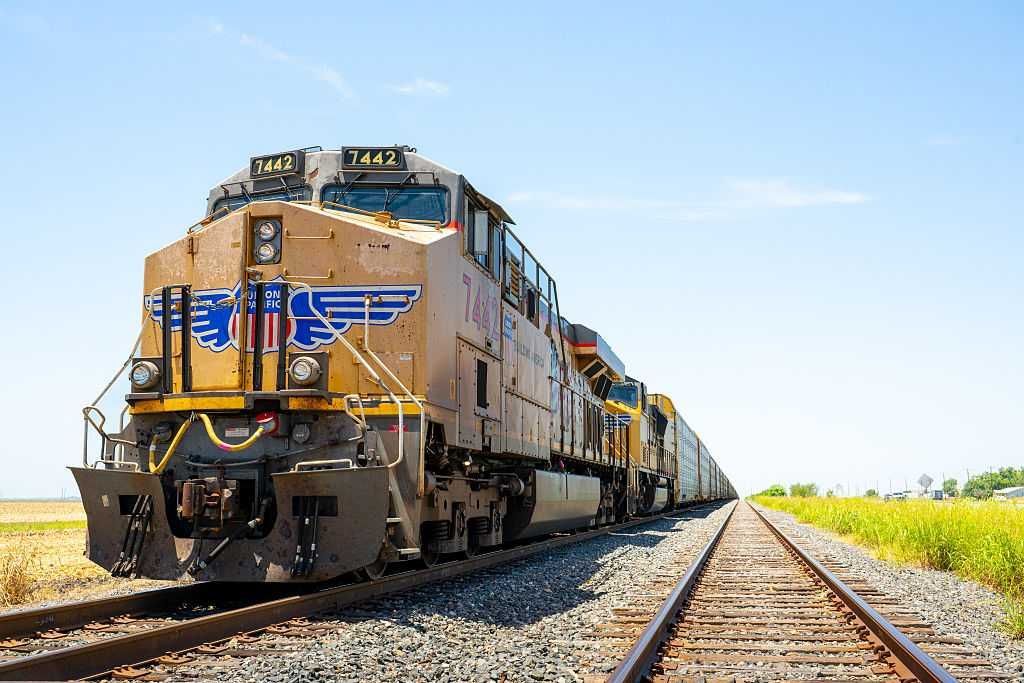


The debate over the proposed Union Pacific-Norfolk Southern merger has the competition question backward. Critics in Washington are asking whether the two railroads are too big to combine, fearing a monopoly.

However, if we are serious about rebuilding American industry, strengthening the middle class, and winning on the global stage, this merger deserves to be judged by what it actually delivers for workers, consumers, and the economy.

Competition in the modern economy means ensuring that American industries have the scale and integration needed to compete where it matters

Freight rail is one of the last sectors in America that consistently delivers high-quality, middle-class jobs without requiring a four-year degree. Rail workers earn up to 40% more than the national average. These are real careers that actually create things.

Union Pacific has already signed a jobs-for-life agreement with SMART-TD, the nation’s largest railroad union, which has endorsed the deal. The companies’ amended filing also projects that 1,200 net new union jobs will be added by year three of the combined company, on top of those existing protections.

Then there is industrial capacity. Politicians on both sides of the aisle have sought to bolster America's production capacity. A better-connected freight rail system does a lot to further this goal. It means more goods moving across the country, more demand for domestic production, and steadier employment for the workers who keep that system running.

The consumer case for this merger is straightforward. Rail shipping costs less than trucking, and those savings work their way through the supply chain. The company's amended Surface Transportation Board application projects $3.5 billion in annual savings for shippers, driven largely by diverting more than 2 million truckloads of long-haul freight to rail.

Critics will say the merger is anti-competitive. That argument misreads the competition. U.S. freight rail does not run in a closed market. This is an end-to-end combination of two railroads that currently operate on opposite sides of the Mississippi.

Combining them would let the new company compete against heavily subsidized trucking and global logistics companies at a scale no individual railroad can match on its own.

Trucking, for example, relies on publicly funded highways, while railroads maintain their own infrastructure at private expense. Meanwhile, China is building integrated national logistics systems designed to dominate global trade flows.

Competition in the modern economy means ensuring that American industries have the scale and integration needed to compete where it matters: across continents and against state-backed rivals.

RELATED: The potential Union Pacific merger risks upsetting America's rail industry
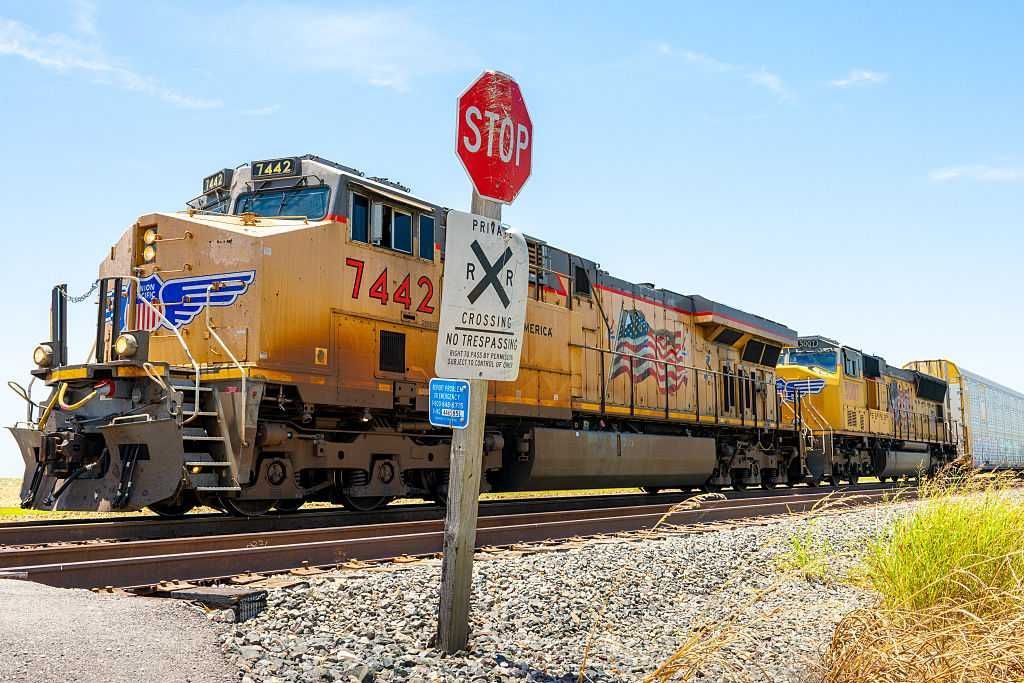
Brandon Bell/Getty Images

A transcontinental rail network strengthens that position by expanding reach, improving efficiency, and connecting American producers to broader markets.

Washington has spent years promising to reshore manufacturing, secure supply chains, and cut dependence on foreign adversaries. Delivering on those promises requires infrastructure that is capable of supporting domestic production at scale.

You cannot rebuild American industry without the ability to move raw materials to factories and finished goods to markets quickly and cheaply. Freight rail is central to that goal. It is more fuel-efficient than trucking and more cost-effective for bulk commodities. Shifting long-haul freight from highway to rail also reduces accidents.

Rail accounts for a fraction of the fatalities and injuries per ton-mile that trucking does, and fewer heavy semis on interstates mean safer roads for everyone.

A stronger rail network is not a threat to workers or to competition. It is what both of those things depend on. Judge this merger by whether it makes the American economy stronger. Judge it by whether working people get something out of it. On both counts, the answer is yes.

Guaranteed union jobs, lower costs for shippers, and a supply chain that finally runs coast to coast on American rails. That is the kind of industrial investment this country keeps saying it wants. Policymakers who care about the future of the country should support it.
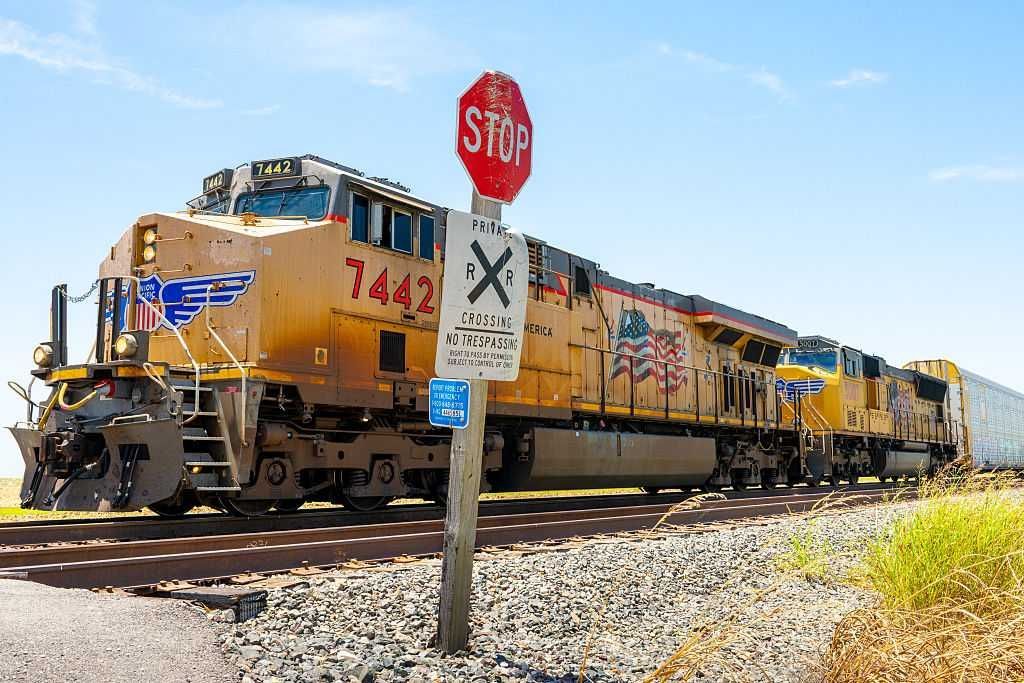
The potential Union Pacific merger risks upsetting America's rail industry


Rail transportation is the backbone of the American economy, and a proposed $85 billion merger between Union Pacific and Norfolk Southern threatens to overconcentrate market power in an already highly consolidated industry.

The consequences will ripple across the economy, raising transportation costs, weakening service, and squeezing industries that depend on rail, from agriculture to energy.

At a moment like this, regulators shouldn’t take merger parties at their word. They should demand evidence. That’s exactly what we have called for when it comes to evaluating this mega-merger, and we are pleased that the Department of Justice and the Surface Transportation Board have agreed.

This merger could further entrench consolidation in freight rail, reducing competitive options for shippers and ultimately increasing costs for businesses and consumers.

The Justice Department — in a notable recommendation consistent with its review of mergers outside the rail industry — urged the STB to require that Union Pacific and Norfolk Southern produce certain executive-level information regarding their internal assessments of the merger.

The STB took an important step in that direction on March 18, requiring Union Pacific and Norfolk Southern to turn over internal documents assessing how the deal would affect competition, pricing, and market dynamics.

These are the kinds of materials the Justice Department has long relied on to evaluate mergers because they reveal how companies themselves expect a transaction to play out.

Attorneys general across the country have warned that this merger could further entrench consolidation in freight rail, reducing competitive options for shippers and ultimately increasing costs for businesses and consumers.

The merging companies point to a limited “open gateway” commitment as proof that competition will be preserved. But Union Pacific itself dismissed similar promises in the recent Canadian Pacific and Kansas City Southern rail merger in 2023. Now it asks regulators to accept vague assurances that it will maintain open gateways at “commercially reasonable” terms without enforceable guarantees.

Union Pacific argues that the merger will drive growth, including taking 2 million trucks off the road by shifting their freight to rail. But this is an optimistic forecast that UP would face no repercussions for missing. Indeed, the recent CPKC rail merger has fallen well short of a much more modest target of 65,000 truck-to-railway conversions.

The companies also promise efficiencies and new investments but offer little detail about their pre-merger plans or whether similar gains could be achieved through other means, such as partnerships or joint ventures — much less how any such efficiencies will benefit shippers, rather than shareholders and executives.

RELATED: Digital trade corridors can fix our outdated supply chain

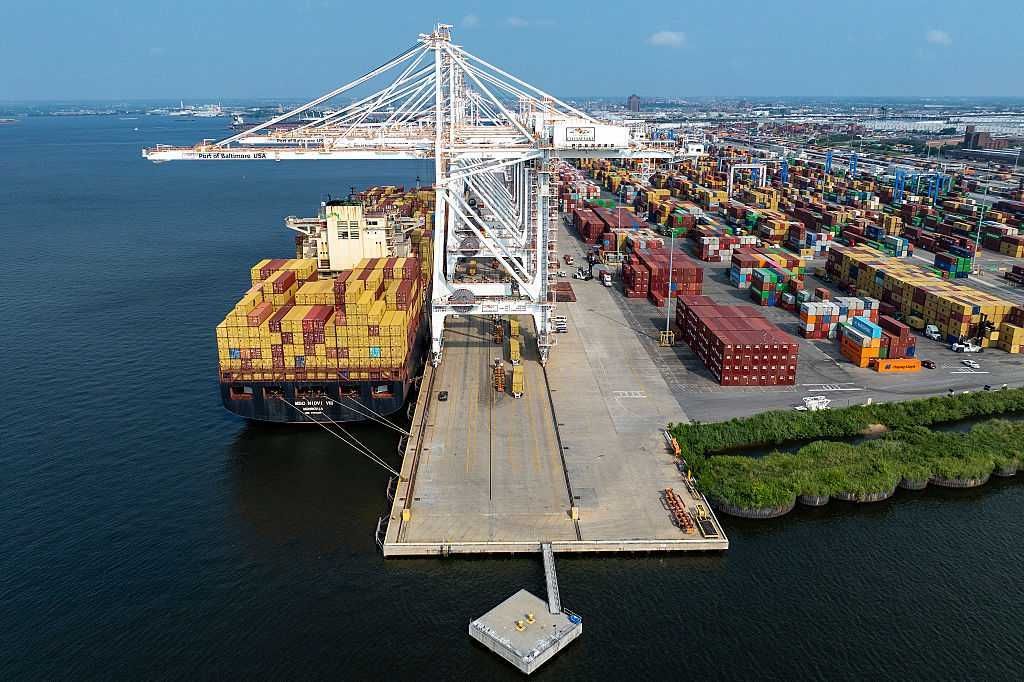
JIM WATSON/AFP/Getty Images

In other words, regulators are being asked to accept sweeping claims with limited substantiation.

The STB is right to push back on the “just trust us” approach. Internal company analyses can reveal whether executives expect service disruptions, pricing power, or integration challenges that could undermine supply chains.

They can also test whether the merger’s benefits are actually realistic. This level of scrutiny is basic due diligence, particularly in an industry where reduced competition can have economy-wide consequences, and especially when the merging railroads claim that this transaction will change American railroading for the next hundred years.

At a time when businesses and consumers are still grappling with inflation and the cost of goods, it is hard to overstate the risks of this mega-merger.

As this review proceeds, the STB should ensure that all stakeholders have the information needed to assess the merger’s true impact and the time to be heard, resisting pressure to rubber-stamp a deal this consequential for the rail industry and American consumers. Anything less risks locking in higher costs and fewer choices for years to come.

The American economy runs on rail. The STB should make sure it stays on track.

This coast-to-coast rail merger could cut your expenses


Government micromanagement has throttled economic growth for decades. The latest example came when the Surface Transportation Board deemed the Norfolk Southern-Union Pacific merger application incomplete and rejected it without prejudice. That decision delays what would be the first uninterrupted transcontinental railroad in American history — a privately financed project that could strengthen supply chains, boost growth, and improve American competitiveness without costing taxpayers a dime.

For now, that vision sits on hold.

A stronger rail network would help stabilize the supply chain while lowering costs for producers and consumers alike.

The STB said the 7,000-page filing lacked several key materials, including a full market-impact analysis with traffic projections. Norfolk Southern and Union Pacific now must fill in the gaps and refile.

That setback does not decide the larger question. Rail mergers have recovered from early regulatory obstacles before, and the STB’s ruling on completeness says nothing definitive about the underlying merits of this merger.

In May 2021, for example, the STB rejected CSX’s application to acquire Pan Am Railways as incomplete. Two months later, CSX resubmitted the application, and the board accepted it. The combined railroad later expanded shipping options, lowered freight costs for shippers, and supported regional growth.

Opponents of the present merger nevertheless treat the incomplete ruling as a final victory. It is not. It is a procedural delay, not a substantive rejection. And history shows that rail mergers of this kind can generate real economic benefits.

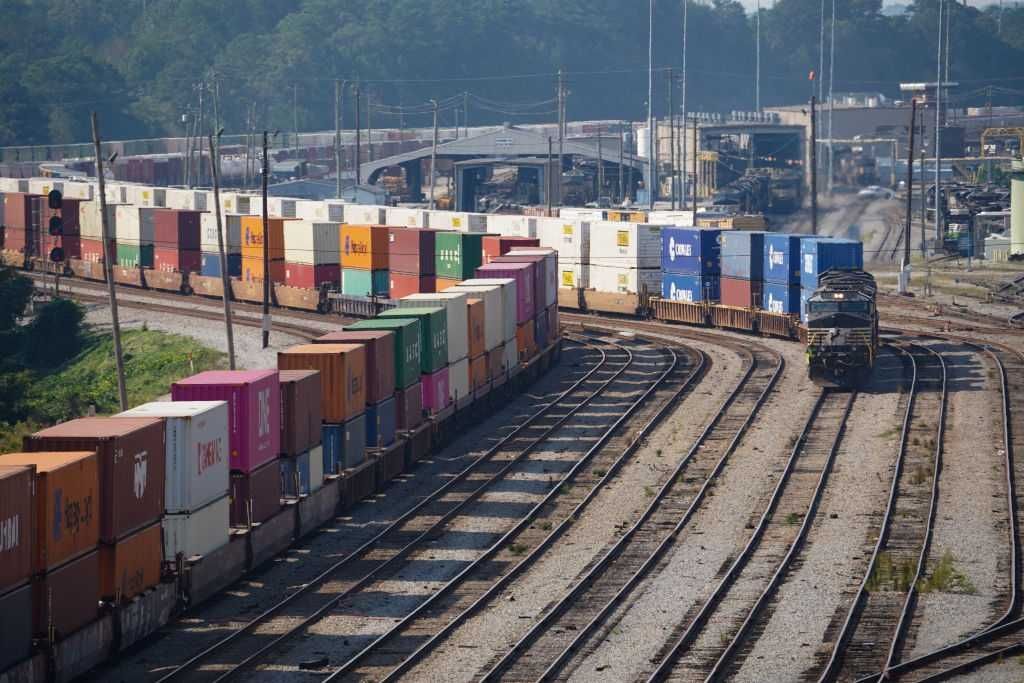
Today, shipping goods across the country by rail often means navigating a patchwork system of freight lines, transfer points, and carriers. Businesses must coordinate among multiple operators just to move a product from one coast to the other.

That fragmentation imposes real costs. It slows delivery, raises uncertainty, and forces businesses to protect themselves with larger inventory buffers and wider shipping windows. Those costs do not disappear. Businesses absorb some of them, and consumers pay the rest.

Farmers, manufacturers, and other suppliers feel that pressure most acutely. Many already operate on thin margins. Add shipping delays and higher freight costs, and those businesses face hard choices: eat the loss, cut investment, or raise prices.

That is why the Union Pacific-Norfolk Southern merger matters.

A stronger rail network would help stabilize the supply chain while lowering costs for producers and consumers alike. It also would mark the first time companies attempted to create a true transcontinental rail line without asking taxpayers to foot the bill.

RELATED: The railroad that could unite — and revive — America

Photo by Brandon Bell/Getty Images

The competitiveness argument matters too. A USDA study found that wheat grown in 2022 cost more to ship by rail to western ports in the United States than in Canada, even across comparable distances. Canada produces far less wheat than the United States, but its less fragmented rail network gives its exporters an advantage. American farmers, by contrast, compete from a structurally weaker position because the U.S. rail system remains broken into discontinuous lines.

That disadvantage carries real consequences. When uninterrupted, rail can move freight at costs up to 60% lower per ton than other transportation modes. A more seamless coast-to-coast rail network would narrow the gap between American producers and their foreign competitors.

Critics argue that the merger would reduce competition in shipping. That view is too narrow. Freight competition does not occur only within rail. Shippers compare rail with trucking, barges, pipelines, and air cargo. A stronger rail network would not eliminate those alternatives. It would complement them. In a resilient supply chain, businesses need multiple transportation options, not fewer.

An efficient rail system would make the entire freight market stronger by giving shippers another dependable, lower-cost tool for moving goods.

The task now is straightforward: Norfolk Southern and Union Pacific should complete the review process quickly and responsibly. The precedent exists for a successful resubmission after an incomplete ruling. If that happens here, Americans will gain the kind of privately financed infrastructure upgrade the country badly needs.

NTSB confirms it was 'unnecessary' to create a toxic 'mushroom cloud' over East Palestine


A Norfolk Southern freight train with 141 loaded cars, nine empty cars, and three locomotives was making its way through Ohio the evening of Feb. 3, 2023, when disaster struck.

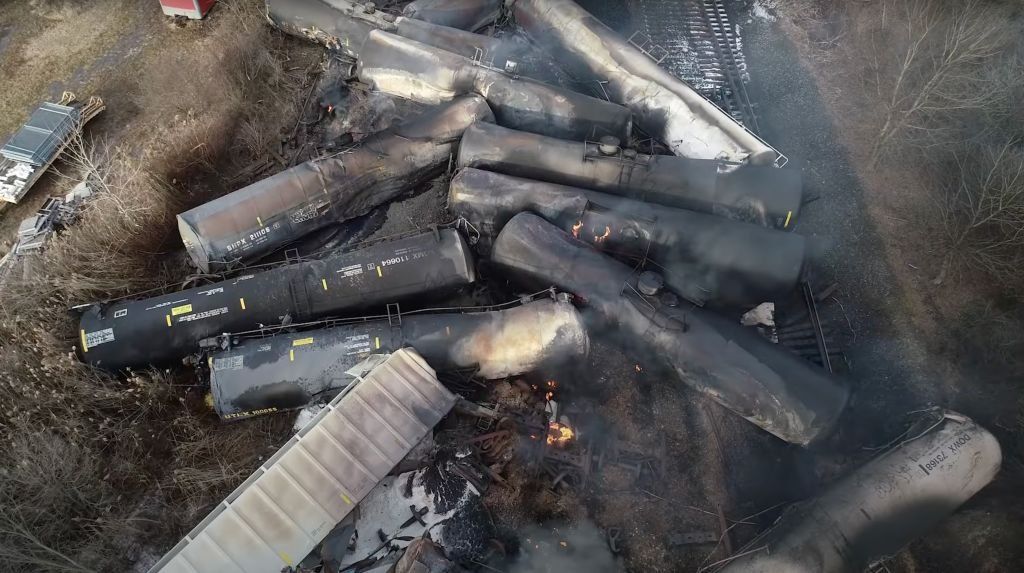
Thirty-eight cars, 11 of which contained hazardous materials — including vinyl chloride, benzene residue, hydrogen chloride, ethylene glycol monobutyl ether, ethylhexyl acrylate, and isobutylene — went off the tracks in the town of East Palestine. The worst, however, had yet to come.

The flames that apparently first showed beneath the train soon transformed part of the pile of derailed cars into an inferno.

'We basically nuked a town with chemicals.'

Days into the fires, Norfolk Southern emergency crews, under the supervision of purported experts and first responders, started their own blaze.

Citing the need to avoid a "catastrophic tanker failure," the railway conducted a vent and burn of five tanks of vinyl chloride, darkening the sky above East Palestine with what the National Transportation Safety Board called a toxic "mushroom cloud."

Silverio Caggiano, a hazardous materials specialist, told WKBN, "We basically nuked a town with chemicals so we could get a railroad open."

Local creatures died off in the thousands. Nearby water was poisoned. Residents had to flee their homes.

Apparently it was all for nothing.

The NTSB announced Tuesday that the decision by the local incident commander on Feb. 6 to execute the controlled burn "was based on incomplete and misleading information provided by Norfolk Southern officials and contractors. The vent and burn was not necessary to prevent a tank car failure."

While the Federal Railroad Administration maintains that a vent and burn procedure should be the last resort, the NTSB indicated the railway "rejected three other removal methods and began planning for a vent and burn shortly after the derailment."

According to an abstract for the NTSB's final report, the "observed downward temperature trend in tank car OCPX80370 indicates that polymerization was not occurring within the tank car, contrary to the representation by Norfolk Southern Railway and its contractors."

Polymerization similarly did not occur in the tank cars containing vinyl chloride monomer — which "remained in a stabilized environment until the vent and burn" — meaning their alarmist defense of blowing up the trains was unfounded.

The safety board claimed the railway withheld information from Oxy Vinyls, the company that made the vinyl chloride, as well as information indicating the tank cars were cooling after the derailment, reported the Associated Press.

Jennifer Homendy, the chair of the NTSB, indicated that investigators were told by a Norfolk Southern contractor that it did not keep records of temperature changes on the tank cars containing vinyl chloride.

'We found through text messages through one of their employees, who provided that information in later interviews, that they did keep those records," said the NTSB chair. "It took about two months before the team received those texts and the emails."

Temperature readings were highly relevant when making the decision to execute a controlled burn.

In a statement Tuesday, Norfolk Southern once again defended its decision, claiming it carefully considered all alternatives.

It also alleged that it and its contractors "received conflicting information from Oxy Vinyls' personnel as to whether polymerization was or could be occurring. And Oxy Vinyls' safety data sheet was clear that polymerization was possible in the circumstances observed at the derailment."

Contrary to the railroad's suggestion, Oxy Vinyls experts reportedly testified at previous NTSB hearings that they were certain at the time that polymerization wasn't happening.

At the NTSB's hearing Tuesday, Homendy also accused Norfolk Southern — which has spent nearly $100 million greasing the hands of politicians in Washington, D.C., since 1990 — of tripping up the investigation and abusing its status as a party to the investigation,

"Norfolk Southern’s abuse of the party process was unprecedented and reprehensible," said Homendy.

The railroad apparently dragged its feet when providing investigators with critical information. At other times, Homendy suggested that Norfolk Southern did not even bother providing requested information.

The NTSB also stressed in its report that Norfolk Southern's delayed provision of consistent information to emergency responders "needlessly increased the time emergency responders spent near the derailment pileup and delayed the evacuation order, resulting in unnecessary and increased exposure of emergency responders and the public to postderailment hazards."

The release of the board's findings comes one month after a federal judge approved Norfolk Southern's $600 million class action settlement addressing class-action claims within a 20-mile radius of the derailment and personal injury claims within 10 miles of the derailment.

Like Blaze News? Bypass the censors, sign up for our newsletters, and get stories like this direct to your inbox. Sign up here!

Norfolk Southern Reaches $600 Million Settlement With East Palestine Train Derailment Victims

'[I]ndividuals within 10 miles of the derailment may, at their discretion, choose to receive additional compensation'

Bureaucrats And Big Business Leave East Palestine Suffering A Year After Train Disaster

A year after the Norfolk Southern derailment, East Palestine residents are still experiencing serious health issues and seeking accountability.
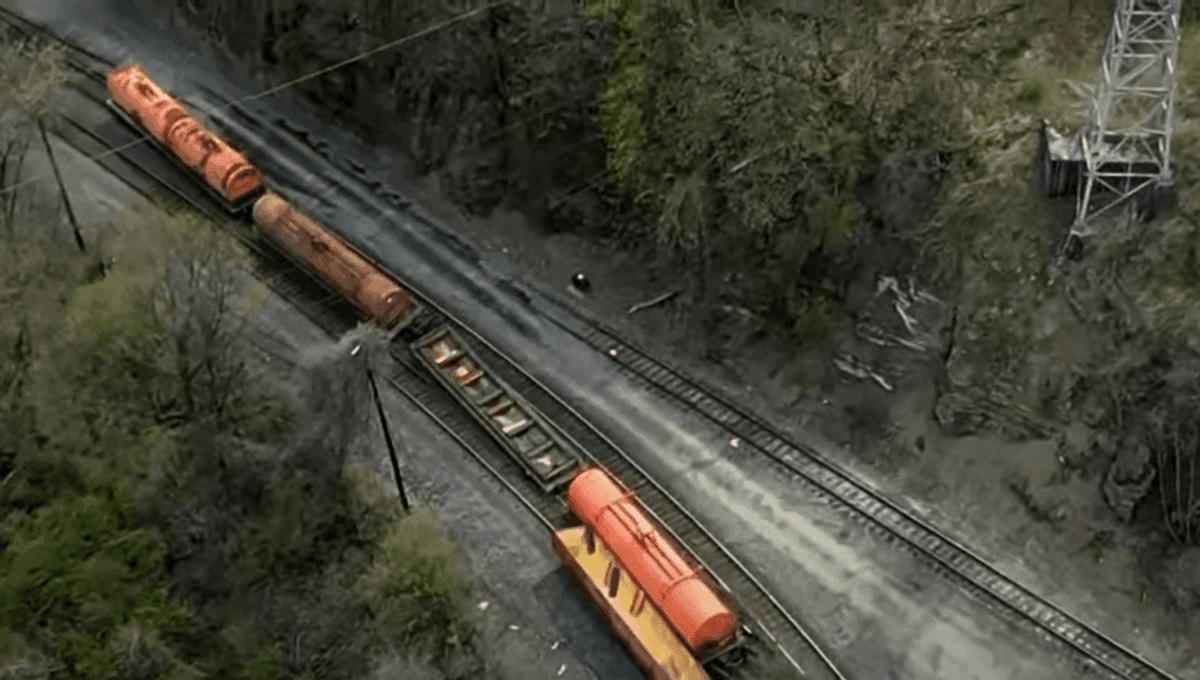
2 Norfolk Southern trains derail, spill diesel fuel and engine oil


Two Norfolk Southern trains derailed this weekend – one in Alabama and another in Pennsylvania. The train derailment in Alabama spilled diesel fuel and engine oil.

There were 11 cars of a Norfolk Southern train that flew off the tracks early Sunday morning in Jasper, Alabama. Some of the cars rolled over. The locomotive also rolled on its side and spilled diesel fuel and engine oil into the crash area.

There are no reports of a hazmat situation, and the train company said there was no danger to the public.

Two crew members of the train were injured and taken to a nearby hospital. Both have since been released.

Jasper Police released a statement that read, "According to Norfolk Southern, the train crew was briefly trapped in the engine room because the engine tilted over. There were no major injuries, but RPS was called to the scene to evaluate the crew and transported two crew members as a precaution."

"Per Norfolk Southern personnel, there were no hazardous materials involved in the derailment or released into the area," the press release stated. "Jasper Fire called all personnel in to assist the crew in getting out of the train and managing the scene, along with Jasper Police. Norfolk Southern and Walker County EMA are remaining on the scene to return the track to service."

Norfolk Southern crews worked through the night on the cleanup.

Norfolk Southern issued a statement on the latest derailment:

Last night, 11 cars and the lead locomotive derailed from a train traveling through Jasper, Alabama. There are no reports of a hazmat situation or danger to the public. Our two crew members were transported to the hospital and have since been released. During the derailment, the locomotive rolled onto its side and as a result spilled some diesel fuel and engine oil. Norfolk Southern crews have responded and have been working through the night on cleanup. We'd also like to thank the first responders who quickly arrived on-scene and took care of our crew.
\u201c\ud83d\udea8#BREAKING: 2 hospitalized after 11 car Norfolk Southern train derailment in Jasper, Alabama; diesel and engine fuel spilled #BreakingNews \n\n\ud83d\udcf7 Bill Castle\u201d
— Breaking News (@Breaking News) 1681057794

Another Norfolk Southern train derailed around 9:30 a.m. on Saturday in Pittsburgh, Pennsylvania. Five empty cars veered off the track.

Norfolk Southern senior communications manager Connor Spielmaker said no hazardous materials were involved and there were no reported injuries.

Spielmaker said, "We appreciate the community's patience" while crews take care of the derailed cars.

Last month, another Norfolk Southern train derailed in Alabama. In that incident, roughly 37 cars went off the tracks in Calhoun County. There were no injuries and no reports of dangerous leaks.

The derailment happened just hours before the CEO of Norfolk Southern testified before Congress regarding the train derailment that spilled toxic material in East Palestine, Ohio.

Like Blaze News? Bypass the censors, sign up for our newsletters, and get stories like this direct to your inbox. Sign up here!

Five empty Norfolk Southern train cars derail in Pittsburgh www.youtube.com