![]()
Last year, the Defense Intelligence Agency concluded that Russia and China increasingly lean on nuclear weapons to pursue their national interests. Together, they could surpass the U.S. strategic nuclear force in numbers, creating a multiple-challenger problem and raising the risk of coordination between adversaries.
Put plainly: The nuclear balance is moving against the United States.
The DIA projects more than missiles and warheads. It predicts that China will deploy 60 fractional-orbit bombardment systems by 2035 — systems designed to complicate warning and response.
Start with Russia. The DIA projects a force of 400 land-based intercontinental ballistic missiles. Fifty would be Sarmats, each reportedly capable of carrying up to 20 high-yield warheads — about 1,000 warheads. The remaining 350 would be Yars missiles, with roughly four medium-yield warheads each — about 1,400 more. That puts Russia at roughly 2,400 warheads on land-based ICBMs alone.
Russia’s sea-based force adds more. The Bulava submarine-launched ballistic missile reportedly carries six warheads. Under the DIA’s forecast, that comes to about 1,152 additional warheads, pushing the combined ICBM/SLBM total to roughly 3,552. Russian strategic bombers can carry still more — around 1,000 warheads on air-launched systems.
That implies a Russian long-range strategic force as high as 4,552 warheads — far above the 2010 New START ceiling.
China’s trajectory looks even more unsettling. The DIA now projects 700 Chinese ICBMs by 2035, a striking revision given the agency’s history of underestimating Beijing’s growth. China reportedly produces 50 to 75 ICBMs per year. With roughly 400 already fielded, an additional 300 by 2035 are well within reach even at a slower production rate.
Warhead potential varies by missile type. The DF-31A can carry three re-entry vehicles. The DF-41 can reportedly carry up to 10 warheads. Depending on the mix, China could field anywhere from roughly 2,100 to 7,000 ICBM warheads.
The DIA also forecasts 132 Chinese SLBMs by 2035: 72 JL-3 missiles and 60 additional missiles for three new Type 096 ballistic-missile submarines. If the JL-3 carries three warheads, that yields 216 SLBM warheads. If the new SLBM carries at least six, that adds 360 more. In that scenario, China fields about 576 SLBM warheads — bringing the total for Chinese ICBMs and SLBMs to roughly 2,616 to 7,616 warheads.
The DIA projects more than missiles and warheads. It predicts that China will deploy 60 fractional-orbit bombardment systems by 2035 — systems designed to complicate warning and response. It also anticipates roughly 4,000 hypersonic weapons, many of which can evade current defenses and approach from unpredictable trajectories. Some could potentially carry nuclear payloads. China also produces hypersonic vehicles at scale and at far lower cost than the U.S.
North Korea compounds the problem. The DIA forecasts that Pyongyang could field about 50 ICBMs. That adds a third nuclear challenger and increases the risk of coordination among Russia, China, and North Korea during a crisis.
RELATED: How the military is computing the killing chain
![]() Photo by John Harrelson/Getty Images
Photo by John Harrelson/Getty Images
No quick fixes
Now consider the United States. The modernization plan centers on 400 Sentinel ICBMs deployed in existing silos through roughly 2045, with 400 warheads but potentially 800 to 1,200 in an upload scenario. At sea, the U.S. plans 12 Columbia-class submarines, each with 16 missiles. If each missile carries up to eight warheads, the fleet could carry 1,536 warheads. Combined, that produces 2,736 fast-flying warheads in a maximum-load scenario.
The bomber leg adds more, at least on paper. A force of B-52s and B-21s carrying cruise missiles and gravity bombs could add up to roughly 720 additional warheads, pushing a hypothetical total to about 3,456 strategic long-range warheads. That number may exceed the available warheads in the stockpile and planned cruise-missile inventories, but it illustrates the upper bound of what current plans could support.
Even that maximum posture faces a timing problem. Triad experts estimate that the United States would need at least four years to upload an expanded warhead force. Against a potential Russian and Chinese deployed force with more than 11,000 long-range warheads, the U.S. could face a numerical disadvantage of at least 3-1. More importantly, in this scenario the United States would already sit at its build limits: Sentinel and D-5 capacities would be maxed out.
We could add more bombers, but those aircraft also support critical conventional missions that few allies can perform. Current plans call for 100 B-21s, with growing support for 150 to 200. Additional ICBMs, submarines, or bombers would arrive late — often after 2040. The U.S. has 50 additional, currently empty ICBM silos that could help, but the vulnerability window could still remain open for years.
Time to build — again
Some argue that raw warhead counts do not matter. That view may comfort American planners, but it does not necessarily describe how adversaries think. Arms control — from SALT to New START — rested on the premise that limits matter and that verification matters. President Reagan captured the logic: “Trust but verify.”
If numbers never mattered, verification never would have.
History also suggests that superiority can translate into leverage. President Kennedy believed nuclear advantage helped the United States stare down the Soviets during the Cuban Missile Crisis. He reportedly called the newly deployed Minuteman force “my ace in the hole.” He similarly saw the Polaris submarine force as insurance against Soviet pressure during the Berlin crisis.
None of this replaces sound diplomacy. Military strength without strategy becomes bluster. Diplomacy without credible force becomes impotent. Henry Kissinger made that point repeatedly, and it remains true in a nuclear age.
If the 2023 Strategic Posture Commission is correct that Russia and China practice nuclear blackmail and coercion, the United States cannot assume shared premises about deterrence, arms control, or restraint.
RELATED: Trump’s space order shows why the Outer Space Treaty must go
![]() Manuel Mazzanti/NurPhoto via Getty Images
Manuel Mazzanti/NurPhoto via Getty Images
Consider the recent arms-control record. Under the Moscow and New START agreements, the U.S. and Russia reduced deployed strategic warheads by roughly 4,500 each, bringing the total to roughly 1,700 to 1,800. Russia may have sought to keep U.S. deployed forces below 2,000 for roughly two decades while it modernized, recovered economically, and positioned itself for a new era of confrontation.
If China and Russia achieve meaningful numerical superiority, they may gain coercive leverage that changes behavior across regions. At the same time, abolition advocates urge the United States to abandon deterrence and extended deterrence, leaving America's forces below those of its adversaries. That would signal weakness to NATO and Indo-Pacific allies, undermining confidence and pushing some to consider their own nuclear options.
That outcome would be bitterly ironic. Many critics predicted that pushing European allies to spend more would weaken the alliance. In reality, a stronger NATO — anchored by U.S. power and reinforced by allied conventional buildup — raises the cost of aggression and reduces the risk of miscalculation.
The enemy always gets a vote. Our adversaries have cast theirs. They treat nuclear force not simply as a deterrent, but as a tool of coercion and a shield for aggression — an adjunct to the unrestricted warfare the U.S. now faces.
Because nuclear weapons underpin America’s deterrent strength and provide the umbrella under which U.S. military and diplomatic power operate, the United States must complete — and expand — its nuclear modernization plans. That effort should include credible theater and tactical nuclear capabilities as well as strategic systems. These forces function as a firewall against coercion and attack.
No substitute exists, regardless of how strongly abolition advocates wish otherwise.
Editor’s note: This article was originally published by RealClearDefense and made available via RealClearWire.


 President Donald Trump did something Tuesday that he has done repeatedly over the course of his political career: He issued a dramatic warning ahead of negotiations. “A whole civilization will die tonight, never to be brought back again. I don’t want that to happen, but it probably will,” Trump said Tuesday morning on Truth Social […]
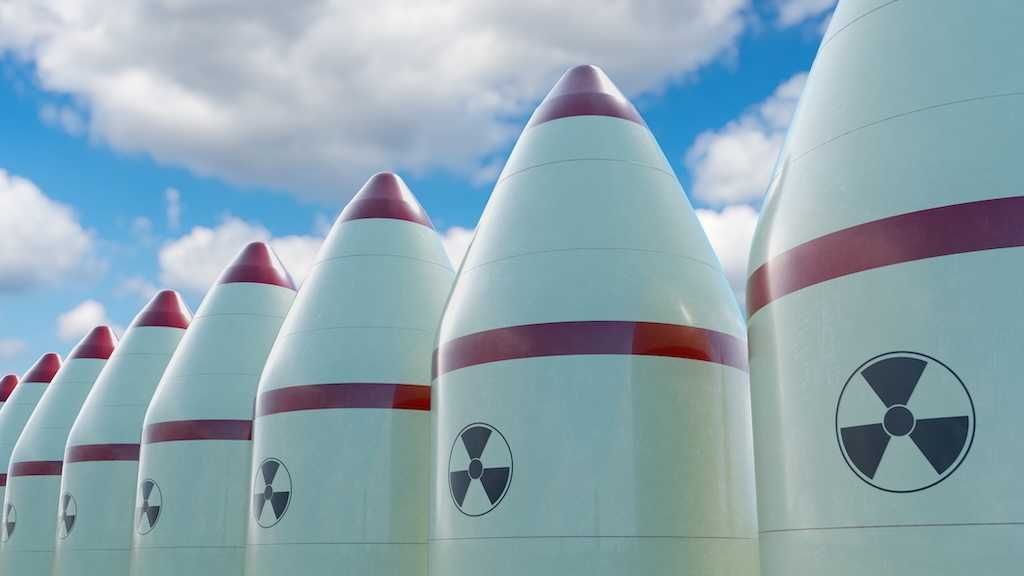
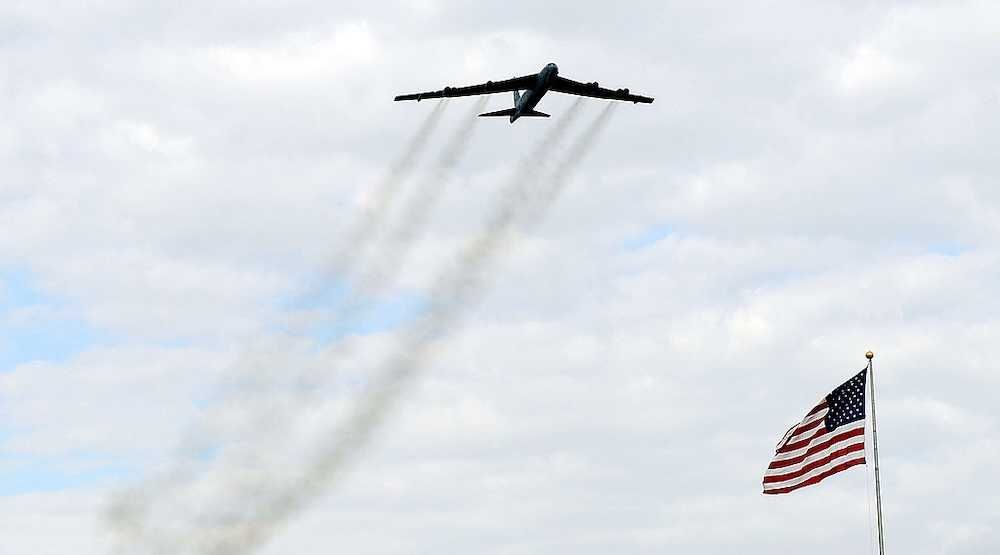 Photo by John Harrelson/Getty Images
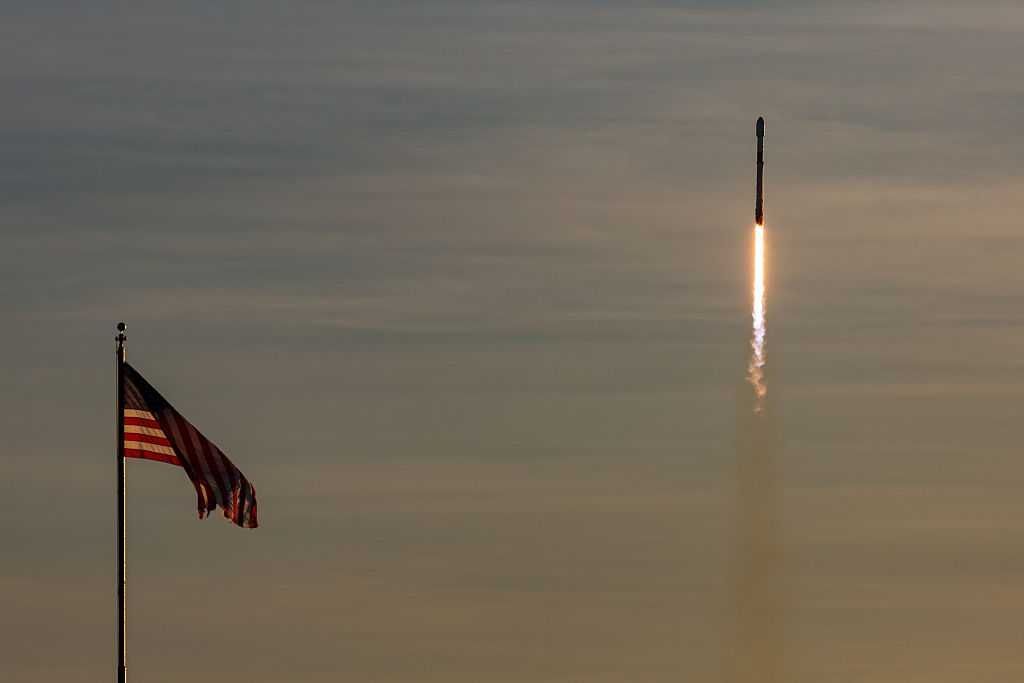 Manuel Mazzanti/NurPhoto via Getty Images
 'Too many U.N. members are actively engaged in persecuting Christians,' said Ryan Brown, CEO of Open Doors US.
 www.theblaze.com
 thefederalist.com
 www.theblaze.com
 www.theblaze.com