![]()
President Donald Trump has endeavored to ram a stake through the heart of the federal DEI regime.
He kicked off his second term by requiring that the head of every federal agency, department, or commission see to the elimination of all DEI offices, positions, initiatives, programs, contracts, and performance requirements; ordering the government to eliminate DEI discrimination in the federal workforce as well as in federal contracting and spending; tasking his inbound attorney general with preparing a civil rights-focused pressure campaign against DEI practitioners in the private sector; and rescinding numerous race- and identity-centered executive orders issued by Democrat presidents.
While Trump has since enjoyed tremendous success in eliminating various DEI initiatives across the government, it appears that there is still much work to be done.
The 1792 Exchange, a corporate bias watchdog seeking to restore political neutrality in the boardroom and to educate lawmakers about the dangers of woke corporate policies, recently released an analysis of the top 100 federal contractors by dollars obligated in fiscal year 2023.
The report highlights the apparent ideological capture and woke policies of a number of corporate juggernauts on the list, including Lockheed Martin, Boeing, and the RTX Corporation, formerly Raytheon.
"The American people have the right to know if our hard-earned money is subsidizing any corporation's subversive ideological programs," 1792 Exchange CEO Daniel Cameron said in a statement.
"President Trump has taken bold action to remove DEI programming from federal institutions, including government contractors," continued Cameron. "This report empowers government agencies and legislators to align procurement decisions with that vision of neutrality and excellence."
RELATED: Behind the rainbow curtain: Who is funding the trans agenda targeting kids?
![]() Photo by PATRICK T. FALLON/AFP via Getty Images
Photo by PATRICK T. FALLON/AFP via Getty Images
Of the 100 contractors that the 1792 Exchange analyzed, 36 were characterized as "high risk," 16 as "medium risk," and 46 as "lower risk," on the basis of "publicly documented alignment with DEI-driven policies and practices."
The watchdog noted that high-risk companies "have demonstrated a pattern of engaging in DEI practices that prioritize ideological conformity over merit-based considerations."
Examples of such practices include recruitment, hiring, and promotion on the basis of immutable characteristics and sexual preference; requiring employees to suffer through training sessions on gender ideology and critical race theory; and corporate alignment on philanthropy and marketing strategies with "progressive social agendas."
While some big organizations appear to have read the writing on the wall and reversed course on DEI — 1792 indicated that Accenture, AT&T, IBM, Booz Allen Hamilton, and IBM have rolled back at least some of their most divisive DEI policies — others have dug in their feet.
Seven out of the top 10 recipients of federal dollars on the 1792 Exchange's list of U.S. government contractors were labeled "high risk." They were, in order from biggest to smallest recipients of federal dollars obligated: Lockheed Martin, the RTX Corporation (formerly Raytheon), the Boeing Company, Northrop Grumman, Optum360, Leidos, and McKesson.
'Compliance with the CEI naturally leads to ceding nearly all facets of corporate governance to the HRC's influence.'
BAE Systems and Honeywell, though farther down the list, similarly appear to be big offenders in terms of DEI initiatives.
Lockheed Martin, at the top of the list, "yields to political activism in shaping corporate governance, potentially alienating consumers, dividing employees, and harming shareholders"; "implements race and identity-based policies that replace merit, excellence, and integrity with preferential treatment and outcomes"; and "embraces corporate initiatives that redirect its central focus from business goals to partisan policies and divisive issues," according to the 1792 Exchange.
Part of what gave the company away was its perfect score on the 2025 Corporate Equality Index from the non-straight activist organization Human Rights Campaign, as well as its receipt of the "Equality 100 Award: Leader in LGBTQ+ Workplace Equality" distinction from the activist group.
Many of the scoring criteria for both the 2025 CEI and the so-called equality award appear to require corporate violations of federal policy.
While the watchdog outfit did not go out of its way to put CEI scores as a top consideration when assessing risk, Dustin DeVito, the 1792 Exchange's director of corporate research, told Blaze News that "compliance with the CEI naturally leads to ceding nearly all facets of corporate governance to the HRC's influence."
"1792 Exchange's company ratings center around six criteria: ideologically driven cancellation, charitable work, employment policies, reputation, funding, and political action," continued DeVito. "The CEI touches on all of these."
When pressed for comment, Lockheed Martin referred Blaze News to its Jan. 23 statement, which claimed:
Merit-based talent management programs and compliance with all applicable laws, regulations, contracts, and directives have always been central to this mission. We are taking immediate action to ensure continued compliance and full alignment with President Trump’s recent executive order. We will not have goals or incentives based on demographic representation or affirmative action plans. Additionally, our training offerings are compliant with Executive Order 13950 from President Trump's first administration.
The RTX Corporation was slapped with the same broad critiques as Lockheed Martin. A closer look revealed precisely why.
The company similarly rated high on the 2025 CEI partly because the company apparently "will not donate to non-religious charities unless they embrace controversial sexual identity policies"; requires employees to attend "multiple, controversial trainings on gender identity, sexual orientation, transgender issues, and divisive racial ideology"; covers medical transvestism costs for employees and their children; and publicly advocates for "controversial sex and gender ideology through local, state, or federal legislation or initiatives."
When pressed for comment, RTX directed Blaze News to a Jan. 24 company statement that said, "RTX is taking the necessary actions to comply with the presidential executive orders."
RELATED: Pride Month’s true competition? Faith, family, freedom
![]() Blaze Media Illustration
Blaze Media Illustration
Both Boeing — whose executive compensation plan the 1792 Exchange claimed "devalued the weight of product and employee safety in its operational performance metrics, in order to include diversity, equity, and inclusion as a consideration" in recent years — and Northrop Grumman also scored 100% on the 2025 CEI, meaning that it likely jumped through many of the same hoops as other "high-risk" organizations.
Blaze News reached out to Boeing and Northrop Grumman as well as to top "high-risk" companies McKesson, Honeywell, Leidos, Optum360, and BAE Systems for comment.
Northrop Grumman directed Blaze News to another months-old statement indicating that work was under way to ensure the company was in compliance with the president's executive orders.
"We are actively reviewing our policies and processes and taking the necessary steps to ensure compliance with the presidential executive orders for the work entrusted to us," said the Northrop Grumman statement. "Underpinned by our values, we hire, promote, and pay based on merit and performance, resulting in the best team to deliver for our customers."
A company spokesperson for BAE Systems told Blaze News, "As a federal contractor, we continuously evaluate our policies and programs to ensure continued compliance with all applicable legal requirements, including executive orders, and we will continue to hire, promote, and compensate based on merit."
The other companies did not respond by publication time.
The 1792 Exchange has invited any companies on its list to submit corrections to the data if they have taken meaningful steps to comply with Trump's executive orders.
Like Blaze News? Bypass the censors, sign up for our newsletters, and get stories like this direct to your inbox. Sign up here!

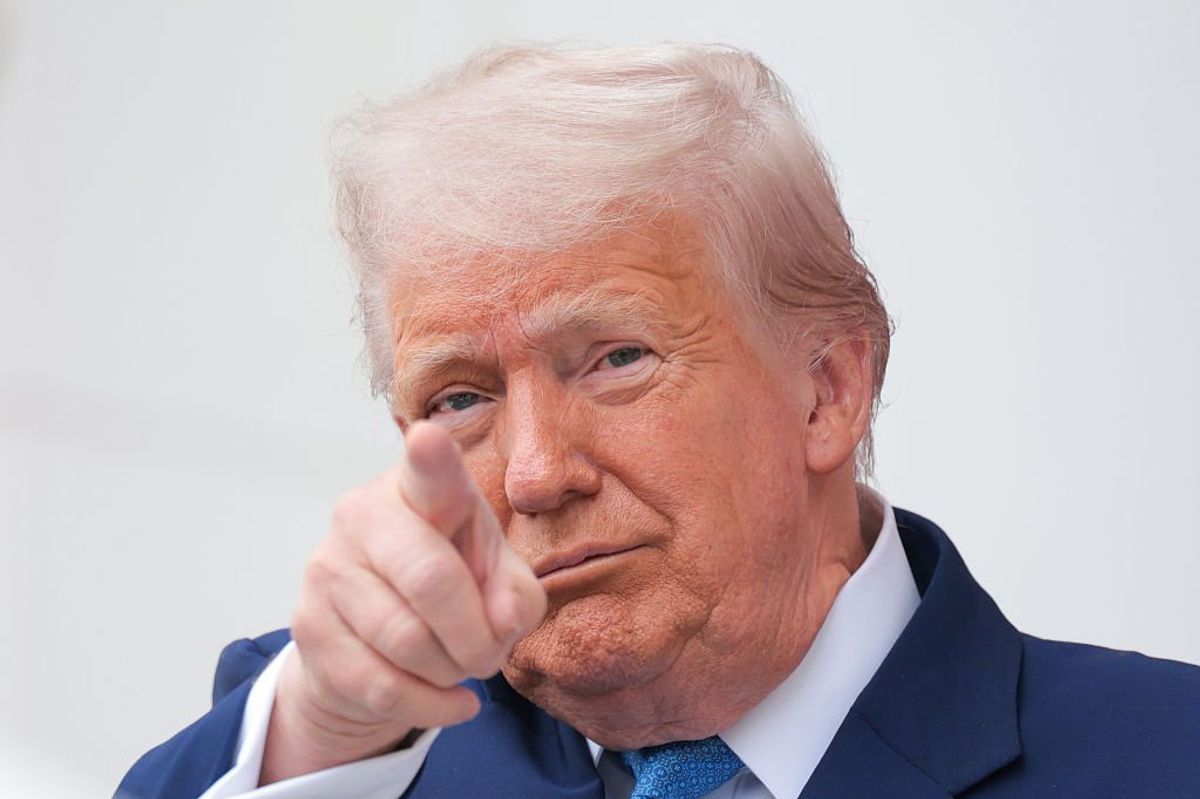
 Photo by PATRICK T. FALLON/AFP via Getty Images
 Blaze Media Illustration
 thefederalist.com
 www.theblaze.com
NASCAR suspends Mike Wallace indefinitely over social media post