Congress had the receipts. Katherine Maher had amnesia.
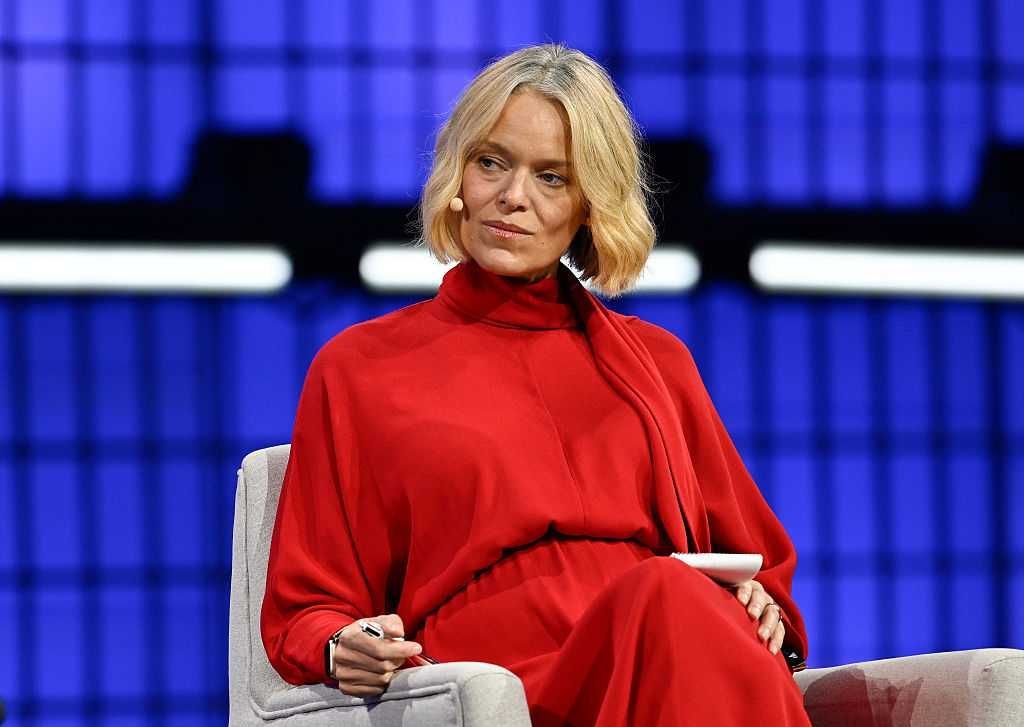
On October 26, National Public Radio CEO Katherine Maher received the James C. Goodale First Amendment Award from Harper’s Magazine. The honor recognizes people who have demonstrated a consequential commitment to a free press and its constitutional protections. Apparently, demonstrating a commitment to those protections is easier when your own organization needs them.
Harper’s applauded Maher for defending NPR against President Donald Trump’s attempt to cut off its federal funding. NPR challenged the executive order, and in March, a federal judge ruled that the government could not use its spending power to punish speech it disliked. The judge, not NPR’s lawyer, supplied that First Amendment language.
The First Amendment is not a menu from which public figures may order only the protections that suit their politics.
I agree that the government shouldn’t punish a news organization for its opinions. But I would like to know when Katherine Maher discovered the merits of letting people express theirs.
In January 2021, after Trump was bounced from major social media platforms, Maher posted this little valentine to free expression: “Must be satisfying to deplatform fascists. Even more satisfying? Not platforming them in the first place.” She didn’t name Trump. The timing hardly required a decoder ring.
Six months later, during an Atlantic Council discussion of online misinformation, she described the First Amendment as the “number-one challenge” to governmental regulation because it provides robust protection for rights. Imagine that: The Constitution was getting in the way of government action against speech.
Maher also said those protections were important for platforms deciding what to carry. The problem is the ease with which she can celebrate keeping undesirable speakers off private platforms and then accept an award for defending speech against government interference. Different legal questions, certainly. But what a conveniently adjustable enthusiasm for expression.
CYA takes on new meaning here. Who gets to designate “misinformation”? Who fact-checks the fact-checkers? And what happens when the people appointed to decide the truth have a habit of declaring their political opponents unfit to be heard?
Sorry, but if Maher had renamed NPR “NPPR” — National Pol Pot Radio — after taking over in 2024, she might at least have spared the audience the pretense of ideological neutrality. NPR’s critics have long questioned the network’s political sympathies; she arrived with a social media archive that did nothing to reassure them.
Then Congress invited the free-speech laureate to explain herself.
At a March 2025 House hearing on public broadcasting, Rep. Brandon Gill (R-Texas) confronted Maher with a tweet asserting that America was “addicted to white supremacy.” She acknowledged the post and explained that her thinking had “evolved” over the previous five years.
Evolved! How reassuring. Under congressional lights, old declarations become artifacts of a former self. For everyone else, an unwise social media post can remain an indelible mark of moral depravity.
Gill also asked about her January 2020 post announcing that she had taken a day off to read Ta-Nehisi Coates’ “The Case for Reparations.” Maher first said she didn’t think she had read the essay. Confronted with her own words, she said she couldn’t recall the post. He had the receipts. She had the amnesia.
RELATED: Gavin Newsom makes damning admission about socialist takeover on undercover camera
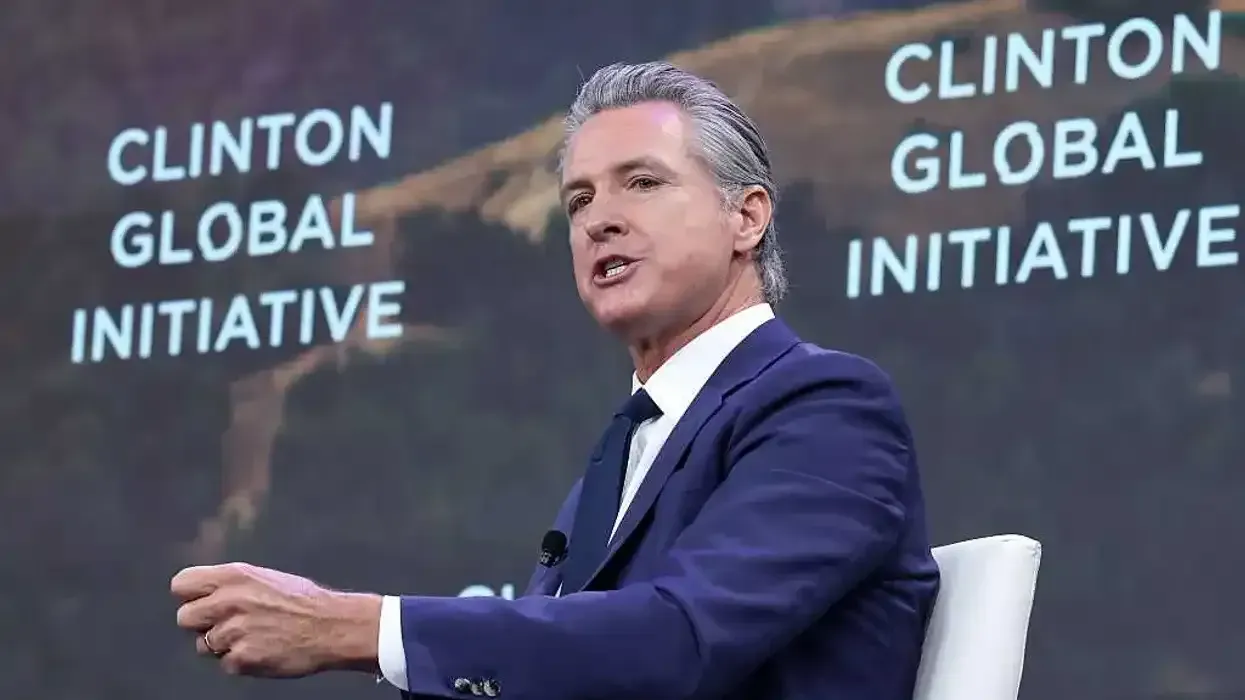
It recalled, with apologies to Hillary Clinton, the pink-pantsuit “I do not recall” tour: plenty of confidence when issuing pronouncements, less when an inconvenient statement comes back for an encore.
Maher didn’t run NPR when it made some of the coverage decisions congressional Republicans criticized. She runs it now. That is reason enough to ask how the network treated Hunter Biden’s laptop, COVID-19’s origins, and allegations involving Trump and Russia — and whether a news organization so eager to scrutinize others welcomes the same attention.
Of course, Maher can criticize Trump. She can call him names, cheer private companies that deny speakers a platform, and advocate tighter restrictions on “misinformation.” The First Amendment protects her right to make the case. It also protects the public’s right to notice the inconsistencies — and to ask why taxpayers should subsidize a network they regard as partisan.
What makes the Harper’s award so delicious is the timing. One year she is in Washington explaining the evolution of her thoughts and forgetting inconvenient tweets. The next she is at a glittering ceremony receiving a prize for constitutional principle. If that isn’t a career arc worthy of a statuette, what is?
Barack Obama received the Nobel Peace Prize in 2009; two years later, his administration killed American citizen Anwar al-Awlaki in a drone strike in Yemen. Apparently, once the medal is pinned on, the terms and conditions expire.
RELATED: Liberal media bends over backward to avoid ‘misgendering’ gunman who murdered kids in church

Maher’s honor suggests an exciting new category of prizes for our part-time constitutionalists.
Why not a “Silence Is Golden Award” for a prosecutor who complains that suspects invoking the Fifth Amendment interfere with convictions — and then invokes it himself when a police officer pulls him over for drunken driving? Surely the citation would be magnificent.
Or a “Gun Violence Prevention Award” for a crusader against firearms who keeps a pistol by the bed and fires it at an intruder? An acceptance speech about the need for fewer guns would bring the house down.
Perhaps Harper’s could create a special trophy for people who find the Constitution irksome when it protects their adversaries and indispensable when it protects their friends. Given the competition, it might need an entire banquet hall.
The First Amendment is not a menu from which public figures may order only the protections that suit their politics. Maher can claim every one of those protections and good for her. But she cannot reasonably expect applause for her own freedom while escaping scrutiny for her apparent indifference to the freedom of those she dislikes.
Someone might explain that to the lovely, vivacious Katherine Maher before she accepts her next award.
 Historically low birth rates signify not just fewer babies but less happiness.
 Greenland's premier praised the deal for strengthening the security of that territory. "It is to the benefit of us all," he said.
 We do not systematically verify citizenship at registration, we detect ineligible registrations mostly by accident, and when we do detect them, we usually decline to prosecute.
 'Republican voters were not subtle.'

 Daniel Heuer/Bloomberg/Getty Images
 Kent NISHIMURA/AFP/Getty Images
 www.theblaze.com
 thefederalist.com
 www.theblaze.com
 www.theblaze.com
US Journalists On CCP Payroll? 🇨🇳