Welcome to Witchcraft State University — bring plenty of sunblock
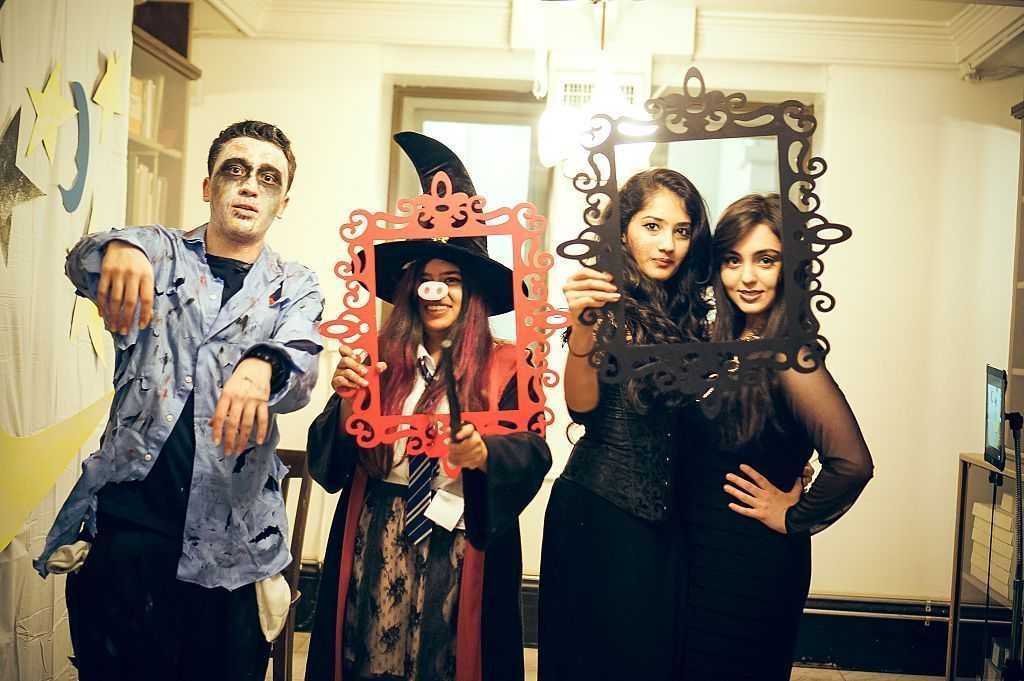


As a modest contribution to the general welfare, I have once again taken on a task that state universities, despite their ever-expanding bureaucracies, seem unable to perform: helping parents and students decipher the course catalog before they accidentally enroll in an ideological boot camp.

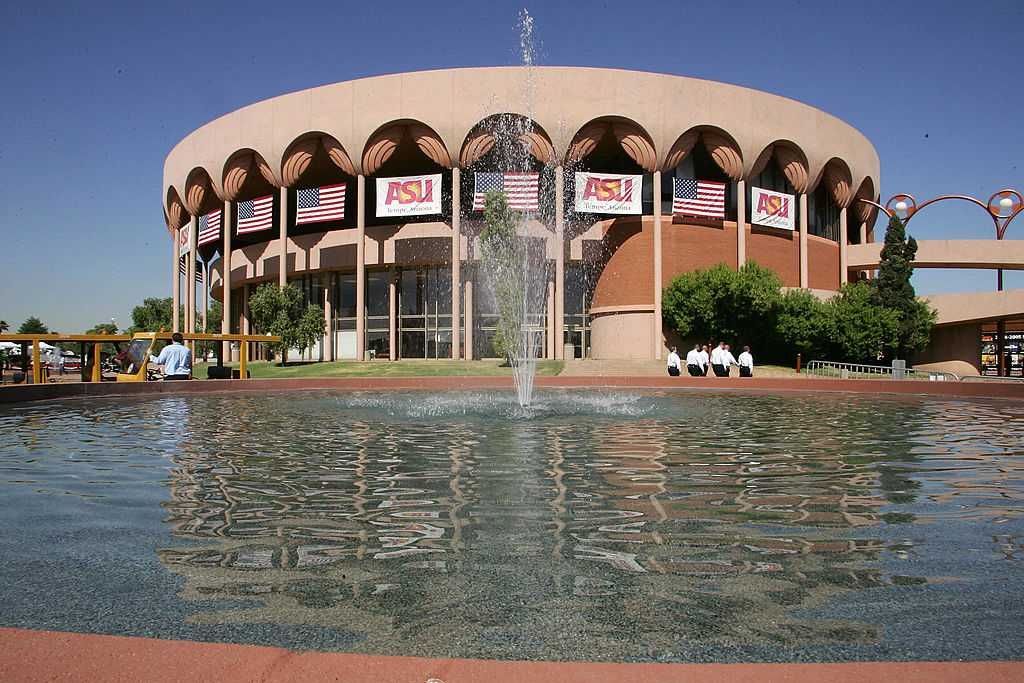
This year’s expedition into Arizona State University’s listings produced a familiar discovery.

The challenge is recognizing ideological conformity when it hides beneath academic jargon and historical subject matter.

For fall 2026, ASU offers eight courses with witchcraft, magic, or the occult in the title — and exactly one with Christianity.

Think about that for a moment.

At one of the largest public universities in the country, students can choose from a small festival of courses on witchcraft, while Christianity receives a single titled course.

The predictable defense is already forming: These are history classes. They merely study witchcraft as history; they do not promote it.

If only the syllabus cooperated.

One ASU syllabus from this summer says the course will examine how the identity of the heretic and the witch was constructed against its binary opposite, the “orthodox” Christian. It then turns to “religious Othering,” especially “the female as Other,” and asks students to explain how centuries-old witch persecutions continue to shape their own lives.

A student scrolling through the catalog may think, “Witchcraft? That sounds like an interesting history class.” What the description does not announce plainly is that the course has already selected its moral and political framework before the first reading begins.

Allow me to translate the academic dialect into ordinary English.

The syllabus contains three ingredients that appear with remarkable regularity across what I call the oppression-studies curriculum.

First, orthodox Christianity is cast as the principal villain. The word "orthodox" is not merely descriptive. It identifies the force against which everyone else must be understood. Those troublesome Christians, always insisting that the Word of God is true.

Second, history is organized around a fixed binary of oppressors and oppressed. The key term is “Othering.” Outside the university, the word means little. Inside it, “Othering” functions as a philosophical skeleton key.

RELATED: Warning: This college course may be bad for your brain

Andi Purnomo/Getty Images

Whatever the subject — witchcraft, colonialism, literature, economics, architecture, or even mathematics — the conclusion is expected to fit the same template: One group possesses power, another is marginalized, and scholarship consists of exposing the machinery of oppression.

Questions about whether Christianity is true, whether Christ is who Christians say He is, or whether salvation is real disappear from view. The course’s operating question is not “What is true?” but “Who has power?”

Third, the historical narrative must be applied directly to the present. Medieval Europe is not studied merely to understand medieval Europe. Students must show how the old oppression continues now.

History becomes raw material for a contemporary moral narrative in which Christians are still preventing women from having a little fun — even if that fun occasionally involves necromancy. Dead people need friends too.

Once you learn the pattern, whole sections of the catalog become easier to read.

The subject often matters less than the interpretive framework. Whether a course concerns witchcraft, fairy tales, Shakespeare, climate, coffeehouses, or design, the destination frequently remains the same. Society is assumed to be organized by systems of oppression, and every topic marches toward that conclusion.

That’s precisely why parents and students need help reading college catalogs.

Course descriptions are often written in a dialect that obscures more than it reveals. The average 18-year-old has no reason to know that terms such as “Othering,” “lived experience,” “deconstructing,” “intersectionality,” “hegemonic,” or “dialectic of oppression” may signal not simply a topic but an entire philosophical system.

Learning to recognize those signals is an exercise in intellectual discernment.

At the most elementary level, discernment means making distinctions. Ideas have presuppositions. Professors never merely present facts; every course is organized around assumptions about reality, morality, human nature, and truth.

For Christians, some distinctions remain basic. The Word of God? Yes. Communion with Satan? No. That binary is not about power. It is about truth and goodness, and it should not require four credit hours to sort out.

RELATED: Why do state schools bankroll people who despise the state?
ROBYN BECK/AFP/Getty Images

Once students grasp that first level of discernment, they are prepared for the next: watching how quickly the narrative shifts when necessary.

One day, witchcraft is presented as a genuine spiritual tradition unjustly maligned by Christianity. The next, it is described as a social category invented by Christians to oppress women.

Those claims are difficult to reconcile, but reconciliation is beside the point. Both preserve the same moral architecture: Christians remain the oppressors, and everyone else becomes the oppressed.

The hardest courses to identify are not those that openly advertise ideology. Those are easy enough to avoid. The greater challenge is recognizing ideological conformity when it hides beneath academic jargon and historical subject matter.

The sooner students learn to decode that language, the sooner they can decide where to spend their tuition dollars and intellectual energy.

College is expensive enough without paying thousands of dollars to hear that orthodox Christianity is the principal menace of Western civilization — and discovering only after the drop deadline that you accidentally enrolled in Witchcraft 101.


The dark religion behind ‘manifesting’


The power of positive thinking has taken an occult turn. After his UFC victory at the White House last month, Sean O’Malley told Joe Rogan that he had seen the outcome beforehand and manifested it into reality.

Whether he meant those words casually or literally, they reflect an increasingly common belief among athletes, entrepreneurs, influencers, and podcasters. Success is no longer merely achieved through discipline and hard work. It is manifested — even conjured. Consciousness itself creates the future.

Our thoughts influence our actions, but they do not govern reality. We make plans, set goals, exercise prudence, and work diligently. The outcome ultimately belongs to God.

At first glance, this language may sound harmless. Athletes have long used visualization techniques. Coaches encourage competitors to imagine success before a game. Olympic athletes mentally rehearse routines. Quarterbacks visualize throws. Fighters picture victories.

But modern manifesting goes far beyond sports psychology.

Traditional visualization is straightforward. Imagining success can improve focus, reduce anxiety, build confidence, and prepare the body for performance. The athlete does not create reality through thought. He prepares himself to perform when reality arrives.

Manifesting makes a different claim.

It holds that consciousness participates in creating reality. The fighter does not merely prepare for victory; he helps bring it into existence. The entrepreneur does not merely work toward success; he attracts it. The individual does not merely respond to the world; he creates his own reality.

This way of thinking has become so common that many people no longer recognize how strange it is. Yet it represents a significant religious shift in modern American culture.

Ironically, little about it is new.

The roots of today’s manifestation movement extend into 19th-century American religious history and, before that, into occult and hermetic traditions.

One important source was Christian Science, founded by Mary Baker Eddy. Christian Science taught that matter is subordinate to mind and that many human problems result from false thinking rather than objective conditions.

Christian Science differs from today’s manifestation culture in important ways, but both assign consciousness a far more fundamental role than traditional Christianity permits.

Closely related was the New Thought movement. Its writers and lecturers taught that positive thinking could produce health, prosperity, and success. The message was simple: Change your thoughts, and you can change your reality.

RELATED: How the WNBA’s biggest star became its biggest embarrassment

Katelyn Mulcahy/Getty Images

Many modern manifestation teachers merely repackage New Thought for the social media age.

The vocabulary has changed, but the assumptions remain strikingly similar.

Instead of speaking about positive thinking — the scientific language of that era — people now invoke frequencies, vibrations, energy, alignment, and quantum possibilities — the scientific language of ours. Instead of spiritual laws, they speak of neuroscience and mindset.

The central claim remains unchanged: Your thoughts possess creative power.

The fundamental reality, they teach, is consciousness. The awakened self is divine.

This worldview also resembles older occult, esoteric, and theosophical traditions.

Historically, occult systems taught that hidden knowledge gave initiates access to powers unavailable to ordinary people. Reality operates according to secret principles that could be learned and harnessed. The enlightened individual gained mastery by acquiring that knowledge.

It is the promise of the serpent in the garden: You will know as God knows.

Human beings know by discovering what is real. God knows as the creator who determines what is real.

Modern manifestation culture often follows the same pattern. Its teachers claim that reality contains countless possible futures and that consciousness selects among them. Individuals are urged to discover hidden truths about their power, unlock limiting beliefs, raise their vibrations, and learn the principles by which the universe operates.

The pattern appears throughout many nonbiblical religions: You are a higher consciousness trapped in a body and must discover the secret that will restore you to divinity.

The problem is not sin but rather ignorance of your own godhood.

You do not need redemption through Christ to restore communion with God. You need enlightenment to remember that you are God.

That is why modern manifestation can accurately be described as a form of neo-gnosticism.

Ancient gnosticism taught that human beings contained a hidden divine element. The fundamental human problem was ignorance of this truth. Salvation came through secret knowledge that awakened people to their true nature.

Modern manifestation often follows the same structure:

You possess hidden creative powers.

You do not understand your true potential.

Limiting beliefs keep you trapped.

Special knowledge sets you free.

The language differs, but the story remains familiar. And its attraction is obvious.

Manifestation promises control in an uncertain world. It offers success without dependence, power without submission, and meaning without repentance. It assures individuals that they are not subject to forces beyond themselves but possess the power to shape their destinies.

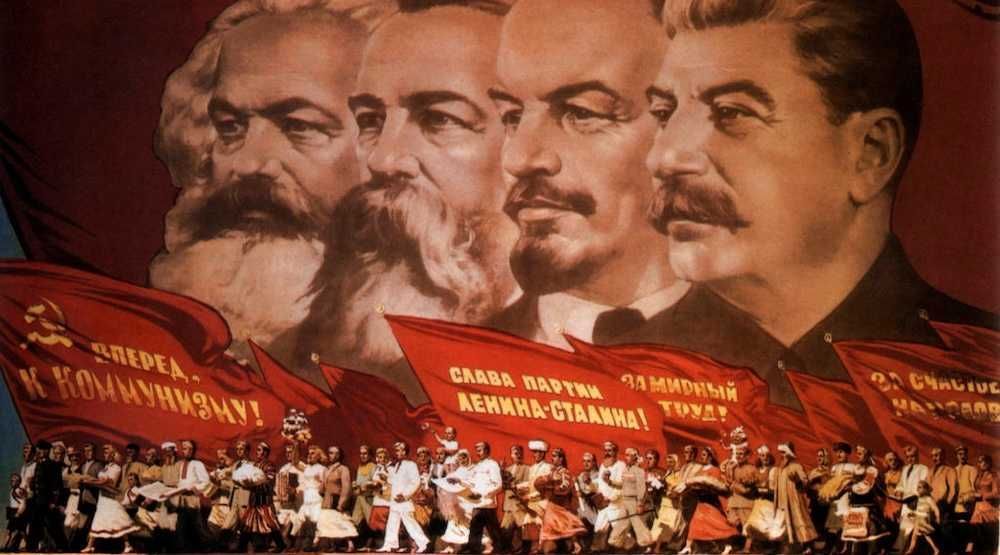
RELATED: What if the commies were right after all?

Apic/Getty Images

Yet the system contains a serious flaw: It is self-validating.

When someone succeeds, the success proves manifestation works. When someone fails, the failure is blamed on faulty manifestation. Success confirms the theory. Failure confirms it too.

It resembles the gambler who remembers the one time double zero hit twice in a row and forgets every losing bet.

A theory that can absorb every possible result explains nothing. It merely improvises a new explanation after the fact.

Christianity begins somewhere else entirely.

Scripture teaches that human beings are not creators but creatures. God alone exists from eternity. He created human souls and a material world, and he called that world very good.

Our thoughts influence our actions, but they do not govern reality. We make plans, set goals, exercise prudence, and work diligently. The outcome ultimately belongs to God.

The biblical question is not, “What reality can I create?” It is, “What has God ordained, and how should I respond faithfully?”

That distinction may sound subtle, but it marks two radically different visions of the world.

One places creative sovereignty in human consciousness.

The other places it in God.

So when O’Malley says he manifested his victory, he may mean only that he visualized success and prepared himself mentally. If so, there is little controversy.

But if he means that consciousness itself helped create the result, then he is participating in a much larger religious movement — one stretching from 19th-century metaphysical spirituality through New Thought and occultism into today’s podcast culture.

The language is modern. The temptation is ancient.

How to keep the faith (and the fun) this Halloween


Every October, some Christians wrestle with how to handle the season of ghosts and goblins. The evening before All Hallows’ Day — meant to honor the saints — has long since been hijacked by darker themes.

As the Babylon Bee recently joked, the parental mood this time of year can swing between cautious curiosity and comic dread. Its headline read: “Mom Can’t Decide Between Allowing Her Kids to Dress Up for Halloween or Having Them Get to Heaven.”

Plenty of kids and parents still favor clever over creepy — even if most Halloween events these days lean more toward horror-movie grotesque than good-natured fun.

Halloween may have gone off the rails since my childhood, but families can still enjoy the “scary stuff” without getting cozy with the occult.

Between church services that mark the feast of All Saints and wholesome fall festivities, there’s room for fun without flirting with the demonic. I’ve seen it firsthand.

A nod to more innocent times

When I was growing up in Pittsburgh, my siblings and I spent many happy hours at the Sarah Heinz House, a youth club sponsored by the H.J. Heinz Company. Think of it as a hometown version of the YMCA — a place where kids could swim, play, and learn, without a screen in sight. Sadly, the complex was turned into apartment loft space in the early 2000s after more than a century of serving the community.

Every Halloween, the club hosted a costume party. Back in the mid-1960s, devil horns and fake blood were still frowned upon, so creativity mattered. One year, I cut arm and neck holes in a 13-gallon black trash bag, slipped it on, and topped it with a bamboo rice hat.

I went as a “Chinese Garbage Bag.” Somehow, I won “Most Original Costume.” (No, the prize wasn’t a bottle of Heinz ketchup.) Today, that outfit would probably get me thrown out before I reached the door for “cultural appropriation.”

Even so, the spirit of ingenuity survives. Plenty of kids and parents still favor clever over creepy — even if most Halloween events these days lean more toward horror-movie grotesque than good-natured fun.

Some families simply skip the whole thing. They hand out candy at the door and call it a night. That’s fine too.

New York’s Halloween capital

Here in my current corner of the world — Tarrytown, New York — avoiding Halloween takes real effort. The town goes all in. It’s bigger than Christmas.

Washington Irving, America’s first literary celebrity, rests behind the Old Dutch Church in Sleepy Hollow Cemetery, made famous by “The Legend of Sleepy Hollow.” The story comes alive every October with parades, tours, and re-enactments.

At the end of the annual parade, the Headless Horseman rides through town, pumpkin in hand, to the crowd’s delight. The celebration owes more to folklore than witchcraft — this isn’t Salem, after all — and it gives locals a fun, spooky way to honor a beloved American story.

Not everything hits the right note, though. Some newer attractions in the nearby Rockefeller Preserve have turned too gruesome, especially in 2023, when organizers displayed gore-soaked scenes just weeks after the October 7 terrorist attacks in Israel. Even Halloween should have limits.

Scary, but silly

For families who prefer their frights with a laugh, I recommend a few old-school classics. Start with Disney’s 1949 animated “Legend of Sleepy Hollow,” narrated by Bing Crosby. It’s a perfect mix of charm and chills.

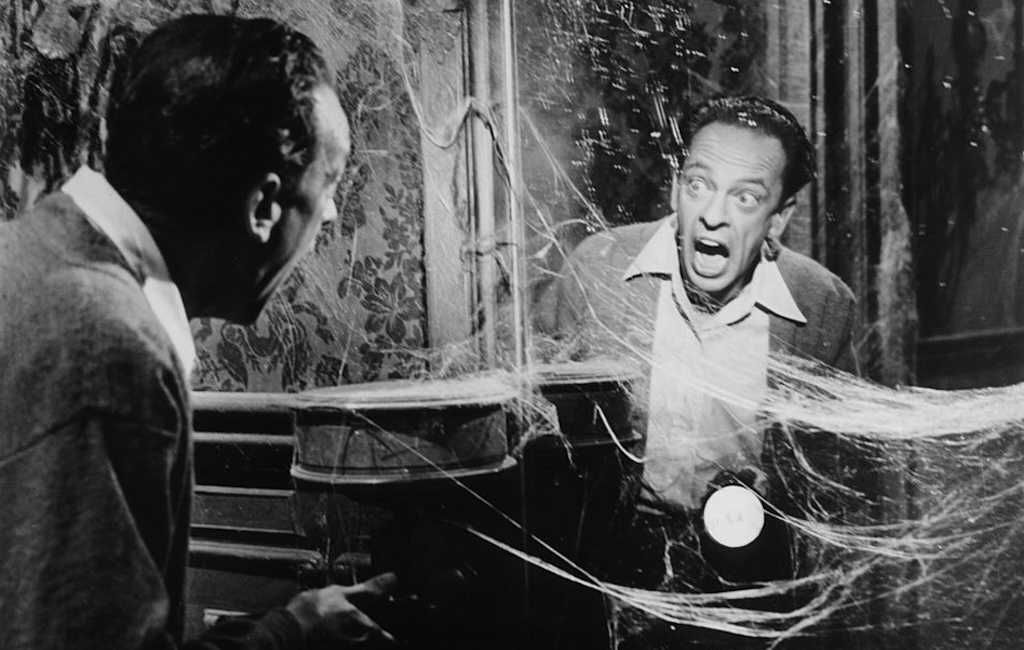
My personal favorite — any time of year — is “The Ghost and Mr. Chicken” (1966), starring Don Knotts. It’s delightfully corny and just spooky enough. “Atta boy, Luther!

And if you’re in the mood for something truly obscure but delightful, you can find my own 1992 amateur film “The Chartreuse Goose” in two parts on YouTube. Think of it as my humble homage to Don Knotts, made with more enthusiasm than budget.

RELATED: Vampires, werewolves, and the very real evil stalking our souls

Photo by FREDERIC J. BROWN/AFP via Getty Images

Books for the brave

For those who like their autumn reading with a hint of the supernatural, Jonathan Cahn’s “The Avatar” fits the season. It builds on his earlier book “The Return of the Gods” and offers a sobering look at modern spiritual forces disguised as politics.

For little ones wrestling with nighttime fears, my children’s book “Hamster Holmes: Afraid of the Dark?” might be a gentler companion — no ghosts required.

The light beyond the lanterns

Whatever your family’s approach, October doesn’t have to be a tug-of-war between faith and fun. You can honor the saints, roast a few marshmallows, and maybe laugh at Don Knotts along the way.

Then, as Halloween fades and November begins, we move toward the true seasons of joy — Thanksgiving and Christmas — where the light always wins out.

Editor’s note: A version of this article appeared originally at American Thinker.

Wikipedia co-founder: Epstein, elite rings, and occult portals — what they don’t want you to know


Co-founder of Wikipedia Larry Sanger found God in an unconventional way.

When he was introduced by a friend to the world of Jeffrey Epstein and the elites, he was forced to reckon with the idea that our culture is ruled by those who will do anything to defend their own immoral horrors.

“A friend of mine was opening my eyes to the existence of various — call them elite pedophile rings. Epstein was not the only one. You can look up the NXIVM case,” Sanger tells BlazeTV host Allie Beth Stuckey on “Relatable.”

“And then there’s, like, ‘Pedowood,’ which is what we call the prevalence of pedophilia in Hollywood. It’s very weird that a lot of the people who are involved, or at least accused of being involved, in such activities have occult beliefs,” he continues.


According to Sanger, his friend knew some of these people personally and confirmed that’s why “they use all of these symbols,” like “the old one-eye.”

“People still notice that, but they used to do that all the time. I think they avoid it now, but generally speaking, a lot of movie posters would show up with this. That’s an occult symbol,” he explains.

Those who partake in these morally bankrupt rituals are willing to put a lot on the line to defend them, which Sanger explains must “at least mean that the spirit world is true” and that “demons exist.”

And because it opened his eyes to evil, he realized that its opposite, good, exists as well.

“Doesn’t that mean that it’s possible that God exists?” he says.

And that’s why, as he found himself digging deeper into the occult, he did not want to “open any portals.”

“I didn’t want to get into it,” he tells Stuckey. “But one thing I learned is that if you look at Masonic symbology, it’s based on a lot of Old Testament, like, temple symbology. What occultists like to do is to invert biblical symbols.”

“So, in other words, pervert them, twist them,” he adds.

Want more from Allie Beth Stuckey?

To enjoy more of Allie’s upbeat and in-depth coverage of culture, news, and theology from a Christian, conservative perspective, subscribe to BlazeTV — the largest multi-platform network of voices who love America, defend the Constitution, and live the American dream.

Ex-witch reveals LA’s dark world of sex cults and blood offerings


Jac Marino Chen was just 5 years old when a family member sexually abused her. This tragic event would be the catalyst that launched Jac down a path of darkness most of us can only imagine.

After years of confusion, strange supernatural experiences, and a series of toxic relationships, Jac found herself joining “a cult order called the Golden Dawn where [she] practiced ritual magic in a Freemason lodge.”

“It was there that Jesus Christ met me in that darkness and saved me,” she tells Allie Beth Stuckey.

Now, Jac is on a mission to share her testimony and spread the hope of the gospel.

- YouTubewww.youtube.com

While Jac’s story really begins at age 5, it wasn’t until high school, when she entered into a series of toxic friendships and abusive romantic relationships, that she began learning about the New Age concepts that would eventually lead to her involvement in the occult.

In one particular relationship with a Native American boy, Jac recalls “staying up all night on drugs on the reservation talking about aliens and ancestors and elements” — that is, when things “weren’t violent” between them.

In her next relationship, Jac was introduced to “psychedelic drugs,” “New Age festivals,” “sexual liberation,” “polyamory,” “karma,” and the power of “crystals” and “moonlight.”

These were essentially gateway ideas that led to the occult.

“If you follow the New Age, you’ll find the occult,” Jac tells Allie.

In the midst of getting deeper into dark spiritual practices, one day Jac “saw these tarot cards that were glowing” in a metaphysical shop. Believing she was divinely inspired, she purchased the deck and began to study the cards in depth.

“They ended up being the Thoth tarot deck by a man named Aleister Crowley, and he’s known as the most wicked man who ever lived,” she explains, adding that Crowley “actually popularized a lot of wicked things here in America” — things too vile to even say aloud.

“The next step was joining this Golden Dawn,” says Jac, noting that “Aleister Crowley was in the Golden Dawn — the original Golden Dawn” founded in the late 19th century.

“I was living in L.A. at the time that had a [Golden Dawn] order where they practiced the same magical system.”

When she was invited to the Freemason lodge the order used for meetings, “There was a woman on the top of the stairs waiting for [her] in a full black robe with a hood.”

“I was put in a room. I was also put in a black robe. I had to wear red socks, and I was told not so much to pray but to meditate to prepare myself for this ritual,” Jac recalls, adding that at one point during the ceremony, “There was a sword put to [her] neck” to ensure she would never share the order’s secrets.

What’s perhaps most shocking is that during this time of her life, Jac still thought she was a Christian.

“I thought I was getting closer to Christ because that's what we were told. We would use the name Jesus Christ, but Jesus was someone that you become — someone that you attain to. I just thought I had a deeper understanding of what it meant to be Christian, but I was worshiping demons, and I was becoming more and more depraved sexually,” she reflects.

“I got involved in sex magic,” she confesses, adding that the rituals the order practiced often involved blood, which “is seen as powerful.”

Unsurprisingly, abortion, which Allie and Jac both acknowledged as “child sacrifice,” was another practice celebrated in the occult.

“I didn't get to the point where [child sacrifice] was being practiced,” says Jac. “Praise God that I was saved before then, but if it had started, it would have made sense to me based on what I was fully believing and thought was good.”

“That's what can be so disturbing about this. I thought it was good that you are god of your own body,” she laments, adding that the idea of abortion and using your blood for magical practices was heavily linked to the “women empowerment” and “self-empowerment” movements in our secularized culture today.

Thankfully, the light of the real Jesus Christ was just around the corner for Jac. In a moment of terrifying darkness, God reached down and saved her.

To hear Jac’s incredible story of salvation and learn how she escaped from the occult, watch the episode above.

Want more from Allie Beth Stuckey?

To enjoy more of Allie’s upbeat and in-depth coverage of culture, news, and theology from a Christian, conservative perspective, subscribe to BlazeTV — the largest multi-platform network of voices who love America, defend the Constitution, and live the American dream.

Ex-psychic who spent years speaking to demons sheds light on Taylor Swift occult controversy


Jenn Nizza was just 13 years old when she had her first tarot card reading. Without her knowing, the seemingly innocuous event would usher her into the realm of demonic spirits. Just a few years later, after the first spirit visited her, Jenna trained to become a medium, believing she was helping people find peace and understanding by contacting what she assumed were dead loved ones.

Later, when she met Jesus Christ and surrendered her life to Him, Jenna realized that she was never speaking to the spirits of deceased people; she was actually speaking to masked demons.

Her intentions to help people haven’t wavered, but now she lives out her calling through ministry and sharing the gospel.

Allie Beth Stuckey recently invited Jenna onto the show to share her unique testimony and provide insight into how the occult is hidden in some of the most unsuspected places – like yoga and Taylor Swift.

- YouTubewww.youtube.com

On the subject of Swift, Jenna contends that the megastar is deeply involved in the occult and so are her “swifties,” even though many don’t realize it.

“Taylor Swift presents as this Christian-looking, innocent girl years ago, and then you see the darkness boldly, blatantly” emerge after so many people “are already hooked,” says Jenna, adding that this sequence of events “is strategic on behalf of the enemy.”

According to Jenna, “[Swift’s] music boldly promotes New Age ideologies and concepts,” especially songs like “Karma” and “Invisible String.”

While “Karma” may seem obvious, “Invisible String” is a song many would categorize as an innocent love song.

However, Jenna says the song is based on “the invisible string theory” – the idea that “there's an invisible string wrapped around your thumb [or] your pinky” and another “wrapped around somebody else's thumb or pinky that you've crossed paths with at some point in your life.”

This invisibly connected pair are often referred to as “twin flames” or “soulmates,” which Jenna says are also New Age concepts.

“The idea is that … you have this energetic soulmate/twin flame, which are all lies and doctrines of demons, and [Swift] pushes these all out in her music,” she tells Allie, adding that Taylor is also “doing witchcraft on the stage.”

To hear more of the conversation, watch the episode above.

Want more from Allie Beth Stuckey?

To enjoy more of Allie’s upbeat and in-depth coverage of culture, news, and theology from a Christian, conservative perspective, subscribe to BlazeTV — the largest multi-platform network of voices who love America, defend the Constitution, and live the American dream.

Anti-Christian Olympic Opening Ceremony Heralds The Rise Of A Neopagan West

The entire point of the transgender 'Last Supper' scene in Paris was to mock Christianity and offend Christians.

6 Ways To Detox From Marxist Feminism For A Happier Life

Utility, productivity, and power have supplanted the virtues of what we used to equate with a good woman. How do we detox from this poison?

‘90 Day Fiancé’ Ditches What Made It Great To Appease The Cancel Crowd

The showrunners face a dilemma: They have a hit program that demands a re-up in a climate ready to cancel it.

Star Wars Spoon-Feeds Paganism To Kids In Live-Action ‘Ahsoka’

All this witchcraft and paganism is especially bizarre considering the rest of the show feels like it’s made for kids.