![]()
While Americans are paying a premium for gasoline, the Iranians are filling up for just 12 cents a gallon. With the Strait of Hormuz blockaded, Iran is desperately trying to use up its oil inside the country — going as far as burning it off at wellheads and hauling it over land in pickup trucks using buckets.
But this isn’t sustainable. Sooner or later, something will have to give.
To find out what happens next and what it means for American gas prices and energy security, Glenn Beck speaks with oil and gas expert Tim Stewart.
Glenn asks Stewart how long before Iran is forced to shut down oil operations.
“From what we gather, they are almost there,” says Stewart.
He explains that oil is stored in tanks, pipelines, trucks, and ships and is in “a constant moving process.” However, the current blockage means the “floating storage” is “shut down,” which “puts intense pressure” on the other storage units. Eventually, the valve on the wells has to be turned down to compensate.
“And that’s what the Iranians actually did,” says Stewart.
But this didn’t solve their problem. Iran’s main oil fields are “legacy fields,” meaning their infrastructure is outdated.
“Those fields have water issues; they have pressure issues; they have migration issues,” says Stewart.
Given that these old fields were already running at their limit before the blockade forced production to slow, Iran will have an immensely difficult time ramping them back up to full operating capacity once the current crisis ends, he explains.
“The [current slowdown] is going to have a long-term impact on their ability to ramp up to another three million barrels a day,” he tells Glenn. “We are kind of in that endgame scenario right now.”
Iran aside, Glenn wants to know how America can address her own oil woes regardless of what’s happening overseas.
Stewart explains that the United States is now the world’s biggest oil producer, but the oil we produce — “light sweet crude” — cannot be utilized because our refineries were built to process “heavy sour crude” imported from other countries. Thus for decades now, we’ve been in an oil swapping game.
But that’s beginning to change.
Stewart notes that companies are beginning to invest in refineries that process light sweet crude oil; Wall Street has finally accepted that fossil fuels are the future; OPEC is starting to crack with the recent departure of the United Arab Emirates.
However, even with the tides turning, we’re still contending with a massive 450 million barrel global shortage.
“So there's a long tale as to how and when that shortfall is made up,” says Stewart.
Glenn praises President Trump’s America First mindset in “setting us up to be the OPEC of the world,” but he expresses concern for the American people. While American oil companies are sure to make a lot of money from Trump's initiative, the people themselves are financially hurting from the high prices.
“Has anyone ever said ... ‘Hey, is there a way to give the American people a break here and maybe turn our profits down just a little bit?”’ he asks.
“It's difficult because, again with the industry being bifurcated like it is, you know, the majority of my members of the U.S. Oil and Gas Association are small independent producers. We're like farmers,” says Stewart. “It's like when you send the cows to auction, you don't set the auction price. The auction does.”
The same dynamic occurs in the oil industry.
“We prefer stable prices more than anything,” says Stewart, “and those prices need to be in that $67 to $85 a barrel range. ... It allows us to do long-term planning.”
This stability benefits the customer too, he explains.
“The Goldilocks zone is in that $70 to $90 [per barrel range], which that translates to that $2.95, $3.15 a gallon for gas, and that's where people seem to be able to to function well,” he adds.
Giving consumers immediate relief, Stewart says, is really up to the states.
“Have the states themselves look at what they're charging and adjust those fees, adjust those taxes or waive them or do a holiday or something like that,” he says. “That brings some immediate relief.”
“The problem is that relief only lasts as long as we don't get a $20 spike in crude the next day because of a tweet or because of a drone strike,” he warns.
“If things are solved, let's say in the next four weeks, and it goes back and the strait is open ... how fast does the gas price come down at the pump?” Glenn asks.
“I do think you see it this summer, particularly in the United States,” says Stewart.
Once the strait opens, America’s European and Asian allies can start getting their oil supply elsewhere instead of from the U.S., resulting in lower gas prices here.
But Glenn wants to know how low prices will be.
Stewart believes the range of $2.85 to $3.15 is plausible, and it’s “where everybody's happy.”
“You want a growing economy, which then needs energy to be able to fuel it. You don't want demand collapse where gas is cheap but nobody's working, right?” he says. “And so again, it's this Goldilocks zone we’re trying to get in.”
To hear more, watch the video above.
Want more from Glenn Beck?
To enjoy more of Glenn’s masterful storytelling, thought-provoking analysis, and uncanny ability to make sense of the chaos, subscribe to BlazeTV — the largest multi-platform network of voices who love America, defend the Constitution, and live the American dream.
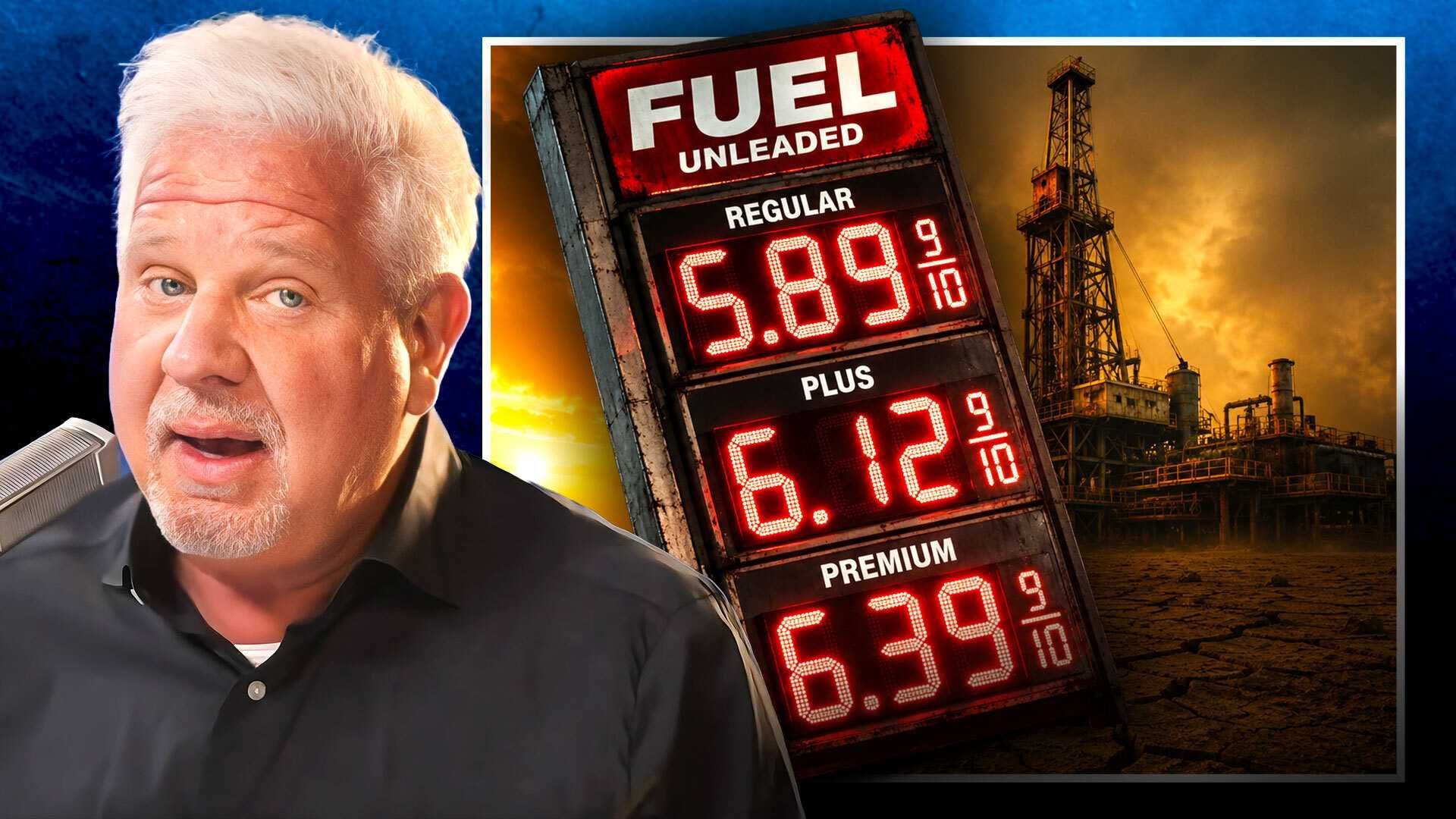

 Photo by Leon Neal/Getty Images
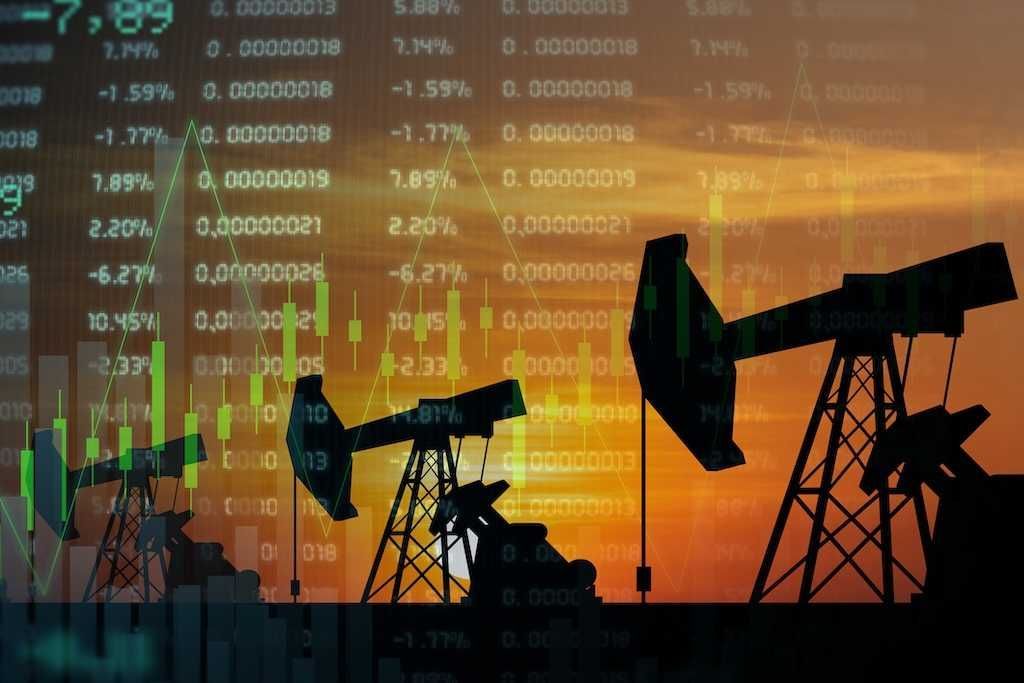 bymuratdeniz via iStock/Getty Images
 If the Chinese yuan were to become the global reserve currency, it would, in essence, give the CCP the ability to cripple entire nations.
 In the days, weeks, and months ahead, the 'get Trump' circus will continue to dominate the news.
 Emptying the strategic reserve is at best stupid and at worst corrupt.
 www.theblaze.com
 www.theblaze.com
 www.theblaze.com
 thefederalist.com
 www.theblaze.com