Trump Needs A Massive Drone Fleet To Defend U.S. Interests And Deter Its Enemies
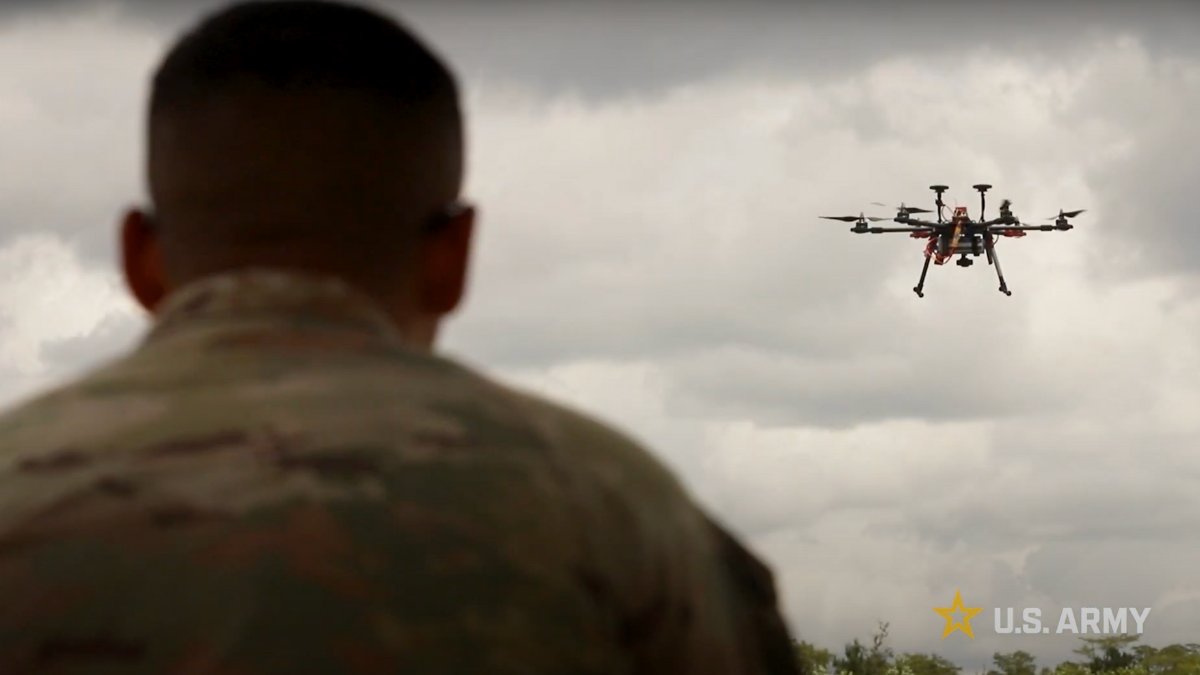 A core component of future strength will not be a dozen or even hundreds of drones ready for war. The future is hundreds of thousands.
The United States has taken direct military action against Iran’s nuclear program. Whatever you think of the strike, it’s over. It’s happened. And now, we have to predict what happens next. I want to help you understand the gravity of this situation: what happened, what it means, and what might come next. To that end, we need to begin with a little history.
Since 1979, Iran has been at war with us — even if we refused to call it that.
We are either on the verge of a remarkable strategic victory or a devastating global escalation. Time will tell.
It began with the hostage crisis, when 66 Americans were seized and 52 were held for over a year by the radical Islamic regime. Four years later, 17 more Americans were murdered in the U.S. Embassy bombing in Beirut, followed by 241 Marines in the Beirut barracks bombing.
Then came the Khobar Towers bombing in 1996, which killed 19 more U.S. airmen. Iran had its fingerprints all over it.
In Iraq and Afghanistan, Iranian-backed proxies killed hundreds of American soldiers. From 2001 to 2020 in Afghanistan and 2003 to 2011 in Iraq, Iran supplied IEDs and tactical support.
The Iranians have plotted assassinations and kidnappings on U.S. soil — in 2011, 2021, and again in 2024 — and yet we’ve never really responded.
The precedent for U.S. retaliation has always been present, but no president has chosen to pull the trigger until this past weekend. President Donald Trump struck decisively. And what our military pulled off this weekend was nothing short of extraordinary.
The strike was reportedly called Operation Midnight Hammer. It involved as many as 175 U.S. aircraft, including 12 B-2 stealth bombers — out of just 19 in our entire arsenal. Those bombers are among the most complex machines in the world, and they were kept mission-ready by some of the finest mechanics on the planet.
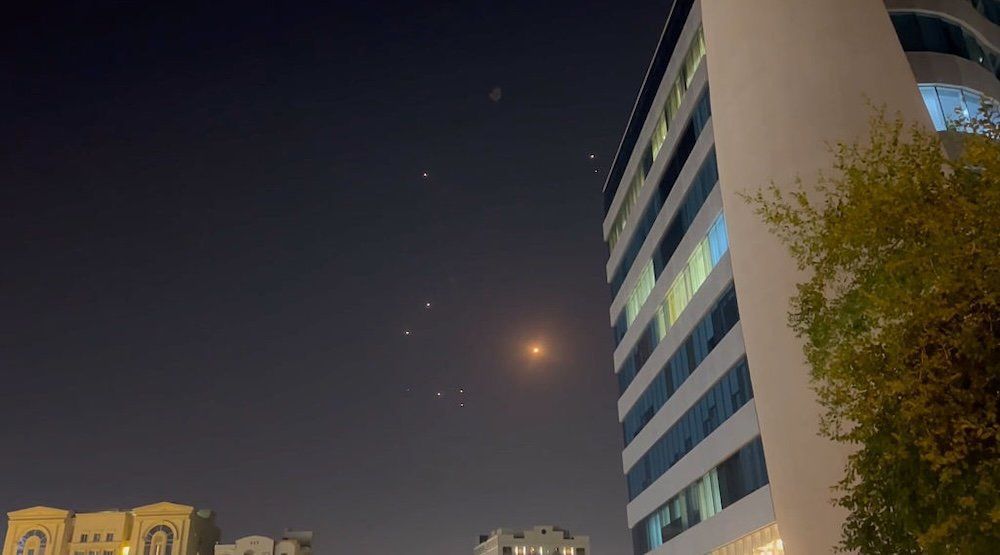
RELATED: Iran fires missiles at US troops on bases in Qatar and Iraq
To throw off Iranian radar and intelligence, some bombers flew west toward Guam — classic misdirection. The rest flew east, toward the real targets.
As the B-2s approached Iranian airspace, U.S. submarines launched dozens of Tomahawk missiles at Iran’s fortified nuclear facilities. Minutes later, the bombers dropped 14 MOPs — massive ordnance penetrators — each designed to drill deep into the earth and destroy underground bunkers. These bombs are the size of an F-16 and cost millions of dollars apiece. They are so accurate, I’ve been told they can hit the top of a soda can from 15,000 feet.
They were built for this mission — and we’ve been rehearsing this run for 15 years.
If the satellite imagery is accurate — and if what my sources tell me is true — the targeted nuclear sites were utterly destroyed. We’ll likely rely on the Israelis to confirm that on the ground.
This was a master class in strategy, execution, and deterrence. And it proved that only the United States could carry out a strike like this. I am very proud of our military, what we are capable of doing, and what we can accomplish.
We don’t yet know how Iran will respond, but many of the possibilities are troubling. The Iranians could target U.S. forces across the Middle East. On Monday, Tehran launched 20 missiles at U.S. bases in Qatar, Syria, and Kuwait, to no effect. God forbid, they could also unleash Hezbollah or other terrorist proxies to strike here at home — and they just might.
Iran has also threatened to shut down the Strait of Hormuz — the artery through which nearly a fifth of the world’s oil flows. On Sunday, Iran’s parliament voted to begin the process. If the Supreme Council and the ayatollah give the go-ahead, we could see oil prices spike to $150 or even $200 a barrel.
That would be catastrophic.
The 2008 financial collapse was pushed over the edge when oil hit $130. Western economies — including ours — simply cannot sustain oil above $120 for long. If this conflict escalates and the Strait is closed, the global economy could unravel.
The strike also raises questions about regime stability. Will it spark an uprising, or will the Islamic regime respond with a brutal crackdown on dissidents?
Early signs aren’t hopeful. Reports suggest hundreds of arrests over the weekend and at least one dissident executed on charges of spying for Israel. The regime’s infamous morality police, the Gasht-e Ershad, are back on the streets. Every phone, every vehicle — monitored. The U.S. embassy in Qatar issued a shelter-in-place warning for Americans.
Russia and China both condemned the strike. On Monday, a senior Iranian official flew to Moscow to meet with Vladimir Putin. That meeting should alarm anyone paying attention. Their alliance continues to deepen — and that’s a serious concern.
We are either on the verge of a remarkable strategic victory or a devastating global escalation. Time will tell. But either way, President Trump didn’t start this. He inherited it — and he took decisive action.
The difference is, he did what they all said they would do. He didn’t send pallets of cash in the dead of night. He didn’t sign another failed treaty.
He acted. Now, we pray. For peace, for wisdom, and for the strength to meet whatever comes next.
Want more from Glenn Beck? Get Glenn's FREE email newsletter with his latest insights, top stories, show prep, and more delivered to your inbox.
On June 21, 2025, the United States launched a military mission dubbed Operation Midnight Hammer, targeting Iran’s nuclear sites at Fordow, Natanz, and Isfahan to dismantle Iran's nuclear enrichment capabilities and block its path to nuclear weapons. This marked the U.S.' first direct engagement amid the Israel-Iran conflict. The U.S. deployed 125 aircraft, including seven B-2 stealth bombers that unleashed 14 GBU-57 "bunker-buster" bombs on Fordow, alongside over two dozen Tomahawk missiles striking Isfahan. In a White House address, President Trump hailed the operation as a "spectacular military success."
And Mark Levin agrees. “What Donald Trump did as commander in chief is remarkable,” he says.
“It's not just that he had the courage to order the attack on the Islamo-Nazi Iranian nuclear sites, but look how it came off,” he adds, referring to how all U.S. military equipment, including the seven B-2 bombers and other aircraft involved in Operation Midnight Hammer, along with American personnel, returned safely to their bases with no reported damage or casualties.
“This is what we should be used to — that is, a commander-in-chief, not an interventionist,” who “knows when and how to use the United States military … the most massive and powerful fighting machine on the face of the earth, ready to take action as needed, in any environment, against any enemy, in any way,” says Levin. “We should be cheering this.”
He looks back to how former President Bill Clinton was naive enough to give North Korea “billions and billions of dollars to feed their people” when right under his nose, the communist nation was building “a nuclear missile.” Obama was hardly better. His administration appeased Iran's "Islamo-Nazi" regime with a nuclear deal that was overly lenient, allowing the terrorist nation to pursue nuclear weapons.
In 2018, Donald Trump set America back on the right path when he “ripped [Obama’s Joint Comprehensive Plan of Action] up” and put “the Iranian regime on its back.” Unfortunately, Biden then reversed course, reinstating Obama’s flawed JCPOA approach, surrounding himself with the same advisers, and providing Iran with billions in funds.
“And so Donald Trump comes in again — thank God, thanks to you — and he says, ‘Wait a minute, these guys are gonna have a nuclear weapon,”’ says Levin, noting that this threat was confirmed by intelligence and the IAEA. “And Donald Trump says … ‘I know there are people in our country that are isolationists; I know there are people in our country who claim to speak for MAGA and don't. I, Donald Trump, I'm MAGA; I speak for MAGA, and MAGA doesn't believe in suicide."’
“And then he orders this in coordination with the Israelis,” says Levin, calling Operation Midnight Hammer “absolutely fantastic.”
To all those who are now drowning in “what if” questions about how Iran will respond, he says the far more important question is: “What if we didn't stop Iran and they had nuclear weapons?”
“The fact is the enemy itself remains: It is Islamo-Nazi terrorism … wherever it is,” Levin insists. “They want to kill us; they've been wanting to kill us since long before the other day when we hit those sites ... and they’re going to continue to try and kill us.”
The “Islamo-Nazi mindset,” he says, is “kill the Jews, kill the Christians, kill Muslims who don't agree with us, kill the Hindus, kill the Buddhists, kill the West, kill the Americans — kill until we control the world.” This bloodthirsty mentality is deeply entrenched in religious creed, and so it will never go away. Operation Midnight Hammer “doesn’t change” Iran’s bent toward terrorism, but what it did accomplish is to remove its capacity to inflict it.
“The enemy is still there, but this particular element of the enemy and this particular program of the enemy has been destroyed,” says Levin.
To hear more of his commentary, watch the video above.
To enjoy more of "the Great One" — Mark Levin as you've never seen him before — subscribe to BlazeTV — the largest multi-platform network of voices who love America, defend the Constitution, and live the American dream.
Iran began its retaliatory attack against the U.S. in a missile barrage against U.S. bases in Qatar and Iraq, according to CNN, Fox News, and other sources.
The reports included firsthand claims of explosions at both bases at about 8 p.m. local time.
'They're going to find overwhelming American force from the American military. That is really the choice before the Iranians.'
The report initially stated that 10 missiles attacked the facility in Qatar and one missile in Iraq. Further reporting from Fox News puts that number at six.
CNN anchor Becky Anderson called the mission "highly symbolic" rather than a substantive strike. A CNN correspondent in Tehran, Iran, said that officials confirmed the attack on television.
U.S. officials warned Iran against retaliation on Sunday.
"If they make smart decisions, I think they're going to find us willing to work with them," said Vice President JD Vance. "If they continue to support terrorism, nuclear weapons programs, then they're going to find overwhelming American force from the American military. That is really the choice before the Iranians. And that's a choice only they can make."
U.S. Secretary of State Marco Rubio threatened Iran if the country tried to shut down the Strait of Hormuz, a key water channel for trade.
"If they mine the Straits of Hormuz, the Chinese are going to pay a huge price," said Rubio. "And every other country in the world is going to pay a huge price. We will too. It will have some impact on us. It will have a lot more impact on the rest of the world, a lot more impact on the rest of the world. That would be a suicidal move on their part because I think the whole world would come against them if they did that."
There are about 40,000 American troops stationed across the Middle East.
This is a developing story, and additional information may be added.
Like Blaze News? Bypass the censors, sign up for our newsletters, and get stories like this direct to your inbox. Sign up here!
U.S. Secretary of State Marco Rubio and Vice President JD Vance answered tough questions about the successful U.S. attack on Iran in a pair of interviews on Sunday morning.
The Trump administration is touting the success of "Operation Midnight Hammer" in which a fleet of B-2 bombers flew deep into Iran and obliterated sites known to be associated with Iran's nuclear development capabilities. Iran has not yet retaliated but had issued numerous threats against the U.S. before the strike.
'It will have a lot more impact on the rest of the world, a lot more impact on the rest of the world. That would be a suicidal move on their part because I think the, the whole world would come against them if they did that.'
Rubio had a lively discussion that veered into debate with Margaret Brennan of "Face the Nation" on CBS News. Brennan tried to corner Rubio on whether the U.S. was pressing for regime change in Iran in their exchange, but Rubio made it clear that their only goal was to prevent Iran from obtaining nuclear weapons.
"A serious foreign policy is one that's focused on identifying what our national interest is. You don't have to like the regime," said Rubio.
"There are a lot of regimes around the world that we don't like. Okay, but in this particular case, what we are focused on is not the changing of the regime. Okay, that's up to the Iranian people if they want to do that, but that's not what we're focused on. Our national interest is about one thing, and that is Iran not getting anywhere near the capability to weaponize and have nuclear weapons. They're not going to get anywhere near that capability. The President has made that clear from day one," he continued.
"Our preference for solving that problem, that very specific problem, is through diplomacy. We've said that. We've given it every opportunity. They played games, they tried delay tactics," Rubio added.
Rubio considered the possibility of Iran closing the Strait of Hormuz, a move that would significantly imperil the oil trade, and warned that Iran would earn the ire of the entire globe if it did so.
"If they mine the Straits of Hormuz, the Chinese are going to pay a huge price," he said. "And every other country in the world is going to pay a huge price. We will too. It will have some impact on us. It will have a lot more impact on the rest of the world, a lot more impact on the rest of the world. That would be a suicidal move on their part because I think the, the whole world would come against them if they did that."
Brennan also pressed Rubio on the national intelligence assessment that found no evidence that Iran's supreme leader had ordered nuclear weaponization. Rubio argued that this didn't matter because Iran had all the elements to enrich uranium and obtain nuclear weapons.
"That's irrelevant. I see that question being asked in the media, that's an irrelevant question, they have everything they need to build the weapon," Rubio said before getting interrupted by Brennan.
"That is the key point in U.S. intelligence assessments. You know that," she replied.
"No it's not," he fired back. "I know that better than you know that, and I know that that's not the case. You don't know what you're talking about..."
Rubio went on to say the intelligence didn't matter and he pummeled Brennan with the known evidence that Iran could obtain nuclear weaponization if unopposed.
"Forget about intelligence. What the IAEA knows they are enriching uranium well beyond anything you need for a civil nuclear program," he said. "So why would you enrich uranium at 60%, if you don't intend to one day use it to take it to 90% and build a weapon? Why are you why are you developing ICBMs? Why do you have 8000 short range missiles and two to 3000 long- mid range missiles that you continue to develop?"
"Understood," she replied.
Rubio also asserted that the U.S. would respond if Iran retaliated against U.S. bases in the Middle East.
'If they continue to support terrorism, nuclear weapons programs, then they're going to find overwhelming American force from the American military.'
In an interview with Jon Karl on "This Week" on ABC News, Vance stayed consistent with the messaging from the White House that their only goal with the bombing operation was to prevent Iran from obtaining nuclear weapons. He also warned that the U.S. was prepared to respond with "overwhelming force" if Iran retaliated.
"If they continue to pursue a nuclear weapon, you're also going to see overwhelming force from the American people. So, we've got really the ball in Iran's court here," he said.
"If they make smart decisions, I think they're going to find us willing to work with them. If they continue to support terrorism, nuclear weapons programs, then they're going to find overwhelming American force from the American military. That is really the choice before the Iranians. And that's a choice only they can make."
RELATED: DOD reveals stunning new details following Trump's attack on Iran
Vance also responded to a comment from Dmitri Medvedev, the former president of the Russian Federation, who said that Iran still had nuclear enrichment capabilities and their program would continue.
"I think it's a bizarre response, but I also don't know that that guy speaks for President Putin or for the Russian government," said the vice president.
"One of the things that we've picked up, Jon, in our conversations with the Russians over the last few months, despite our many disagreements, of course, with the state of Russia, they've been very consistent that they don't want Iran to get a nuclear weapon," Vance explained.
"Iran having a nuclear weapon, nuclear proliferation in the Middle East, is a disaster for pretty much everybody. It's one of the few issues where Russia, China and the United States have broad agreement is that we don't want to see a nuclear arms race in the Middle East," he added. "So, what the president did was very important. I'll let President Putin speak to what the official Russian position on this is."
While it is too early to assess if Iran's nuclear capabilities have been completely wiped out, Vance said that the operation ensured that Iran no longer has the capacity to obtain weapons-grade uranium.
Like Blaze News? Bypass the censors, sign up for our newsletters, and get stories like this direct to your inbox. Sign up here!
Defense Secretary Pete Hegseth and Chairman of the Joint Chiefs of Staff Gen. Dan Caine revealed stunning new details following President Donald Trump's historic strikes against Iranian nuclear sites on Saturday.
Hegseth and Caine confirmed deception was involved to execute "Operation Midnight Hammer," commending the American military who "performed flawlessly" during the mission. Part of the fleet of B-2 bombers flew West over the Pacific as a decoy while the "main strike package" headed East before striking Iran at about 6:40 pm Eastern Standard Time.
'When this president speaks, the world should listen.'
Hegseth also clarified that only the Iranian nuclear targets were "devastated" and that civilians were not targeted.
"Many presidents have dreamed of delivering the final blow to Iran's nuclear program, and none could, until President Trump," Hegseth told reporters during a press conference Sunday. "The operation President Trump planned was bold and it was brilliant, showing the world that American deterrence is back when this president speaks, the world should listen."
"No other country on planet Earth could have conducted the operation that the chairman is going to outline this morning, not even close," Hegseth added.
Caine also confirmed that American troops in the region were not notified in advance of the strikes, but were placed on high alert due to increasing tension and risk in the region.
"This operation underscores the unmatched capabilities and global reach of the United States military," Caine said. "As the President clearly said last night, no other in the military in the world could have done this."
Operation Midnight Hammer was executed without any internal leaks, only notifying members of Congress immediately after the strike took place.
Hegseth also reiterated that the president does not intend to escalate the conflict to a full blown war, but has threatened Iran with further military action if they retaliate.
RELATED: Praise, prayers, and impeachment: Reactions pour in following US attack on Iran
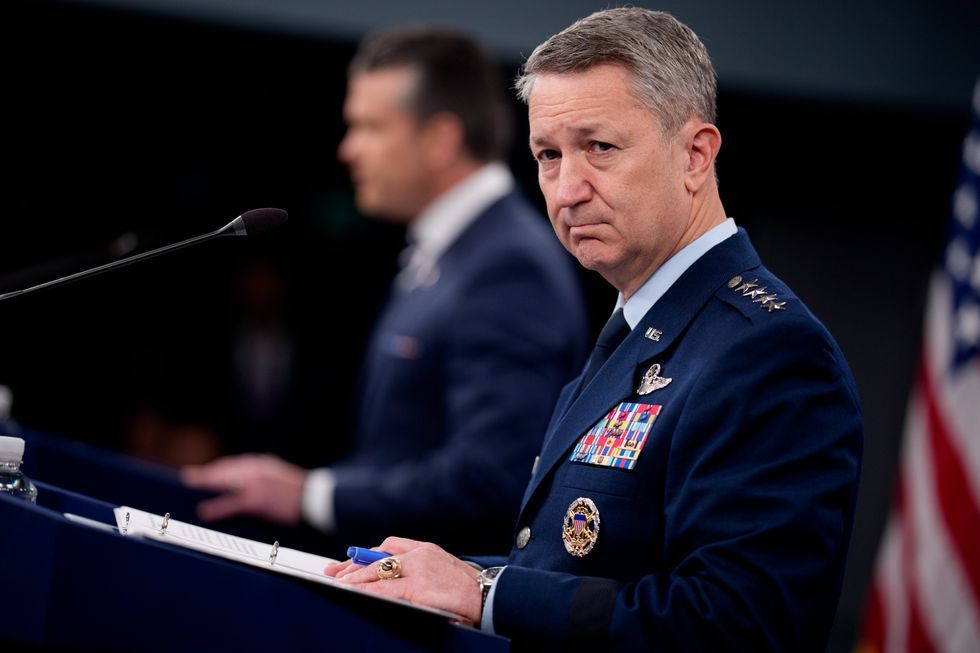
"As President Trump has stated, the United States does not seek war, but let me be clear," Hegseth said. 'We will act swiftly and decisively when our people, our partners, or our interests are threatened. Iran should listen to the president of the United States and know that he means of it every word."
Trump announced the attack shortly after he arrived at the White House on Saturday afternoon. Notably, the president didn't speak with the press when he stepped off of Marine One and onto the South Lawn, but he did pause to admire his new towering flag poles before entering the White House.
Like Blaze News? Bypass the censors, sign up for our newsletters, and get stories like this direct to your inbox. Sign up here!
 The bombings are a powerful deterrent to the 'CRINK' alliance; talk of America’s decline is merely wishful thinking; and leadership matters.


 www.theblaze.com