A new threat on American streets: Inside the rise of Indian gangs
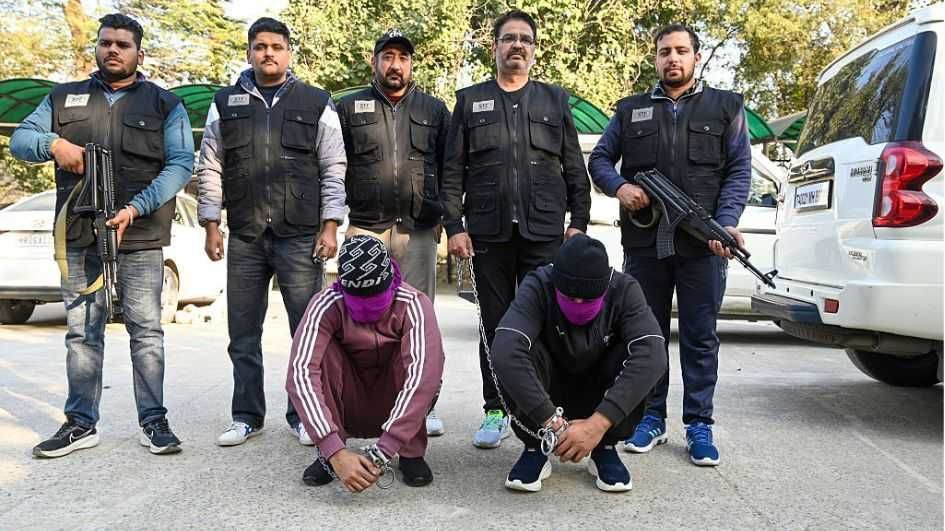


For decades, Hollywood fed us a steady diet of tracksuit-wearing Gambino soldiers whining about their mothers and cartoonishly tattooed cartel enforcers threatening to dissolve people in vats of premium tequila.

But those legacy brands are officially losing market share to a heavily armed, highly aggressive corporate competitor that weaponizes car horns to deafen the opposition. International syndicate networks tied directly to India are systematically restructuring the geography of global street violence, proving that globalization works beautifully for extortion rackets too.

By establishing these isolated, closed-off cultural zones, these factions maintain a fierce allegiance to old-world tribal hierarchies.

Playing 'Hard Ball'

California serves as the primary battleground for a ruthless wave of Indian organized crime tearing through the state. These syndicates use major metropolitan hubs as operations bases for massive drug trafficking corridors and organized intimidation schemes. Federal agents recently dismantled a major cell during Operation Hard Ball, arresting 11 Indian operatives across targeted raids in Los Angeles and Sacramento.

Investigators seized massive stockpiles of high-grade narcotics, automatic weapons, and cash, exposing a highly sophisticated network built for domination rather than minor street theft. This aggressive expansion shows exactly how foreign syndicates import overseas violence directly into the heart of American suburban communities. India is best known for bowel-blasting street food and a population of drivers apparently trained exclusively in demolition derbies. The American public would do well to update its perspective — fast. That goes for the rest of the West too, because this brand of trouble spans continents.

The expansion strategy mimics that of a tech startup, rapidly scaling operations across Europe and the Great White North. Take Portugal, for instance. The historic streets of Lisbon and the sunny coastal regions of the Algarve are currently experiencing an influx of Punjab-themed turf wars. Rival Indian syndicates are actively fighting over localized human smuggling routes and synthetic drug distribution rights, turning once-peaceful European plazas into active combat zones.

RELATED: A Memphis mom was fired for telling the truth about crime; now she's fighting back
Sen. Marsha Blackburn/Austin Johnson/Getty Images

Canada war zone

Meanwhile, Canada has become something of a war zone. In the suburban sprawl of Surrey, British Columbia, and the Greater Toronto Area, daylight drive-by shootings are now a standard feature. These are high-volume tactical ambushes executed on public streets with automatic weapons.

Organized crime expert Martin Purbrick notes that the massive Indian diaspora across the United Kingdom, Canada, and the United States provides the perfect camouflage for foreign syndicates. Because these criminal networks integrate effortlessly into pre-existing social and cultural enclaves, they remain entirely invisible to outside law enforcement.

This insulating effect is particularly troubling in the United States, where a massive influx of Indian nationals flood the country utilizing heavily abused H-1B visa programs, fraudulent tech certifications, and rubber-stamped degrees from fake universities to set up illicit cash-heavy operations under the guise of legitimate business.

For those who argue that these people are simply desperate migrants seeking a better life, I would argue that if an individual is entirely comfortable breaking federal immigration laws and committing systemic document fraud just to enter the country, there is absolutely no reason to believe he will suddenly develop a moral conscience and stop breaking the law once he is safely inside.

Clannish communities

And once inside, the immediate consequences are clear. In Texas, suburban stretches outside Dallas and Houston have been completely overrun by waves of rapid migration. The sudden demographic shift is sobering because it features a total lack of assimilation. Instead of adopting local Texan culture, these highly clannish Indian communities stubbornly lock themselves into insular, self-governing pockets that refuse any meaningful integration with the broader American population.

This refusal to assimilate allows them to import third-world values directly into respectable neighborhoods from a nation where female genital mutilation, forced child marriages, and primitive honor killings are routine societal practices. By establishing these isolated, closed-off cultural zones, these factions maintain a fierce allegiance to old-world tribal hierarchies. This absolute rejection of Western legal and social standards provides a protected operational base for crime syndicates, allowing them to enforce their own brutal brand of street justice entirely outside the reach of American law.

Normalized savagery

When a syndicate recruits enforcers raised in an environment where killing your own sibling is considered a legitimate way to preserve family reputation, putting a bullet in someone’s head to settle a drug debt becomes second nature. This normalized savagery feeds directly into the operational tactics used on streets in America and beyond.

Modern law enforcement agencies are forced to adapt to a criminal structure that operates like a multinational corporation rather than a traditional street corner crew. The hierarchy relies on distinct, siloed departments handling recruitment, international money laundering, transport logistics, and tactical intimidation. The primary advantage these syndicates maintain is their ability to exploit the immigrant communities they embed themselves within. Victims of extortion may refuse to contact authorities due to targeted threats directed at their relatives back in the homeland.

With over 3 million Indian nationals now residing in America, the scale of this blind spot is staggering. While the multiculturalist consensus assumes the vast majority are law-abiding, it is past time to acknowledge the harsh reality. A significant and growing number are not, having entered the country through illicit, fraudulent, or entirely illegal means. It is precisely this undercurrent of lawlessness that provides the perfect, impenetrable human shield, enabling foreign thugs to operate with total impunity on American soil.
‘Circle of silence’: Why Mexican cartels are targeting Christians


Christian persecution is happening around the world, and in some places that you would never expect — including Mexico.

Open Doors US CEO Ryan Brown tells BlazeTV host Allie Beth Stuckey that his organization has a World Watch List that tracks persecution across the globe, and what’s happening inside America’s southern neighbor is shocking, to say the least.

“One of the very also present realities there are with the cartels and organized crime,” Brown tells Stuckey, explaining that the cartels target Christians because the church is “bad for business.”

Christianity hurts the cartels, as it keeps young men from getting drafted into their ranks as well as stops potential drug or alcohol users from buying what they make their living on.


This is why many cartel leaders view the Christian church as a threat, and sometimes they “strike with violence” in retaliation.

One Christian church, Brown explains, was targeted by the cartel for not doing as they said.

“The cartels came in one night ... with guns ablazing ... and, you know, forced people out with the clothes on their back. They corralled them in a school building and held them captive there, wouldn’t allow them to escape, wanted people to see that they were being held there,” he recalls.

“There was one bucket in the middle of the room to utilize as the bathroom for a period of 10 days. No water provided. They had to drink water from puddles,” he continues.

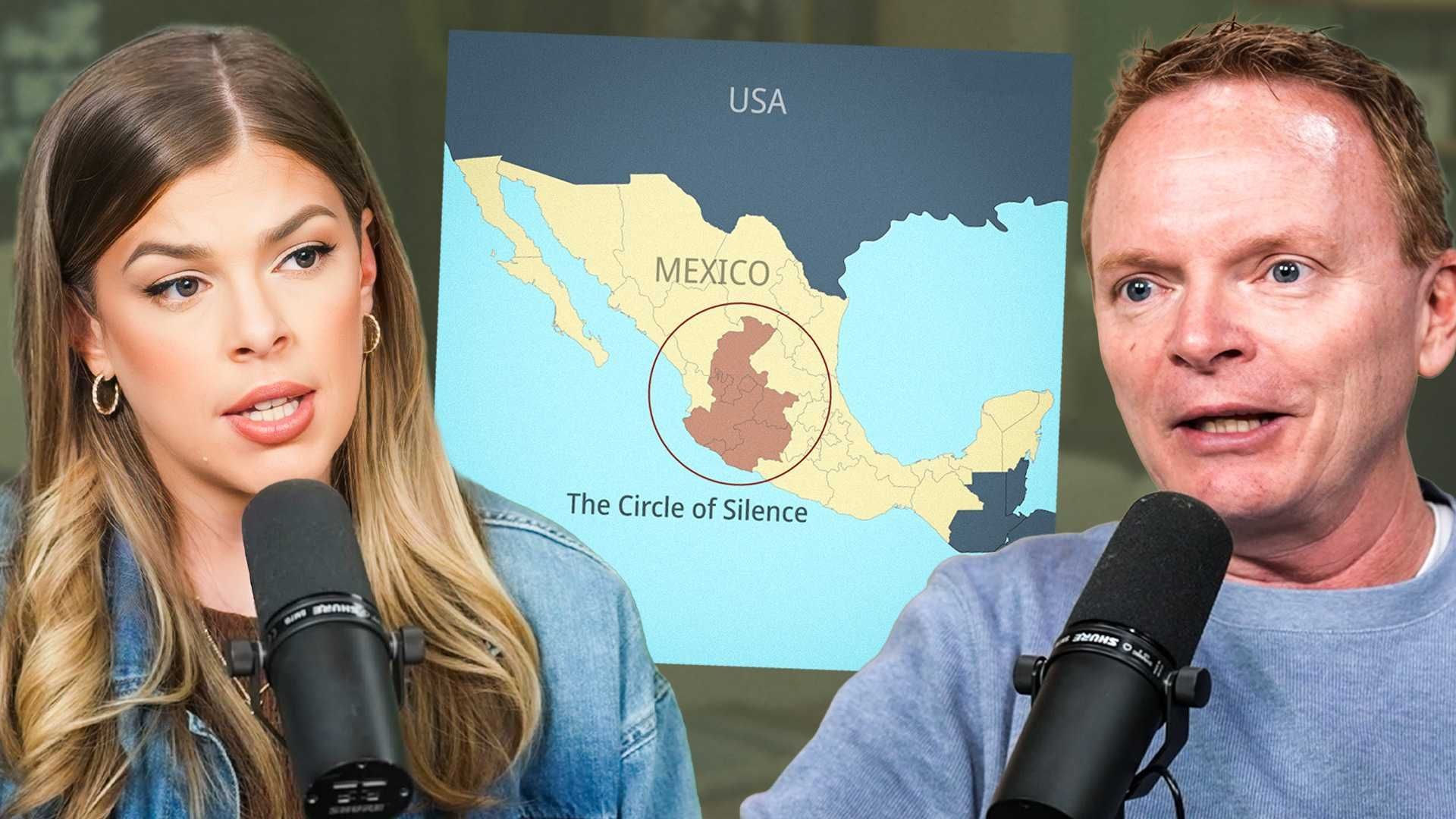
There’s also an area of several states in Mexico called “the circle of silence.”

Geographically these states form a circle and represent an area where Christianity and Catholicism are not heavily represented.

“So, you know, there is not a strong presence of the church there to vocalize and to make the message of the gospel known. So, that’s one area of silence,” Brown tells Stuckey.

“They want no presence of Christianity there. They want it to be silenced,” he adds.

Want more from Allie Beth Stuckey?

To enjoy more of Allie’s upbeat and in-depth coverage of culture, news, and theology from a Christian, conservative perspective, subscribe to BlazeTV — the largest multi-platform network of voices who love America, defend the Constitution, and live the American dream.

In Federal Spending Fight, House Republicans Have Only One Acceptable Tack: No Security, No Funding

The 'power of the purse' is the most effective tool we possess to force an out-of-control executive branch to end its abuses.
Italian police capture most wanted mafioso who ran Cosa Nostra clan, was on run for 30 years


The 60-year-old mafia don whose criminal gang Cosa Nostra inspired "The Godfather" was captured Monday by Italian police after spending 30 years on the run. Matteo Messina Denaro was previously one of Europe's most wanted fugitives.

What is the background?

Denaro, who went by the nicknames "the devil" or "the skinny one," was the son of an influential Cosa Nostra boss, Don Ciccio. According to the Guardian, Denaro built an unlawful multibillion-euro empire in the wind energy, waste, and retail sectors.

The godfather is linked to over 50 murders, such as the bombings that claimed the lives of renowned anti-mafia prosecutors Giovanni Falcone and Paolo Borsellino — after whom the international airport outside of Palermo was named.

These bombings also claimed the lives of Falcone's wife and the family's bodyguards. The overwhelming majority of Italians reckon Falcone to have died a hero.

Denaro was also wanted for the heinous strangling of Giuseppe Di Matteo, a former mafioso's son whose body the mobster dissolved in a vat of acid.

The New York Times noted that Denaro allegedly murdered a pregnant woman on June 15, 1992.

Denaro went on the run in June 1993. Despite having abandoned his headquarters in Trapani, he was still considered the head of the Cosa Nostra, reported the Los Angeles Times. Italy's Carabinieri (national) police indicated last year that Denaro was still giving orders.

While he allegedly managed his illicit affairs in exile and continued to profit from wind farm deals, various collaborators throughout Sicily reportedly helped the murderer evade arrest.

Prosecutors suggested that the mobster relied heavily upon a network of powerful freemasons to maintain his freedom, reported the Times.

While underground, Denaro was nevertheless tried and convicted of dozens of murders. Denaro now faces multiple life sentences.

Justice as a gift

Police caught Denaro, the last "godfather" of the Sicilian mafia, in Palermo, where he had been living under the assumed name "Andrea Bonafede."

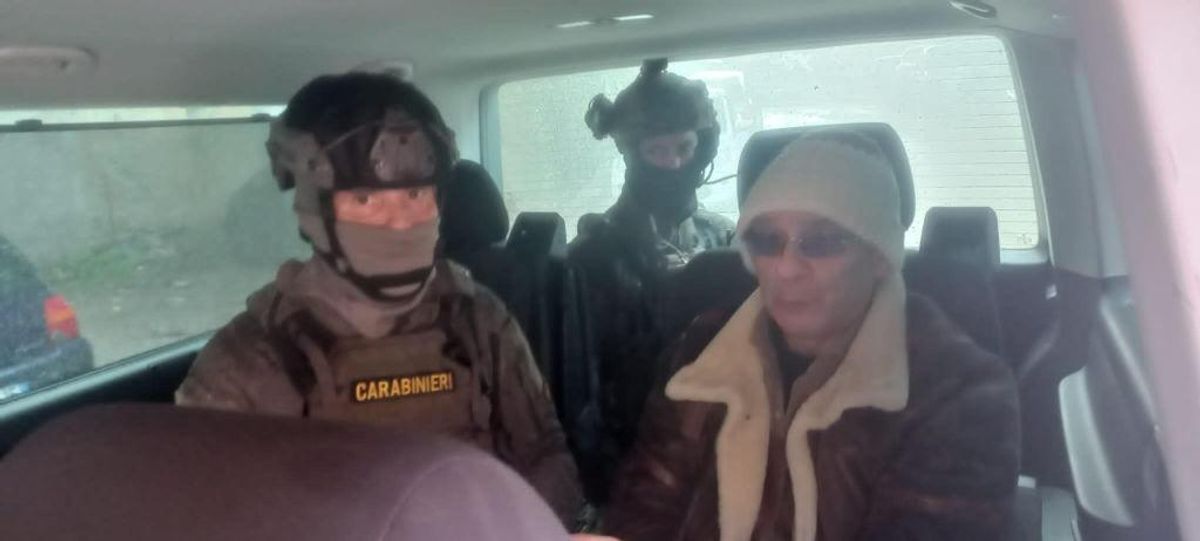
Carabinieri police intercepted him at a private health clinic on Jan. 16, where, according to Carabinieri Gen. Pasquale Angelosanto, the mobster had been receiving treatment at the clinic for an undisclosed medical condition.

A pair of Carabinieri officers marched the defeated and feeble mobster out of the clinic and dumped him into black van. They then took Denaro to a secret location.

\u201c\ud83d\udd34 Le prime immagini di #MatteoMessinaDenaro, arrestato questa mattina a Palermo.\u201d
— RTL 102.5 (@RTL 102.5) 1673865189

Some people took to the streets to applaud the mobster's arrest:

\u201cVedere le persone che esultano per la cattura di Matteo Messina Denaro \u00e8 la cosa pi\u00f9 bella che vedrete oggi (a parte l'arresto).\u201d
— Ida De Vico (@Ida De Vico) 1673860928

Italian Prime Minister Giorgia Meloni said, "This is a great victory for the Italian state, which shows we should never surrender to the mafia."

Meloni thanked police and government forces for Denaro's arrest in the "aftermath of the anniversary of the arrest of [Salvatore] Totò Riina."

\u201cUna grande vittoria dello Stato che dimostra di non arrendersi di fronte alla mafia. All'indomani dell'anniversario dell'arresto di Tot\u00f2 Riina, un altro capo della criminalit\u00e0 organizzata, Matteo Messina Denaro, viene assicurato alla giustizia.\u201d
— Giorgia Meloni (@Giorgia Meloni) 1673859841

Riina, also a murderous mobster, ordered hundreds of murders, including Falcone's and Borsellino's in 1992. Riina had begged to die in his home, but succumbed to cancer behind prison bars at the age of 87 in November 2017.

Concerning Denaro's arrest, Lamberto Giannini, Italy's chief of police, said, "It is a victory for all the police forces that have worked together over these long years to bring the dangerous fugitive to justice."

Once known for his lavish lifestyle, expensive cars, and designer clothes, Denaro will likely die behind bars in his prison uniform.

Like Blaze News? Bypass the censors, sign up for our newsletters, and get stories like this direct to your inbox. Sign up here!

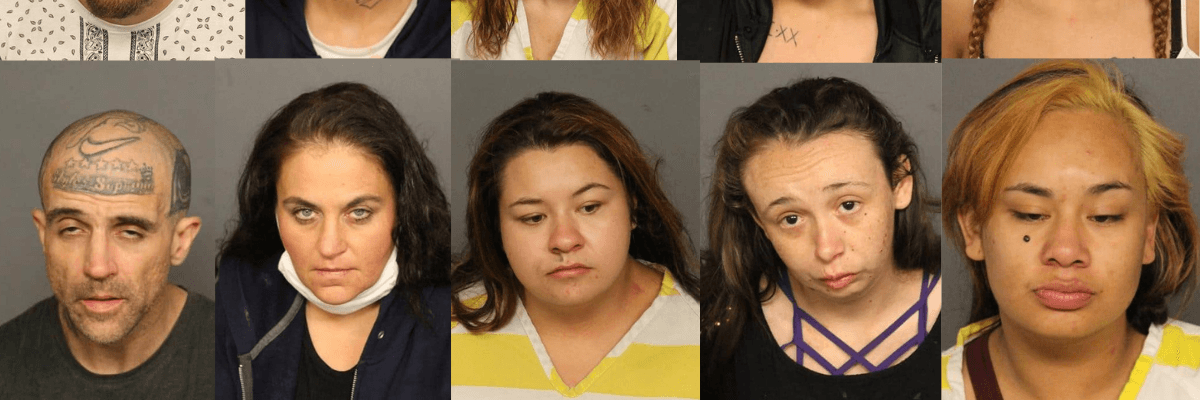
Group calling themselves 'the Sopranos' busted for alleged massive theft ring started to support their drug addictions. One even has 'styles Soprano' tattooed on his forehead.


A group of 11 men and women ages 21 to 42 in Denver have been arrested and accused of enterprising to commit dozens of thefts and other crimes for the purpose of supporting their drug addictions.

The alleged organized crime ring, which allegedly livestreamed some of their crimes on Facebook, identify themselves as "the Sopranos." One of the members even has the phrase "styles Soprano" tattooed on his forehead.

In a news release issued Friday, the office of Denver District Attorney Beth McCann announced that the group had been charged on a whopping 91 counts for a litany of crimes, including aggravated motor vehicle theft, identity theft, illegal possession of a weapon, and possession of a controlled substance with intent to distribute.

The attorney's office added that they are "accused of stealing more than $950,000 in motor vehicles, firearms, tools, financial transaction devices, and other items to maintain their lifestyles and support their drug habits," which included addictions to fentanyl, heroin, and methamphetamines.

According to prosecutors, the group would routinely conduct reconnaissance to identify potential vehicle targets and then would work in teams of two to steal the vehicle. One member would "break the driver's side door lock, then break the ignition lock and start the vehicle using a screwdriver" while "the other team member acted as look-out and get-away driver."

They also stole credit cards from vehicles to quickly purchase "gift cards, tools, and other property" before the cards were canceled by the owner, authorities said.

The group also allegedly used Facebook and other social media platforms to coordinate criminal activity, elude capture by police, arrange for the sale of allegedly stolen goods, and even brag about their criminal prowess. Sometimes members would even livestream their crimes on Facebook where other members would then offer real-time encouragement.

But it was their cocky use of Facebook that, in part, led to their downfall. According to KCNC-TV, investigators used the Facebook conversations as well as DNA evidence to identify and track the suspects.

Those arrested are listed as follows: Timothy James Boles, 27; Daniel Holman, 42; Richardlee Martin Oritz, 28; Lanea Dawn Rodriquez, 23; Guillermo Jesus Hernandez, 21; Danea Lynn Holman, 39; Daysha Ann Holman, 22; Elisha Monique Marquez, 30; Rachel Christine Montour, 22; Sierra Sandoval, 22; and Ariel Sosa, 21.

Hundreds arrested from more than a dozen countries in massive global organized crime sting kickstarted by FBI


Hundreds of criminals from more than a dozen countries spanning Europe, Asia, Australia, and the Middle East were arrested this week in perhaps the largest organized crime sting in history.

The operation — variously referred to as "Ironside," "Greenlight," and "Trojan Shield" — was jointly conceived by the FBI and Australian police in 2018 and sold supposedly encrypted phones to criminals around the world, enabling law enforcement to track their communications, multiple outlets reported on Tuesday.

It all started when U.S. officials became involved in the development of ANOM, a technology perceived to be a secure encrypted messaging app that customized cell phones to remove all their capabilities, including voice and camera functions, apart from the technology.

The app was then sold to organized crime officials, unbeknownst to them that they were being monitored. Those crime officials then distributed phones containing the app to associates, believing the phones to be secure, the Guardian reported.

Over the next two years, law enforcement in more than 100 countries was able to monitor the internal communications of more than 300 criminal groups, including plans for drug smuggling, money laundering, and even murder.

Then, according to Europol, early this week, 16 countries conducted raids based on the evidence gathered, leading to more than 800 arrests in at least 18 countries across the globe. Tons of drugs, cryptocurrencies, luxury cars, and weapons were also seized in the raids, along with $148 million in cash.

In a press conference, Australian Prime Minister Scott Morrison said the operation "struck a heavy blow against organized crime — not just in this country, but one that will echo around organized crime around the world."

"This is a watershed moment in Australian law enforcement history," Morrison added.

Australia's federal police commissioner, Reece Kershaw, said nothing was hidden from law enforcement: "It was there to be seen, including, 'We'll have a speedboat meet you at this point,' 'This is who will do this,' and so on."

"We have been in the back pockets of organized crime," he said. "All they talk about is drugs, violence, hits on each other, innocent people who are going to be murdered."

FBI Assistant Director Calvin Shivers called the results "staggering" Tuesday at Europol's headquarters in the Netherlands, according to Agence France-Presse. Shivers noted that aside from the operation's arrests, it also foiled dangerous and murderous criminal plans.

"Not only have we heard about the number of arrests and the number of seizures, but over 100 threats to life that were mitigated," he said.

Kershaw agreed: "We have arrested the alleged kingmakers behind these crimes, prevented mass shootings in suburbs and frustrated serious and organized crime by seizing their ill-gotten wealth."

The FBI is expected to hold a press conference announcing further details on Tuesday.