Fauci pleads the 5th, Paul removes his lawyer as hearing explodes
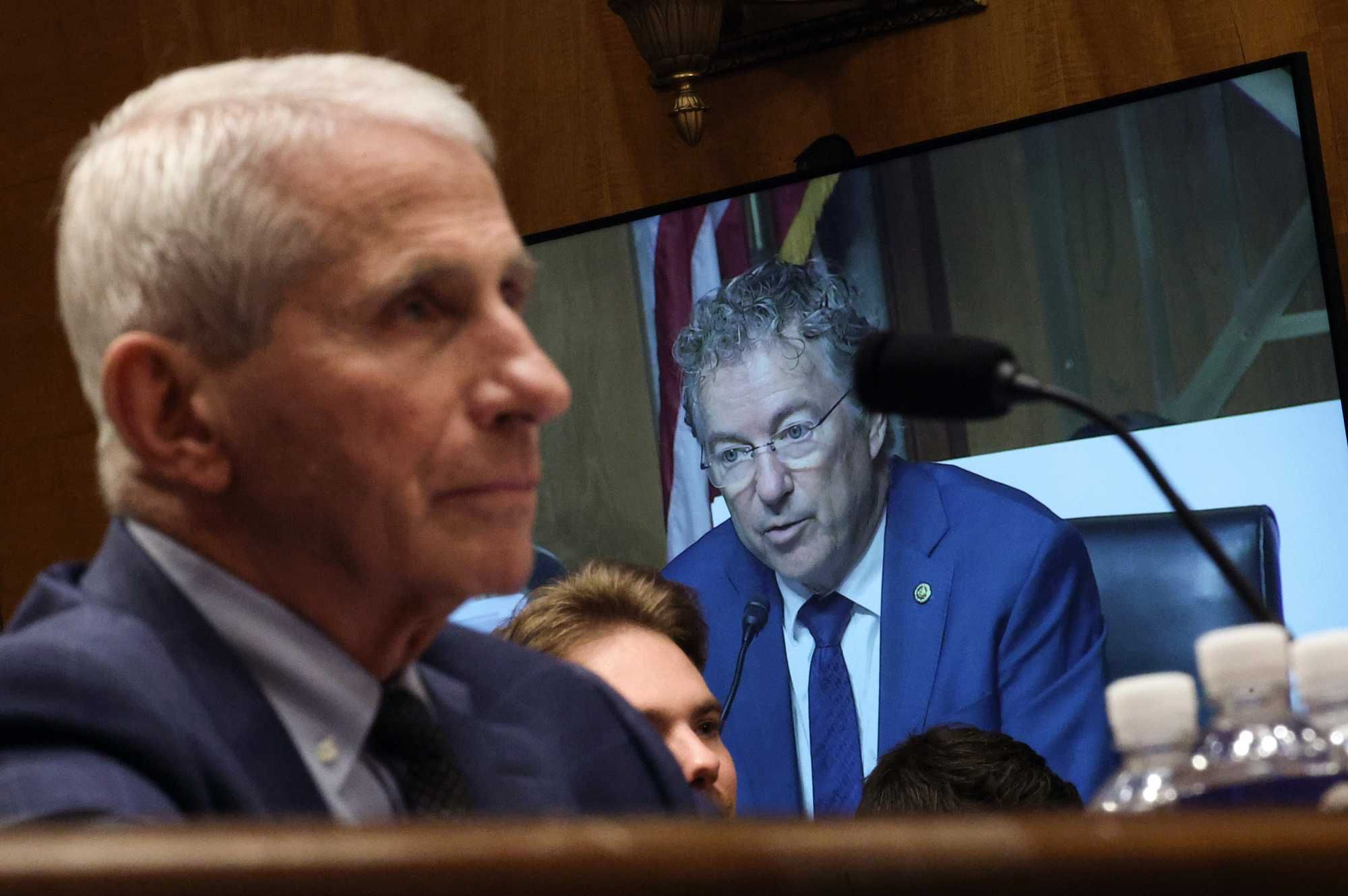


On Wednesday morning, a much anticipated hearing featuring Dr. Anthony Fauci began as he appeared before the Senate Committee on Homeland Security and Governmental Affairs. It is Fauci's first appearance before a legislative body since Sen. Rand Paul (R-Ky.) released the diary Fauci kept using his government email account. The session quickly erupted into fireworks, as Chairman Paul had Anthony Fauci's attorney removed for not following the directions of the chair.

Fauci used his own opening statement to defend his decades in government, noting that he had testified before or briefed Congress "well over 200 times" during his almost 40 years running the National Institute of Allergy and Infections Diseases and framing that record as proof he "believe[s] in and respect[s] the value of legitimate congressional oversight."

'The COVID lockdown … could never have been inflicted without you aiding and abetting the crime.'

He wasted no time going after Paul, accusing him of an "unhinged obsession" with trying to see him "behind bars." Fauci framed the whole hearing as bad faith, saying it was designed to get him to "say something — anything — that could vindicate" Paul's public pledges.

He also went after the publication of his email diary directly, calling it a move "aimed at embarrassing and intimidating me."

In his opening statement, Paul reminded the room that Fauci only showed up "under duress" and later baited him on the record: "Let the record record that the witness has refused to answer whether there's a folder in front of him."

"The COVID lockdown … could never have been inflicted without you aiding and abetting the crime," Paul said.

Invoking his Fifth Amendment right, Fauci said, after Paul began direct questioning, "under the advice of my attorneys, I will invoke my right under the Fifth Amendment of the Constitution to refrain from answering your questions."

RELATED: Puppy love: Diary exposes Fauci's crush on Julia Roberts

Things then boiled over when one of Fauci's attorneys tried to jump in mid-hearing. Paul cut him off cold — "Sit quietly and don't say another word. ... You are not recognized" — before warning him a second time that he would be removed if he spoke again.

The lawyer kept talking anyway. "Security, please remove him from the room," Paul ordered. The standoff dragged on for over a minute before security pulled him out and the room broke into applause.

Democrat Gary Peters, the committee's ranking member, tried to intervene on the attorney's behalf. Paul overruled him on the spot.

The Fifth Amendment plea helps Fauci stay out of legal jeopardy. Former President Joe Biden's preemptive pardon for Fauci covers offenses from 2014 through the pardon's issue date, tied to his government service — but legal experts and lawmakers agree it does not protect against future perjury or obstructive conduct in compelled testimony.

Paul made clear days earlier that there was an easy way out: "There's no risk to perjury if you tell the truth." Fauci could admit to past falsehoods, destroyed records, or a one-sided presentation of the science, Paul said — "the only thing he can't do is lie again." Paul had also predicted the outcome, telling reporters ahead of time that Americans "would be very disappointed" if Fauci pleaded the Fifth — which he just did.

For more on Fauci's COVID cover-up, check out BlazeTV's six-episode docuseries "The Coverup."

Like Blaze News? Bypass the censors, sign up for our newsletters, and get stories like this direct to your inbox. Sign up here!

New York’s home-care fraud scandal exposes Medicaid’s rotten incentives


Medicaid is federally funded and state-run, but the program’s beneficiaries often have the least say in who provides their care and what that care costs.

That’s a built-in flaw. States have every incentive to maximize federal matching funds while federal taxpayers bear much of the cost. The result pits state bureaucrats against Washington’s need to control Medicaid spending — and against taxpayers’ interest in stopping providers, insurers, and contractors from cashing in on weak oversight.

New York’s home-care scandal is not merely a contracting failure. It is a warning about Medicaid’s overall design.

That is why cosmetic Medicaid reforms so often produce more spending, more inefficiency, and more fraud.

Just look at New York.

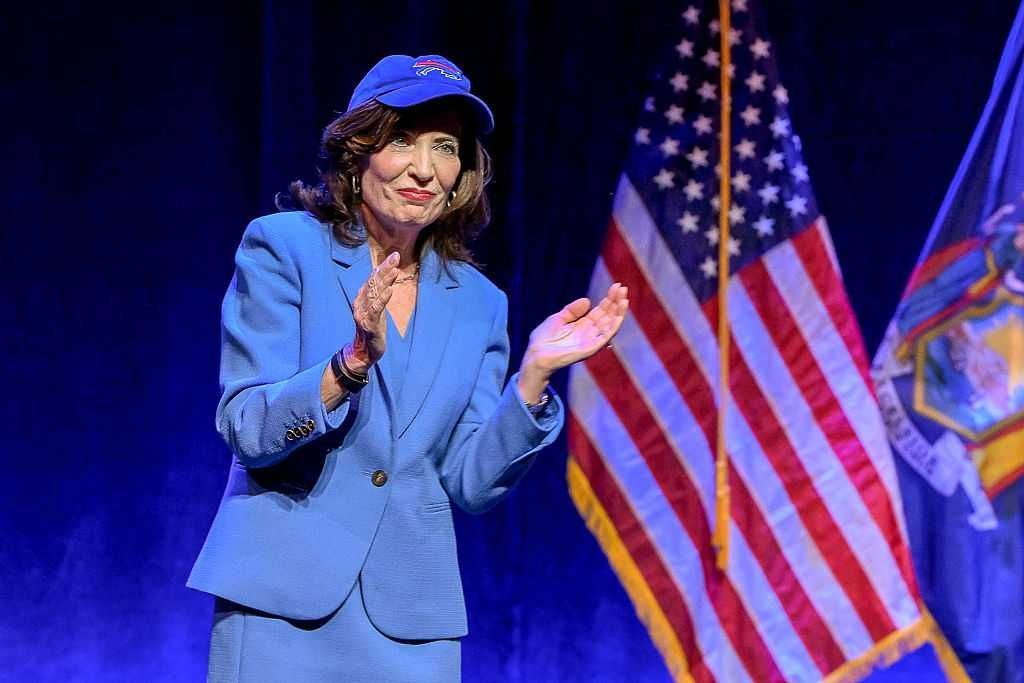
Democrat Governor Kathy Hochul’s administration botched the reform of its roughly $11 billion Consumer Directed Personal Assistance Program, a Medicaid-financed home-care benefit, so badly that federal prosecutors came knocking.

The U.S. Justice Department recently sued the New York State Department of Health and Public Partnerships LLC, the program’s sole fiscal intermediary since 2025. Prosecutors allege that New York’s CDPAP reform, supposedly designed to reduce waste in a billion-dollar program, instead created conditions for an ongoing Medicaid fraud scheme.

Personal care — nonmedical long-term care provided in the homes of elderly and disabled patients — is especially vulnerable to waste and abuse. The reason? It’s difficult to verify that caregivers worked the hours billed or provided the services claimed.

“The service is delivered by unlicensed caregivers in private residences, usually with no on-site supervision,” Bill Hammond of the Empire Center has explained. “The risk is heightened when the aide is a friend or family member of the patient, which is allowed under the popular and rapidly growing [CDPAP].”

New York’s numbers show the scale of the problem.

In 2021, the state employed 138 home-health and personal care aides per 1,000 residents age 65 or older — more than double the national average. New York City employed 236 aides per 1,000 older residents. By 2024, the statewide rate had climbed to 171 aides per 1,000 older residents.

Home care was supposed to reduce New Yorkers’ reliance on nursing homes. Yet the share of elderly New Yorkers living in nursing homes declined more slowly than in almost every other state, while New York’s per capita Medicaid spending on nursing homes remained the highest in the nation and more than double the U.S. average.

RELATED: Medicare red tape turned insurers into villains

NoDerog/Getty Images

Over the decade leading up to 2025, hundreds of fiscal intermediaries emerged to process payroll for CDPAP lay caregivers and perform other administrative duties. These intermediaries eagerly tapped loosely supervised Medicaid dollars.

Many aggressively advertised the opportunity to become a CDPAP caregiver and get paid by Medicaid to care for a family member — eventually at the same legally mandated minimum pay as professionally trained home-care aides.

That helped fuel what Hammond described as “seemingly bottomless and unchecked demand for a costly Medicaid benefit, which has been rising almost 10 times faster than the growth of the state’s elderly population.”

In 2024, New York passed legislation consolidating CDPAP management under a single statewide contractor. The state awarded that role to PPL.

By then, CDPAP relied on nearly 600 intermediary firms, and enrollment had exploded from roughly 12,000 to more than 250,000 between 2015 and 2023.

By shrinking the bureaucracy, New York lawmakers claimed they would restrain CDPAP’s soaring costs. Once again, they promised greater accountability and hundreds of millions of dollars in savings.

They did not deliver.

According to the Justice Department, the procurement process for “one of the most lucrative contracts for administering a Medicaid program in the nation” was compromised from the beginning. Prosecutors allege that “PPL was preselected as the winner through a sham bid process.”

The transition from hundreds of intermediaries to PPL was also disorderly. An unrealistic timeline, evident to both PPL and the Department of Health, disrupted patient care.

Most important, prosecutors allege that “PPL and New York, without explanation, have disregarded key limits the contract imposed on the revenues and profits PPL was entitled to.” Those limits were “central to the goal of saving hundreds of millions of dollars through the CDPAP transition.”

PPL allegedly “siphoned millions of dollars of Medicaid funding,” with the state Department of Health complicit in the ongoing scheme.

RELATED: SNAP may be paying for manicures, bongs, and an obesity epidemic — on your dime

Pete Kiehart/Bloomberg/Getty Images

PPL can be replaced. But another company eager to rent-seek will inevitably take its place unless the incentive structure changes.

As long as federal taxpayers contribute anywhere from $1 to $9 for every $1 New York contributes to fund Medicaid for New Yorkers, state administrations and health officials will remain too complacent about the misuse of taxpayer money.

Any money recovered from this alleged scheme would be dwarfed by Medicaid’s broader improper spending crisis, which may have exceeded $1 trillion over the past decade.

New York’s home-care scandal is not merely a contracting failure. It is a warning about Medicaid’s overall design.

The program rewards states for spending more, obscures responsibility for waste, and leaves taxpayers chasing fraud after the money is gone. Overhauling Medicaid to restore accountability is long overdue.

Prominent Nick Kristof Donor Bill Gates Questioned By Congress Over Yearslong Relationship With Jeffrey Epstein

Bill Gates, a prominent donor to New York Times columnist Nicholas Kristof's failed campaign for Oregon governor, faced congressional questioning this week over his longstanding relationship with Jeffrey Epstein. 

The post Prominent Nick Kristof Donor Bill Gates Questioned By Congress Over Yearslong Relationship With Jeffrey Epstein appeared first on .

America's most powerful AI superchips may be in China's hands


The U.S. built an entire export control system to keep its most powerful AI chips out of enemy hands, but a loophole may have made the system vulnerable to infiltration by China and other countries.

America's chip export rules target where a company is headquartered, not who ultimately owns it — meaning a Chinese tech giant could set up a subsidiary in Singapore or Malaysia and buy chips the parent company never could.

'The new Blackwell that just came out, it's 10 years ahead of every other chip. But no, we don't give that chip to other people.'

The Bureau of Industry and Security in the Commerce Department released new guidance Sunday, clarifying that a subsidiary of any company headquartered in a U.S. arms-embargoed nation — including China — still requires an export license to purchase advanced chips, regardless of where the subsidiary operates.

The requirement had technically been on the books since November 2023 — but the BIS acknowledged it had been receiving questions about whether it was still being enforced.

In May 2025, the bureau scrapped the Biden administration's strict AI Diffusion Rule export framework. The Trump administration called it "overly complex, overly bureaucratic," and warned that it would "stifle American innovation" and damage diplomatic relations with dozens of allied nations.

Pulling the Biden framework without a replacement in place, however, left the rules that govern who can buy these chips effectively unenforced. Furthermore, chips purchased during the loophole window do not have to be returned.

Former State Department official Chris McGuire, who helped build America's chip export framework under Biden, sounded the alarm on X Sunday, writing that "Chinese companies have been buying these chips, very likely at scale."

While the new guidance requires export licenses for subsidiaries of companies linked to U.S. arms-embargoed nations, it does not reinstate a separate safeguard: the requirement for offshore chip manufacturers to verify who is ultimately behind a purchase — a vulnerability that McGuire warned remains unaddressed.

Trump struck a deal on December 8, 2025, allowing China to purchase the H200 — a less powerful Nvidia data center chip and the company's second-best — with Nvidia paying 25% of those sales back to the U.S. government. Trump announced the deal on Truth Social, writing that Chinese President Xi Jinping "responded positively."

However, it appears China "chose not to" approve the purchases.

RELATED: Trump goes to China with THIS surprise guest and an entourage of business leaders

Brendan Smialowski/AFP/Getty Images
While China was passing on the H200, a scaled-down export variant, Nvidia's Blackwell chips — which defense analysts warn could serve as the foundation for next-generation autonomous weapons systems — may have been flowing freely through the back door.

The Blackwell chip was never supposed to reach any entities linked to U.S. arms-embargoed countries. Trump made that explicit while speaking to reporters aboard Air Force One in November 2025: "The new Blackwell that just came out, it's 10 years ahead of every other chip. But no, we don't give that chip to other people."

Al Jazeera reported that Nvidia said the company had been operating according to the clarified rules, claiming its "sales and vetting process is correct." Nvidia also claimed China "has more than enough domestic chips for all of its military applications," raising questions about the Chinese military actively seeking Nvidia chips in the first place.

Nvidia did not respond to a request for comment from Blaze News.

Like Blaze News? Bypass the censors, sign up for our newsletters, and get stories like this direct to your inbox. Sign up here!

Ain’t no scam: Bitcoin fixes the looming AI oversight fiasco


Welcome, America, to the Thunderdome of AI oversight.

President Trump has dropped his executive order, putting the onus on the federal government’s most secretive agencies to determine whether the products of private corporations are safe for public consumption. The National Security Agency is at the heart of the plan, with the intelligence community setting classified benchmarks, vetting, and gatekeeping new AI models within a 30-day window. Private-sector institutions and stakeholders, including AI companies themselves, must sit and wait, blind, for decisions to be handed down.

It can’t be said that this decision is strongly supported by conservatives, the “based community,” or even MAGA people more narrowly. The personal, private bid by former White House AI and crypto chief David Sacks to stop the Trump train on AI resulted only in a delay and a narrowing of the oversight window. On X, Sacks had to resort to emphasizing the things the order doesn’t do that he and the accelerationist wing of the right oppose.

Is there anything we can tell these machines to do that doesn’t tend to demote us as human beings?

That means even Trump’s inner circle will keep on duking it out among themselves.

Congress is wrestling with OpenAI’s approach, which relies on (deep breath) the National Institute of Standards and Technology’s Center for AI Standards and Innovation. In short, the idea is that oversight and testing should be carried out under the aegis of established and respected bodies that bridge government and industry through public-private partnerships. This approach allows AI companies themselves, plus other stakeholders and experts outside the intelligence community, to have a participatory role in testing and oversight of new models.

Yet Congress is sharply divided, and the upcoming midterm elections could alter the balance of power. Competing bills are already in the mix on Capitol Hill, with the leading piece of draft legislation, the bipartisan American Leadership in AI Act, hinging on outcomes in the rat’s nest of congressional politics — ranging from Louisiana Republican House Speaker Mike Johnson’s unwillingness to reauthorize the House AI Task Force to rank-and-file Democrats’ unfavorable disposition toward the draft bill.

Can both houses of Congress come to an agreement on AI model development as well as testing? One that Trump won’t veto? Probably not, but with anti-AI sentiment running hotter and hotter across the populist (and opportunist) wings of both parties, principled members and ambitious members alike are all but guaranteed to shoot their shot before November.

That means Americans won’t be looking to their elected representatives for clarity on AI.

RELATED: Why dystopian AI doomers need to get religion

The doomer delusion ArtMarie via iStock/Getty Images

And Pope Leo XIV, of course, has his landmark encyclical out there, insisting — along with many other Christians — that no law or regulation or basket of rules is enough to enable anyone, even the United States government, to get the kind of grip on AI that will ensure our sacred human being is no worse for wear.

But there’s no indication that America’s Christians, much less the world’s, are poised to throw down their doctrinal and ecclesiological differences and line up shoulder to shoulder with the pope’s presentation of things — or with the pope as a singular planetary spiritual authority on all matters AI and tech.

That means neither our leading political power players nor our leading spiritual authority figures will give Americans the kind of overall guidance they increasingly seem to crave.

Perhaps, however, we should all recognize that’s actually for the best, because the essence of the problem concerning AI is its risk, not of wiping out the human race, but of emptying the human race of all power and authority except for a tiny cyborg elite, one hell-bent on remaking all God’s creation, every single one of us included, in their monomaniacal image.

Paradoxically, responding to this risk by maximizing tech hate and consolidating all tech hatred into as tiny and powerful an elite as possible dramatically increases the risk of both wiping out the human race and deepening the would-be cyborg elite’s conviction that if they don’t achieve a radical and irreversible break with all to ever come before them, then they’ll meet a fate worse than death.

Back on our feet and back in charge

Given the dangers of over-centralized AI oversight on one hand and a regulatory war of all against all on the other, now is a good time to ask whether Bitcoin can offer ordinary people a more balanced, distributed, and practical path forward.

For all the noise and blather in the fractured crypto world, the case for Bitcoin in the AI age is simple: If we are not going to dismantle these machines — and if people will keep building more powerful ones — can we direct them toward anything that preserves rather than diminishes our human dignity?

The answer is obviously yes, but the combination of massive fear over techno-dystopia and massive resistance to “organized religion” leads many to paint themselves into a paralyzing psychological corner where no answer seems plausible or effective.

That’s a shame. Bitcoin is sitting right there, an advanced, mature technology that allows people with a minimum of new information or expertise to start creating and growing markets and institutions that benefit and protect themselves and their friends, families, and parishes, without having to rely on superintelligent machines or government financial systems.

Given that superintelligent machines and government financial systems have a clear logical and practical tendency to converge, becoming one system very well suited to enforcing a single, uniform, and servile existence worldwide, it would seem fairly urgent for people to consider the benefits of taking a few steps outside their zone of comfort or self-disempowerment and start to use Bitcoin at least a little with those they care about most.

That’s why I continue to offer my book on our tech reckoning, "Human Forever," only in Bitcoin. Piling up the digital currency and waiting for Nirvana just isn’t going to cut it, whether we face a societal collapse scenario, an age of mandatory pleasure and plenty, or a mutant future that somehow combines both into one waking phantasmagoria. Using Bitcoin needs to happen well beyond the realm of books, obviously. But being a writer, well — I’m putting my money where my mouth is.

Is it enough to solve all our problems, with our machines and with one another? Obviously, again, no. But it just might fix our attention on how we can preserve human ways of life that open the way not just to solutions, but to salvation.

SCOTUS Case Makes Freight Brokers Responsible For Crashes Caused By Commercial Immigrant Drivers

Thirty people died in 17 semi-truck crashes caused by noncitizen commercial truck drivers in 2025, according to the Department of Transportation. That number is almost certainly an undercount. Prior to 2025, the immigration status of a commercial truck driver was mostly not recorded in crash reports, court filings, or news coverage. The national conversation focuses […]

Good Court Rulings Aren’t An Excuse For GOPers To Ignore Their Duty To Judicial Oversight

Relying on higher courts to correct the abusive actions of rogue judges is not an effective long-term strategy for Republicans.
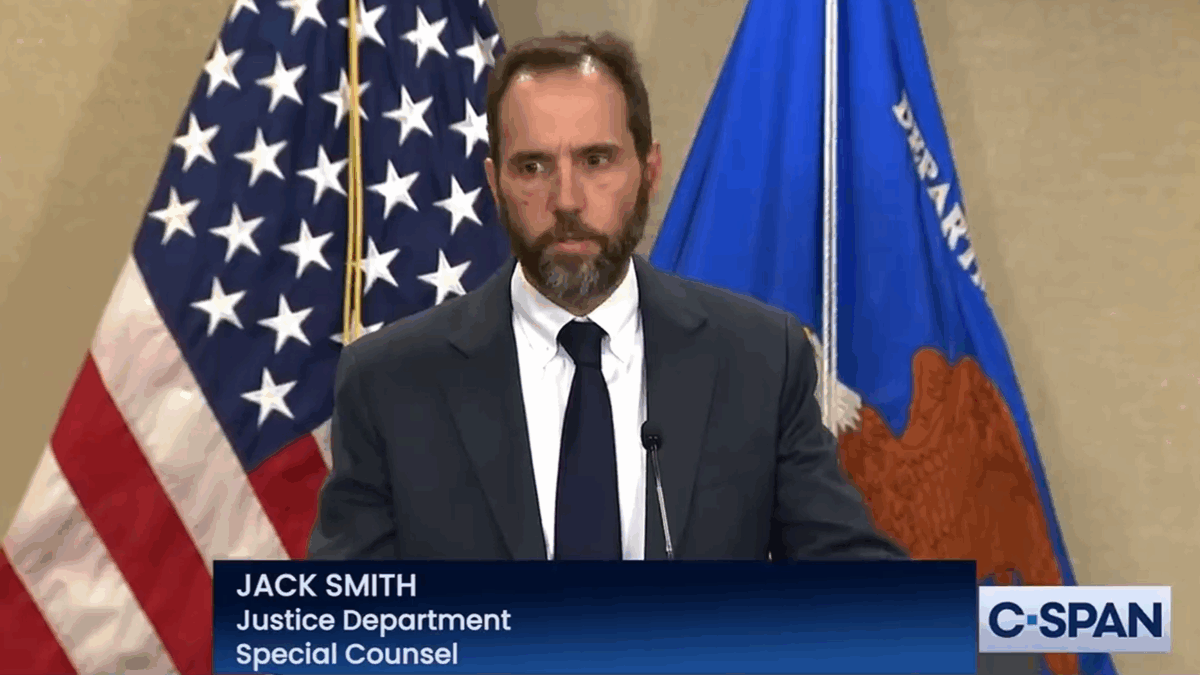
House Subpoenas Jack Smith Over ‘Brazen’ Arctic Frost Fishing Expedition Targeting Trump, GOP

Jordan's letter demanded Smith appear to testify on Dec. 17, and instructed the former special counsel to turn over documents by Dec. 12.
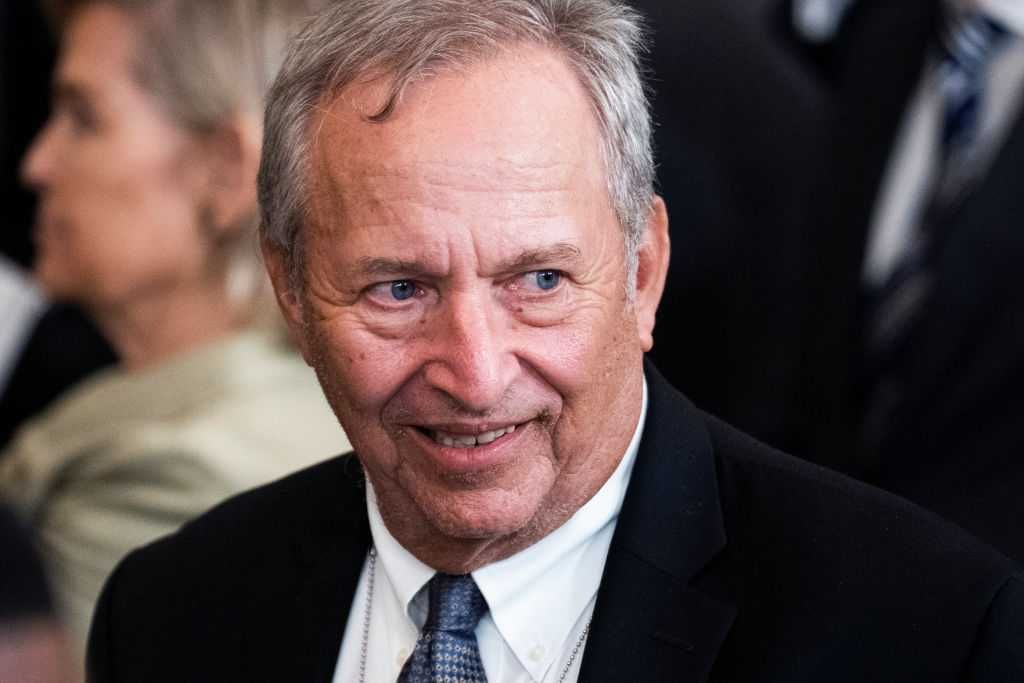
Epstein emails SHAME Obama/Clinton ally: Larry Summers quits public life amid calls for Harvard to cut ties


President Donald Trump directed the Justice Department and the FBI on Friday to "investigate Jeffrey Epstein's involvement and relationship with Bill Clinton, Larry Summers, Reid Hoffman, J.P. Morgan, Chase, and many other people and institutions, to determine what was going on with them, and him."

The order has clearly ruffled some feathers among some of the infamous sex offender's associates.

For instance, Hoffman, the co-founder of LinkedIn, claimed on X that the "calls for baseless investigations of me are nothing more than political persecution and slander. I was never a client of Epstein's and never had any engagement with him other than fundraising for MIT."

A spokesperson for Clinton told NBC News that the emails "prove Bill Clinton did nothing and knew nothing," adding that the "rest is noise meant to distract from election losses, backfiring shutdowns, and who knows what else."

JPMorganChase said in response to Trump's announcement, "We regret any association we had with the man, but did not help him commit his heinous acts. We ended our relationship with him years before his arrest on sex trafficking charges."

While some of Epstein's pen pals are proclaiming their supposed innocence, Summers, a Harvard professor who served as former President Barack Obama's top economic adviser and former President Bill Clinton's treasury secretary, has instead signaled regret and announced he is effectively going into hiding.

'She is doomed to be with you.'

"I am deeply ashamed of my actions and recognize the pain they have caused," Summers said in a statement on Monday. "I take full responsibility for my misguided decision to continue communicating with Mr. Epstein."

"While continuing to fulfill my teaching obligations, I will be stepping back from public commitments as one part of my broader effort to rebuild trust and repair relationships with the people closest to me," added Summers.

RELATED: Trump gives Republicans the green light on the Epstein files: 'I DON’T CARE!'

Photographer: Victor J. Blue/Bloomberg via Getty Images

The Economic Club of New York has reportedly postponed an event featuring Summers and the Center for American Progress, a liberal think tank with strong ties to the Democratic Party, and indicated on Monday that Summers has ended his fellowship with them.

Massachusetts Sen. Elizabeth Warren (D) has called on Harvard University to similarly cut ties with Summers.

Warren, another Democrat who has worked at Harvard as a professor, told CNN, "For decades, Larry Summers has demonstrated his attraction to serving the wealthy and well-connected, but his willingness to cozy up to a convicted sex offender demonstrates monumentally bad judgment."

"If he had so little ability to distance himself from Jeffrey Epstein even after all that was publicly known about Epstein’s sex offenses involving underage girls, then Summers cannot be trusted to advise our nation’s politicians, policymakers, and institutions — or teach a generation of students at Harvard or anywhere else," added Warren.

CNN indicated that Harvard had not responded to its requests for comment.

Among the over 20,000 pages of damning Epstein emails released by the House Oversight Committee last week were numerous messages between the dead sex trafficker and Summers, in many cases about women, politics, and projects linked to Harvard University, where Summers was president from 2001 to 2006.

While remorseful now that his correspondences have been published, Summers evidently had no issue gossiping with Epstein in the years following his 2008 felony conviction for solicitation of prostitution and solicitation of prostitution from a person under the age of 18. Summers apparently wrote to Epstein as late as July 5, 2019 — a day before Epstein was arrested on new federal charges of sex trafficking of minors and a month before he was found hanged in his prison cell.

The Harvard Crimson highlighted that in addition to apparently joking with Epstein about women being less intelligent than men, criticizing Harvard's admission of a black baby killer, and discussing the sex offender's donations to various initiatives, Summers also turned to Epstein for advice on romantic matters.

In a sequence of texts and emails between November 2018 and the eve of Epstein's July 2019 arrest, Summers reportedly pressed the convicted sex offender — who described himself as the Harvard professor's "wing man" — for advice about pursuing a woman he characterized as a mentee.

In one instance, Summers — who has been married to his second wife, Elisa New, since 2005 — reportedly forwarded Epstein an email from the object of his desire wherein she requested feedback for a paper.

Epstein, responding to Summers' suggestion that he should hold off on replying, wrote, "She's already begining [sic] to sound needy :) nice."

The Crimson noted that the woman Summers was attempting to seduce and referencing in a number of his messages with Epstein was Chinese economist Keyu Jin, a professor of finance at the Hong Kong University of Science and Technology who earned her Ph.D. at Harvard between 2000 and 2009.

Jin's father happens to be a former high-ranking Chinese Communist Party official with whom Summers was apparently quite close. In a letter dated Dec. 22, 2018, Jin thanked Summers for his support and for his support for her father's work. Her father, Jin Liquin, served as China's vice minister of finance and ran part of Beijing's imperialistic Belt and Road Initiative.

Summers forwarded the letter to Epstein, noting that he "sent a comment in mtg w her father flattering her father and saying other China officials had flattered him as well."

In the months that followed, both men continued to discuss Summers' relationship with the woman and joked about the Harvard professor's probability of having sex with her, even as their relationship was apparently petering out.

"She is doomed to be with you," Epstein wrote Summers in 2019, though the identity of the woman Epstein was referencing is unclear.

Like Blaze News? Bypass the censors, sign up for our newsletters, and get stories like this direct to your inbox. Sign up here!

Hint Of Russia Hoax Accountability: Anti-Weaponization Measure Passes House Intel Committee

The provision that passed HPSCI Wednesday requires the FBI to notify Congress of any investigations into federal candidates for office.