A caregiver’s Christmas

A Christmas or two ago, we arrived in Denver just after Thanksgiving for my wife’s long-awaited surgery — one of a series of complex procedures that could only be done at the teaching hospital there. The hospital was already dressed for the season, garlands hung and trees lit, but I barely noticed. All I could see was the next hurdle in a long medical journey.
After eight days in the ICU, Gracie was transferred to the neuro floor. I wanted her to feel something of Christmas, so I slipped out to a store and returned with a small tree, poinsettias, battery candles for the window, and stockings I hung by the nurses’ message board. A friend loaned me a keyboard, which I tucked into the corner. Music has steadied us through many storms, and I hoped it would do so again.
Christmas felt sharper there. Simpler. More honest. When life strips away what doesn’t matter, what does matter finally comes into view.
When the nurses wheeled her into that room, she entered a tiny Christmas world carved out of tile and fluorescent light. The cinnamon-scented broom was no match for the Montana pines behind our home, but it still brought a smile.
Gracie sometimes sang from her hospital bed as I played familiar carols. You’ll be relieved to know that when a staffer requested Mariah Carey’s “All I Want for Christmas,” I politely declined and stayed with the classics. Her song gets ample airplay as it is.
Learning the language of hospital life
I have been a caregiver for a long time. We have spent nearly every major holiday in a hospital, along with most minor ones — birthdays, anniversaries, and the days in between.
Hospitals, however harsh, have become familiar enough that they no longer disorient me. In the last three years alone, we spent nearly 11 months in that same Denver hospital over three difficult stretches. Over the decades, Gracie has been inpatient in 13 different hospitals. After that many years, you learn the rhythms, the noises, the hush, and the hidden grief of those hallways.
At night, before crossing the street to the extended-stay hotel where I lived during that long stretch, I often stopped at the grand piano in the massive lobby and played Christmas hymns. Patients and their families drifted nearby or stood quietly along the balcony with IV poles and wheelchairs. Their faces carried the loneliness, fear, and disbelief that appear when life tilts without warning. When I played “Silent Night,” you could see the change. Shoulders dropped. Eyes softened. A few wiped away tears.
We lived in Nashville for 35 years before moving to Montana, and the only time I felt a lump in my throat at that piano was when I played “Tennessee Christmas.” When I reached the line about Denver snow falling, it hit me harder than I expected. Being far from home — and yet exactly where we needed to be — settled heavily on me in that moment.
Spending Christmas Eve in a hospital is unlike any other day. For a few minutes that night, the music gave all of us a place to breathe. While I’ve grown somewhat used to that world, I could tell my impromptu audience had not. So I played for them.
Not home, but holy
Our youngest son flew in, and a close friend joined us for Christmas Eve. In that small room upstairs, we shared meals, prayed, and laughed through the kind of tears that form when joy and exhaustion sit side by side. It was not home, but it was holy.
On Christmas morning, we filled stockings, opened gifts, and played more music. To our surprise, that hospital Christmas became one of the most meaningful we’ve ever known. We have enjoyed plenty of postcard holidays in the Montana Rockies, with snowy woods and trees cut from behind our cabin. Yet none of those scenes compared to the quiet radiance of that hospital room.
RELATED: What we lose when we rush past pain
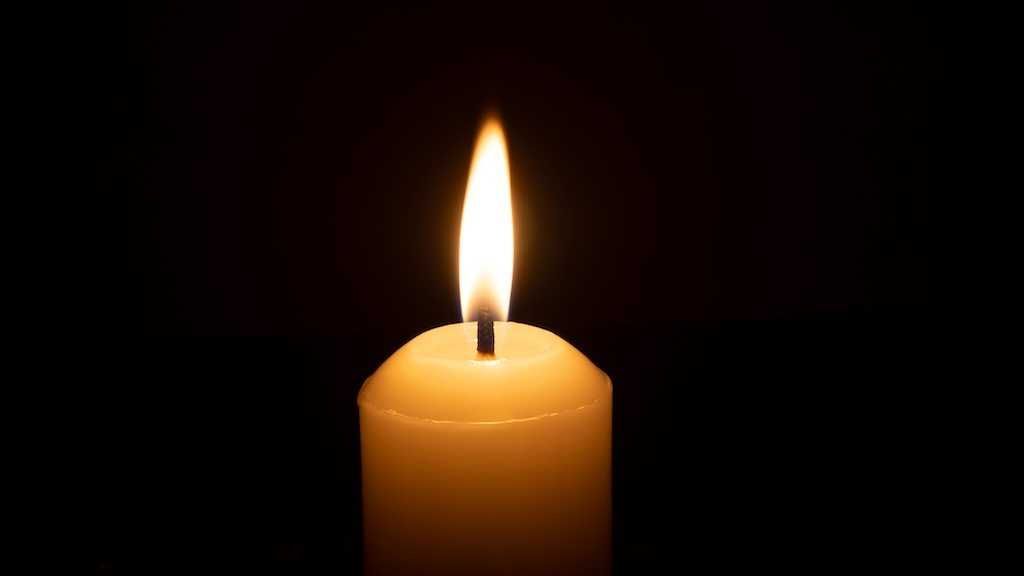
Christmas felt sharper there. Simpler. More honest. When life strips away what doesn’t matter, what does matter finally comes into view.
God stepped into a harsh world, not a perfect one. The first Christmas came in conditions far cruder than ours, yet Heaven filled that stable. That is the story we remember every year: Emmanuel — God with us.
I thought of that as I looked up from the piano in the lobby, seeing the sadness on the faces around me and those watching from above. It brought to mind the crowds Jesus saw when Scripture says He was “moved with compassion” for the afflicted. Unlike me, He did not merely observe sorrow. He stepped into it. He came to bear it, redeem it, and ultimately remove it.
The light that still shines
That night reminded me that the holiness of Christmas is not found in perfect scenes but in God drawing near to people who are hurting. Being in a hospital on Christmas Eve was a fitting picture of how needy we truly are — and how miraculous it is that Christ entered our sorrow, suffering, and loneliness. Emmanuel means God with us, not in theory, but in the raw places where we feel most alone.
I left Denver with a truth I needed to keep close: Joy does not depend on scenery. Any place can become a sanctuary when Christ is worshipped — even a hospital room where monitors beep and nurses whisper through the night.
If you’re facing a season you never would have chosen, may this Christmas meet you with that same comfort. The promise of Emmanuel — God with us — has not changed.
“Yet in thy dark streets shineth the everlasting light; the hopes and fears of all the years are met in thee tonight,” Phillips Brooks wrote in 1868, steadying his people with the truth that Christ walks into dark streets as readily as bright ones.

 Photo by Nathan Posner/Anadolu via Getty Images
 Biden's new rules threaten doctors who are not abortionists themselves, but who clean up the messes caused by those who illegally perform abortions.
 Several cases on the Supreme Court’s docket this term could rein in the administrative state, with potential implications for health care.
 It's tempting to shrug off the annoying pronoun questions from your doctor because they're not hurting you. That's where you'd be wrong.
 One woman had to watch her four-year-old being forcibly masked by nurses in hazmat suits during his first-ever asthma attack.
 www.theblaze.com
 www.theblaze.com