Penn State Law School Hit With Civil Rights Complaint Over ‘Antiracist’ Strategic Plan
Penn State Dickinson Law School on Monday was hit with a civil rights complaint over its "antiracist" strategic plan, which calls to expand "employment opportunities" for "underrepresented" groups.
The post Penn State Law School Hit With Civil Rights Complaint Over ‘Antiracist’ Strategic Plan appeared first on .
A Texas Military Vet Dropped Out of Penn State Law School Rather Than Submit to Its Mandatory Anti-Racism Course
David Blackman, a native of Plano, Texas, was thrilled to be starting law school at Penn State in the fall of 2025. A former 911 call operator and a veteran of the Texas State Guard, Blackman, 26, loved the university's football team and its location in the Appalachian Mountains. "I’ve been a fan of Penn State since I was a teenager," Blackman told the Washington Free Beacon. He arrived on campus in August 2025, a 50 percent merit scholarship in hand, excited for game nights in Beaver Stadium and a three-year reprieve from the Texas heat. Then he sat through his first anti-racism class.
The post A Texas Military Vet Dropped Out of Penn State Law School Rather Than Submit to Its Mandatory Anti-Racism Course appeared first on .
House Candidate Backed by AOC, Van Hollen Hails Cop-Killer Mumia Abu-Jamal as Black Freedom Fighter and Political Prisoner
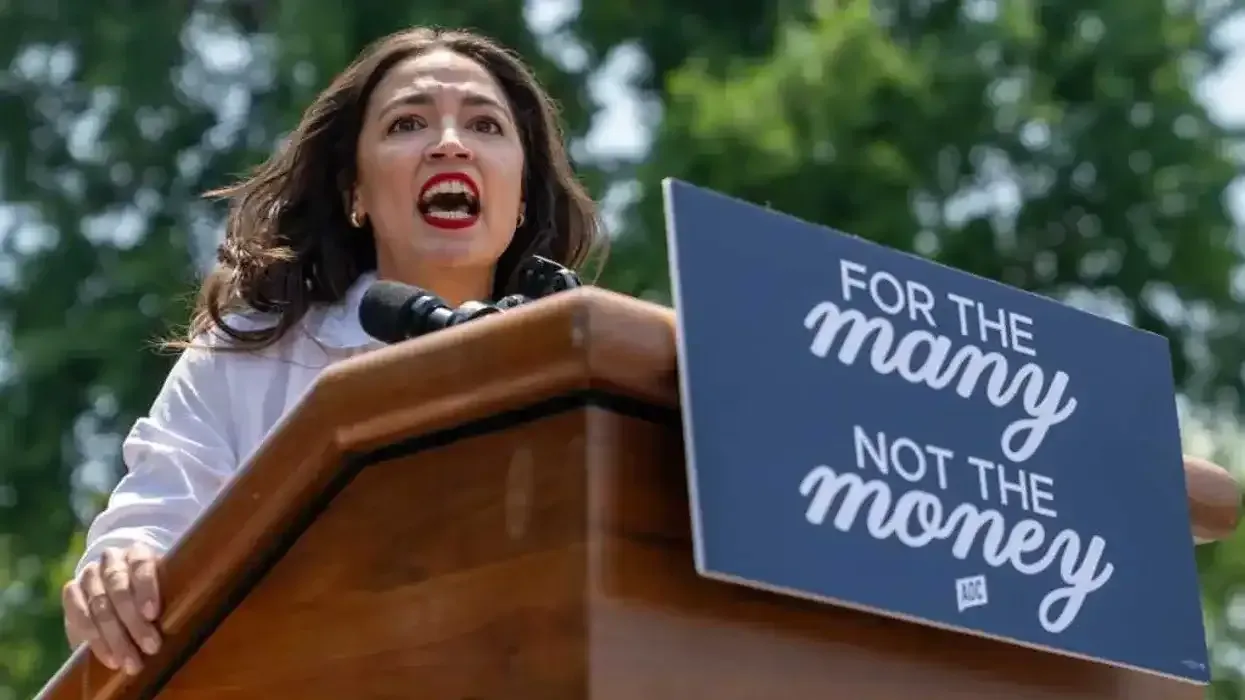
A Pennsylvania House candidate endorsed by Rep. Alexandria Ocasio-Cortez (D., N.Y.), Rep. Ro Khanna (D., Calif.), Sen. Chris Van Hollen (D., Md.), and other leading far-left figures has hailed notorious cop-killer Mumia Abu-Jamal as one of several "Black freedom fighters" and "elderly political prisoners" and called for his release from prison.
The post House Candidate Backed by AOC, Van Hollen Hails Cop-Killer Mumia Abu-Jamal as Black Freedom Fighter and Political Prisoner appeared first on .
Pennsylvania Supreme Court Justice Leaves Democratic Party
Pennsylvania Socialist With Real Shot At Winning District Votes Against Child Sex Abuse Bill Two Weeks Before Election
'Antiracist Critical Pedagogy': Penn State Law School's New Strategic Plan, Devoted to 'Antiracism,' Raises Legal Questions
In an internal planning document distributed to faculty last month, Pennsylvania's flagship law school promised to devote the entire institution to "antiracism," from recruitment and hiring decisions to research and classroom instruction. Penn State Dickinson Law said it would "recruit, retain, teach and research according to antiracist principles" and embrace an "antiracist critical pedagogy," according to a copy of the document obtained by the Washington Free Beacon.
The post 'Antiracist Critical Pedagogy': Penn State Law School's New Strategic Plan, Devoted to 'Antiracism,' Raises Legal Questions appeared first on .
The Pennsylvania Supreme Court's ballot decision is a step in the right direction

In its coverage of the Pennsylvania Supreme Court’s recent cast vote record decision, Democracy Docket framed the ruling as a dangerous victory for “election deniers” and claimed it gave a “DHS conspiracy theorist access to 2020 election data.”
That framing misses the central point of the case: The court did not authorize the exposure of anyone’s private vote. It allowed access to election records that help the public verify whether reported vote totals match recorded vote data.
In a republic, ballot secrecy protects the voter. Transparency protects the result. Both principles can coexist, and the Pennsylvania Supreme Court understood that.
Americans across the political spectrum have lost faith in election systems at different moments and for different reasons.
The court’s actual holding was straightforward: Cast vote records, or CVRs, are not the “contents of ballot boxes or voting machines” under Pennsylvania’s Election Code and therefore are not categorically exempt from public disclosure.
A CVR is not a physical ballot. It does not contain information about voters. It contains information about ballots — and ballots do not contain personally identifying information.
A properly configured CVR cannot link a ballot to a voter in a way that compromises ballot secrecy. In the Lycoming County system at issue, the data was randomized and did not contain personally identifying voter information.
The court explained that the CVR numbers do not correspond to the order in which voters checked in or cast ballots and that those randomization features “significantly decrease the likelihood” of identifying an individual vote. The court concluded that disclosure would allow the public to check the math without violating ballot secrecy.
There is a line of thinking that says a CVR can be kept from the public if there is some edge case where the voter behind a ballot could be reasonably guessed. What that argument misses is that ballot secrecy exists to protect voters from the state — not to protect the state from public scrutiny.
If a government builds or certifies a voting system that allows officials, vendors, or anyone else to identify which voter cast which ballot, the problem is not the citizen asking for public records and the remedy is not secrecy for the government. The remedy is fixing, randomizing, or decertifying the system.
If a county claims that it cannot disclose a CVR because the public could determine how individual voters voted by matching multiple records together, that should trigger an immediate and serious response from state election authorities.
A voting system that allows ballots to be connected back to voters is not merely inconvenient for public-records compliance. It is a direct threat to ballot secrecy.
Public access to CVRs is not about exposing voters. It is about allowing citizens to confirm that election totals add up. Bloomberg Law captured the ruling more accurately: Pennsylvanians may review raw voting records to ensure elections are accurate; the court said disclosure promotes trust, confidence, and legitimacy without violating voter secrecy law.
Americans across the political spectrum have lost faith in election systems at different moments and for different reasons. In September 2024, Gallup found that only 57% of Americans were confident that presidential votes would be accurately cast and counted nationwide, with a massive partisan gap: 84% of Democrats expressed confidence, compared with only 28% of Republicans.
After the 2024 election, AP-NORC found that about six in 10 Americans believed the presidential vote was counted accurately nationwide, while independents remained notably less confident.
In April 2026, Reuters/Ipsos found sharp partisan divides on election fraud beliefs, while also finding that majorities of both Democrats and Republicans remained confident their own ballots would be counted.
This is not a one-party problem. Republicans have raised concerns about mail ballots, voter rolls, citizenship verification, ballot harvesting, and machine tabulation. Democrats, too, have raised serious concerns about election technology when the perceived threat came from foreign interference or insecure electronic systems.
RELATED: The FBI should get a warrant before reading your messages

After the 2016 election, the Clinton campaign joined recount efforts in key states, with Marc Elias writing that the campaign had examined allegations involving hacking, outside interference, and voting technology.
In the years that followed, prominent Democrats pushed aggressively for paper ballots, audits, and replacement of insecure voting machines. Oregon Democratic Sen. Ron Wyden’s PAVE Act, backed by Democratic senators, including Elizabeth Warren (Mass.), Cory Booker (N.J.), Kamala Harris (Calif.), Tammy Baldwin (Wisc.), Kirsten Gillibrand (N.Y.), and others, would have mandated hand-marked paper ballots and risk-limiting audits in federal elections.
Let’s be honest: Concern about election technology was not invented in 2020. Democrats were warning about electronic voting systems, paperless machines, hacking, and public confidence long before the current fight over CVRs.
In the case of Pennsylvania, election researcher Heather Honey asked a basic question: Can the public inspect the data necessary to verify the count? The Pennsylvania Supreme Court answered yes, subject to the election code and subject to the protection of ballot secrecy. That should be an easy win for anyone who claims to care about democracy.
Instead, Democracy Docket labeled Honey a “conspiracy theorist” and portrayed the ruling as a victory for sinister forces. But the court did not adopt a conspiracy theory. It adopted a transparency principle. In fact, the court said disclosure promotes “fair, honest, and transparent elections.”
I know Heather Honey as a hard-working, dedicated patriot, a wonderful person, and a loving parent. Her biggest personal failing, as far as I can tell, is that she is a Philadelphia Eagles fan — a burden no court can remedy.
The attack on Heather Honey is totally misplaced. If Democracy Docket disagrees with the legal reasoning, it should argue the law. If it believes certain CVR formats in certain counties could threaten secrecy, then the correct response is not to smear citizens who request public records.
RELATED: Age verification laws do not make us safer

The correct response is to demand voting systems that protect ballot secrecy by design: randomized ballot records, standardized public CVR formats, and certification standards that make it impossible to connect a ballot back to a voter.
Marc Elias, the founder of Democracy Docket, has built a platform devoted to voting rights and election litigation. He knows better than most that election legitimacy depends not only on access to the ballot, but on public confidence that lawful votes are accurately counted.
CVR transparency is one way to earn it. It does not reveal who someone voted for or publish private voter choices. Properly handled, it lets citizens, researchers, journalists, campaigns, and watchdogs compare reported totals against underlying tabulation records. It is a public audit trail.
And if any county says its CVRs cannot be disclosed because the records would allow ballots to be matched back to voters, then the public-records request is not the scandal. The voting system is.
Democracy does not become weaker when citizens can verify government math. It becomes stronger.
So Democracy Docket should correct its framing, and Marc Elias should leave Heather Honey alone. She is simply defending one of democracy’s oldest and most important rules:
Trust the voters. Protect the secret ballot. And let the people check the math.
'Nonviolent' leftist allegedly calls for murdering Trump days after third assassination attempt

A Pennsylvania man has been arrested after allegedly leaving a series of voicemails calling for the murder of President Donald Trump and other officials.
Raymond Chandler of the Pittsburgh-area city of Wilkinsburg appeared in federal court on Friday on charges of influencing, impeding, or retaliating against a federal official by threatening a family member and by threatening a federal official and influencing, impeding, or retaliating against a federal official by threat, according to WTAE.
'He’s a liar among all liars. He’s a great deceiver. He’s the antichrist.'
An FBI affidavit claimed that Chandler left several threatening voicemail messages with a member of Congress between April 2025 and April 2026.
Last Wednesday, just days after a third assassination attempt against Trump, Chandler allegedly told the congressperson regarding President Trump:
What I want you to do is I want you to take a firearm. I want you to put it in your hand. I want you to walk into the Oval Office. I want you to put that firearm to the president’s head, and I want you to pull the trigger and I want you to kill him. I am petitioning you, Senator, for redress of grievances. My redress of grievances is that this president is awful. ... He’s a liar among all liars. He’s a great deceiver. He’s the antichrist. I want you to walk into the Oval Office with a gun in your hand. I want you to put it to his temple, and I want you to pull the trigger. That is what I want you to do as my agent. That’s what I want you to do as my elected official. That’s what I am petitioning you to do with my free speech. I want you to kill the president. I want you to assassinate the president. That’s what I want you to do. Now, Senator, are you gonna come after me? Are you going to try me because of my voice and what I said?
On April 18, Chandler also allegedly said of the congressperson and the congressperson's daughter:
Imagine your house, your daughter’s house, everyone you know and love who is also rich. Imagine every single one of those homes being surrounded by a thousand people. Then imagine them all getting a text and then, then suddenly taking out their pocketknives, walking slowly towards your house with 10, you got your 10 guards or whatever against a thousand people, and then they come and they pull you out of your house and they slit your throat and they slit your daughter’s throat and they slit everyone’s throat. That you know, sir, that is the future.
The speaker allegedly added:
It's not a future I want; it's not a future I'm advocating for, but wealth concentration has gotten so bad in this country. The greed has gotten so bad. People are suffering so much, sir, that that is what is in our future. You will not escape their wrath. We must redistribute the wealth away from people like you.
In another alleged message, the suspect pledged to build gallows and hang the congressperson, who is not named in the FBI affidavit. Other alleged voicemails made threats against ICE and expressed a willingness to "personally kill."
RELATED: Suspected WHCD shooter snapped damning photo moments before the attack, court docs reveal
The affidavit claimed the caller identified himself as Chandler and gave his address. The phone number associated with the calls was directly linked to Chandler via "publicly available information," the affidavit further claimed.
Chandler is scheduled to appear for a preliminary hearing on Friday.
On Friday, WTAE reported the following FBI statement:
This morning, FBI Pittsburgh and the U.S. Secret Service arrested Raymond Chandler for threatening to kill federal officials, including President Trump and a member of Congress. The FBI will not tolerate threats of violence and will work tirelessly to protect public officials and all members of our communities. This arrest is a great example of our work with our law enforcement partners at the USSS, the U.S Capitol Police, and the United States Attorney’s Office for the Western District of Pennsylvania.
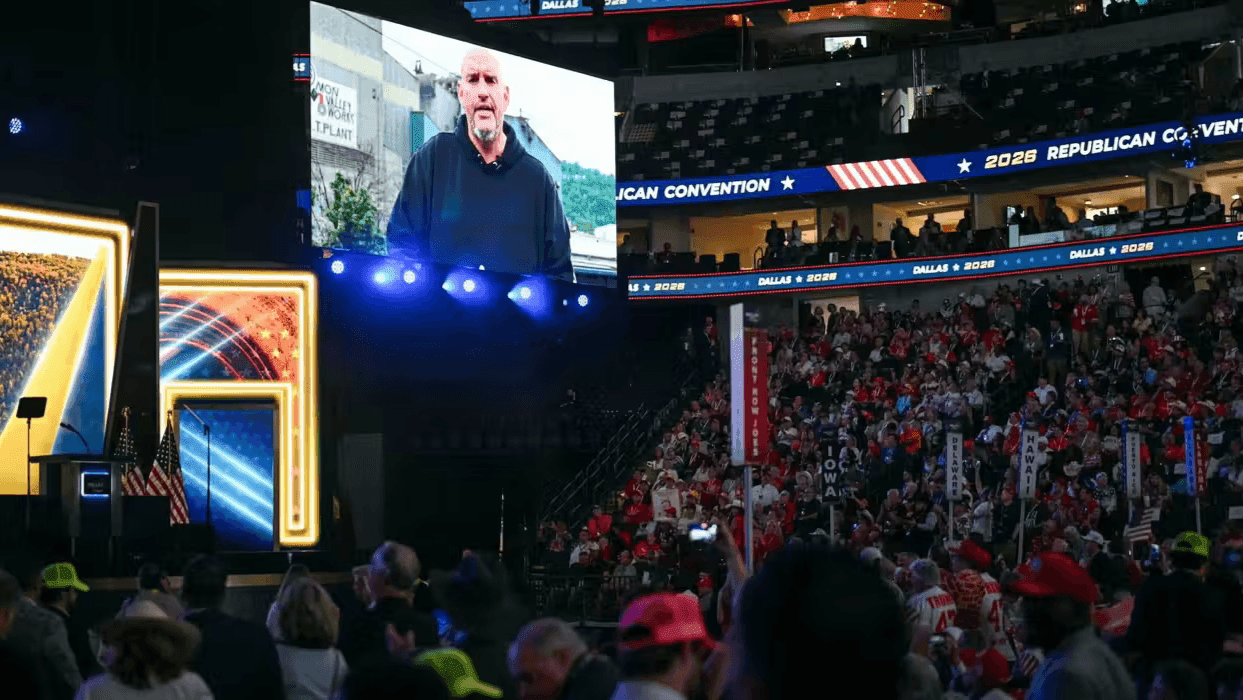
Chandler is running against incumbent U.S. Sen. John Fetterman (D-Pa.) in 2028. On his campaign website, Chandler promises to tax billionaires, provide universal basic income, "abolish ICE," and protect abortion.
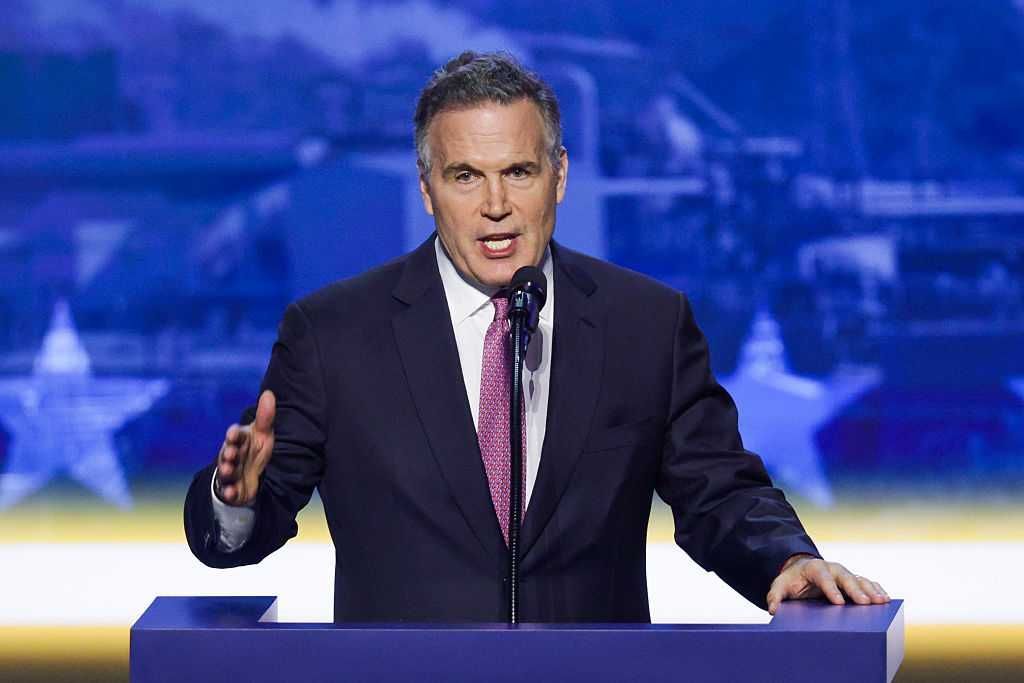
In an open letter to Sen. Dave McCormick (R-Pa.) featured on his website, Chandler describes himself as "a Quaker" with "a commitment to non-violence." He also chastises McCormick because his "voicemail is wayyy to [sic] short."
Chandler's campaign did not respond to a request for comment from Blaze News.
Like Blaze News? Bypass the censors, sign up for our newsletters, and get stories like this direct to your inbox. Sign up here!
Dem House Candidate Paige Cognetti Owns Secret Second Home at ‘Fairy Tale’ Ski Resort
Scranton, Pa., mayor Paige Cognetti (D.) is running for Congress on a platform of "transparency" and as a working class champion, hammering her Republican opponent in Pennsylvania’s Eighth Congressional District for owning a "secret helicopter." But Cognetti has secret assets of her own that she has not publicly disclosed.
The post Dem House Candidate Paige Cognetti Owns Secret Second Home at ‘Fairy Tale’ Ski Resort appeared first on .