Democrats Still Don’t Know What a Woman Is

Democrats are still struggling to define the word "woman." Axios recently asked the Democratic politicians most likely to run for president in 2028 a few basic questions about so-called transgender issues, including, "Can a man become a woman?" Nearly all of them declined to comment or failed to respond.

The post Democrats Still Don’t Know What a Woman Is appeared first on .

Biden said $5 gas was inevitable. Biden was wrong.


When gasoline surged past $5 a gallon in 2022, the impact landed on every household, every small business, and every industry that depends on transportation — which is to say, nearly all of them.

Families were reshuffling budgets, truckers were adding unavoidable surcharges, and businesses were raising prices simply to stay afloat.

It remains true that no president controls gas prices outright. But federal policy does shape how quickly American energy can be produced, moved, and delivered.

At the same time, Americans were told that there was little anyone in Washington could do to ease the burden. The message stayed the same for months: Global forces were responsible, and there was no quick fix for the pain drivers were feeling at the pump.

Yet while families struggled with the highest fuel prices ever recorded — a national average of $5.02 per gallon — the federal government was encouraging Americans to buy electric vehicles costing between $50,000 and $70,000.

All pain, no gain

Transportation officials suggested that the “more pain” people felt from gasoline prices, the more attractive EVs would become. Energy officials repeated that an electric car was the fastest way for families to reduce their gas bills to zero. For most households, though, the math just didn’t work. The average new EV price in 2022 was $66,000 according to Kelley Blue Book, while the median U.S. household income was around $74,000. A new electric car was not an immediate or practical solution.

Meanwhile, federal actions during those early years reflected a shift away from domestic oil development. The Keystone XL pipeline permit was canceled on day one, new federal oil and gas leasing was paused, existing Arctic leases were withdrawn, and a record 180 million barrels were released from the Strategic Petroleum Reserve. Drilling permits decreased, and U.S. oil production fell below 2020 levels despite growing demand. Those choices — combined with refinery constraints and global volatility — kept domestic supply from growing at the pace needed to bring relief.

Supply high

The landscape looks very different today. By late 2025, U.S. energy production had expanded significantly. Federal lands reopened for leasing, permitting became faster, and producers were able to meet more of the country’s energy needs. American crude oil production climbed to an all-time high of 13.4 million barrels per day, and the number of active drilling rigs rose substantially from pandemic-era lows. More supply began moving through the system, helping stabilize markets that had been strained for years.

The results are unmistakable. The national average for regular gasoline sits near $3 per gallon — roughly 40% lower than the 2022 peak. Eighteen states now have average prices below $2.75. These aren’t isolated discounts; they are widespread indicators of stronger supply and more balanced market conditions.

RELATED: America First energy policy is paying off at the pump

Photo by Brandon Bell/Getty Images

Where the rubber meets the road

It remains true that no president controls gas prices outright. Global crude markets, refinery operations, seasonal demand, transportation costs, and taxes all influence what drivers pay. But federal policy does shape how quickly American energy can be produced, moved, and delivered. When supply is constrained, prices rise. When supply grows, prices ease. The past three years have demonstrated this in real time.

The contrast between the experience of 2022 and the reality of 2025 underscores a simple point: Energy policy affects everyday life in immediate, measurable ways. It determines what families pay to commute, what businesses spend to operate, and what consumers pay for goods delivered across the country. It is not theoretical. It shows up every time someone fills a gas tank.

For millions of Americans now seeing sub-$3 gasoline again, the numbers tell the story more clearly than any political argument.

Trump TORCHES Biden-Buttigieg EPA rules


Washington rarely admits when policy has failed. But earlier this month, the White House stepped back from more than a decade of regulations that drove car prices to record highs, limited consumer choice, and tried to force an industry to move faster than technology, infrastructure, or American families could manage.

With the unveiling of the Freedom Means Affordable Cars proposal, President Donald Trump and Transportation Secretary Sean Duffy signaled a dramatic shift in national auto policy — one aimed at making car ownership attainable again for millions priced out of the market.

The Biden-Buttigieg standards were projected to generate $14 billion in compliance fines between 2027 and 2032, costs manufacturers said would be passed directly to buyers.

The timing is critical. New vehicle prices topped $50,000 this fall, while average monthly payments approached $750. Families are keeping cars longer than ever, pushing the average age of the U.S. fleet to record levels. As Washington pushed electric vehicles, consumers pushed back: EV demand stalled, rejection rates soared, and buyers continued to favor affordable gas and hybrid vehicles. That tension has been building for years, and the December 3 announcement marked the most direct challenge yet to the regulatory regime behind it.

Trump’s proposal resets National Highway Traffic Safety Administration fuel-economy rules, reversing Biden-era targets that aimed to push the fleet toward roughly 50 mpg.

Closing the 'back door'

Under the new plan, Corporate Average Fuel Economy standards return to 34.5 mpg — levels last seen in the late 2000s — with future increases scaled back to what Congress originally envisioned. The administration projects up to $109 billion in savings over five years and roughly $1,000 off the average new car. Whether those figures hold, the philosophical shift is clear: ending what the White House calls a backdoor EV mandate.

For years, automakers warned privately that the prior rules forced them to build vehicles customers didn’t want simply to avoid massive penalties. The Biden-Buttigieg standards were projected to generate $14 billion in compliance fines between 2027 and 2032, costs manufacturers said would be passed directly to buyers. Aligning federal rules with California’s stricter standards further nudged companies toward EVs even as demand weakened. CAFE was never meant to reshape the marketplace — but that is how it was being used.

The consequences were stark. Billions were poured into EV-charging initiatives with little to show for it; $5 trillion was allocated, yet only 11 stations were built nationwide. California faced rolling blackouts with EVs still just 2.3% of vehicles on the road. Experts warned that even 10% EV adoption would strain the grid under current infrastructure. Meanwhile buyers who didn’t want EVs — still the majority — faced fewer choices and higher prices.

Attracting investment

The Trump reset aims to reverse course. Automakers quickly announced new domestic investments. Stellantis committed $13 billion to expand U.S. manufacturing, including Jeep, Dodge, Ram, and Chrysler. Ford pledged $5 billion for American facilities, noting that 80% of its vehicles are already made domestically. General Motors announced $4 billion to bring production back from Mexico while retooling plants for broader consumer demand. Even the United Auto Workers offered support, citing increased U.S. jobs and domestic production.

The plan also includes a tax change backed by the National Auto Dealers Association, allowing buyers to deduct interest on American-built vehicles. At a time when many families are locked out of the new-car market, the measure offers practical relief while encouraging domestic manufacturing.

Less noticed — but equally important — was the Congressional Review Act action that eliminated California’s special emissions waivers. Signed in June 2025, those resolutions dismantled the structure that allowed California to dictate national vehicle policy, ending the EV mandate embedded in federal regulations and clearing the way for this shift.

RELATED: Duffy threatens funding freeze for 3 states flouting English requirements for truck drivers

Secretary of Transportation Sean Duffy. Photographer: Eric Lee/Bloomberg via Getty Images

Not far enough?

Some analysts argue the rollback doesn’t go far enough. As long as CAFE exists — at any target — it remains vulnerable to political swings. They contend emissions should be regulated directly through the EPA, leaving the market to determine the mix of gas, hybrid, and electric vehicles. This view is gaining traction among critics who say CAFE no longer reflects consumer demand or technological reality.

Even Republican Sen. Bernie Moreno of Ohio weighed in, calling the forced EV pivot “irrational policy” that benefits China. China controls roughly 80% of EV battery minerals and most related mining, while the U.S. holds the world’s largest proven oil reserves. Moreno’s argument is blunt: America weakened its own manufacturing base by adopting policies that played to China’s strengths.

Sales data reinforces the point. EVs made up about 6% of new vehicle sales in November 2025, with rejection rates near 70% due to cost, charging gaps, range limits, insurance, and cold-weather performance. EVs still account for just 2.3% of vehicles on U.S. roads. The demand Washington expected never materialized.

The new policy reflects those realities. It restores balance to an industry pushed into transformation without consumer support or infrastructure readiness. Automakers will still build EVs and hybrids and pursue new technologies — but consumers will decide the pace, not regulators.

For the first time in years, drivers may again see affordability, variety, and genuine choice. Fuel-economy rules will remain contested, but the Freedom Means Affordable Cars plan marks the most significant shift in auto policy in over a decade.

For millions of Americans priced out of the market, that change alone is long overdue.

Abigail Spanberger Wins Virginia’s Gubernatorial Race After Bruising Campaign

Former Virginia congresswoman Abigail Spanberger (D.) secured victory over lieutenant governor Winsome Earle-Sears (R.) in the Old Dominion’s gubernatorial race. The result, though expected, came at a cost for Spanberger, who struggled to answer questions on transgender issues and faced criticism late in the race for standing by her party's disgraced attorney general nominee, Jay Jones.

The post Abigail Spanberger Wins Virginia’s Gubernatorial Race After Bruising Campaign appeared first on .

Trump Appears Likely To Overhaul Presidential Bunker During White House Renovation

President Donald Trump’s sweeping renovation of the White House, a hotspot of outrage for his detractors, may potentially include one of the most secure facilities of the U.S. government. Trump is temporarily demolishing the White House’s East Wing — which his administration eventually plans to rebuild and modernize — to construct The White House State […]

Bill Nye, Pete Buttigieg rally for Democrat who stands by candidate who wished death on GOP lawmaker's kids


After refusing to call on Virginia attorney general candidate Jay Jones to drop out of the race over a text message scandal, Democratic gubernatorial candidate Abigail Spanberger is hoping to boost her odds with a Tuesday campaign event featuring two familiar names.

Bill Nye "the Science Guy" and Biden Transportation Secretary Pete Buttigieg were scheduled to join Spanberger on Tuesday for her rally in Charlottesville, according to Fox News Digital. Buttigieg and Spanberger will host a "Virtual Coalitions All Call" on Tuesday evening.

'I made clear to Jay that he must fully take responsibility for his words.'

Former President Barack Obama, who endorsed Spanberger last week, will attend her Norfolk rally on November 1, her campaign website states.

"Virginia's elections are some of the most important in the country this year, and I am proud to endorse Abigail Spanberger for governor. Republican policies are raising costs on working families so billionaires can get massive tax cuts," Obama stated. "As governor, Abigail will stand up for Virginia families. She'll work to build an economy that works for everyone, not just big corporations and the wealthy."

Nye attended a No Kings event in D.C. over the weekend. During his speech, he criticized President Donald Trump.

"We are here to tell our lawmakers that what's going on in our government is wrong. They must stop the abuses of this petulant president and his circle of sycophants," Nye said.

"This president and his associates cannot tolerate dissent. To them, our free speech is frightening. They are arresting people and denying due process in courts," he continued.

RELATED: Democrat Jay Jones cancels fundraiser amid growing backlash over violent texts about GOP rival and his kids

Photo by Win McNamee/Getty Images

Spanberger's high-profile endorsements follow a public relations scandal that Virginia Democrats have attempted to downplay. In a leaked text message exchange from 2022, Jones, a former Virginia delegate, wished death upon a Republican lawmaker and his children.

In the texts, Jones presented a hypothetical scenario in which he would choose to use "two bullets" to shoot then-House Speaker Todd Gilbert (R), if given the choice between Gilbert, Adolf Hitler, and Pol Pot. He also accused Gilbert and his wife of "breeding little fascists" and wished harm on their children.

RELATED: VIDEO: Earle-Sears crushes Democratic candidate over death-wish texts during gubernatorial debate

Abigail Spanberger. Photo by Chip Somodevilla/Getty Images

Spanberger released a statement condemning Jones' violent comments but stopped short of calling for him to end his campaign. Instead, Spanberger continues to host events sponsored by her campaign and those of Jones and Democratic nominee for lieutenant governor Ghazala Hashmi.

"After learning of these comments earlier today, I spoke frankly with Jay about my disgust with what he had said and texted," Spanberger stated. "I made clear to Jay that he must fully take responsibility for his words. What I have also made clear is that as a candidate — and the next governor of our commonwealth — I will always condemn violent language in our politics."

As of Tuesday evening, no Democrats have called on Jones to step out of the race.

Like Blaze News? Bypass the censors, sign up for our newsletters, and get stories like this direct to your inbox. Sign up here!

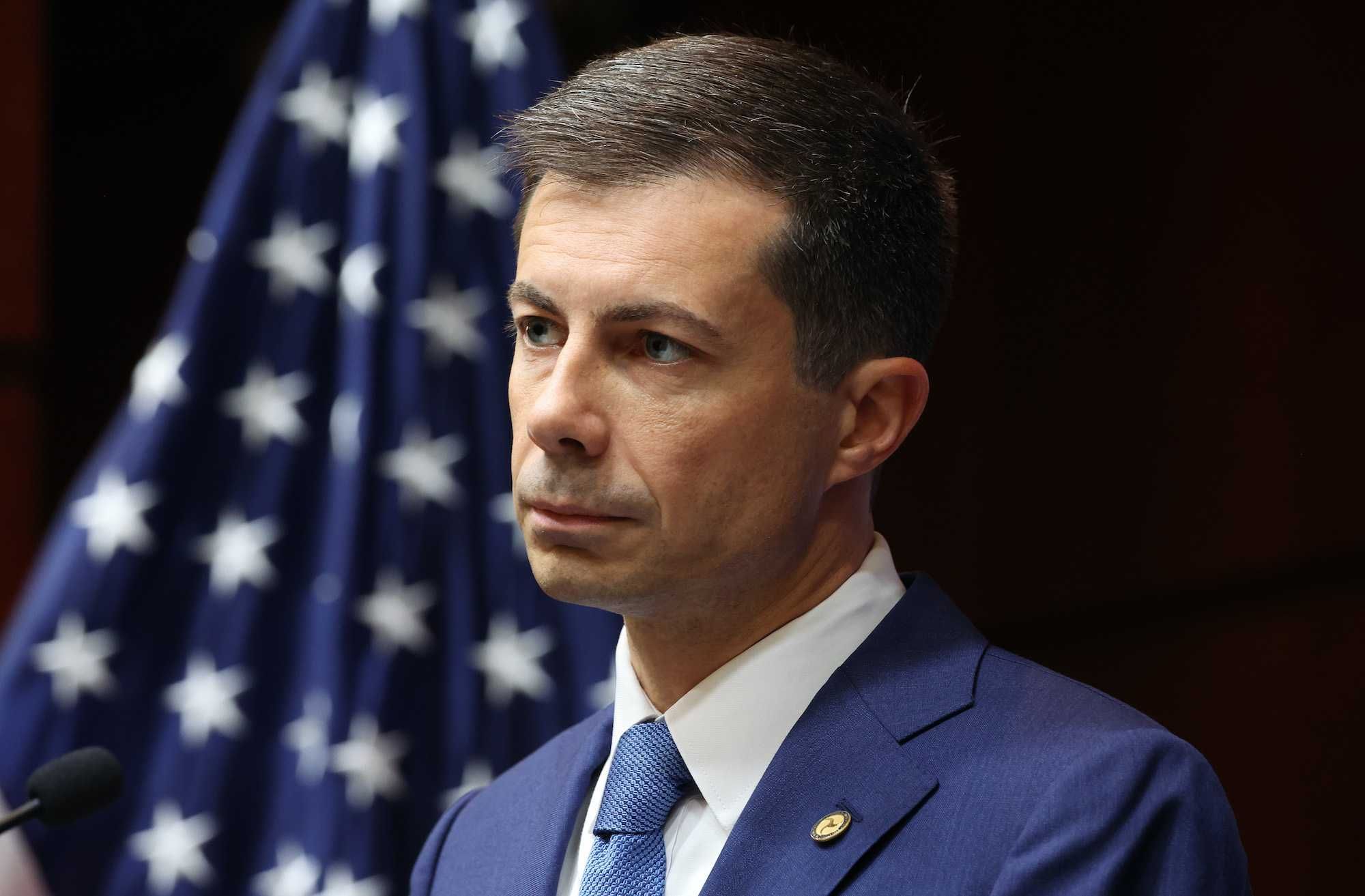
Pete Buttigieg TOO GAY to be vice president according to Kamala Harris


Former Democrat presidential candidate Kamala Harris said the quiet part out loud when she wrote in her new book, "107 Days," that her first choice for a vice presidential candidate in the 2024 election was not Tim Walz — but Pete Buttigieg.

And not only did she admit that Walz was not her first choice, but that she didn’t pick Buttigieg as her running mate because he is gay.

MSNBC’s Rachel Maddow, who is gay, sat down with Harris for an interview and put her in the hot seat over her decision.

“I guess I’d ask you to just elaborate on that a little bit. It’s hard to hear with you running, as you know, you’re the first woman elected vice president, you’re a black woman and a South Asian woman elected to high office, very nearly elected president. To say that he couldn’t be on the ticket effectively because he was gay is hard to hear,” Maddow said, disappointed.


“No, no, no, that’s not what I said, that he couldn’t be on the ticket because he is gay,” Harris responded, before trying to explain herself.

“To be a black woman running for president of the United States and as a vice presidential running mate, a gay man, with the stakes being so high, it made me very sad, but I also realized it would be a real risk, no matter how, you know, I’ve been an advocate and an ally of the LGBT community my entire life,” she said.

BlazeTV host Liz Wheeler is floored.

“Imagine if this were a Republican saying what Kamala Harris just said. Imagine if a Republican went on cable news after having lost the presidential election,” Wheeler says.

“Imagine if a Republican said, ‘Actually, my first choice for vice presidential running mate, I decided against because he was gay.’ The left’s heads would explode. They would be screeching and screaming melting down like the wicked witch of the West, calling that Republican a bigot, a hateful homophobic bigot,” she continues.

And instead of admitting that she didn’t choose Buttigieg because he’s gay, she laid the blame at the feet of Americans who wouldn’t vote for him.

“Kamala Harris, her answer, she said she didn’t disqualify Pete Buttigieg because he’s gay, because she’s personally prejudiced. She disqualified — she decided not to choose him because he’s gay because you’re prejudiced,” Wheeler says.

“She didn’t have time to contend with the homophobic masses. She didn’t have time to re-educate the Christians, the terrible, hateful Christians who hate Pete Buttigieg because he’s gay,” she continues, adding, “She’s dripping with disdain for you, but she’s above board.”

Want more from Liz Wheeler?

To enjoy more of Liz’s based commentary, subscribe to BlazeTV — the largest multi-platform network of voices who love America, defend the Constitution, and live the American dream.