Dolly Parton Wrote America’s Best Love Song
 “I Will Always Love You” isn’t just her most popular song; it’s her best. And it’s one of our best too. Life treated her kind.
Let us give thanks to America’s ultra-rich from a bygone era. Without them, our world would be poorer in beauty.
That sounds like I’m making a joke, doesn’t it? The received opinion in America today is that the ultra-wealthy are slavering predators bent on “capitalisming” poor Gen Z coffee shop employees into penury.
That’s one of the best parts about the Shelburne Museum — very little is behind velvet ropes.
Well, I’m not joking, and the received opinion is baloney.
Whereas the anti-wealth advocates generally make their points by taking to the streets and screaming like lunatics, I'm going to try a different approach. I trust you'll find it more pleasant.
Allow me to take you on a short tour of one of the finest civic legacies bestowed upon my state of Vermont: the Shelburne Museum. I hope this product of one socialite's generosity inspires you to see what treasures may have been bequeathed to your town by a philanthropist of old.
I thank God for the ultra-rich of the past who practiced the lost art of noblesse oblige. Scottish-American industrialist Andrew Carnegie built more than 1,600 public libraries in the U.S. alone. Your town may have one. You know them by their quality, their gracious architecture, their built-in hardwood book cases and grand stairs.
Compare a Carnegie library to a modern concrete, glass, and steel monstrosity such as the Seattle Public Library.
Vermonters have Electra Havemeyer Webb to thank for the idyllic paradise on the shores of Lake Champlain called the Shelburne Museum. The 45-acre property has 30 buildings, one of the last steamships to ply the lake, a preserved general store and apothecary, and more. The footpath through the property is about a mile, and it takes you through rolling hills dotted with original buildings from the colonial era through the 19th century.
I imagine that it’s a bit like the Queen’s Hamlet at Versailles. Marie Antoinette constructed a working toy village at a short distance from the main palace, an idealized country village with a mill, a dairy, and charming bridges over streams. She liked to retreat from the frenetic court, and she used the Hamlet as a sort of proto-Montessori school to teach her children.
The Shelburne Museum is like an American version. All the old buildings are actually old buildings, not replicas. Most were transported to the museum grounds from other parts of Vermont and New England.
As you walk by the original saltbox-style house from the 1700s, you see the town jail built in stone on the other side of the path. It’s just two cells with doors of iron bars, but at least they gave the prisoners (likely just the town drunks) a stove for winter heat.

Up the path a bit you’ll find a working printshop that still uses an old Heidelberg press. The docents will ink up plates and press flyers right in front of you to show how events were advertised and how news was printed for distribution before the digital age, all on working antique machines.

Heiress to a sugar refining fortune, Webb was raised among the upper crust of New York City and taught to appreciate high European culture. But at a young age it was American craft that caught her eye. She devoted her time and fortune to amassing a vast collection of early American antiques, art, and everyday objects. By founding the museum in 1947, she opened that collection to the people of Vermont.
What she left is a true gift in the best philanthropic spirit of America’s old money. Mrs. Webb saved one of the last steamships to traverse Lake Champlain and had it hauled by rail onto dry land to be preserved. If you’re ever in town, bring your kids. Imagine the sense of magical whimsy when you crest a hill and see a 19th-century steamship over the horizon.

Go aboard, and find yourself immersed in Edwardian splendor. This is what travel used to look like.
See those chairs? You can sit in them. That’s one of the best parts about the Shelburne Museum — very little is behind velvet ropes. You get to touch most things, and you get to watch old machines come to life and do the job for which they were built.

The place is a paradise for boys who love mechanical toys. Go downstairs below the waterline, and you’re next to the towering vertical beam steam engine that turned the red paddle wheels and propelled the Ticonderoga at a brisk-for-the-time 17 miles per hour.

RELATED: Kerosene lamps: Your escape from the sickly glare of LEDs
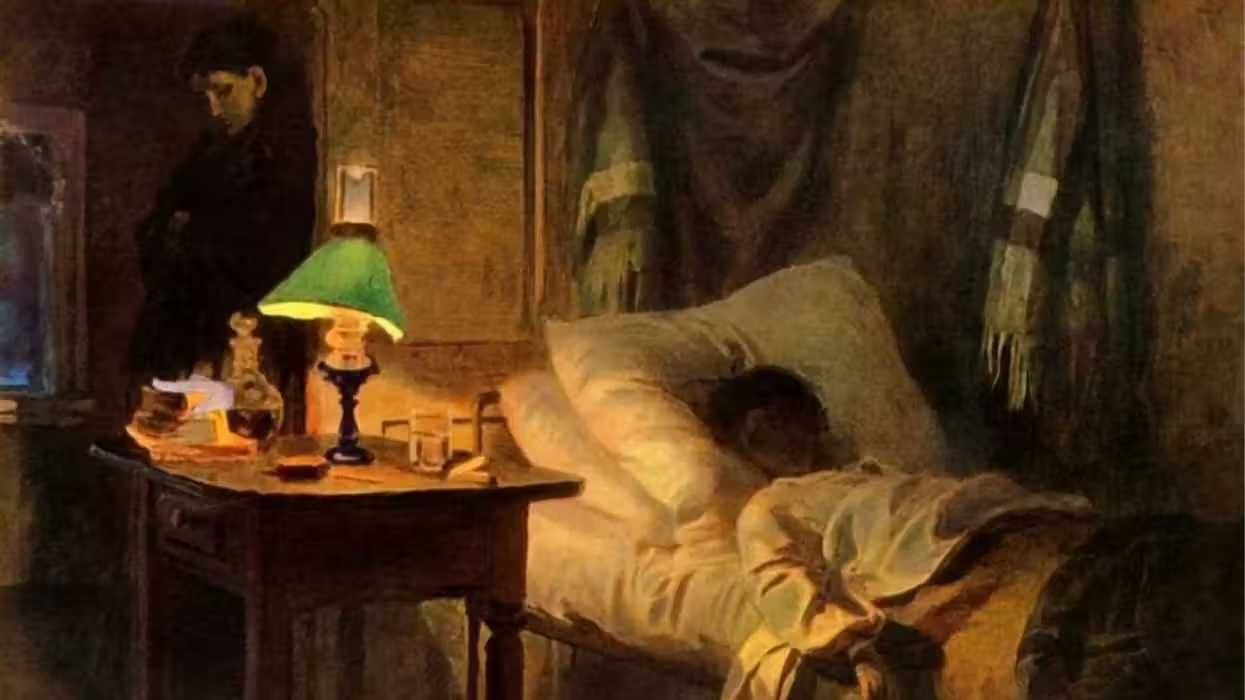
Let’s walk on to the general store. Again, this is no twee recreation of Ye Olde Time Store.
It’s a real general store, and everything inside it is from the period. The enormous cast iron stove sits in the middle of the room. On either side are goods behind the counter: tobacco, canned vegetables, molasses from a barrel, hardtack for the sailors.

The docent, a gentleman in his 80s in natty tweed, conducted me to the back room where the barber shop is preserved. Beyond that is the small tavern room where men would come after work to drink ale and rum while playing cards.
Beyond that is what may be one of the most perfectly preserved and extensively stocked apothecary shops (a forerunner of the drugstore) in the United states. Look at these cabinets full of what must be almost the entire range of patent medicines sold in the U.S. at the turn of the 20th century.

And that lamp is one of the best-preserved examples I have seen of the most sought-after and expensive kerosene lamp of its day (I’m a collector).
The Angle Lamp was so named because it placed the wick burner at an angle, rather than vertically. Combined with the specially shaped milk glass shades, the Angle Lamp was the first oil-burning lamp designed to throw light downward and outward. It became a mainstay of workshops, where good lighting was a necessity.
The docent told me the museum officials had no idea of the lamp’s history or its place in commercial lighting, and they were delighted to note down more detail about a part of their collection. That’s another charming aspect of the Shelburne Museum; the people who work and volunteer there love what they do and are happy to learn as much from visitors as they teach.
And wouldn’t you like to get your hands on some of the remedies that can no longer be legally sold?

Do you have girls who love dolls and life in miniature? Be sure to take them to the third floor of one of the last buildings on the path. The exhibit of dollhouses and dioramas is magical.
Here’s the lobby in one dollhouse set up as a late 19th-century hotel.

Some of the others are so detailed you could fool yourself into believing you were looking at a full-size room.

No collection of doll-related ephemera would be complete without That One Cursed Doll, and the Shelburne does not disappoint.

Good luck sleeping.
Your correspondent finds it difficult to write a column without finding something to mock, and fortunately Mrs. Webb provided for this with her collection of Impressionist paintings. The main home on the property features at least two Monets, and I’m here to tell you they look worse in person than they do in museum catalogs.
I mean, look at this:

My friend is an artist who made a beeline for the Monets. We stood in front of this representation of some primitive huts, and she didn’t say anything. I did.
“Well, it’s s**t, isn’t it?” I said.
“Yeah. That’s really ugly,” she replied.
Not all fine art is actually fine. Sorry.
But noblesse oblige is very fine indeed. It is, in fact, noble. Without the Mr. Carnegies and Mrs. Webbs, our country would be impoverished in beauty and the ability of the public to experience it. It takes robber-baron levels of wealth to collect, to curate, and, eventually, to bequeath to the public examples of the finest uplifting, aspirational, and enchanting machines and objets d’art that show the best of what man and woman can create.
This is something only the rich can do for us. Let’s hear it for Mrs. Webb.
We measure influence in the U.S. military by rank, command, sacrifice, and decorations. Another kind of influence never shows up in an evaluation report or an after-action review. It lives in barracks humor, in whiteboard scrawl, and in the jokes told seconds after a blast, when nobody knows what else to say.
For more than four decades, that language included Chuck Norris, who died Thursday at 86.
In a culture that trains people to suppress fear and keep vulnerability under lock and key, humor becomes one of the safest ways to admit the stress everyone carries.
To most Americans, Norris was a martial artist and action hero. To generations of service members, he also became the centerpiece of a strange, durable mythology. The Chuck Norris jokes — absurd, hyperbolic, endlessly recycled — turned into more than throwaway lines. They became part of the emotional vocabulary of military life.
My combat deployment was no exception. Chuck Norris jokes covered bathroom walls, T-barriers, and whiteboards. They showed up during rocket attacks, after sniper fire, and in the lulls between incoming mortar fire. In a world built on danger and uncertainty, those ridiculous one-liners delivered something surprisingly useful: familiarity, laughter, and a brief reminder of invincibility.
That mattered more than civilians might think.
Humor in combat rarely counts as trivial. It works as a pressure valve. It functions as resilience. In a culture that trains people to suppress fear and keep vulnerability under lock and key, humor becomes one of the safest ways to admit the stress everyone carries. A joke can cut the tension without breaking bearing.
The Norris myth worked because it exaggerated what warfighters hope to find in themselves and in each other: strength, competence, endurance, and an almost supernatural refusal to lose. “Chuck Norris doesn’t do push-ups. He pushes the Earth down.” The line was silly on purpose. The more impossible the joke, the better it mocked the impossible situations young Americans were asked to endure.
Over time, the jokes became a kind of oral tradition. They passed from senior NCOs to new enlisted troops, from one unit to the next, from one deployment cycle to another. Like much of military culture, they traveled informally. They still carried meaning. They created continuity between those who served before and those serving now.
RELATED: Here are some of the funniest ‘Chuck Norris facts’ memes fans have shared to honor his memory

That’s how military culture often works. Doctrine and discipline matter, but shared rituals, symbols, and humor hold people together under pressure. The public tends to focus on the formal parts of service — uniforms, medals, salutes, speeches. The glue usually looks less official and more human.
It may sound odd to credit a pop-culture figure with shaping the inner life of the armed forces. Anyone who has deployed knows morale survives on unexpected things: coffee, music, dark humor, inside jokes, nicknames, and familiar reference points that make hardship feel survivable.
Chuck Norris became one of those reference points.
Warfare changes. Technology changes. The human side changes slower than people like to admit. Young Americans still deploy far from home. They still face fear, boredom, grief, and danger. They still need shared ways to absorb the psychological shock that comes with those experiences.
Whether the next generation inherits Chuck Norris jokes or builds a new mythology misses the larger point. Cultural touchstones endure because they give people a common language for courage. They turn anxiety into laughter. They remind troops that toughness isn’t only physical; sometimes toughness means smiling in the middle of chaos.
Norris did not shape strategy or write doctrine. But for a remarkable span of time, he held a small, steady place in the culture of the people who carried America’s wars.
That’s a real legacy.
Rest in peace, Chuck Norris.
The Epstein files released by the Department of Justice last month painted Microsoft co-founder and vaccine champion Bill Gates in a particularly unfavorable light.
Amid uproar over her ex-husband's repeat mention in the files — including in a 2013 email wherein Jeffrey Epstein alleged that he procured for Bill Gates "drugs, in order to deal with consequences of sex with Russian girls" — Melinda French Gates told NPR's "Wild Card" podcast, "It's personally hard whenever those details come up, right? Because it brings back memories of some very, very painful times in my marriage."
'Knowing what I know now makes it, you know, a hundred times worse.'
While French Gates indicated that she has "been able to move on in life," her ex-husband is alternatively still dealing with the consequences of his long-standing association with the notorious child sex offender.
Gates reportedly apologized to the staff of the Gates Foundation for the fallout of his Epstein ties during a town hall on Tuesday, stating, "It was a huge mistake to spend time with Epstein," according to a recording reviewed by the Wall Street Journal.
Gates, who has not been accused of wrongdoing by any of Epstein's victims and whose spokesperson characterized the claims in the 2013 email as "completely false," reportedly stressed, "I did nothing illicit. I saw nothing illicit."
The billionaire reportedly had an explanation for the photographs in the files featuring him in the company of women whose faces are redacted. Epstein asked to take pictures of his assistants with Gates after meetings, Gates claimed, according to the Journal.
RELATED: Epstein-friendly lesbians managing fraud-plagued Manhattan club in hot water — again

"To be clear, I never spent any time with the victims, the women around him," said Gates, according to the Journal. He noted, however, that he "did have affairs, one with a Russian bridge player who met me at bridge events, and one with a Russian nuclear physicist who I met through business activities."
Gates reportedly suggested further that despite his ex-wife expressing concerns about Epstein in 2013 — five years after he pleaded guilty to solicitation of a minor for prostitution — Gates continued meeting with Epstein.
"Knowing what I know now makes it, you know, a hundred times worse in terms of not only his crimes in the past, but now it’s clear there was ongoing bad behavior," Gates reportedly told staff.
Gates, apparently recognizing that his relationship with Epstein helped boost Epstein's reputation, reportedly apologized "to other people who are drawn into this because of the mistake I made."
Gates also recognized the negative impact his Epstein ties have had on the organization previously known as the Bill & Melinda Gates Foundation, which became the Gates Foundation last year following the couple's divorce and previous revelations about Bill's ties to Epstein.
"It definitely is the opposite of the values of the Foundation and the goals of the Foundation," said Gates, who has directly and through his foundation worked to shape public health, the news landscape, education policy, AI, American farmland, the energy sector, foreign policy, and the Earth itself.
"And our work is very reputational sensitive," continued the billionaire. "I mean, people can choose to work with us or not work with us."
When asked about the recording and Gates' remarks, the Gates Foundation told Blaze News in a statement, "This was a scheduled townhall with employees, which Bill does twice a year. In the conversation, Bill answered questions submitted by foundation staff on a range of issues, including the release of the Epstein files, the foundation's work in AI, and the future of global health."
The foundation added, "In the townhall, Bill spoke candidly, addressing several questions in detail, and took responsibility for his actions."
"The harm Epstein inflicted on women and girls was horrific, and no one should ever have to experience what they did," the foundation said in a statement earlier this month. "The foundation regrets having any employees interact with Epstein in any way."
Like Blaze News? Bypass the censors, sign up for our newsletters, and get stories like this direct to your inbox. Sign up here!The Gates Foundation and its partners announced the launch of NextLadder Ventures on Thursday, signaling their combined philanthropic investment effort to develop technologies for “frontline workers.” The group will invest $1 billion over the next 15 years, though the targeted group is not what many would expect.
The press release states that the founding group is "combining efforts to catalyze a thriving market that can attract ongoing investment in tools that ensure life’s pivotal moments don't become permanent barriers to upward mobility."
NextLadder Ventures will purportedly focus on helping nearly one-third of the US population ‘as well as the more than 1.6 million helpers like social workers, legal aid attorneys, and other frontline professionals.’
The Ballmer Group; the Gates Foundation; Stand Together, a nonprofit started by Kansas-based billionaire Charles Koch; the Valhalla Foundation, a group funded by Intuit billionaire Scott Cook; and John Overdeck are listed as founding members of the group.
RELATED: Would you let Bill Gates hack your DNA?

NextLadder Ventures will purportedly focus on helping nearly one-third of the U.S. population “as well as the more than 1.6 million helpers like social workers, legal aid attorneys, and other frontline professionals who guide people through critical life moments.”
It is unclear how they plan to reach over 90 million people through this program or why NextLadder Ventures considers social workers and lawyers to be “frontline professionals.”
NextLadder Ventures will initially be partnering with the AI group Anthropic to seek solutions for these "frontline workers." The group's AI is called Claude.
"Core to our mission is helping AI benefit humanity,” said Elizabeth Kelly, head of beneficial deployments at Anthropic. “This is exactly the kind of real-world impact we want to see — AI making essential services work better for the people who need them most."
Ryan Rippel, who previously directed the Gates Foundation's economic mobility and opportunity program, will serve as the CEO of NextLadder Ventures.
“To better serve those in need, we need new, practical pathways to opportunity that helps the helpers and the people they serve," Rippel said in the press release.
This latest Gates initiative may raise some eyebrows given his own group’s questionable investments in the past.
Gates and his affiliates played a major role in funding the effort behind the COVID vaccines during the pandemic, partnering with GAVI, the Vaccine Alliance, and the Coalition for Epidemic Preparedness Innovations.
Gates has also invested heavily in African agriculture. The Bill and Melinda Gates Foundation reportedly bought 500,000 shares of Monsanto stock, which equated to roughly $23 million. Monsanto is known for developing genetically modified seeds.
The foundation also invested in Cargill, another agricultural giant that was widely criticized by small farmers.
Like Blaze News? Bypass the censors, sign up for our newsletters, and get stories like this direct to your inbox. Sign up here!
Many of us on the political right once held a principled aversion to telling the ultra-wealthy how to spend their money. Confiscating private wealth sounded un-American. If billionaires wanted to build libraries, fund symphonies, or throw lavish parties, fine — they were reinvesting in society, directly or indirectly.
But that was before the rise of the modern “philanthropath”: a new breed of sociopathic billionaire using inherited or self-made fortunes to re-engineer civilization from the top down. These aren’t benevolent stewards. They’re ideological crusaders waging war on tradition, prosperity, and truth.
These are not patrons of progress — they’re funders of decline. And their wealth has become a weapon.
George Soros spent millions installing radical, pro-crime prosecutors in cities across the country. Bill Gates bankrolls schemes to block the sun in the name of climate alarmism.
At least Soros and Gates earned their fortunes. Increasingly, the most aggressive philanthropaths are heirs — trust-fund radicals who never worked a day to build the wealth they now use to tear society apart.
Earlier this month, Walmart heiress Christy Walton made headlines for bankrolling the No Kings anti-Trump protests. Hyatt heir and Illinois Gov. JB Pritzker (D) used his $3 billion inheritance — and famous last name — to push transgender surgeries on minors. After President Trump’s 2024 election, Pritzker promised to turn Illinois into a destination for confused parents seeking to chemically sterilize and mutilate their children.
His sibling Jennifer Pritzker (born James) proudly funds transgender medical interventions, calling it “a continuation of my family’s tradition of putting personal philanthropy into service for the public good.”
As I’ve documented before, the eco-vandal group Just Stop Oil — responsible for throwing soup on van Gogh paintings and blocking roads across Europe — draws funding from Abigail Disney, Aileen Getty, and Rory Kennedy. These aren’t anonymous donors. They’re members of America’s closest thing to a royal class. Getty even defended funding the group in the Guardian, writing, “I fund climate activism — and I applaud the van Gogh protest.”
I don’t support an inheritance tax. These taxes hit middle-class families hardest — especially family farms and small businesses. The IRS doesn’t care how long your grandfather worked the land; it just wants a cut.
But the more the ultrarich use their fortunes to fund antihuman ideologies, the harder it becomes to defend that wealth politically. They are making the moral case for confiscation easier by the day.
Market trader and television commentator Jim Iuorio recently wrote, “There is no moral or economic argument in favor of inheritance tax ... it should obviously be zero ... making it more than zero is rooted in petty jealousy.”
Fair enough. But if I had to argue in favor of an inheritance tax on moral grounds, I’d just start naming names: Alex Soros. Melinda Gates. JB Pritzker. Christy Walton. Aileen Getty. It’s not envy — it’s damage control.
RELATED: Billions go in, billions come out — guess who benefits?

We don’t need to confiscate wealth to fight philanthropaths. But we do need a strategy. Here’s a start:
Trustbusting: Break up corporate monopolies. This won’t empty the bank accounts of people like Gates or Zuckerberg, but it could dismantle the ideological machines they built — and send a message: America won’t tolerate ideological empires built on tech monopolies.
Lawfare: Conservatives have long avoided weaponizing the law. But that restraint has allowed the left to prosecute its enemies with impunity. State attorneys general and DAs should investigate tax-exempt foundations. Are these groups funding organized criminal activity? Are they operating as unregistered lobbying arms? If so, they’re fair game.
If the ultra-wealthy refuse to stop using their fortunes to undermine Western civilization, we must treat their fortunes as what they are: weapons.
These billionaires aren’t just funding protests. They’re promoting a post-human future. In the name of “climate justice,” they want to ban meat, take away your car, outlaw carbon-based energy, and impose synthetic food alternatives on working families.
They aren’t asking politely. They’re demanding submission — or else.
World Economic Forum guru Yuval Noah Harari said the quiet part out loud in 2022: “We just don’t need the vast majority of the population.” I assume he doesn’t mean himself. He means you. He means your family.
When elites embrace mass depopulation as policy, don’t expect me to argue over tax brackets. I’m not interested in theory. I’m interested in survival.
So yes, I’m more open to separating sociopathic billionaires from their wealth than I once was. I still believe in economic liberty. But liberty doesn’t mean allowing radicalized aristocrats to fund our destruction.
Because if we don’t stop them now, they won’t just take your gas stove — they’ll take your future.
Investigations by the Department of Government Efficiency have uncovered widespread waste and misappropriation of public funds at the U.S. Agency for International Development, with money being funneled into woke propaganda and other questionable initiatives. In response, Bill Gates and the Gates Foundation have aggressively defended USAID and its $50 billion annual budget, which continues with little oversight despite opposition from most American voters.
Gates appeared on “The View” to emphasize USAID’s importance, highlight his foundation’s frequent partnerships with the agency, and express concern over the DOGE’s audit of USAID spending. He also criticized the Trump administration’s freeze on funding during the investigation, claiming the pause could endanger “millions of lives.”
One of the key revelations from the DOGE’s investigation is the extent to which USAID is the Gates Foundation and the Gates Foundation is USAID.
Framing financial accountability as a life-or-death issue is a classic rhetorical dodge. Declaring that “millions will die unless we keep getting money” is the kind of argument a protection racket might use — or a Bond villain. Yet, Gates made this claim without hesitation, and Gates Foundation CEO Mark Suzman echoed the same warning.
One of the key revelations from the DOGE’s investigation is the extent to which USAID is the Gates Foundation and the Gates Foundation is USAID. Gates presents their relationship as a public-private partnership dedicated to saving lives. In reality, it functions more like a money-laundering scheme — one that “cleans” both wealth and power for people like Gates while sustaining thousands of projects, employees, and placeholders in organizations that rely entirely on a circular flow of public funds. These funds are redirected by uniparty operatives, who, of course, also benefit from the system.
A quick search of the Gates Foundation website reveals 14 separate grants from the foundation to USAID, totaling millions of dollars. A deeper dive shows that since the Gates Foundation was established, as much as $4 billion has flowed from the foundation into projects directly controlled by USAID or USAID-Gates Foundation partnerships. This might sound like Gates generously funding lifesaving initiatives out of the kindness of his heart — but that’s not the whole story.
At the same time the Gates Foundation directs money to USAID, USAID sends money back to the foundation or to organizations like GAVI, the vaccine alliance Gates founded with an initial $750 million investment. Gates maintains significant influence over GAVI and other recipients, ensuring the money circulates between these entities before a significant portion ultimately returns to him.
When the funds are in the Gates Foundation, GAVI, or a USAID-affiliated project, Gates can claim he has given his share away. But these same organizations then make purchases from pharmaceutical, agribusiness, and green energy companies — many of which Gates holds private investments in.
Gates has directed $4 billion in so-called charitable giving toward USAID-controlled programs over the past two decades. Yet in just one year, GAVI received $4 billion back from USAID. Jon Fleetwood describes this vast money circulation as a system that transforms Gates’ private interests into “noble philanthropy” while triggering a fresh cycle of USAID funding. Public funds spent by the federal government match and eventually surpass the original donations, fueling an ever-expanding financial loop.
USAID is frequently involved in laundering taxpayer money through projects that support globalist strategic interests, which might not always align with the stated goals of development or poverty alleviation ... Gates’ GAVI was one of the top recipients of USAID grants in 2024, according to the Association of American Physicians and Surgeons. The association shared a screenshot indicating USAID awarded GAVI $4 billion for that year alone.
GAVI then uses that USAID money to buy vaccines from companies in which Gates has private investments or redirects the funds back to the Gates Foundation. Whether the money directly profits Gates or strengthens his financial network, the transactions remain largely concealed beneath the claim that this circular flow of funds is “saving lives.”
Even without absurd expenditures like funding transgender opera performances in the third world or more insidious activities such as sponsoring regime change under CIA direction, USAID spending remains deeply problematic. Powerful organizations and individuals like Bill Gates benefit from these funds while claiming to donate money, creating a fraudulent money-laundering scheme. Taxpayers, who never had the opportunity to consent to their dollars being used this way, are ultimately the ones footing the bill.





 American corporations and their government regulators serve radical left-wing interests rather than the common good.
 Parents, teachers, philanthropists, and students aren’t waiting for American higher education to fix itself. They’re pioneering new colleges and universities now.
 Another Emmy season has come and gone. This year’s winners and nominees are once again a sweeping validation of the left-leaning Ford Foundation’s strategy to sponsor and cultivate progressive films and filmmakers. The Ford Foundation’s biggest winner this season, “Going to Mars: The Nikki Giovanni Project,” an artsy biopic about a poet and activist, won […]
 www.theblaze.com
 www.theblaze.com