'Looksmaxxing' and the war on male self-improvement
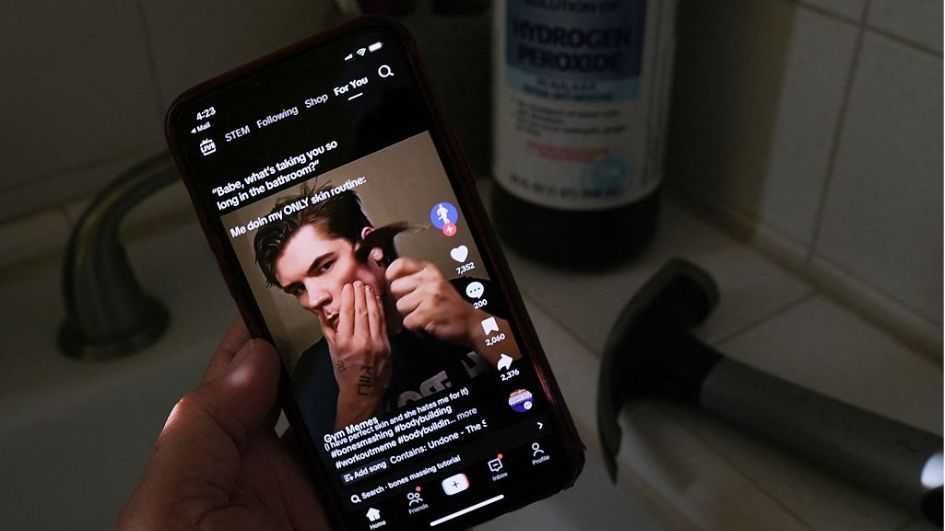


If you've been anywhere near social media lately, you have probably heard of the latest oddly named lifestyle: looksmaxxing.

It's laughed at, pathologized, and treated as a digital disease. It is filed under narcissism, extremism, or maladaptation — anything that avoids taking it seriously.

What really offends critics isn’t the vanity but the accountability. Looksmaxxing puts the burden back on the individual in a culture addicted to external blame.

But what is it?

Checklist for Chads

At its most basic, looksmaxxing refers to a loose online movement encouraging men to improve their physical appearance through deliberate, practical self-improvement rather than passive acceptance. In practice, this usually means mundane, unglamorous changes: losing excess weight, lifting weights consistently, grooming properly, dressing with intention, fixing posture, and presenting oneself as a capable human being. It is not a philosophy so much as a checklist.

There are, inevitably, outliers — internet backwaters where bone-breaking routines are discussed without irony, extreme facial surgeries are contemplated, and pseudoscientific measurements of skull angles are treated as destiny.

These exist, and they’re easy to mock. But they don't represent the broader phenomenon. They emerge at the margins, where men believe, rightly or wrongly, that they have exhausted ordinary options. The typical looksmaxxing example is far less exotic. A sedentary man quits junk food, joins a gym, gets a proper haircut, replaces stained hoodies with fitted clothes, and steps out of his mom’s basement.

Scarcity mindset

Looksmaxxing is a response to scarcity: romantic scarcity, social scarcity, economic scarcity. Young men are told relentlessly that confidence matters, that personality wins, that being “yourself” is enough.

Then reality arrives, usually with a swift kick to the nether regions. Faces, frames, height, grooming, fitness, posture — these things open doors long before a sentence is spoken. They decide who gets seen, who gets listened to, who gets to move on to the next round. The lie isn’t that personality matters, but that it matters first.

Critics default to dismissal because it requires no engagement. It costs nothing to tell a struggling man that he should simply “be kind” or “work on his inner self.” It costs nothing to shame him for caring about how he looks, while a culture sells beauty as destiny and desire as status.

The same people who insist looks don’t matter meticulously curate their appearance through filters, lighting, angles, brands, and cosmetic interventions. They publicly reject the rules while privately enforcing them. Everyone else pays for the pretense, most notably the average American man.

And the term average couldn’t be more apt. Overweight. Sedentary. Winded by a flight of stairs, pausing halfway like he’s summiting Everest. He is the product of abundance without discipline, comfort without consequence, a culture of convenience, couches, and calories. And he is told, endlessly, that his problems are emotional rather than physical.

Law of attraction

Looksmaxxing begins where denial ends. It says the body matters; the face matters; presentation matters. It refuses to treat biology as a slur. It doesn’t ask permission to acknowledge that attraction is selective, visual, and often cruel.

In a dating environment dominated by apps, where most singles are judged in a fraction of a second, this isn’t ideology but reality. That honesty unsettles people who have built careers telling men soothing stories about how the world ought to work rather than how it does.

As noted above, looksmaxxing can become obsessive. That pattern is familiar in any movement shaped by exclusion. But remove the extremes, and what remains is entirely reasonable. Lift weights. Lose the gut. Fix posture. Groom properly. Dress like you respect yourself. Sleep. Eat like an adult. Stop looking like you lost a bet with your mirror. None of this is radical. None of it is hateful. It is common sense.

Man up

What really offends critics isn’t the vanity but the accountability. Looksmaxxing puts the burden back on the individual in a culture addicted to external blame. It tells men that improvement is possible, but optional excuses are not. That message is intolerable to systems that profit from passivity. It is far easier to medicalize male dissatisfaction than to admit that a doughy, slumped, self-neglecting body will be judged accordingly.

There is also a class element no one wants to touch. Good looks are increasingly a luxury good: time to train; money for decent food; knowledge of grooming, style, and fitness. These are not evenly distributed. Telling men that looks don’t matter is a convenient way to ignore how much effort the winners quietly invest. Looksmaxxing is, in part, a grassroots attempt to close that gap — crude at times, desperate at others. But earnest.

There is also an undeniable element of misandry at play. When women improve their appearance, it is framed as empowerment, self-care, or self-expression. When men do the same — deliberately, analytically, and without apology — it is framed as an illness requiring immediate intervention. Looksmaxxing, a movement dominated by men, is treated as evidence of a psychological defect. The behavior is identical; the judgment is not. The double standard is structural.

RELATED: You can't be 50 in Hollywood
Alexandre Guerra/Getty Images

What about both?

And most straight women, if they are honest, aren’t confused about what they find attractive. Who doesn’t want a good-looking man? Who doesn’t respond positively to a strong frame, a defined jawline, a body that signals health and self-command?

This doesn’t negate the need for depth. No one wants a handsome face paired with the emotional range of a vacuum cleaner. But the inverse is no more appealing. Emotional intelligence struggles to shine when it is housed in a body that signals neglect. The idea that a man must choose between substance and appearance is false. It is entirely possible — indeed reasonable — to demand both.

Looksmaxxing doesn’t promise eternal happiness, but it does promise leverage — a chance to be seen before being dismissed. A chance to compete rather than be invisible. For the overweight man incapable of doing a single pull-up, it offers something rare: a clear target and a measurable path.

Looksmaxxing exists because the social contract broke first. When institutions stopped offering stable work, when dating turned into a market, when community receded and screens advanced, men adapted.

Mock looksmaxxing if you want. Call it vain. Call it sad. But don’t call it irrational. It isn’t the sickness but the symptom. And until we are willing to tell the truth about attraction, status, and the price of neglect, young men will keep gravitating toward the only strategy that abandons pretense.

Botoxic femininity? 'Titanic' star bashes 'cartoon'-faced plastic surgery addicts


Our looks-obsessed, social-media-fueled culture is out of control — and it is causing more and more women to turn themselves into "cartoons."

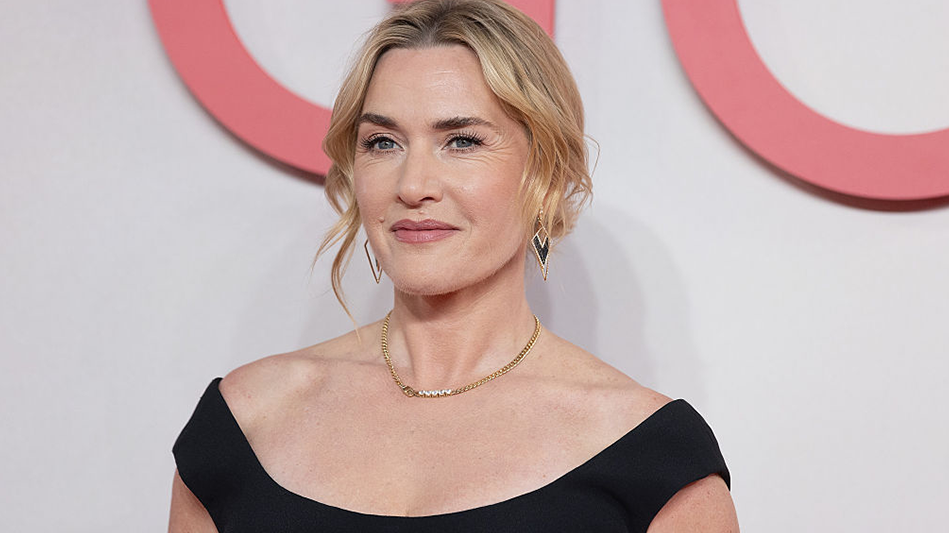
So says Hollywood star Kate Winslet, who unloaded on the subject in a recent interview with the Times.

'It is f**king chaos out there.'

Carpet-bombed

Winslet, who rocketed to worldwide fame after starring in 1997's "Titanic," recalled enduring incessant scrutiny of her weight early in her career — at one point being described as "a little melted and poured into" a dress she wore at an awards show.

Still, the now-50-year-old said she never reacted to these barbs by getting surgery or taking weight-loss drugs, two approaches she feels are so common today that they have warped our idea of beauty.

Winslet added that her first reaction when seeing another woman with Botox or filler in her face is to think "No, not you! Why?"

But, Winslet continued, "No one's listening because they've become obsessed with chasing an idea of perfection to get more likes on Instagram. It upsets me so much."

Lip service

Nor is Winslet a fan of weight-loss drugs like Ozempic."

"Do they know what they are putting in [their bodies]?" she asked. "The disregard for one's health is terrifying. It bothers me now more than ever. It is f**king chaos out there."

RELATED: Can conservatives reclaim pop culture?

Photo by SC/Mirrorpix via Getty Images

Winslet implied that while she gets why the Hollywood crowd is obsessed with appearances, what really bothers her is the thought of everyday people "who save up for Botox or the s**t they put in their lips."

Character flaw

To illustrate her point, she told the Times about a BBC article she read about a car crash with a young woman.

"She looked like a cartoon," Winslet scolded. "You do not actually know what that person looks like — from the eyebrows to mouth to lashes to hair, that young woman is scared to be herself. What idea of perfection are people aspiring to? I blame social media and its effect on mental health."

To that end, she added that it has been "heartbreaking" to see people constantly looking at their phones.

"Nobody’s looking into the f**king world any more."

RELATED: Transracialism is back — and it's worse than ever

Photo by: Vince Bucci/NBC/NBCU Photo Bank

While attempting to show that "life" is in one's hands, Winslet remarked, "Some of the most beautiful women I know are over 70, and what upsets me is that young women have no concept of what being beautiful actually is."

The interviewer noted that Winslet went out of her way to prove she "hasn't got anything" in her face and even squeezed her hands to show creases around her veins.

Plastic Surgeon Estimates Joe Biden Spent $100K On Face Lifts And Hair Implants

Dr. Motykie explained that Biden did not receive drastic plastic surgery recently but likely had incremental work done

Buccal Fat Removal Surgery Is The Worst Cosmetic Fad To Hit Social Media

Young people fall for terrible beauty trends like buccal fat removal surgery because our bodies are at the mercy of the algorithm.

Under Biden Proposal, Everyone Including Kids Could More Easily Get Transgender Surgery

There’s no limit to the number of insurance-sponsored surgeries someone could have, Roger Severino said.
White influencer under fire for identifying as Korean, blasts 'woke' mob for hypocrisy: 'If you can be transsexual you can also be TRANSRACIAL'


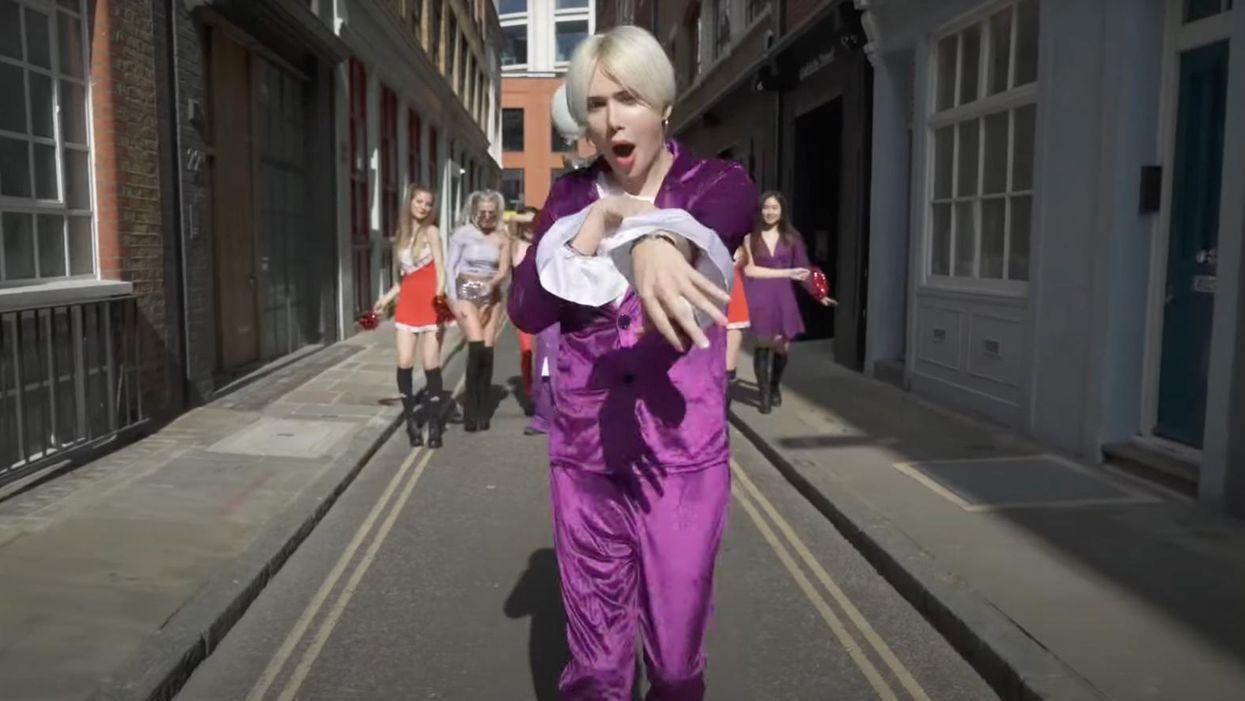
British influencer Oli London is taking heat after publicly identifying as Korean.

The announcement comes after the influencer is said to have paid more than $150,000 for cosmetic surgery to look like Park Ji-Min of wildly popular South Korean K-Pop band BTS.

What are the details?

London is facing heavy backlash for identifying as Korean, according to Insider.

"On June 18, London tweeted an image of a rainbow reimagining of the South Korean flag, saying that it was their 'new official flag for being a non-binary person who identifies as Korean,'" Insider's Palmer Haasch wrote. "They also said that they use 'they and them' pronouns as well as 'kor/ean' neopronouns."

London tweeted, "This is my new official flag for being a non-binary person who identifies as Korean. Thank you for the overwhelming support it was so hard for me to come out as Them/they/kor/ean."

London later added, "So sad how many comments are being homophobic and non-binary phobic. This is actually the official LGBTQI+ flag of South Korea ... GOOGLE IT. Anyone that puts a negative comment is anti-LGBT and anti-equality. So sad in 2021 people will judge others on how they identify!"

So sad how so many comments are being homophobic and non-binary phobic. This is actually the official LGBTQI+ flag… https://t.co/RjY5FCEn8H

— Oli London (@OliLondonTV) 1624124470.0

On Friday, London continued to address the backlash, tweeting, "If you can be transsexual you can also be TRANSRACIAL. Why are there such double standards & hypocrisy with people criticizing me for being Korean. It's the same as someone who was born in the wrong body and wants to become a man or a woman. I was actually born in the wrong body!"

If you can be transsexual you can also be TRANSRACIAL.Why are there such double standards & hypocrisy with people c… https://t.co/wIoAaDdt4r

— Oli London (@OliLondonTV) 1624612614.0

London also shared the news in a widely viewed YouTube video, in which the influencer and performer blasted "woke people" for their criticisms.

"The only people that need to be canceled is the woke people," London said. "Because they are so dangerous to freedom of speech in society."

At the time of this reporting, the video — titled "I'm Non Binary Korean..." — has been viewed more than 34,000 times.

I'm Non Binary Korean…www.youtube.com

What else?

The British-born influencer and singer — who has nearly a half-million followers on TikTok — has long had a fascination with Korean culture and appearance.

In 2019, London appeared on plastic surgery reality show "Hooked on the Looked," saying, "I'm not actually changing my race. I have a deep respect for Korean culture. It's cultural appreciation, not cultural appropriation."

In a 2020 interview with American TV host Phil McGraw, London said, "If you look at the pictures of me and Ji-Min, we're identical. When I was in Korea, everyone called me Ji-Min [as] I'm walking down the street. Everyone, they think I'm Ji-Min."

So what has been the response?

Paper Magazine's Sandra Song noted that London's announcement was highly offensive.

Song wrote, "As someone who actually has Korean DNA though, I can say that some white fetishist — as proven by those 15 surgeries to look like Ji-Min — suddenly deeming themself 'Korean' is incredibly offensive, especially since it effectively trivializes our identities because they're suddenly 'trendy.'"

"[W]hat they're doing is an appropriation of only the good (K-pop and food) without acknowledging the way our lives are still affected by all the racist, discriminatory, and historical baggage caused by the West (being used as pawns in an anti-communist agenda which led to the separation of our families, the negative effects of being constantly pressured to assimilate, legislative 'Othering,' etc. etc)," Song added.

"So yeah, obviously it's pretty sus that a white person is saying they're Korean."

When reached for comment, a spokesperson for Scott, Oli's manager, told Song that "Oli has ... felt strongly attached to Korea and the Korean culture and feels much more connected to this than his own culture."

"[Oli] hopes that people will accept and love [them] for who [they] is without judgment," the spokesperson added.

The Daily Dot reported Monday that comments flooded social media after London's proclamation.

One user wrote, "As a Korean Queer, shut the f*** up."

Another added, "As a Korean this is really p***ing me off right now. Nationality is not that simple."

"You may fetishize Koreans but you'll never be a Korean," another irate social media user snapped.

What else?

On Thursday, London further addressed the controversy in an Instagram post, writing:

"I just want to set the record STRAIGHT… It's Pride Month and I have always struggled with identity issues and been confused about who I am as a person. I took the difficult and brave decision to come out as Non-Binary and Korean to help millions of other LGBTQI+ young people around the world, Kpop fans and the Korean people feel confident enough to be able to feel no fear to be able to express themselves and how they identify."

The influencer continued, "In South Korea, there are millions of unrepresented LGBTQI+ people who are voiceless and who often face being ostracised from society and sometimes even being rejected by their own families, for being LGBTQI+. Being a member of the LGBT community in Korea, like in much of the world, is often met with hardships and rejection due to traditional and conservative viewpoints."

"I wanted to be a beacon of light for these brave people and tell them it's okay to express themselves and it's okay to come out to the world with however you identify," London's post continued. "Yes I identify as Korean. Yes I'm non-binary. Yes I look like Jimin. But none of this should be a reason to outcast me from society, to dehumanise me and shame me for being who I am, a non-binary Korean person."

London concluded the post, "I will never stop being the person I was born to be! Next time you decide to troll a person online and publicly shame them for their sexuality or identify- think about the consequences of your words. It costs nothing to be kind, to show respect and to spread love. Spread kindness this Pride month and let's come together to fight homophobia and allow all human beings the same equal rights regardless of how each one of us identify."


Oli London- Koreaboo (Street Dance Version)www.youtube.com