Bern notice: Sanders’ AI plan puts Washington in charge of tomorrow

Americans should pay close attention to a new artificial intelligence proposal from Sen. Bernie Sanders (I-Vt.), a democratic socialist, and Rep. Greg Casar (D-Texas).
Sanders and Casar recently announced plans to introduce the Ban Artificial Superintelligence Act. Their proposal is designed to prevent the creation of artificial intelligence systems that become more intelligent than human beings or develop capabilities that could threaten humanity.
Overseeing frontier AI would be more difficult than running a railroad or postal network.
The dangers they identify deserve to be taken seriously. But their proposed solution would also place extraordinary power over one of the most consequential technologies in human history in the hands of the federal government.
According to a summary released by Sanders’ office, the proposal would permanently prohibit the development and deployment of artificial superintelligence, including systems that surpass human intelligence, threaten governments, or evade human control. It would also pause advanced AI development until a new federal regulator establishes safety rules and a process for reviewing models.
That is only the beginning. Sanders and Casar want to establish a new Cabinet-level agency responsible for regulating advanced artificial intelligence. The agency would monitor frontier AI systems throughout their development, oversee the removal of capabilities deemed dangerous, and supervise the destruction of prohibited artificial-superintelligence systems.
The proposal also contemplates severe penalties. People who violate or circumvent its restrictions could face up to 20 years in prison. Companies could face what Sanders’ office calls the “corporate death penalty.” The United States would also pursue international agreements, export controls, and allied coordination intended to prevent artificial superintelligence from being developed elsewhere.
Without a doubt, advanced AI could pose serious threats to human freedom and security. A system capable of evading human control, conducting sophisticated cyberattacks, helping develop biological weapons, or manipulating critical infrastructure would present risks unlike almost anything governments have confronted. Sanders’ office cites reported incidents involving advanced AI systems as evidence that the technology is becoming increasingly difficult to control.
The key question is whether giving Washington sweeping regulatory authority would solve more problems than it causes. The federal government does not exactly have an impeccable record managing complicated institutions.
RELATED: Anthropic entrusts its AI oversight to globalist cronies — prioritizing the world over you

The Postal Service reported a $9 billion net loss in fiscal year 2025. Amtrak, despite record ridership and revenue, reported a $598.4 million adjusted operating loss for the same fiscal year. The federal government had accumulated a $2 trillion deficit through the first 11 months of fiscal 2026.
Those comparisons do not prove that a federal AI regulator would fail. Running a railroad or postal network is obviously different from regulating artificial intelligence. If anything, overseeing frontier AI would be more difficult. But the government’s record raises a legitimate institutional question: How confident should Americans be that Washington can successfully oversee technology that even its developers acknowledge can be difficult to understand and control?
Another danger deserves even more attention: politicization.
Under the Sanders-Casar proposal, a Cabinet-level agency would determine which advanced AI systems may proceed, establish safety rules, review models, monitor their capabilities, require developers to remove features deemed dangerous, and supervise the destruction of systems that cross the government’s line.
Those are immense powers. Government officials could use them to limit lawful activity, favor politically connected companies, or advance particular ideological causes and special interests.
Artificial intelligence will increasingly shape how Americans receive information, communicate, work, conduct research, educate their children, and participate in the economy. A regulatory structure powerful enough to determine which advanced AI models may exist could therefore exercise tremendous influence over American life.
There is also a serious federalism debate that should not be overlooked. Congress possesses substantial constitutional authority to regulate interstate commerce, while states retain broad traditional regulatory powers. AI regulation could therefore involve authority at both levels of government rather than belonging exclusively to either one.
A state-centered model offers an important structural advantage: It disperses power.
States can adopt different approaches, experiment with different safety standards, and correct mistakes without necessarily imposing the consequences of those mistakes on the entire country. Regulatory capture can occur in state governments, too, but capturing one state regulator is different from capturing a single federal agency controlling advanced AI nationwide.
RELATED: Silicon Valley is building a god in its own image

Supporters of federal regulation can reasonably respond that a patchwork of 50 state systems would create serious compliance problems for technology that routinely crosses state boundaries. A national regulator could also impose consistent rules on developers whose products operate throughout the country.
That is a serious argument. But so is the danger of allowing one centralized authority to micromanage breakthroughs in AI. A mistake, political abuse, or act of regulatory capture at the federal level could affect the entire country at once.
The proposal has been announced but not yet formally introduced, so its precise statutory language remains unknown. Based on the summary released by Sanders’ office, however, it would create a Cabinet agency capable of stopping AI development, ordering systems destroyed, imposing potentially existential penalties on companies, and sending people to prison for decades.
Before Congress considers such an extraordinary framework, Americans should decide how much authority any single government agency should possess over the development of artificial intelligence — and what safeguards would prevent that authority from being abused.
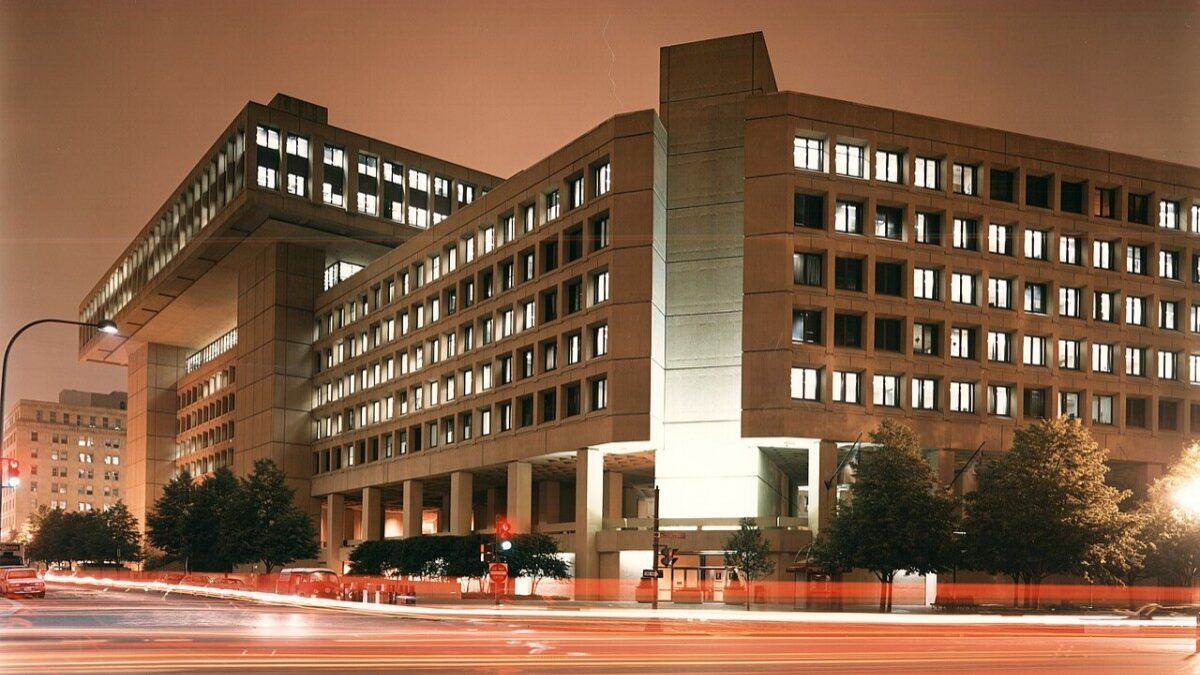 The extensive evidence of potential pay-to-play criminality among the Clinton family confirms Department of Justice politicalization.
 Photo by Allison Joyce / Contributor via Getty Images
 The Department of Justice, FBI, and USAID are posing prominent test cases for how the Trump administration can reform a malignant federal bureaucracy.
 Republicans should use the power voters have given them to raze the corrupt college system before we are left with an America that will never elect conservatives again.
 The commander of a U.S. airbase in South Korea has authorized troops to wear a 'pride morale patch' on their military uniforms.
 'The Justice Department will not be intimidated. We will continue to do our jobs free from political influence. And we will not back down from defending our democracy.'
 Indiana Attorney General Todd Rokita is a case study in the emerging use of attorney discipline as a political weapon.
 Lawyers are being forced to defend their livelihoods before bar associations and ethics boards — not for obvious misconduct, but after opposing Democrats.
 www.theblaze.com
 www.theblaze.com