Democrats once undermined the Army. Now they undermine the nation.
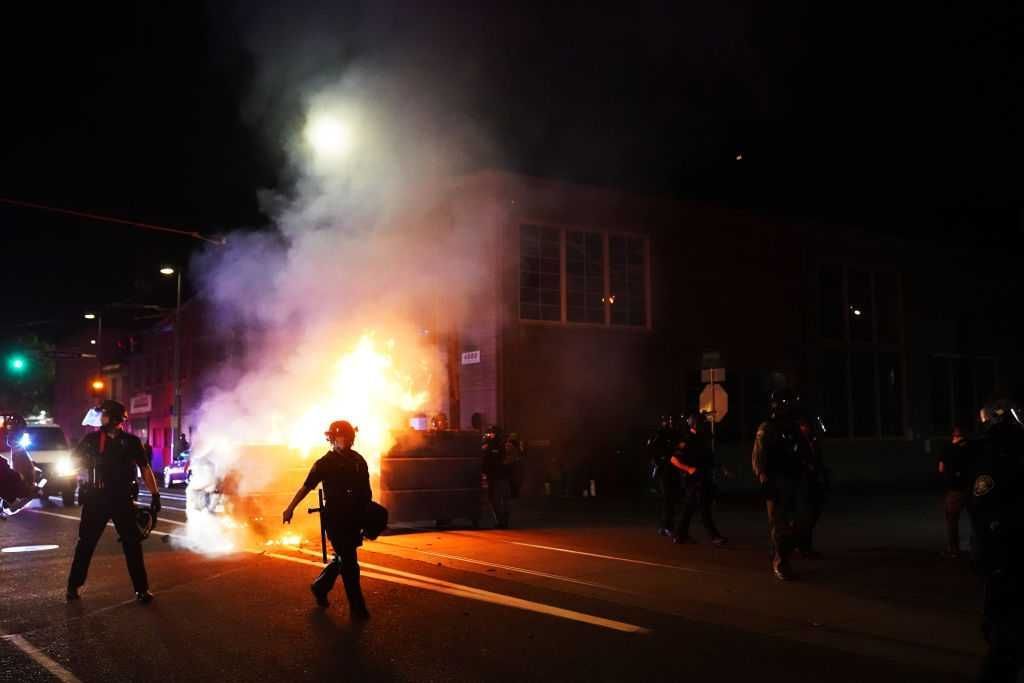


America again stands on the edge of betrayal, watching mobs assault federal officers while judges call it “restraint.”

This is not new. Between 1876 and 1878, the same script played out as those sworn to uphold the law were branded as tyrants and those undermining it claimed the mantle of freedom. When the federal government lost the will to enforce its own laws, violence filled the vacuum.

How the first ‘Redemption’ worked

After the Civil War, Republican coalitions in the South — freedmen, poor whites, and Northern reformers — were crushed by white Democrats who called themselves “Redeemers.” They promised “home rule” but delivered a racial caste system enforced by terror and political exclusion.

The Redeemers invoked ‘home rule’ to dismantle Reconstruction. Today’s Democratic left invokes ‘human rights’ to paralyze national defense.

The last obstacle to that counterrevolution was federal protection of black voters. During the disputed 1876 election, President Ulysses S. Grant stationed troops at polling sites across the South to deter fraud and Ku Klux Klan violence. Democrats in South Carolina vowed to “wade in blood knee-deep” if necessary to reclaim power.

Those troops were the only shield between freedmen and their former masters. But in the Compromise of 1877, federal forces were withdrawn to buy political peace. Reconstruction governments collapsed, schools for freedmen closed, and voting rights vanished. As W.E.B. Du Bois wrote, “The slave went free; stood a brief moment in the sun; then moved back again toward slavery.”

Southern Democrats soon made that withdrawal permanent. Wrapping themselves in the rhetoric of liberty and “local control,” they pushed the Posse Comitatus Act of 1878, criminalizing use of the Army for domestic law enforcement except when Congress expressly authorized it.

The narrative was set: Federal troops at the polls meant “tyranny”; “home rule” meant “harmony.” In truth, the act cemented the collapse of Reconstruction and led to the birth of Jim Crow, which paralyzed federal defense of civil rights for nearly a century.

RELATED: Stop pretending Posse Comitatus neuters the president
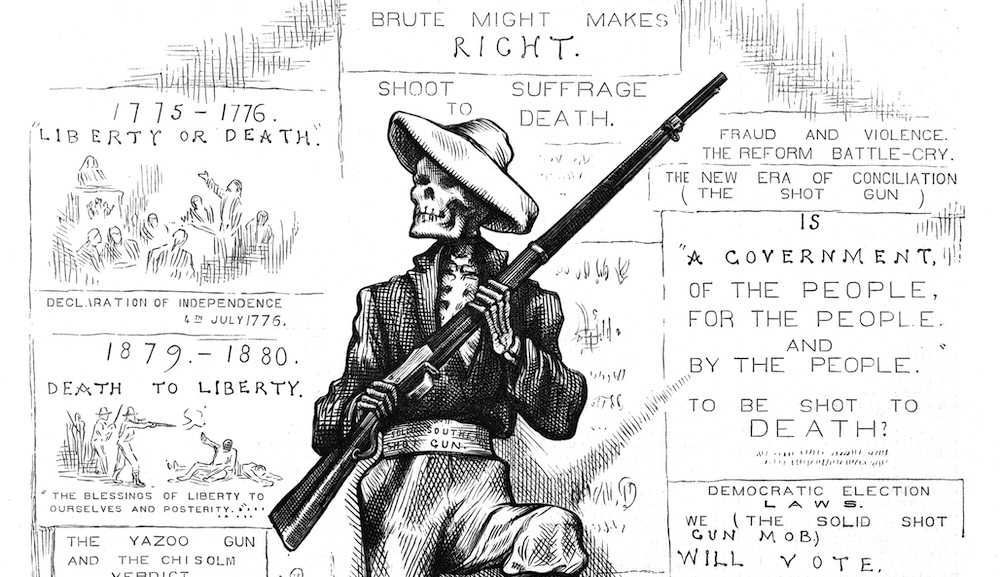
Photo by Interim Archives/Getty Images

The rhetoric of reversal

Debates over the Posse Comitatus Act dripped with moral inversion. Southern Democrats like Rep. John Atkins of Tennessee and William Kimmel of Maryland denounced President Rutherford B. Hayes as a “monarch” who preferred bullets to ballots. Federal soldiers protecting black voters were smeared as bloodthirsty brutes and “tools of despotism.”

In that twisted language, enforcing the law became tyranny, while mob rule became freedom.

It was early information warfare: delegitimize the protectors, vindicate the aggressors, and freeze lawful authority into submission.
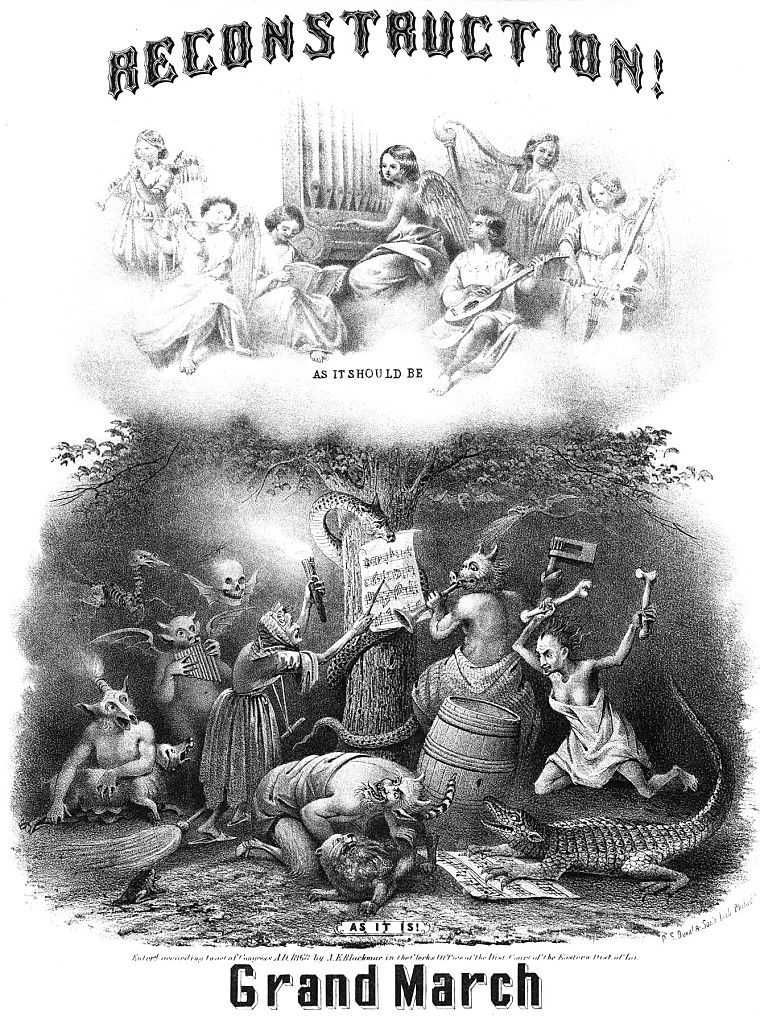
Photo by Transcendental Graphics/Getty Images

The new paralysis

A century and a half later, the pattern repeats. Democrats, left-wing activists, and their media allies now use essentially the same language to delegitimize immigration enforcement. ICE and Border Patrol agents, upholding laws passed by Congress, are branded as “fascists.” Federal defense of government facilities is denounced as “militarization.”

Judges cite the Posse Comitatus Act to block National Guard deployments meant to protect ICE offices from violent assaults. In Illinois, U.S. District Judge April Perry ruled that deploying the Guard could “add fuel to the fire that they started,” claiming no evidence of impending “rebellion.” The ruling came days before No Kings Day demonstrations.

The Department of Homeland Security had extended fencing around its Broadview facility after earlier attacks — rioters hurling fireworks, bottles, and tear gas while local officials looked away. When the DHS finally reinforced its defenses, the courts ordered them torn down.

Since June, ICE and Border Patrol have endured shootings, arson attempts, and coordinated ambushes. In Dallas, a sniper targeted an ICE field office. In suburban Chicago, federal agents were rammed and pinned by cartel-linked drivers before returning fire. Local police en route to assist were told to stand down.

Within hours, left-wing outlets and activist networks declared the clash proof of “authoritarianism.” The strategy is deliberate: manufacture chaos, provoke a lawful response, then cite that response as evidence of tyranny.

This is a textbook reflexive control operation — using perception to paralyze power. The Redeemers of 1878 called federal troops “despots” and “usurpers.” Their descendants call federal agents “fascists.” The aim is identical: Erode public trust in lawful authority and make enforcement politically impossible.

Citizenship as the battlefield

Then, as now, the real fight centers on citizenship itself.

In the 19th century, freed black Americans embodied the principle that allegiance and equality before the law, not race or birth, define membership in the republic. That ideal shattered the old Southern order, so Redeemers destroyed it.

Today, citizenship threatens a different order — the globalist one. Citizenship implies borders, duties, and distinctions. So progressives seek to redefine it as exclusionary or immoral. Illegal aliens become “newcomers.” Enforcing the law becomes oppression. The federal obligation to protect citizens morphs into a liability.

What began as Redeemer propaganda has evolved into a post-national orthodoxy: Sovereignty is shameful, and the citizen must yield to the “world citizen.” The result is the same — federal paralysis, selective law enforcement, and mobs empowered by moral cover.

RELATED: A president’s job is to stop the burning if governors won’t
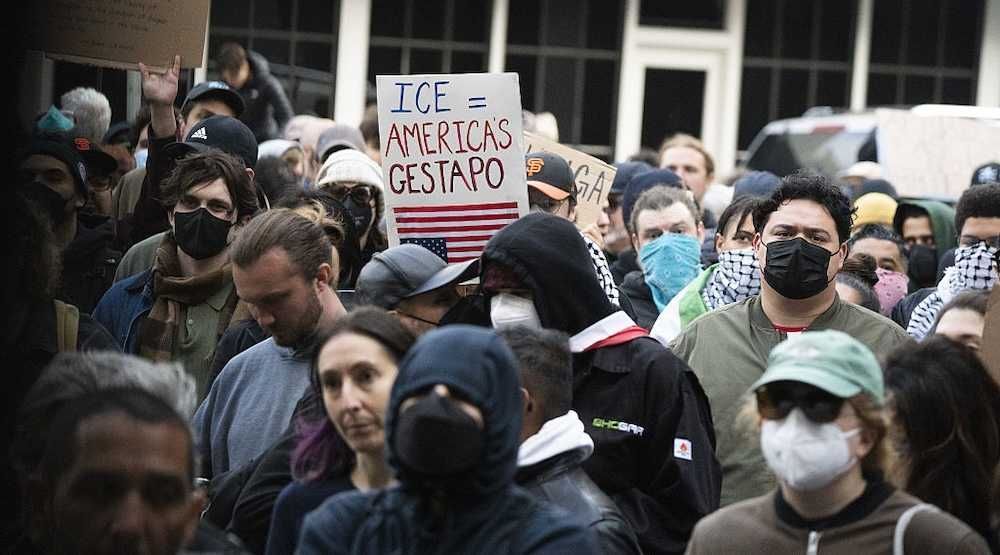
Photo by Minh Connors/Anadolu via Getty Images

Lessons from the first betrayal

The parallels are precise. The Redeemers invoked “home rule” to dismantle Reconstruction; today’s left invokes “human rights” and “de-militarization” to paralyze national defense.

The Posse Comitatus Act was never a sacred constitutional barrier — it was a political tool of retreat. Then it left freedmen defenseless; now it hinders protection of federal agents, citizens, and borders. By turning law into spectacle and restraint into virtue, it leaves our republic unguarded.

History teaches a blunt lesson: Retreat invites terror. When the state retreats, mobs rule. When courts mistake optics for justice, defenders become defendants. The same moral inversion that once enslaved men through “home rule” now threatens to enslave the republic through lawfare.

To survive, America must recover what it lost in 1877 — the courage to act as a nation. Withdrawal is not peace. Compromise, in this instance, is not order. The freedman of this century is the American citizen himself — and the question, once again, is whether the nation that freed him will defend him.
Stop pretending Posse Comitatus neuters the president


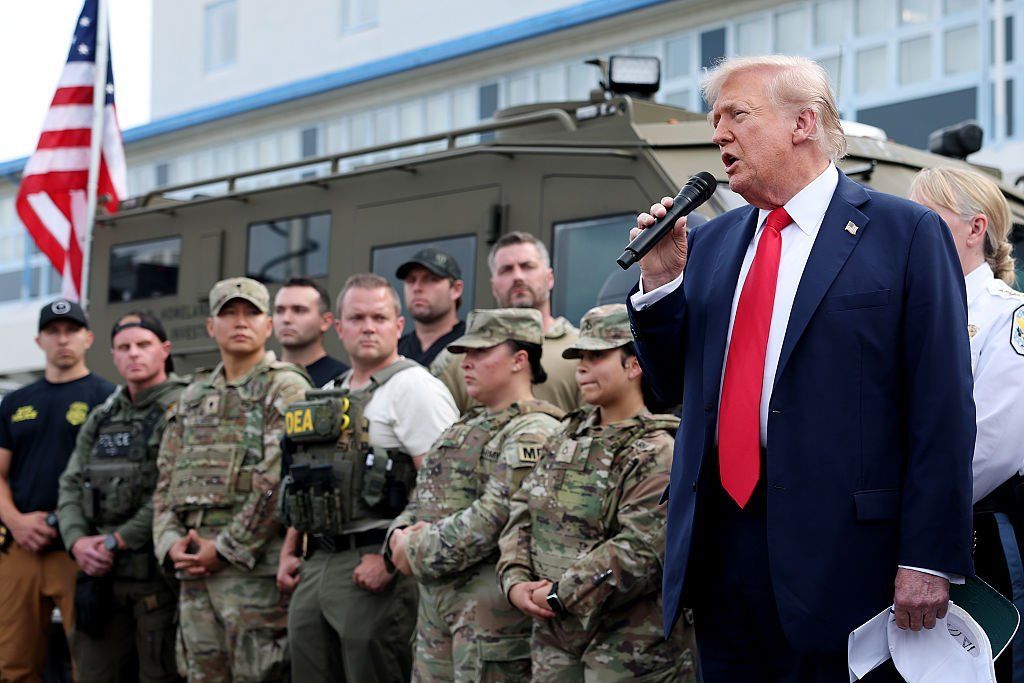
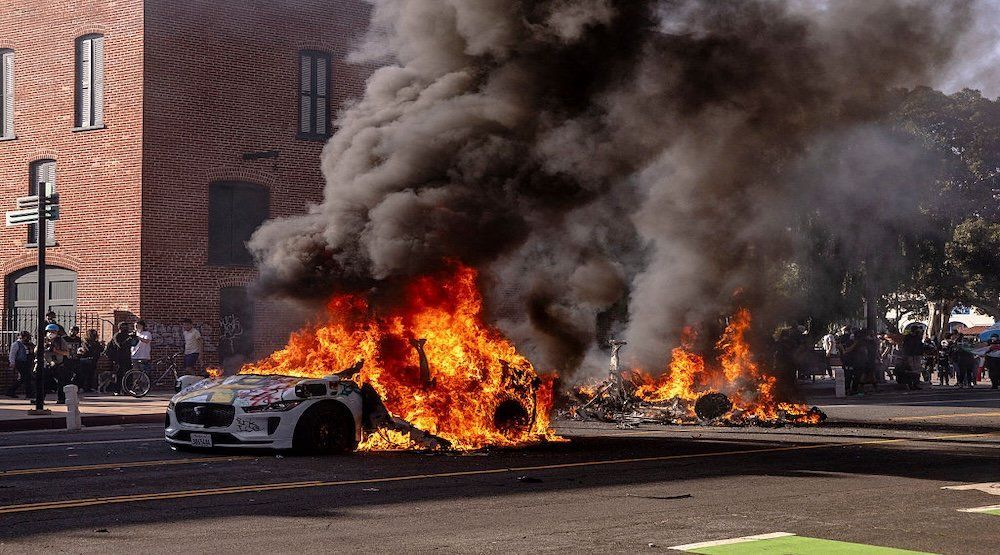
President Trump drew heavy criticism for calling up the California National Guard to confront anti-ICE rioting in Los Angeles in July. On Sept. 3, U.S. District Judge Charles Breyer blocked the move, claiming it violated the Posse Comitatus Act of 1878. He delayed his order until Sept. 12, but the administration immediately appealed, and the Ninth Circuit has already granted a partial stay while the case moves forward.

Critics insist Trump is misusing the military as some kind of “secret police.” They invoke the Posse Comitatus Act as if it were an absolute ban on military involvement in domestic affairs. That is flatly wrong. The Act does not prohibit the president from using the Army, Marines, or National Guard to enforce federal law. It simply requires that such forces be deployed under the president’s authority, not at the whim of a sheriff or local marshal.

The real danger comes not from Trump’s use of the National Guard, but from a judiciary willing to invent limits the Constitution never imposed.

The Constitution itself grants the president this power. Article IV, Section 4 reads:

The United States shall guarantee to every state in this union a republican form of government, and shall protect each of them against invasion; and on application of the legislature, or of the executive (when the legislature cannot be convened) against domestic violence.

Congress reinforced that authority in the Insurrection Act of 1807, which authorized the president to use the Army when it became “impracticable to enforce the laws of the United States in any State or Territory by the ordinary course of judicial proceedings.” In short: When mobs threaten federal law, the president has the duty — and the power — to act.

What Posse Comitatus really meant

Before 1878, federal marshals could deputize Army units as a local posse. That pulled soldiers out of their chain of command and placed them under partisan officials. Officers objected, rightly fearing the practice would corrupt the Army. They welcomed congressional intervention.

The Posse Comitatus Act corrected that flaw. It barred the military from being drafted by civil authorities except when the Constitution or Congress explicitly authorized it. The Act did not strip the president of power. It reaffirmed that only the president, acting under constitutional authority, could commit troops to restore order.

History bears this out. The U.S. military has intervened in domestic affairs 167 times since America’s founding. Soldiers put down the Whiskey Rebellion in the 1790s, enforced fugitive slave laws in the 1850s, and captured John Brown at Harpers Ferry in 1859. After the Civil War, troops secured polling places so freedmen could vote. The Act was not written to stop such uses, but to prevent local abuse.

As scholar John Brinkerhoff explained in 2002, “All that [the Posse Comitatus Act] really did was to repeal a doctrine whose only substantial foundation was an opinion by an attorney general. ... The president’s power to use both regulars and militia remained undisturbed.”

Why Breyer is wrong

Judge Breyer’s ruling misreads both history and law. By treating Posse Comitatus as a blanket prohibition, he ignores the Constitution and the Insurrection Act. His injunction assumes any federal troop support is unlawful. But the law says otherwise: Troops cannot be used under lesser authority than the president’s. Trump acted as president. That is the highest authority the law contemplates.

The Ninth Circuit has already acknowledged the seriousness of the case by issuing a partial stay. That matters. Pulling remaining troops before the courts finish their review risks chaos. Keeping them in place while the appeal proceeds protects public order.

RELATED:A president’s job is to stop the burning if governors won’t

Photo by SAHAB ZARIBAF/Middle East Images/AFP via Getty Images

Prudence, not prohibition

The Posse Comitatus Act never emasculated the presidency. It preserved the president’s authority while removing soldiers from the clutches of local sheriffs. The only real limitation is prudence. Presidents must decide when the threat justifies force and when restraint serves the nation better.

I have opposed proposals to use the military in the so-called war on drugs and other ill-considered campaigns. Prudence matters. But the Constitution is clear: When federal law is under assault, the president can act.

The real danger comes not from Trump’s use of the National Guard, but from a judiciary willing to invent limits the Constitution never imposed. Los Angeles cannot be allowed to burn while mobs terrorize federal officers. The president has the duty to restore order.

That is why the administration is right to appeal. The courts should correct this error and reaffirm what the Constitution already guarantees: the president’s authority to protect the republic against domestic violence.

Federal Judge In California Remains At The Ready To Wrest Control Of National Guard From Trump

Breyer remains poised to meddle in Trump's constitutional authority.
'BIG WIN': Newsom's losing streak continues as 9th Circuit Court delivers Trump more great news


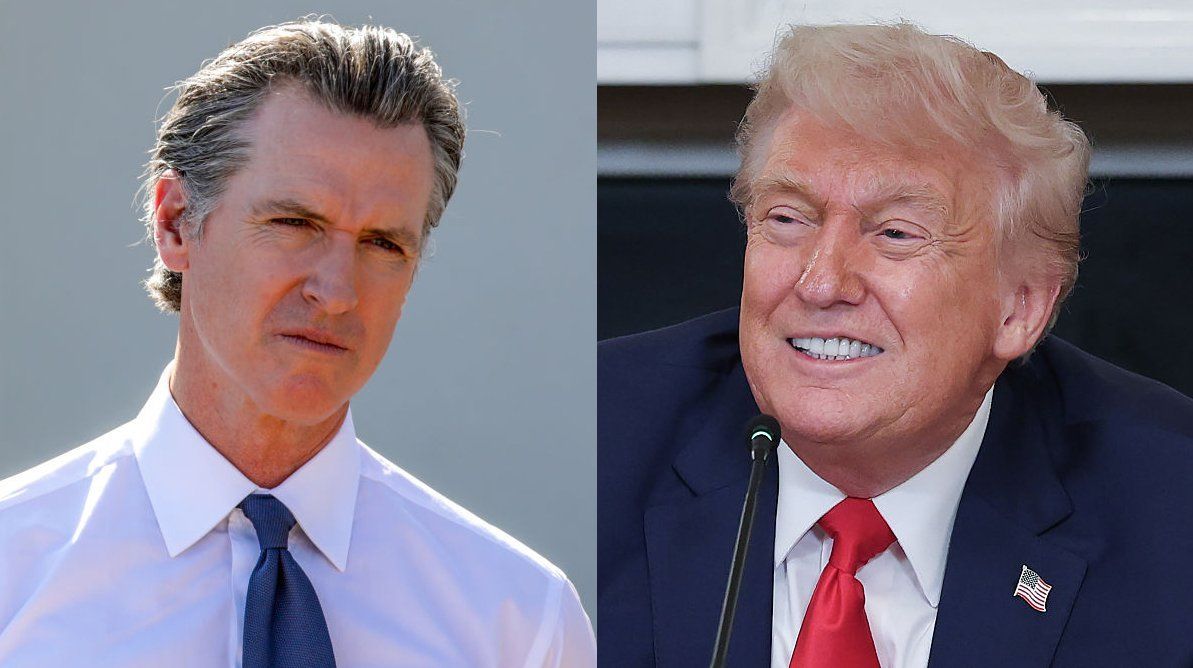
The U.S. Court of Appeals for the Ninth Circuit overruled a Clinton judge and delivered some bad news to California Gov. Gavin Newsom (D) that might wipe the default grin off his face.

How it started

Exercising his constitutional and statutory powers, President Donald Trump deployed the National Guard to Los Angeles on June 7, noting that the anti-Immigration and Customs Enforcement riots constituted "a form of rebellion against the authority of the Government of the United States."

'It is likely that the president lawfully exercised his statutory authority under § 12406(3).'

Newsom — among the many Democrats who downplayed the violence and appeared sympathetic to the rioters' cause — asked a federal district court judge to force Trump to surrender control of the federalized California National Guard.

U.S. District Court Judge Charles Breyer, a Bill Clinton appointee, sided with Newsom, claiming on June 12 that Trump's actions "were illegal — both exceeding the scope of his statutory authority and violating the Tenth Amendment of the United States Constitution."

Newsom subsequently told Trump, "You must relinquish your authority of the National Guard back to me and back to California," then smugly attacked the president in a press conference where he called Trump "weak."

The governor's gloating was cut short when the Trump administration appealed to the Ninth Circuit Court of Appeals and secured an emergency ruling to return command of the National Guard to the president.

How it's going

Newsom optimistically stated on Tuesday, days ahead of the appellate court's ruling, "I'm confident in the rule of law. I'm confident in the Constitution of the United States. I'm confident in the reasoned decision issued last week by a very well-respected federal judge. And I'm confident that common sense will prevail here."

Common sense prevailed — just not in Newsom's favor.

RELATED: Gavin Newsom and Karen Bass to California: 'Look what you made us do!'

Mario Tama/Los Angeles Times/Getty Images
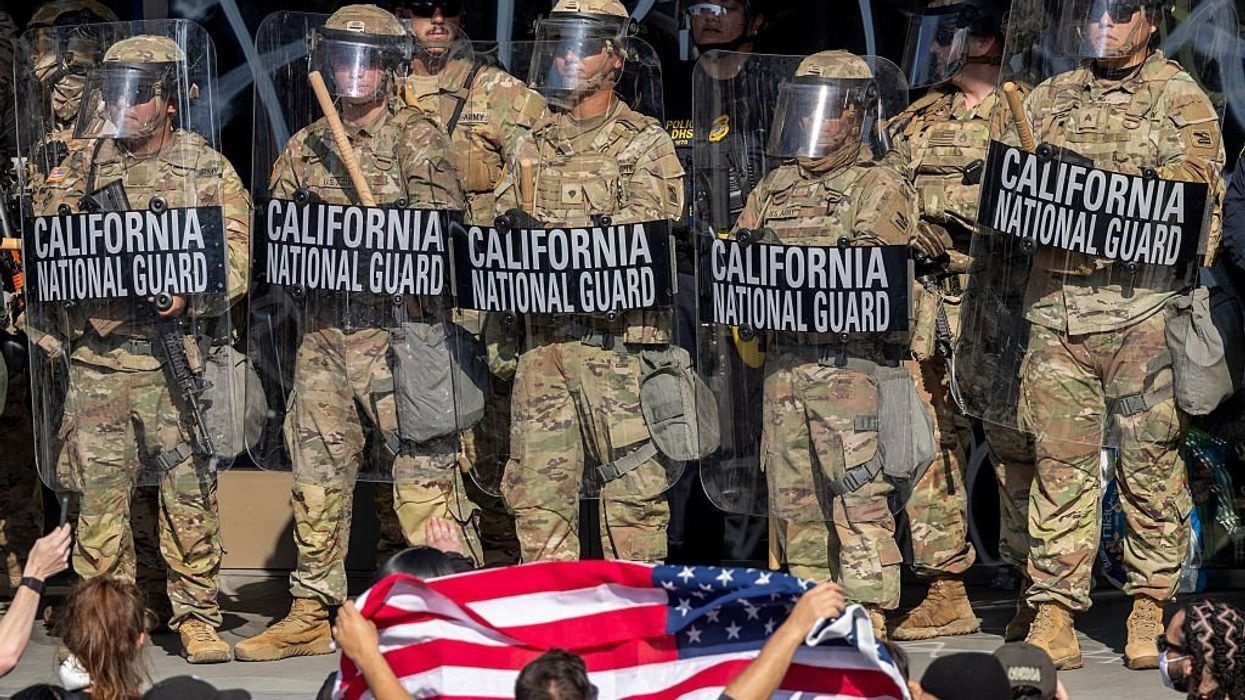
On Thursday, a three-judge panel of the appeals court ruled unanimously in the president's favor, granting a stay of the Clinton judge's order.

The appeals court concluded that "it is likely that the president lawfully exercised his statutory authority under § 12406(3), which authorizes federalization of the National Guard when 'the president is unable with the regular forces to execute the laws of the United States'" and indicated Hegseth's transmittal of the order "likely satisfied the statute's procedural requirement that federalization orders be issued 'through' the governor."

'The Judges obviously realized that Gavin Newscum is incompetent and ill prepared.'

The court also recognized that Trump had "a colorable basis" for deploying the National Guard, citing evidence that the anti-ICE rioters:

  • interfered "with the ability of federal officers to execute the laws";
  • threw objects at ICE vehicles attempting to complete a law enforcement operation;
  • threw Molotov cocktails and vandalized property;
  • "'pinned down' several [Federal Protective Service] officers defending federal property by throwing 'concrete chunks, bottles of liquid, and other objects,' and used 'large rolling commercial dumpsters as a battering ram' in an attempt to breach the parking garage of a federal building."

To Newsom's likely chagrin, the court noted further that "the president's failure to issue the federalization order directly 'through' the governor of California does not limit his otherwise lawful authority to call up the National Guard" and that "Newsom had no power to veto or countermand the president's order."

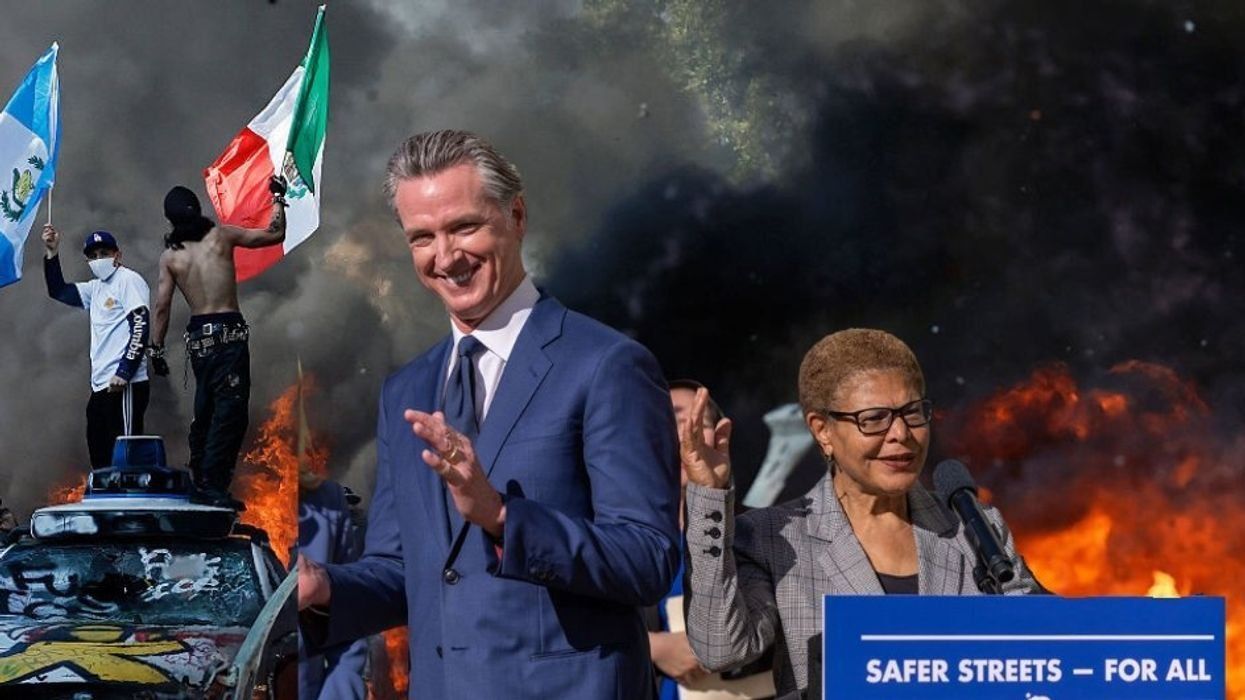
Newsom, like Los Angeles Mayor Karen Bass and other Democrats, suggested that the presence of the National Guard was inflammatory and prompted more unrest.

RELATED: The Democrats’ key to success

California National Guard troops outside a Los Angeles federal building on June 9, 2025. Photo by David McNew/Getty Images
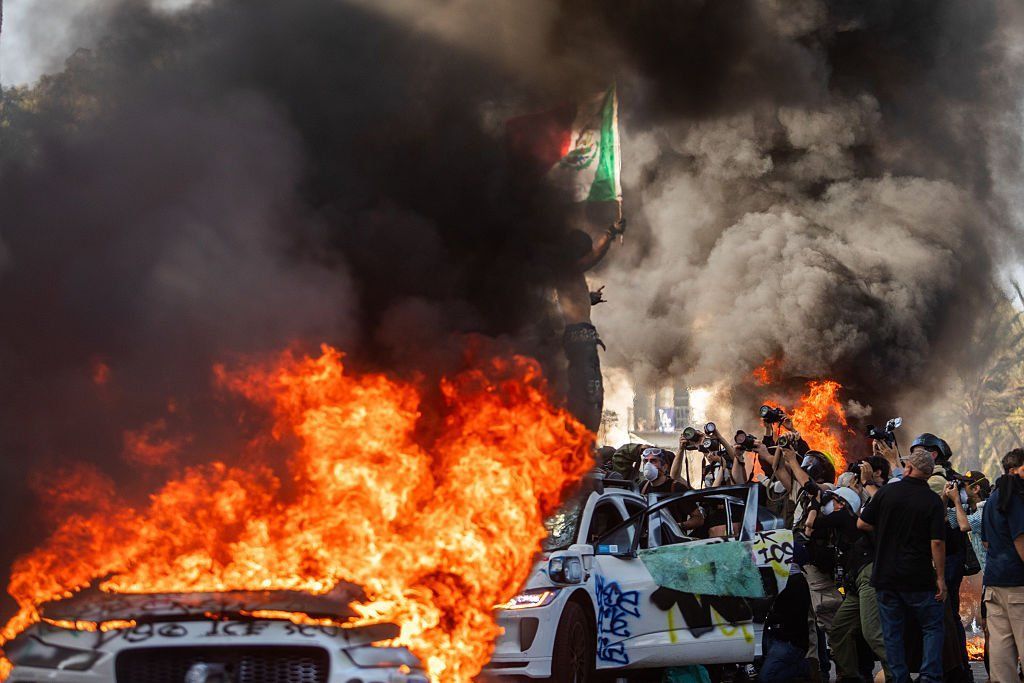
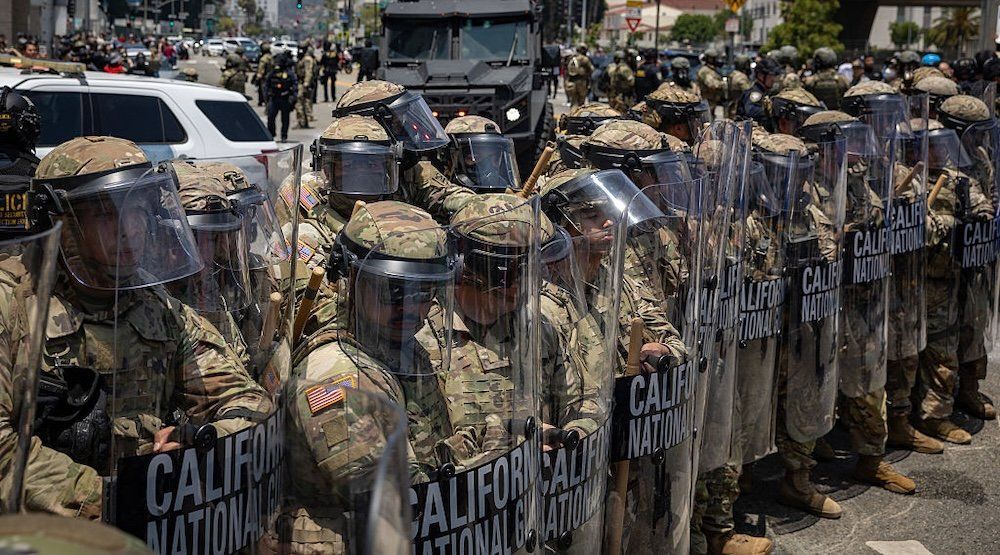
The appellate court was not buying what the governor was selling, noting both that "these concerns are counterbalanced by the undisputed fact that federal property has been damaged and federal employees have been injured" and that such concerns "are too speculative."

President Trump celebrated the ruling, suggesting the decision affirms his ability to take similar action elsewhere if necessary.

"BIG WIN in the Ninth Circuit Court of Appeals on the President's core power to call in the National Guard!" the president wrote on Truth Social. "The Judges obviously realized that Gavin Newscum is incompetent and ill prepared, but this is much bigger than Gavin, because all over the United States, if our Cities, and our people, need protection, we are the ones to give it to them should State and Local Police be unable, for whatever reason, to get the job done."

"This is a Great Decision for our Country, and we will continue to protect and defend Law abiding Americans. Congratulations to the Ninth Circuit, America is proud of you tonight!" added Trump.

Newsom expressed his disappointment, vowing to press forward with his "challenge to President Trump's authoritarian use of U.S. military soldiers against citizens."

Judge Breyer is reportedly contemplating whether to slap Trump with another injunction, restricting the president's use of National Guard troops in Los Angeles.

Like Blaze News? Bypass the censors, sign up for our newsletters, and get stories like this direct to your inbox. Sign up here!

A president’s job is to stop the burning if governors won’t


In response to widespread rioting and domestic disorder in Los Angeles, President Trump ordered the deployment of National Guard units. More than 700 U.S. Marines from the Air Ground Combat Center in Twentynine Palms were also mobilized on Monday to protect federal property around the city.

As expected, critics pounced. They claim Trump’s orders violate American tradition — calling them anti-constitutional, anti-federal, and an authoritarian misuse of executive power. They say Trump is turning the military into a domestic police force.

In moments like this, the republic must defend itself.

But that argument isn’t just wrong — it’s nonsense on stilts.

The U.S. Army Historical Center has published three comprehensive volumes documenting the repeated and lawful use of federal military forces in domestic affairs since the founding of the republic. From the Whiskey Rebellion to civil rights enforcement, history shows that federal troops have long been a constitutional backstop when local authorities fail to maintain order.

Certainly, the use of military forces within U.S. borders must be limited and considered carefully. But the Constitution explicitly grants this authority. Article IV, Section 4 states: “The United States shall guarantee to every state in this union a republican form of government, and shall protect each of them against invasion; and on application of the legislature, or of the executive (when the legislature cannot be convened), against domestic violence.”

That clause isn’t a suggestion — it’s a command. A republican government exists to safeguard life, liberty, and property. The First Amendment protects the right to peaceably assemble and petition the government, but it does not shield acts of arson, looting, or assault. When rioters threaten the public, federal intervention becomes not just permissible but, in this instance, necessary.

Article II empowers the president, as commander in chief of the Army, Navy, and National Guard (when called into federal service), to act decisively against both foreign and domestic threats. That includes quelling insurrections when state leaders fail to uphold public order.

The National Guard is not the “militia” the founders discussed. That distinction was settled with the passage of the Dick Act in 1903, which clarified the Guard’s federal identity in relation to state control. Since then, the Guard has operated under dual federal and state authority — with federal control taking precedence when activated. Once federalized, the National Guard becomes an extension of the U.S. military.

Congress codified this authority in 1807 with the Insurrection Act. It authorizes the president to use military force when ordinary judicial proceedings fail. This provision enabled presidents throughout history to deploy troops against domestic unrest. During the 1950s and ’60s, Dwight D. Eisenhower and John F. Kennedy used it to enforce desegregation orders in the South.

In 1992, President George H.W. Bush relied on the same statute to deploy Army and Marine forces alongside the California National Guard during the L.A. riots following the Rodney King trial verdict. That was done without sparking cries of dictatorship.

RELATED: Why Trump had to do what Gavin Newsom refused to do

Jason Armond / Los Angeles Times via Getty Images
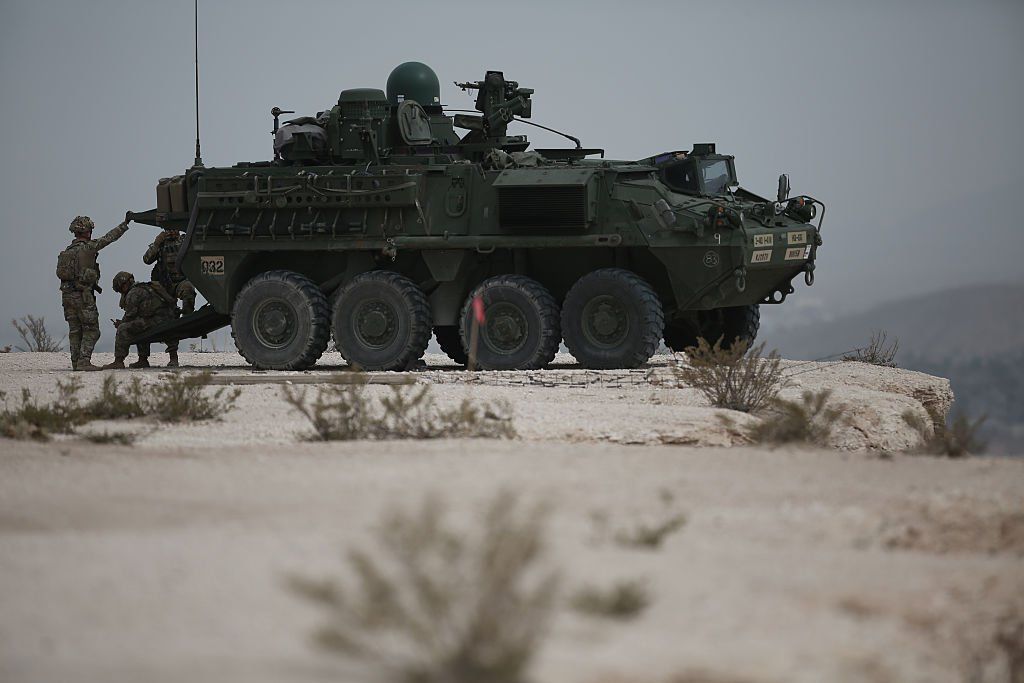
Those accusing Trump of violating norms by acting over a governor’s objection should revisit 1957. After Arkansas Gov. Orval Faubus (D) defied federal orders to desegregate Little Rock Central High School, President Eisenhower federalized the Arkansas National Guard and sent in the 101st Airborne Division. Democratic Sen. Richard Russell of Georgia decried the move, comparing the troops to Hitler’s storm troopers — a reminder that hysterical analogies are nothing new.

Americans have sought to limit military involvement in domestic life. The Posse Comitatus Act of 1878 was designed to do just that — restrict the use of federal troops in civil law enforcement without explicit authorization. But even that law has historical nuance.

The concept of “posse comitatus” comes from English common law. It refers to the authority of sheriffs to summon local citizens to restore order. In early American history, federal troops often supported U.S. Marshals. They enforced the Fugitive Slave Act, stanched the bleeding in Kansas, and helped capture John Brown at Harpers Ferry.

After the Civil War, the Army played a key role in enforcing Reconstruction and suppressing the Ku Klux Klan under the Force Acts. Southern Democrats opposed this use of federal power. But by the 1870s, even Northern lawmakers grew uneasy when soldiers were ordered to suppress railroad strikes under direction of state and local officials.

The Army eventually welcomed Posse Comitatus. Being placed under local political control compromised military professionalism and exposed troops to partisan misuse. Officers feared that domestic policing would corrupt the armed forces.

I’ve long argued for restraint in using military power within U.S. borders. That principle still matters. But lawlessness, when left unchecked, can and will destroy republican government. And when local leaders fail to act — or worse, encourage disorder — the federal government must step in.

President Trump has both the constitutional and statutory authority to deploy troops in response to the violence unfolding in Los Angeles. Whether he should do so depends on prudence and necessity. But the idea that such action is unprecedented or somehow illegal has no basis in law or history.

If mayors and governors abdicate their duty, Washington must not. The defense of law-abiding citizens cannot hinge on the whims of ideologues or the cowardice of local officials. And in moments like this, the republic must defend itself.

Trump’s border blitz puts military muscle to work


President Donald Trump has moved faster than anyone expected to secure the U.S.-Mexico border. His latest action — deploying the U.S. military to the Roosevelt Reservation, a 60-foot-wide strip of federal land spanning the border in California, Arizona, and New Mexico — is a necessary step to defend American sovereignty.

A White House memorandum issued April 11 authorizes the military to take temporary control of the corridor, detain individuals attempting illegal entry, and support key security operations, including barrier construction and surveillance. With drug cartels, human traffickers, and other criminal threats exploiting the southern border, this deployment offers a direct, long-overdue response to a crisis the political class has allowed to fester for years.

The military brings what civilian authorities can’t: logistical power, surveillance, and manpower. We’ve seen it work before.

Established in 1907 by President Theodore Roosevelt to safeguard the border, the Roosevelt Reservation provides the ideal legal framework for President Trump’s latest deployment. By designating the strip as a “National Defense Area,” Trump has empowered the military to act decisively within a clearly defined legal perimeter.

This renewed focus on border security comes none too soon. Under President Biden, the situation along the reservation deteriorated. In 2022, frustrated by the White House’s inaction, Arizona Gov. Doug Ducey (R) ordered shipping containers stacked along the reservation to block illegal crossings. His successor, open-borders Democrat Katie Hobbs, wasted no time removing them.

The Trump memorandum directs the Departments of Defense, Interior, Agriculture, and Homeland Security to transfer jurisdiction of the Roosevelt Reservation to the Pentagon. This move allows U.S. troops to detain border trespassers until Border Patrol can process them.

This isn’t “militarizing” the homeland — it’s using federal authority to defend it. The chaos Biden unleashed now demands real action. Trump’s strategy puts American citizens, not politics, first.

The need for this action is clear. Even with reports of fewer illegal crossings, the southern border remains a pipeline for deadly drugs like fentanyl — which killed more than 70,000 Americans in 2023. Cartels continue to exploit weak enforcement, using remote corridors like the Roosevelt Reservation to move narcotics and human trafficking victims deeper into the country.

Critics rushed to label Trump’s deployment an overreach, but their objections don’t hold up. Some claim the move violates the Posse Comitatus Act, the 1878 law restricting military involvement in domestic law enforcement. One activist even called the strategy a “crazy” attempt to skirt the law by labeling illegal aliens as trespassers on military land.

That argument is nonsense. The Posse Comitatus Act allows exceptions during national emergencies, and Trump’s declaration of a border emergency provides that authority.

What’s more, the military’s role under the April 11 memorandum is narrow and lawful. It simply detains border trespassers on federal land until civilian authorities take over. This mirrors past deployments under both Republican and Democratic presidents. The Pentagon isn’t rounding up citizens or patrolling cities. It is securing a narrow federal corridor explicitly designated for border protection.

Some Democrats and activist groups claim that deploying the military escalates tensions unnecessarily, especially since illegal border crossings have declined since Trump took office. But that argument misses the point. Crossings dropped because of Trump’s tough policies — not because the threat disappeared.

Cartels are opportunistic and fast-moving. They seize on any lapse in enforcement. The Roosevelt Reservation’s rugged terrain and rumored smuggling tunnels make it a prime target. A military presence deters those operations before they escalate.

Waiting for the next crisis — like the 2022 surge that saw more than 2.5 million migrant encounters — isn’t strategy. It’s surrender.

Open-border activists argue that Border Patrol or local law enforcement should secure the border alone. But that ignores reality. Of the border’s 1,954 miles, more than 700 run through rugged, hard-to-patrol terrain. Civilian agencies are already overwhelmed.

The military brings what civilian authorities can’t: logistical power, surveillance technology, and manpower. This isn’t theoretical. We’ve seen it work before. In 2018, during Trump’s first term, Operation Faithful Patriot provided vital support for wall construction in high-traffic zones — reducing illegal crossings where they were most severe.

Extending this strategy to the Roosevelt Reservation isn’t radical. It’s obvious.

Trump’s order rests on a simple truth: A nation without borders is not a nation at all. The new memorandum isn’t just defensible. It’s essential. Anyone who doesn’t see the military’s role in this crisis is clinging to the same mindset that let things spiral out of control in the first place.

Trump’s border strategy exposes myths about posse comitatus


Our military was not built for urban renewal projects in Kabul or to referee Sunni versus Shia conflicts in Baghdad. Its primary purpose is to protect our country from foreign invaders. If the military cannot be deployed to address the millions of people strategically funneled into the country by ruthless drug cartels — cartels that are killing hundreds of thousands of Americans with fentanyl — then what purpose does it serve? The fact that these individuals do not remain near the border does not transform mass removals into a domestic law enforcement issue; it remains a matter of national defense.

Many in the media shout, “Posse comitatus!” as if invoking it magically prohibits the military from addressing the invasion, attempting to sound legally astute. Some Republicans, such as libertarian-leaning Rand Paul of Kentucky, express concern over the “optics” of using the military for mass deportations. While cutting off employment and benefit incentives would likely eliminate the need for mass deportations by encouraging many to leave on their own, we cannot legally preclude the military’s use based on a flawed interpretation of the law.

Prudence or 'optics' should not mislead us into spreading misinformation about the legal authority we must preserve.

Ulysses S. Grant signed the 1878 Posse Comitatus Act to prevent the military from enforcing domestic Reconstruction-era laws against American citizens in the South without explicit authorization from Congress. But repelling an invasion at the border — or within the nation’s interior — is precisely the kind of mission our founders envisioned for the military. Article IV, Section 4 of the Constitution obliges the federal government to protect states against invasion. We owe this to border states like Arizona and Texas, as well as every state impacted by illegal migration.

Article IV, Section 4 should serve as the constitutional exception to the Posse Comitatus Act prohibition on military enforcement. The Constitution itself expressly authorizes federal action to secure the nation from invasion, making this a legitimate use of the military in the face of an ongoing crisis.

Even without the constitutional provision, the law itself only prohibits the military from enforcing domestic laws targeting Americans, such as tax laws or traffic regulations, under the direction of local marshals. This prohibition stems from the term “posse comitatus,” which means “the power of the county.” The 1878 law prevents the military from acting as reinforcements to enforce local laws under the authority of a county sheriff.

The act responded to Attorney General Caleb Cushing’s 1854 opinion during the “Bleeding Kansas” conflict, which held that “every person in the district or county above the age of fifteen years,” including “militia, soldiers, marines,” was part of the posse comitatus and subject to the sheriff or marshal’s commands. As the Congressional Research Service notes, Congress was alarmed by this precedent even before 1878 and attempted to restrict it through an Army appropriations bill, prohibiting the use of the military to enforce territorial law in Kansas.

Under Trump’s proposed plan, however, the military would focus solely on those who invaded the country and enforce national sovereignty laws. Just as states can declare an invasion, the federal government has the authority to treat the 10-million-man border incursion as an invasion. When gangs like Tren de Aragua operate across half the states, their numbers exceed the size of any force America’s founders envisioned threatening the nation during the Constitution’s adoption.

Using the military in this context is entirely legitimate. Labeling it “immigration law” does not transform it into a domestic territorial matter outside the scope of national defense.

During “Operation Wetback,” President Eisenhower deported up to 1.3 million illegal aliens using the U.S. military, including National Guardsmen operating under Title 10 federal orders. The operation was completed within a few months, and no court challenges were filed on the grounds of violating the Posse Comitatus Act. At the time, cartels and transnational gangs posed a far lesser national defense threat than they do today.

The absence of legal challenges stemmed from the fact that deportation is not equivalent to a law enforcement action depriving someone of life, liberty, or property — protections covered under the 1878 act. As the Supreme Court ruled in Fong Yue Ting v. United States (1893):

The order of deportation is not a punishment for crime. It is not a "banishment," in the sense in which that word is often applied to the expulsion of a citizen from his country by way of punishment. It is but a method of enforcing the return to his own country of an alien who has not complied with the conditions upon the performance of which the government of the nation, acting within its constitutional authority and through the proper departments, has determined that his continuing to reside here shall depend. He has not, therefore, been deprived of life, liberty, or property without due process or law, and the provisions of the Constitution securing the right of trial by jury and prohibiting unreasonable searches and seizures and cruel and unusual punishments have no application.

In short, actions not governed by the laws of due process are not subject to the Posse Comitatus Act’s limitations on military use. If the goal were to prosecute and imprison illegal aliens indefinitely, that would constitute a domestic law enforcement action. However, removing individuals who invaded national sovereignty by escorting them across the international border falls squarely within the military’s legal authority.

A large military force going house to house to deport illegal aliens likely won’t be necessary. Cutting off incentives such as employment, identity theft opportunities, welfare benefits, and K-12 education would prompt most to leave voluntarily. State enforcement of laws, combined with state guard units operating under Title 32 (and not subject to the Posse Comitatus Act), in red states would ensure that any encounter with the state leads to removal. This approach would deter illegal immigration, limiting active deportation efforts to targeting criminal aliens. In fact, some illegal immigrants in Springfield, Ohio, are already leaving in anticipation of Trump taking office.

Prudence or “optics” should not mislead us into spreading misinformation about the legal authority we must preserve. This is about protecting territorial sovereignty — the very purpose for which America’s founders envisioned a standing army — far more than defending the fragmented territories of warring Islamic capitals.

New Intelligence Rules Let The U.S. Military Help Kill Americans, But Not Directly

The directive is authorizing military intelligence assets to surveil, monitor, and evaluate U.S. citizens so civil authorities may kill some of those same citizens.

How This Adam Schiff Amendment Could Have Protected A Child Pornographer

Had Schiff’s amendment to the NDAA been the law, the result in Dreyer's case would have almost certainly been different.