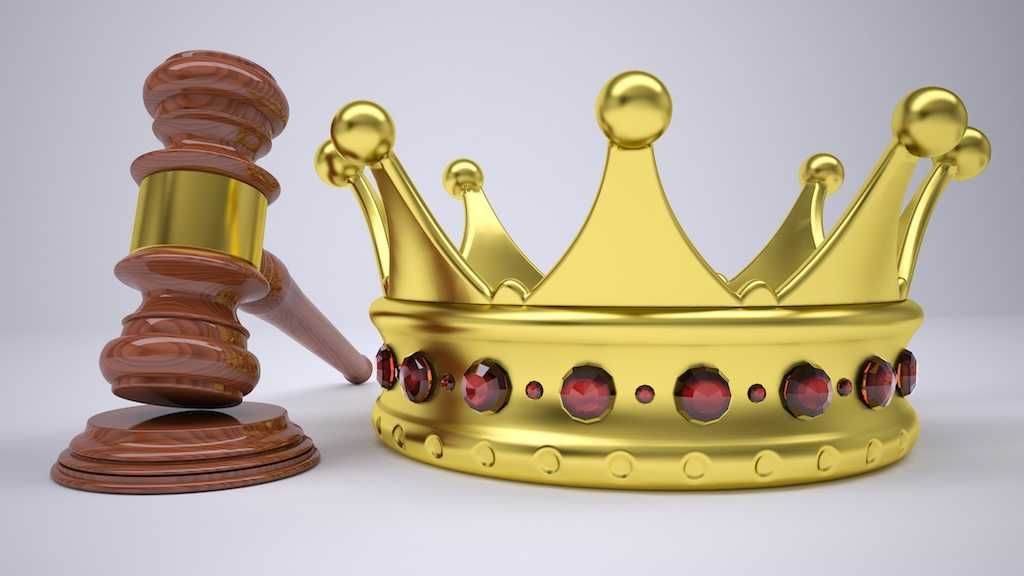
This Supreme Court case could reverse a century of bureaucratic overreach


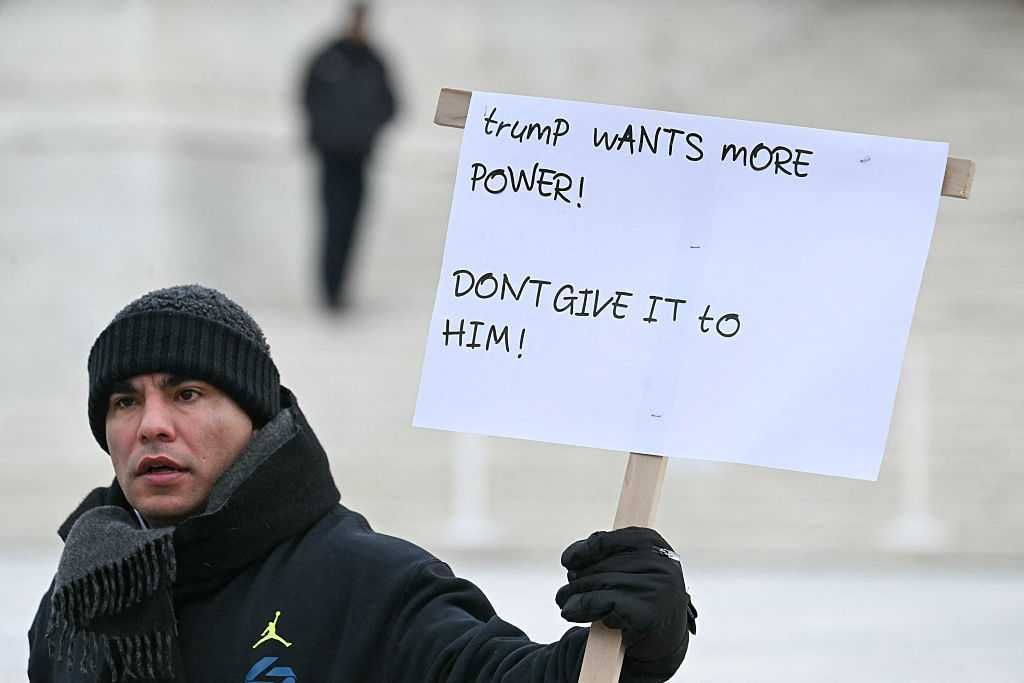
Washington is watching and worrying about a U.S. Supreme Court case that could very well define the future of American self-government. And I don’t say that lightly. At the center of Trump v. Slaughter is a deceptively simple question: Can the president — the one official chosen by the entire nation — remove the administrators and “experts” who wield enormous, unaccountable power inside the executive branch?

This isn’t a technical fight. It’s not a paperwork dispute. It’s a turning point. Because if the answer is no, then the American people no longer control their own government. Elections become ceremonial. The bureaucracy becomes permanent. And the Constitution becomes a suggestion rather than the law of the land.

A government run by experts instead of elected leaders is not a republic. It’s a bureaucracy with a voting booth bolted onto the front to make us feel better.

That simply cannot be. Justice Neil Gorsuch summed it up perfectly during oral arguments on Monday: “There is no such thing in our constitutional order as a fourth branch of government that’s quasi-judicial and quasi-legislative.”

Yet for more than a century, the administrative state has grown like kudzu — quietly, relentlessly, and always in one direction. Today we have a fourth branch of government: unelected, unaccountable, insulated from consequence. Congress hands off lawmaking to agencies. Presidents arrive with agendas, but the bureaucrats remain, and they decide what actually gets done.

If the Supreme Court decides that presidents cannot fire the very people who execute federal power, they are not just rearranging an org chart. The justices are rewriting the structure of the republic. They are confirming what we’ve long feared: Here, the experts rule, not the voters.

A government run by experts instead of elected leaders is not a republic. It’s a bureaucracy with a voting booth bolted onto the front to make us feel better.

The founders warned us

The men who wrote the Constitution saw this temptation coming. Alexander Hamilton and James Madison in the Federalist Papers hammered home the same principle again and again: Power must remain traceable to the people. They understood human nature far too well. They knew that once administrators are protected from accountability, they will accumulate power endlessly. It is what humans do.

That’s why the Constitution vests the executive power in a single president — someone the entire nation elects and can unelect. They did not want a managerial council. They did not want a permanent priesthood of experts. They wanted responsibility and authority to live in one place so the people could reward or replace it.

So this case will answer a simple question: Do the people still govern this country, or does a protected class of bureaucrats now run the show?

Not-so-expert advice

Look around. The experts insisted they could manage the economy — and produced historic debt and inflation.

The experts insisted they could run public health — and left millions of Americans sick, injured, and dead while avoiding accountability.

The experts insisted they could steer foreign policy — and delivered endless conflict with no measurable benefit to our citizens.

And through it all, they stayed. Untouched, unelected, and utterly unapologetic.

If a president cannot fire these people, then you — the voter — have no ability to change the direction of your own government. You can vote for reform, but you will get the same insiders making the same decisions in the same agencies.

That is not self-government. That is inertia disguised as expertise.

A republic no more?

A monarchy can survive a permanent bureaucracy. A dictatorship can survive a permanent bureaucracy. A constitutional republic cannot. Not for long anyway.

We are supposed to live in a system where the people set the course, Congress writes the laws, and the president carries them out. When agencies write their own rules, judges shield them from oversight, and presidents are forbidden from removing them, we no longer live in that system. We live in something else — something the founders warned us about.

And the people become spectators of their own government.

RELATED: Judges break the law to stop Trump from enforcing it
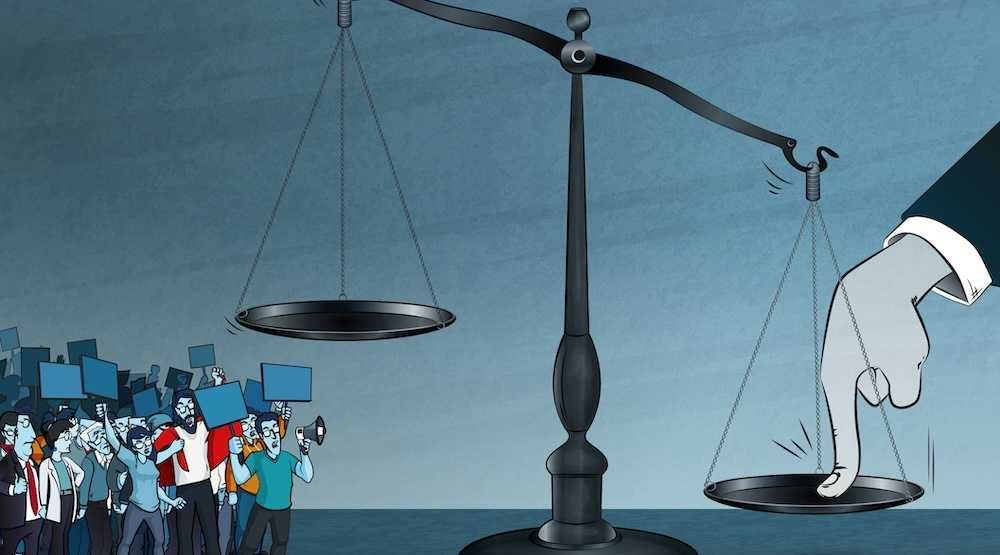
Photo by Jim WATSON / AFP via Getty Images

The path forward

Restoring the separation of powers does not mean rejecting expertise. It means returning expertise to its proper role: advisory, not sovereign.

No expert should hold power that voters cannot revoke. No agency should drift beyond the reach of the executive. No bureaucracy should be allowed to grow branches the Constitution never gave it.

The Supreme Court now faces a choice that will shape American life for a generation. It can reinforce the Constitution, or it can allow the administrative state to wander even farther from democratic control.

This case isn’t about President Trump. It isn’t about Rebecca Slaughter, the former Federal Trade Commission official suing to get her job back. It’s about whether elections still mean anything — whether the American people still hold the reins of their own government.

That is what is at stake: not procedure, not technicalities, but the survival of a system built on the revolutionary idea that the citizens — not the experts — are the ones who rule.

Congress Needs To Grill Joe Biden About Whether He Was Actually President

The American people have a right to know who was actually in charge of the executive branch, with all its awesome power, for four years.
Trump says he's serious about another term in office: 'Sort of a fourth term'


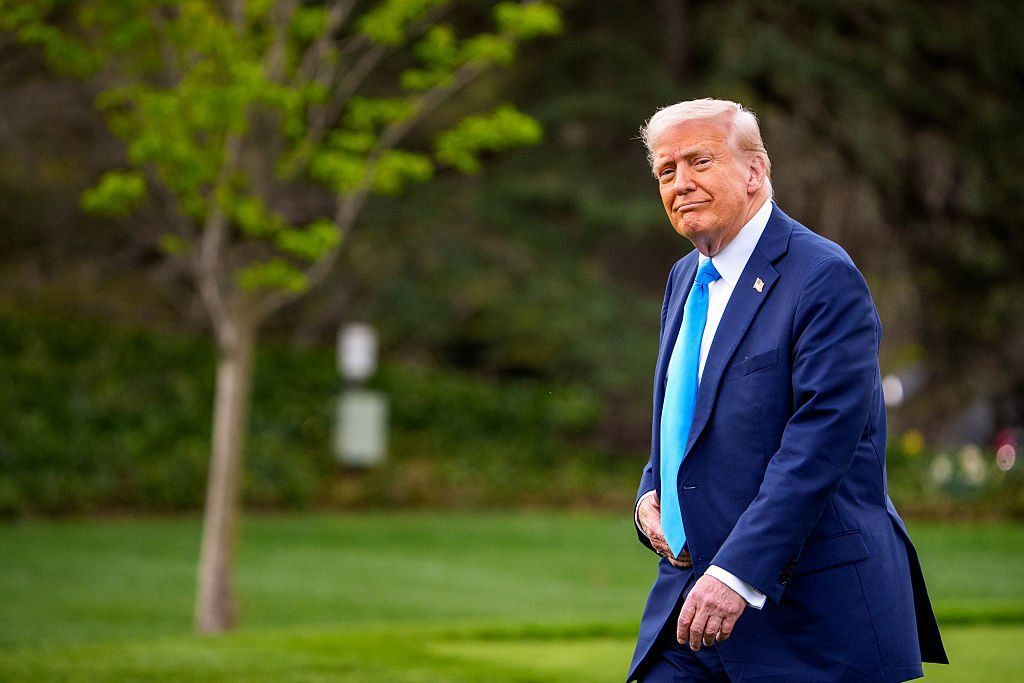
President Donald Trump said in a Sunday morning phone interview that he is serious about the possibility of serving a third term in office. When pressed later aboard Air Force One about his comments, the 78-year-old Republican suggested that supporters have raised the possibility of him ultimately serving a total of 12 years, citing their pleasure with the wins he has notched since retaking office.

"A lot of people want me to do it," Trump told NBC News' Kristen Welker. "But, I mean, I basically tell them we have a long way to go, you know, it's very early in the administration."

"I'm focused on the current," added Trump.

Article II, Section 1, of the Constitution set presidential terms at four years but did not originally set term limits. While presidents were long able to serve over two terms, George Washington set a precedent that all but one president, Democrat Franklin D. Roosevelt, followed.

In response to Roosevelt holding onto power from 1933 until 1945, the 22nd Amendment was ratified in 1951, limiting presidents to serving two terms.

The Congressional Research Service indicated that over the past seven decades, there have been scores of attempts to repeal the two-term limit as well as chatter among partisans about their favored president serving some overtime.

Just as there was some interest in the possibility of a third term for Dwight D. Eisenhower in 1960, there was a push in 1973 by Richard Nixon supporters — pleased with the Republican's successful first term — to eliminate the constitutional obstacle to another four years. Apparently, there was also serious interest among supporters of Bill Clinton and Barack Obama to ax the 22nd Amendment in the interest of keeping their favorites politically viable for more time in the Oval Office.

There has also been interest in clearing the way for a third Trump term.

Tennessee Rep. Andy Ogles (R) introduced a House joint resolution in January that would enable a president to serve three terms so long as he did not already serve two consecutive terms. Accordingly, Trump could serve a third term but Obama and Clinton would be unable.

'We have a long time to go.'

"[Trump] has proven himself to be the only figure in modern history capable of reversing our nation's decay and restoring America to greatness, and he must be given the time necessary to accomplish that goal," Ogles said in a statement. "To that end, I am proposing an amendment to the Constitution to revise the limitations imposed by the 22nd Amendment on presidential terms."

It is highly unlikely such a constitutional amendment would receive the required two-thirds vote in both houses of Congress as well as the required ratification of three-fourths of the state legislatures or state conventions.

"There are methods which you could do it," Trump told Welker when asked about whether he had seen plans detailing how he might pursue another term.

NBC News reportedly floated a possible scenario where Vice President JD Vance successfully won a presidential election then substituted Trump in. After all, the Constitution specifically prohibits reelection to a third term but does not explicitly prohibit a third term.

Legal scholars indicated in a Clinton-era paper published by the Minnesota Law Review that "a President nearing the end of his or her second term and determined to stay in office might run as Vice President with the idea that the President-elect would step aside, allowing the already twice-elected President (and Vice President-elect) to serve a third term without running afoul of the Twenty-Second Amendment's bar on reelection."

While "there would be inevitable conflict over its legality and wisdom," the paper noted that "the possibility of an already twice-elected President reassuming that Office also presents opportunities of potential benefit to the polity."

Trump, who would be nearing the age of 87 by the end of a third term, told NBC News the vice-presidential backdoor into a third term is one possibility, adding that "there are others too," without elaboration.

'I'm not joking.'

When asked about whether he would actually want another term, Trump told Welker, "I like working."

"I'm not joking," added Trump. "But I'm not — it is far too early to think about it."

When asked later in the day about his interest in a third term, Trump told reporters, "I'm not looking at that, but I'll tell you, I have had more people ask me to have a third term, which is, in a way, a fourth term because the other election, the 2020 election, was totally rigged. So it's actually sort of a fourth term in a certain way. I just don't want the credit for the second because Biden was so bad."

After claiming "some very important people" have complimented his second administration's accomplishments, Trump noted he doesn't want to talk about the possibility because "no matter how you look at it, we have a long time to go."

It is unclear if Trump is just trying to rile up his critics. While he has previously expressed interest in a third term, he told Time magazine last year he was not interested in repealing the 22nd Amendment and told House Republicans in November, "I suspect I won't be running again unless you say, 'He's so good we've got to figure something else out.'"

Like Blaze News? Bypass the censors, sign up for our newsletters, and get stories like this direct to your inbox. Sign up here!

Obama's former right-hand man Rahm Emanuel posturing for presidential run: Report


The list of potential Democratic presidential candidates for 2028 continues to grow.

California Gov. Gavin Newsom appears to have aspirations of podcasting his way from his crime-ridden state to the White House. Newsom's fellow governor Josh Shapiro of Pennsylvania is also considered a contender — at least by the Washington Post. Among the numerous other middling prospects keen to throw their hats in the ring is Minnesota's honesty-impaired governor, Tim Walz, who recently indicated that he would run "if the circumstances are right."

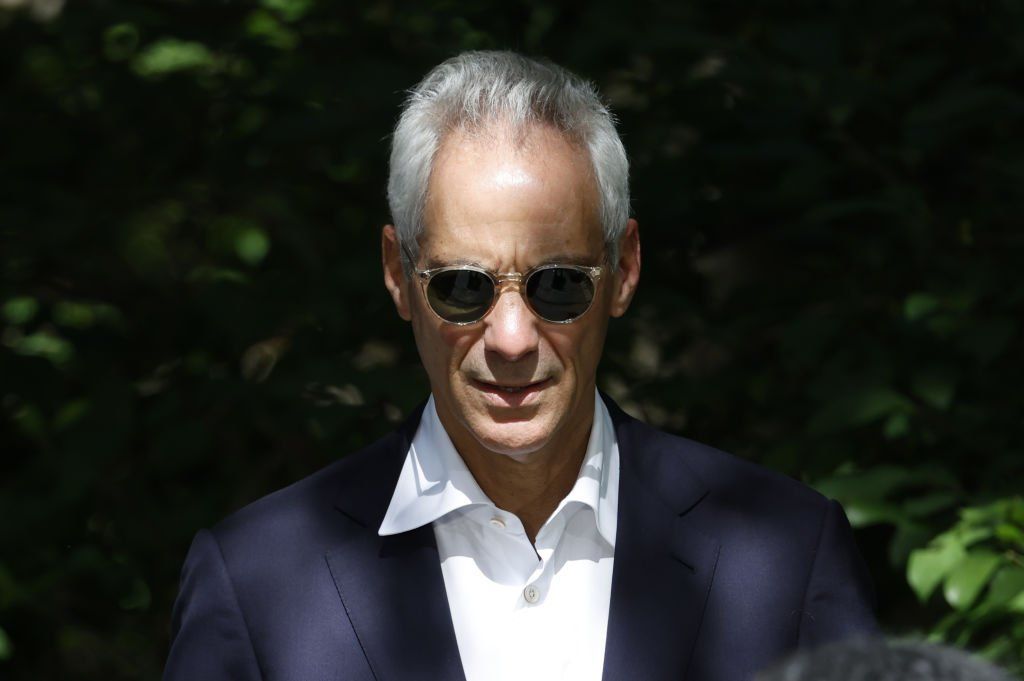
Barack Obama's old right-hand man Rahm Emanuel — the Democrat who famously said at the outset of the 2008 financial crisis that "you never want a serious crisis to go to waste" — is apparently now also preparing to run, ready to exploit the crisis in the Democratic Party to distinguish himself from the pack.

Emanuel is a Democratic operative who fundraised for Bill Clinton ahead of the 1992 presidential election, then later served as his adviser, championing NAFTA; represented Illinois for three terms in the House; served as Obama's chief of staff from 2009 to 2010; and served as Biden's ambassador to Japan.

Between his stints with the Obama and Biden administrations, Emanuel served as mayor of Chicago for eight years, during which time he oversaw an explosion in the city's crime and rat infestation rates; secretly used a personal email domain for government work; dropped the ball on affordable housing promises; and saw 60% of his top 103 campaign donors receive city contracts, zoning changes, pension work, business permits, regulatory help, or other consequential benefits, according to a Chicago Tribune analysis.

Emanuel recently told Politico, "I'm not done with public service, and I'm hoping public service is not done with me."

The liberal publication previously propped up by federal subscriptions indicated that Emanuel's behavior since returning home from Japan hints at ambitions of pursuing higher office. He has sought to maximize his visibility, appearing on podcasts, securing a CNN contract, and consistently spilling ink in his Washington Post column.

'He understands how to win.'

Emanuel has also made his rounds on the lecture circuit, addressing deep-pocketed audiences at the Chicago Economic Club and at the Realtors Political Action Committee President's Circle conference last month. He is apparently set to speak at West Point as part of a broader service academy tour, which will allow him to test the waters with other voter demographics.

Politico suggested that Emanuel's recent efforts to play to opinion polls is further evidence that he is testing the waters. He has embraced popular Republican positions on gender ideology and the need to remedy bureaucratic bloat in the federal government, while criticizing the Democratic Party's leftist fetishes, which helped Kamala Harris lose in November and alienated American voters.

It appears that elements of the Democratic establishment are receptive to the idea of Emanuel as a candidate.

"Who has more relevant experience?" former Obama adviser David Axelrod told Politico. "He understands how to win and speaks bluntly in an idiom that most folks understand."

Axelrod apparently characterized Emanuel as the "remedy, not the replica, of a president with little interest in governance and the chaos that flows from that," according to a paraphrase from Politico.

While Politico appears convinced that Emanuel might try for the top seat, it appears that the 65-year-old Democrat is open to securing power at virtually any level. The Chicago Tribune reported that Emanuel has not ruled out running again for Chicago mayor or seeking the Democratic nomination for Illinois governor next year if Gov. J.B. Pritzker (D) does not run again.

Like Blaze News? Bypass the censors, sign up for our newsletters, and get stories like this direct to your inbox. Sign up here!

'Autopen' used on official docs throughout Biden presidency — including on pardons while he vacationed: Report


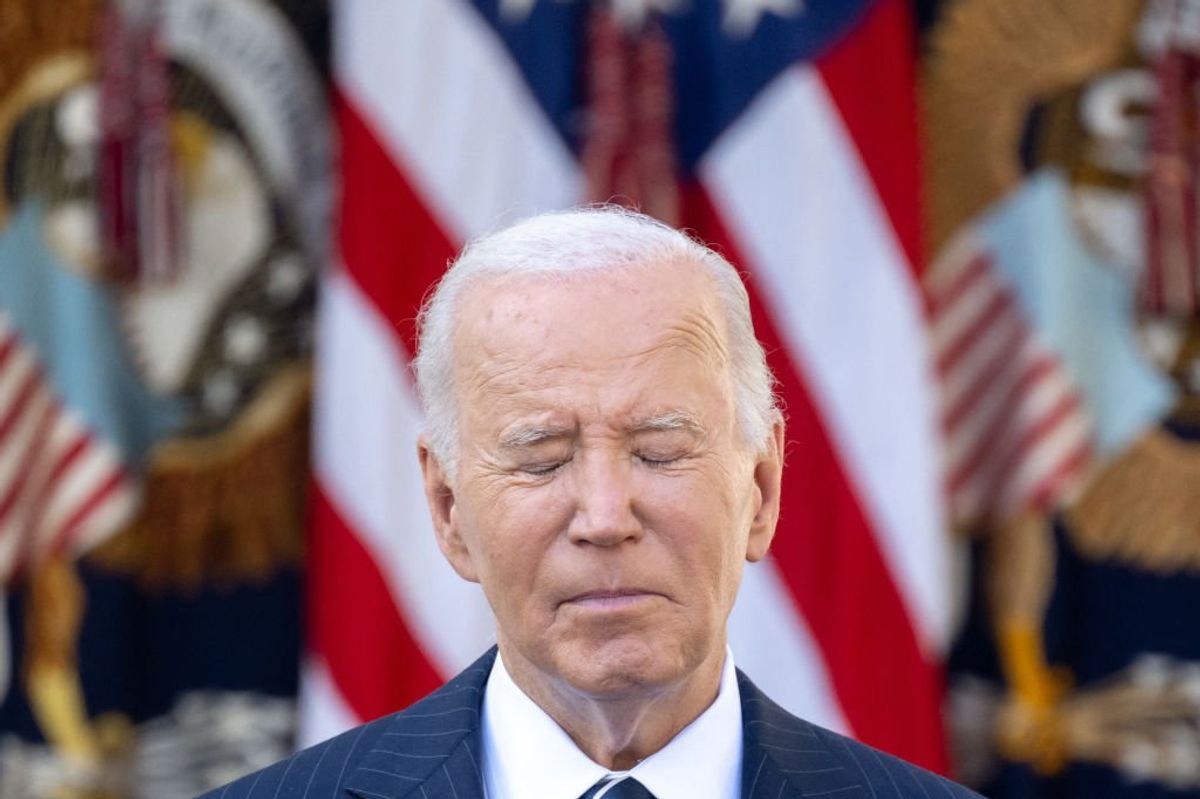
The Heritage Foundation's Oversight Project revealed Thursday that Joe Biden's signature on numerous executive orders, pardons, and other documents of national consequence appears to have been machine-generated.

Oversight Project Executive Director Mike Howell told Blaze News, "The main legal question here is who was the president over the last four years. That's what we are aiming to uncover. The prolific use of autopen by the Biden White House was an instrument to hide the truth from the American people as to who was running the government."

The watchdog group noted that "every document" they could find with Biden's signature — with the exception of the announcement indicating that he was dropping out of the 2024 presidential race — "used the same autopen signature."

The Oversight Project noted, for instance, that the repeatedly used autopen signature appeared on the pardons for a murderer and five other criminals that were issued while Biden was vacationing and golfing in the U.S. Virgin Islands. The pardons all reportedly indicated that they were signed "at the City of Washington."

This discovery, coupled with the former president's alleged admission to House Speaker Mike Johnson (R-La.) that he did not remember signing a January 2024 order to pause decisions on exports of liquefied natural gas, prompted the Oversight Project to once again cast doubt on whether Biden was ever calling the shots and to suggest that "WHOEVER CONTROLLED THE AUTOPEN CONTROLLED THE PRESIDENCY."

Critics, enraged by yet another indication that unelected ideologues may have secretly controlled the executive branch for the past four years, are now questioning the legitimacy of the documents bearing the autopen signature.

'All those orders are void.'

Seeking definitive answers, Missouri Attorney General Andrew Bailey wrote to the Department of Justice last week requesting a full investigation into the legality of Biden's presidential actions in light of his apparent mental decline, which was especially clear to special counsel Robert Hur, who figured Biden as possibly too senile to charge.

"Under the 25th Amendment, his inability to make decisions should have meant a succession of power," Bailey noted in his letter. "Instead, it appears staffers and officers in the Biden administration may have exploited Biden's incapacity so they could issue orders without an accountable President of sound mind approving them."

President Donald Trump told Blaze Media co-founder Glenn Beck in October that Joe Biden was likely little more than a figurehead for a "committee" of unnamed bureaucrats.

Lindy Li, a former Democratic strategist and fundraiser who served as a surrogate for failed presidential candidate Kamala Harris and worked for the 2020 Biden campaign, recently shed some light on potential members of that supposed committee. Li told podcaster Shawn Ryan last month that Hunter Biden, Jill Biden, and a handful of other unelected senior advisers effectively served as a combined shadow president.

Missouri Attorney General Bailey suggested that a number of pardons Biden supposedly signed were suspicious, including the unconditional 10-year pardon Biden supposedly gave his son after repeatedly vowing he would not do so and just months after declaring without qualification, "No one is above the law."

"It is black-letter law that a document is void, ab initio, when the person signing it lacks mental capacity," wrote Bailey. "Staffers and the Vice President cannot constitutionally evade accountability by laundering far-left orders through a man who does not know what he is signing. If in fact this has been occurring, then all those orders are void."

The Oversight Project suggested that in order to determine whether Biden ordered the signing of key documents or was even mentally capable of doing so, investigators must "determine who controlled the autopen and what checks there were in place."

The watchdog group further indicated that Biden's work to undermine the White House executive privilege shield will make such determinations achievable.

"There is a constitutional process to deal with an incapacitated POTUS and it doesn't contemplate giving someone else his autopen and authority," tweeted Howell. "It's called the 25th Amendment and the conspiracy not to invoke it in order to keep whatever they were doing going is a big problem."

The New York Post indicated that representatives for Biden had not responded to requests for comment regarding the use of the autopen.

Like Blaze News? Bypass the censors, sign up for our newsletters, and get stories like this direct to your inbox. Sign up here!

Was Lincoln gay? New doc conscripts American icon to LGBT cause


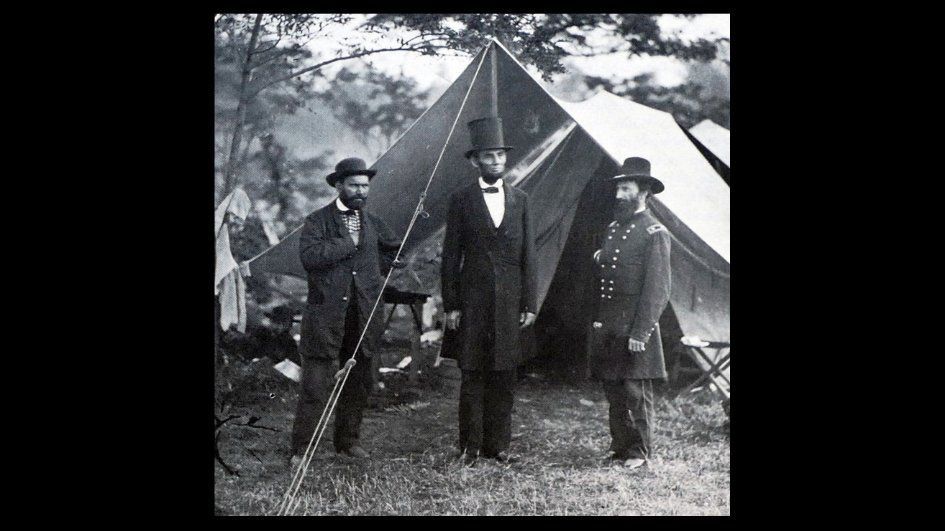
Abraham Lincoln holds a mythic position in the American consciousness. He’s respected across the political spectrum. He redrew America’s social contract and self-image. And because he led the country through the Civil War and abolition, he’s now accorded a status befitting a Greek god, cast in bronze and marble.

Lincoln is essential to the American social contract, which makes him essential to any political cause seeking to reframe the national project. He’s criticized by “woke” leftists and alt-righters as a symbol of the neo-liberal consensus and used as a symbol of equality and unity by those in power.

One of the saddest things about the modern world is that the concept of close male friendship has functionally been destroyed.

It’s no surprise, then, that the LGBT movement would come to claim him as well. While no American presidents have ever been openly "gay" as such, a handful have attracted questions concerning their sexual proclivities. Lincoln’s predecessor James Buchanan, for example, was America’s only bachelor president, a pink flag for certain historians looking to "out" him.

Lincoln's outsized stature naturally makes him a far more tempting catch. As transgender and gay issues increasingly dominate the discourse, there have been more than a few attempts to use speculation about Lincoln’s private life and vague comments in his letters to canonize our 16th president as an official "queer" icon.

A deliberate provocation

A recent documentary boldly announces its intention in its blunt title: "Lover of Men: The Untold Story of Abraham Lincoln."

The film was released this fall to general praise from the press and backlash from conservative media. The filmmakers mostly laughed off said backlash, telling the Hollywood Reporter that they were “thrilled” that Ben Shapiro, Alex Jones, and Elon Musk were furious about it. “The reason that they notice the film is because it is compelling. This story is provocative,” said director Shaun Peterson.

The case "Lover of Men" makes goes roughly like this: Lincoln had very close relationships with multiple men throughout his adult life, relationships that were arguably more intimate than traditional friendships. He shared beds with men for months or years at a time, revealed details of his sex life to them in letters, and openly expressed his deep emotional connection to them.

The film essentially argues that Lincoln was LGBT avant la lettre, living an identity that would today be recognized as "queer," "fluid," or "non-conforming." Whether Lincoln actually had sex with any of these men is largely immaterial.

Strange bedfellows

"Lover of Men" dismisses most of the immediate rebuttals with a shrug; the first among them being that beds in the 19th century were expensive and scarce, and it wasn’t uncommon for inns to assign multiple men to a bed or for male friends to share beds.

Peterson's argument relies upon the common modern assumption that intimacy and sexuality are deeply entwined things. The possibility that two men would share deep affection without any hint of the erotic is mostly overlooked because the alternative soundbite — Lincoln was gay! — proves irresistible.

Ironically, Peterson's eagerness to reach this conclusion tells us more about the America of today than it does about Lincoln's era. One of the saddest things about the modern world is that the concept of close male friendship has functionally been destroyed. Even progressive feminists will admit that one of the privileges women enjoy is the ability to form intimate, non-sexual relationships without any hint of Eros.

Men consequently tend to be lonelier than women and have more trouble intimately bonding.

Part of this can be attributed to a decline in fraternal organizations, with most male-only organizations now admitting women. Part of it is also the growing masculine insecurity with being perceived as unmasculine.

The erosion of male friendship

Still, the pernicious influence of the LGBT lobby's tendency to cast public male intimacy as gay should not be underestimated. One needs only recall the particularly fanciful attempts to affirm the secret, sexual passion between "Lord of the Rings" protagonists Frodo and Sam, despite all evidence to the contrary, not least of which is author J.R.R. Tolkien's devout Catholicism.

The result is a negative feedback loop. Men have fewer and fewer opportunities to express themselves. They are criticized for not being emotional; at the same time, any emotional expression is seized upon as evidence of homosexuality.

Tolkien's close friend C.S. Lewis, himself a target of LGBT revisionists, diagnosed the problem more than 60 years ago in his book "The Four Loves": “Those who cannot conceive Friendship as a substantive love but only as a disguise or elaboration of Eros betray the fact that they have never had a Friend. The rest of us know that though we can have erotic love and friendship for the same person yet in some ways nothing is less like a Friendship than a love affair.”

Was Lincoln "closeted"? It's certainly possible — but it seems likely that the claim is beyond proving. "Lover of Men" takes this as reason enough to indulge its speculation. As one interviewee argues, “If the naysayers had their way, there wouldn’t be a gay history because you couldn’t prove it.”

And yet "Lover of Men" is not content to settle for the past. Appropriating Lincoln’s life as a story of repressed homosexuality is a means to entrenching the LGBT movement's power in the present; one commentator goes so far as to say the 14th Amendment should be extended to Americans identifying as transgender.

Whatever one's personal opinions on the matter, using Lincoln as a vehicle for modern-day activism in this way is bad history. We don’t know the secrets of Lincoln’s cloistered heart, and neither do the historians Peterson has assembled. We should be happy to admit our ignorance; some things are meant to remain a mystery.

There Is Nothing ‘Joyful’ About Harris’ and Walz’s Grimly Anti-American Agenda

The Harris-Walz campaign's ambivalent message on public policy is designed to hide their destruction of everything they govern.

The Ousting Of Biden Was A Textbook Coup D’état

This type of coup was supposed to have been rendered impossible back when our grandfathers were in middle age. Now we know better.