Stephen A. Smith Refuses To Be Baited By CNN Host Over Trump’s IQ Comments
'Certainly an upgrade from what we were seeing from Joe Biden'
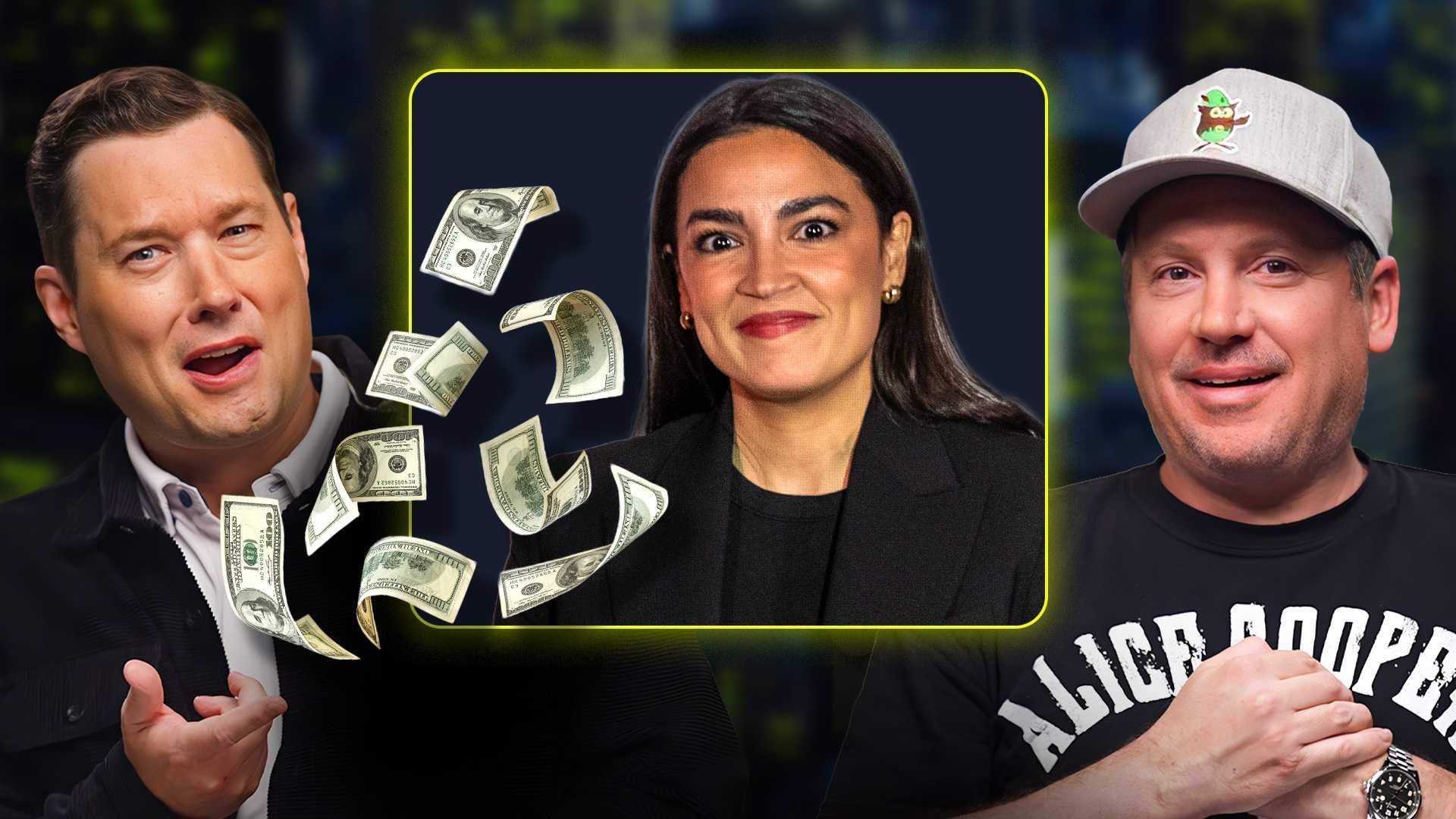
Former bartender and current Rep. Alexandria Ocasio-Cortez (D-N.Y.) is proving that no matter where you come from — or what ridiculous ideas you have — you can still be taken seriously as a potential candidate for president of the United States.
And BlazeTV host Stu Burguiere tells co-host Dave Landau that AOC, who is one of “the most famous politicians in America” while also being “a dunce,” is “surging to a lead in the 2028 primary for the first time.”
“AOC?” Dave asks, shocked.
“Yes, Alexandria Ocasio-Cortez,” Stu replies.
“I just went blind in my right eye for a moment,” Dave jokes.
“It is legitimately possible that she could win,” Stu adds, before playing a clip of the congresswoman telling Ilana Glazer on the “It’s Open” podcast that billionaires “can’t earn” $1 billion.
“There’s a certain level of wealth and accumulation that is unearned. Right? You can’t earn $1 billion. You just can’t earn that. You can get market power. You can break rules. You can do all sorts of things. You can abuse labor laws. You can pay people less than what they’re worth. But you can’t earn that,” AOC explained.
“And so, you have to create a myth that since you didn’t earn that, you have to create a myth of earning it,” she added.
“I don’t have $1 billion,” Dave comments, “but I don’t trust anyone telling someone they didn’t earn the money they earned.”
“I don’t know when the country became this way,” Stu adds, “but they are this way now where you just get to, without accomplishing anything on your own, you get to just say that no one else deserves what they have achieved in their lives.”
To enjoy more of Stu and Dave's lethal blend of wit, humor, and insightful commentary subscribe to BlazeTV — the largest multi-platform network of voices who love America, defend the Constitution, and live the American dream.
Few remember what economic plan Jimmy Carter tried to sell in 1980. They remember the misery index, inflation and unemployment climbing together, and the hostages in Iran. What they don’t remember are the policy details, because one question cut through all of it.
Ronald Reagan asked, “Are you better off than you were four years ago?”
That was it. Everything Carter wanted to argue for a second term had to pass through that question. Once it didn’t, the rest of the argument no longer mattered.
People escape accountability because we lack the will — or the courage — to let the question stand in the spotlight.
People remember questions like that, not because they were clever, but because they left nowhere to hide.
“What did the president know, and when did he know it?” —Howard Baker
“Can you provide a definition for the word 'woman'?” —Senator Marsha Blackburn
“What's your favorite type of abortion?” —Rep. Brandon Gill
And then there is the question God put to Job, not for information, but for perspective: “Where were you when I laid the foundation of the earth?”
Some questions demand accountability from men, while one reminds man who he is. We used to understand this. Now we try to avoid it.
I have spent four decades in exam rooms, where polite conversation is useless when something goes wrong. You don’t ask questions to sound informed; you ask because something is at stake.
What happened? What changed? What are we doing now?
You don’t let the answer drift into language that sounds right but explains nothing. You bring it back, again and again, until something real emerges. No amount of expertise, credentials, or authority allows someone to evade accountability with a filibuster. You don’t have to know how to perform surgery to do that. You just have to care enough not to be brushed aside.
That discipline is rare in our public life.
A congresswoman recently echoed a talking point her party and much of the media have been pushing. She pressed Pete Hegseth about the 25th Amendment and Donald Trump. It sounded serious, but it wasn’t.
The world watched Joe Biden struggle in plain view. Where was this concern then?
The same thing shows up with Elizabeth Warren. She raised concerns about airline prices while opposing the JetBlue-Spirit Airlines merger that might have reshaped that market.
She is welcome to make the argument, but the question remains: "You opposed the merger, so how is this outcome not on you?"
That question doesn’t ask for a speech; it requires an answer.
The same pattern shows up on a much larger stage. For decades, leaders in both parties have said the same thing about Iran: It cannot be allowed to obtain a nuclear weapon, and it remains a leading state sponsor of terrorism.
That has been the consistent position, even as the policies have differed. Two Clintons, two Bushes, Obama, Schumer, Pelosi, Biden, and scores of others all said the same thing: Iran can't have a nuclear weapon.
Now, when Donald Trump takes steps he argues are aimed at achieving that outcome, many of the same voices object.
RELATED: The media can't hide behind 'we' forever
We have also lost the discipline to define the words we use. People throw around “fascist” as if saying it settles the argument, when all it does is raise another question: "What do you mean?"
Not the label, but the definition. If the word means something, it should withstand that question. If it can’t, then it is being used as a weapon or a prop, not a description. Ultimately, the question becomes the teaching moment.
God set that standard in the third chapter of Genesis: “Where are you?” “Who told you that you were naked?”
He didn’t ask because they needed information, but because they needed to see. That’s what a real question does. It brings clarity. It forces things into the open that people would rather leave covered.
Clarity doesn’t come from longer answers. It comes from better questions. And when the question is right, it leaves no room to hide behind time or language.
People escape accountability because we lack the will — or the courage — to let the question stand in the spotlight. The clock runs out. The filibuster works. And the question either goes unanswered or never gets asked at all.
And everyone retreats to their corner, waiting for the next performance.
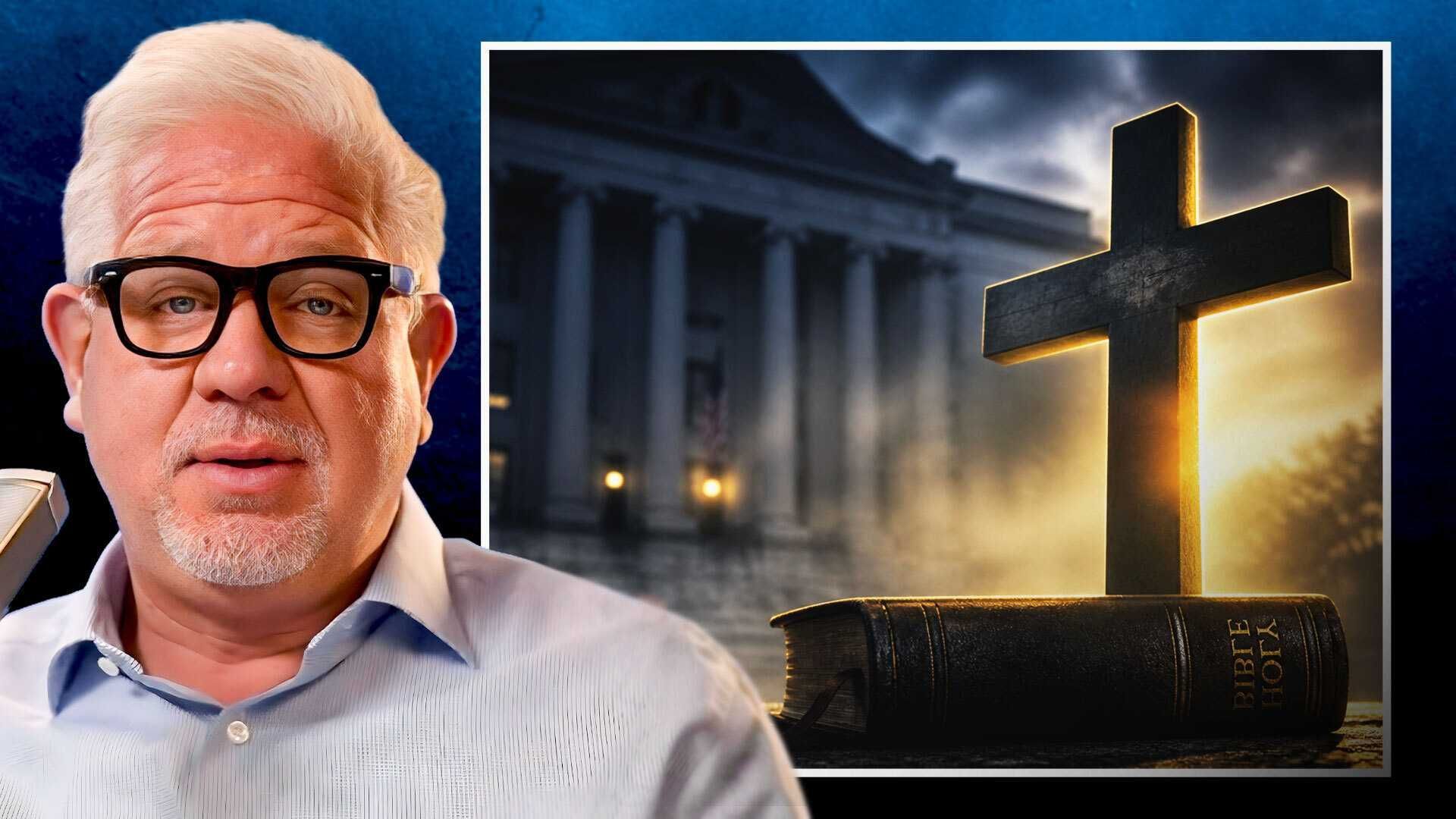
A newly released Department of Justice task force report is confirming concerns that religious Americans — particularly Christians — were unfairly targeted by their own government. And Assistant Attorney General Harmeet Dhillon has seen it herself.
“We’ve been compiling this stuff for a while now, and I experienced this type of anti-Christian and really anti-religious bias as a lawyer in private practice over the last several years,” Dhillon tells Blaze Media co-founder Glenn Beck on “The Glenn Beck Program.”
“I’ll just give you one example. Our government, not just the DOJ but, you know, various aspects of the government, viewed people seeking religious accommodations to not have to get the COVID vaccination if they were government employees as not legitimate,” she explains.
“They basically internally labeled all of those accommodation requests illegitimate,” she adds.
The Supreme Court Bostock ruling, Dhillon explains, “basically made it illegitimate for any person employed by the government to have a Christian viewpoint on gay marriage and issues like that, which are very much spiritual and religious in nature.”
“And so, there was just a complete lack of respect for the Christian,” she adds.
Dhillon explains that according to a FACE Act weaponization report, “disparaging remarks were made by DOJ prosecutors in [her] department” regarding “a magistrate judge being a Catholic, keeping people of faith off of juries, and going after and seeking sentences that were more than double for Christian protesters outside abortion clinics than for really domestic terrorists going after pro-life centers in Florida.”
“So these disparities were marked, they were open, they were written down in emails. And thank goodness that we have a president today who is not just dedicated to changing that but to also documenting what happened so that people should feel ashamed to do this to other people of faith in our country because our country is founded on faith,” she continues.
“And specifically,” she adds, “on the Christian faith.”
To enjoy more of Glenn’s masterful storytelling, thought-provoking analysis, and uncanny ability to make sense of the chaos, subscribe to BlazeTV — the largest multi-platform network of voices who love America, defend the Constitution, and live the American dream.
Many leftists pin their hatred of Donald Trump on their unproven claim that he was involved with Jeffrey Epstein — but that isn’t stopping them from supporting an alleged abuser at the box office.
And BlazeTV host Sara Gonzales is tired of the hypocrisy.
“They’re like, ‘Oh my gosh, we hate pedophiles. We are the party against pedophiles, and the Republicans are always protecting pedophiles. If there’s anything we hate, it’s pedophiles,’” Gonzales mocks.
“Actually, that’s historically not been the case. Has not been the case, as documented with all of these Democrats involved with Jeffrey Epstein, but also they have apparently been crawling all over each other to go watch a movie about [an alleged] renowned kiddie diddler,” she continues.
The movie is Antoine Fuqua’s Michael Jackson biopic, which brought in a whopping $218.8 million globally over its opening weekend and became the biggest domestic opening of all time for any biopic.
“Michael Jackson, when it comes to him, technically he was cleared in the legal system in 2005,” Gonzales says, though she isn’t buying it.
And according to a report in People magazine, Gonzales may be on to something.
The report claims that the director of the biopic allegedly made an extra $25 million to remove child sex abuse allegations.
“That’s a lot of money to pay the director and a producer to remove things from the movie if they weren’t true,” Gonzales says, pointing out that it’s not the first time allegations of abuse have been suspiciously squashed.
“You also had the documentary ‘Leaving Neverland,’ which was 2019. And the biggest accusations that came out were highlighted in this. ... But guess what? If you missed it and you want to go back to check it out, you’re not going to be able to see it because the Jackson Estate sued to remove it from the internet, just like they buried it in the movie and got paid off,” she continues. “Are you sensing the trend yet?”
To enjoy more of Sara's no-holds-barred takes on news and culture, subscribe to BlazeTV — the largest multi-platform network of voices who love America, defend the Constitution, and live the American dream.
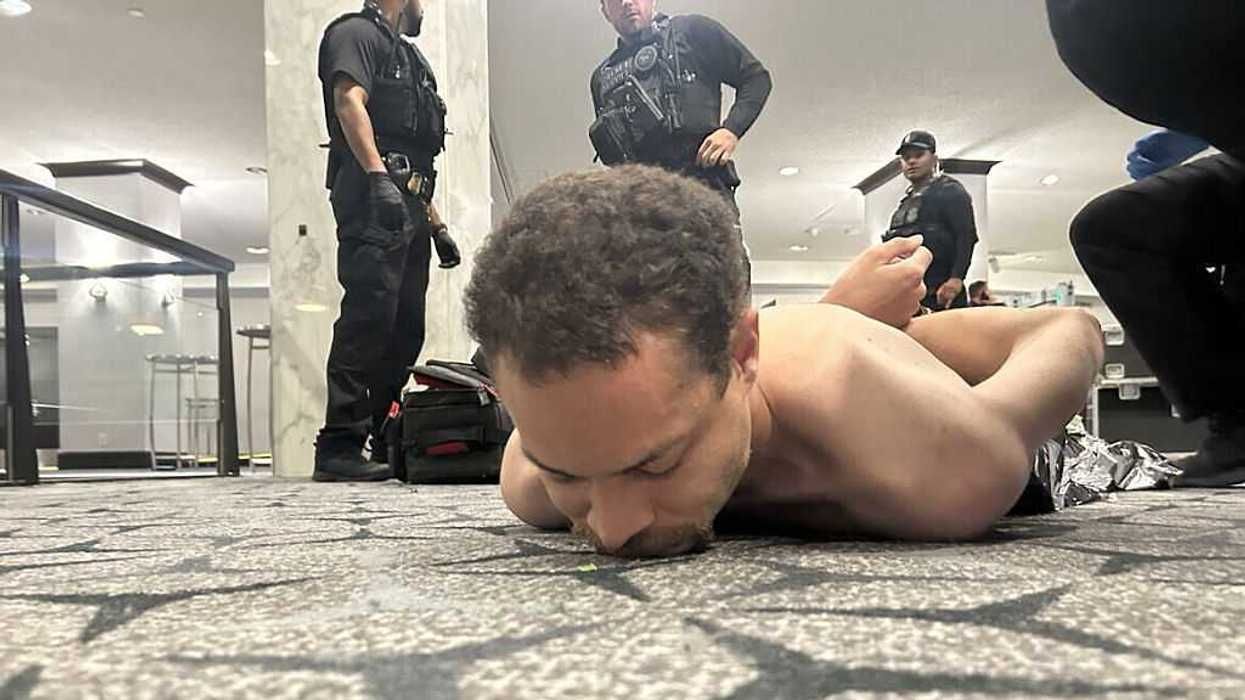
A depraved radical opened fire at the White House Correspondents' Association Dinner on Saturday night with the apparent aim of assassinating President Donald Trump and administration officials.
Following this latest attempt on his life, Trump implored all Americans to "recommit with their hearts in resolving our difference peacefully."
'A lot of this does come from the White House.'
White House press secretary Karoline Leavitt expounded on the need to drop the divisive rhetoric, telling reporters on Monday that "this political violence stems from a systemic demonization of [Trump] and his supporters by commentators — yes, by elected members of the Democrat Party and even some in the media. This hateful and constant and violent rhetoric directed at President Trump, day after day after day for 11 years, has helped to legitimize this violence and bring us to this dark moment."
Like the hordes of anti-Trump leftists who sounded off online over the weekend, especially on the liberal X knockoff Bluesky, Rep. Eugene Vindman (D-Va.) made clear Monday on CNN that he would rather point fingers than build bridges.
Vindman impressed upon CNN talking head Sara Sidner the supposed need for social media censorship, which he euphemistically referred to as "better regulat[ion.]"
When Sidner asked the Democrat congressman whether toning down the rhetoric "is even possible with this political class, with the vitriol that comes out of the White House," Vindman agreed that Trump is at least partially responsible for the divisive "political climate."
"No," responded Vindman, a native of the former Ukrainian Soviet Socialist Republic whose twin brother attacked Trump online after the previous attempt on the president's life. "Absolutely not. And look, I think you're right. A lot of this does come from the White House."
Vindman was hardly the only Democrat who apparently felt obliged to blame Trump for the violence directed his way.
Illinois Gov. J.B. Pritzker (D) told CNN on Monday, "Remember that it's been Donald Trump and the Republicans that have called for political violence."
After blaming suspected shooter Cole Allen's intended targets, Pritzker said that America needs to bring "peace to its politics." This sentiment was, however, short-lived, as he proceeded to defend the suggestion in his state of the state speech last year that the Trump administration is reminiscent of the Nazi regime in Germany.
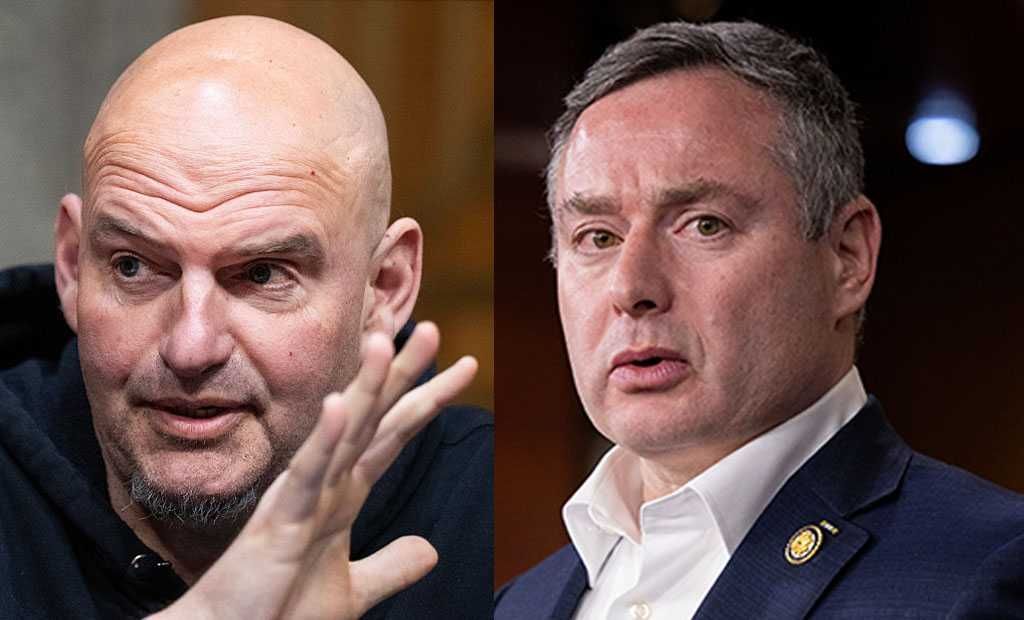
Unlike Pritzker and Vindman, Pennsylvania Sen. John Fetterman (D) told his Democrat peers to "drop the TDS and build the White House ballroom for events exactly like these."
Fetterman further acknowledged that the hotel where the gunman attacked on Saturday "wasn't build to accommodate an event with the line of succession for the U.S. government."
Trump wrote in a Truth Social post on Sunday, "What happened last night is exactly the reason that our great Military, Secret Service, Law Enforcement and, for different reasons, every President for the last 150 years, have been DEMANDING that a large, safe, and secure Ballroom be built ON THE GROUNDS OF THE WHITE HOUSE. This event would never have happened with the Militarily Top Secret Ballroom currently under construction at the White House. It cannot be built fast enough!"
Like Blaze News? Bypass the censors, sign up for our newsletters, and get stories like this direct to your inbox. Sign up here!
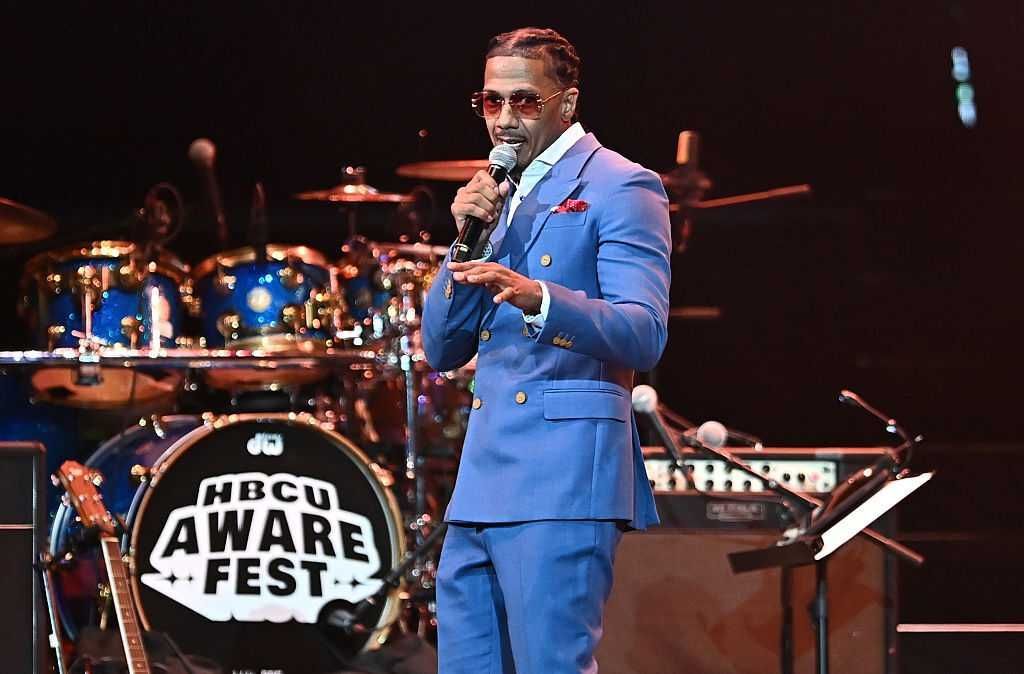
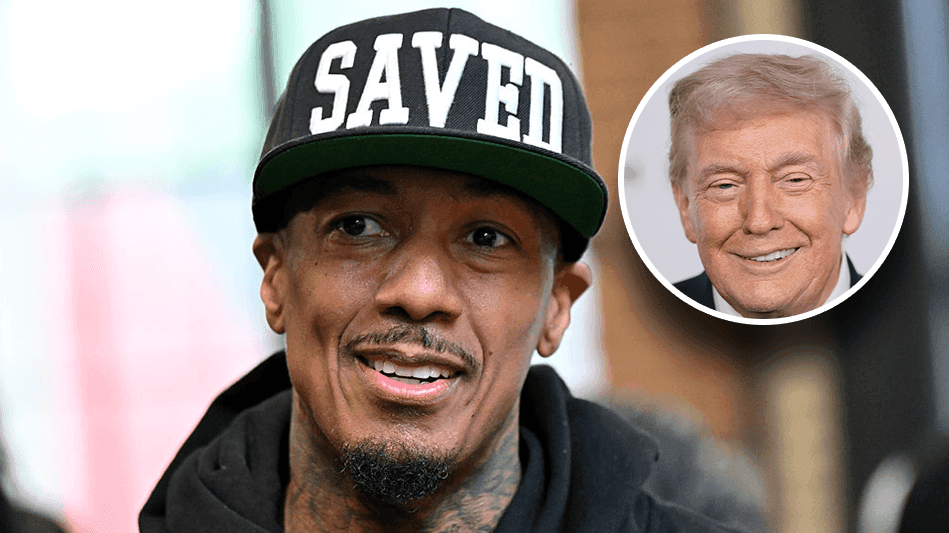
Actor, comedian, rapper, and TV host Nick Cannon can now add another title to his resume: unabashed Trump fan.
The "Masked Singer" host made his remarks on a recent episode of his podcast "Nick Cannon's Big Drive," which appears to have been removed from YouTube.
'People don't know that the Republicans are the party that freed the slaves.'
Speaking to Amber Rose, a model who spoke at the Republican National Convention in 2024, Cannon asked her if she supported the GOP as a result of her wealth and enterprise.
"Is that because the bag has got so intense and so heavy that you ... up there with the elite now?"
"Not even close," Rose replied. "Democrats don't care about black people, and they don't care about people of color, and the Republicans do. And that's the misconception."
Cannon's response was blunt: "You know what? I agree with you 100%. People don't know that the Democrats is the party of the KKK. People don't know that the Republicans are the party that freed the slaves."
While Cannon allowed that he wasn't as "outspoken" about his conservative views as Rose, he did confess to admiring the current president.
"I f**k with Trump," Cannon added after laughing about him "cleaning house" and "charging a $5 million bottle service fee to get in the country."
Cannon was also quick to defend Trump from any charges of racism, noting that he never faced such accusations before he got involved in politics.
"He would be at all the events with like, Russell Simmons, all the black parties. ... But when he got political, that's when, you know, people start putting the racist jacket on."
Cannon then came up with a word for what Trump actually is:
"I honestly don't think he's racist. I think he's Trumpist."

While the host shared a mutual admiration for California with Rose, he admitted the state has floundered in recent years. Rose pointed out "potholes everywhere" as the two drove through Los Angeles.
"Look at these roads. ... It's disgusting. We pay too much taxes in California to be living like this."
Agreeing, Cannon commented on a "great exodus" of the state, but with both entertainers being parents, they said they did not want to uproot their kids or take them away from their respective spouses.
Cannon is not one to shy away from controversial statements. In 2020, he was fired by ViacomCBS for claiming that Jews have "the bloodlines that control everything, even outside of America" and that black people are the "true Hebrews."
In 2017, Cannon had called Trump a "bully" and said he needed to be a better leader. He also criticized the president for wanting to send the National Guard into Chicago.
"Darkness does not get rid of darkness, you’ve got to bring some light to this community! Bring that to Chicago!"
Like Blaze News? Bypass the censors, sign up for our newsletters, and get stories like this direct to your inbox. Sign up here!
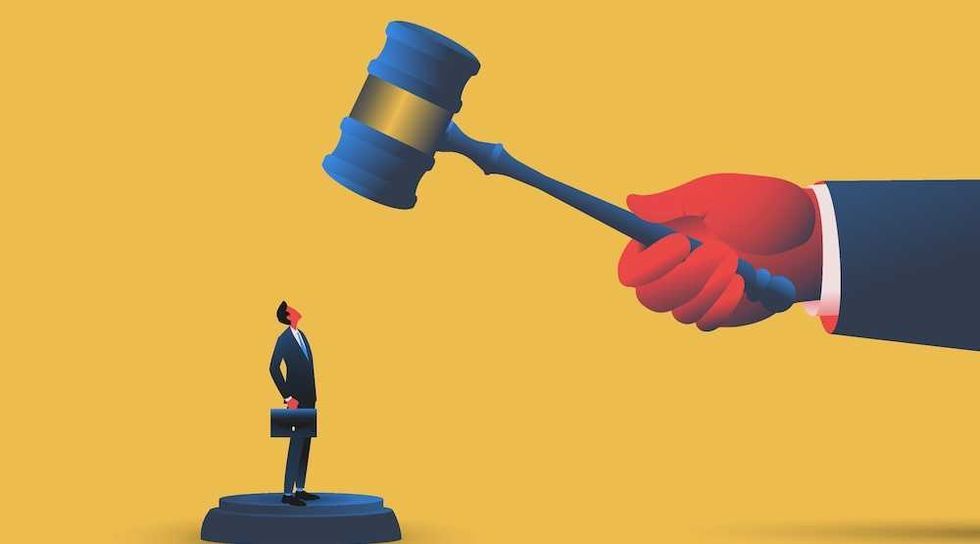
What do you call an official who claims the final say over the limits of his own power — and everyone else’s? Someone who can slap a “yes” on anything the elected branches do, or a “no” on anything they attempt, and treat his decree as the last word? That kind of power would have shocked America’s founders. In practice, it can exceed anything King George III exercised over the American colonies. Yet we keep granting it to federal judges by treating their overreach as binding even when Congress has said otherwise.
The founders worried most about the branches that wield force and money. The president commands the sword. Congress holds the purse. Both stand for election. Judges do not. Life tenure exists to protect judges while they decide cases, not to hand them an independent mandate to run the country. Judges possess no army and control no appropriations. Their influence depends on the political branches giving lawful effect to their rulings.
No individual right exists to use the courts as a substitute legislature to remain in the country. Judges cannot confer amnesty by injunction.
Those lawful bounds are not mysterious. Congress established the lower federal courts, and Congress defines their jurisdiction. Even the Supreme Court’s appellate jurisdiction is subject to congressional regulation. Article III, Section 2 makes it subject to “such Exceptions, and under such Regulations as the Congress shall make.”
Justice Clarence Thomas put it plainly in Patchak v. Zinke: “When Congress strips federal courts of jurisdiction, it exercises a valid legislative power no less than when it lays taxes, coins money, declares war, or invokes any other power that the Constitution grants it.”
Immigration offers the clearest test case because it sits at the heart of sovereignty. Over no issue do the political branches hold more constitutional authority than determining which foreigners may enter and remain.
As Justice Felix Frankfurter wrote in Galvan v. Press (1954), policies on entry and removal are “peculiarly concerned with the political conduct of government,” and Congress’ exclusive control over them has become “about as firmly imbedded in the legislative and judicial tissues of our body politic as any aspect of our government.”
Congress, then, holds plenary authority over immigration policy and sweeping authority over federal court jurisdiction — especially the lower courts. Yet now, every loser district judge routinely grants standing to illegal aliens to challenge detention and removal, even when Congress has restricted review.
RELATED: The courts are running the country — and Trump is letting it happen

Take Temporary Protected Status. The Ninth Circuit ordered the Trump administration to continue TPS for Venezuelans, despite the Supreme Court staying the original injunction. Another district judge issued a similar mandate for Haitians — 16 years after Haitians received that “temporary” status under President Obama. What often goes unsaid: Congress barred judicial review over TPS determinations. Federal law states, without qualification: “No court shall have jurisdiction to review any determination” of DHS “in granting or withdrawing TPS.” Other provisions restrict review of many deportation-related challenges — limits judges often treat as suggestions.
Over the past year, judges who view themselves as latter-day Martin Luther Kings have used legal fog to hear cases Congress barred, even after signals from the Supreme Court. That brings the Trump administration to its decision point.
Administration officials argue — correctly — that courts lack authority to issue certain orders. But judges have neither force nor will beyond what the executive supplies. The executive’s job includes enforcing the jurisdictional limits Congress enacted. A court that lacks jurisdiction cannot establish it by decree.
If this judicial coup runs to its logical end, any district judge becomes the final arbiter of any political question: grant standing to any plaintiff, announce standing rules that override statutes, take jurisdiction Congress withheld, then command the elected branches to act. That is not the Supreme Court’s role, let alone a trial judge’s.
It also outstrips anything King George could do at the founding. He needed Parliament for matters like citizenship. We are now told a judge can dictate immigration policy regardless of the law.
Waiting on the Supreme Court to clean up the mess is a fool’s errand. District judges return with a slightly modified case and restart the process. During Trump’s first term, an immigration lawyer summed up the strategy: “May a thousand litigation flowers bloom.”
The numbers tell the story. In Minnesota alone, federal court sees an average of one habeas petition filed every hour. A judge even ordered a previously deported alien brought back. These petitions do not claim Immigration and Customs Enforcement mistakenly detained U.S. citizens. They aim to use courts to stall enforcement in bulk.
RELATED: The imperial judiciary strikes back
Finality binds parties in cases; it does not bind the political branches into permanent policy submission. Lincoln drew that distinction in his 1858 debates with Stephen Douglas. Courts may decide individual cases. But if courts try to turn those decisions into national political rules, elected officials should not treat them as binding “political rules” that forbid any measure that does not “concur” with a judicial decision.
Lincoln practiced that view as president. His attorney general, Edward Bates, explained the judiciary’s proper scope: Judicial power is ample for justice “among individual parties,” but “powerless to impose rules of action and of judgment upon the other departments.”
Applied to immigration, the point is simple: No individual right exists to use the courts as a substitute legislature to remain in the country. Judges cannot confer amnesty by injunction. Congress has not passed a legislative amnesty in four decades for a reason: It requires majorities in both houses and the president’s signature, and the politicians who vote for it must face the voters. Yet the current judicial pattern grants amnesty through procedure — without hearings, without votes, and without accountability. Life tenure was designed for the opposite purpose.
No shortcut exists. The political branches must stop treating lawless judicial opinions as if they carry the force of law — especially when those opinions ignore statutes, exceed jurisdiction, and attempt to seize control of core sovereign functions.



 The California governor correctly figures that if he stays on offense, his own dismal record will be ignored — even if that offense is odd.
 thefederalist.com
 www.theblaze.com
 freebeacon.com
 thefederalist.com