Conservatives demand competition — except in their own primaries


Conservatives say they believe in competition. So why on earth do we tolerate a political system in which one man effectively picks our candidates before voters have a chance to examine them?

Friedrich Hayek understood why monopoly is dangerous: “Our freedom of choice in a competitive society rests on the fact that, if one person refuses to satisfy our wishes, we can turn to another. But if we face a monopolist we are at his absolute mercy.” That principle applies to political candidates as surely as it does to products. Competition forces people to earn our support. Coronations teach them that our votes are theirs by right.

Trump’s terrible endorsements are not a minor blemish on an otherwise beloved political figure. They are a debilitating obstacle to rebuilding the right.

Instead, Republican voters have been handed one establishment dud after another, especially in states where the GOP should have the freedom to nominate a fighter. Then, when the general election arrives, we are ordered to fall in line because the Democrat is worse. That is a political monopoly, and it is killing the conservative movement.

Consider the 22 Senate contests this November in states Donald Trump carried in 2024. The incumbent Republicans include Dan Sullivan in Alaska, Tom Cotton in Arkansas, Jim Risch in Idaho, Roger Marshall in Kansas, Ashley Moody in Florida, Cindy Hyde-Smith in Mississippi, Pete Ricketts in Nebraska, Jon Husted in Ohio, Mike Rounds in South Dakota, Bill Hagerty in Tennessee, and Shelley Moore Capito in West Virginia. South Carolina has an appointed incumbent, Darline Graham, seeking a full term.

The other nominees include Barry Moore in Alabama, Mike Collins in Georgia, Ashley Hinson in Iowa, Andy Barr in Kentucky, Julia Letlow in Louisiana, Mike Rogers in Michigan, Kurt Alme in Montana, Michael Whatley in North Carolina, Ken Paxton in Texas, and Harriet Hageman in Wyoming.

How many of these 22 are Ron DeSantis-tier conservatives? How many would fight the interests that actually control Washington? How many would champion an immigration moratorium, end vaccine liability immunity, oppose government subsidies for Flock surveillance cameras and data centers, or take a machete to federal spending? How many would even answer those questions without consulting a donor?

My count is maybe four decent conservatives and no genuine superstars. Feel free to dispute my rankings. The larger scandal is that Republican voters rarely got a serious contest in which to test these candidates and force them to take positions on the issues that count.

The reason is Donald Trump’s primary endorsements and the Republican establishment that treats them like royal decrees.

No, the president has not canceled elections. He didn’t need to. His endorsements routinely settle them in practice. Ballotpedia reported a 97% primary success rate for his endorsed candidates as of July, with every endorsed congressional candidate who had faced a primary by then advancing. That is a remarkable record for a man who claims to oppose the swamp.

Sometimes a stronger conservative alternative ran and lost. Sometimes the endorsement deterred a challenge in the first place. Either way, candidates escaped the serious ideological cross-examination they should have faced. They learned to court Trump instead of courting conservative voters.

Montana supplies the most outrageous example. Sen. Steve Daines withdrew from his re-election bid minutes before the filing deadline, just after U.S. Attorney Kurt Alme filed for the seat. Trump endorsed Alme almost immediately. With no time for other Republicans to enter, the primary was effectively over before it began. Call that a coincidence if you like. To me it looks like a backroom succession plan that stripped Montana conservatives of a meaningful choice.

RELATED: Democrats may ride a blue wave on a red script
Id-work/Getty Images

Does Alme support an immigration pause? Would he end vaccine liability immunity or subsidies for data centers? Would he actually stand in the way of runaway spending? Those questions should have been contested in a primary, not left to be answered after a nominee was already installed.

The consequences extend beyond conservative principles. North Carolina Republicans rallied behind Michael Whatley, Trump’s choice for an open Senate seat, only to see him struggle badly against Roy Cooper in the general-election campaign. This is a state Republicans have carried in every presidential election since 1980 except 2008. An endorsement is no substitute for a candidate who can persuade voters.

Even where Republican nominees survive November, what then? Hinson, Sullivan, and the rest are supposed to lead the fights conservatives actually care about. On what evidence? Where were the primary debates on spending, immigration, government surveillance, and corporate welfare that might have forced their hands?

Trump’s terrible endorsements are not a minor blemish on an otherwise beloved political figure. They are a debilitating obstacle to rebuilding the right. We cannot claim to oppose a ruling class while allowing one man to decide which members of that class get another six years in power.

RELATED: Pray for the country. Then do your part.
Imagedepotpro/Getty Images

I am not writing this to relitigate every lost primary in 2026. I want to know what conservatives intend to do before the 2028 cycle begins.

Recruitment and organizing start well before Election Day. If prospective challengers assume Trump will automatically bless the incumbent RINO or an establishment favorite for an open seat, many will never bother running. And the people who claim to speak for the grassroots will shrug and tell us to vote Republican anyway.

That problem needs an answer on November 4, the morning after these midterms, not when the next slate of candidates has already been anointed. Find and recruit challengers. Demand debates. Make candidates state their positions. Stop treating the president’s endorsement like a substitute for the judgment of the voters who built this movement.

And yes, the same standard should apply to the 2028 Republican presidential primary. Even a candidate we like should have to sweat through hard questions about electability, the failures of GOP leadership, and why the next Republican trifecta would accomplish more than the last.

Thomas Sowell wrote that “competition does a much more effective job than government at protecting consumers.” Conservatives understand that when discussing monopolies in the marketplace. If we refuse to apply it to the politicians who govern us, we deserve every political dud we get.
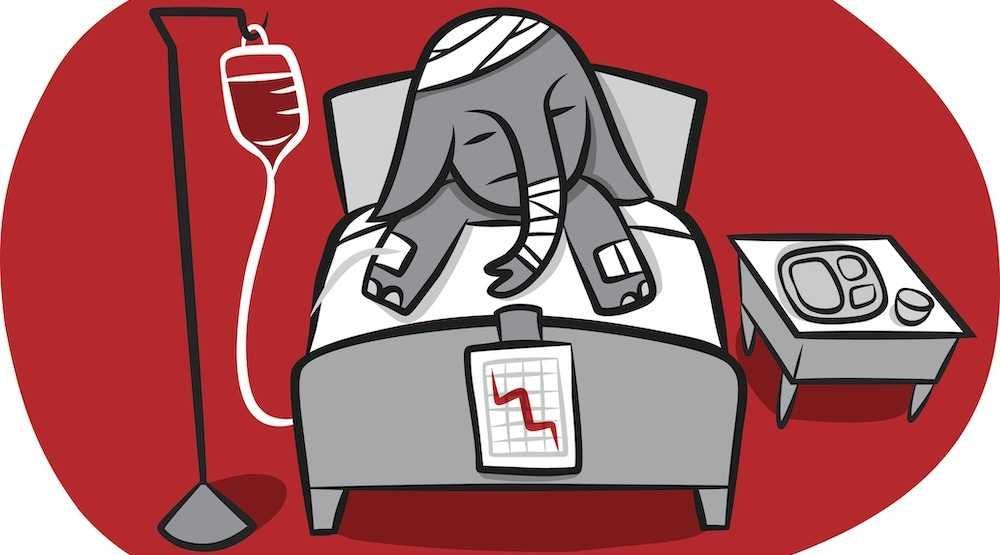
The left uses primaries. The right wastes them.


You can’t drain the swamp by refilling it with the same sorts of politicians backed by the same special-interest money driving the status quo. The leftist base learned that lesson for its own dangerous purposes this primary season. The conservative base, meanwhile, has somehow unlearned what it knew during the Tea Party years.

Liberal voters are knocking out very liberal Democrats for candidates even further left. Republican voters are not only keeping their moderates; they are knocking out some of the few members who actually fight for the party’s stated goals. What gives?

The left built a movement. The right built an industry. The results show.

There are only a few dozen full-spectrum conservatives among the 219 House Republicans who keep the pedal to the metal on immigration, fiscal, and social issues. Contrast that with Democrats, where you’d be hard-pressed to find a member outside a swing district who dissents from party dogma on a major issue. Yet seven Democratic incumbents have already lost primaries this cycle.

In Texas, Rep. Al Green lost to fellow incumbent Christian Menefee, while Julie Johnson lost a rematch with former Rep. Colin Allred. In New York, Dan Goldman lost to Brad Lander, and Adriano Espaillat lost to Darializa Avila Chevalier. Diana DeGette lost to Melat Kiros in Colorado. Shri Thanedar lost to DSA-backed Donavan McKinney in Michigan. John Larson lost to former Hartford Mayor Luke Bronin in Connecticut.

These were not moderates. DeGette, for example, was a House manager during Trump’s second impeachment trial in 2021. Yet to the Democratic base, she might as well have been Trump.

Most significantly, not one incumbent on the left lost to someone more moderate. You’d be hard-pressed even to find serious moderate challengers against Democratic incumbents.

Now contrast that with the GOP. Last cycle, the only Republican incumbent to lose was Freedom Caucus Chairman Bob Good. This cycle, Tennessee Rep. Andy Ogles, one of the caucus’ most conservative members, was unseated by a Republican backed by a green energy PAC. In Kentucky, Thomas Massie was defeated by a candidate generally to his left, with President Trump’s help. The one clean ideological defeat from the right was Dan Crenshaw, who lost to Texas state Rep. Steve Toth — in a race where Trump thankfully declined to rescue the moderate incumbent.

Cory Mills also lost in Florida, and good riddance, but scandals and corruption drove that race more than a groundswell to move the party toward its base.

Overall, with Freedom Caucus retirements added in, we are backsliding. And that doesn’t begin to capture the lost decade of conservative primaries.

For several cycles, as Trump endorsements refilled the swamp in statewide and federal races, the bright spot was the State Freedom Caucus Network. It gradually won open seats and knocked off incumbents in state legislatures, peaking in 2024 when its members took control of the South Dakota and Wyoming Houses.

RELATED: Republicans keep losing because they won’t take hostages

darenwoodward/iStock/Getty Images

Two years later, the establishment came back with a vengeance. South Dakota’s Freedom Caucus was essentially wiped out, and the Wyoming caucus lost 13 seats and its majority. In Idaho, five conservatives were defeated by Republicans backed by Gov. Brad Little, whom Trump endorsed for a third term. Elsewhere we have gained some and lost some, but the advance of liberty has largely stalled.

During the Tea Party era, we invested in activists. Today we invest in podcasters, TikTokers, and sycophantic grifters who sniff Trump’s rear end all the way to financial success. You reap what you sow. We have endless content, endless influencers, and endless Mar-a-Lago high rollers — but comparatively little money and activism flowing to conservative candidates in primaries.

Meanwhile, the Democratic base is dragging its party closer to the left goal post even in state races. In New York, DSA-backed candidates — many aided by Mayor Zohran Mamdani’s political network — toppled a string of incumbent legislators.

I watch right-leaning propagators online, and they are already obsessed with the next presidential election. What they fail to understand is that even if their dream candidate wins the primary and the White House, he will inherit a generation of Lindsey Graham’s sister acolytes who oppose the reform agenda these same influencers claim to want.

And they will have nobody to blame but themselves for sleeping through the lost decade of primaries.

The left built a movement. The right built an industry. The results show.

Online Sports Gambling Companies Are Buying State Elections

'Now it's just out of control, I've never seen a state house race in Kansas with $150,000 dropped into it, but basically anyone that they thought they would be able to sway their vote got a lot of money.'

The media’s Democratic cover-up is collapsing


Democrats’ growing radicalism presents a danger to the country. Their shrinking ability to conceal it presents a danger to the party.

As democratic socialists and other far-left candidates win Democratic primaries, the mask of moderation is slipping. The establishment media can downplay radical policies when they belong to activists, backbenchers, or losing candidates. It becomes much harder when those candidates begin winning elections.

The Democratic Party’s greatest political danger is not that the party features a rapidly growing number of radicals. It’s that ordinary Americans are finally getting a clear look at them.

The Graham Platner debacle in Maine shows both how much extremism Democrats will tolerate and how long the media will help them avoid confronting it.

Platner was sold as an acceptable working-class populist. His carefully cultivated image as an oyster farmer obscured his privileged background and family support. He disparaged fellow veterans, blamed military service for a history of incendiary online statements, and sent explicit messages to women while married. His policy positions occupied the party’s farthest-left edge. Then came the Nazi tattoo and a series of preposterous explanations.

Democrats, their leaders, and sympathetic media outlets stood by him through it all.

Only after a woman publicly accused Platner of sexual assault did his campaign finally collapse. Platner denied the allegation, but leading supporters withdrew their endorsements, and he announced plans to leave the race.

The episode illustrates two problems: Democrats’ willingness to embrace radicalism in nearly any form and the establishment media’s willingness to disguise that radicalism.

The second may ultimately prove more damaging to the party.

How can appearance be more dangerous than reality? Because the Democratic Party has been moving left for years while much of the press assured Americans that it remained broadly moderate.

Bernie Sanders nearly defeated Hillary Clinton for the 2016 presidential nomination. Two members of the Democratic Socialists of America entered Congress with “the Squad” in 2018. Under the figurehead leadership of Joe Biden, the administration pursued diversity mandates, radical climate policies, uncontrolled spending, and an open southern border.

RELATED: This is not the ‘red wave’ America needs

Aimee Dilger/SOPA Images/LightRocket/Getty Images

The establishment media minimized those policies, just as it concealed Biden’s cognitive decline until his political usefulness expired. Once Biden became obviously unelectable, Democrat leaders and their media allies turned on him.

The same thing happened to Platner. The party tolerated everything until his liabilities threatened its electoral prospects.

In both cases, the candidate was expendable. The ideology remained.

Democratic radicalism is becoming more visible because the party and its media allies can no longer hide it. As more moderate Democrats lose primaries, the press must cover the candidates replacing them.

American political journalism has always preferred the horse race to the substance: polls, debates, endorsements, fundraising, and election-night results. Those subjects are more exciting — and less revealing — than sustained scrutiny of what candidates intend to do in office.

But the horse race becomes a problem when the socialists are winning it.

In 2025, self-described socialists Zohran Mamdani and Katie Wilson won the mayoralties of New York City and Seattle.

More recently, Mamdani-backed candidates swept prominent New York congressional primaries. Former New York City Comptroller Brad Lander defeated incumbent Rep. Dan Goldman, while other left-wing candidates unseated Democrat establishment figures.

In Texas, far-left state Rep. James Talarico won the Democratic nomination for U.S. Senate. In Michigan, Abdul El-Sayed has emerged as a leading contender in the Democratic Senate primary.

More victories may follow as the primary season continues.

Each one forces the media to cover candidates it would previously have dismissed as activists on the party’s fringe. As establishment Democrats disappear from ballots, journalists have fewer supposedly moderate alternatives to place in the foreground.

RELATED: Democratic Socialists of America will seek to RADICALLY upend the federal government in reported platform update

Adam Gray/Bloomberg/Getty Images

The problem becomes even more severe in heavily Democratic districts, where winning the primary is effectively equivalent to winning the general election.

Those nominees are highly likely to enter Congress, join Sanders and “the Squad,” and pull congressional Democrats farther left. Their anti-Trump agenda will give them a national platform over the next two years, making their positions increasingly difficult to ignore.

The establishment media can soften the language. It can call socialism “progressivism,” describe government control as “investment,” and portray ideological victories as demands for affordability or generational change.

It cannot indefinitely hide what elected officials say and do.

That is the Democratic Party’s greatest political danger. It’s not merely that the party features a rapidly growing number of radicals. It’s that ordinary Americans are finally getting a clear look at them.

For years, the establishment media helped Democrats preserve the appearance of moderation while the party moved steadily left. Socialist victories are making that deception impossible.

Democrats Are Turning Out In Droves — Even In MAGA Country

90% of Democrat House primaries saw higher turnout.

Trump’s Biggest Endorsement May Trigger Painful Primary Memories For Republicans

'He was not supportive of [Trump] when times were tough.'

John Cornyn’s Failure To Fight For The SAVE Act Cost Him Trump’s Endorsement

Republican primary voters want candidates who will fight for the MAGA movement, not institutionalized RINOS who won't.