Milwaukee’s Latest Election Mess Is All Just A Little Bit Of History Repeating
 Milwaukee has a way of coming up with just enough votes the Democrat machine needs to win swing state Wisconsin. Call it a 'lair for drama.'
Democratic socialist Francesca Hong’s rise is about more than one candidate — it’s a warning sign that ideas once confined to the political fringe are gaining influence across the country.
“If you don’t live in Wisconsin, you may not be interested, but you should be interested, because this is something that’s spreading across the nation. We have the same types of people running for office in Texas, and you probably have them in your state, so you’ve got to pay attention,” "Relatable" host Ron Simmons explains.
Hong, Simmons notes, has been "endorsed by the Democratic Socialists of America as a member of the Wisconsin Socialist Caucus.”
“That tells you something. If there’s enough people in there to have a caucus, meaning there’s enough of her other fellow state reps that they form their own caucus, that’s a little scary,” he says.
And according to a Marquette University poll, she leads the primary with 38% support among Democrat voters, with her closest competitor being former Lieutenant Governor Mandela Barnes, who only has 16%.
“So I would say the chances of this lady winning the Democrat primary are pretty good. She has expressed some pretty radical views, including the criticism of traditional holidays such as Thanksgiving and support for anti-racism policies that most of us would argue are actually racial themselves,” he says.
However, even some Democrats are weary of her past comments, including CNN anchor Kaitlan Collins.
Collins pressed the socialist on her controversial Thanksgiving opinion, asking, “Do you still believe that Thanksgiving should be canceled?”
Hong responded, “Thanksgiving is also a time that’s incredibly painful for many people in our communities. And so I think there, I wanted to make sure that people understood that there are multiple views, but views can evolve, and the position that I’m running for right now, and I think my background as a chef will actually help me become a better governor that’s able to bring more people to the table.”
“So I’ve never known anybody that's traumatized by Thanksgiving,” Simmons comments. “... And this lady is Korean ... why would she be traumatized by Thanksgiving?”
Hong also lamented on a podcast that her son is half-white, which gives him a “proximity to whiteness.”
“He’s an American male. And the fact that he’s half-Korean or whatever, half-non-Korean, what she calls ‘half-white,’ he’s an American male. That’s what he is,” Simmons says.
“And that's what we should think about him as being,” he adds.
To enjoy more of Allie’s upbeat and in-depth coverage of culture, news, and theology from a Christian, conservative perspective, subscribe to BlazeTV — the largest multi-platform network of voices who love America, defend the Constitution, and live the American dream.
Political campaigns have a rhythm. At first, the questions are easy: Who raised the most money? Who landed the biggest endorsement? Who dominates the headlines? Consultants love this stage because it allows them to declare winners before most voters have begun paying attention.
Then the race changes.
The primary is no longer simply a contest over money, endorsements, or online attention. It is becoming a test of who understands what comes next — and who has prepared to govern through it.
Momentum gives way to scrutiny. Personality must give way to policy. Candidates who looked inevitable begin answering questions about their records, judgment, and ability to govern.
Florida’s Republican primary for governor has reached that stage.
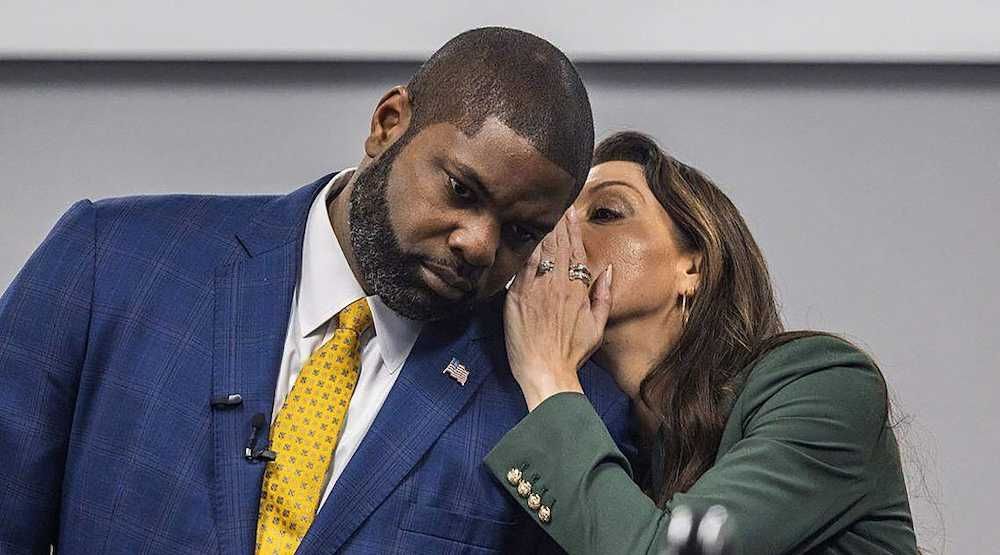
Only a few months ago, the race appeared nearly settled. U.S. Rep. Byron Donalds had President Donald Trump’s endorsement, national attention, and a fundraising operation that dwarfed the rest of the field. Political insiders spoke of inevitability as though Republican voters had already rendered their verdict.
Donalds remains the front-runner. That position deserves acknowledgment — and scrutiny. Increased attention has brought new questions about his record, campaign, and legal controversies. Voters and the courts, where appropriate, will decide those issues. But they are now part of the race, whether his supporters welcome them or not.
James Fishback entered the race as an energetic outsider with a strong social media operation and a talent for commanding attention. He has proved capable of generating enthusiasm and headlines. Campaigns, however, eventually demand more than velocity.
Voters begin asking harder questions: Can this candidate govern? What’s the plan? How would bold promises become legislation and administration?
Those questions have become more urgent as Fishback defends himself against a legal challenge to his eligibility under Florida’s constitutional residency requirement. Fellow Republican candidate Jay Collins brought the challenge. Fishback disputes the allegations and says he meets the requirement. Whatever the outcome, the case has introduced uncertainty into a campaign built largely on momentum and personality.
Collins faces a different test.
A decorated Green Beret with a compelling personal story, Collins entered the race with credentials few could dismiss. Yet campaigns turn on trust as much as biography. Critics have questioned whether his rhetoric and financial support align, particularly on hyperscale data centers and real estate development. Collins has defended his positions, but the dispute illustrates how quickly Republican voters now demand consistency between campaign language and governing priorities.
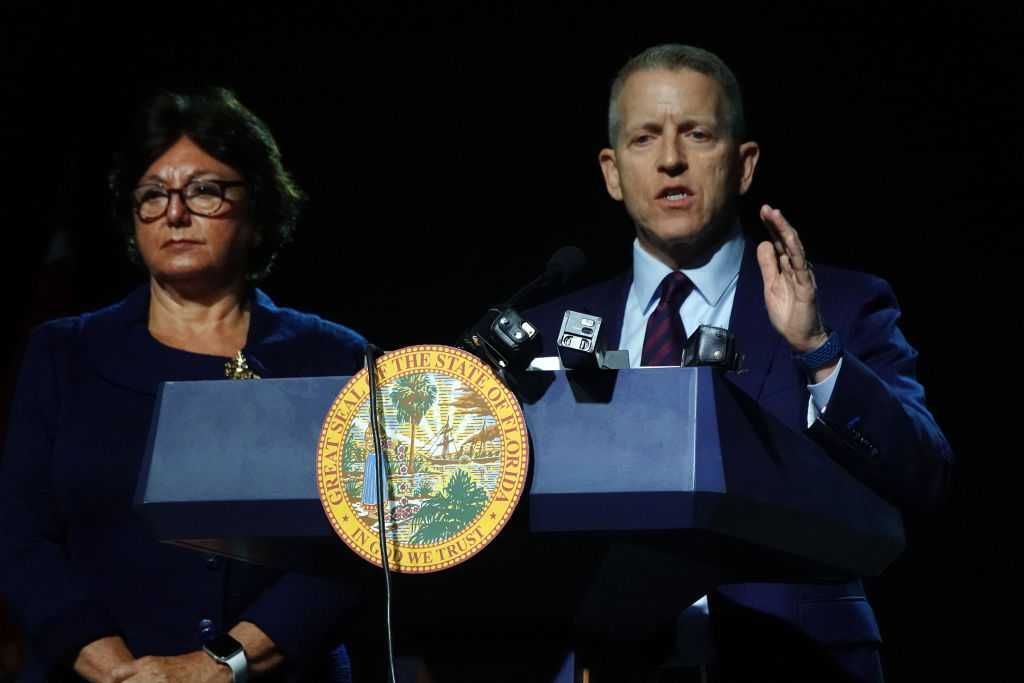
That leaves the most overlooked candidate in the field: Paul Renner.
Renner lacks Donalds’ financial advantage and has not relied on celebrity, inevitability, or viral attention. Instead, he has offered voters something less theatrical and potentially more consequential: a governing program.
Voters may disagree with parts of his First 100 Days agenda, but it is a road map rather than a collection of applause lines.
Renner has addressed property insurance, affordability, infrastructure, parental rights, election integrity, illegal immigration, and Florida’s response to the emerging artificial intelligence economy. More important, he has tried to show how those priorities connect.
RELATED: ‘It’s past time’: Florida launches investigation into Fauci
That is where the race is changing.
Florida Republicans have spent years fighting over freedom. They are now asking how to preserve the quality of life that freedom was supposed to protect.
How does Florida keep teachers, firefighters, nurses, sheriff’s deputies, and young families from being priced out of the communities they serve? How can the state welcome investment without overwhelming roads, utilities, and water supplies? How should it embrace artificial intelligence while protecting property rights, local communities, and natural resources? How can growth enrich Floridians rather than merely raise their cost of living?
Those are real governing questions, not merely campaign slogans.
The next governor will inherit one of America’s fastest-growing states and most dynamic economies. He will also inherit rising insurance costs, strained infrastructure, rapid population growth, technological disruption, and mounting pressure on the affordability that helped make Florida attractive.
The primary is therefore no longer simply a contest over money, endorsements, or online attention. It is becoming a test of who understands what comes next — and who has prepared to govern through it.
Momentum changes. Fundraising advantages narrow. Polls rise and fall. Eventually, voters stop asking which candidate can win and start asking which candidate should govern.
Florida’s Republican primary has finally reached that question. The candidate who answers it most convincingly may discover that the race was never as settled as the consultants claimed.
"Inclusive.” “Representative.” “Transparent.” That is how Maine Democratic Party Chairman Charlie Dingman describes the process for selecting a new Democratic nominee after Graham Platner’s withdrawal last week from the U.S. Senate race.
Those are worthy goals. But can a process truly be fair, representative, and transparent when the voters who participated in the June primary will not directly choose the replacement nominee?
Maine voters deserve to know that their vote counts not only on Election Day, but throughout the electoral process.
Under Maine law, Democrats have until July 27 to select a replacement. Rather than hold another statewide primary, party officials will convene a nominating convention to choose the candidate who appears on the November ballot.
That means 601 delegates from Maine’s 16 counties — not the full primary electorate that selected Platner — will choose the replacement nominee.
Primary elections and nominating conventions serve different purposes. A primary gives every eligible voter an equal voice in choosing a nominee. A convention limits that decision to party delegates acting on behalf of the organization.
Both are recognized under Maine law. But they are fundamentally different processes, and the distinction is vital.
The question is not whether Maine Democrats are acting within the law. The question is whether replacing the primary electorate with a convention best preserves public confidence.
Transparency is important. But transparency alone does not answer the deeper question: Should voters or party delegates choose a replacement nominee after a primary?
The circumstances in Maine are unusual, but the broader issue is not.
Political parties across the country have rules for replacing nominees when unexpected vacancies occur. A replacement is necessary. Parties must follow the law. But they should also ask whether their procedures reflect the will of voters as closely as circumstances allow.
RELATED: The media’s Democratic cover-up is collapsing

Following the law is essential. Preserving confidence in the process is essential too.
This is not the first time Democratic voters have watched party leaders make consequential decisions after ballots had already been cast. In 2024, Democratic delegates, rather than primary voters, selected Vice President Kamala Harris after President Joe Biden stepped aside.
Regardless of where one stood on that decision, it raised an enduring question now facing Maine: When circumstances change after a primary, who should choose the replacement nominee?
Election integrity is often discussed in terms of voter ID, ballot security, voter rolls, and timely vote counting. Those safeguards matter because they help ensure elections are conducted securely and accurately.
But election integrity also depends on voters believing their participation shapes the outcome.
When the final decision shifts from the primary electorate to party delegates after voters have already cast ballots, voters are left wondering how much their vote truly counts.
That uncertainty fuels something increasingly common in American politics: cynicism.
A growing number of Americans have adopted a “black-pill” view of politics — the belief that participation is pointless because vital decisions are ultimately made by a small group rather than the broader electorate.
They’re wrong. Voting remains viable.
Yet every time a party shifts a consequential decision from the full primary electorate to a smaller group of delegates after ballots have already been cast, it becomes harder to convince people their participation makes a difference.
RELATED: This is not the ‘red wave’ America needs
Maine voters deserve to know that their vote counts not only on Election Day, but throughout the electoral process.
Election integrity is about more than secure ballots and accurate voter rolls. It is about preserving public confidence that voters, not party insiders, ultimately decide who represents them.
Maine’s experience should prompt lawmakers and political parties to examine whether existing nominee replacement procedures preserve voter confidence when nominees withdraw after a primary.
The question in Maine is not simply who the next Democratic nominee will be.
It is whether voters remain at the center of the process after their ballots have been cast.
The strength of an election is measured not only by how votes are counted, but by whether the voters who cast them still have the final word.
Establishment liberals are fighting a rearguard action against radical socialists inside the Democratic Party.
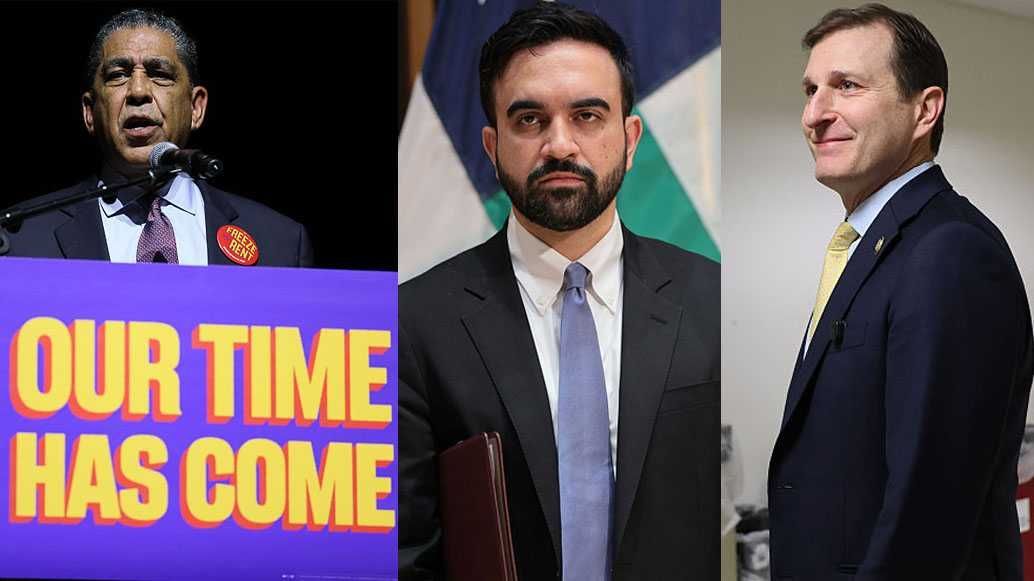
They lost more ground on Tuesday when a troop of democratic socialist candidates endorsed by fellow traveler New York City Mayor Zohran Mamdani knocked off a pair of incumbents in New York's Democratic primary elections — Rep. Daniel Goldman and five-term Rep. Adriano Espaillat.
'Seize the means of production.'
As more comes out about the character of the victorious socialists for whom Mamdani held the door open, it seems that the ascendant radicals may be more radical than even the mayor.
In a softball interview Wednesday on MS NOW, talking head Ali Velshi pressed Darializa Avila Chevalier — the Muslim convert who beat Espaillat 49.4% to 45.9% and previously helped lead the destructive 2023-2024 Columbia University encampment — about President Donald Trump's characterization of her and other candidates in Tuesday's primary races as "communists."
"Donald Trump talked about communists being elected last night. There were three of you in the congressional races, and there were five people who Zohran Mamdani supported in state races. All eight of you won," said Velshi. "How do avoid becoming the ad for Republicans?"
RELATED: CNN data analyst stunned by Democratic Party's takeover by Mamdani's fellow travelers
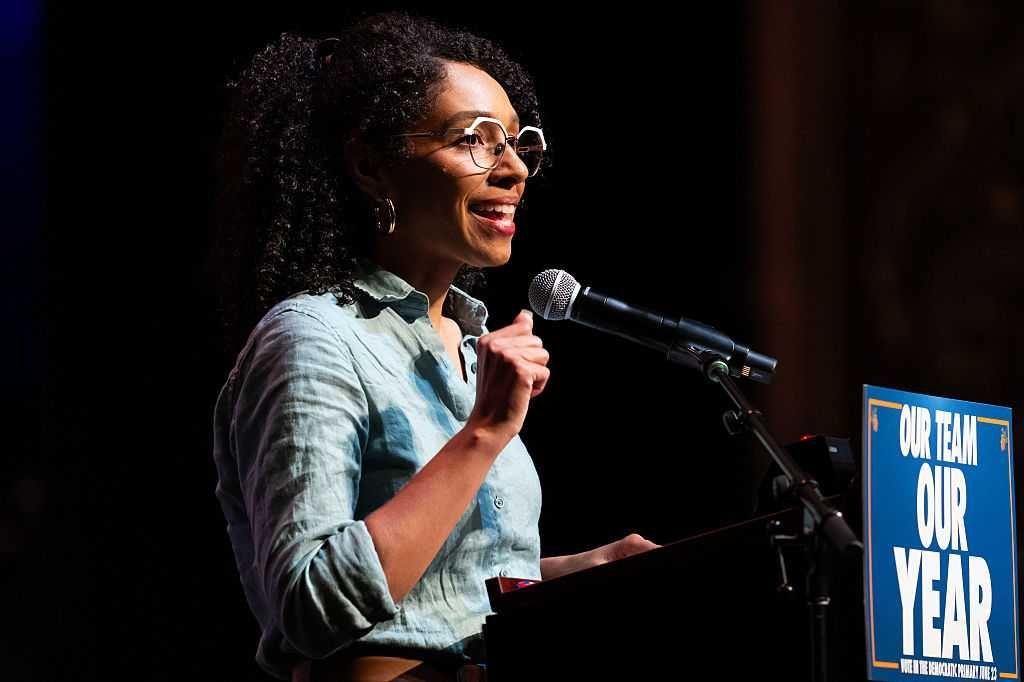
"You will be a member of the Democrat delegation, and you're going appear in all sorts of people's ads," continued Velshi. "All sorts of Republicans' ads [will] say, 'This is what you're going to get if you vote for the Democrats — a communist.'"
Avila Chevalier — the co-founder of a group that posted "death to America" on social media earlier this year and called for the "total eradication of Western civilization" — did not bother challenging her characterization as a communist but instead expressed pride in dodging the question and tossed Velshi a word salad.
"That framing is one that I've been very proud to be able to say I don't respond to, one in which I have been very intentional to say I won't be reactive," said the radical who identifies as an "Afro-Latina" Dominican daughter of immigrants. "We are presenting a vision of what we're fighting for, and I think for far too long we have had politics that is reactive to what Republicans are doing. What we need is Democrats who are actually going to present a positive vision."
Despite talking around whether she is a communist, Avila Chevalier told Velshi, "I will always be honest about my position on things."
Before she apparently deleted her X account, thousands of Avila Chevalier's posts were archived. If as honest in recent years about her views as she purportedly is now, then it appears Trump's "communist" characterization is more than fair.
In addition to sharing a post that called for the state takeover of parts of the economy; the nationalization of utilities, hospitals, and pharmaceutical companies; the suspension of rent payments; and the seizure of "all properties from landlords," CNN reported that Avila Chevalier tweeted or retweeted the following messages:
Earlier this month, Avila Chevalier said in a statement to CNN, "I have grown considerably since in the years since these tweets, and I am focused on our community and our community’s future."
Some of the tweets were as recent as 2022.
In her victory speech on Tuesday night, Chevalier — who, according to the Guardian, was recruited to run for Congress by Justice Democrats, the same outfit that backed democratic socialist Rep. Alexandria Ocasio-Cortez — said that her primary success signaled "a new dawn" for the district.
Like Blaze News? Bypass the censors, sign up for our newsletters, and get stories like this direct to your inbox. Sign up here!The Democratic Party is undergoing a hostile takeover by democratic socialists — as evidenced in New York's primaries on Tuesday where Democrat establishment-types suffered humiliating defeats at the hands of radicals cut from the same cloth as New York City Mayor Zohran Mamdani.
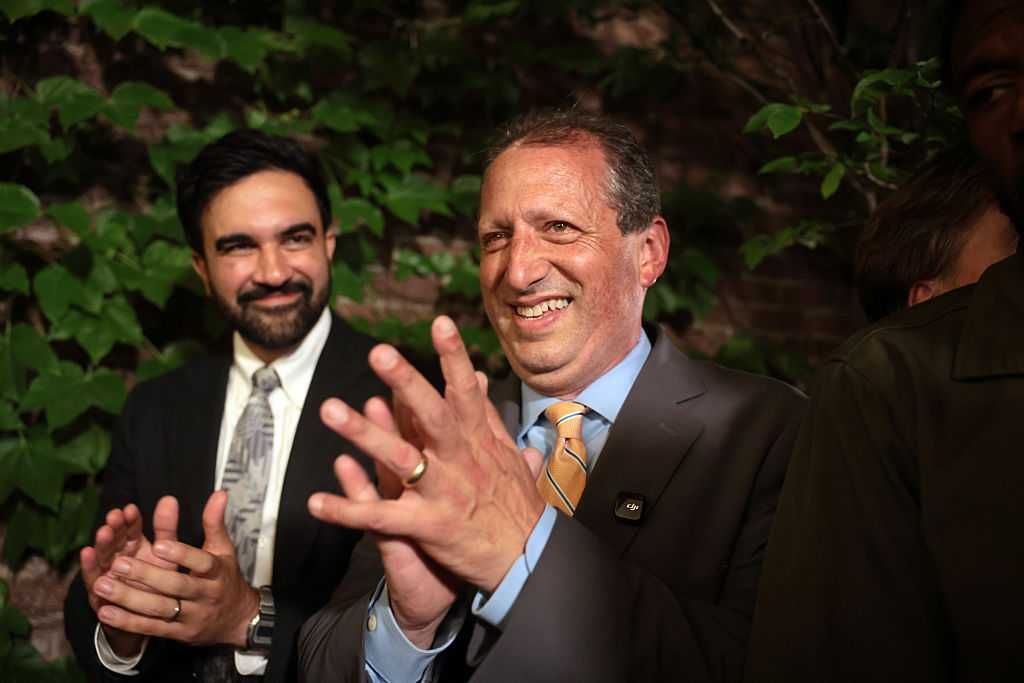
With over 90% of the votes in on Wednesday morning, incumbent Rep. Daniel Goldman trailed former NYC Comptroller Brad Lander 65.8% to 34% — a whopping 31.8 percentage points.
'We are Westerners fighting for the total eradication of Western civilization.'
Lander was endorsed by Mamdani, Sen. Bernie Sanders (I-Vt.), Sen. Elizabeth Warren (D-Mass.), and the Working Families Party, and ran largely to the left of Goldman, heir to the Levi Strauss fortune.
Goldman — who was endorsed by AIPAC, Gov. Kathy Hochul, and House Minority Leader Hakeem Jeffries — did his apparent best to join his opponent, who is also Jewish, in criticizing Israel and virtue-signaling to radical would-be voters, but his best was nowhere near good enough.
After getting steamrolled at the ballot box, Goldman told supporters, "The voters of New York’s 10th Congressional District have spoken, and while this is certainly not the outcome I hoped for and worked so hard for, I respect their decision."
RELATED: CNN data analyst stunned by Democratic Party's takeover by Mamdani's fellow travelers
President Donald Trump weighed in on Truth Social, writing, "Weak and pathetic Congressman Dan Goldman just lost, BIG! I guess people didn’t like him illegally targeting President TRUMP. In any event, this jerk is finally GONE!"
Rep. Adriano Espaillat, the five-term Democrat who leads the Congressional Hispanic Caucus, also lost to a Mamdani-backed radical, democratic socialist Darializa Avila Chevalier.
Chevalier is a black identitarian who co-founded Columbia University Apartheid Divest, a radical coalition that posted "death to America" on social media earlier this year; stated, "We are Westerners fighting for the total eradication of Western civilization"; and asked for "community and instruction from militants in the Global South, who have been on the frontlines in the fight against tyranny and domination which undergird the imperialist world order."
'NEVER be a communist Country!'
In addition to her involvement with the international intifada, Chevalier helped advance the Columbia rape hoax and made headlines for advocating against all deportations, claiming, "Israel doesn't exist," and demanding a "world without prisons or police." She was backed by Mamdani, the local Democratic Socialists of America chapter, and Justice Democrats PAC.
With 88% of the votes in, Chevalier leads Espaillat — who enjoyed endorsements from Hochul, Jeffries, and New York Attorney General Letitia James — 49.4% to 45.9%.
Espaillat endorsed Mamdani for mayor last year.
Claire Valdez, a Mamdani-backed democratic socialist member of the New York State Assembly, won her primary race for Democratic incumbent Rep. Nydia Velazquez's seat, beating the Democratic establishment's apparent preference and Velazquez's desired successor, Brooklyn Borough President Antonio Reynoso.
Valdez campaigned on abolishing U.S. Immigration and Customs Enforcement, "demilitar[izing] the border," making it easier for illegal aliens to gain lawful permanent residence, defunding Israel, and super-charging the "Green New Deal." Like the other radicals, she also enjoyed support from Sanders, Justice Democrats PAC, and the DSA.
Following the Mamdani-backed candidates' clean sweep, Trump wrote, "America the Beautiful will NEVER be a communist Country!"
Like Blaze News? Bypass the censors, sign up for our newsletters, and get stories like this direct to your inbox. Sign up here!
Marine veteran and former Alaska Attorney General Daniel S. Sullivan has served in the U.S. Senate since 2015 and is now seeking re-election. The Anchorage-based Republican's route to victory is anything but assured, especially with Democratic challenger and former Rep. Mary Peltola leading him in recent polls.
The Alaska Division of Elections appears, however, to be eliminating at least one obstacle to Sullivan's success in the Last Frontier's Aug. 18 nonpartisan top-four primary, namely Daniel J. Sullivan of Petersburg.
'The preponderance of evidence does not support your eligibility.'
J. Sullivan, a 69-year-old retired teacher who was born in the Midwest, reportedly registered as a Republican earlier this year and entered the race to oust Sen. S. Sullivan on May 29, just before the deadline for filing.
The namesake challenger said that he had "every right to stand up and do this" and characterized himself as a "pragmatic Republican centrist."
The newly minted Republican's candidacy didn't pass the smell test where Sen. S. Sullivan, other Alaska Republicans, and the National Republican Senatorial Committee were concerned.
Sen. S. Sullivan told CNN earlier this month that J. Sullivan's candidacy was effectively a Democratic effort to "cheat."
The senator said, "Democrats recruited a guy by the name of Dan Sullivan. He is a liberal progressive, right. We've seen it — his donations to all the far-left groups. He's donated to Peltola, OK. His whole purpose of running is to confuse Alaskans."
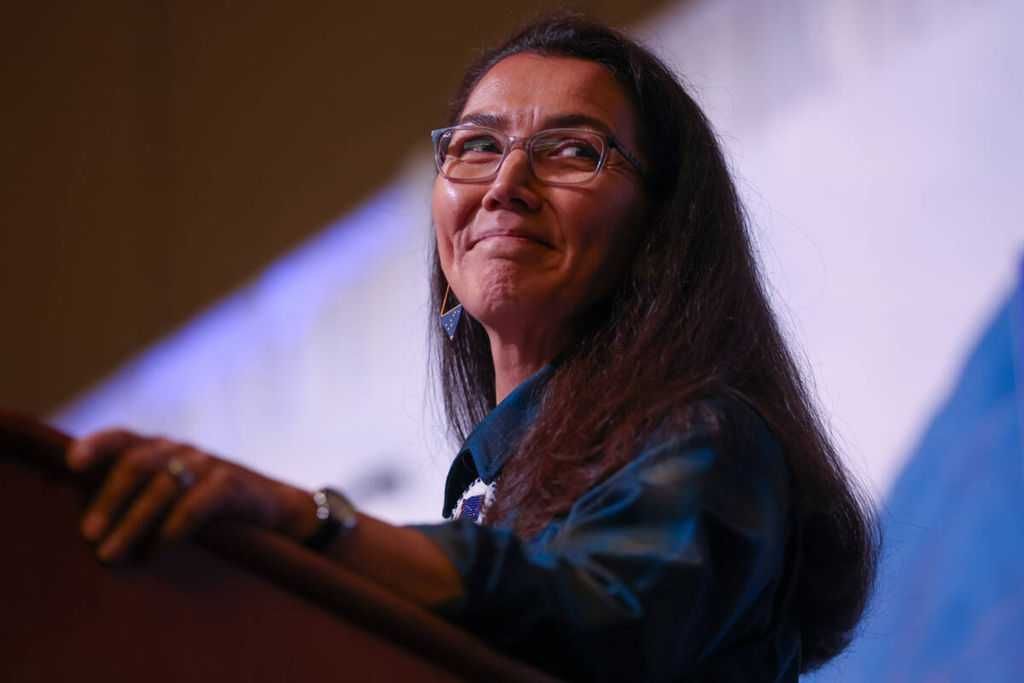
Alaska's News Source confirmed that a Dan Sullivan with a Petersburg zip code had previously donated to Peltola campaigns — in 2022 and in 2024. A spokesman for Peltola's campaign has denied involvement with J. Sullivan's Senate bid.
The NRSC filed a complaint with the Federal Election Commission on June 6, stating that "there is reason to believe Daniel J. Sullivan and Amber Lee of Amber Lee Strategies have engaged in a coordinated scheme to launch a U.S. Senate candidacy in violation of the Federal Election Act's prohibition on fraudulent misrepresentation of campaign authority at 52 U.S.C. §30124."
Blake Murphy, general counsel for the NRSC, noted in the complaint that:
Murphy suggested that the purpose of J. Sullivan and Lee's alleged fraudulent misrepresentation was to "deceive and mislead Alaskan voters to the detriment of another candidate."
The NRSC asked the FEC to investigate the matter and — in the event that wrongdoing is confirmed and found willful — refer it to the Justice Department for further review.
The Alaska Republican Party separately filed a pair of complaints with the state's Division of Election. One of the complaints claimed that J. Sullivan's candidacy was improper because his declaration of candidacy said he was affiliated with the GOP despite having an "undeclared" political affiliation at the time, reported the Anchorage Daily News.
Alaska Lt. Gov Nancy Dahlstrom notified J. Sullivan on June 8 that she had requested an investigation into his eligibility, claiming that the allegations against him were credible.
On Wednesday, Carol Beecher, director of the Division of Elections, delivered the namesake challenger some bad news, writing, "Based on a review of the evidence presented and in the [Division of Elections'] possession, the Division has determined that the preponderance of evidence does not support your eligibility for the office of United States senator."
Beecher gave J. Sullivan until 5 p.m. on Thursday to respond to the Alaska GOP's complaints, after which time she said a final determination would be made.
The namesake challenger said in response that Dahlstrom's "actions create the impression that the state government is being used to protect an incumbent senator from facing competition at the ballot box. That's not how elections should work."
"I am a qualified candidate who followed the rules and filed to run for office under my legal name. Yet, unsupported accusations have been given credibility while political operatives continue their effort to keep me off the ballot," continued J. Sullivan. "The people of Alaska are fully capable of deciding for themselves who should represent them in Washington."
Like Blaze News? Bypass the censors, sign up for our newsletters, and get stories like this direct to your inbox. Sign up here! The narrow victory for the Milwaukee County Executive over socialist Francesca Hong was a win for Dem Party 'establishment.'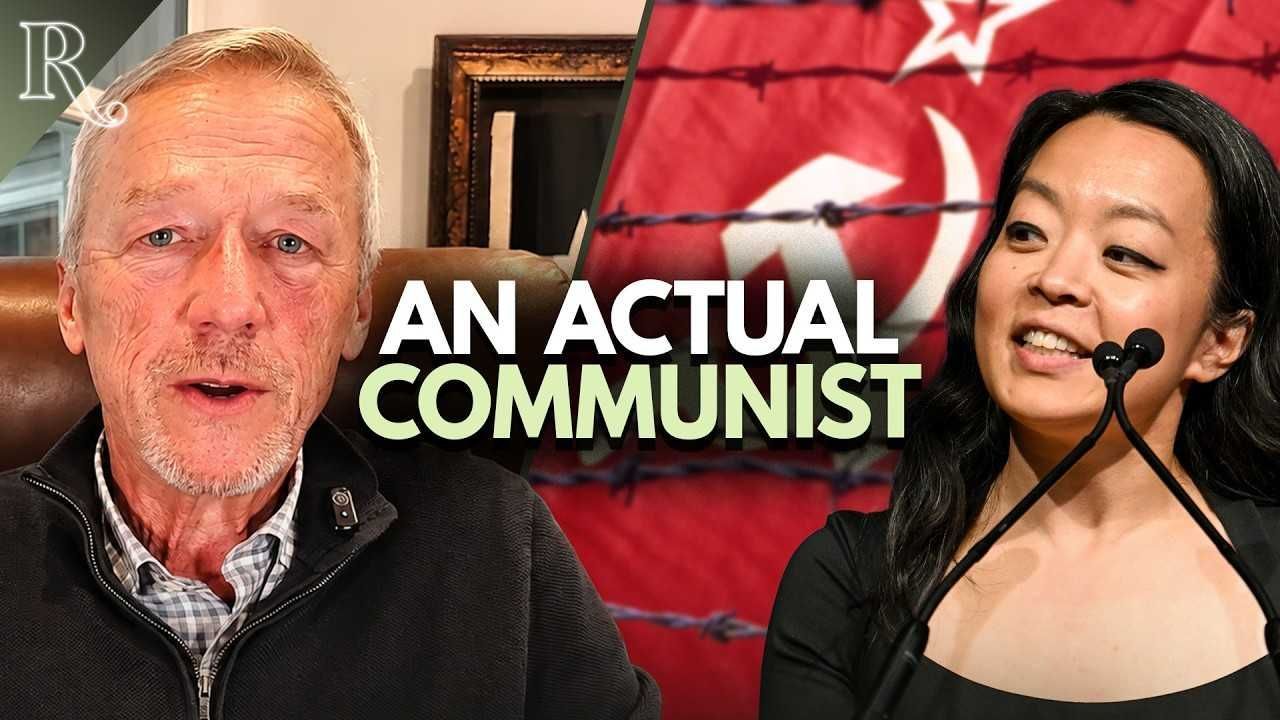
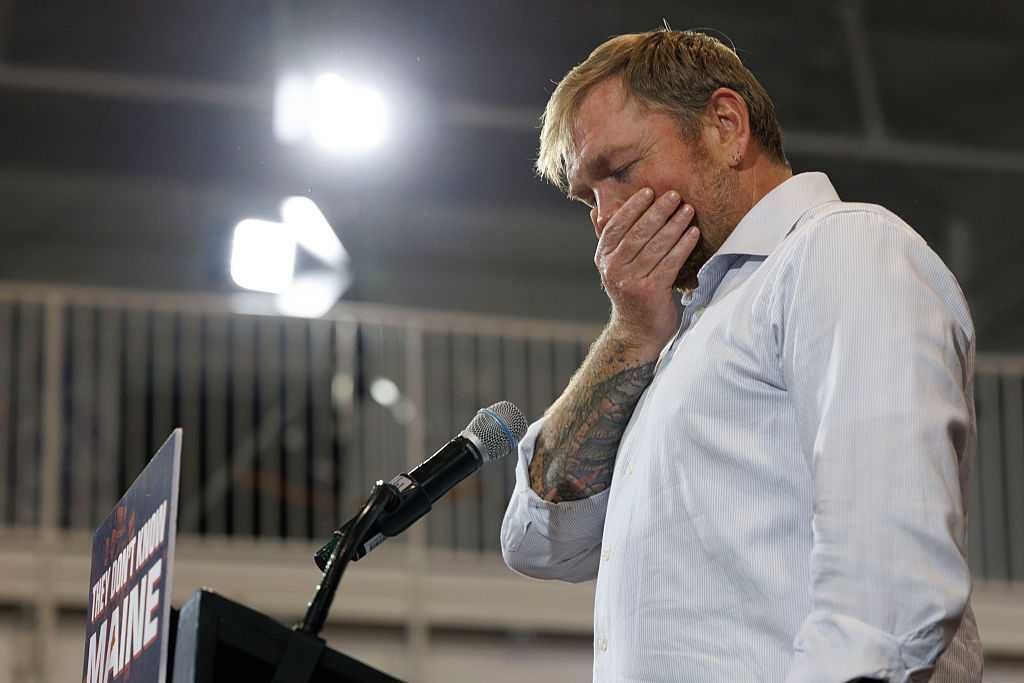
 The state Supreme Court ruled on Monday that Daniel J. Sullivan must be placed back on the ballot despite being accused of confusing voters.

 www.theblaze.com
 www.theblaze.com
 www.theblaze.com
Oprah and The Rock are facing MAJOR BACKLASH over THIS