Does the DHS meme strategy actually work?


Growing up, Republicans treated deportations like a topic that required careful handling. Under presidents such as George W. Bush, the language was softened, the messaging was restrained, and the emphasis was placed on policy rather than persuasion. The assumption was that if the argument was sound, the public would eventually come around to it.

That assumption turned out to be wrong.

The goal is not to explain policy in a traditional sense, but to normalize it through repetition, familiarity, and shareability.

Consider the sympathetic yet stern immigration pivots Republicans such as former Texas Governor Rick Perry had during the 2012 GOP primary. Back then, the media and liberal pundits painted Perry as hardcore and extremely right-wing. Compared to Republicans in office now, however, he would be considered passive and extremely soft on the issue.

The assumption that the independent and flip-voter public would buy in to the GOP stance was not because the policy case for enforcement lacked merit, but because the conversation was happening somewhere else entirely.

Opinions were not being decided based on press briefings or white papers. They were being shaped on TV screens, social media feeds, comment sections, and viral content ecosystems where tone and format mattered as much as the substance.

Jeremy Knauff, founder of the PR firm Spartan Media, puts it this way:

Public relations plays a far larger role in policy than most people realize. It’s not enough just to educate the public any more — today, lawmakers need to engage in a more direct effort to influence public perception. The government has always done this to some degree, but the left has been significantly more active and effective in this regard. But now we’re starting to see a measurable shift from the right.

What we are seeing now from the Department of Homeland Security’s social media team represents a break from that old model. Simply put, they’re playing to win.

The kids want memes

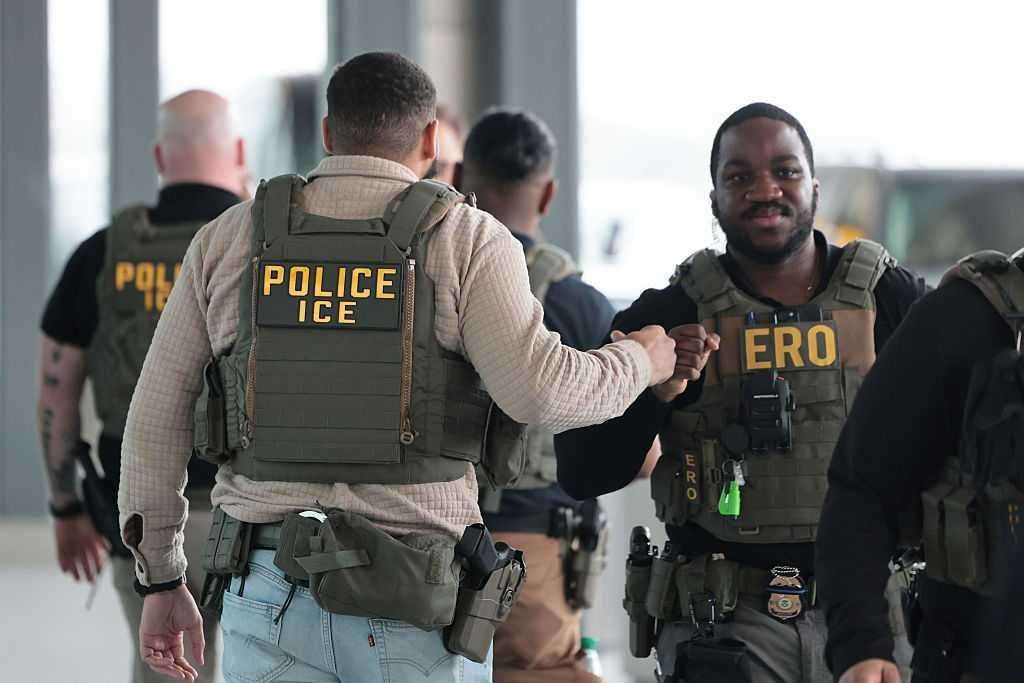
The DHS, along with the White House and ICE, has been using memes, viral audio, and internet-native content to promote deportation policy and immigration enforcement. This includes Christmas-themed deportation memes, TikTok-style videos set to trending music, and stylized content designed to travel well beyond traditional government channels.

Keep in mind that Millennials (roughly ages 27-42) spend an average of nearly three hours per day, or approximately 17 to 20+ hours per week, on social media.

These aren’t your father’s government employees figuring these things out on the fly, looking sloppy and rushed. The content they’re putting out isn’t just quality; it is the type of content you would see on the feeds of the most viral social media content creators. They’re in the major leagues of viral political content.

One viral video posted by the DHS, captioned 'Gotta Catch ‘Em All,' showed ICE agents blowing in doors and handcuffing and leading away undocumented immigrants to the theme song from the "Pokemon" cartoon. It certainly tugged on Millennial heartstrings, because that clip alone has been viewed 75.5 million times.

The backlash has been as immediate and intense as you would expect. Critics say this approach is dehumanizing, that it trivializes serious issues, and that it reflects a level of insensitivity that should not be associated with government communications.

CNN has gone so far as to claim that "underlining" DHS recruitment posters "are undertones that historians and experts in political communication say are alarmingly nationalist — and fraught with appeals to a specifically White [sic] and Christian national identity.”

Supporters see it as effective and long overdue after years of what they view as overly cautious messaging from the right.

RELATED: The case against ‘principled conservatism’

Erhui1979/Getty Images

Focusing only on whether the memes are appropriate misses the larger point. What is happening here is not primarily about humor or tone; it is about control over how the issue is framed and where the framing takes place.

Knauff says, “The people who are criticizing this approach are only doing so because they can see that it’s effective. And their complaints are disingenuous because it’s the exact same thing they’ve been doing for decades.”

The cool kids in control

For the better part of the last decade, conservatives did not lose the immigration argument on substance. They lost it on distribution. They had policies and data on their side, but they failed to communicate those ideas in the environments where younger voters and low-information audiences were actually forming opinions.

Put plainly, they were boring and unwilling to defend their position with the same passion as liberals.

The polling makes the gap impossible to ignore. Multiple 2026 surveys show that younger Americans are far less supportive of Trump’s immigration policies than older voters, especially Boomers who largely consume cable news.

A February PBS/NPR/Marist poll found that just 18% of voters under 30 approved of the administration's approach to deportations, while 69% disapproved. A CBS/YouGov survey in mid-January similarly found that 60% of respondents under 30 believed Trump was doing “too much” to deport illegal aliens.

This issue isn’t cut and dry. Trump was delivered a mandate in 2024, but now that optics are changing, the question is whether to keep the foot on the pedal or not.

The picture is clear though: Younger voters are not instinctively aligned with the administration’s immigration agenda, even if they support individual enforcement measures in isolation. So what to do? Keep the memes coming.

The current strategy appears to be an attempt to close that gap by meeting the audience where it already is. Instead of trying to pull younger users into formal policy discussions, the DHS is embedding its messaging inside the formats the youth consume on a daily basis.

The goal is not to explain policy in a traditional sense, but to normalize it through repetition, familiarity, and shareability.

Propaganda? Only call it that if it's boring.

RELATED: Why I support ICE as the son of an immigrant
Michael M. Santiago/Getty Images

It’s all about virality

What we’re seeing represents a significant shift in how the government communicates. In the past, agencies relied on press releases, official statements, and media intermediaries to convey their message carefully and cautiously. Now, the message is being delivered directly to the public in the same formats used by influencers, creators, and online communities.

The distinction between political communication and internet culture is becoming increasingly blurred.

There are clear risks to this approach. When complex policies are reduced to highly shareable clips, the conversation can quickly become polarized.

At the same time, the old model was not getting the job done. Staffers with communications degrees did not win over younger audiences, did not reshape cultural perception, and did not prevent immigration from becoming one of the most emotionally charged issues in our society today.

Backtracking to a more restrained style of messaging would not solve anything. It would only surrender the digital battlefield once again.

What makes this moment notable is not just the content itself, but what it signals about the future of political communication. The DHS is operating less like a government agency and more like a savvy political campaign, prioritizing reach, engagement, and narrative control over neutrality.

Weapons of meme destruction

The DHS’ use of memes is an indication that the rules of engagement have shifted. Political power is no longer exercised solely through policy decisions or legislative victories, but through the ability to shape perception at scale.

Republicans spent years trying to win arguments in spaces that fewer and fewer people were paying attention to. Now, they appear to be adapting to the environment as it actually exists. Whether that approach proves sustainable or backfires politically remains to be seen.

Knauff explains it like this:

I believe this strategy will not only continue to be effective, but also become more effective as time goes on. Right now, it’s novel and exciting, but as the new car smell wears off, the impact will remain — if we have the discipline to stick with the mission. Public relations requires time to create the desired outcome. It’s not something you can rush. The left had decades to slowly leverage this strategy, so the right needs to be just as patient in their execution.

If the GOP maintains its majority in Congress, Republicans might joke about how the memes saved them. If they lose, expect the old guard to say the memes were too mean.

What is clear is that the next phase of political communications will not be conveyed primarily through speeches, press conferences, or media panels. It will be fought through content and the side that understands that reality will have a decisive advantage.

May the side with the best memes win.
Cracker Barrel responds with sneaky message after backlash over rebrand


Cracker Barrel wants Americans to move forward following intense blowback after the company rebranded its iconic logo and stores.

The beloved franchise was dragged through the mud when customers noticed a change to its recognizable logo, which removed the "old-timer" known as Uncle Herschel sitting on a chair next to a barrel. The brand took it a step further by also removing the barrel itself and erasing the text "Old Country Store."

'Nobody asked for a remodel for modern dining!'

This left the logo as just black "Cracker Barrel" text on a yellow background, zapping the fun and charm out of not only the company website, but more importantly, the interior of its locations.

After millions voiced their disdain with the rebrand, Cracker Barrel formally responded Monday morning, but it may not be what consumers were hoping for.

"If the last few days have shown us anything, it's how deeply people care about Cracker Barrel," the company posted on Facebook.

"You've also shown us that we could've done a better job sharing who we are and who we'll always be," the post continues.

With a "promise" to its guests, the company wrote that it will not be getting rid of its rocking chairs, hearth, peg games, or unique treasures. But the same cannot be said for unique design of the stores or the old logo.

RELATED: Cracker Barrel ditches Americana as customers call for boycott over iconic brand change

Cracker Barrel said it loved seeing how much people care about Uncle Herschel and that it will still include him on the menu, "road signs," and as a feature in the country stores.

"He's not going anywhere — he's family," the company claimed.

Reading between the lines, though, it seems Cracker Barrel is sticking with the new logo and interior design that have received so much criticism. The company message then jumped into menu items, listing off products like country fried steak and pancakes.

"While our logo and remodels may be making headlines, our bigger focus is still right where it belongs ... in the kitchen and on your plate," Cracker Barrel stated.

"We know we won't always get everything right the first time, but we'll keep testing, learning, and listening to our guests and employees," the company added, before invoking the "old-timer" one last time.

"Uncle Herschel wouldn't have it any other way."

RELATED: Cracker Barrel's long history of cozying up to left-leaning organizations exposed: Report

Readers were not fooled, and they let the company know in the comment section.

"If you are leaving him on the menus and road signs then leave him on the logo," Betty wrote.

"Nobody asked for a remodel for modern dining! A lot of folks go to Cracker Barrel for nostalgia!!!!" Facebook user Audra stated.

Real people even asked the brand, "Why take him off your logo?" while others stated they would not be returning to the restaurant.

"You change, I change! I'll change where I eat and shop, and it won't be Cracker Barrel," Randy added.

Only time will tell whether remaining committed to the rebrand will help or hurt the company, but at the same time, the publicity has brought focus to the brand's left-wing activism.

Cracker Barrel had previously boasted about its "culture and inclusion" initiatives that celebrate race- and gender-based programs. While its website has gone through a revamp and changed the terminology to "culture and belonging," it still promotes programs like "Be Bold," a mission to develop "black leaders," and the "LGBTQ+ Alliance."

The purpose of the latter is "strengthening Cracker Barrel's relationship to the LGBTQ+ community."

Like Blaze News? Bypass the censors, sign up for our newsletters, and get stories like this direct to your inbox. Sign up here!

EXCLUSIVE: How Tim Burchett Became A Social Media Phenomenon

'I think everybody's just a foul-mouthed dirtbag'

Anti-American ideology still festers at West Point


Diversity, equity, and inclusion employees are still running amok in the hallowed halls of the United States Military Academy at West Point. President Trump and members of his administration have taken the first steps toward eliminating DEI in the military, but there won’t be lasting change until all traces of it are removed from our military’s oldest academy.

In 2024, Congress and watchdog groups started asking why cadets were being taught DEI and critical race theory ideology in West Point classrooms. Over the next several months, West Point was embroiled in controversy as the academy faced a barrage of congressional hearings, lawsuits, and Freedom of Information Act requests. But the school was able to successfully shield many of its woke policies through disingenuous public relations tactics.

As long as these officials remain in charge, any claims of returning to a pre-DEI, mission-focused ethos ring hollow.

More than six months into the new administration, it is clear that West Point’s “compliance” with President Trump’s “Restoring America’s Fighting Force” executive order and Defense Secretary Pete Hegseth’s anti-DEI memo is merely perfunctory — and even deceptive. Their orders are being undermined by the continued presence of woke employees who continue to prop up a leftist regime that has embedded itself at West Point.

DEI by any other name

Dr. Morten Ender is a full professor of sociology at West Point whose work confirms his allegiance to DEI dogma. Before Congress became wary of DEI in the military, Ender worked as the co-chair of USMA’s Diversity and Inclusion Studies Minor. He was the point of contact for classes such as "Deconstructing Patriotism" and "The Evolution of Cross-dressing in the Military."

Ender also taught classes such as "Deviance and Social Control" and "Race, Class, Gender, and Ethnicity.” His work has included publications including “Dinner and Conversation: Transgender Integration at West Point and Beyond” and books like “Inclusion in the American Military: A Force for Diversity.” It’s absurd to believe that a person who so vigorously embraced the politicization of the military would simply give up that crusade in a new role, with a new title.

Since Congress took a harder line on DEI in the military, the DEI minor’s website has disappeared, and Ender’s bio has been cleaned up, removing any trace of his association with DEI. Originally, West Point’s site listed his many accomplishments, including his pro-DEI articles and woke classes.

West Point may try to cover up its history, but it will not fool us.

RELATED: ‘Get DEI and CRT out of the military’: Leftist media in shambles after Hegseth pick

Photo by Andrew Harnik/Getty Images

The continued employment of Lisa Benitez, another woke professor, is also puzzling in light of Hegseth’s clear directive to stop the inculcation of toxic ideologies like DEI and CRT in the military. The former chief diversity officer of West Point’s Office of Diversity, Inclusion, and Equal Opportunity, Benitez’s role has taken several new forms since 2024. In June of last year, she was given the title of Chief Engagement and Retention Officer and then became Equal Employment Manager only a few months later.

While Benitez no longer has an official presence on the academy’s website, her LinkedIn profile still lists her as a West Point employee, and her phone number matches that of the equal employment manager role.

Benitez organized the annual West Point Diversity and Inclusion Leadership Conference. This conference had been a bastion of woke ideology in our nation’s premier military academy, hosting talks on “The Evolution of Diversity” and “Corporate Diversity.” The name of the conference changed in January to “The Iris and Herman Bulls ’78 Family Legacy of Graduates and Leaders Forum” and was eventually canceled due to controversy. It’s clear, however, that the radical ideology it once openly promoted remains.

Col. Archie Bates III, the deputy director of West Point’s Behavioral Science and Leadership Department, attended one of those conferences. In addition to doing academic work on preferential college admissions, he touts himself as a skilled promoter of DEI and lists his many woke accomplishments. He also co-authored the military’s DEI policy, which authorized women for combat arms in 2011. Bates is currently the academy’s acting department head of Behavior Sciences and Leadership.

Another member of the DEI faculty still in place at West Point is Maj. Catherine Grizzle, who is currently an instructor for the Behavioral Science and Leadership Department.

Grizzle came up through the ranks when woke leadership was being openly promoted and praised. She has long been a poster child for DEI, becoming only the third female field artillery Basic Officer Leader Course gunnery instructor. Her LinkedIn profile showcases her full commitment to DEI, and she is the only West Point faculty member to have DEI listed as one of her research interests.

Fortunately, at least one faculty member who teaches DEI is leaving voluntarily. USMA history professor Anthony Guerrero, who has been at West Point for over two years, is resigning in protest due to President Trump’s crackdown on DEI.

In a New York Times op-ed, Guerrero called Trump’s executive order on military excellence and readiness a “legal command that provides cover for bigotry. It delivers hate in the guise of a national security issue, dressed up in medicalized language.” Not only is Guerrero defending transgender ideology, but he is also contradicting a direct order to keep his concerns private.

Ideology runs deep

West Point’s DEI leadership — including figures like Ender, Bates, Grizzle, Benitez, and Guerrero — represents just a fraction of DEI’s ideological entrenchment there. Despite recent efforts to present a façade of reform, West Point remains captive to the same people who have been championing divisive policies on race and sex for years.

As long as these officials remain in charge, any claims of returning to a pre-DEI, mission-focused ethos ring hollow. The result is an officer corps trained in ideological conformity rather than the lethality, leadership, and war fighting excellence our national defense demands.

While the Trump administration has taken commendable steps to roll back DEI in the military, those efforts cannot succeed if the very officials who created these policies remain in positions of influence. Lasting reform requires not just policy change but also serious personnel change.

Editor’s note: This article was originally published at the American Mind.

Why MAGA wants the Epstein list — and won’t settle for less


What’s happening with Donald Trump and Pam Bondi’s mishandling of the Jeffrey Epstein files is a textbook example of the rake-stepping that tripped up the president’s first term. The timing is worse this time, too — because it stands in sharp contrast to the mostly smooth, high-functioning operation of Trump’s second term so far.

Something’s clearly going on behind the scenes — something so sensitive that it’s backing this administration into corners that no number of Ben Shapiro explainers can easily talk us out of. I won’t speculate here on what exactly that “something” is. You’ve earned the right to connect your own dots in this post-COVID, post-trans-the-kids world.

We are in a civil war — spiritual, political, cultural. And the last thing we can afford right now is to split our ranks over a human toilet like Jeffrey Epstein.

But the politics of this mess? That’s what I want to talk about.

A movement that’s moved on

As someone who came of age politically reading Buckley, Kirk, Friedman, and Reagan — before I ever knew the gospel — I’ve often found myself at odds with parts of the MAGA movement. My political DNA was shaped by ideas. MAGA has shifted into something else entirely, something rawer, more primal. Less interested in debating the “oughts” and more obsessed with exposing the corruption and rot.

In that sense, DeSantis vs. Trump wasn’t just a primary — it was a proxy war. And MAGA told people like me, flat out: We’re not ready for your high-minded conversation. First, we’ve got to name names and slash some tires.

One of those names, from the very beginning, was Epstein — and anyone who set foot on his infamous island.

Trump himself promised to release the Epstein list more than once on the 2024 campaign trail. So did members of his inner circle. That pledge became a symbol — a MAGA line in the sand. Break it, and you break trust. Think Bush 41’s “read my lips” betrayal, but this time with the stakes multiplied by a base that’s already been burned too many times.

The movement wants its perp walk. And until it gets it, as the prophets Hetfield and Ulrich once said, nothing else matters.

The fracture under way

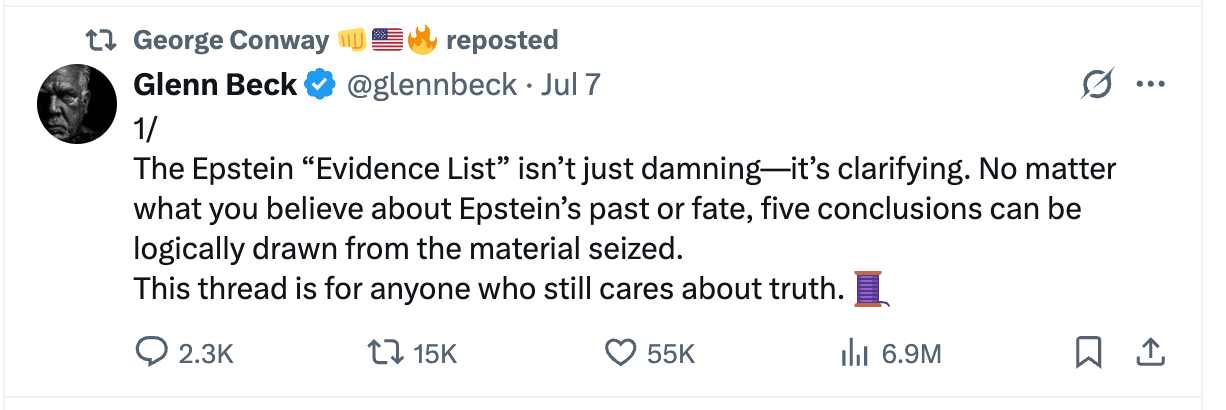
Still think this is just internet drama? Then explain why George Conway is reposting Glenn Beck. Did you have that on your 2025 bingo card?

Or why Jake Tapper — yes, that Jake Tapper — thinks this is his comeback moment. He’s calling for the release of the Epstein list and the tapes, not because he cares about justice, but because he knows exactly how deep the wound could go. He sees the opportunity to turn a hairline fracture in Trump’s base into a compound break.

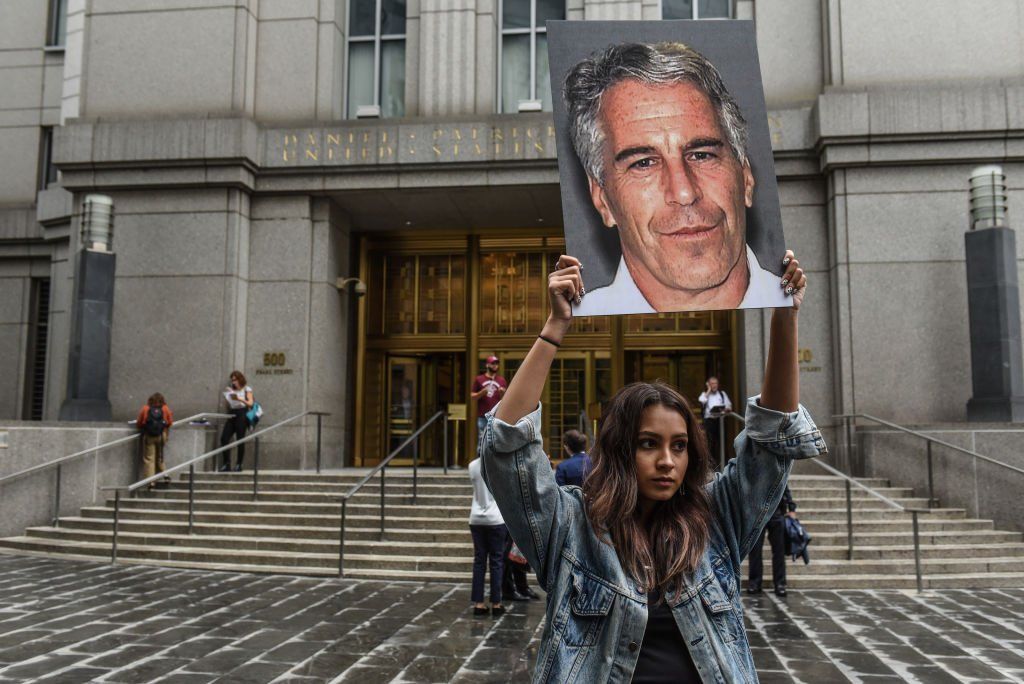
RELATED: The Epstein case proves one thing: The elites are protected

Photo by Spencer Platt/Getty Images

And here’s the thing: He might succeed.

Unless someone at 1600 Pennsylvania Avenue or the Justice Department decides it’s worth risking serious chaos in the GOP, this issue won’t just fester. It’ll metastasize.

If this controversy had erupted while Trump was pushing votes for the One Big Beautiful Bill Act or preparing to bomb Iran, would the base have stood firm? Maybe not. Because this hits differently. This feels moral. Existential. A test of whether Trump’s still serious — or if power has tamed him as it tamed so many before.

The clock is ticking

And what happens in 2026?

Republican turnout in the low 90s won’t cut it — not with a deflated, demoralized base that sees Epstein accountability as a promise on par with Trump’s other major blunders. COVID. Fauci. The shots. Pile on Elon Musk’s third-party siren song, and that’s maybe just enough to peel off five points, and you’ve got a perfect storm of apathy, betrayal, and collapse.

This is the math no one wants to run — but it’s already penciled in.

The Trump team’s answers are getting the red-pen treatment in real time. The political class can pretend this is a sideshow. It isn’t. It’s the main stage, and the spotlight’s burning hot.

We are in a civil war — spiritual, political, cultural. And the last thing we can afford right now is to split our ranks over a human toilet like Jeffrey Epstein.

Top Biden Adviser Has Not Yet Divested Multimillion Dollar Investment Portfolio: REPORT

White House Senior Adviser Anita Dunn has yet to divest holdings

By Hiring CBS Reporter Kate Smith, Planned Parenthood Brings Propaganda Production In-House

Planned Parenthood's hiring of Smith is only surprising in that they think she is more valuable on staff than carrying water for them on CBS.

How Public Relations Firms Are Exploiting Distrust In Media For Dollars

In the void of trustworthy news sources, audiences are being taken advantage of and being peddled political talking points from PR firms.