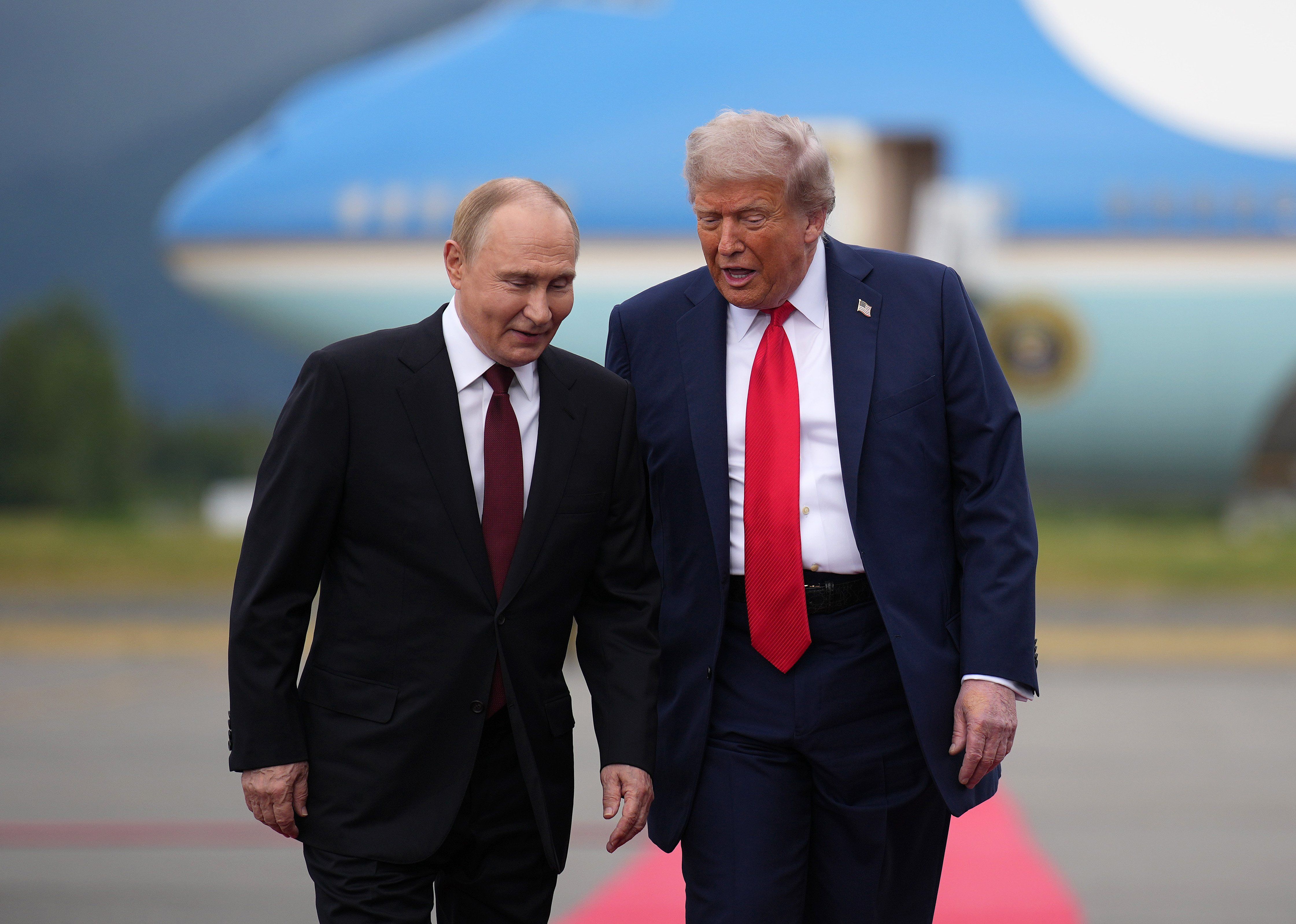
Frustrated Trump calls for Ukrainian election after Zelenskyy seemingly torpedoes another peace opportunity


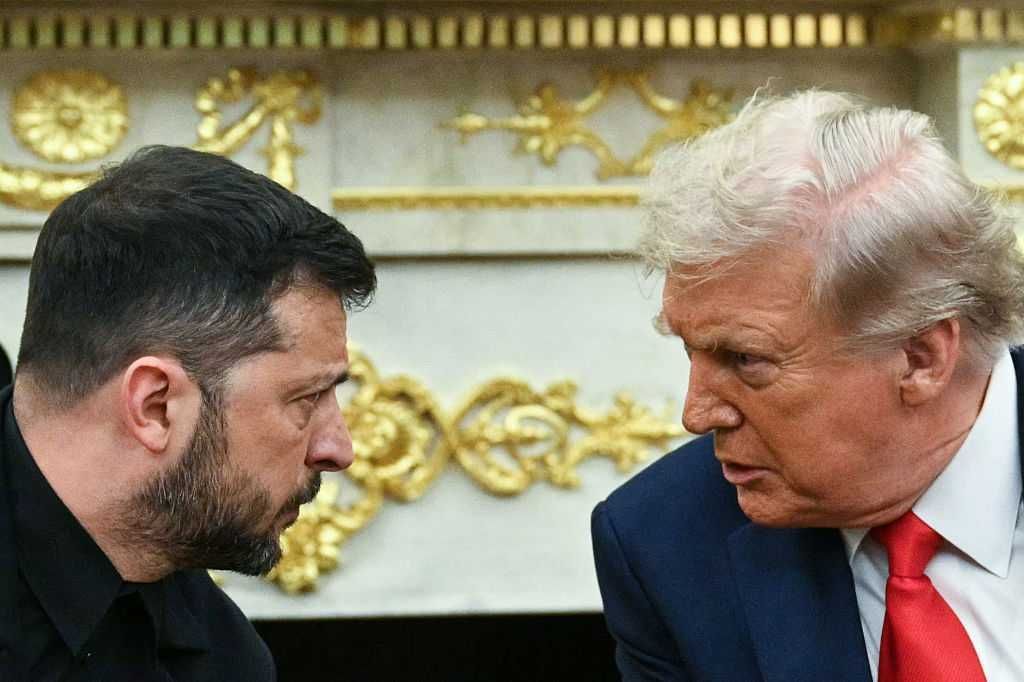
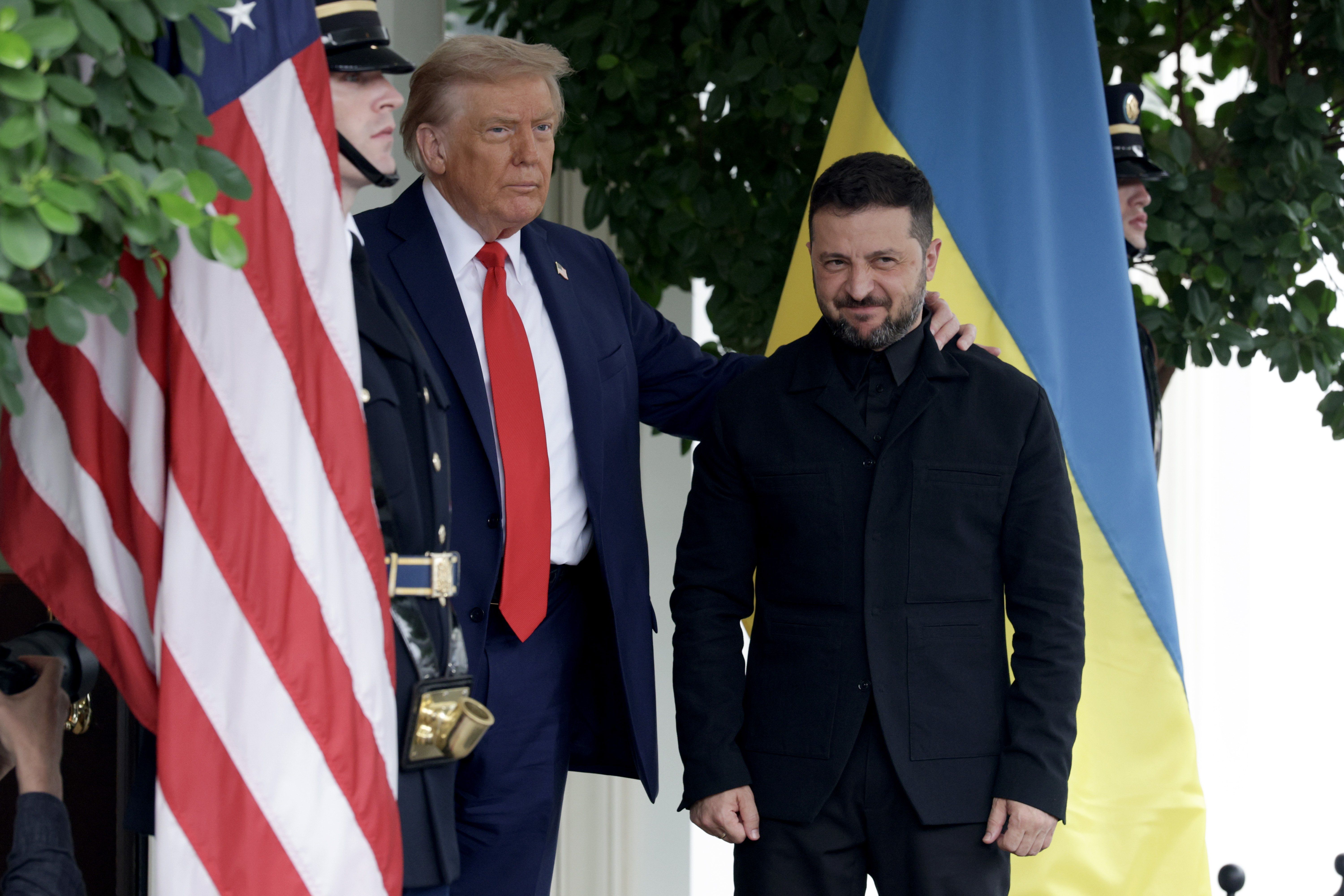
Ukrainian President Volodymyr Zelenskyy has effectively torpedoed President Donald Trump's peace plan.

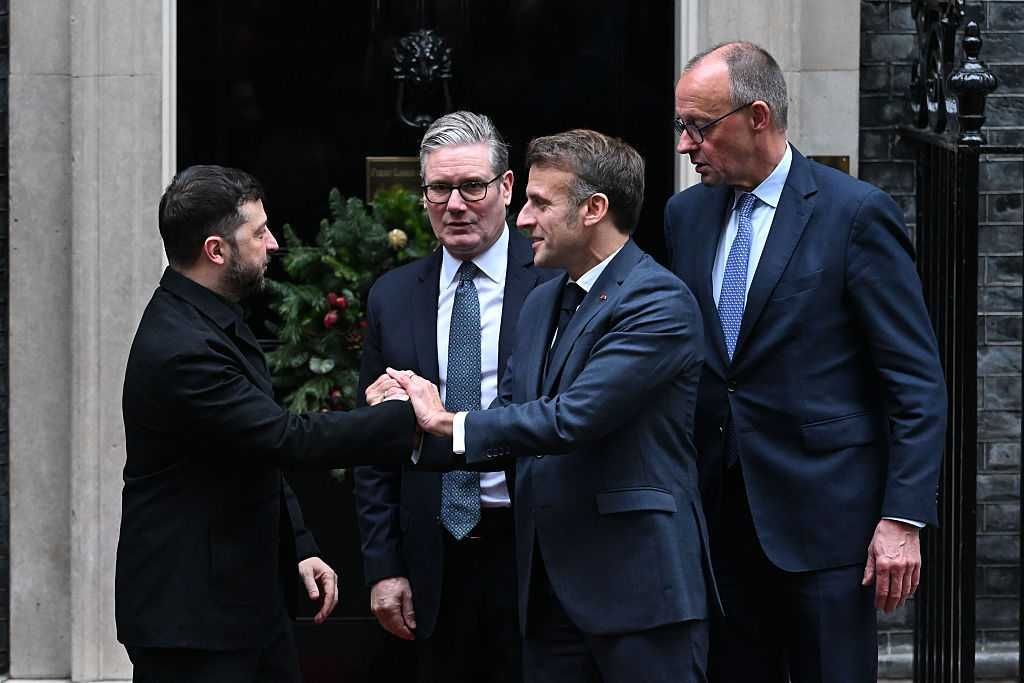
After his meeting on Monday with British Prime Minister Keir Starmer, German Chancellor Friedrich Merz, and French President Emmanuel Macron — who reportedly suggested last week that the U.S. might "betray" Ukraine — Zelenskyy reportedly told reporters that Kyiv will not cede any territory to Russia.

'A lot of people are dying. So it would be really good if he'd read it. His people loved the proposal.'

"We have no right to give anything away — not under our laws, not under international law, not under moral law," said Zelenskyy, reported the New York Post. "Russia is, of course, insisting that we give up territory. We, of course, do not want to give up anything — that is precisely what we are fighting for, as you are well aware."

Zelenskyy, whom Trump accused in February of "gambling with the lives of millions of people," added, "To be honest, the Americans are looking for a compromise today."

Russia, which has slowly captured additional territory over the past year, presently occupies around 20% of the entire country and most of the Donbas — including all of the Luhansk region, most of the largely Russian-speaking Donetsk region, much of the Kherson and Zaporizhzhia regions, and parts of the Sumy and Kharkiv regions.

Under the Trump administration's initial 28-point peace plan, embraced by Moscow but rejected by Kyiv and European leaders,

  • the U.S. would recognize Crimea, Luhansk, and Donetsk as de facto Russian;
  • Kherson and Zaporizhzhia would be divided along the current line of contact;
  • Russia would cede other territories under its control outside the five regions; and
  • Ukrainian forces would abandon the part of Donetsk Oblast currently under their control, leaving it as a demilitarized buffer zone.

RELATED: European leaders gossip about US amid apparent efforts to torpedo Trump's Russia-Ukraine peace deal: Report

Photo by Rasid Necati Aslim/Anadolu via Getty Images

Trump has long maintained that Kyiv will have to make some territorial concessions to bring an end to war that has resulted in millions of casualties. In August, for instance, the president said that while the U.S. seeks to negotiate for some of the Russia-occupied territories back for Ukraine, inevitably "there will be some land swapping going on. I know that through Russia and through conversations with everybody."

On Monday, Zelenskyy suggested that he and Trump see things differently, stating that Trump "certainly wants to end the war. ... Surely, he has his own vision. We live here, from within we see details and nuances, we perceive everything much deeper, because this is our motherland."

'It gets to a point where it's not a democracy anymore.'

Trump said in an interview with Politico on Monday that while he credits the Ukrainian people for their bravery in defending their homeland, Russia is presently in the stronger negotiating position and "size will win, generally." Accordingly Ukraine has to "play ball," suggested the president, who was uncertain about whether Zelenskyy had even bothered to read the latest peace proposals.

"That's as of yesterday. Maybe he's read it over the night," said Trump. "It would be nice if he would read it. You know, a lot of people are dying. So it would be really good if he'd read it. His people loved the proposal. They really liked it. His lieutenants, his top people, they liked it, but they said he hasn't read it yet. I think he should find time to read it."

Zelenskyy indicated this week that he will provide Washington with his views on the current U.S. peace plan — which has reportedly shed eight of the original points Zelenskyy characterized as "anti-Ukrainian" — on Tuesday night but not until he discusses with European leaders the "reparations loan and security guarantees" he regards as critical to the peace process.

When asked what would happen if Zelenskyy rejected the deal, Trump said, "He's gonna have to get on the ball and start accepting things." As for the European leaders who appear keen to involve themselves in the process, Trump said, "They talk but they don't produce, and the war just keeps going on and on."

Trump noted further that it's time now — 18 months after Zelenskyy's term was originally scheduled to end and in the midst of an ever-worsening corruption scandal involving Zelenskyy's administration and close allies — for a Ukrainian presidential election.

"It's been a long time," said Trump.

"I think it's an important time to hold an election. They're using war not to hold an election, but I would think the Ukrainian people would, should have that choice. And maybe Zelenskyy would win. I don't know who would win. But they haven't had an election in a long time. You know, they talk about a democracy, but it gets to a point where it's not a democracy anymore."

Zelenskyy said in a statement on Tuesday, "We are committed to a real peace and remain in constant contact with the United States. And as our partners in the negotiating teams rightly note, everything depends on whether Russia is ready to take effective steps to stop the bloodshed and prevent the war from reigniting."

Like Blaze News? Bypass the censors, sign up for our newsletters, and get stories like this direct to your inbox. Sign up here!

Another historic peace imminent? Ukraine signals support for altered version of Trump's peace plan


President Donald Trump has in recent months brokered peaceful resolutions between numerous warring parties, including Israel and Hamas; Azerbaijan and Armenia; Rwanda and the Democratic Republic of the Congo; Cambodia and Thailand; and India and Pakistan.

The major peace he campaigned on securing between Ukraine and Russia has, however, proven elusive.

Last week, Ukrainian President Volodymyr Zelenskyy and his government's representative to the U.N. appeared to reject the fundamentals of the Trump administration's 28-point plan for peace.

The plan would have: barred Ukraine from NATO, having an army exceeding 600,000 men, and acquiring nukes but provided Kyiv with a NATO-style security guarantee from the U.S.; recognized much of the occupied territory in eastern Ukraine as Russian; set the stage for an American-backed rebuilding of Ukraine; and granted full amnesty to all parties involved in the conflict.

'Don't believe it until you see it.'

While apparently averse to several of the 28 points, Kyiv has, however, since expressed support for an altered version of the peace plan, the details of which Trump and Zelenskyy — who has reportedly not authorized anyone but himself to discuss territorial matters — may soon iron out at the White House.

An official briefed on the negotiations told the Washington Post that Trump's peace plan had been reduced from 28 points to 19 points by Monday. A European official briefed on the talks suggested that some of the provisions concerning European security didn't make it to the new draft.

Ukrainian delegate Oleksandr Bevz noted, "Many of the controversial provisions were either softened or at least reshaped" to get Kyiv on board.

RELATED: Zelenskyy's hold on power uncertain as criminal charges reach his inner circle

Photographer: Aaron Schwartz/Sipa/Bloomberg via Getty Images

After Ukraine's delegation returned from Geneva, where they met over the weekend to discuss the American peace proposal with representatives of the Trump administration, Zelenskyy said in a statement on Monday evening that "now the list of necessary steps to end the war can become doable. As of now, after Geneva, there are fewer points — no longer 28 — and many of the right elements have been taken into account in this framework."

"Our team has reported on the new draft of steps, and this is indeed the right approach," continued Zelenskyy. "I will discuss the sensitive issues with President Trump."

Echoing Zelenskyy, Ukraine's national security secretary Rustem Umerov announced that the U.S. and Ukrainian delegations "reached a common understanding on the core terms of the agreement discussed in Geneva."

Amid U.S. Army Secretary Daniel Driscoll's meetings on Tuesday with Russian and Ukrainian officials in Abu Dhabi, which a spokesman said were "going well," a U.S. official told CNN that "the Ukrainians have agreed to the peace deal. There are some minor details to be sorted out, but they have agreed to a peace deal."

White House press secretary Karoline Leavitt confirmed on Tuesday that "tremendous progress towards a peace deal" has been made, adding that "there are a few delicate, but not insurmountable, details that must be sorted out and will require further talks between Ukraine, Russia, and the United States."

Secretary of State Marco Rubio effectively said the same thing days earlier, adding, "I honestly believe we'll get there."

During a press conference with the Belarusian foreign minister on Tuesday, Russian foreign affairs minister Sergey Lavrov noted that Moscow "welcomed" the 28-point plan but will consider the "interim" plan produced by Washington, Kyiv, and the Europeans in the coming days.

Lavrov noted, however, that Russia expects the peace plan to adhere to the terms President Vladimir Putin discussed with Trump during their August summit in Anchorage.

"We are not hurrying. We're not pushing our American counterparts. We have waited a long time since Anchorage," said Lavrov. "We are only reminding them that we stick to those agreements."

Lavrov added, "If the spirit and letter of Anchorage is erased in terms of the key understandings we have established then, of course, it will be a fundamentally different situation."

Trump noted in a Truth Social post on Monday, "Is it really possible that big progress is being made in Peace Talks between Russia and Ukraine??? Don't believe it until you see it, but something good just may be happening. GOD BLESS AMERICA!"

Like Blaze News? Bypass the censors, sign up for our newsletters, and get stories like this direct to your inbox. Sign up here!

Congress Ups Ante Against Russia In New ‘State Sponsor Of Terror’ Bill, Hits China On The Way

The Senate Foreign Relations Committee advanced three bipartisan bills on Wednesday in an effort to tighten the screws on Moscow and its backers nearly three years after Russia’s invasion of Ukraine. If passed by the Senate, the trio of bills will label Russia a state sponsor of terrorism, sanction China for supporting Russia’s war effort, […]

Xi, Putin, and Modi join forces to reject West’s fading world order


What do a Hindu nationalist prime minister, a former KGB autocrat, and communist China’s imperial strongman have in common?

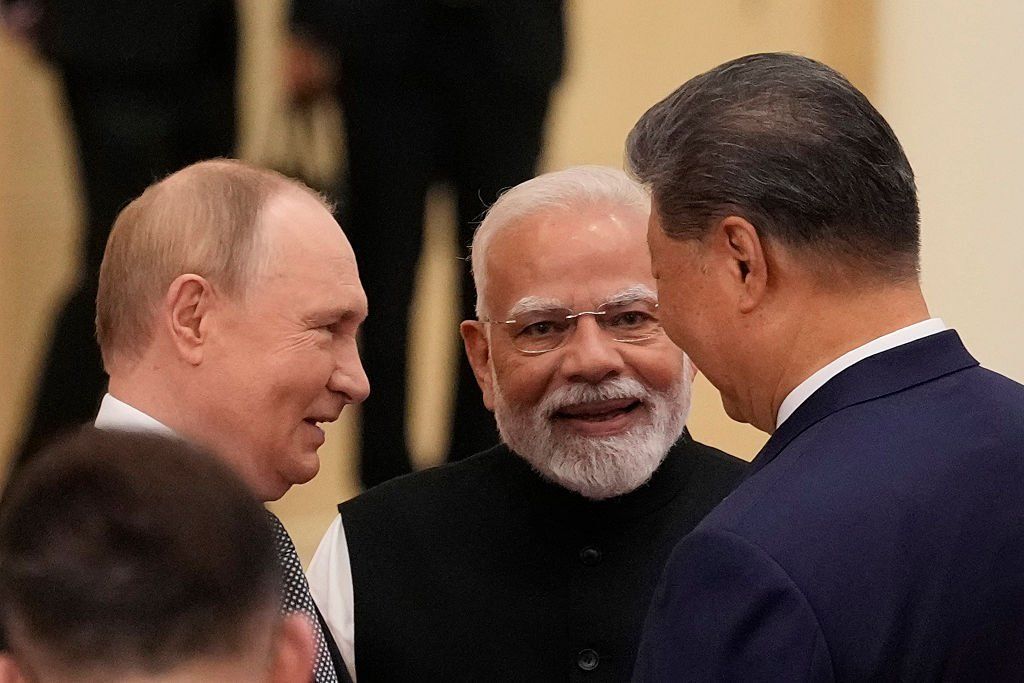
Apparently, enough to walk arm in arm at the recent Shanghai Cooperation Organization summit in China — smiling for the cameras, toasting regional “cooperation,” and calling for a new global order that doesn’t revolve around Washington, Brussels, or the International Monetary Fund.

Each of these leaders — Xi, Putin, Modi — believes his country has been talked down to by a West that still sees itself as the default setting of human civilization.

Watching Indian Prime Minister Narendra Modi, Russian President Vladimir Putin, and Chinese President Xi Jinping embrace in Tianjin earlier this month may strike Western observers as a diplomatic absurdity — a Lovecraftian alliance of contradictions. But it’s only absurd if you’re still trapped in the fog of 1990s end-of-history delusions.

In reality, what we’re seeing is a convergence of deeply rooted civilizations — ancient empires with long memories — asserting that they won’t be subordinated to a West that still believes it owns the future.

To understand this moment, you need to understand history — not just the last 80 years, but the last 800.

Reclaiming ancient identities

China was the “middle kingdom” long before it became the world’s factory. It ruled as a centralized, Confucian empire for millennia — containing its own tributary states, cultures, and contradictions. The current Chinese Communist Party regime doesn’t just govern China; it is consciously rebuilding it as a totalitarian civilizational state aimed at restoring its former glory and avenging its “century of humiliation.” Xi Jinping’s “rejuvenation of the Chinese nation” is a project explicitly rooted in a return to imperial pre-eminence, not democratic inclusion.

Russia, for its part, never really stopped being an empire. Whether it flew the tsarist eagle, the Soviet hammer and sickle, or today’s revanchist flag of Russian Orthodoxy and gas pipelines, it has always been a civilizational project stretching across 11 time zones. Putin’s Russia isn’t looking to export an ideology — he trades in memory, borders, and ensuring it’s never again humiliated by NATO expansion or IMF diktats.

And India — too often misunderstood as just the world’s largest democracy — is in the midst of rediscovering its own cultural core. While India has never sustained a single continuous empire, Modi’s India is assertive, spiritual, and unapologetically Hindu in its civilizational narrative. While he plays nice on global stages, he is keen to shed India’s post-colonial skin and assert its role not as a subordinate in the West’s rules-based order, but as a peer.

Of course, these aren’t natural allies. India and China have come to blows in the Himalayas. Russia and China eye each other warily in Central Asia. Modi can’t forget the border clashes or China's tech intrusion. Putin sells weapons and hydrocarbons to both. But what unites them now is something the West continues to ignore: a shared rejection of subordination.

Each of these leaders — Xi, Putin, Modi — believes his country has been talked down to by a West that still sees itself as the default setting of human civilization.

A unified front against the West

The SCO summit wasn’t about solving their differences. It was about presenting a united front against a common narrative: the unyielding insistence by Washington and Brussels that there is one set of rules for everyone else and another for the liberal West.

And it’s not lost on anyone in the East that Western Europe has all but collapsed economically — not because of war or invasion, but because of its own self-inflicted obsession with net-zero fantasies. Energy costs have skyrocketed, industries are fleeing, and the once-mighty militaries of Germany, France, and the U.K. are now barely functional. Their foreign policies rest on rhetoric, not strength. They outsourced their energy to Russia and their deterrence to America — and now have neither.

Meanwhile, China, India, and Russia burn coal, build steel, and mobilize armies.

The world is not “deglobalizing”; rather, the world’s center of economic gravity has shifted.

If trade gets blocked in one place, whether by sanctions or tariffs, it reappears in other ones. As Louis Gave explains:

The Western world attempted to trigger a collapse in the Russian economy by blocking access to the U.S. dollar, euro, British pound, and Swiss franc. Unsurprisingly, Russia immediately shifted to selling its commodities for renminbi, Indian rupees, Brazilian real, or Thai baht, and trade between Russia and the world’s major emerging markets went parabolic.

China’s trade surplus has surged by opening new markets for its products. In 2017, the value of Chinese exports to ASEAN economies amounted to 60% of China’s exports to the U.S. Today, China’s exports to Southeast Asia stand at roughly 120% of China’s exports to the U.S.

A multipolar world

The American foreign policy class loves binaries: democracy vs. autocracy, order vs. chaos, good guys vs. bad guys. But history doesn't care about binaries. It cares about power, memory, geography, and pride.

That’s what brings these “strange bedfellows” together. They don’t need to love each other. They just need to agree that the current world order is not designed with their civilizations in mind.

And as America potentially turns back to America First — which is long overdue — it’s worth recognizing that this time, the rest of the world isn’t standing still. Unipolar globalization is no longer the key organizing principle. The East now speaks with a louder voice, and it contains over half the world’s population and represents almost 40% of global GDP. A second Trump term can’t simply reassert American dominance by fiat.

RELATED: From Silicon Valley to Moscow, a supply chain of death

Photo by ewg3D via Getty Images

America First with guile

The SCO summit was more than a photo op. It was a signal. That signal is this: The old rules-based order isn’t binding any more. The future isn’t unipolar; it’s multipolar and won’t be built only on Western terms.

This is not a call for appeasement. It’s a call to engage with these ancient empires by leveraging our strengths with strategic humility and guile.

America First must deal from strength and with awareness that it no longer holds all the cards. President Trump knows how to read a room. He now needs to read a world where the emperors are back. And this time, together, they’re working on a plan.
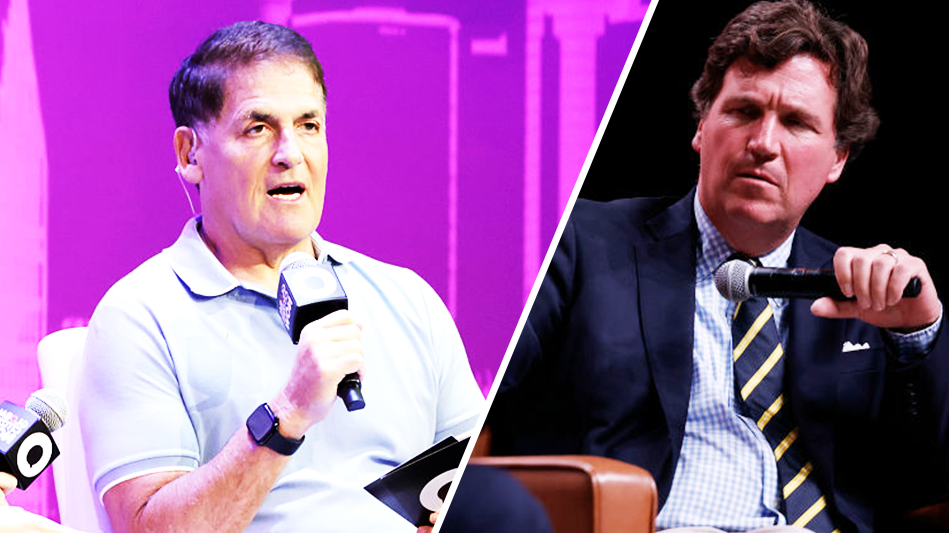
Tucker Carlson clashes with Mark Cuban over Ukraine stance: 'How much money have you sent?'


Former talk-show host Tucker Carlson and businessman Mark Cuban had an uncomfortable exchange over the topic of the Russia-Ukraine war earlier this week.

The two stars appeared at the All-In Summit on Monday, hosted by the "All-In" podcast, a business and technology show hosted by entrepreneurs Chamath Palihapitiya, Jason Calacanis, David Sacks, and David Friedberg.

'Forcing other people to help is not charity. It's vanity.'

Cuban appeared first, with the panel jumping into the topic of fixing America's health care. This led Cuban to bring up his latest venture, a pharmaceutical website that sells drugs at cost, with the URL getting at least eight mentions in about 15 minutes.

When Carlson appeared on stage, he immediately mocked the consistent plugs.

When asked how to identify the line between "democracy" and "pandering," Carlson offered a hilarious answer.

"Where is the line? I mean, I can identify it: It's at costplusdrugs.com," Carlson said, poking fun at Cuban's business.

Less than 10 minutes passed before Sacks, the White House AI and crypto czar under President Trump, asked Cuban about "whether we should be sending money to Ukraine or not."

"Were you in favor of that?" Sacks inquired.

"Honestly, I don't have a good answer," Cuban replied. "I can make an argument both ways, and half my family is Ukrainian, from my grandparents. Personally, I think we should help, but I don't have a studied answer for you."

This led to the most contentious part of the show, with Carlson cornering Cuban on his position.

RELATED: Mark Cuban says Americans 'aren't ready' for transgender athletes yet: 'You can't just force it down people's throats'

"How much money have you sent to Ukraine?" the former Fox News host asked the billionaire.

"None," Cuban revealed.

This did not stop Carlson's questions.

"Oh, so what do you mean by 'we'?" Carlson continued. Cuban was silent, responding only with a shoulder shrug.

"You're the one whose family's from Ukraine. Like, why don't you send them a billion dollars?" Carlson piled on.

"Because I'm trying to fix health care," Cuban retorted.

Tucker, not standing down, then asked, "Why don't you fix their health care if you're, like, so deep? If you think we need to help, why don't you start? How about you first? I noticed that's never even an option for anybody."

The crowd erupted in applause in support of Carlson's rhetoric.

"It's like, 'We need to help!'" the podcaster added. "That's not what charity is. Forcing other people to help is not charity. It's vanity."

Calacanis then jumped in and saved Cuban with comments about the war and joked that President Trump was going to turn a profit from all the chaos in Eastern Europe.

RELATED: How Tucker Carlson vs. Ted Cruz exposed a critical biblical question on Israel


Much of Carlson's commentary on the panel was focused on population replacement in Western countries and the unaffordability of homes, which is stagnating population growth.

Other highlights included Carlson being asked if he is anti-Semitic, if Jeffrey Epstein was a spy, and if Russian President Vladimir Putin is a war criminal.

Like Blaze News? Bypass the censors, sign up for our newsletters, and get stories like this direct to your inbox. Sign up here!

Trump defends Zelenskyy against Russian official: 'It's all bulls**t'


President Donald Trump dismissed the claim of a Russian official as the commander in chief continues to negotiate peace talks with Ukraine.

Sergey Lavrov, Russia's minister of foreign affairs, recently said that Russian President Vladimir Putin would not sign a peace deal with Ukrainian President Volodymyr Zelenskyy because he is viewed as an "illegitimate" leader. Trump shot down Lavrov's comments during Tuesday's Cabinet meeting, saying, "Everybody is posturing."

'The issue of who is going to sign the deal on Ukrainian side is a very serious issue.'

"It doesn't matter what they say," Trump told reporters. "Everybody is posturing. It's all bullsh**t."

Trump also offered United States Special Envoy Steve Witkoff the opportunity to chime in, to which he simply said, "I agree with you, sir." The room filled with reporters and government officials promptly erupted with laughter.

Notably, Zelenskyy's five-year presidential term was set to end in May 2024, but no elections have been called due to the ongoing conflict with Russia.

RELATED: Trump demands death penalty for DC murderers

Reporter: "This weekend Sergey Lavrov was saying Putin will not sign a peace deal with Zelenskyy because Russia views him as illegitimate..."

President Trump: "It doesn't matter what they say. Everybody is posturing. It's all bullshit." pic.twitter.com/8H8AeKNqAC
— TheBlaze (@theblaze) August 26, 2025

Although the Trump administration has held separate summits with both Zelenskyy and Putin in recent weeks, Lavrov said there is "no planned meeting" between the two leaders.

In addition to challenging Zelenskyy's leadership, Lavrov reiterated the slew of preconditions Russia is demanding from Ukraine. Some of these preconditions include Ukraine agreeing not to join NATO, "the discussion of territorial issues," and for Zelenskyy to cancel any legislation "prohibiting the Russian language."

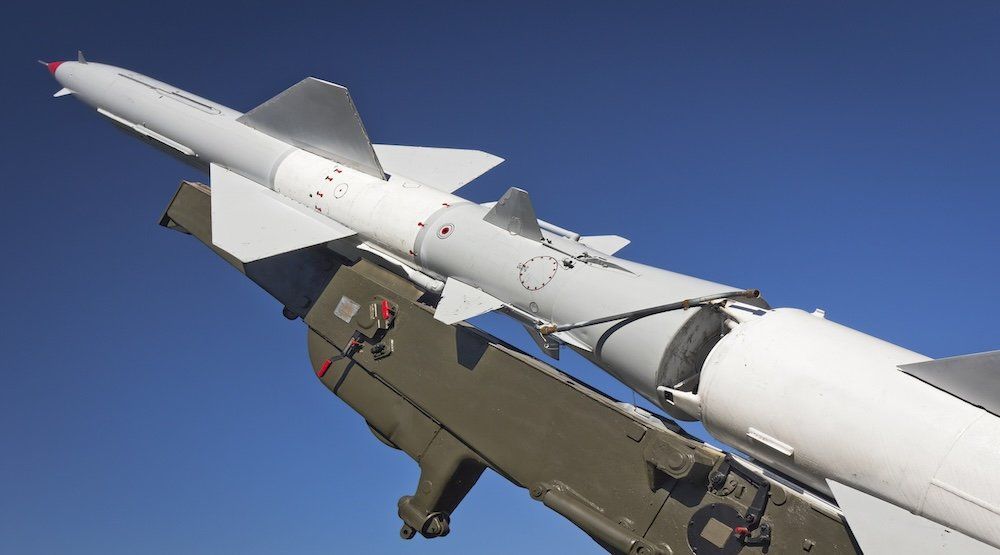
RELATED: Trump makes a bold push for global competitors to abandon nukes: 'The power is too great'

Photo by Andrew Harnik/Getty Images

"Irrespective of when this meeting might take place, and that must be very well prepared, the issue of who is going to sign the deal on Ukrainian side is a very serious issue," Lavrov said over the weekend.

Like Blaze News? Bypass the censors, sign up for our newsletters, and get stories like this direct to your inbox. Sign up here!

Putin’s Big Mistake: The Russian President Ticked Off the First Lady and Uncle Sam

It turns out that insulting the president's wife is a bad idea.

Just after Donald Trump's November victory, Russian state media broadcast racy photos from Melania Trump's modeling career while the presenters stifled giggles. This was not well calculated to win over the Slovenian-American, who naturally sympathizes with Ukraine. As her husband remarked last month, "I go home and tell the first lady, 'I spoke with Vladimir today. We had a wonderful conversation.' She says, 'Oh really? Another [Ukrainian] city was just hit.'" Trump brought to the Alaska summit a letter from Melania to Vladimir Putin essentially asking him to stop kidnapping and butchering Ukrainian children.

The post Putin’s Big Mistake: The Russian President Ticked Off the First Lady and Uncle Sam appeared first on .

Trump tells Mark Levin what guides him in peace talks, emphasizes need to stop the Russia-Ukraine massacre


President Donald Trump revealed in a Tuesday interview with Blaze Media co-founder Mark Levin what guides him through his diplomatic endeavors as well as what's next for Ukraine, Russia, and America where brokering a lasting peace is concerned.

"You've got a lot of balls in the air with this," said Levin.

"You've got NATO. You got these NATO countries. You've got our national security interests. You've got Russia and Ukraine, their interests, and so forth and so on."

Levin asked, "Is there process here, or do you just kind of go with the flow?"

'Don't forget: That's not easy to overcome when he sees these wack jobs.'

Trump — who alluded in the interview to the conflicts he recently resolved between Rwanda and the Democratic Republic of the Congo, Cambodia and Thailand, and India and Pakistan, as well as his decisive strikes on Iran and the progress made already regarding the war in Ukraine — indicated that "it's probably instinct more than process."

"I have instincts, and I've lived with my instinct about things. Even running for president, I had an instinct I'd win the first time, and I did even better the second time — as you know, I did much better ... but bad things happened," said Trump.

The president suggested that now his second term "is far more powerful."

RELATED: Peter Doocy confronts Zelenskyy with question central to peace talks — and the response speaks volumes

Photo by Anna Moneymaker/Getty Images

While his instinct has helped bring relative peace to numerous nations around the world, Trump admitted to Levin that based on his previous relationship with Russian President Vladimir Putin, he initially expected that things would have gone more smoothly with the Ukraine peace talks.

"I actually had a good relationship with President Putin [in] the first term despite the fact that we had 'Russia, Russia, Russia,'" said Trump. "Don't forget: That's not easy to overcome when he sees these wack jobs — and he knew it was false because he wasn't involved. Not to say he's an angel, by the way, but he knew it was all a made-up thing, and, you know, he probably thought we were totally crazy, this country."

Trump indicated that while the Russia-Ukraine war has proven more difficult to resolve than other conflicts — certainly more difficult that he first imagined — he had "very successful" meetings with Putin and Ukrainian President Volodymyr Zelenskyy, "and now we'll see how they do."

In the event that Putin and Zelenskyy can't seal the deal, Trump indicated, "I'll probably be able to get it closed. I just want to see what happens at the meeting."

'You're not going to have to worry about that.'

Regardless of the outcome, Trump made clear that the American taxpayer will no longer be on the hook for prolonging the Slavic bloodshed.

Trump bemoaned the hundreds of billions in taxpayer dollars that have been spent on the war, stressing, "We're not going to do that."

Between the rare-earth deal he brokered with Ukraine and his deal with NATO for the military alliance to buy American missiles and weapons, Trump indicated that "we're not spending any money" despite pressure from Zelenskyy, whom he likened to P.T. Barnum, the hoax-pushing showman who co-founded the Ringling Bros. and Barnum & Bailey Circus.

"The whole thing is ridiculous," said Trump. "But more importantly, the death being caused over there is incredible. So we're going to try and stop it, and I think we have a good shot."

At the very least, Trump reassured Levin that whereas the conflict in Ukraine was dragging the world toward nuclear war when former President Joe Biden was in office, "you're not going to have that any more. That's the nice part. You're not going to have to worry about that."

Like Blaze News? Bypass the censors, sign up for our newsletters, and get stories like this direct to your inbox. Sign up here!