America First energy policy will be key to beating China in the AI race
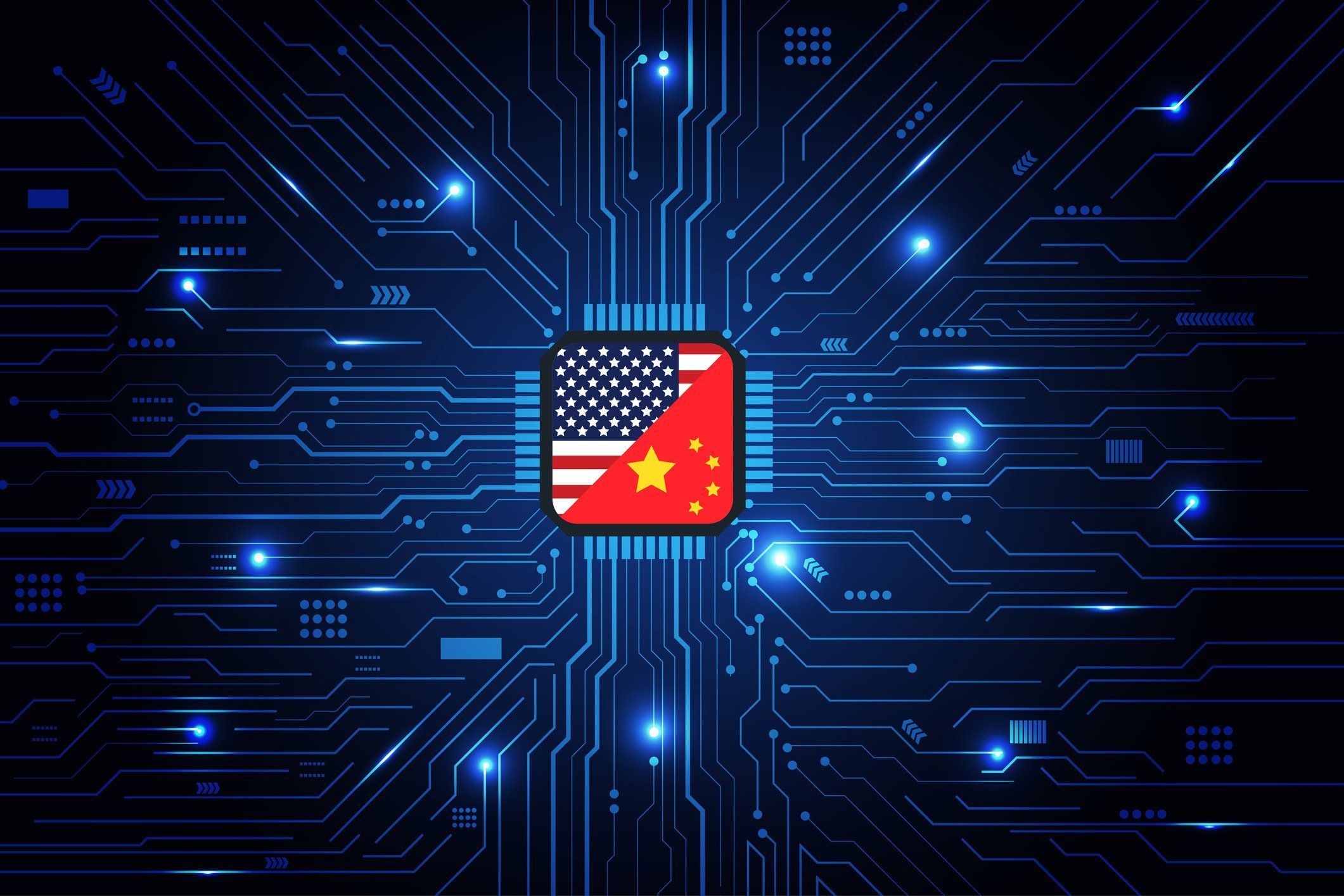


The world is on the verge of a technological revolution unlike anything we’ve ever seen. Artificial intelligence is a defining force that will shape military power, economic growth, the future of medicine, surveillance, and the global balance of freedom versus authoritarianism — and whoever leads in AI will set the rules for the 21st century.

The stakes could not be higher. And yet while America debates regulations and climate policy, China is already racing ahead, fueled by energy abundance.

Energy abundance must be understood as a core national policy imperative — not just as a side issue for environmental debates.

When people talk about China’s strategy in the AI race, they usually point to state subsidies and investments. China’s command-economy structure allows the Chinese Communist Party to control the direction of the country’s production. For example, in recent years, the CCP has poured billions of dollars into quantum computing.

China’s energy edge

But another, more important story is at play: China is powering its AI push with a historic surge in energy production.

China has been constructing new coal plants at a staggering speed, accounting for 95% of new coal plants built worldwide in 2023. China just recently broke ground on what is being dubbed the “world’s largest hydropower dam.” These and other energy projects have resulted in massive growth in energy production in China in the past few decades. In fact, production climbed from 1,356 terawatt hours in 2000 to an incredible 10,073 terawatt hours in 2024.

Beijing understands what too many American policymakers ignore: Modern economies and advanced AI models are energy monsters. Training cutting-edge systems requires millions of kilowatt hours of power. Keeping AI running at scale demands a resilient and reliable grid.

China isn’t wringing its hands about carbon targets or ESG metrics. It’s doing what great powers do when they intend to dominate: They make sure nothing — especially energy scarcity — stands in their way.

America’s self-inflicted weakness

Meanwhile, in America, most of our leaders have embraced climate alarmism over common sense. We’ve strangled coal, stalled nuclear, and made it nearly impossible to build new power infrastructure. Subsidized green schemes may win applause at Davos, but they don’t keep the lights on. And they certainly can’t fuel the data centers that AI requires.

The demand for energy from the AI industry shows no sign of slowing. Developers are already bypassing traditional utilities to build their own power plants, a sign of just how immense the pressure on the grid has become. That demand is also driving up energy costs for everyday citizens who now compete with data centers for electricity.

Sam Altman, CEO of OpenAI, has even spoken of plans to spend “trillions” on new data center construction. Morgan Stanley projects that global investment in AI-related infrastructure could reach $3 trillion by 2028.

Already, grid instability is a growing problem. Blackouts, brownouts, and soaring electricity prices are becoming a feature of American life. Now imagine layering the immense demand of AI on top of a fragile system designed to appease activists rather than strengthen a nation.

In the AI age, a weak grid equals a weak country. And weakness is something that authoritarian rivals like Beijing are counting on.

Time to hit the accelerator

Donald Trump has already done a tremendous amount of work to reorient America toward energy dominance. In the first days of his administration, he released detailed plans explicitly focused on “unleashing American energy,” signaling that the message is being taken seriously at the highest levels.

Over the past several months, Trump has signed numerous executive orders to bolster domestic energy production and end subsidies for unreliable energy sources. Most recently, the Environmental Protection Agency has moved to rescind the Endangerment Finding — a potentially massive blow to the climate agenda that has hamstrung energy production in the United States since the Obama administration.

These steps deserve a lot of credit and support. However, for America to remain competitive in the AI race, we must not only continue this momentum but ramp it up wherever possible. Energy abundance must be understood as a core national policy imperative — not just as a side issue for environmental debates.

RELATED: MAGA meets the machine: Trump goes all in on AI
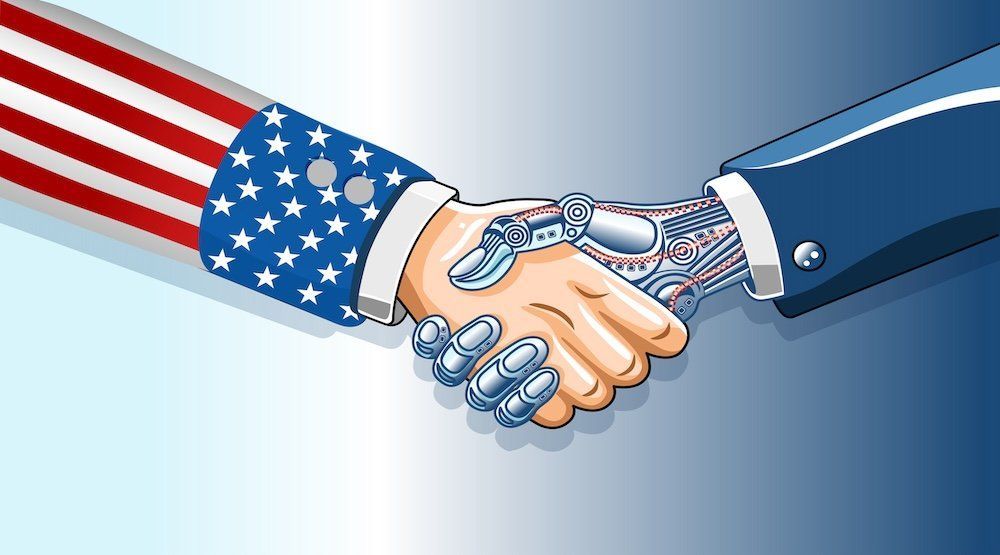
Photo by Grafissimo via Getty Images

Silicon Valley cannot out-innovate a blackout. However, Americans can’t code their way around an empty power plant. If China has both the AI models and the energy muscle to run them, while America ties itself in regulatory knots, the future belongs to China.

Liberty on the line

This is about more than technology. This is about the world we want to live in. An authoritarian China, armed with both AI supremacy and energy dominance, would have the power to bend the global order toward censorship, surveillance, and control.

If we want America to lead the future of artificial intelligence, then we must act now. The AI race cannot be won by Silicon Valley alone. It will be won only if America moves full speed ahead with abundant domestic energy production, climate realism, and universal access to affordable and reliable energy for all.


A brutal wake-up call from America’s most powerful banker


Jamie Dimon, CEO of JPMorgan Chase — one of the most powerful financial institutions on earth — issued a warning the other day. But it wasn’t about interest rates, crypto, or monetary policy.

Speaking at the Reagan National Defense Forum in California, Dimon pivoted from economic talking points to something far more urgent: the fragile state of America’s physical preparedness.

We are living in a moment of stunning fragility — culturally, economically, and militarily. It means we can no longer afford to confuse digital distractions with real resilience.

“We shouldn’t be stockpiling Bitcoin,” Dimon said. “We should be stockpiling guns, tanks, planes, drones, and rare earths. We know we need to do it. It’s not a mystery.”

He cited internal Pentagon assessments showing that if war were to break out in the South China Sea, the United States has only enough precision-guided missiles for seven days of sustained conflict.

Seven days — that’s the gap between deterrence and desperation.

This wasn’t a forecast about inflation or a hedge against market volatility. It was a blunt assessment from a man whose words typically move markets.

“America is the global hegemon,” Dimon continued, “and the free world wants us to be strong.” But he warned that Americans have been lulled into “a false sense of security,” made complacent by years of peacetime prosperity, outsourcing, and digital convenience:

We need to build a permanent, long-term, realistic strategy for the future of America — economic growth, fiscal policy, industrial policy, foreign policy. We need to educate our citizens. We need to take control of our economic destiny.

This isn’t a partisan appeal — it’s a sobering wake-up call. Because our economy and military readiness are not separate issues. They are deeply intertwined.

Dimon isn’t alone in raising concerns. Former Google CEO Eric Schmidt has warned that China has already overtaken the U.S. in key defense technologies — hypersonic missiles, quantum computing, and artificial intelligence to mention a few. Retired military leaders continue to highlight our shrinking shipyards and dwindling defense manufacturing base.

Even the dollar, once assumed untouchable, is under pressure as BRICS nations work to undermine its global dominance. Dimon, notably, has said this effort could succeed if the U.S. continues down its current path.

So what does this all mean?

RELATED: Is Fort Knox still secure?

mphillips007 via iStock/Getty Images
It means we are living in a moment of stunning fragility — culturally, economically, and militarily. It means we can no longer afford to confuse digital distractions with real resilience.

It means the future belongs to nations that understand something we’ve forgotten: Strength isn’t built on slogans or algorithms. It’s built on steel, energy, sovereignty, and trust.

And at the core of that trust is you, the citizen. Not the influencer. Not the bureaucrat. Not the lobbyist. At the core is the ordinary man or woman who understands that freedom, safety, and prosperity require more than passive consumption. They require courage, clarity, and conviction.

We need to stop assuming someone else will fix it. The next crisis — whether military, economic, or cyber — will not politely pause for our political dysfunction to sort itself out. It will demand leadership, unity, and grit.

And that begins with looking reality in the eye. We need to stop talking about things that don’t matter and cut to the chase: The U.S. is in a dangerously fragile position, and it’s time to rebuild and refortify — from the inside out.

Want more from Glenn Beck? Get Glenn's FREE email newsletter with his latest insights, top stories, show prep, and more delivered to your inbox.

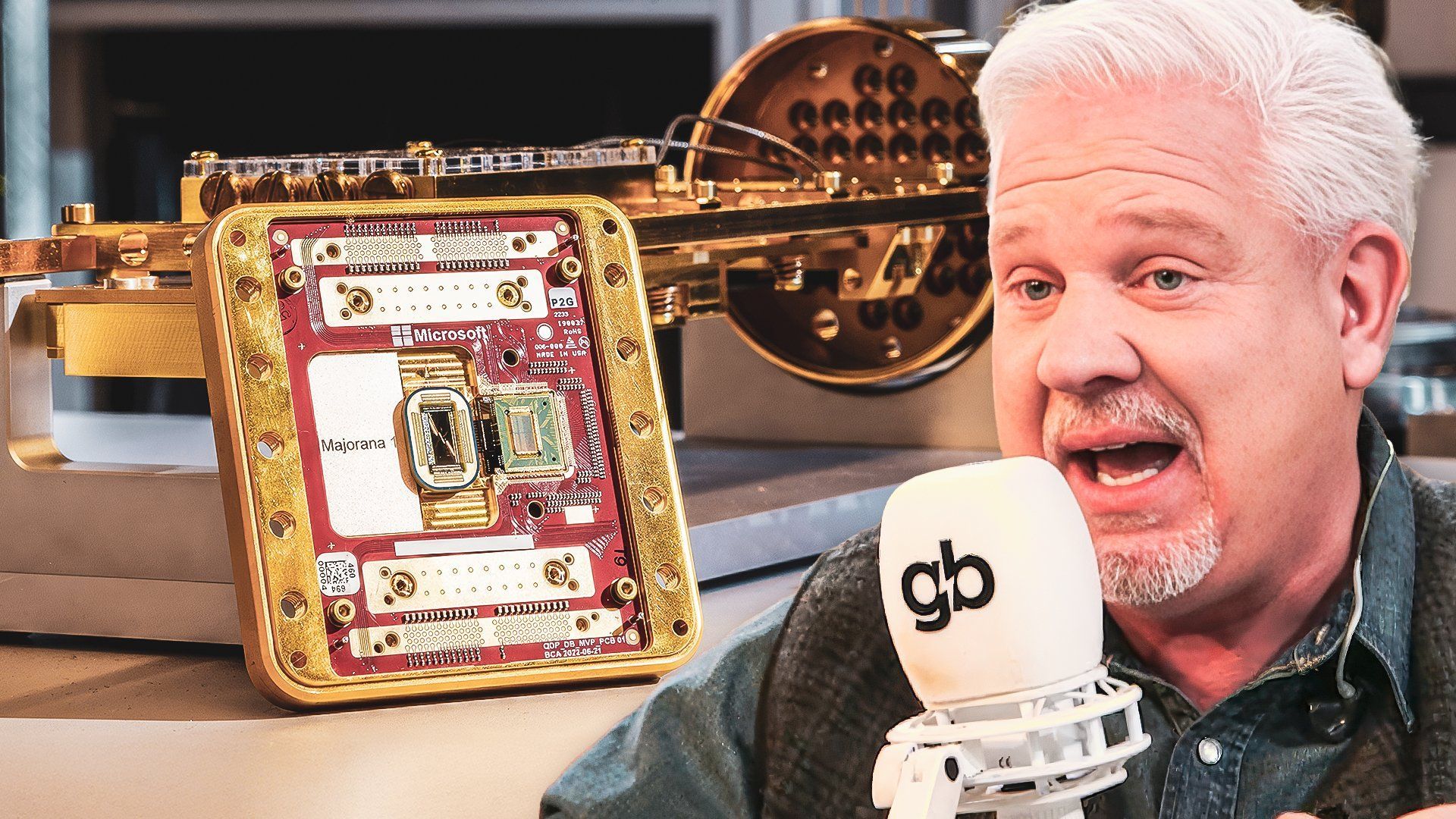
Introducing Majorana 1: Microsoft's computer chip that uses a NEW STATE of MATTER to unlock inconceivable power


Last week, Microsoft dropped a bombshell report that Glenn Beck says is possibly the biggest news in his lifetime: Another type of matter has been discovered.

“Listen to this sentence,” says Glenn, reading from Microsoft’s report. “Most of us grew up learning there are three main types of matter: solid, liquid, and gas. Today that has all changed. After nearly a 20-year pursuit, we've created an entirely new state of matter, unlocked by a new class of materials: topoconductors.”

Topological conductors have allowed Microsoft to harness and control the "Majorana" particle, which was first predicted to exist by Italian theoretical physicist Ettore Majorana in 1937. Until last year, though, the particle has been inaccessible.

After just one year of using topoconductors to manipulate Majorana particles, Microsoft has developed Majorana 1: “the world’s first quantum chip powered by a new topological core architecture” that will revolutionize computing (and life) as we know it.

Glenn explored the implications of Majorana 1 in his latest op-ed.

“If today’s best supercomputers are like an Olympic sprinter, quantum computers are like teleportation — and we’re on the verge of plugging artificial intelligence into that system,” he wrote.

On a recent episode of “The Glenn Beck Program,” Glenn went into more depth about what this latest breakthrough could mean for the world.

“Everything has changed,” he says.

“If they could put that one chip in your phone, it would make your phone as powerful as the best supercomputer with a server farm the size of the planet Earth,” he explains.

While it’s unlikely that such technology will be put into cell phones or really any place where the average person can access it, Majorana 1 will nonetheless have a huge impact on the everyday person.

Glenn gives an example of how the chip could be used: “You'll be able to say, ‘Look, I need airplanes to be absolutely the most fuel-efficient; I don't care what the fuel is; you invent new fuel, too. I need it to be a quarter of the weight of an airplane, carry more passengers, and I want it to travel at 9,000 miles an hour. … Give me the materials and tell me how to make that plane.”

“Boom — 10 minutes later, you have the design of not just the plane but the materials and the fuel.”

While that scenario sounds great, there is, as always, potential for extraordinary darkness.

If, for example, one were to inquire about how to cure cancer, the technology might say, “Why cure cancer? I'll just redesign the human so it never gets cancer.”

“That's the kind of game-changing scenario that we're looking at in the next five years,” says Glenn.

To hear more of Glenn’s analysis and predictions for the future, watch the clip above.

Want more from Glenn Beck?

To enjoy more of Glenn’s masterful storytelling, thought-provoking analysis, and uncanny ability to make sense of the chaos, subscribe to BlazeTV — the largest multi-platform network of voices who love America, defend the Constitution, and live the American dream.

The quantum AI revolution is here — and we’re not ready


On Wednesday, Microsoft quietly announced a breakthrough that could change the world forever. No fanfare, no flashing sirens — just a casual revelation that it's unlocked an entirely new state of matter. This isn’t science fiction. This is real. And if you thought the pace of technological change was overwhelming before, buckle up, because everything changed yesterday.

In science class, we are taught there are three states of matter: solids, liquids, and gases. Microsoft has allegedly developed a new class of matter, called “topological conductors,” that form the foundation of a new kind of quantum computing. The tech world has been chasing this for decades, and now, after nearly 20 years of research and billions of dollars, Microsoft has found the key.

This breakthrough isn’t just another incremental tech update — it’s a paradigm shift — and shifts like this don’t come without consequences.

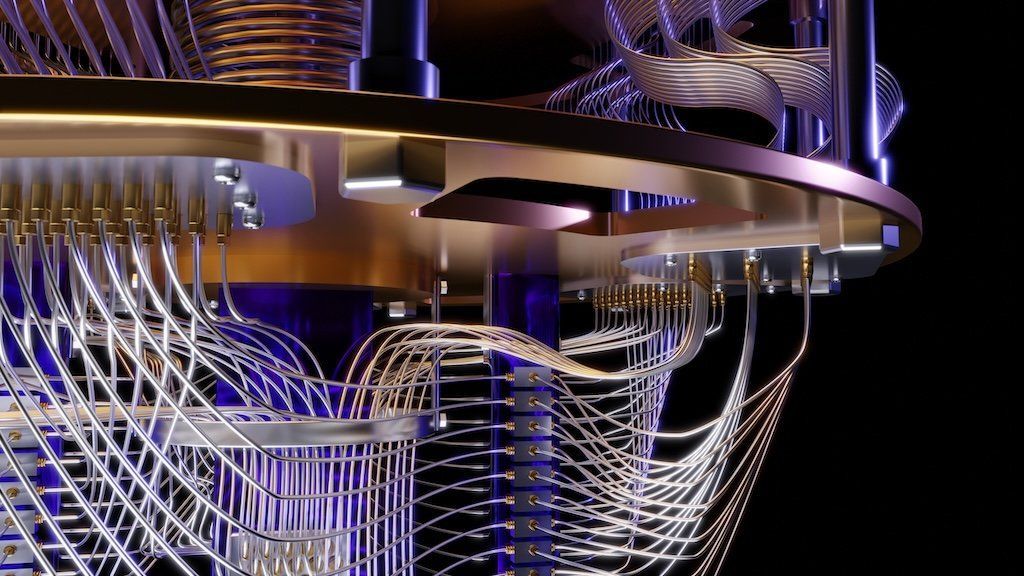
Computing power is about to explode beyond anything we’ve ever imagined. Right now, we process information linearly — one step at a time. However, with quantum computing, an infinite number of calculations can be solved simultaneously. If today’s best supercomputers are like an Olympic sprinter, quantum computers are like teleportation — and we’re on the verge of plugging artificial intelligence into that system.

Has AI already surpassed human intelligence?

This week, Elon Musk’s AI system, Grok, released its latest update, and it’s already surpassing ChatGPT. I asked Grok how fast it learns new information, and it told me that in just 12 hours, it gains the equivalent of five to 10 years of human intellectual development. Imagine what happens when AI of this capacity is connected to quantum computing. The AI itself estimated that instead of advancing five to 10 years in 12 hours, it would leap 50 to 100 years in intellectual growth. Let that sink in.

We are looking at intelligence that will be unimaginably superior to the smartest human beings on the planet, accelerating at a pace beyond comprehension. It won’t be a matter of decades before AI outpaces human intelligence — but days — and we’ve just given it the keys to quantum power.

This is an event horizon, the moment after which nothing will ever be the same.

Are you prepared for this?

Tech elites, corporations, and governments are sprinting toward artificial superintelligence without a single serious conversation about what happens next. We already see AI systems manipulating public perception, influencing politics, and transforming industries. But what happens when an intelligence 1,000 times greater than any human starts making decisions for us? What happens when it controls entire economies, military systems, and information networks?

Microsoft’s announcement should have been headline news. Instead, it was a tweet, a YouTube video, a whisper in the background of the cultural noise. But this breakthrough isn’t just another incremental tech update, it’s a paradigm shift — and shifts like this don’t come without consequences.

We stand at the precipice of a new world. Quantum-powered AI will redefine everything — from the way we work, to the way we think, to the very fabric of reality as we understand it. This isn’t just an upgrade. This is the rewriting of the human experience.

Want more from Glenn Beck? Get Glenn's FREE email newsletter with his latest insights, top stories, show prep, and more delivered to your inbox.

Trump’s promised ‘golden age’ collides with a tech revolution


President Donald Trump opened his second inaugural address by declaring, “The golden age of America begins right now.” His new term promises a transformational four years. While foreign policy, economic concerns, and political divisiveness will dominate headlines, a quieter yet far-reaching revolution is underway. Massive technological innovation coincides with Trump’s presidency, setting the stage for societal changes that will shape the coming decades. These advancements offer progress but also demand vigilance as the nation navigates their ethical and societal challenges.

By the time Trump leaves office in January 2029, artificial intelligence, automation, self-driving cars, quantum computing, and other emerging technologies will have reached unprecedented levels. Their evolution and impact on society will likely shape the future more profoundly than the political battles of today.

The next few years will hinge on how society embraces innovation while protecting freedoms, privacy, and stability.

OpenAI, Tesla, and IBM are driving technological advancements, investing billions in research and development to turn science fiction into reality. The AI startup sector alone secured more than $100 billion in global investments last year. Companies pursuing quantum computing, including Google and IBM, are racing toward quantum supremacy, aiming for breakthroughs that could transform entire industries. Tesla and Waymo are investing billions in self-driving cars, positioning themselves to revolutionize transportation.

This surge in investment and innovation highlights the transformative power of these technologies. At the same time, it raises concerns about how society will navigate their rapid evolution. As these breakthroughs accelerate during Trump’s presidency, the stakes remain high — not only for harnessing their potential but also for mitigating their risks

The rise of a new decision-maker

Artificial intelligence has advanced rapidly in recent years, evolving from narrow, task-specific algorithms to sophisticated systems capable of natural language understanding, image recognition, and even creative tasks like generating art and music. OpenAI’s ChatGPT and Google’s DeepMind have become household names, demonstrating AI's expanding role in everyday life and business.

By 2029, industry experts expect AI to grow more advanced and deeply integrated into society, influencing everything from health care to legal systems. Breakthroughs in generative AI could enable machines to produce realistic virtual experiences, transforming education, entertainment, and training. AI-driven research is also poised to accelerate discoveries in medicine and climate science, with algorithms identifying solutions beyond human capabilities.

These advancements promise significant benefits. AI could revolutionize medicine by personalizing treatments, reducing errors, and improving access to care. Businesses may see substantial productivity gains, driving economic growth and innovation. Everyday conveniences, from personal assistants to smart infrastructure, could enhance quality of life, relieving people from mundane tasks and fostering greater creativity and leisure.

The rapid integration of AI raises serious concerns. As AI systems collect and analyze vast amounts of data, issues of surveillance, privacy, and consent demand attention. There are automated decision-making risks that could displace workers, worsen economic inequality, and foster new forms of dependency. Misuse — whether through biased algorithms, manipulative propaganda, or authoritarian control — heightens the need for vigilance. Protecting individual liberty and ensuring AI serves society, rather than undermining it, remains crucial.

Redefining the workforce

Advanced robotics and automation are rapidly transforming traditional industries. Robots already handle complex tasks in manufacturing, agriculture, and logistics, but improvements in dexterity and AI-driven decision-making could make them essential across nearly every sector by the decade’s end.

Several companies are racing to develop increasingly advanced robots. Tesla’s Optimus and Agility Robotics’ Digit are humanoid models designed to perform tasks once exclusive to humans. As Agility Robotics strengthens its partnership with Amazon, Elon Musk predicts robots will outnumber people within 20 years.

While automation boosts efficiency and productivity, it also threatens jobs. Millions of workers risk displacement, creating economic and social challenges that demand thoughtful solutions. The Trump administration will likely face mounting pressure to balance innovation with protecting livelihoods.

Who is in the driver’s seat?

Self-driving vehicle technology has long been anticipated, with Elon Musk initially predicting its emergence by 2019. While that timeline proved optimistic, autonomous vehicle technology has advanced significantly in recent years. What began as experimental prototypes has evolved into semi-autonomous systems operating in commercial fleets. By 2029, fully autonomous vehicles could become widespread, transforming transportation, urban planning, and logistics.

Despite these advancements, controversies remain. Questions about safety, liability, and infrastructure lack clear answers. Additionally, concerns about centralized control over transportation systems raise fears of surveillance and government overreach. The Trump administration will play a crucial role in shaping regulations that safeguard freedom while fostering innovation.

A massive computing breakthrough

Quantum computing, once limited to theoretical physics, is rapidly becoming a practical reality. IBM and Google have led advancements in this technology, with Google recently unveiling Willow, a state-of-the-art quantum computer chip. According to Google, Willow completed a complex computation in minutes — one that would have taken the world’s most advanced supercomputers 10 septillion years. That’s more than 700 quintillion times older than the estimated age of our universe.

With the ability to solve problems at speeds unimaginable for classical computers, quantum computing could transform industries like cryptography, drug development, and economic modeling.

This technology also presents serious risks to privacy and security. Quantum computing’s ability to break traditional encryption methods could expose sensitive data worldwide. As the field advances, policymakers must develop strong regulations to protect privacy and ensure fair access to this powerful technology.

Trump’s most enduring legacy?

These technological advancements could drive extraordinary breakthroughs, including drug discoveries, disease cures, and an era of abundance. But they also pose significant risks. Concerns over data collection, job displacement, surveillance, and coercion are not hypothetical — they are real challenges that will require attention during Trump’s term.

The next few years will hinge on how society embraces innovation while protecting freedoms, privacy, and stability. Trump’s role in this technological revolution may not dominate headlines, but it will likely leave the most lasting impact.

Dark future: Unveiling society's transformation through AI


“Discrimination” may be a word used flippantly by the left, but that’s not stopping Justin Haskins from warning of the very real discrimination we all may face if the Great Reset goes as planned.

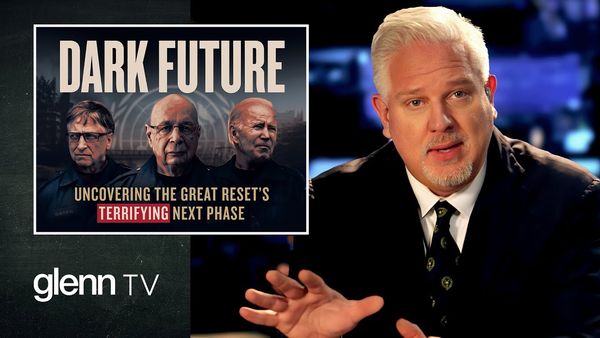
Haskins is the co-author of “Dark Future: Uncovering the Great Reset's Terrifying Next Phase” with Glenn Beck, in which they not only reveal the technologies and cultural changes that will cause an unprecedented level of disruption across the globe but offer a plan to combat it.

While those who have been paying attention likely know what the Great Reset is, fewer are aware of the “Great Narrative.” Haskins is changing that.

“Essentially, the idea behind the Great Narrative is, ‘We need a new story, a new narrative, a new way of thinking about the world, to prepare the world for this transformation that is coming,’” Haskin explains to Stu Burguiere.

He dives a little deeper, explaining that the Great Narrative is essentially the core of the Great Reset — all of the tools and mechanisms for reshaping society, like social credit scores and ESG, coupled with emerging technologies that will disrupt the way the world runs.

That coupling would allow a global government to easily discriminate any individual for their beliefs or political history.

“You can pick individuals out and say, ‘You are the problem. You, the individual person who said this terrible thing on social media, who is clearly a Trump supporter,’” Haskin explains.

When you have this kind of technology, “you can tie that to a score.”

“That makes it really easy to punish or reward people, which is what ESG is. And then you have the technology to sift through that and to do it on a wide scale,” Haskins adds, warning, “you can discriminate in a way that was never possible before.”

Though people have been taught to fear a violent, “blood-thirsty,” authoritarian government over a seemingly benevolent one, this technology changes what needs to be done to exert total control over a population.

“You don’t need these kinds of giant crackdowns, jackboot stormtroopers. You just need the right system in place,” Haskins continues.

“Once they figured out that controlling the money, having social credit scores, and controlling technology — those three things together — give you everything they ever wanted without having to kill anybody. That’s when all of this really ran loose,” he adds.


Want more from Stu?

To enjoy more of Stu's lethal wit, wisdom, and mockery, subscribe to BlazeTV — the largest multi-platform network of voices who love America, defend the Constitution, and live the American dream.