Christians: Don't fall for Talarico's performative messaging
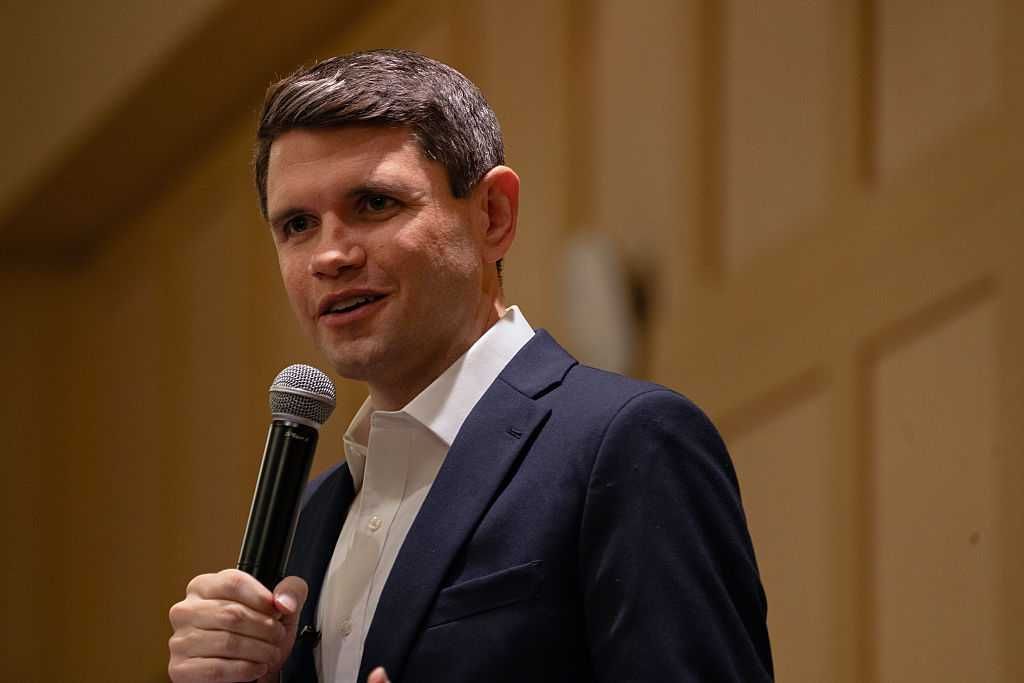


A pro-abortion U.S. Senate candidate in Texas is trying to pass himself off as a sincere Christian preacher. If he succeeds, he could be the deciding vote to allow abortion up to birth.

James Talarico has mangled Scripture to conceal the gaping chasm between Christianity and the Democratic Party's extreme abortion agenda. Currently, 210 House Democrats and the entire Democratic Senate caucus support abortion-up-to-birth legislation: the so-called Women's Health Protection Act. And Democrats only need to win a few Senate races to build a pro-abortion majority.

Texas voters should look at this moral grandstanding and utterly reject it.

It is critically important for pro-life voters to get informed and frustrate his attempt to sneak these radical views past Texans.

Talarico's voting record includes opposing protecting children born alive after a botched abortion and fighting to block or repeal crucial protections for the unborn in Texas. Following the Jackson v. Dobbs decision, Talarico begged President Joe Biden to undermine Texas laws by making abortionists federal employees and putting abortion clinics on federal land.

Talarico repeated these requests during a speech as part of an appeal to restore the "soul" of the country and to imitate Jesus. However, Talarico did not explain what was so Christ-like about ensuring that abortionists can dismember babies immediately before birth.

Faithful Christians deserve better than being represented by such a pro-abortion extremist. But Talarico is trying to appeal to Texas Christians, aided by glowing profiles from outlets such as Politico and the New York Times, which have portrayed him as a model Christian statesman.

This is why it is essential that voters look at his discrediting approach to Scripture. If they do, they will notice a clear pattern of a shameless politician abusing key passages to push an extreme abortion agenda.

On "The Joe Rogan Experience" in July of last year, Talarico was asked to provide biblical evidence for his abortion views. He outrageously chose to use Mary's agreement to conceive the Savior as part of his pro-abortion argument. Talarico even told Joe Rogan that the Torah might contain instructions for how to commit an abortion. This is, of course, totally false. Instead, the Torah contains God's words carved in stone: "You shall not murder."

Talarico also used Scripture to argue that life begins "at first breath" in a clear attempt to undermine the humanity of the unborn.

During a discussion on "The Ezra Klein Show" earlier this year, Talarico warned that Christians would be judged by whether they feed the hungry and care for the sick, before moving on to defend abortion. However, he voted against a bill to ensure care for babies born alive after abortions.

By contrast, his pro-life colleagues voted to feed the hungry, to give drink to the thirsty, and to offer care to the most vulnerable of the sick.

Talarico maintains this absurd approach to Scripture not just on the campaign trail but in his sermons as well. In 2022, he suggested that defending the unborn was “Christo-fascism" and that "nothing is more un-Christian than" Texas' laws protecting the unborn.

RELATED: The champagne communists who sold Millennials a bill of goods

BRO Vector/Getty Images

Talarico, who has described God as "nonbinary," claimed during his abortion sermon that "the Bible sometimes describes God as a female, calling her Sophia." He also claimed that "our trans community needs abortion care too."

In light of such statements and Talarico's record, Texas voters should look at this moral grandstanding and utterly reject it.

Talarico tends to contrast himself morally with his opponent, Texas Attorney General Ken Paxton, as if he were the Pharisee who thanked God that he was not like other men. But here is the most fundamental moral contrast that swamps all others: Talarico has tried to undermine Texas' laws protecting the unborn. Paxton has defended them.

Talarico stayed silent when a surrogate mother, pressured to abort her baby, fled to Texas. She did so reportedly due to concerns that the biological parents would deny the baby life-saving care. Paxton welcomed and defended her and her child.

But Talarico's arguments will not go unchallenged. Because informed pro-life Texans are the key to Talarico's defeat, Susan B. Anthony Pro-Life America is investing $2 million in Texas races. This effort includes the Senate race between Talarico and Paxton. SBA is putting $500,000 behind a compelling new ad from the Women Speak Out PAC, which fiercely calls out Talarico's radical abortion proposals.

Pro-life Christians fighting for the least among us, the vulnerable unborn, have the power to block Talarico and prevent a pro-abortion majority from taking power in Congress.
Trump pays homage to Columbus, unveils special tribute from Italy


For years, President Trump has called for Christopher Columbus to be returned to his place among the respected, great men who are part of this nation's history.

And his speech just days before Columbus Day was the latest of his defiant pronouncements against those who hate America's history.

'We're going to place it in a very special place of honor.'

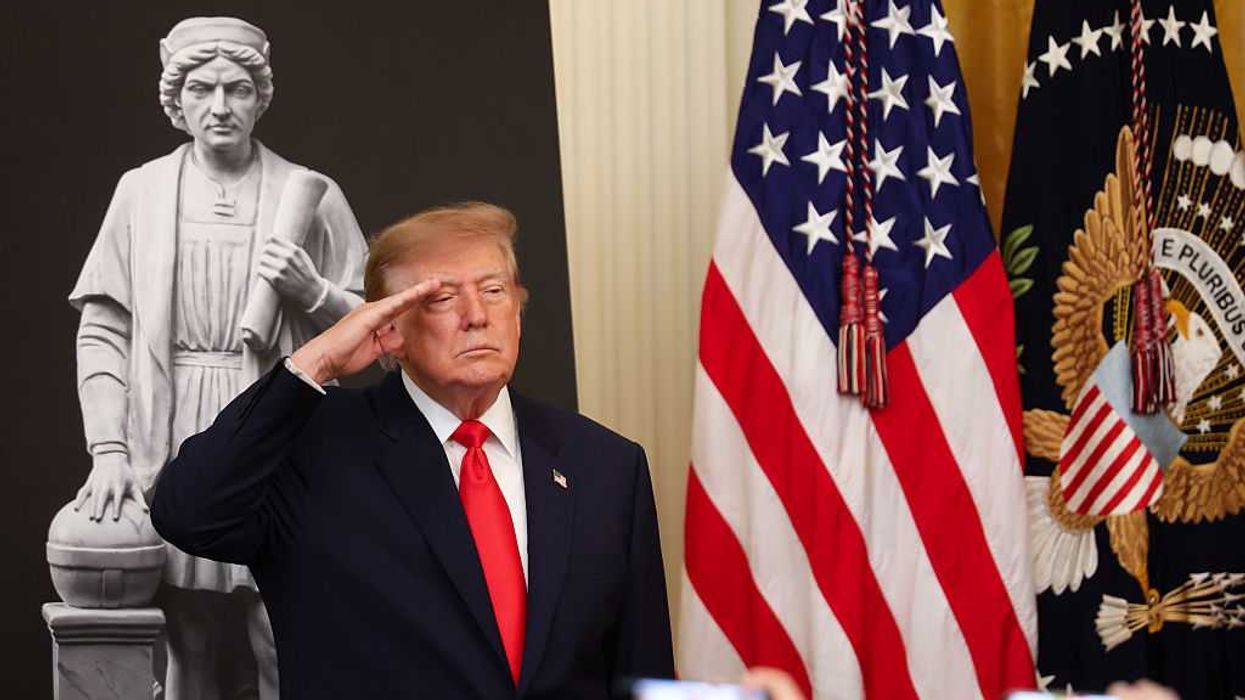
On Friday, President Trump hosted a celebration of Christopher Columbus at the White House in the latest of his efforts to rehabilitate the 15th-century Italian explorer whose memory and legacy have been maligned in recent years by the woke left.

Trump, however, has long been a staunch supporter of Christopher Columbus and his legacy, even calling for the U.S. to "BRING BACK COLUMBUS DAY" four years ago. In April 2025, he posted on Truth Social that he would bring Columbus Day "back from the ashes" after the "Democrats did everything possible to destroy" him, including the destruction of his statues.

During his speech Friday, Trump echoed a number of these sentiments and made some important announcements in his efforts to rehabilitate Columbus Day.

“Christopher Columbus changed the future of humanity forever. And in this administration, we know that Christopher Columbus is — to us, he’s a hero. He’s a hero," Trump said.

RELATED: Social studies teacher vandalizes Christopher Columbus statue

Trump told the story of Baltimore's statue of Columbus, "made from the finest Italian marble," which faced the city's Little Italy.

"But on July 4, 2020, a hate-filled mob of radical left lunatics and Marxists, communists lashed chains around Columbus' neck," toppled the statue to the ground, and dumped the broken remains into Baltimore Harbor, he said.

“They want to tear down the history and heritage that makes us who we are, not only Columbus," Trump reminded the audience at Friday's event.

The fragments were quickly recovered by Italian-Americans, and a restored version of the statue, using the fragments of the destroyed statue from Baltimore, was placed outside the Eisenhower Executive Office Building near the White House earlier this year. Trump said last month he placed it there "in Honor of the Italian American Community" — a common theme during Friday's event as well.

President Trump indicated that there was another surprise — but he hadn't seen it yet.

Trump introduced Brett Rugo during the speech and explained that Rugo had presented the White House with "a one-of-a-kind 19th-century statue of Christopher Columbus from Italy."

He told the crowd that he had not seen the statue yet. He asked the audience what they thought of it, and many gave signs of approval.

Trump went on to explain the plans for the statue: "We're going to be bringing Brett's [statue] over to the Rose Garden, and we're going to place it in a very special place of honor."

“While I’m president of the United States, we’ll always honor and celebrate the immortal legends," Trump said.

Like Blaze News? Bypass the censors, sign up for our newsletters, and get stories like this direct to your inbox. Sign up here!

The danger of calling the left stupid


A long list of prominent conservatives have referred to leftists and Democrats as dumb, stupid, incompetent, crazy, and insane. In 2007, Ann Coulter wrote the book “If Democrats Had Any Brains, They’d Be Republicans.” Both Rush Limbaugh and President Trump regularly referred to Democrats as “Dumbocrats.” More recently, the leader of the House Freedom Caucus called Democrats “the crazy party,” and JD Vance framed the contrast between the parties as “common sense vs. crazy.”

Matt Margolis titled a piece in PJ Media this year “Democrats Are Too Stupid to Heed This Warning” and posited that somewhere between the 1990s and today, the Democratic Party lost its mind. Some of this stuff gets a chuckle, but conservatives need to be careful with this narrative.

Calling an adversary’s actions crazy or stupid implies that those actions produce an outcome fundamentally different from what their architects intended.

Conservatives need to understand that this tactic can not only contradict the more serious messages they’re trying to convey about leftist policies, it can also remove responsibility from leftists for their malevolence.

Consider a recent interview in which Rep. Jim Jordan (R-Ohio) explained that the left’s open-border policy was part of a shrewd, long-term plan to bring in new Democrat constituents, with sanctuary-city policies as another step in that plan. Yet in the same interview, he called the policy “just stupid” and “one of the dumbest policies I’ve ever heard of,” and, in a later interview, adding that “just about every single position today’s left adopts is crazy.”

So we are told that leftists are shrewd, long-term planners who are simultaneously stupid and crazy. Which is it? The distinction may seem trivial, but it’s not.

We need to distinguish between leftist leadership and its dominant agenda on the one hand and its useful idiots on the other.

To be clear, there are certainly some dim bulbs among the left — both in leadership and rank and file. Showcase examples include Vice President Kamala Harris, who frequently struggles to articulate coherent sentences; Rep. Hank Johnson (D-Ga.), who worried during a congressional hearing that Guam might “tip over and capsize” if it became too populated; and Rep. Alexandria Ocasio-Cortez (D-N.Y.), who told us that America with defunded police would look just like the wealthy white suburbs.

On a broader scale, consider millions of California voters who knowingly continue to vote for politicians whose policies have devastated the Golden State.

But these examples aside, the overarching leftist agenda — and the people who genuinely understand, subscribe to, and orchestrate it — cannot simply be dismissed as stupid. Doing so is dangerous.

The rise of the New Left

As has often been the case with radical leftist movements in the United States, their stated objective is to dismantle existing American institutions, traditions, and governing structures in favor of a fundamentally different social order. Put simply, they despise America as it currently exists.

Once you understand this premise, their positions look less like harebrained, stupid, illogical, or unworkable ideas, but more like carefully conceived, sometimes ingenious tactics intended to advance that larger objective.

RELATED: Democrats are desperate to 'Europe' our health care system

Sorbetto/Getty Images

In this light, things like defunding the police, draconian regulations and carbon taxes, mothballing coal and nuclear plants, wide-open borders, turning a blind eye to Medicaid and NGO fraud, supporting genital mutilation of minors, opposing voter ID, massive expansion of entitlement spending, lowering combat readiness standards in the military in the name of gender equality, and support for adversaries like Hamas can be understood not as disconnected examples of incompetence, but as elements of a broader ideological program.

If it does damage to America and hastens the great realignment, they support it.

Whether one agrees with that interpretation of any particular policy is a separate question. The important point is that conservatives shouldn’t automatically assume destructive policies are the product of stupidity.

In “America’s Cultural Revolution,” Christopher Rufo explains how the radical left’s approach evolved from traditional Marxist class conflict toward an emphasis on race, gender, and identity. Traditional Marxism defined the conflict largely in socioeconomic terms, pitting the working class against the wealthy. In the United States, however, the middle class proved too large, mobile, and invested in the existing system for a conventional class-based revolution to take hold.

Influenced by thinkers such as Antonio Gramsci and Herbert Marcuse, the New Left increasingly emphasized “the war of position,” “the long march through the institutions,” and racial and cultural identity as alternatives to direct political conflict. Barack Obama became a highly consequential figure in this transformation.

During his 2008 presidential campaign, Obama told an audience in Columbia, Missouri, “We are five days away from fundamentally transforming the United States of America.” In the years that followed, he did precisely that.

The media proactively escalated the new narrative, increasing use of the terms racist, racists, and racism by roughly 700% between 2011 and 2019. The phrase “white supremacy” rarely appeared in the media until 2015, but by 2019, the Times and the Post were using it 17 to 18 times more often than in 2014, with similar jumps for “systemic racism,” “white privilege,” “unconscious bias,” and “whiteness.”

Gallup found that the share of respondents who believed black-white relations were “very good” or “somewhat good” plummeted from about 70% to 47% by 2015.

From the perspective of those who designed it, this was a deliberate and consequential political strategy. Arthur Brooks put it well, pointing out that the president ran on optimism and unity but governed on pessimism and division. In 2011, Obama’s Executive Order 13583 cemented DEI language, metrics, and policies across federal agencies. The resulting fallout has been well documented.

RELATED: The right is building its own lawfare defense machine — finally

Schöning/ullstein bild/Getty Images

Stupid or strategic?

To call leftist leaders or their policies stupid is therefore more than an unfortunate choice of words. It can mislead conservatives regarding what they are confronting.

We don’t tend to think of stupid people as evil. Perceived stupidity neutralizes perceived intent and, to some degree, perceived blame. “Stupid” is not the word that comes to mind for figures like Stalin, Mao, or Pol Pot, and it would have done us no favors to describe the Axis powers in World War II as merely stupid or crazy.

Calling an adversary’s actions crazy or stupid implies that those actions produce an outcome fundamentally different from what their architects intended. But what if the opposite is true? What if the policies are producing precisely the disruption their architects sought?

Once upon a time, Democrats and Republicans were two parties with broadly similar hopes for America but sharply different views on how to get there. That time has passed.

Conservatives should not lose sight of what they believe to be the left’s overarching mission. They need to describe political actions, and the consequences those actions produce, not simply as the unfortunate results of incompetent or stupid people, but as those of an underlying ideological agenda.

That doesn’t mean every Democrat is a radical leftist, every leftist is an intellectual strategist, or every controversial policy reflects a coordinated conspiracy. Nor does it mean conservatives should stop pointing out genuinely foolish statements or incompetent decisions. It means something simpler: Stop confusing foolishness with strategy.

Some political actors may indeed be foolish. Others may be highly intelligent and deeply committed to an ideological vision conservatives regard as destructive. Those two categories shouldn’t be confused.

If conservatives want to understand and effectively challenge the modern left, they should focus less on calling its leaders stupid and more on understanding what they’re trying to accomplish. That leadership may be insidious, duplicitous, destructive, morally wrong, and in some cases evil. But dismissing them as stupid or crazy risks missing the point entirely.

Let’s start calling them out on what they actually intend to do.

Editor’s note: This article was originally published at the American Mind.

Bring Back Karens

It is no coincidence that since Karens have been silenced, our public spaces have deteriorated, and our politics have become less constructive.

Propaganda Media Gear Up To Whitewash New York’s Socialist Takeover

Whatever web of deceit needs to be conjured up to benefit their political allies, the media are there to spin it.


Democrats don't have a fix for their extremism problem


Democrats have an extremism problem, and it’s not clear how they can solve it.

After yet another gunman allegedly tried to assassinate President Donald Trump at last weekend’s White House Correspondents’ Dinner, liberals nobly renewed their commitment to moderation. “We need LESS violence in America, not MORE violence in America,” wrote CNN’s Van Jones.

Quite right. But the American left has not exactly put itself in a good position to calm down its radicals.

You can court bloodthirsty Marxists, or you can build a wide-ranging coalition of the sensible, but it’s hard to do both at once.

Consider: In April, the New York Times hosted superstar streamer Hasan Piker for a podcast with writer Jia Tolentino. Piker has fantasized on camera about murdering landlords and once told his viewers, “If you cared about Medicare fraud or Medicaid fraud, you would kill [Florida Republican Sen.] Rick Scott.”

He joked with Tolentino about “micro-looting” — that is, shoplifting — and equivocated about whether UnitedHealthcare CEO Brian Thompson deserved to die at the hands of his alleged murderer, Luigi Mangione.

Thompson “was engaging in a tremendous amount of social murder,” said Piker, citing Friedrich Engels to suggest that the killing was retribution for “systematized forms of violence” in the health care system.

Piker is just one online celebrity, but the problem is that he represents a significant portion of the base that Democrats must now cater to. One survey found that 41% of young voters, and 22% of Democrats, considered Mangione’s actions “acceptable.”

This will make it hard for mainstream politicians to tack toward the center without alienating their most youthful, energetic supporters — especially since many Democrats have been enthusiastically courting those supporters since 2020.

That June, following the death of George Floyd, then-California Democratic Sen. Kamala Harris solicited donations to cover bail for rioters and looters in Minnesota. Sen. Chuck Schumer (N.Y.), Rep. Nancy Pelosi (Calif.), and other congressional Democrats donned Ghanaian Kente-cloth stoles and knelt in a display of solidarity with protesters as they proposed unworkable and dangerous police reform.

For a good long while, it was not only encouraged but almost compulsory on the left to side with criminals in the name of social justice. None of this was a secret; all of it was put proudly on record.

Not only that, but to dissent from the maximalist position in these matters, even slightly, was portrayed as a ghastly betrayal that could only be motivated by rank prejudice. “All this anti-woke stuff is just anti-black. Period. Full stop,” said California Gov. Gavin Newsom (D) just last year.

If that’s the case, then it’s hard to see how 2028 presidential hopefuls like Newsom can moderate in any meaningful way without falling into the jaws of their own logic: Either you’re woke, or you’re a cretin. That is not the sort of stance one can gracefully adjust or walk back without considerable awkwardness.

RELATED: Trump’s enemies keep reaching for the gun

Blaze Media illustration

And so, as William Voegeli observed in the Claremont Review of Books, “Even when moderates do emerge from the Democrats’ process of selecting nominees, a correlation of forces within the party combines with shrewd politicians’ flexibility of conviction to accelerate the leftward shift.”

The Hasan-ization of the party, in other words, may be hard to resist. Try as they might to avoid it, Democrats might be forced to swallow the Piker Pill.

For instance, last November, Ezra Klein of the New York Times was lamenting that “the Democratic Party has made room on its left and closed down on its right,” suggesting a more balanced approach would be effective against the polarizing force of Trumpism.

But by April of this year, Klein was making qualified excuses for Piker in a column initially headlined “Hasan Piker is not the enemy.” The Tolentino podcast followed shortly thereafter.

You can court bloodthirsty Marxists, or you can build a wide-ranging coalition of the sensible, but it’s hard to do both at once.

Democrats might like to recast themselves as the cool-headed alternatives to Trump’s reckless villainy. But all the momentum and media clout are with Piker — and with young celebrity politicians who feel comfortable making high-profile public appearances alongside him, like Rep. Alexandria Ocasio-Cortez (D-N.Y.) and New York Mayor Zohran Mamdani (D).

Regrettably, this could be what peak Democrat performance looks like from now on: callow, clickable, and aggressively extreme on social and economic issues.

That’s not obviously a winning brand. But it could be the only viable one going. If so, then Democrats don’t actually get to choose whether to court the far left or recast themselves as sensible centrists. They already chose back in 2020, and they chose peak woke.

Editor’s note: This article was originally published in the American Mind.

Xavier Becerra Is No Moderate

Trying to attack Becerra as a moderate should strike most reasonable individuals as absurd.

Catholics And Protestants Are Going To Need Each Other For What’s Coming

Whatever our theological differences, our common enemy is the radical left, which seeks to persecute Christians of all kinds.

The left's absurd attack on Brooke Rollins


Recently, a simple note from Secretary of Agriculture Brooke Rollins wishing staff a meaningful Easter and reminding them that it was a day to celebrate the “foundations of our faith” has caused those in the secular-state industrial complex to rhetorically crucify the secretary.

The right of a U.S. secretary of agriculture — or any public official — to send a pro-Easter message to staff is not only constitutionally permissible, it is deeply consistent with the text, history, and tradition of the First Amendment.

There’s a difference between hearing something and being made to say it yourself.

The First Amendment safeguards the free exercise of religious practice in public while ensuring that there will be no state-mandated religion. Critics often interpret the Establishment Clause as requiring a strict secular silence from public officials, but that interpretation is historically incomplete.

The Constitution does not demand a religion-free public square; rather, it prevents coercion or official establishment of a national church.

This kind of message is not new. It echoes in older scenes: a president bowing his head at the end of a proclamation, members of Congress listening to a morning prayer before debate begins, a phrase stamped quietly onto a coin that passes through countless hands.

Indeed, the U.S. Supreme Court has repeatedly recognized that government may acknowledge religion as part of the nation’s heritage. From legislative prayers upheld in Marsh v. Chambers to holiday displays permitted in Lynch v. Donnelly, the court affirmed that ceremonial and traditional expressions of faith are compatible with constitutional principles.

A secretary of agriculture sending a goodwill Easter message fits squarely within this tradition.

Religious references have been woven into American governance since the founding. Presidents from George Washington onward have issued proclamations referring to God and religious observances.

Congress employs chaplains. The national motto, “In God We Trust,” appears on currency. These practices demonstrate that the framers did not intend to purge religious expression from public office, but to prevent its abuse.

Easter, specifically, has long been recognized both culturally and institutionally in the United States. Federal employees often receive time off for Easter-related observances, and presidents frequently release Easter messages reflecting on themes of renewal and hope.

A pro-Easter message that is inclusive in tone — perhaps acknowledging the holiday’s themes or extending goodwill to those who celebrate — does not coerce belief or participation. Employees remain free to disregard the message, just as they are free to observe or not observe the holiday.

RELATED: The trial lawyers come for online free speech

Skodonnell/Getty Images

There’s a difference between hearing something and being made to say it yourself. The First Amendment lives in that space. It protects the employee who quietly appreciates the message and the one who deletes it without a second thought.

Suppressing such expressions, on the other hand, risks creating a different constitutional problem: hostility toward religion. The Supreme Court has cautioned against interpretations of the Establishment Clause that demonstrate animus toward faith.

Neutrality does not mean erasure; it means equal treatment. Allowing a pro-Easter message does not privilege Christianity so long as the government does not exclude or penalize other beliefs.

In a religiously pluralistic society, the goal should not be to eliminate religious references from public life, but to ensure that they are expressed in a way that respects freedom for all.

The secretary of agriculture sending an Easter message — grounded in tradition, delivered without coercion, and consistent with historical practice — falls well within those constitutional boundaries.

The campus isn’t ‘misunderstood.’ It’s mismanaged — on purpose.


Former Columbia University President Lee C. Bollinger has produced a slender, puzzling book. It glides past the central problems facing campuses — weak leadership, weak accountability, and ideological capture — and lingers instead on nostalgia and the “community of scholars.”

It also prompts a blunt question: Why do university presidents publicly dissemble? Not in the chest-thumping manner of a cable-news partisan, but in the lubricated, bureaucratic manner that says almost everything except what matters most.

Bollinger presents a university with virtually no blemishes — blameless, well-run, noble — and then points outward, toward Trump and the federal government, as the true threat.

Bollinger was recruited by W.W. Norton editor in chief Dan Gerstle to adapt lectures delivered in spring 2025 into a book. He aims to remind readers that the American university occupies a critical place in society. In the abstract, he’s right, and parts of the argument work.

As a constitutional law scholar, he also tries to weave the First Amendment into the university’s institutional identity, suggesting the two are inseparable. That claim needs more force than this book provides. The prose reads like speech material polished for print. The ambition outruns the substance.

But the real center of gravity arrives quickly: Bollinger casts the primary threat to higher education as “outsiders,” especially the federal government and, most of all, Donald Trump. Yes, it’s another Trump-as-villain entry in the culture wars, and likely the reason this book was rushed into print. Whatever Bollinger’s hygienic tone, this is hatchet work in a gentleman’s suit.

Bollinger is no detached man of letters offering serene judgment from above the fray. He remains a prominent operator inside elite academic and political networks. His calm posture functions less as neutrality than as insulation.

The book is divided into three parts: “The University,” “The First Amendment,” and “The Fifth Branch.” If the press is the “fourth branch” of government, Bollinger argues the university deserves branch status too.

I write often about the university’s high mythology — the version parents and alumni carry around because universities actively sell it. Bollinger indulges that mythology. His university is a place of serious minds, noble purpose, and largely blameless governance, with only the occasional “organized anarchy,” the predictable messiness of complex institutions.

He offers this earnest passage:

I challenge anyone to spend a day, a week, or more in any university — sitting in on classes, attending lectures, meeting with students, visiting a laboratory, being part of a seminar — and not come away deeply impressed, indeed invigorated, about the human potential to know and to grasp something of our existence.

Many readers will want to believe it. Bollinger counts on that desire.

And here’s where the trouble begins.

RELATED: How America’s universities embraced anti-American ‘blood and soil’

Photo by Selcuk Acar/Anadolu via Getty Images
The book’s best section is its opening chapter, which promises an insider’s look at how universities actually function. Bollinger divides the institution into multiple levels of analysis — individual, university, and system — in a way that will feel familiar to anyone trained in serious political science. The intent looks analytic. The presentation sounds authoritative.

Then he leaves out the single biggest operational reality on most campuses.

Bollinger describes academic affairs — faculty, curriculum, and the traditional governance story — and effectively ignores student affairs, often rebranded as “student success.” That omission is not a minor gap. It’s the whole fight.

Modern universities are not simply faculty-driven institutions with a few administrative appendages. They are sprawling managerial systems in which student affairs bureaucracies routinely outnumber faculty and operate as an ersatz ideological faculty through what they call the co-curriculum: workshops, trainings, mandatory seminars, “wellness” programming, diversity offices, identity centers, residence-life systems, conduct regimes, orientation pipelines, and retention machinery.

This is education by parallel authority.

Student affairs is frequently staffed, trained, and ideologically shaped by external nonprofits such as ACPA, NASPA, NADOHE, and NACADA. These groups do not simply offer best practices. They often function as ideological conduits, pushing “critical pedagogy” and “critical consciousness” as an institutional mission. One of them literally advertises the goal of “boldly transforming higher education.”

That transformation is not a side story. It is the story. It’s how the modern university moved from the “shared governance” myth to a bureaucratic reality where the faculty increasingly serves as a decorative legitimacy layer.

Bollinger never deals with it. Not directly. Not honestly. Not at all.

Contemporary scholarship has already documented how student affairs increasingly designs, delivers, and assesses structured educational experiences parallel to the faculty curriculum. The same bureaucracy often serves as a channel for activism infrastructure that has helped fuel campus chaos since 2020.

Student affairs is wholly under the control of the extremist left. Yet Bollinger presents a university with virtually no blemishes — blameless, well-run, noble — and then points outward, toward Trump and the federal government, as the true threat.

It’s hard not to conclude that the nostalgia is doing work. Bollinger affirms the version of the university that parents and alumni want to believe still exists: the citadel of learning devoted to truth, stewarded by wise leaders, occasionally messy but fundamentally righteous.

RELATED: How to muzzle the three-headed diversity monster

Photo by Bill Pugliano/Getty Images

That image now functions as cover.

It shields what many universities have become: money-making and idea-laundering operations that give lip service to the people paying the bills — parents, students, donors — while empowering internal bureaucracies that answer to their own ideological class.

Bollinger’s personal position makes this posture easier to spot. He belongs to the wealthy mandarin class that runs elite higher education. His Columbia compensation reportedly topped $5 million annually. Columbia’s assets were roughly $23.5 billion at the end of 2022.

He also guards his own record with careful selection.

While he was president of the University of Michigan, the school was involved in two affirmative action cases decided by the Supreme Court in 2003. Bollinger highlights the win (Grutter v. Bollinger) but gives scant attention to the loss (Gratz v. Bollinger). In places, his wording blurs them together in a way that can leave casual readers thinking Michigan prevailed across the board.

It didn’t. In Gratz, Michigan’s admissions policy violated the Equal Protection Clause. That case foreshadowed the eventual collapse of the broader regime in Students for Fair Admissions v. Harvard two decades later.

At Columbia, Bollinger helped lay the groundwork for the institution’s later disorder by expanding and empowering DEI bureaucracies in response to the 2020 “racial reckoning.” Many presidents issued pro forma statements they now quietly regret. Bollinger went further: He built and strengthened the permanent infrastructure.

My view is straightforward: Bollinger represents the ascent of the new mandarins — administrators who guard prerogatives, expand PR machinery, and grow their internal empires against faculty authority, all while presenting themselves as the guardians of scholarly life. He is the living, breathing antithesis of what the university and its presidents should be in the 21st century.

In “University: A Reckoning,” Bollinger wants readers to see a university that largely no longer exists. His lack of candor ensures that readers learn little about how universities actually function — and even less about why so many are failing.