The most honest phrase you’ll hear all week


Friday morning, I listened to a Pentagon briefing about the Strait of Hormuz. A reporter pressed the chairman of the Joint Chiefs of Staff for clarity. What exactly was happening? What would the outcome be? How would this end?

General Dan Caine paused and offered a phrase that struck me immediately. He said the region was “a tactically complex environment.”

In a tactically complex environment, certainty about outcomes is rarely available. Clarity about the mission remains essential.

The military has a way of compressing enormous realities into a few calm words. Geography, enemy capability, shipping lanes, alliances, timing, logistics, unintended consequences. All of it folded into one sentence.

“A tactically complex environment” was not the answer the press wanted.

Reporters are trained to extract certainty, preferably in a sentence short enough to fit beneath a television chyron. A clean headline. A confident prediction. Something that sounds definitive before the next commercial break.

But responsible leaders know something the press room often does not. In environments like that, certainty is rarely available. Mission clarity is.

The Navy does not control the currents in the Strait of Hormuz. It cannot control every ship moving through that narrow passage or every decision made in Tehran. What it can control is the mission. Protect shipping. Maintain security. Avoid escalation when possible. Respond when necessary.

Clarity of mission matters more than clarity of outcome.

Listening to that exchange, I thought about how often life itself unfolds inside tactically complex environments.

A late-night conversation with a doctor where the scans are clear but the future is not.

A family meeting where emotions, responsibilities, and competing opinions collide in ways no one quite knows how to resolve.

A business decision where every option carries consequences that may not become visible for months or even years.

RELATED: After Rush Limbaugh, conservatives stopped listening together
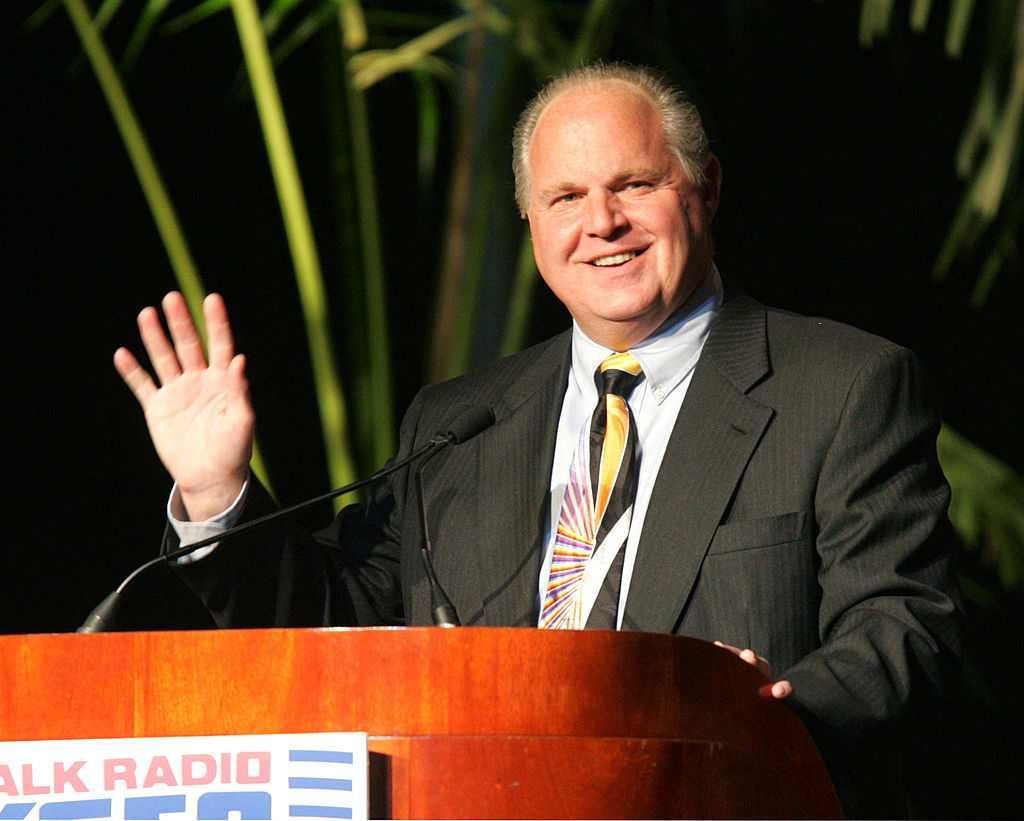
Photo by John Medina/WireImage

In moments like those, people instinctively search for certainty. We want someone to tell us exactly how things will turn out.

But history has never offered that luxury.

During COVID, nearly every commercial began with the same solemn line: “During these uncertain times.”

I remember thinking, when exactly were times certain?

Wars have always been uncertain. Medicine has always involved risk. Markets rise and fall. Families face crises. The human story has never been a tidy script where outcomes are guaranteed.

Yet we keep demanding certainty anyway.

We demand it from generals.

We demand it from doctors.

We demand it from politicians.

And, if we are honest, we often demand it from God.

The Bible records that struggle with remarkable honesty. The Psalms repeatedly ask the same aching question: “How long, O Lord?

Not from skeptics, but from believers. From men who trusted God and still found themselves standing in the middle of circumstances they could not fully understand.

Scripture does not hide that tension. It reveals it.

Faith does not remove complexity. It teaches us how to live within it.

The Bible does offer assurance about the final outcome of God’s purposes. But it rarely provides advance clarity about how today’s circumstances will unfold. The pain, confusion, and pressure of the present moment are not automatically lifted.

What Scripture does provide, again and again, is clarity about calling.

Love the Lord your God. Love your neighbor. Do justice. Walk humbly. Be faithful.

Those instructions remain clear even when circumstances are not.

Perhaps that is why General Caine’s phrase lingered with me.

“A tactically complex environment.”

Recognizing that reality does not solve every problem. But it does something important. It resets our expectations and reminds us that life is rarely as simple as the people shouting from the sidelines insist. Once that becomes clear, the insistence on certainty begins to fade.

Instead of demanding guarantees no one can provide, we begin asking the question that actually guides wise decisions.

What is the mission?

In a tactically complex environment, certainty about outcomes is rarely available. Clarity about the mission remains essential.

Sometimes doing nothing is the hardest challenge of all


A reporter once asked me, “What’s the toughest challenge you’ve faced as a caregiver?”

“Knowing what’s mine and not mine to carry,” I replied without hesitation.

He expected a different answer. Caregiving is usually described in terms of health care, insurance, exhaustion, sacrifice, or resilience. All of that is real, but none of it gets to the heart of the problem.

As a caregiver, I don’t need an 'A for effort.' I need to know whether what I’m doing actually helps.

I see this challenge most clearly in exam rooms. My wife needs space to speak for herself, even when pain makes it slow or difficult. Knowing when to step in and when to stay silent is a daily test of restraint. I’m her husband, advocate, and caregiver. She often asks for my voice, but I must also know when to withhold it.

Her car accident happened before I met her. I did not cause it, and I cannot undo it. Forty years into our marriage and this caregiving journey, I still haven’t managed to slow its effects, much less resolve them. Time has given me experience, but not control.

We live in a culture that treats effort as virtue and control as responsibility.

Paramedics, doctors, and first responders are compelled to act because they are trained and authorized.

Those outside those roles are often driven by something else. Someone else’s suffering agitates us. The urge to relieve that discomfort gets mistaken for a moral obligation. Action becomes a way to quiet ourselves rather than to help.

That reflex doesn’t stay confined to caregiving. When situations grow heated, the instinct is almost always the same: escalate, push harder, do more. Stopping feels irresponsible.

RELATED: When you’re carrying the love alone on Valentine’s Day

kckate16 / Getty Images

But effort is not the same as efficacy.

As a caregiver, I don’t need an “A for effort.” I need to know whether what I’m doing actually helps. And to know that, I have to stop and ask tough questions.

What is my responsibility? What are my capabilities?

I cannot make my wife’s legs grow back or eliminate her pain. I cannot undo the accident.

If those are my metrics, no amount of effort will ever succeed.

For years, fear convinced me that if I stayed more vigilant, sacrificed more, and tried harder, I could outrun reality. I mistook effort for faithfulness and exhaustion for love. In the process, I didn’t just wear myself down; I made things harder for the person I was trying to help.

Living with this over decades eventually forced me to exchange action for stewardship. When panic told me I had to solve everything immediately, a simpler question surfaced.

What is actually mine to do in this moment?

Care, not cure. Faithfulness, not outcomes.

Over time, it became clear that this struggle is not unique to caregiving. Powerlessness is terrifying, and unexamined fear often leads to recklessness or rage.

We see the results daily. People insert themselves into situations they do not understand, interfere where they have no authority, and escalate conflicts rather than resolve them.

Those thoughts don’t just whisper, they accuse. And when they go unchecked, they drive people, individually and collectively, to destructive extremes in the name of responsibility.

I’ve learned to pay attention to the language that accompanies overreach. It often arrives like a whip: I’ve got to. I must. I have to. I’m supposed to. Those phrases feel like responsibility, but they are often fear speaking in the grammar of duty. They leave no room for limits, no space for discernment, and no acknowledgment of jurisdiction.

This is where the harder question emerges.

Who actually has jurisdiction?

Not every situation improves when I insert myself into it. Not every wrong becomes mine to right. Sometimes the most faithful response is counterintuitive.

Sometimes I should just stand there. Not indifferent or in moral retreat.

I need to recognize that stepping outside my jurisdiction can damage the responsibilities already entrusted to me.

RELATED: The reform every society needs: Stop mistaking shock for success

Cienpies via iStock/Getty Images

This is where clarity matters most. God holds ultimate jurisdiction over my wife’s condition. My role is not to replace Him or compete with Him. My role is to care steadily and responsibly, trusting that restraint is not neglect and limits are not abandonment.

I once heard a story about Joni Mitchell telling a bassist working with her, “You have a marvelous use of space.” The bassist still had notes to play, but he understood the song was not his to dominate. Respecting the artist and the music itself required restraint. His understanding of limits did not diminish the song. It allowed it to become what it was meant to be.

I still struggle with the line between intervention and restraint. If someone is harming himself or others, is there a responsibility to step in — and at what cost?

Nothing resolves those questions neatly. But refusing to ask them guarantees damage.

Overreach often disguises itself as virtue. But good intentions do not protect from bad outcomes. And sometimes what we call virtue is little more than performance.

When that temptation returns, I am steadied by words a wise friend once spoke to me. “She has a Savior. You are not that Savior.”

That distinction does not diminish love. It protects it. It keeps care from turning into control, responsibility from turning into ruin, and effort from becoming its own justification.

Knowing what isn’t mine to carry remains one of the hardest lessons of my life.

It is also one of the most necessary.

Here’s The Real Reason Gen Z Doesn’t Want Kids (And It’s Not The Economy)

For a generation raised to be safe rather than strong, the thought of children can be terrifying.

How Trump Rebuffed D.C. Warmongers With One Surgical Strike Against Iran

[rebelmouse-proxy-image https://thefederalist.com/wp-content/uploads/2025/06/Screenshot-2025-06-29-at-8.46.53 PM-1200x675.png crop_info="%7B%22image%22%3A%20%22https%3A//thefederalist.com/wp-content/uploads/2025/06/Screenshot-2025-06-29-at-8.46.53%5Cu202fPM-1200x675.png%22%7D" expand=1]For the first time in a generation, the United States is exclusively pursuing its vital interests, not the ambitions of its NatSec elites.

No, Biden, It’s ‘Reckless, Dangerous, And Irresponsible’ Not To Challenge Unjust Verdicts

It is necessary, healthy, and responsible for people to speak out when they do not agree with the government’s exercise of prosecutorial power.

Squires: America needs healing from ‘Gates disorder’ and a return to responsibility


Here’s the most important lesson I learned in 2021: Our most important institutions reach for things they can control when they have proven themselves unable to manage their primary duties.

This phenomenon is what I call Gates disorder, because it involves institutions that simultaneously abrogate their responsibilities and arrogate to themselves powers that are outside their expertise and authority. The relationship between the two “gates” is direct. The more institutions fail at their core duties, the more eager they are to seek duties outside their purview. This logical paradox is destroying the credibility of our most important political and cultural institutions.

This two-part process can be motivated by a number of factors, including a combination of ineffectiveness, incompetence, cowardice, prioritizing symbolism over substance, and the twin desires to appear righteous and remain relevant. At its root, however, Gates disorder is about power and control. This is why people and institutions with a god complex are particularly susceptible to it and exhibit its most severe symptoms.

The response to COVID-19 over the last two years from our governing authorities is a textbook example of Gates disorder. President Biden pledged to “defeat” the coronavirus after criticizing the Trump administration’s response to the pandemic in 2020. The fact that more Americans died from COVID-19 in 2021 than 2020 demonstrates a failure to deliver on that promise.

The federal response over the latter part of 2021 was to work with corporations, school districts, and the media to enact mask and vaccine mandates, fire workers who resisted medical coercion, and silence anyone who questioned the administration’s COVID policies. Gates disorder made the president pivot from trying to control a respiratory virus to trying to control American citizens.

Local leaders in some of our biggest cities are no different. Bill de Blasio, former mayor of New York City, embraced activist demands to defund the police in 2020 as shootings and homicides increased significantly. He responded to his crime prevention failures by shifting to something he could control – vaccine mandates for New Yorkers and vaccine passport enforcement by the NYPD.

He is not alone. Mayor Lori Lightfoot is doing the same thing in Chicago. The black citizens who make up the majority of homicide victims in both cities want mayors who use the police to prevent them from getting shot. What they’ve gotten instead are elected officials who shout “black lives matter!” then force them to get a shot half of them don’t want. And the police who were called racist while solving black homicides and saving black lives are now on the front lines keeping black patrons from eating in restaurants.

Recent history shows that Gates disorder is just as prevalent in American cultural institutions as it is in our politics.

Female athletes, parents, and elected officials across the country are voicing concerns about biological males being allowed to compete in girls’ sports. The New York Post has dedicated multiple stories to Lia Thomas, the transgender Penn swimmer who competed as a male for three years and is now dominating the competition since being allowed to compete against his female peers.

For some reason ESPN, the self-proclaimed “worldwide leader in sports,” has been conspicuously silent about Thomas or the broader debate about transgender athletes and sports. The same can be said for sites like Deadspin and Bleacher Report. The sports media establishment and its leading personalities are derelict in their duties to report on major issues in sports. What they’ve done instead is take on the mantle of social justice by focusing on issues that have nothing to do with sports.

ESPN used its airtime to solicit opinions on the Kyle Rittenhouse trial from hosts, analysts, and former athletes. Many of these opinions were completely detached from the facts of the case, but perfectly aligned with the narrative – white supremacist teen murdered three racial justice activists – being spun on CNN and MSNBC.

Sports networks sit silently while men dominate women in athletic competition. They only find the courage to speak when their social commentary conforms to what sponsors, activists, and the Democratic Party want to hear. They abandon their core duties and take on responsibilities they are clearly unequipped to perform.

The country is in deep need of healing from Gates disorder. Left untreated, it will have a catastrophic impact on the next generation. Our political leaders are too busy trying to hold on to power to ask themselves about the effect of schools that abandon their responsibility to teach children how to read, write, and count for ideological programming on race, gender, and sexuality. I feel sorry for the children whose most enduring grammar lesson after 13 years of compulsory education is how to state their personal pronouns.

The politicians, CEOs, academics, media personalities, entertainers, athletes, and influencers who compose the ruling class have been afflicted with Gates disorder for decades. They have expanded in size and influence while individuals, families, and civic institutions have been shrinking and losing significance.

The only way out of this outbreak is for both groups to return to a rightful understanding of authority and responsibility. The Bible describes Christians as a body with many parts. The church can only survive if each part contributes to the health of the body by understanding, valuing, and fulfilling its unique role. The body politic is no different. Politicians, journalists, teachers, and parents all have different roles to play. Our society suffers when any one of those entities neglects its responsibilities for those that belong to another. We need to cure the Gates disorder before some of our essential cultural organs shrivel up and wither away.

Squires: Jemele Hill uses rapper Young Dolph to argue that white oppressors must save black America


If black Americans want to see a reversal of the troubling trends preventing our progress, we need to revisit and remake the rap song "Self-Destruction."

The cultural call to action was released in January 1989 as the only single by the Stop the Violence Movement formed by KRS-One. The rapper created the collaboration in response to violence in the black community. The issue was personal for the rapper because his close friend DJ Scott La Rock was murdered in 1987. The song featured a number of hip-hop pioneers, including MC Lyte, Doug E. Fresh, Heavy D, and Public Enemy.

The hook, "self-destruction, you're headed for self-destruction," plays after every verse. One of the song's most memorable lines was delivered by Kool Moe Dee.

"Back in the '60s our brothers and sisters were hanged. How could you gang-bang? / I never ever ran from the Ku Klux Klan and I shouldn't have to run from a black man."

Anyone watching the music video today would be struck by how open the artists, mostly men, are about naming the problem and taking responsibility for addressing it through the platform they had at the time.

The loss of strong male leadership and an unwillingness to courageously confront obvious issues are slowly draining the black community of its energy, spirit, and resolve. Only a great awakening can reverse that trend.

The recent murder of rap artist Young Dolph provided another opportunity to honestly confront the violence in hip-hop. Dolph, born Adolph Robert Thornton Jr., was shot and killed while buying cookies in his hometown of Memphis, Tennessee. The murder of Young Dolph was addressed on "The Breakfast Club," and one of the radio show's co-hosts said that fans of hip-hop glorify and celebrate all the wrong things, then wonder why atrocities like this happen.

That admission alone was a major breakthrough.

Rap is a relatively young genre, but the fact remains that 51% of deceased rappers were murdered. Homicide does not account for more than 10% of deaths in any other genre. Young Dolph, 36, was older than many of the rappers on this unfortunate list, but several rappers, from the Notorious B.I.G and Tupac Shakur to King Von and Pop Smoke, were in their early to mid-20s. If the keepers of hip-hop culture don't deal with its violence problem, the genre won't exist in 20 years.

The sad reality is that hip-hop culture is a microcosm of America. The statistics for deceased rappers match the 50% of black males between the ages of 15 and 24 for whom homicide is the leading cause of death. At 13% of the population and about 50% of murder victims, the homicide rate for black Americans is about seven times higher than the rate for white Americans. Many of these victims are innocent bystanders and children. In fact, there are many more black schoolchildren shot and killed every year than unarmed black men fatally shot by the police.

The glorification of violence in rap music is deeply embedded in the art form and culture. That means there are a lot of people — including many black artists, DJs, producers, and executives — who would lose money if shows like "The Breakfast Club" ever took a stand and refused to promote any artist who made murder music to a catchy beat. They also have no incentive to change because the public, including many of the same black people who claimed Kyle Rittenhouse is a murderer, have no problem bopping their heads to black men who brag about "shooting n*ggas" 20 times in a three-minute video.

There is another reason black people across the country are headed for self-destruction: the abandonment of any sense that we are responsible for addressing any of the issues plaguing our communities.

This allergic reaction to responsibility is often paired with rhetoric about all the systemic issues that need to be fixed in order for black people to expect peace in our neighborhoods.

An Instagram post from Jemele Hill after Young Dolph was murdered captured this line of reasoning perfectly. In it, Hill quickly claimed the notion of "black-on-black crime" is rooted in racist ideas about inherent black criminality. She then talked about a recent change in Tennessee gun laws that allows people to carry handguns without a permit. She also claimed that institutional racism contributed to the violence, in the form of higher rates of poverty and fewer resources for education and housing. She ended her post with these words:

"Fix the issues that invite violence, and we will lose less people. But when you have entire communities full of people who are hopeless and feel like they have nothing to lose, violence will be a mainstay."

Hill never said who is responsible for fixing these issues, but given my familiarity with this line of reasoning, I'm certain she means the white people who black liberals generally claim are in charge of most American institutions.

This cannot continue. The mentality that says that black people must have material needs provided for by benevolent actors in the government and other institutions in order not to kill one another is a recipe for turning free people into wards of the state.

This needed change will also require addressing another group — the guilty white liberals who think it's their job to rescue the black community. They see black people as damsels in distress and themselves as white knights fresh out of anti-racism training. These are the types who are always criticizing "whiteness" and harassing other white people online about being better allies and comrades.

I often speak about the connection between these guilty white liberals and the self-professed oppressed class of black liberals. Those two groups have a symbiotic relationship with each other and a parasitic relationship with everyone else. The learned helplessness of the black elite is working its way into every corner of black culture.

That is why anyone who focuses on the things black people can do today to improve our chances of success in this country (e.g., marriage before children) should expect to be accused of "letting white people off the hook."

I don't say any of this from a place of disdain or hatred. Quite the opposite — I say it from a place of love. Love protects, but it also corrects. Any father who doesn't correct his children can't say that he loves them. This principle is applicable in other contexts as well. The book of Proverbs says, "The wounds of a friend are faithful, but the kisses of an enemy are deceitful." Ignoring self-destructive behavior allows it to spread.

Members of the black leadership class know this. They practice discipline. They just focus it in the wrong place. They have no problem telling white people to abandon their "privilege," to take responsibility for sins they didn't commit, or that "silence is violence." What they will not do under any circumstances is use their bully pulpit to demand that black lives must matter to black people first before they matter to anyone else.

This is not a denial of the ugly history of racism in America. It is a realization that it is unrealistic to expect someone to treat my life as priceless when I treat it as worthless.

If the Black Lives Matter movement was serious, protesters would take their fight to abortion clinics, record labels, radio stations, and the communities where a small number of young men have no problem shooting at their enemies on crowded streets in broad daylight.

They would also know that any group that thinks it can subvert God's plan for the family — husband, wife, and children — and thrive over multiple generations is fooling itself. No amount of guilt-inspired donations can replace the impact of strong, stable, and loving families.

Black leaders in previous generations fought for freedom and equality. Today's most influential black outlets fight for cultural paternalism. They act as if low-income black people have no agency. Even the young rappers of the 1980s knew better. They made direct moral appeals to their peers because they believed it was possible for people, even those in difficult economic circumstances, to distinguish between right and wrong.

If love is measured by attention and correction, then it is clear black liberals love white liberals more than life itself. It's time they wake up and realize they are taking us down a path of self-destruction.

Squires: American men need to make responsibility great again


The recent controversy surrounding the Texas abortion law caused a diverse coalition of left-leaning men to suddenly sound like sophomore gender studies majors. I have been disheartened by the number of men who think other men should shut up about abortion — unless they support it — because they have bought the "my body, my choice" mantra. That desire to evade responsibility in such a highly charged political debate mirrors similar behavior in our everyday lives. The country is getting weaker because American men are suffering from a responsibility crisis.

Many of these men, like the women they are trying to appease, believe babies derive their value from the extent to which they are wanted by their mothers, the circumstances of their conceptions, the economic background of their parents, their risk of disability or birth defect, and their stage of development. Like Nick Cannon, they think they are being good male feminists by silencing themselves and saying what happens after conception is all on the woman. They think manhood means playing the role of seed-spreader. This embrace of the matriarchy makes life easy for them.

The truth is a lot more complex. Humans are not amoebas who reproduce through binary fission. It takes one man and one woman to make a baby. No surgery can make a biological female produce sperm or give a biological male the ability to "chestfeed." No matter what the CDC, Cori Bush, AOC, Marc Lamont Hill, or other science-deniers may say about "birthing people" for the sake of social justice or a paycheck, all the man-made gender ideology in the world cannot disrupt God's design for reproduction. A father provides half of a child's DNA and determines the child's sex. We shouldn't allow people who think men can get pregnant to scare us into devaluing the role men play in creating life and building families.

Responsibility is one of the main things that separates men from boys. Environments have order and accountability when it is embraced, but disorder and confusion reign when it is abdicated. This is due in part to what I have dubbed the "law of dissipating responsibility." Similar to the law of the conservation of energy in physics, the law of dissipating responsibility states that once created, responsibility for a particular person, object, or entity is never destroyed. It is transferred from one body to another, and the level of investment, care, and concern generally diminishes with each transfer to a new party.

This principle can be applied to politics as well as culture. One area where this law shows up most clearly is with children. When adults — or children making adult decisions — have a child, they are accepting responsibility for the care and protection of that child. When they fail to fulfill that responsibility, someone else who does not have the same bond with the child has to step in. One example of this principle put into practice occurs when fathers abandon their financial responsibilities to their children. Their decisions mean someone else has to pick up the slack, and often that means government aid. I would contend that one reason the government has grown so large and become so involved in the personal affairs of American citizens is because many men have discharged their responsibilities onto elected officials and bureaucrats.

It is a man's job to provide for the children he creates. Absent fathers lead to stressed and overworked mothers as well as vulnerable children. Children in fatherless homes are at higher risk for neglect as well as sexual and physical abuse. Whenever I see an overwhelmed mother who ends up harming her children, I always ask myself, "Where is their father?" The same goes for instances when a mother's new boyfriend ends up harming her children. NFL running back Adrian Peterson's two-year-old son was killed by his mother's new boyfriend, but Peterson only learned about the child two months before he died. Raising children is a job women should not have to do alone.

This is part of the reason I advocate so passionately for the benefits of marriage and the nuclear family. Women and children deserve to be protected. This is one of the primary functions any man should fulfill. That may sound chauvinistic to some people, but what woman wants a man who hides behind her when something goes bump in the night?

Our children need us. They need us to pray for them, provide for them, and protect them. They need our guidance and attention. They need us to discipline them lovingly so that they understand that correction is as much a sign of love as affirmation. For husbands, our children need to see us loving their mothers well. We need to set an example for what we want our sons to become and demonstrate the characteristics we want our daughters to value in a future husband.

Irresponsible men become parasites — constantly feeding from those they should be nourishing. Responsible men become patriarchs — planting seeds of faith and wisdom in good soil today so that future generations can reap a bountiful harvest in the future. We have too many of the former and too few of the latter. It's time for us to change that.

10 Top Books To Learn How To Rejuvenate American Families

The ideologies of the sexual revolution must be exposed if Americans are going to recover marriage and family life. Here's where to start.

Harry And Meghan Don’t Have A Clue What It Means To Be Aristocracy

By seeking to keep the positive publicity and public platform of royal celebrities while rejecting the responsibilities of monarchy, Harry and Meghan are missing the point of their station.