He wanted infamy. The judge gave him life.
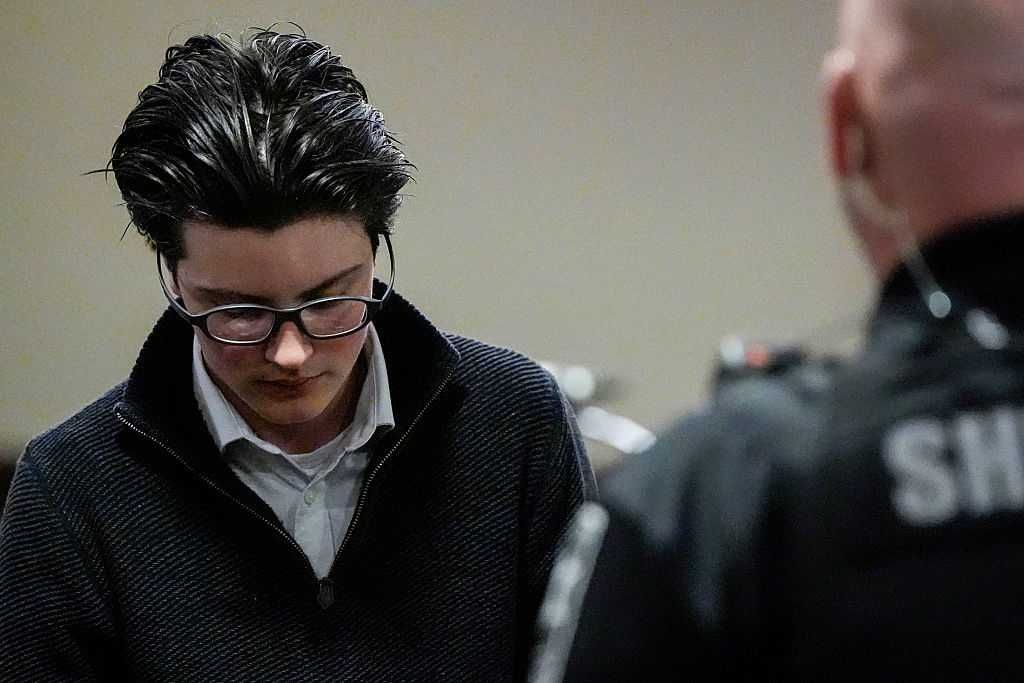


Two years ago, high school freshman Colt Gray shot up Apalachee High School in Georgia, killing two teachers and two students and wounding nine others. School resource officers quickly ended the rampage, and Gray was taken into custody before the death toll climbed higher. His father, Colin Gray, who bought him the gun, was later convicted of manslaughter and second-degree murder.

Colin Gray's prosecution drew much of the attention because it was a rare case of a parent being held criminally responsible for a child's violence. But Colt Gray's own punishment deserves attention too: life imprisonment without parole.

Healing is harder when justice is denied.

Gray’s age, troubled home life, and prior experience of being bullied could have been invoked as reasons for leniency. Instead, the judge concluded that his crime and his motives justified the harshest sentence available for a juvenile offender.

That’s significant because justice is not merely a tool for rehabilitation or deterrence. It also concerns what is owed to victims and to the community after an irreparable wrong.

Gray murdered four innocent people without anything resembling a justification. I would have no moral objection to the death penalty in a case like this. Because he committed the murders as a minor, however, life without parole is the most severe punishment available.

Even that cannot restore what was taken. As the older brother of one victim put it: “The defendant's family will still get to see their son, talk to him, and know he is breathing. ... My mother (and) my father don't get that privilege. The only way to visit Christian now is by standing over his grave.”

Aristotle defined justice in terms of giving each person what he is properly owed. Whatever one makes of that formulation, it captures something modern criminal-justice debates often neglect: Punishment is not only about what might improve the offender. It is also about recognizing the gravity of the offense.

A sentence cannot bring the dead back. But a legal system that treats grave crimes with proportionate seriousness tells victims, families, and the broader community that what happened to them was not trivial and will not be waved away.

RELATED: ‘Why do we have an FBI?’ Georgia school shooter was on FBI’s radar months before attack

Jessica McGowan/Getty Images

Justice should also force us to confront the nature of the crime. As I wrote at the time, Gray displayed warning signs before he ever brought a gun to school. The lesson is not that every troubled teenager should be treated as a future murderer. It is that threats, fixation on mass killers, access to weapons, and other concrete warning signs should be taken seriously before tragedy makes hindsight easy.

The strongest objection to a sentence like this is that even terrible offenders, especially young ones, may be capable of change. That is a serious argument. But mercy and rehabilitation do not erase agency, nor do they undo the harm already done.

In Gray’s case, the record described an obsession with school shooters and a desire for notoriety. He was obsessed with school shooters. His home life may have been chaotic and his parents may have failed him badly. None of that means he lacked the capacity to understand that murdering classmates and teachers was wrong.

Judge Nicholas Primm made the point directly, saying the shooting “wasn’t done out of fear or anger” but “for the infamy of it.” As such, he doesn’t deserve another chance at living a “normal life.”

Gray may someday understand the evil of what he did. He may repent. He may even become, within prison, a radically different person. But none of those possibilities can make four murdered people less dead or obligate society to restore to him the freedom he deliberately took from others. Explanations are not the same as excuses.

This is where some accounts of restorative justice become inadequate. Restoration may have a place in criminal justice, especially where offenders can make meaningful amends. Murder imposes a limit on that logic because the central harm cannot be repaired.

RELATED: Jordan Salinas: Another ‘good guy with a gun’ ruins the gun control lobby’s narrative
Jason Armond/Getty Images; Facebook/JordanSalinas

The same caution applies beyond this case. It is a mistake to assume that every young violent offender is beyond redemption. It is equally mistaken to assume that redemption, if it occurs, necessarily entitles an offender to release. Recidivism among released prisoners is a real problem, though rates vary substantially by offense, age, and time horizon. The point is not that mercy is impossible. It is that mercy must be ordered to justice, not substituted for it.

By holding offenders accountable, courts can give victims and their families something no therapy program can supply on its own: a public judgment that the crime was real, grave, and deserving of punishment.

Assuming Gray’s punishment sticks, the Apalachee High School community will still have a long road ahead. Students and faculty can honor those they lost, support one another, and take warning signs more seriously in the future. None of that requires pretending punishment itself is healing. But healing is harder when justice is denied.

In this case, justice prevailed.

Texas’ School Choice Bill Will Help Teachers And Students Alike

The status quo isn’t working, and reform is needed more now than ever.

'Anti-racism' and knitting circles: Biden's DOJ wastes $100M on woke school programs, report says


The Biden administration's Department of Justice reportedly wasted more than $100 million on woke school initiatives.

A Thursday report from Parents Defending Education revealed that from 2021 to 2024, the DOJ granted $100,113,942 in grants to hundreds of school districts in 36 states to support programs promoting restorative justice, social-emotional learning, and diversity, equity, and inclusion.

'Federal bureaucrats made a deliberate choice to prioritize ideology and pet projects over protecting American schoolchildren.'

The report explained that the information was "based on available data and not exact," noting that the number of school districts that received funding was "likely much higher."

PDE estimated that the DOJ awarded over $45 million for promoting restorative practices or SEL; more than $32 million to support DEI initiatives; nearly $20 million to hire consultants who often promoted critical race theory, gender theory, and queer theory; and another $10 million for hiring new administrators for positions related to restorative justice, SEL, and DEI.

The report provided examples of specific programs the DOJ funded, including $2 million to "create safe learning environments where practices of anti-racism and anti-oppression are embedded," and nearly $2 million to develop mental health programs that included "mindfulness meditation, yoga, and knitting circles."

The report also noted the DOJ's STOP School Violence Program, which provides grants to support projects that "increase school safety by implementing solutions that will improve school climate."

"More often than not, when schools mention 'improving school climate,' they mean replacing exclusionary discipline with restorative practices and social emotional learning. Exclusionary discipline removes the disruptor from the classroom, allowing the rest of the class to continue learning. Restorative practices, on the other hand, often disrupts class time for more students, as both the offender(s) and victim(s) in an incident are brought together to discuss what happened and 'repair harm,'" the report read.

It added, "Social emotional learning (SEL) is more insidious than it may sound. While SEL was originally intended to teach children skills like self-awareness, self-management, and goal setting, the definitional shift to 'Transformative SEL' prioritizes equity and 'the collective' — it has become another avenue to bring DEI into the classroom."

PDE founder and president Nicole Neily told Fox News Digital, "Although the Biden administration claimed they cared about 'student safety,' these grants highlight that at the end of the day, federal bureaucrats made a deliberate choice to prioritize ideology and pet projects over protecting American schoolchildren, using the tax dollars of hardworking citizens."

The DOJ did not respond to a request for comment from Fox News Digital.

Like Blaze News? Bypass the censors, sign up for our newsletters, and get stories like this direct to your inbox. Sign up here!

‘$50 Billion’ Chicago Teachers Union Contract Demands Higher Pay And Lower Expectations

The contract veers into many social issues and away from academics: LGBT issue training, sex-neutral bathrooms, immigrant housing, police-free schools, restorative justice, and more.



White guilt? Liberal friends of murdered girl lobby for the RELEASE of her murderer in the name of 'restorative justice'


It’s a natural feeling to want justice when you’ve been wronged.

Unless you’re the liberal friends of Jen Angel, a 48-year-old baker who was brutally murdered back in February by a 19-year-old named Ishmael Burch during an attempted robbery.

Instead of good, old-fashioned justice, they would prefer Burch be released from prison in the name of “restorative justice.”

For those who don’t know, restorative justice is the woke way to handle crime. Instead of putting criminals behind bars, advocates of restorative justice propose intervention that involves helping criminals form positive self-identities and understand the harm they’ve caused, giving them a second chance.

That all sounds well and good, except for the part where they don’t have to serve their sentences.

But that’s exactly what Angel’s friends are hoping to accomplish.

They want Ishmael Burch to be released from prison. And they swear this is what Angel herself would have wanted.

“Angel strongly disagreed with the criminal justice system and would not want her alleged killer to go to prison,” says one friend of Angel, who is leading the charge of “[pursuing] an alternative to traditional prosecution.”

“They have a dead friend,” Rubin says, “and their concern is that the perpetrator of this murder somehow not be treated poorly.”

This is “further proof that progressivism is a mental disorder,” says Peter Lloyd, a British journalist joining Rubin on the show.

It’s also “pathological altruism,” which is when “you have so much good intention that it goes beyond the realm of what’s beneficial and becomes negative,” he continues.

Douglas Murray, author of "The War on the West," says that Angel’s friend clearly “cares about her own narcissistic self-presentation more than she does about her friend's murder.”

“The criminal justice system is not in place in order to heal,” Murray says in response to another friend’s comment that “restorative justice is really about healing.”

“The primary purpose of imprisonment ... is punishment for crime,” he concludes.

Watch the full clip here.


Want more from Dave Rubin?

To enjoy more honest conversations, free speech, and big ideas with Dave Rubin, subscribe to BlazeTV — the largest multi-platform network of voices who love America, defend the Constitution, and live the American dream.

More Money And Gimmicks Won’t Improve Public Schools, But Competition From Charters Will

Simply spending more money on new interventions won't improve American public education, and it's wrong to dismiss the promise of charter schools.

How Public Schools’ ‘Equity’ Policies Make It Impossible For Students To Succeed

At Equity High School, a composite of leftist policies found across the country, students are not allowed to compete at all.
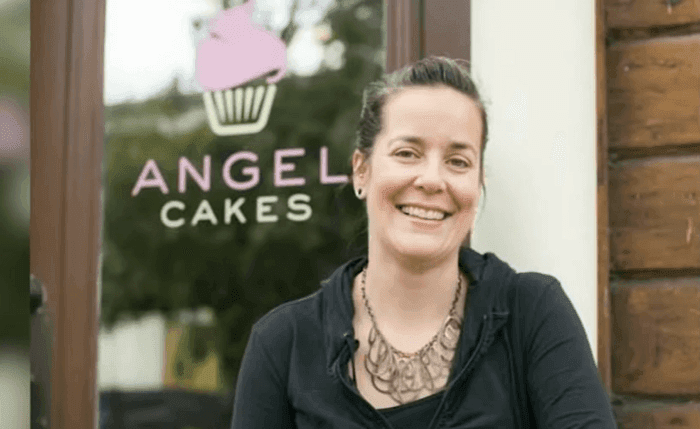
Anti-police baker died after violent robbery, family doesn't want criminals linked to her death prosecuted as a way to honor her social justice values


A California baker – who identified as an anarchist and social justice advocate – died after she was the victim of a brutal theft. Family and friends don't want the criminals who are linked to her death to be prosecuted because that would allegedly go against the woman's values.

Jennifer Angel went to a Wells Fargo bank branch in Oakland on Monday afternoon. A car pulled in front of her vehicle and blocked her from leaving, Angel's fiance, Ocean Mottley, told the San Francisco Chronicle.

A spokesperson with the Oakland Police Department said that around 12:30 p.m., "an individual broke into" Angel’s car while she was in it and stole an item, then ran back "to a waiting vehicle."

Angel chased after the thief and got caught in the door of the fleeing car. She was reportedly dragged down the street for more than 50 feet, hitting her head several times.

She was rushed to Highland Hospital, where she was put into a medically-induced coma. Angel underwent emergency surgery, and part of her skull was removed to help with severe swelling in her brain.

Jennifer died from her injuries sustained in the robbery on Thursday. Doctors confirmed that Angel had lost all brain function.

Family and friends of Angel issued a statement.

"It's with very heavy hearts that we announce that Oakland baker, small business owner, social justice activist, and community member Jen Angel has been medically declared to have lost all brain function and will not regain consciousness. Her official time of death was 5:48 p.m.," the statement began.

The family and friends said, "We know Jen would not want to continue the cycle of harm by bringing state-sanctioned violence to those involved in her death or to other members of Oakland’s rich community. As a long-time social movement activist and anarchist, Jen did not believe in state violence, carceral punishment, or incarceration as an effective or just solution to social violence and inequity."

The statement said that Angel "worked toward an ecologically sustainable" society, where "people are free and equal."

The friends and family proclaimed that the criminals involved in Jennifer's death should not be prosecuted.

"If the Oakland Police Department does make an arrest in this case, the family is committed to pursuing all available alternatives to traditional prosecution, such as restorative justice," the statement declared.

The family and friends said that Jennifer's death should not be used to "further inflame narratives of fear, hatred, and vengeance, nor to advance putting public resources into policing, incarceration, or other state violence that perpetuates the cycles of violence that resulted in this tragedy."

Angel's friend Emily Harris told KGO-TV, "We are really trying to orient towards her brilliant life, and that actually, she is not a person who would support the policing and imprisonment of the people who harmed her."

"Feels like absolutely an opportunity to stand in her values, and support the world that she wants," Harris said. "By actually showing that something different than actual policing and prosecution is possible, and is how we can have accountability."

The Oakland Police Department is asking for the public's assistance to find the suspects, and anyone with information on the crime should call 510-238-3326. Crime Stoppers of Oakland is offering up to $7,500 for information leading to the arrest of the criminals, and tips can be provided at 510-777-8572.

Like Blaze News? Bypass the censors, sign up for our newsletters, and get stories like this direct to your inbox. Sign up here!

Family of Oakland baker seeks 'restorative justice' for her death following robbery www.youtube.com