Being A Millionaire On Paper Doesn’t Mean You Can Stop Saving For Retirement
These days, a million-dollar 401(k) doesn’t guarantee a cushy retirement.Republican Sen. Cynthia Lummis of Wyoming becomes the latest GOP lawmaker to take a step away from politics.
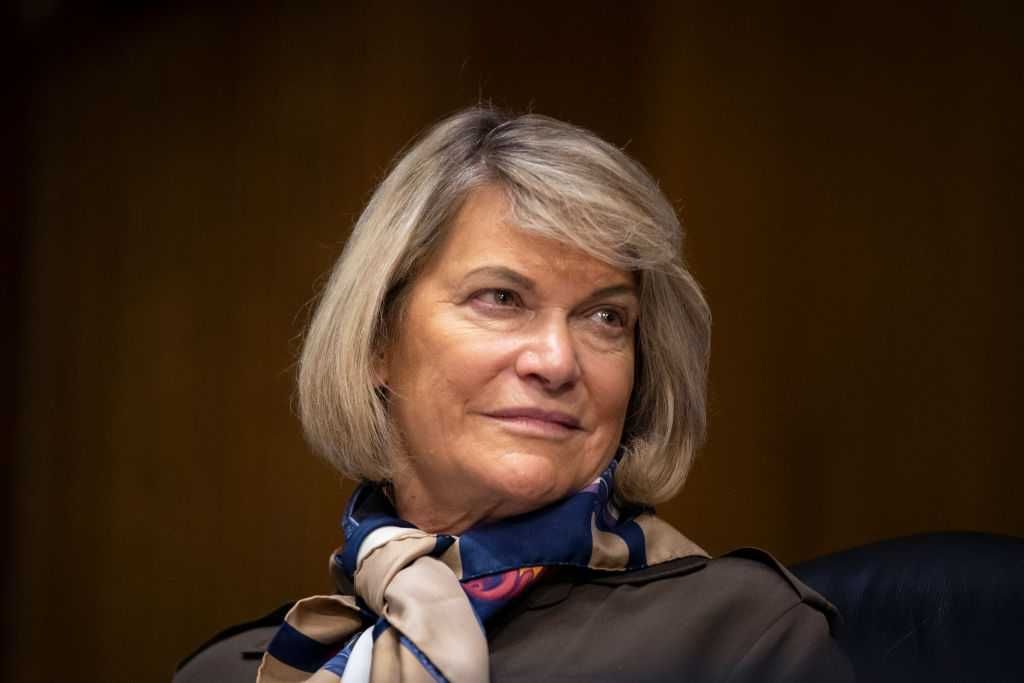
The freshman senator announced her retirement Friday after several "exhausting session weeks" this Congress. Lummis was first elected to the Senate in 2020 but previously represented Wyoming in the House from 2009 to 2017 as well as in state government prior to her career in Washington, D.C.
'I feel like a sprinter in a marathon.'
"What a blessing to serve with Senators John Barrasso and Mike Enzi when I was in the U.S. House, and with John and Rep. Harriet Hageman while I've been in the Senate," Lummis said in a statement Friday.
"We all put Wyoming first, which has cemented our cohesive working relationship."
RELATED: 'Unnecessary and protracted': Elise Stefanik drops out of New York governor's race

Lummis reiterated her commitment to the state and her constituents but noted that she no longer has the "energy required" for the job.
"Deciding not to run for reelection does represent a change of heart for me, but in the difficult, exhausting session weeks this fall I've come to accept that I do not have six more years in me," Lummis said. "I am a devout legislator, but I feel like a sprinter in a marathon. The energy required doesn't match up."

"I am honored to have earned the support of President Trump and to have the opportunity to work side by side with him to fight for the people of Wyoming. I look forward to continuing this partnership and throwing all my energy into bringing important legislation to his desk in 2026 and into retaining commonsense Republican control of the U.S. Senate. Thank you, Wyoming!"
Like Blaze News? Bypass the censors, sign up for our newsletters, and get stories like this direct to your inbox. Sign up here!
Philip Rivers knew the playbook going in.
When the 44-year-old quarterback got the call from the injury-plagued Indianapolis Colts, he already had a relationship with coach Shane Steichen. Almost a peer of his at 40 years old, Steichen was the offensive coordinator for the Los Angeles Chargers when Rivers last played in 2020.
'These kind of things don't come up.'
With Steichen using the same playbook with the Colts as he did when he was arm-in-arm with Rivers, the 44-year-old quarterback came out of retirement to plug the hole for the Colts as their promising season was falling apart.
On Sunday, the father of 10 stepped in the game and threw a touchdown in a hard-fought battle against the Seattle Seahawks, one of the best teams in the NFL this season. That single TD pass was one more than his opponent, and despite the Colts taking the lead with a late field goal, the Seahawks followed suit and kicked a field goal of their own with 22 seconds left to win 18-16.
At the postgame press conference, Rivers was asked why he wanted to come back after nearly five years away from the game, especially with a strong possibility of failure looming.
"I think about my own boys, you know, my own two sons, but certainly [the] high school team I'm coaching, but this isn't why I'm doing it," Rivers replied.
"These kind of things don't come up. But obviously, this doesn't come up every day. But I think, maybe it will inspire or teach [them] to not to run or be scared of what may or may not happen."
RELATED: Christian NFL star apologizes after reference to kids' game that likely left LGBTQ crowd seething
According to Catholic Vote, since retiring Rivers has been coaching the football team at St. Michael Catholic High School in Fairhope, Alabama, where his son also played quarterback.
It was when talking about his high school team that Rivers began getting emotional in front of the NFL press.
"Certainly I think of my sons and those ball players that I'm in charge of at the school. They'll say, like, 'Crap! Coach wasn't scared!' You know what I mean. Shoot, sometimes there is doubt, and it's real, and ... the guaranteed safe bet is to go home or to not go for it. And the other one is, 'Shoot, let's see what happens,'" he said.
It was in that moment that Rivers' faith shined through.
"I hope that in that sense that it can be a positive to some young boys or young people. ... Whatever God's will, I'm happy with," he added.

Rivers also answered questions about self doubt in his abilities after being away from the professional game so long. He admitted that he initially felt some doubt last week, but he was "thankful to God" those doubts quickly dissipated.
"I've been very much at peace and just at peace with everything about it," he revealed.
The Colts play the San Francisco 49ers next Monday in a game that will likely be a must-win if the Colts want to make the playoffs.
Like Blaze News? Bypass the censors, sign up for our newsletters, and get stories like this direct to your inbox. Sign up here!
Dear Mr. President:
I want to draw a parallel between two worlds that don’t seem connected but are. I’m not sure if you follow long-distance running. Perhaps you should.
Is it hubris, or fear, or something else entirely that keeps us clinging with white knuckles to our positions of power — refusing to pass the torch until God breaks our fingers?
Last month, on Patriots' Day, Des Linden crossed the finish line of her 12th Boston Marathon, triumphantly concluding a professional career that has cemented her legend status on Boylston Street.
It was there in 2018 that she made history, becoming the first American woman in 33 years to win, doing so under punishing conditions that overwhelmed many of the sport’s top contenders.
That year, she famously slowed down mid-race to help fellow runner Shalane Flanagan rejoin the pack, only to kick ahead of Mamitu Daska and Gladys Chesir on the Newton Hills to claim victory. Linden capitalized on persistence, grit, and her competitors’ fatigue.
Linden's career spans decades at the highest level of competition, including two Olympic appearances (London 2012 and Rio 2016), a personal best of 2:22:38, and countless top American finishes at many of her 24 major marathons.
Just before lining up at the start of the 2025 event, she shocked fans by announcing her retirement from marathoning at age 41.
Though her 2025 time of 2:26:19 marked her fastest event performance since 2017, she knew it was time to hang up her Brooks Hyperions.
“I was happy with the time I ran, I was happy with how I ran ... and it was also just kind of perfect,” she said on "Nobody Asked Us," her podcast with fellow distance runner Kara Goucher. “It’s just not competitive. That was a really good day, and it’s just not competitive.”
“There’s a level of dignity to it,” she continued. “I don’t want to just limp through these races or be there just to be there. I want to do it well, and if I can’t do it well, I need to move on.”
Dignity is a waning virtue in American politics. Our ruling class is aging, ungracefully, in public.
Dianne Feinstein, a once formidable senator, was wheeled daily into the Capitol in her final months, visibly confused, voting only when prompted by staff, and at one point attempting to give a speech when directed simply to say “aye.”
Mitch McConnell, twice in one year, froze silently mid-sentence at press conferences — eyes locked, hands clenched — and was escorted away like a man forgetting where, or who, he was.
Ruth Bader Ginsburg, a liberal icon, chose not to step down when President Obama could have appointed her successor — clinging to her seat until her death in 2020, which opened the door for you, Mr. President, to replace her with conservative Amy Coney Barrett, reshaping the Supreme Court for a generation.
And, of course, Biden’s presidency was marked as much by gaffes and confusion as by ill-fated policy. He tripped repeatedly up the steps of Air Force One, wandered away from press events unsure of where to exit, and at times struggled to finish coherent sentences during major addresses.
In one widely circulated moment, he mistook the president of Egypt for the president of Mexico. At international summits, he appeared disengaged, sometimes gazing blankly while other leaders spoke and sometimes falling asleep. His handlers often cut his mic or shuffled him away mid-question. What’s more, he was selfishly propped up by his party and his family to run for a second term.
Is it hubris, or fear, or something else entirely that keeps us clinging with white knuckles to our positions of power — refusing to pass the torch until God breaks our fingers, through infirmity, humiliation, or death, to take it from us? I don’t know.
What’s certain is that we have a choice — one with the power to shape our legacies and reveal the true motivations of our hearts.
Our first president understood this better than most, as articulated in his farewell letter to the nation. George Washington’s resignation after two terms — at the height of his ability and at the age of 64 — was a deliberate decision, modeling restraint, humility, and faith in the next generation.
“In a country whose institutions are essentially free, the voluntary relinquishment of power is as necessary as the wise exercise of it,” he said in his 1796 address.
And then, reflecting on his service: “Though in reviewing the incidents of my administration I am unconscious of intentional error, I am nevertheless too sensible of my defects not to think it probable that I may have committed many errors."
"I shall carry with me the hope that my country will never cease to view them with indulgence; and that,” he continued, “the faults of incompetent abilities will be consigned to oblivion, as myself must soon be to the mansions of rest."
At first, I smiled and rolled my eyes at your mention of a third term. In April 2018, during a White House event, you quipped, “Should we go back to 16 years? Should we do that? Congressman, can we do that?”
The crowd laughed; it was a joke, we thought. You’re a stand-up comedian, I explained to fretting leftist friends, whose apoplectic reactions no doubt egged us all on — a brawler with a flair for provocation, not a man mounting a serious challenge to constitutional norms.
Then came the merchandise — “Trump 2028” hats — and the repeated musings: “After that, we’ll go for a third term,” you said at a rally in Nevada. By 2025, the line between jest and intent had blurred. When pressed on the matter in a March 30 interview with Kristen Welker, you replied, “No, no, I’m not joking.”
Herein lies the bind of the Trump supporter: trapped in an exhausting game of "good Trump, bad Trump" — squaring your achievements and impulses, downplaying your unconstitutional suggestions, all while hoping your next move isn’t one we truly can’t defend.
And then, during an exclusive "Meet the Press" interview last week, you offered your clearest indication yet that you’d leave office after two terms, without attempting to extend your stay. “I’ll be an eight-year president; I’ll be a two-term president. I always thought that was very important,” you told moderator Kristen Welker.
Some conservatives in my circle breathed a sigh of relief. Others still wait with bated breath, not sure what to believe. Stances have shifted before. For many on the right, your unpredictability is part of your strength: a negotiating tactic, a strategic ambiguity. However, when it comes to the peaceful transition of power — a foundational tenet of American conservatism — unpredictable rhetoric doesn’t inspire confidence.
That’s why, though I’m loath to admit it, a May 6 New York Times editorial raises a valid concern. "Trump’s Third-Term Jokes Deserve a Serious Response" argues that this kind of rhetoric doesn’t just amuse or provoke — it reinforces your critics’ worst fears. “He has a history, after all, of using seemingly outlandish speculation to push ideas he genuinely favors — such as overturning an election result — into mainstream discourse,” the editorial board writes. They continue:
He tests boundaries to see which limits are actually enforced. Even when he backs away from a provocation, he often succeeds in raising doubts about those limits. His behavior is consistent with a president who indeed wants to serve a third term, if not more, and who keeps raising the idea in the hope of getting Americans comfortable with it.
Those who watched January 6 unfold or listened to your musings about “stolen elections,” even in jest, fear that uncertainty and volatility may once again destabilize faith in our political process. In a climate rife with cynicism, some conservatives aren’t just asking what you’ll do — they’re wondering whether your word, this time, will be final.
In an Instagram post on race day, Des Linden took her final bow. “People say you should go out on top, and that’s what I’m doing — because getting to race my final professional marathon in Boston is indeed going out on top. I’m ready to leave it all out on the course one last time,” she wrote. “See you on Boylston.”
Mr. President, please keep your promise — for the sake of the Republican Party that you’ve reshaped for the better, for the young conservatives you’ve energized, for the party’s dignity and your own. Run the three-year race set before you, and then go out on top.
Democratic Sen. Jeanne Shaheen of New Hampshire announced Wednesday that she would not seek re-election in 2026, giving Republicans another opportunity to grow their Senate majority.
Shaheen has served in the Senate since 2009, flipping the previously red seat blue. Shaheen had also previously served as governor and in the state Senate.
'New Hampshire has a proud tradition of electing common-sense Republicans—and will do so again in 2026!'
"Today, after careful consideration, I'm announcing that I have made the difficult decision not to seek re-election to the Senate in 2026," Shaheen said in a statement Wednesday. "There are urgent challenges ahead, both here at home and around the world. And while I'm not seeking re-election — believe me — I am not retiring."
Although both Senate seats have been held by Democrats for the last few elections, New Hampshire has elected Republican governors since 2016, and Republicans have held on to a majority in the state Senate. Given the strong Republican voting presence in the state, the GOP has the opportunity to flip another key Senate seat.
"Another one!" Republican Sen. Tim Scott of South Carolina said in a statement Wednesday. "Shaheen's retirement is welcome news for Granite Staters eager for new leadership. New Hampshire has a proud tradition of electing common-sense Republicans—and will do so again in 2026!"
Republicans flipped four Democrat-held Senate seats in 2024, electing Republican Sens. Tim Sheehy of Montana, Dave McCormick of Pennsylvania, Bernie Moreno of Ohio, and Jim Justice of West Virginia. This leaves Republicans with a comfortable 53-seat majority to work with.
There has also been some speculation about a potential senatorial run by Republican former Gov. Chris Sununu. Although Sununu has been a past critic of President Donald Trump, he has since warmed up to the party leader and even endorsed him in 2024.
“I have not ruled it out completely, but folks in Washington have asked me to think about it and to consider it, and that is just kind of where I am,” Sununu told the New Hampshire Journal on Tuesday.
“I like getting stuff done,” Sununu said. “I don’t think they could handle me down there. I’d be like a lion in a cage.”
Like Blaze News? Bypass the censors, sign up for our newsletters, and get stories like this direct to your inbox. Sign up here!