Army, Navy release stunning uniforms ahead of historic matchup honoring America's 250th birthday​


The United States Army and Navy are going all out for the 126th Army-Navy Game.

Over the past decade, the teams have worn special uniforms for the NCAA football rivalry series, but for this year's historic occasion, both teams have stepped their game up.

'We will carry the Army's Warrior Ethos with us onto the gridiron.'

Last week, the Army unveiled their jerseys for the Dec. 13th game at M&T Bank Stadium in Baltimore. The focus of the design surrounds "250 Years of Service & Sacrifice."

Specifically, the Army fell back on its ethos: "I will always place the mission first, I will never accept defeat, I will never quit. I will never leave a fallen comrade."

Furthermore, the team put added emphasis on the U.S. Constitution and the Revolutionary War with "1775" written on the back of their helmets.

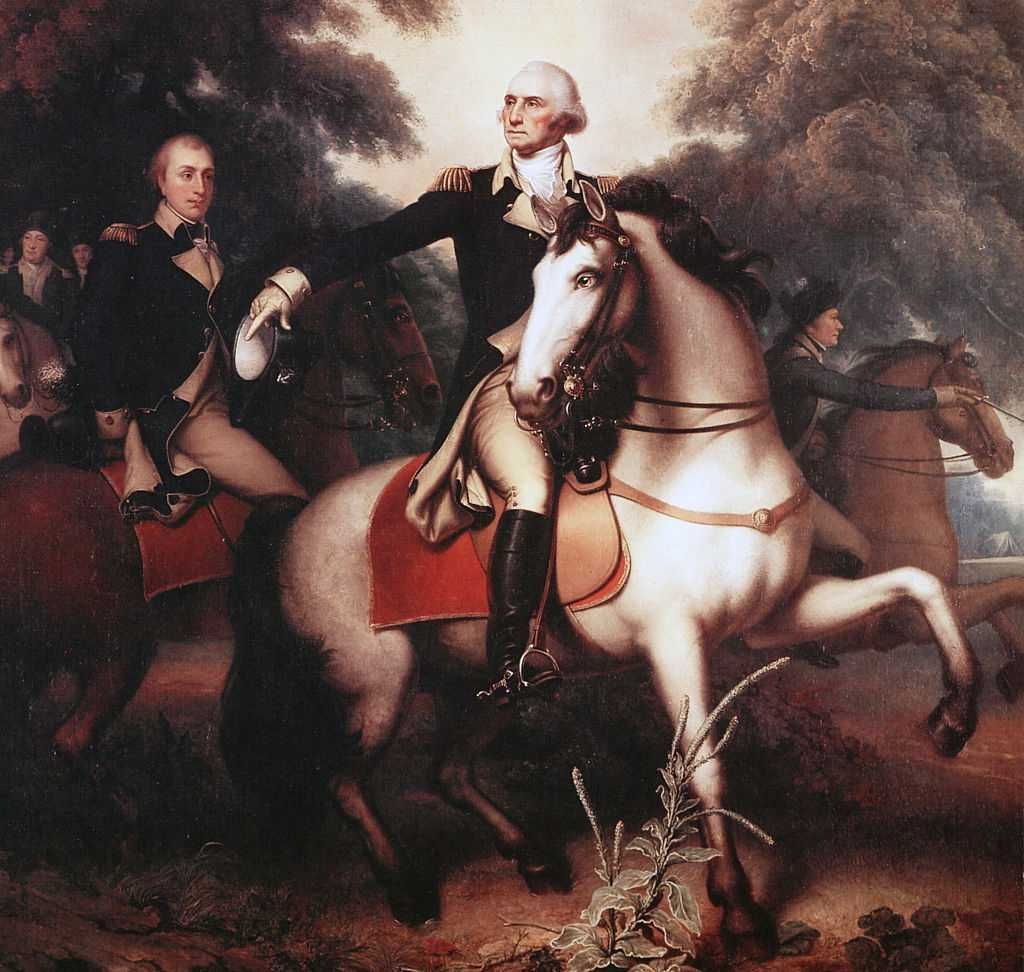
"Washington transformed the Continental Army into a disciplined fighting force. Washington and his soldiers boldly regained the initiative by crossing the Delaware River on Christmas in 1776 and seized Trenton and Princeton," the Army wrote in a press release.

Washington's men were "drilled and disciplined Soldiers able to hold their own against the British, and even to defeat them to secure American independence."

RELATED: Stories Behind the Stars: On a mission to honor every American who died in WWII

Image via United States Army

The uniform uses Constitution-style text on the name plate to honor America's founding documents and to showcase "the importance of having an Army that swears loyalty to a set of ideas rather than a monarch."

It also features the Great Chain, honoring the strategic value of West Point during the American Revolution, as well as purple streaking through the jersey numbers and the helmet, symbolizing the sacrifices made by soldiers and Gold Star families.

The Army cemented its commitment to the defense of liberty in the design, reinforcing its motto, "This we'll defend," while promising victory.

"We will carry the Army's Warrior Ethos with us onto the gridiron in Baltimore as we defeat our rivals and seize the Commander-in-Chief’s trophy," the team said.

— (@)

Navy football also revealed its own iconic uniforms, choosing to focus on the historic copper and the Navy's longest-serving ship.

The USS Constitution gets special recognition from the Navy this year and was heavily used for the uniform's design and inspiration. This includes ship knots around the jersey's sleeves, the American flag, and the nautical Navy and heritage red colors, symbolizing its battle-worn hull.

The USS Constitution is the only remaining frigate from the original six frigates fleet and the world's oldest commissioned warship still afloat, according to the Navy.

The ship is nicknamed "Old Ironsides" because cannonballs appeared to bounce off its hull during the War of 1812. It remains undefeated in battle and has never lowed its flag.

RELATED: How a Navy SEAL preached the gospel to millions

Image via United States Navy

As for the copper, the Navy showcases the vital role the metal has played in preserving the original U.S. frigates. Not only does the copper protect the wooden hulls, but it was the material used for the 1797 and 1798 one-cent pieces placed beneath each mast of the USS Constitution for good luck.

The entire helmet is coated in oxidized copper for the 2025 game, along with a detailed sketch of the historic ship. A wooden plank runs down the center of the helmet too, bound by six ropes to honor the original six frigates.

The ropes on the helmet have 126 knots, a reference to the 126th Army-Navy game.

— (@)

Online, the Army's reveal of its uniforms garnered much praise, even from its rivals.

"I'm a Navy veteran but I love the jersey numbers," one X user wrote.

"I hate army but these are clean," another said.

Over on the Navy's X page, comments were cordial with fans saying designers "knocked it out of the park" and provided "incredible storytelling in this design."

According to the game's official website, the 2024 Army-Navy Game drew an average of 9.4 million viewers on CBS, eclipsing the record of 8.45 million set in 1992.

Like Blaze News? Bypass the censors, sign up for our newsletters, and get stories like this direct to your inbox. Sign up here!

The soul of the republic still belongs to Washington


As we celebrate Independence Day, it’s worth reflecting on America’s founding character — especially the man who defined it: George Washington.

Washington didn’t build his legacy on grand speeches. He led with silence, sacrifice, and restraint. He may not have written poetry, but he lived it — with grit in war, grace in peace, and great wisdom in his letters, journals, and Farewell Address.

This Fourth of July, as fireworks fill the night sky, let’s also make room for silence — for healing, for grief, for endurance.

He didn’t just fight for a nation — he helped shape its soul. Washington understood that a country isn’t defined only by its victories, but by how it makes meaning out of its wounds.

In our time of division and disillusionment, we would do well to reclaim the legacy Washington embodied. Resilience isn’t the denial of pain but rather transformation through it. And the only vision worth holding on to is the one that unites us in building our future as a nation.

Trauma doesn’t end the story. Often, it begins the most meaningful chapters. That’s true in my life — and in America’s. Growth has never come from comfort. It comes from hardship, from wounds we don’t hide from but confront. Psychologists call it “post-traumatic growth.” It’s the idea that suffering, when faced and integrated, can lead to deeper purpose, stronger relationships, and a more grounded sense of self.

I guess most Americans would just call it “history.”

I led soldiers into Iraq in 2003 and returned to a nation largely untouched by the war I had lived. But my reckoning came later — when a brief Wall Street career collapsed, when a home invasion shattered my sense of safety, and when therapy forced me to face what I had tried for years to outrun: trauma, guilt, grief.

What followed wasn’t just recovery. It was transformation — a quiet strength rooted in humility and meaning. Post-traumatic growth teaches that suffering, when faced honestly, can lead to deeper purpose, stronger relationships, and a more grounded self.

That truth doesn’t belong to me. It belongs to us all.

From Valley Forge to Gettysburg, from the Great Depression to Ground Zero, America has been forged in fire. Our greatest progress has rarely come in peacetime. Lincoln didn’t rise when things were easy. The Greatest Generation wasn’t shaped in comfort. Renewal always follows rupture.

We’re in such a moment again. Pressure is building — on our national identity, our personal stories, our sense of unity. But pressure can forge something stronger, if we let it.

We must reject the lie that trauma equals weakness. PTSD is real — often invisible, often devastating. But it’s not the end of the story. Alongside post-traumatic stress, we can teach post-traumatic strength. The kind Washington lived. The kind America has always needed.

That’s part of why I wrote “Downriver: Memoir of a Warrior Poet.” Yes, it tells a story of trauma — from childhood instability to the battlefields of Iraq, from Wall Street collapse to personal unraveling. But more importantly, it traces the long road of healing — not as a tidy comeback story, but as a messy, hard-earned path toward growth and integration.

RELATED: The prayers that shaped a nation can save it again

Wirestock via iStock/Getty Images

The journey is not reserved for veterans alone. It belongs to survivors of addiction, loss, illness, injustice, and personal collapse. It belongs to first responders, caregivers, and ordinary Americans living through extraordinary hardship.

But growth isn’t guaranteed. It requires honesty. It requires community. It demands a culture willing to honor both the warrior and the poet — the one who endures and the one who reflects, the one who fights and the one who heals.

Too often, we swing between denial and despair. But what if we told a different story? What if we treated our national wounds not as signs of weakness but as calls to deepen our roots?

We’ve done it before. The post-9/11 generation gave us new models of service and empathy. The scars of the COVID-19 pandemic will never fully heal, but they can teach us lessons about connection, community, and what really matters.

The question isn’t whether we’ve been wounded. We have. The real question is what kind of country we’ll become in response. Will we let trauma divide us further — or use it to rediscover what binds us together?

This Fourth of July, as fireworks fill the night sky, let’s also make room for silence — for healing, for grief, for endurance. Let’s honor not only what we’ve won but how we’ve grown.

That’s the path of the warrior poet. That’s Washington’s legacy. And it can be ours, too.

Weekend Beacon 5/25/25

A local corrections officer tells me prison breaks are not like in the movies. If it happens on your watch, "there's no slap on the wrist." You will be held accountable. The investigation will also seek ways to prevent future breakouts. I suggest a ban on large posters of Rita Hayworth.

The post Weekend Beacon 5/25/25 appeared first on .

Mark Levin reveals what liberals DON’T want you to know about slavery and the Constitution


The left is the party that spawned critical race theory — the fundamentally flawed ideology that claims our constitutional framers were influenced by the racist norms of their time and therefore all the systems they created are tainted by those biases.

Mark Levin says it’s a shameful lie.

The truth is many of the framers despised slavery, but they had to make a hard deal with the slave states in order to form the United States. Without that union, there would have been no Civil War and no Abraham Lincoln to bring slavery to an end.

At the Constitutional Convention in 1787, the delegates could not agree on the issue of slavery, so they left the issue to their children and grandchildren, Levin explains.

However, the framers knew that “a nation born out of the Declaration of Independence where all men were created equal” could not coexist with slavery.

Thomas Jefferson, who albeit owned slaves, tried to “put a provision in the Declaration of Independence about slavery,” but “it was withdrawn because they were in the middle of what started a revolutionary war for their own survival. ... They had to come together to fight the [British].”

Ultimately, the fight for independence from Britain and national unity took precedence over the issue of slavery until Abraham Lincoln was elected president and the Civil War thankfully put it to an end.

“[Abraham Lincoln] loved the Constitution of the United States, and he loved the Declaration, and he cited them repeatedly, especially the Declaration, as justification for fighting the [Civil] War to the end and abolishing slavery,” says Levin.

He wouldn’t have done that, though, if our founding documents were inherently pro-slavery and pro-white supremacy, as the left suggests they are.

To hear more of Levin’s analysis, including his take on the dangerous idea of nullification, a pre-Civil War movement that would have shattered the Republic, check out the clip above.

Want more from Mark Levin?

To enjoy more of "the Great One" — Mark Levin as you've never seen him before — subscribe to BlazeTV — the largest multi-platform network of voices who love America, defend the Constitution, and live the American dream.

George Washington's heroic Christmas crossing


In the darkness and the frozen spindrift, a cargo boat groans through ice along the Delaware River.

At the helm, a heroic shadow, pointing toward land. Behind him, 2,400 soldiers. Most are standing, biting their lips in the frozen air, specks of ice dotting their reddened faces.

The men had to cross a stretch of river no longer than three football fields, but the ice made even such a small distance nearly uncrossable.

When the men had begun their journey, they were pelted by heavy rain. Now it's nearly midnight, and the rain has become a brutal, hurricane-like snowstorm.

No turning back

To make matters worse, the men are exhausted, in need of food and better uniforms. For the past several months, they've endured defeat after defeat, even losing a major city to the enemy.

But the men trust their leader. He considered canceling the attack as he brooded by a fire, but thought better of it. In his own words:

“As I was certain there was no making a retreat without being discovered, and harassed on repassing the River, I determined to push on at all Events.”

So he loaded up his men with cases of ammunition, and they began their trek, stuffed into 40-foot cargo boats designed to haul bulk goods to the markets in Philadelphia.

“Victory or death” was the password. The 44-year-old general had meticulously planned the attack. It had to be a surprise, which is why he’d chosen tonight in particular: Christmas night.

You've no doubt seen the painting that memorializes that frigid night on the river: "Washington Crossing the Delaware." A reminder that the man whose face we encounter every time we hold a dollar bill was instrumental to the freedom we hold today.

The men had to cross a stretch of river no longer than three football fields, but the ice made even such a small distance nearly uncrossable. The original plan for a three-pronged attack had to be abandoned when the weather prevented two Continental Army brigades from joining Washington's troops.

Spy in the ranks

To make matters worse, a spy embedded in Washington’s army warned the British of Washington’s plans.

Fortunately, the news traveled slowly. Hessian colonel Johann Rall, who was in charge of the Trenton garrison, received the news right as Washington and his men were crossing the river. Rall had become relaxed after a series of false alarms, so he didn’t fully prepare for the attack.

“Let them come,” he told his troops. “Why defenses? We will go at them with the bayonet.”

After reaching the New Jersey side of the Delaware in the predawn light, Washington and his men then marched four hours to Trenton, New Jersey, to an isolated garrison with roughly 1,400 Hessian troops, German mercenaries fighting for Britain.

Unwelcome surprise

They arrived at about 8 a.m. and surrounded the town, and so began the Battle of Trenton. The Americans counted on the possibility that the Germans would have celebrated Christmas with a party and beer. Washington knew this. Before the battle, one of his officers wrote, "They make a great deal of Christmas in Germany, and no doubt the Hessians will drink a great deal of beer and have a dance to-night. They will be sleepy to-morrow morning.

The Hessians were also overconfident after months of British victories, so they underestimated Washington and his band of Continental troops. In total, about 22 Hessians died and 98 were wounded.

As they realized that they’d been cornered into defeat, the men began to panic, and several hundred escaped. Washington captured the remaining soldiers, about 1,000, and commandeered a cache of ammunition and weaponry.

After the battle, Washington is said to have said, “This is a glorious day for our country."

'George can't lose'

Poet David Shulman memorialized Washington’s perilous Christmas-night journey in a poem:

Ah, he stands – sailor crew went going.
And so this general watches rowing.
He hastens – winter again grows cold.
A wet crew gain Hessian stronghold.


George can't lose war with's hands in;
He's astern – so go alight, crew, and win!

The unknown Revolutionary War HERO who sacrificed everything


The American Revolution was led by many men with names we know by heart — Adams, Revere, Hancock, and Washington — to name a few.

But there’s a lesser known name who’s received little to no time in the limelight in the history books: Dr. Joseph Warren of Massachusetts.

“It’s very interesting,” Mark Levin says. “In New England, early on when the war broke out, before 1776, Dr. Joseph Warren was known better than George Washington.”

During the Battle of Bunker Hill, there was a problem that Warren, a leader of the Revolutionary movement in Boston, helped solve.

The colonists were short on gunpowder, so Warren and a few others put together and signed a letter addressed to the Congress of New York asking for help.

“You read that, and you look at that, and you really think about the men who wrote it and signed it, who put everything on the line, everything they had, including their lives,” Levin says, admiring their sacrifice.

When the Patriots ended up running out of gunpowder during this battle, some of them stood firm at the front line while others were ordered to retreat for another day.

“Dr. Warren insisted on staying on the front line. He was a wanted man, they knew who he was,” Levin explains. “The Americans are overwhelmed, they fight hand to hand combat, and one of the higher ranking British officers, as they were charging up the last time, saw Joseph Warren, aimed his pistol at him in nearly point blank range, shot him between the eyes.”

“And so as not to make a martyr out of Dr. Joseph Warren, they would cut him up into pieces, they would burn what was left of him,” he adds, noting that the British forces also urinated on his remains.

The American forces were able to determine that Warren was one of the dead as in his teeth he had some easily identifiable iron, which was made by Paul Revere, who was a metalsmith.

“I tell you that as a personal example, not personal to me, but a specific example, of what took place,” Levin says.


Want more from Mark Levin?

To enjoy more of "the Great One" — Mark Levin as you've never seen him before — subscribe to BlazeTV — the largest multi-platform network of voices who love America, defend the Constitution, and live the American dream.

Don’t Mistake Democrats’ War On America’s Heritage As Just A Clash Over A Pine Tree Flag

The controversy surrounding historical symbols such as the 'Appeal to Heaven' flag reflects a deeper conflict over the very soul of the nation.

Here's what's POSITIVE about the Gadsden flag school scandal


Conservatives across the country are infuriated by the recent incident at The Vanguard School in Colorado Springs, where Jaiden Rodriguez, a seventh-grade student, was told by the administration that he must remove the Gadsden flag patch on his backpack, as it was associated with slavery and therefore racist.

Obviously, the situation is outrageous, as the Gadsden flag is tied to the Revolutionary War and British tyranny and not slavery in any capacity. It also exemplifies the ever-expanding definition of racism as well as the censorship and virtue-signaling that’s unfortunately come to define the country.

However, Glenn Beck sees the silver lining.

For starters, the Equal Employment Opportunity Commission, an organization Glenn has always been at odds with, ruled that “it's not a racist symbol,” and “even the governor of Colorado — a Democrat — said the Gadsden flag is a proud symbol of American Revolution and an iconic warning to Britain or any government not to violate the Liberties of Americans,” he says.

But what Glenn finds most encouraging is how Jaiden Rodriguez has handled this difficult situation.

“I love this kid,” says Glenn. “He knows what he’s talking about.”

“He’s back in school with the flag on his backpack today,” Glenn says, which is largely the result of Jaiden and his mother refusing to be bullied into submission.

Perhaps this situation hints that people have had enough of leftist policies and are finally taking a stand.


Want more from Glenn Beck?

To enjoy more of Glenn’s masterful storytelling, thought-provoking analysis and uncanny ability to make sense of the chaos, subscribe to BlazeTV — the largest multi-platform network of voices who love America, defend the Constitution and live the American dream.

DAR Patriots Fight To Defend Historic Women’s Society From Men Pretending To Be Ladies

These women have pledged to honor their patriot ancestors by preserving their historic women's society and protecting their First Amendment rights.