Spanberger's new gun ban, championed by Bangladesh native, sparks immediate lawsuits


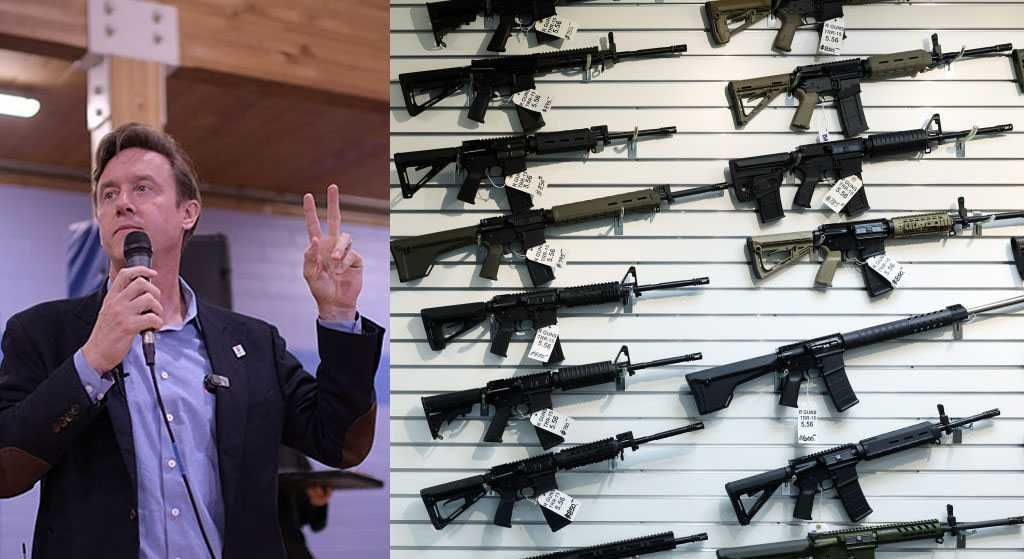
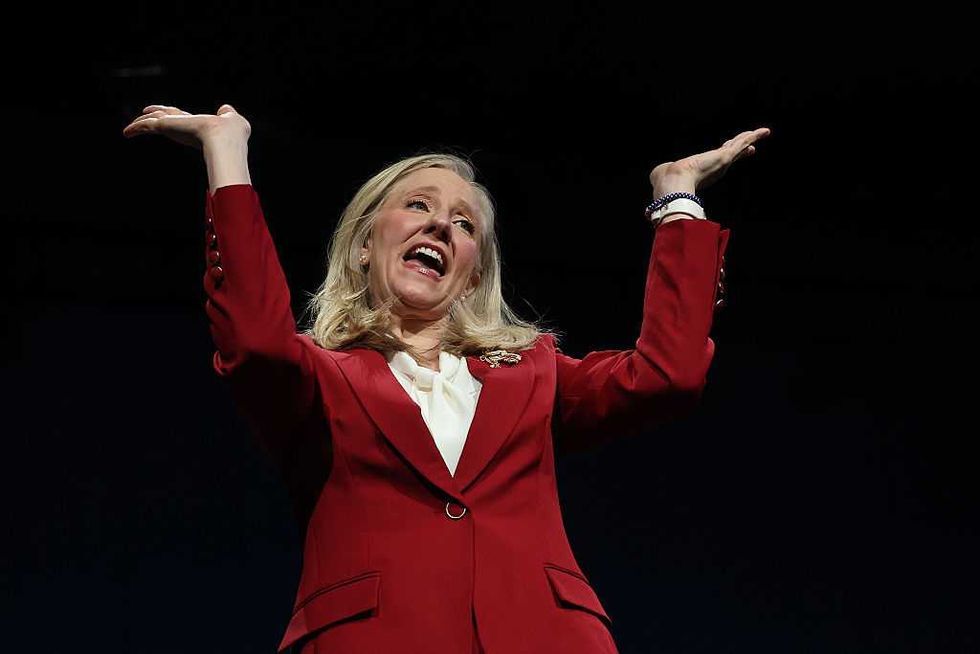
Virginia Gov. Abigail Spanberger (D) provided state Democrats with a big win on Thursday in their ongoing war on the Second Amendment. Despite polls showing earlier this year that Virginians were overwhelmingly opposed, the former CIA officer ratified a ban on so-called "assault firearms."

As of July 1, law-abiding Americans in the Old Dominion will be barred from importing, buying, selling, transferring, or manufacturing:

  • semiautomatic center-fire rifle or pistols with fixed magazine capacities in excess of 15 rounds;
  • semiautomatic center-fire rifles chambered in calibers larger than .22 that have folding, telescoping, or collapsible stocks; thumb-hold stocks or pistol grips that protrude "conspicuously beneath the action of the rifle"; second hand grips that can be held by the non-trigger hand; grenade launchers; and/or threaded barrels capable of accepting a muzzle brake, muzzle compensator, sound suppressor, or a flash suppressor;
  • semiautomatic shotguns that can accept detachable magazines, have a fixed magazine capacity of over 15 rounds, or have collapsible stocks;
  • shotguns with revolving cylinders; and
  • firearms with the capacity to accept a belt ammunition feeding device.

A violation of the ban will be a Class 1 misdemeanor, the most serious misdemeanor level, and someone convicted of such a violation could face up to a year in jail, a $2,500 fine, and be barred from possessing or transporting such firearms for a period of three years.

'Virginia has now joined the minority of radical states to ban these constitutionally protected firearms.'

Democrat state Sen. Saddam Azlan Salim, a Bangladeshi native who came to America in 2000 and served as the gun ban's chief patron, said that "Spanberger's signing of SB749 marks a monumental victory for public safety in the Commonwealth of Virginia."

Salim added that "this law saves lives, and together, we prove that people-powered progress prevails."

The National Rifle Association took legal action just moments after Spanberger ratified the gun ban.

RELATED: Virginia Democrats trying to force through illegal power-grab make ANOTHER humiliating mistake

Win McNamee/Getty Images

John Commerford, executive director of the NRA-Institute for Legislative Action, announced on Thursday the filing of "two critical lawsuits in Virginia — one in federal court, with our friends at the Second Amendment Foundation and Firearms Policy Coalition along with two NRA members, and one in state court, in Washington County, Virginia, along with our state association of Virginia Shooting Sports Association and Middleton Firearms and Training and two NRA members."

"The NRA will not sit idly by while progressive politicians strip the rights of law-abiding citizens, and our world-class legal team is locked, loaded, and ready to shoot down this outrageous gun-control law," said Commerford.

Second Amendment Foundation Executive Director Adam Kraut stated, "It’s wild that lawmakers who each take an oath to uphold the Constitution insist on passing bills purposefully designed to gut it."

"The firearms and magazines banned in this law aren’t bizarre and unusual outliers; they’re among the most commonly owned guns and magazines in the country. They’re owned in the tens of millions by peaceable Americans who use them overwhelmingly lawfully," continued Kraut. "Virginia has now joined the minority of radical states to ban these constitutionally protected firearms and, in so doing, joined the club of states we’re suing over it."

The federal complaint filed in the U.S. District Court for the Eastern District of Virginia by the SAF, FPC, and NRA asserts that the gun ban will infringe upon the Second and 14th Amendment rights of NRA members and other plaintiffs and asks the court to declare that the ban and all related laws, regulations, policies, and procedures violate the right to keep and bear arms as guaranteed under the Constitution.

The Justice Department has also signaled that it will be challenging the gun ban in court.

Like Blaze News? Bypass the censors, sign up for our newsletters, and get stories like this direct to your inbox. Sign up here!

DOJ sues Denver over its ongoing war against the 2nd Amendment — and local Democrats aren't pleased


Denver has for decades impinged upon the Second Amendment rights of its residents.

Since 1989, the city has had a so-called "assault weapons" law on the books that now prohibits the carriage, storage, possession, manufacture, and sale of "any semiautomatic pistol or centerfire rifle, either of which have a fixed or detachable magazine with a capacity of more than fifteen rounds" and "any semiautomatic shotgun with a folding stock or a magazine capacity of more than six rounds."

'The Constitution is not a suggestion.'

According to Denver's Code of Ordinances, the city council that initially advanced the ban determined that the use of "assault weapons poses a threat to the health, safety and security of all citizens" in the city and that restrictions on law-abiding Americans' access to such firearms were both "reasonable and necessary."

The Trump Justice Department demanded in a letter last week that the city repeal the ban, underscoring that it is unconstitutional. Assistant Attorney General Harmeet Dhillon of the DOJ's Civil Rights Division said that failure to comply would likely trigger a lawsuit.

On Monday, the city's attorney, Miko Brown, wrote back to Dhillon, calling the request "baseless, irresponsible, and a clear overreach of the federal government's power."

RELATED: Why the Supreme Court nuked Colorado’s 'Must Stay Gay' law (and what to expect next)

Minh Connors/Washington Post/Getty Images

Democrat Denver Mayor Mike Johnston chimed in, characterizing the DOJ's effort to restore Denverites' rights as intimidation and claiming that the ban "has stood for 37 years because it works, it saves lives, and it reflects the values of our community."

Democrat Councilwoman Serena Gonzales-Gutierrez joined the chorus of fearmongerers, stating both that the Trump administration was trying to deprive students and families of critical "protections" and that "assault weapons take lives — that's what they're made for."

On Tuesday, the DOJ filed a lawsuit with the stated intention of vindicating "the rights of Denver citizens whose rights have been — and are continuing to be — violated."

"The Constitution is not a suggestion and the Second Amendment is not a second-class right," acting Attorney General Todd Blanche said in a statement. "Denver's ban on commonly owned semi-automatic rifles directly violates the right to bear arms."

Citing the standard for applying the Second Amendment outlined in the U.S. Supreme Court's landmark ruling in New York State Rifle & Pistol Association Inc. v. Bruen, the government's complaint asserts that the "Ordinance is presumptively unconstitutional" and that the City of Denver "will not be able to rebut this presumption."

After noting that the Second Amendment protects firearms "typically possessed by law-abiding citizens for lawful purposes that are in 'common use' today" — a protection affirmed by the Supreme Court's decision in District of Columbia v. Heller — the complaint explains that there are at least 28 million AR-style semiautomatic rifles presently in circulation and tens of millions of law-abiding AR-style-rifle owners in the country.

In addition to the numerousness and common use of such weapons, the DOJ's complaint shreds the notion that AR-15-type rifles are the go-to choice for criminals.

When making this point, the DOJ highlighted FBI data showing that whereas there were 364 homicides known to have been committed with rifles of any type in 2019, 6,368 homicides were committed with handguns, 1,476 were committed with knives or other cutting instruments, 600 were committed with hands and feet, and 397 were committed with blunt objects.

Assistant Attorney General Harmeet Dhillon of the DOJ's Civil Rights Division stated, "Law-abiding Americans, regardless of what city or state they reside in, should not have to live under threat of criminal sanction just for exercising their Second Amendment right to possess arms which are owned by tens of millions of their fellow citizens."

Like Blaze News? Bypass the censors, sign up for our newsletters, and get stories like this direct to your inbox. Sign up here!

Not an assassin, not a sniper — just a loser with a rifle


Charlie Kirk’s assassination was an atrocity — for his family, his friends, his supporters, and America. I haven’t been this shaken by the death of someone I didn’t personally know in a long time.

As an ex-U.S. Army Special Operations sniper, I’ve seen a lot of speculation online, and I want to cut through some of the noise. Even following the arrest Friday morning of 22-year-old Tyler Robinson for the crime, people are throwing around claims that this was “state-sponsored” or a “hired hit man paid by a political group.” We don’t know that, nor do we have any evidence pointing to that. In fact, we had ample evidence pointing to somebody just like Robinson: a leftist college dropout.

Charlie Kirk wasn’t taken down by a sniper, or a covert team, or a shadowy state actor. He was killed by a bitter amateur with a rifle and a desperate need to matter.

I won’t call this shooter an “assassin.” That word carries a mystique. It gives a pathetic loser like this validation. He doesn’t deserve the title. He wasn’t an assassin. He wasn’t a sniper. He wasn’t a pro. He was simply an amateur shooter who decided to take a life better than his own and become a killer.

The shot

The facts are simple. The distance was under 200 yards. He used a bolt-action .30-06 Mauser with a scope of at least 8x power. That’s a very easy shot — so easy that I could teach a child to make it in under an hour, and I am not exaggerating at all.

You don’t need military training, hunting experience, or any special skill. The .30-06 is a powerful round, and if you watched the sad, horrific video of Charlie being hit, you saw how devastating it is.

The round appeared to strike Charlie in the neck. Maybe it hit his chest and exited near the neck, but what it didn’t do was hit his head. A professional would have gone for the head. If this killer wanted maximum shock value — which he clearly did — a head shot would have given him that. Either he missed low or he aimed for the chest because he didn’t have the skill level for a headshot.

Either way: amateur hour.

The gun and the tactics

The rifle says it all. A Mauser .30-06 bolt-action is the tool of a casual hunter, not a professional killer. Even on a budget, a serious shooter would have picked better gear. To call that weapon “professional” is laughable. It’s like rolling up to an F1 race in a Honda Accord.

Even more ridiculous than his gear choice were his tactics or lack thereof. He positioned himself on a rooftop in black, wearing a tactical vest. That’s straight from the “Call of Duty in Mom’s basement” playbook. A professional wouldn’t be spotted on camera by kids on the ground asking, “Should someone be up there?”

A pro would have been invisible. Or, if seen, instantly forgettable. He would have used proper urban hiding techniques (I won’t detail them here). He wouldn’t have stood out in black tactical gear. He would have looked like a student or like someone with a legitimate reason to be where he was.

And then there’s the footage — clear, high-quality video of him at the school and hopping fences in a neighborhood. The FBI and local police had his face, which meant, in due course, they had him. This wasn’t a state-sponsored operator or “hit man.” It was an angry lone amateur.

Who he is

When I wrote this column Thursday night, I speculated that the shooter would turn out to be a lonely, angry kid desperate to be somebody. A nobody who wanted attention, validation, fame. He thought killing someone hated by one side of the political spectrum would make him loved by the other. This was about belonging. About being noticed.

And that’s where the media and social media come in. They amplify these monsters. They hand them the spotlight. And for a young man like this, that’s gasoline on the fire.

Sound familiar? Donald Trump barely survived an attempt when another college kid fired at him. Add Luigi Mangione, and that makes three young men in recent memory trying to kill or successfully killing public figures. We’re watching a disturbing trend.

Political assassination — or something new?

Yes, Kirk was killed for his political beliefs. But he wasn’t a politician. He held no office. That’s why this atrocity might mark something new: the first assassination of an influencer.

Think about that. Kirk wasn’t targeted for power, or for policy, but for his ability to influence. If that’s where we are now — where speech alone makes you a target — we’ve stepped into very dangerous territory.

The slippery slope of ‘hateful rhetoric’

Almost immediately, politicians and pundits said, “This is what happens when you use rhetoric like his.” Rep. Ilhan Omar (D-Minn.) went as far as accusing Kirk of posting “hateful rhetoric,” as if that justifies what happened. That logic is as dangerous as the act itself.

If hateful rhetoric makes someone fair game, then by her own standard, someone could make the same judgment about Omar’s words. Would she see her own assassination as justified? Of course not. And that’s the slippery slope: When violence is framed as acceptable because someone decides speech is hateful.

That’s exactly why the First Amendment exists — to protect all speech, even the speech you hate. Because once a group can ban “hateful” speech, they can ban anything they dislike. That’s how dictatorships start. And it’s not a coincidence that the loudest calls to ban “hateful speech” come from people who want more control.

RELATED: Antifa, gay furries, and bomb codes? What the engravings on the Kirk assassination bullets may mean

Photo by MELISSA MAJCHRZAK/AFP via Getty Images

Bottom line: Charlie Kirk wasn’t assassinated by a professional. He wasn’t taken down by a sniper, or a covert team, or a shadowy state actor. He was killed by a bitter amateur with a rifle and a desperate need to matter.

That makes his death no less horrifying — but it should change the way we understand it. Because this wasn’t just about politics. This was about influence, attention, and validation. And it signals a very dark turn in where we are headed.

Ryan Routh's former employee pleads guilty to helping arm Trump's alleged would-be assassin


Ryan Wesley Routh, a cheerleader for a Ukrainian brigade associated with neo-Nazis since its inception, allegedly attempted to assassinate the president at the Trump International Golf Club in West Palm Beach, Florida, on Sept. 15.

On that day, Routh — who made around 20 small donations to Democrats through ActBlue between 2019 and 2020 and whom the Biden Department of Homeland Security declined to investigate despite previous complaints — allegedly took aim at a U.S. Secret Service agent conducting a security sweep with an SKS semiautomatic 7.62x39 caliber rifle with a scope attached and an extended magazine.

One of the two individuals arrested in April and accused by the Department of Justice of selling Routh the same Chinese-made weapon pleaded guilty to firearm trafficking on Monday.

Acting U.S. Attorney Randall Galyon of the Middle District of North Carolina alleged in a pair of court filings — one in May and another last week — that Tina Brown Cooper, who ultimately entered the guilty plea, agreed and conspired with Ronnie Jay Oxendine, her former employer, to "sell and dispose of a firearm to a prohibited person (Routh)."

Cooper set up the deal despite knowing that Routh had previously been charged with multiple felonies after threatening to blow up a police station.

In a Sept. 22 interview with FBI agents, Oxendine allegedly indicated that he met Routh in the 1990s, when they both owned roofing companies, and that they periodically crossed paths at hardware supply stores. Cooper separately indicated that she had known Routh since approximately 1999 and had worked for his company, United Roofing.

Around mid-July 2024, Cooper asked her then-employer, Oxendine, whether he had any guns for sale, then later informed him in a July 27 text message that Routh was making his way to Greensboro, North Carolina, and wanted to meet, court documents said.

RELATED: Leftists normalizing 'assassination culture' — majority view violence against Trump as justified: Report

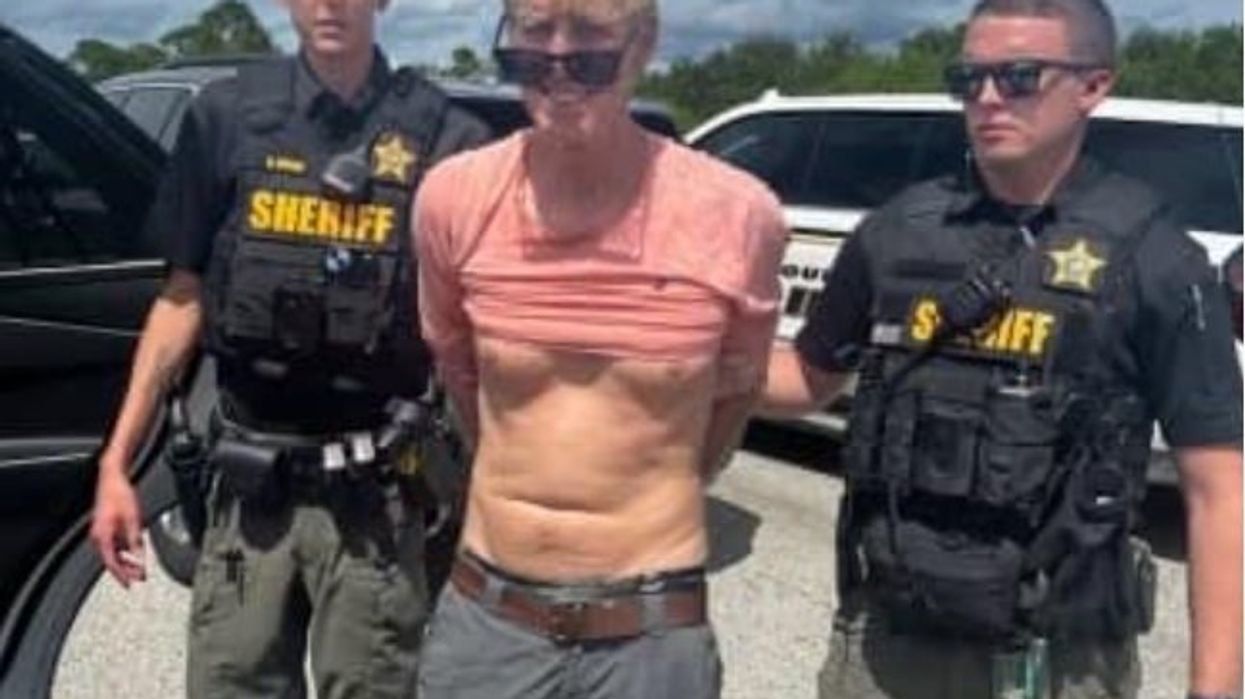
Screenshot of Martin County Sheriff's Office Facebook page

Cooper allegedly told federal agents that Routh called her in July 2024 and indicated he wanted to acquire the weapon for his son to use as protection. When Cooper supposedly suggested Routh just acquire one from a pawnshop, Routh indicated he was unable to do so because he was a convicted felon.

According to the court filing, Cooper asked Oxendine if he had an AK-47 for sale. Oxendine allegedly agreed to sell an SKS rifle, which, while chambered in 7.62x39mm, was not similarly fully automatic.

On Aug. 2, Oxendine allegedly confirmed to Cooper over the phone that he was at his place of business, Oxendine and Son Roofing Company, and had the SKS rifle with him. Cooper turned up with her adult daughter and Routh, the latter of whom allegedly paid Oxendine $350 in cash for the rifle and Cooper $100 for arranging the sale.

Cooper set up the deal despite knowing that Routh had previously been charged with multiple felonies after threatening to blow up a police station, court documents said. The alleged would-be assassin was convicted in 2002 on a possession of a weapon of mass destruction charge, North Carolina Department of Adult Correction records showed.

RELATED: Alleged attempted Trump assassin's political rant revealed in prison letter

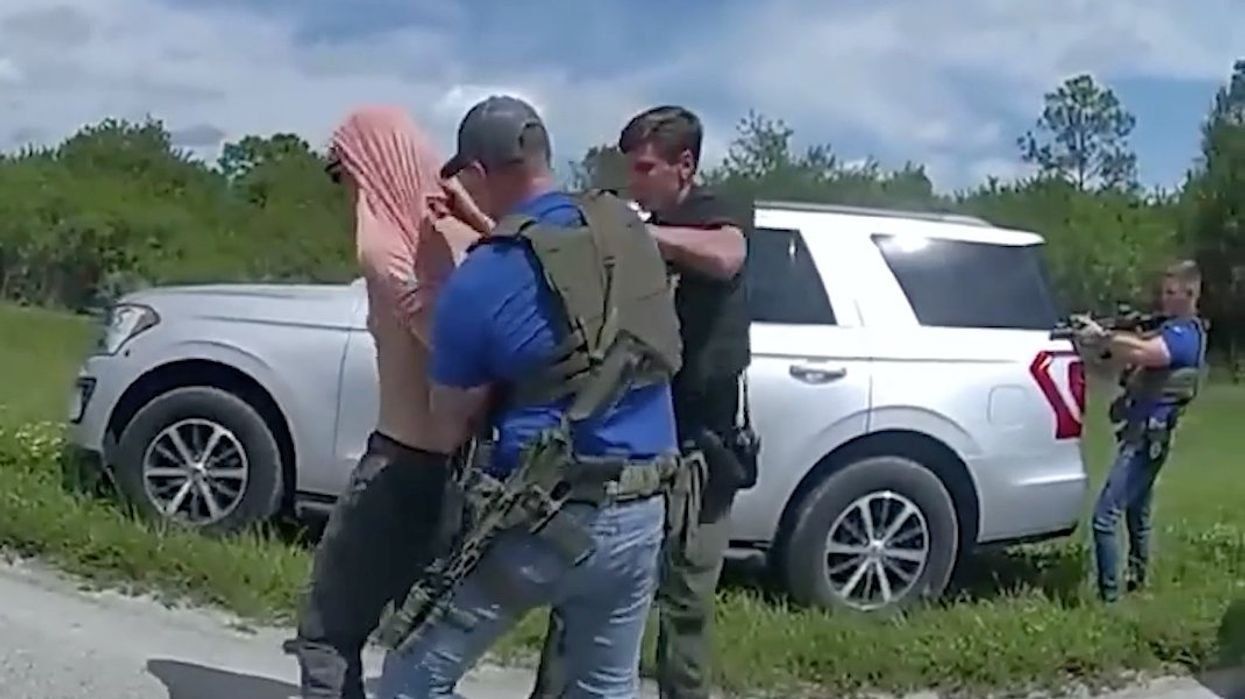
Arrest of Ryan Routh. Photo by Martin County Sheriff's Office / Handout/Anadolu via Getty Images

Cooper — who was apparently chatting with Routh on Facebook Messenger from January 2014 until January 2022 — told FBI agents that upon learning of the alleged assassination attempt on Sept. 15, she deleted the contents of her phone to avoid any traces of involvement.

On Tuesday, the Department of Justice asked the federal court in Florida overseeing Routh's case to admit non-hearsay statements by Cooper as they relate to her alleged efforts to obtain firearms on Routh's behalf.

In the filing, the DOJ also claimed that the trio not only discussed the rifle's serial numbers post-sale, but discussed the matter of possibly also acquiring a .50-caliber rifle for Routh.

Routh filed a motion of his own on Tuesday, requesting a new defense team for his case.

He was charged last year with attempted assassination of a major presidential candidate, possessing a firearm in furtherance of a crime of violence, assaulting a federal officer, illegally possessing a firearm and ammunition, and possession of a firearm with an obliterated serial number. If convicted, Routh could spend the rest of his life in prison.

H/T: Headline USA

Like Blaze News? Bypass the censors, sign up for our newsletters, and get stories like this direct to your inbox. Sign up here!

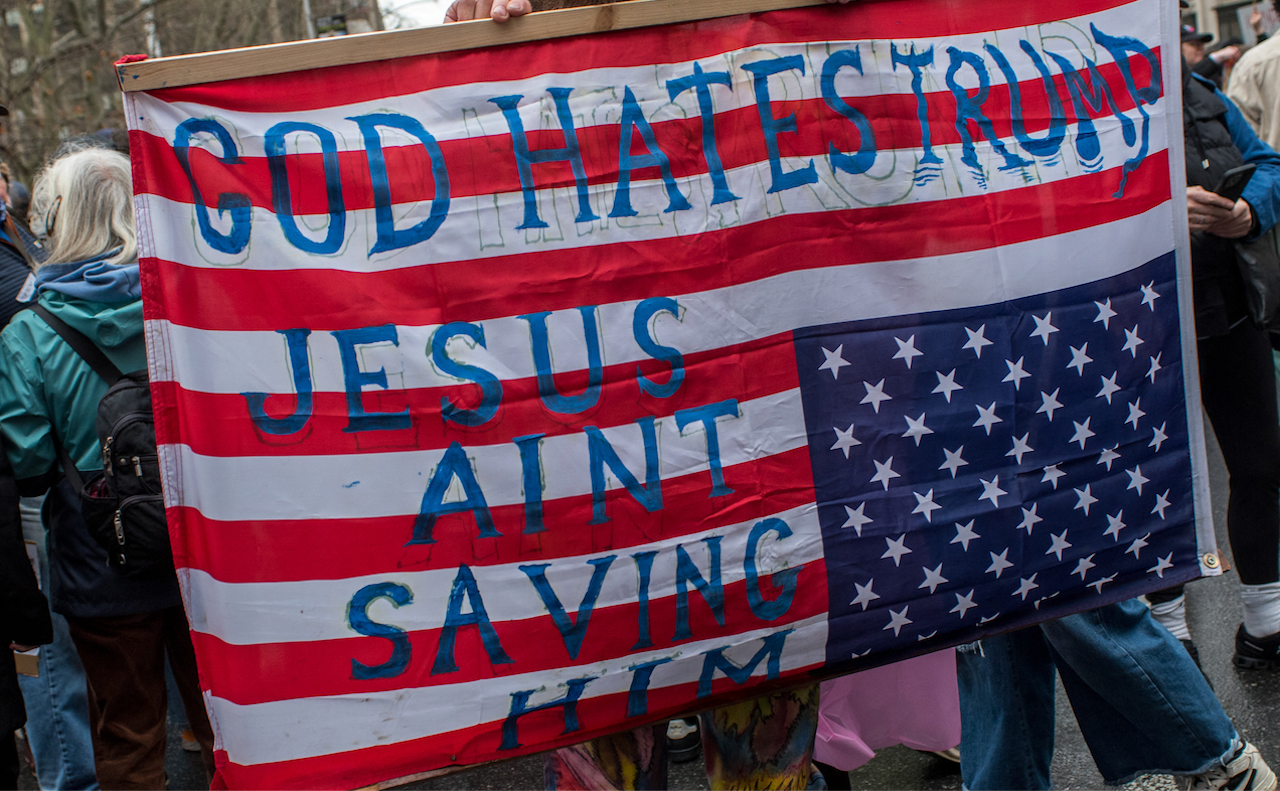
Video: Anti-Trump protester appears to headbutt angry pro-Trump motorist in street — then victim grabs rifle from his truck


An anti-Trump protester appeared to headbutt an angry pro-Trump motorist during a Saturday anti-Trump rally in downtown Lafayette, Indiana, according to video recorded by a Lafayette Journal & Courier reporter.

Video shows the apparent victim — whose nose was bloodied — react by retrieving a rifle from his truck and returning to argue with anti-Trump protesters. The male who appeared to headbutt the pro-Trump motorist ran away, and police told the Journal & Courier they are looking for the alleged attacker.

A witness told the Courier & Journal that the anti-Trump protester who apparently headbutted the pro-Trump motorist 'took off running' after the confrontation.

The paper said hundreds showed up at the Tippecanoe County Courthouse as part of a national "Hands Off! Mass Mobilization" movement, which also occurred at other locations around the United States.

The motorist in question apparently got angry when protesters were crossing Third Street and wouldn't let him turn at the intersection, the paper said, adding that the motorist soon got out of his truck and confronted the protesters.

Video shows the angry motorist — who is bearded and, according to photos in the Journal & Courier story, is wearing a white Make America Great Again hat — pointing his fingers and arguing with a handful of anti-Trump protesters in the street. Soon an anti-Trump protester — who is wearing a half-red, half-black hood — is seen pushing the angry pro-Trump motorist backward before apparently headbutting him.

The pro-Trump motorist briefly reaches for his face, walks out of frame, and then returns with a rifle, confronts the crowd, and hollers for someone to call 911 as he wipes blood from his nose.

A witness told the Courier & Journal that the anti-Trump protester who apparently headbutted the pro-Trump motorist “took off running” after the confrontation.

Arriving police detained the pro-Trump motorist, placed him in the back of a police vehicle, and drove away from the scene, the paper said.

According to the paper, police stated that "during the event, an adult male driver attempted to make a lawful turn at the intersection of Third Street and Columbia Street when his path was obstructed by protesters standing in the roadway. A verbal altercation ensued between the driver and protesters. The situation escalated when the driver exited his vehicle and was subsequently pushed and battered by individuals in the crowd."

Police added that "officers detained the driver due to reports that he had allegedly pointed the firearm at protesters. Officers conducted a thorough investigation and determined that the driver did not point the firearm at anyone and did not commit a crime, the driver was then released," the paper said.

Police said they are seeking the male who headbutted the motorist and are asking those with information to contact them at 765-807-1200, the paper added.

Like Blaze News? Bypass the censors, sign up for our newsletters, and get stories like this direct to your inbox. Sign up here!

Hard target: What I learned at my first nighttime shooting competition


Bullets spilled out of the gun like loose teeth in a nightmare. I squeezed the trigger again: nothing. Then I performed a “tap-rack-bang” — the gun equivalent of blowing into a Nintendo cartridge. Nothing.

Every time I racked the slide, more 9mm rounds tumbled out of the Walther PDP Compact 4. I squeezed the trigger again. More spillage. More teeth.

The range at night was disorienting, a real equalizer. Darkness could downgrade even the most skilled daytime shooters.

I hadn’t expected to dominate my first nighttime shooting competition, but this was ridiculous.

Under the supermoon

It was a windy 55 degrees on the firing line under the glow of a supermoon — the last of 2024. It was my first time at the range after sunset, and there I was, fumbling with a gun like some kind of purple-haired vegan barista.

The moonlight made everything feel dreamlike, glassy, and strange. It was dark. And apparently, I had loaded the rounds into the magazine backward, something I’d like to believe I could never do in daylight.

This wasn’t just my first night shoot; it was my first shooting competition of any kind, even as an observer. While I’ve gone to many ranges over the years, I’ve only made it a habit in the past three months.

The event was hosted by the committee members of my local sportsman's club and the owner of Blackbush Armory, a high-end gun shop specializing in tactical and custom firearms and gear, including all the iconic firearms of history and lore. Typically, the club doesn’t allow shooting when it's dark, but this “Whiteout Shoot” was an exception.

I shot last, so I had time to observe the walkthroughs for each stage and watch the 11 other shooters.

Their spread of gear was magnificent — thousands of dollars’ worth of rifles and pistols and optics and cases and vests and ammo, all laid out like tiny metal fortresses. They were ready for any scenario, but not arrogant about it; happy to help anyone who had shown up less prepared.

Multiple times, guys offered me equipment, advice, and encouragement.

I’d heard about the event from my friend, a gun collector who had previously introduced me to the joy of Henry repeating rifles, and my dad, who didn’t compete. Initially, we’d planned to cover a Sig Sauer event in Oklahoma City, but this local shoot was a more interesting alternative. At the very least, it was a unique way to spend a Saturday night, well worth the $10 entry fee.

Stage 1: Pistol

The course of fire for Stage 1 included three scenarios. First, shoot an array of steel plates horizontally, then shuffle left and knock out vertical targets. Then eject your magazine and fire your last shot at the bull's-eye plate on the left.

The faster, the better. Scores were based on both speed and accuracy. After each shooter finished, the safety officer rattled off numbers to the scorekeepers in the bunker.

The range at night was disorienting, a real equalizer. Darkness could downgrade even the most skilled daytime shooters.

“Just focus on getting out there,” said my friend, handing me a replacement pistol. “And even if you don’t hit a single target, you’ll be all the more successful the next time you hit one. That'll double your accuracy. And most of all, enjoy the big goofy smile you’ll have.”

Miss, miss, miss, miss, miss — PING!

Around the fire

Here we were, a group of heavily armed men, soft-voiced and jovial. The atmosphere was calm, yet focused — a level of tranquility you’d expect at a monastery. We could just as easily have been gathered around a fire in the shadows of a cave, millions of years ago, equipped with the same ancient instincts of survival and camaraderie.

Civilizations need strong men and women on the local level. And by gathering at the gun range on a Saturday night, we expressed faith in the strength of our neighbors. Iron sharpens iron. Trust is enacted, not invoked — actions, not words.

Because here’s a truth about gun culture: This joy is rooted in discipline and protocol.

Safety protocol was strictly enforced. This was a cold range, meaning all firearms had to remain unloaded unless the competitor was under the direction of a range officer. The rest of the time, you stayed behind the red line, away from your weapons.

The event organizers had even notified the sheriff that we’d be shooting at night, in case anyone reported gunshots. Odds are, nobody did — most people were still blasting fireworks every night to celebrate Trump’s landslide victory nine days earlier.

The youngest competitor was 16, shooting alongside his grandfather. The rest of us spread across every decade in between them. Among the group were a former pilot, an entrepreneur, a sheriff, and a professional drummer.

Stage 2: Rifle

Rifles make more sense to me than handguns. They feel natural. So I was less nervous heading into Stage 2, although a vague static lingered in my mind.

The gun shop owner, serving as safety officer, was calm and encouraging. He told me about “sweeping,” accidentally pointing the rifle uprange toward the guys. “Keep your muzzle forward,” he said, adding humbly that he’d once been disqualified for this exact mistake.

“Make ready.”

Magazine in. Bolt back.

BEEP.

In Stage 2, you began crouched behind an obstacle in a surrender position (hands raised, rifle slung on your back). Lean left around the barricade, flip the flashlight on, and fire two shots at the first cardboard target. Then scoot right to the next target.

To my relief, the motions felt natural. The anxiety dissipated.

Next, lean right, two shots, then move to the final target — a hostage situation. The “hostage” was a cardboard cutout nicknamed Macaulay Culkin being manhandled by a “terrorist,” a featureless paper cutout. The challenge was to hit the bad guy without blasting Macaulay to Neverland.

Lost in the cosmos

Heading into the final stage, everyone had talked a lot about the cosmos. It felt like the moon was within reach, glorified by a rainbow-like crown. Low-flying propeller planes puttered toward the local airport, just northwest of the hilltop casino. Everything around us could be charted by its trajectory and velocity.

Guns have only been around for the past millennium or so. But their lineage runs much deeper, and political actors often ignore this reality. Use of weapons preceded the discovery of fire. Early humans were strapped with spears, clubs, and hammers.

This military mindset accelerated civilization and led to political order.

Humanity has always advanced at the pace of its weapons. Some tools spread by innovation, others by necessity or force. Guns were the latter. Societies without them had no choice but to adapt or surrender.

The invention of the ship is also the invention of the shipwreck. Guns deliver godlike power. So our handling of them has to be grounded in clear-cut morality.

Gun culture is misunderstood in this respect. It’s not primarily a political movement; it’s a communion with the past, a metric of the technological present. Some collectors find meaning in cars or cameras. Guns are different. They aren’t just artifacts; they’re instruments of life and death, protection and apocalypse.

Stage 3: Rifle and pistol

The final stage required both rifle and pistol. We moved to the skeet-shooting area on the other side of the range. The entire field was volcanic, crowded with the bright orange clay discs that trap and skeet shooters substitute for birds.

Each step disrupted the rubble. “That’s the crunch of shattered pigeons,” said the kind extrovert who, like many of the guys, had been giving me advice and encouragement.

“Maybe I’ll just do the rifle part,” I suggested. “I don’t feel great about the pistol part.”

“Don’t,” said the kind extrovert. “It’s worth it to challenge yourself. Pistols are work; rifles are fun. The real competition is with yourself.”

The course of fire involved two scenarios, ending with a target shaped like a goat.

The ricochet sparks of bullets against steel lit up the dark. And a red light flashed any time you hit a target.

When it was my turn, I surprised myself by hitting all but one pistol target. The lads cheered.

Then I strode left. Crouched, grabbed the rifle, readied to fire, and — nothing. The night ended with a rifle jam — fitting, given how my evening started. But this time, it was mechanical, not ignorance. “That’s a major malfunction,” said the safety officer. Then he helped fix it nonchalantly.

Ping-ping. Ping. Now for the finale. I took a breath, fired. The shot grazed the goat, but I ended the night with a goofy smile that matched my friend’s prediction.

By the end of the competition, what began as three distinct groups had coalesced into a single community. Moments like these are a crucial reminder for an era trapped in a permanent state of revolution: Any civilized society is armed to the teeth.
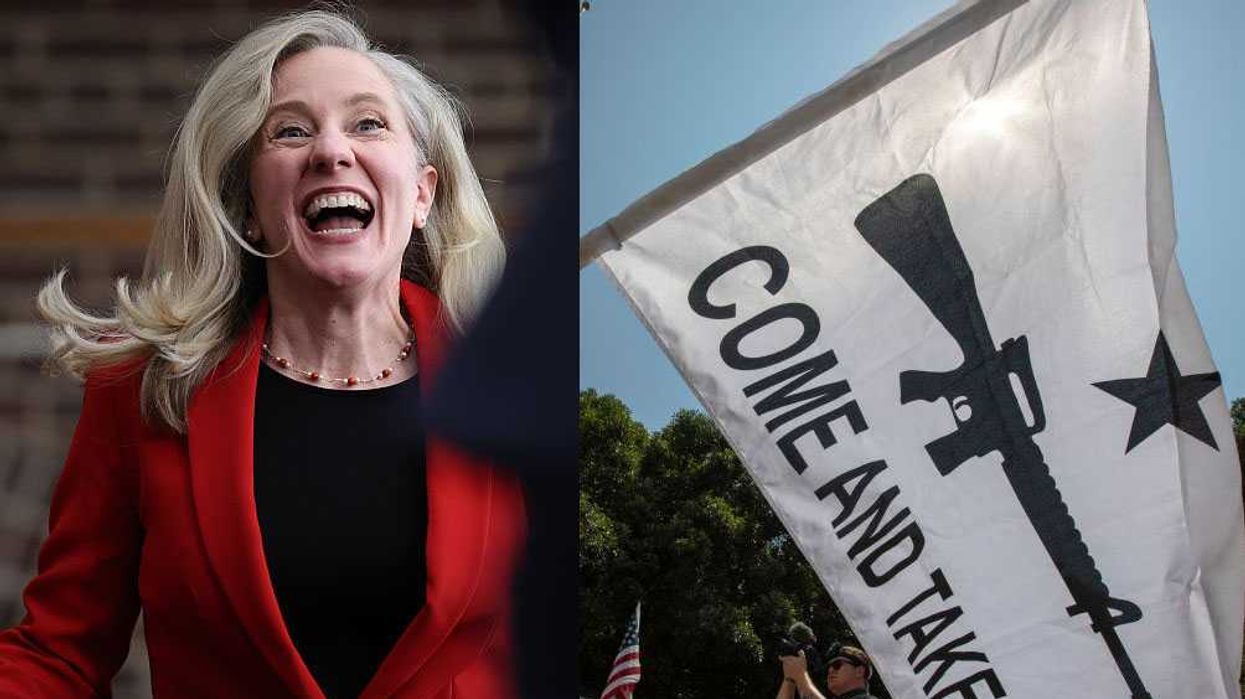
Virginia Gov. Youngkin vetoes 30 anti-gun bills, keeping law-abiding citizens armed and Democrats angry


Virginia Gov. Glenn Youngkin (R) blew away 30 bills this week that he figured encroached on the rights of law-abiding citizens, including a Democratic bill prohibiting the sale or possession of new so-called "assault" rifles.

Among the bills Youngkin ultimately shot down were:

  • HB 2, a Democratic bill that would ban the sale or possession of new "assault rifles";
  • HB 454, a Democratic bill that would have criminalized an otherwise law-abiding citizen's possession of a firearm in a building owned or operated by a college or university — which Youngkin noted was unnecessary granted the present ability of institutions of higher education to implement prohibitions on their respective campuses;
  • HB 585, a Democratic bill that would have barred firearms sales within 1.5 miles of an elementary or middle school — which the governor said appeared "unconstitutional, retaliatory, and arbitrary";
  • HB 799, a Democratic bill that would have required the submission of fingerprints with an application for a concealed handgun permit or permit renewal — which Youngkin said "targets individuals already subject to background checks and mandatory training, creating superfluous and onerous restrictions on responsible citizens exercising their Second Amendment right to self-defense";
  • SB 273, a Democratic bill that would have required a waiting period to purchase a firearm — which Youngkin said would "impede individuals facing threats of violence from promptly acquiring a firearm for self-defense";
  • HB 798, a Democratic bill that would have barred Virginians with a misdemeanor conviction of assault and battery or stalking from purchasing, possessing, or transporting a firearm;
  • SB 99, a Democratic bill that would have banned the carrying of so-called "assault firearms" in public areas; and
  • SB 327, a Democratic bill prohibiting any American under the age of 21 from purchasing a handgun or "assault firearm" — which Youngkin indicated would render meaningless the constitutionally protected right to possess a firearm for those under 21.

The Washington Post noted that in Youngkin's first two years in office, Republican lawmakers successfully prevented gun-grab legislation from advancing in the House of Delegates. This spared the governor from having to evidence his support for the Second Amendment.

However, with majorities in both the state House and Senate, Democrats apparently figured they could advance their agenda or at the very least expose the governor as a defender of the Constitution.

Youngkin said in a statement, "I swore an oath to defend the Constitution of the United States of America and the Constitution of Virginia, and that absolutely includes protecting the right of law-abiding Virginians to keep and bear arms."

The governor did, however, ratify a bill preventing parents from "willfully allowing a child who poses a credible threat of violence to access a firearm" as well as a bill banning the manufacture, transfer, or possession of an auto sear — a device that converts semi-automatic firearms into automatic weapons. Neither of these bills were opposed by the Citizens Defense League.

"I am pleased to sign four public safety bills which are commonsense reforms with significant bipartisan support from the General Assembly, and offer recommendations to several bills which, if adopted, will make it harder for criminals to use guns in the commission of a violent act," added Youngkin.

The governor's vetoes were not well received by Democratic lawmakers, who do not have two-thirds majorities required to override them.

Democratic state Sen. Creigh Deeds complained on X, writing, "2 more of my bills, prospectively banning assault style weapons, and keeping guns off college campuses are being vetoed. Shameful and unthinking action!"

Deeds' colleague, state Sen. Mamie Locke (D), responded, "Consider the source. Guns for everybody, no redemption for anyone, suppress the vote and voters and tax cuts for millionaires. Who's backwards?"

Heather Williams, the president of the Democratic Legislative Campaign Committee, claimed, "Republicans continue to make it clear that they care more about guns than people."

The National Rifle Association, on the other hand, lauded Youngkin's resolve.

"Governor Glenn Youngkin's courageous veto of dozens of ill-conceived gun control bills is a resounding victory for the Second Amendment in Virginia," Randy Kozuch, NRA executive director, said in a statement obtained by Fox News Digital.

"His refusal to bow to unconstitutional overreach — stopping widespread bans on semi-automatic firearms, blocking ill-conceived laws like arbitrary waiting periods, and unjust age restrictions — underscores his fierce commitment to safeguarding our fundamental rights," continued Kozuch. "This is a clear message: Virginia stands firm against the erosion of our liberties."

Like Blaze News? Bypass the censors, sign up for our newsletters, and get stories like this direct to your inbox. Sign up here!

Rifle-toting intruder forces his way into home in middle of night. Homeowner puts him in chokehold; cops find intruder dead.


A rifle-toting intruder forced his way into home in Midland, Texas, early Saturday morning — but the homeowner put the intruder in chokehold, and police said they found the intruder dead.

What are the details?

Midland police said George Samuel Butler, 37, entered a home in the 1400 block of Daventry Place “by force with a rifle," MRT.com reported, after which the homeowner placed the suspect in a chokehold "in an apparent case of self-defense."

Police said they responded to the scene just after 4 a.m. after a report of a disturbance with weapons and found Butler dead, the outlet added.

MRT.com noted that the police department's Crimes Against Persons Unit and Crime Scene Unit also responded to the scene, next of kin were notified, and the investigation into the fatality continued.

Not the first instance

MRT.com added that Butler was previously arrested for burglarizing a home in Midland.

The outlet, citing police, said a woman stated in July 2022 that "Butler had kicked in her front door."

Arriving police said officers saw Butler through windows of a residence searching a room and looking under beds — and cops also saw pieces of the front door frame hanging, MRT.com reported.

More from the outlet:

Officers made several announcements for Butler to exit the residence, but he refused and shut the door, preventing officers from conducting their duties. When officers entered the residence and attempted to place him in handcuffs, Butler started fighting an officer and placed him in a headlock. The officer was able to take Butler to the ground before placing him, with the help of other officers, in handcuffs. The officer also sustained a bloody nose.

MRT.com said Butler was arrested for assault on a peace officer/judge, a second-degree felony; burglary of habitations, a second-degree felony; and two misdemeanor charges. The outlet reported that he was held on a $57,000 bond.

Like Blaze News? Bypass the censors, sign up for our newsletters, and get stories like this direct to your inbox. Sign up here!

Federal judge once again deems California's 'assault weapons' ban unconstitutional, noting 'guns in the hands of law-abiding responsible citizens are necessary'


A federal judge ruled Thursday against California's so-called "assault weapons" ban, reaffirming law-abiding citizens' right to defend themselves in the crime-ridden Democrat-run state.

U.S. District Court Judge Roger Benitez stressed once again that the ban and related statutes were unconstitutional, serving not only to trample Americans' Second Amendment rights but also to leave them outgunned by criminals to whom such laws mean nothing.

The background

The Roberti-Roos Assault Weapons Control Act of 1989 made it such than any firearm on a list specified in the state's penal code was considered an "assault weapon." Such firearms became illegal to purchase, keep for sale, offer for sale, expose for sale, give, lend, manufacture, distribute, or import. Additional prohibitions were built atop this act over time.

Benitez previously struck down the ban in 2021, noting, "Like the Swiss Army Knife, the popular AR-15 rifle is a perfect combination of home defense weapon and homeland defense equipment. ... Yet, the State of California makes it a crime to have an AR-15 type rifle. Therefore, this Court declares the California statutes to be unconstitutional."

State Attorney General Rob Bonta appealed the ruling and petitioned for a stay. The Ninth Circuit subsequently put a hold on Benitez's ruling. Following the U.S. Supreme Court's 2022 reaffirmation of Americans' Second Amendment Rights in New York State Rifle & Pistol Association, Inc. v. Bruen, the Ninth Circuit remanded the case back to the federal district court on Aug. 1, 2022.

This week, Benitez ruled on the remanded case.

The ruling

Judge Benitez's Thursday decision greatly resembled his previous ruling, although this time around he opted for a Bowie knife in his opening metaphor contra the Swiss Army knife from before.

"Like the Bowie Knife which was commonly carried by citizens and soldiers in the 1800s, 'assault weapons' are dangerous, but useful. But unlike the Bowie Knife, the United States Supreme Court has said, '[t]here is a long tradition of widespread lawful gun ownership by private individuals in this country,'" wrote Benitez.

"The American tradition is rich and deep in protecting a citizen's enduring right to keep and bear common arms like rifles, shotguns, and pistols," continued the judge. "The 'assault weapon' prohibition has no historical pedigree and it is extreme."

The judge, who just weeks ago ruled against California's high-capacity magazine ban, also noted that law-abiding Americans have an interest in not being "outgunned" by the state's many criminals, particularly when "crime happens a lot."

Benitez also noted that those seeking to trample the Second Amendment tend to focus on stories of criminal gun use, but neglect the millions of instances in which law-abiding citizens use firearms to save innocent lives and restore order.

In his conclusion, Benitez wrote, "The State's attempt to ban these popular firearms creates the extreme policy that a handful of criminals can dictate the conduct and infringe on the freedom of law-abiding citizens. ... There is only one policy enshrined in the Bill of Rights. Guns and ammunition in the hands of criminals, tyrants and terrorists are dangerous; guns in the hands of law-abiding responsible citizens are necessary."

Deeming the ban unconstitutional, he struck it down. Benitez did, however, grant the state 10 days to seek a stay from the Court of Appeals.

The reaction

Gov. Newsom called the ruling "radical," suggesting that Benitez's comparison of a rifle to a Bowie knife "is a direct insult to every victim of a mass shooting and their families."

"Californians’ elected representatives decided almost 35 years ago that weapons of war have no place in our communities. Today, Judge Benitez decided that he knows better, public safety be damned," continued Newsom. "Judge Benitez is hellbent on making it more dangerous for our kids to go to school, for families to go to the mall, or to attend a place of worship. We are working with Attorney General Rob Bonta to fight this extreme and logically incoherent ruling and keep California safer, but we should not have to go get Judge Benitez overturned every time he decides to write a love letter to the gun lobby."

Bonta claimed in a statement that the decision was "dangerous and misguided," vowing to "work vigorously to reverse it on appeal."

John Dillon, an attorney for the pro-Constitution plaintiffs who sued to overturn the ban, indicated his clients were "very happy" about the decision, reported the Los Angeles Times.

"It seems like the court has applied the standards properly and correctly. There's no doubt about it," said Dillon. "We're glad that our plaintiffs' rights are going to be respected."

According to the CATO Institute's "Freedom in the 50 States" index, California is second-last in the country in terms of gun rights.

Like Blaze News? Bypass the censors, sign up for our newsletters, and get stories like this direct to your inbox. Sign up here!

Exclusive: Texas Lawsuit Could Freeze Biden’s Attempt To Turn Pistol Brace Owners Into Felons, With New Injunction Request

Paxton argues the regulation unconstitutionally taxes citizens for exercising their Second Amendment rights, is arbitrary and capricious, and is unconstitutionally vague.