Memo To Senate: Saving America’s Elections Is Your No. 1 Job Right Now
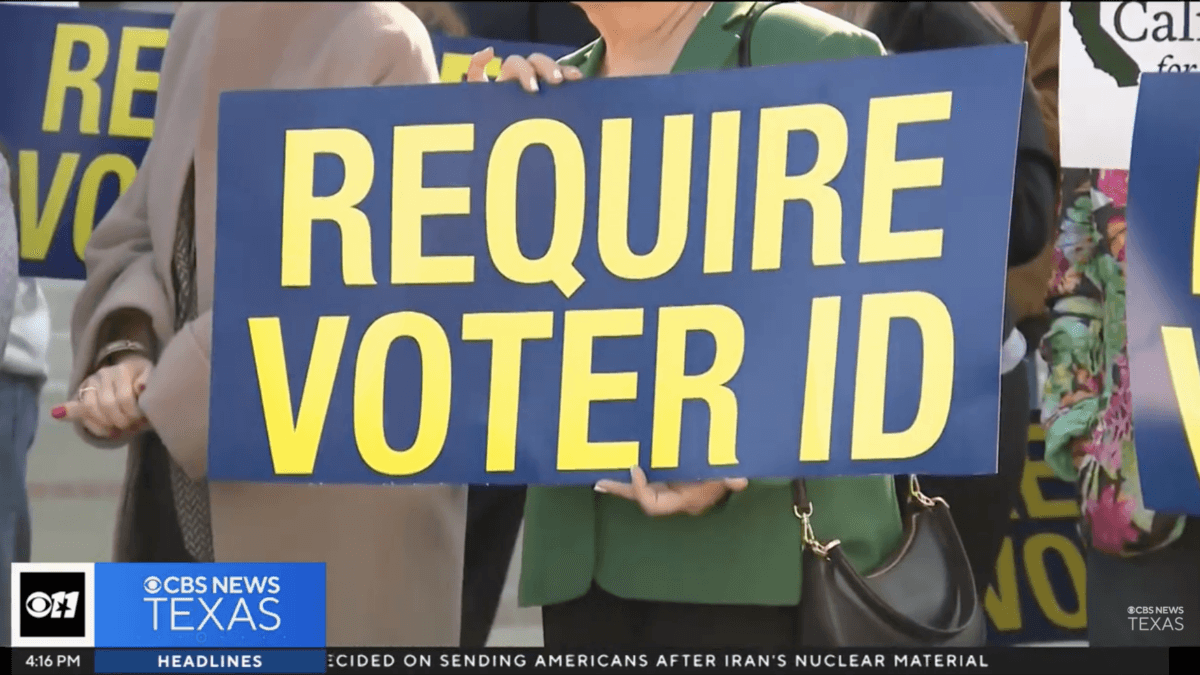 Americans who believe voter verification is essential to free and fair elections need to contact senators now and let them know.
Texas Rep. Dan Crenshaw was overwhelming rejected by voters on March 3 in his state's Republican primary. Crenshaw — whose notably conservative opponent, state Rep. Steve Toth, handily secured over 57% of the total vote — has apparently decided to blame voters for his defeat, claiming that they were misled and failed to come out in sufficient numbers.
CBS News' Margaret Brennan, the liberal talking head who suggested last year that free speech was responsible for the Holocaust, asked Crenshaw on Sunday to unpack his concerns "about this culture of misinformation we're living in."
'In Crenshaw’s case, the problem wasn’t misinformation, but repeated exposure to information.'
Crenshaw, who previously blamed the loss on his branding as "Red Flag Law Crenshaw" and allegations of insider trading, told Brennan, "I'm a unique Republican. You know, I've been the target of online smears and conspiracies for a very long time. My election was basically a product of that."
"First of all, you have about 20% of Republican voters bothering to even vote at a primary, and then you have dozens of online smears and conspiracies that people were going into the voting booth actually believing," continued Crenshaw. "I mean, believing that I was worth millions of dollars from insider trading. Doesn't matter how many times we thought we had debunked that, or that other people and influencers and what have not have debunked it, all of these things, people still went in believing it."
Crenshaw said that "ultimately, this is a question for the American people: Are you going to believe everything you read online or that's sent to you in your mail?"
Crenshaw previously told the Texas Tribune, "A large part of this election was about the power of clickbait."
"Memes became truth. Too many people are not discerning through the clickbait," continued Crenshaw. "People voting — one after the other — literally thought I was making millions in the stock market doing inside trading. Even though I haven’t made a trade in three years. I’ve made under $46,000 over my entire seven years in office. The truth didn’t matter to people."
Crenshaw, faulted by some critics over his insistence that President Donald Trump lost the 2020 election and his Jan. 6 commentary, told the paper that "telling the truth thing" is regarded as "a real crime" among some voters.
Trump adviser Alex Bruesewitz said in response to Crenshaw's remarks to Brennan, "Dan Crenshaw begins to audition for a left-leaning TV commentary gig following his blow out loss."
Wade Miller, executive director of the Center for Renewing America, wrote, "I think in Crenshaw’s case, the problem wasn’t misinformation, but repeated exposure to information and Dan’s own condescending attitude."
Ben Larrabee, a data analyst with Turning Point Action's Chase the Vote initiative, said that contrary to Crenshaw's framing, the reason the congressman lost was that in 2018 and in 2020, "His district had a CPV of R+11, so it was redistricted to an R+15. And as Crenshaw's voting record worsened over time, his new conservative base started voting for a more conservative representative. Ain't more complicated than that."
Like Blaze News? Bypass the censors, sign up for our newsletters, and get stories like this direct to your inbox. Sign up here!
Texas just had a primary election, and the message from voters could not have been clearer: A large share of Republicans are done with incumbent Senator John Cornyn.
After years of frustration with the longtime senator, voters forced a runoff between Cornyn and Texas Attorney General Ken Paxton. Cornyn may have finished with the largest vote total, but the numbers behind that result tell a more revealing story.
Cornyn will now have to defend his record directly to Republican voters who have grown skeptical of his leadership.
Cornyn received roughly 907,000 votes out of more than 2 million total votes cast in the Republican primary. That means over a million Texans showed up to vote for someone other than the incumbent senator. The difference between Cornyn and Paxton was only about 26,000 votes — a razor-thin margin in a state as big as Texas.
Then there is Wesley Hunt, who drew nearly 293,000 votes. Combine the Paxton and Hunt totals, and more than 1.1 million voters cast ballots against John Cornyn.
After all the money Cornyn poured into the race, that should have been the headline.
Cornyn and his allies reportedly spent close to $100 million between campaign spending and super PAC support. Nearly $100 million to hold on to a Senate seat — and the result was a runoff. Paxton spent a fraction of that amount, about $4 million, and still came within striking distance. Put another way, Cornyn spent $129 per vote against Paxton’s $3.79 per vote.
That is not the performance of a senator who commands overwhelming support in his own party. It looks like a political establishment trying to prop up a candidate who has worn out his welcome with grassroots voters.
Yet despite the message voters sent, Washington may be preparing to rescue Cornyn anyway.
President Donald Trump posted on Truth Social that he would soon make an endorsement in the runoff and would ask the candidate he does not choose to drop out of the race immediately.
You would struggle to find many people who have been as outspoken in support of President Trump as I have. I have defended him when the media attacked him and stood by him through years of political backlash. But I still take offense at anyone in the federal government trying to manipulate a Texas election.
Texas has a runoff system for a reason. When no candidate receives a majority, the top two candidates go back to the voters. It forces candidates to earn a true majority rather than slide through a divided field.
Cutting that process short to protect an incumbent senator who just failed to win an outright majority defeats the entire purpose.
It also ignores a political reality that has fueled so much frustration: Cornyn has spent years drifting away from the conservative voters he is supposed to represent.
Cornyn has cultivated a reputation as a Washington dealmaker, working across the aisle and negotiating major legislation with Democrats. That may earn praise from Senate leadership and the political class in Washington, but it has increasingly alienated conservatives back home.
Cornyn’s relationship with Trump has also been anything but consistent. During the lead-up to the 2024 election, Cornyn questioned Trump’s ability to win a general election and suggested Republicans might need a different nominee. He said Trump’s “time has passed him by” and argued the party needed someone who could appeal beyond Trump’s base.
RELATED: America should eliminate the H-1B and replace it with THIS
Statements like that do not disappear just because campaign season arrives.
Ken Paxton’s record with Trump tells a different story. When the political establishment turned on the former president after the 2020 election, Paxton stood with him. He challenged election procedures in court and took enormous political heat for doing so. Paxton absorbed the backlash anyway.
That loyalty is one reason grassroots conservatives rallied behind him in the primary.
And it brings the conversation back to the runoff itself.
Primary night showed that a majority of Republican voters were willing to vote for someone other than John Cornyn. Even after nearly $100 million in support, the incumbent could not clear the threshold needed to avoid a second round.
That fact should make Washington pause before rushing in to protect him.
The runoff exists so voters can finish the conversation they started on primary night. Cornyn will now have to defend his record directly to Republican voters who have grown skeptical of his leadership. Paxton will argue, and rightly so, that Texas deserves a senator who fights the establishment rather than manages it.
Those arguments belong in Texas, in front of Texas voters.
Cornyn has had decades in Washington to prove himself. The primary results suggest a growing number of Texans think that time has passed him by.
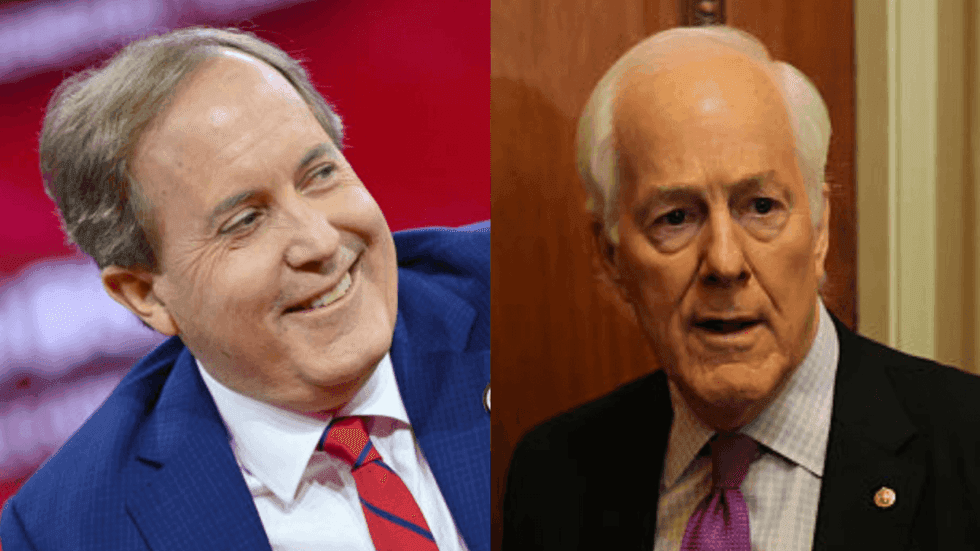
Texas Attorney General Ken Paxton's challenge to incumbent Sen. John Cornyn went unresolved in Tuesday's heated Republican primary race, as neither candidate proved able to secure 50% of the total vote.
With over 95% of the votes in as of Wednesday afternoon, Cornyn leads Paxton 41.9% to 40.7%, reported the Associated Press.
'We must win in November.'
Several hours after the Cornyn campaign stated on social media that "Judgement Day is coming for Ken Paxton," President Donald Trump announced that he would be staging an intervention and handpicking which of the two candidates — each of whom netted the support of approximately 900,000 Texans — he wants to compete against Texas state Rep. James Talarico (D) in the general election.
Trump stated that the GOP primary race in Texas "cannot, for the good of the Party, and our Country, itself, be allowed to go on any longer. IT MUST STOP NOW!"
Claiming that his GOP endorsements have "been virtually insurmountable," Trump said that he will be endorsing one of the two candidates imminently and asking the disfavored candidate "to immediately DROP OUT OF THE RACE!"
"We have an easy to beat, Radical Left Opponent, and we have to TOTALLY FOCUS on putting him away, quickly and decisively!" continued the president, referring to Talarico. "Both John and Ken ran great races, but not good enough. Now, this one, must be PERFECT!"
RELATED: Chip Roy's political future uncertain after nail-biting Texas AG race
"We must win in November!" he concluded.
The runoff election will be held on May 26 in the event that both candidates remain in the race.
On Wednesday afternoon, Paxton tweeted, "Last night, in a historic failure for John Cornyn, he failed to get nearly 60% of the GOP vote after spending $100 million. It's time to finish the job in the runoff."
Like Blaze News? Bypass the censors, sign up for our newsletters, and get stories like this direct to your inbox. Sign up here!Imagine what the Republican Party would have looked like had President Trump been endorsing conservative reformers down-ballot rather than milquetoast RINOs backed by special interests for five consecutive cycles.
In 2016, President Trump stormed the corporatist castle of the country-club GOP. But over the next five election cycles, he pulled up the rope ladder behind him. He left the reinforcements outside the gates, which crushed his ability to deliver on his promises in his first term. It also allowed generic Republicans to ride his brand while drifting away from his original America First message.
Conservatives understand that competition improves a product. When Trump protects incumbents from primary pressure, he guarantees that the party never improves.
Now he is making the same mistake in his second term by backing status-quo, corporatist Republicans in key races.
The opening months of 2026 should be the Super Bowl of primaries for the right. Vulnerable establishment Republicans and open seats sit on the board across solid red states — for Senate and governor.
Even if Republicans struggle in swing states, Trump could still lock in a generation of red-state power by backing grassroots conservatives in open seats and insurgents challenging weak incumbents.
Instead, he keeps yanking the rug out from under his own base.
Over the weekend, the president endorsed Rep. Julia Letlow (R-La.) for U.S. Senate in Louisiana. Until now, Trump has refused to back conservatives against incumbents — except when he endorsed against Freedom Caucus Chairman Rep. Bob Good of Virginia in 2024.
So yes, Trump finally moved against Sen. Bill Cassidy, a pro-COVID-vaccine liberal wasting a conservative seat. But he waited until more conservative candidates — state Treasurer John Fleming, state Sen. Blake Miguez, and state Rep. Julie Emerson — softened Cassidy up. Then Trump picked a challenger who matches Cassidy’s worldview in a prettier package.
Letlow sides with Cassidy on government-run health care and the COVID vaccines. She also voted against penalizing FDA officials for unlawfully expanding access to mifepristone. Trump carried Louisiana by 22 points and won 57 of 64 parishes. He could have used his clout to elect a conservative stalwart like Miguez. Instead, he chose another version of the same problem.
RELATED: Voters won’t buy ‘freedom in Iran’ while Minneapolis goes lawless
If Democrats regain Washington, governors become the last real barrier against federal abuse. Red-state governors will matter more than ever, especially if Democrats install a weaponized Gavin Newsom-style agenda at the national level.
After Ron DeSantis turned Florida from swing state into the red-state model, Republicans should be building an entire bench of governors who make even DeSantis look tame. But Trump’s endorsement habits keep locking in mediocrity. In Florida, he is backing Byron Donalds — a favorite of the legislative RINOs who fought DeSantis for years.
Fourteen governorships are up in states Republicans should win even in a rough year: Alabama, Alaska, Florida, Iowa, Idaho, Kansas, Nebraska, Ohio, Oklahoma, South Carolina, South Dakota, Tennessee, Texas, and Wyoming. Trump hasn’t made one bold, movement-building endorsement as he did with DeSantis in 2018. Instead, he has already pre-emptively endorsed Idaho Gov. Brad Little for a third term and Texas Gov. Greg Abbott for a fourth.
Trump has started interfering even in state legislative races. In Texas, Republicans cut a deal with Democrats and installed Dustin Burrows as speaker against the will of most of the party. Burrows rewarded them by handing committees to Democrats and killing conservative priorities.
When conservatives moved to defeat the traitors, Trump carpet-bombed the effort by endorsing Burrows and his lieutenants for re-election.
Conservatives understand that competition improves a product. Trump keeps canceling that competition. When he protects incumbents from primary pressure, he guarantees that the party never improves.
President Donald Trump has vowed to "take out" the Republican leader in the Indiana Senate for failing to enact the administration's preferred congressional map.
With the 2026 primaries fast approaching, Republicans and Democrats have been gone head-to-head in several states over congressional redistricting. While both parties have seen some success in redrawing districts to their partisan benefit, Indiana Senate Majority Leader Rod Bray's chamber struck down a new map that would have created two red congressional seats.
'Republican's House majority continues to shrink.'
"I was with David McIntosh of the Club for Growth, and we agreed that we will both work tirelessly together to take out Indiana Senate Majority Leader Rod Bray, a total RINO, who betrayed the Republican Party, the President of the United States, and everyone else who wants to, MAKE AMERICA GREAT AGAIN!" Trump said in a Truth Social Post.
"We’re after you Bray, like no one has ever come after you before!"
RELATED: Vance casts tiebreaking war powers vote after Republicans betray Trump
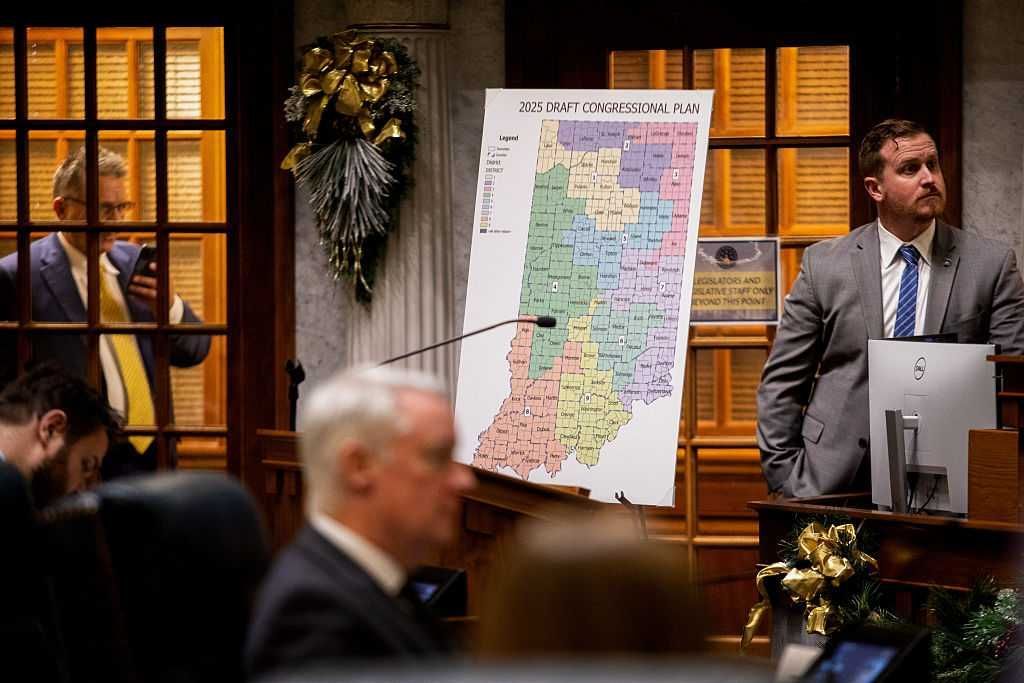
McIntosh confirmed Trump's statement, saying he and the president are "aligned."
"Rod Bray is going down," McIntosh said in a post on X.
Trump's frustration with Bray comes as the Republicans' House majority continues to shrink with resignations, impending retirements, and the tragic death of GOP Rep. Doug LaMalfa of California.
Because of the successful redistricting efforts of blue states like California, many Republican seats are rated "toss-ups" by the Cook Political Report, leaving a lot of wiggle room for Democrats to regain control of the House. Just four Democrat-held seats are currently rated "toss-up," while 14 Republican seats share the same electoral uncertainty.
RELATED: California Republican suddenly dies at age 65
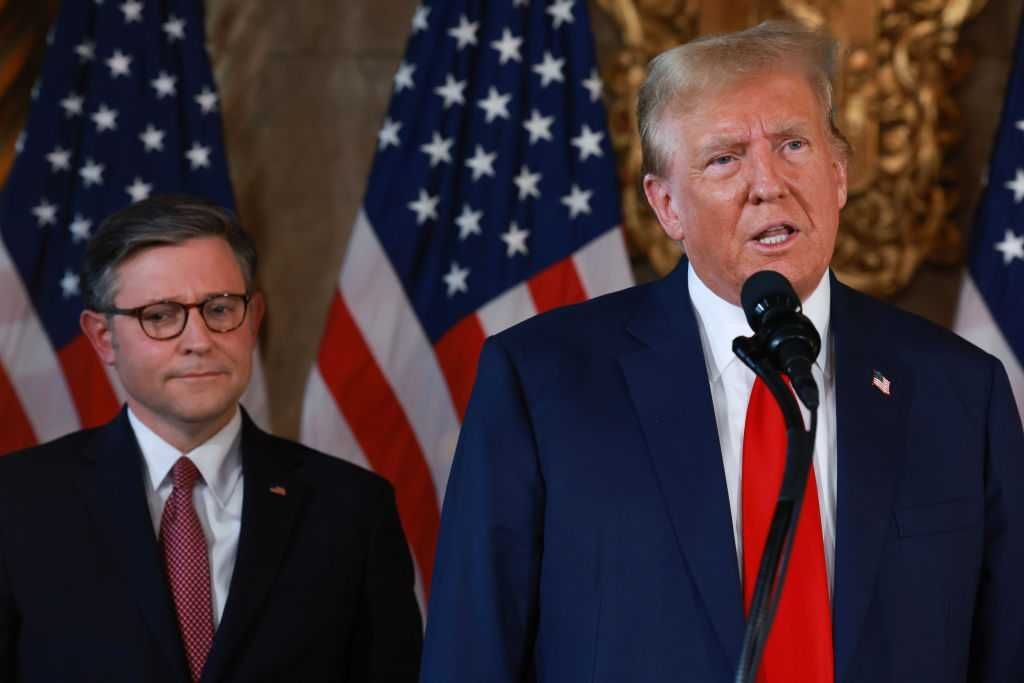
There is also a trend of alternating between unified and divided governments every Congress, with the latter half of a president's term often being paired with an opposing Congress. Although this is not the case for every modern presidency, it is an observable pattern that pundits and political operatives are bracing themselves for.
Like Blaze News? Bypass the censors, sign up for our newsletters, and get stories like this direct to your inbox. Sign up here!
Texas Sen. Ted Cruz (R) dropped out of the 2016 presidential race after his crushing defeat in the Indiana Republican primary by then-candidate Donald Trump. It seems that Cruz did not, however, drop his aspirations of one day taking the White House.
Cruz kept his powder dry during the 2020 presidential election and, in 2024, successfully ran for a third term in the U.S. Senate. Now, the 54-year-old Calgary-born senator appears to be preparing for a 2028 presidential bid.
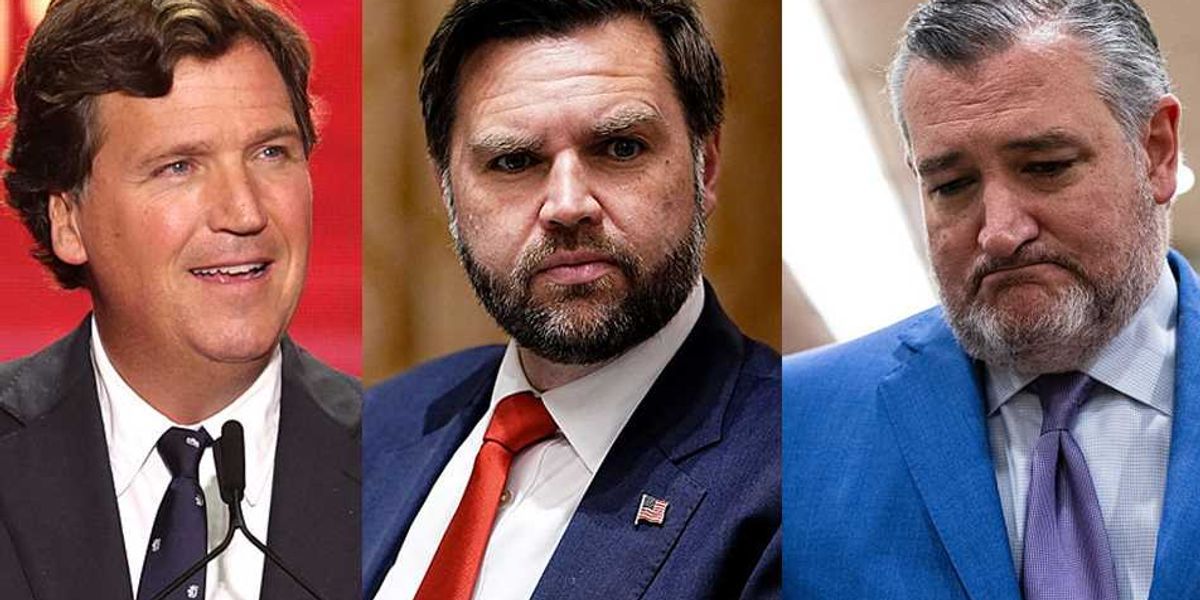
Unfortunately for Cruz, MAGA influencers do not appear too impressed by his recent attacks on Tucker Carlson, which some regard as proxy attacks on Vice President JD Vance, who is far and away the 2028 Republican front-runner, by even Secretary of State Marco Rubio's admission.
'Cruz is gonna have a tough time.'
On Monday, Axios highlighted a number of signs that Cruz is indeed "laying the groundwork" for a 2028 bid, such as hitting the speaker circuit, endorsing midterm candidates, and securing a date to host a big donor retreat next year.
The liberal publication suggested further that it's clear from his recent salvo against Tucker Carlson that Cruz is simultaneously courting powerful pro-Israel donors, some of whom aligned themselves with Nikki Haley in her humiliating 2024 GOP primary run against Trump; "staking out turf as a traditional, pro-interventionist Republican"; and setting the stage for a battle with Vance, who is not only a Carlson ally but unmistakably at odds with the tack taken by the George W. Bush-era GOP.
RELATED: Vance, Banks come out swinging against reporter attacking Tucker Carlson's son
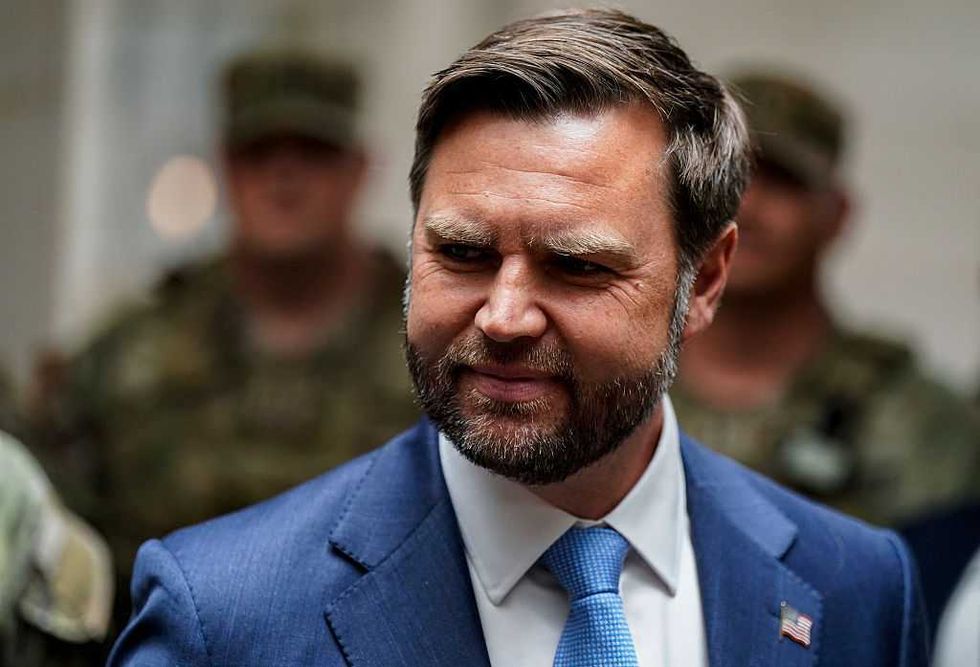
Axios stated that "by poking at Carlson's isolationist foreign policy views, accusing him of anti-Semitism and more, Cruz is putting himself on a collision course with Vice President Vance."
Vance, like Carlson, has criticized the protraction of the war in Ukraine; cautioned against new regime-change wars; emphasized that the U.S. is "not at war with Iran"; and noted that American and Israeli foreign policy are not always aligned.
Cruz has indicated that similar foreign policy views expressed by Carlson are "bat-crap crazy" and "off the rails."
Cruz, who is reportedly set this week to address the Jewish Federations of North America's General Assembly, has also blasted Carlson for his October interview with Nick Fuentes, whom he labeled a "little goose-stepping Nazi," suggesting that Carlson was wrong and "complicit in evil," not for platforming Fuentes but for failing to adequately cross-examine him.
"We have a responsibility to speak out even when it's uncomfortable," Cruz said in a statement to Axios. "When voices in our own movement push dangerous and misguided ideas, we can't look the other way. I won't hesitate to call out those who peddle destructive, vile rhetoric and threaten our principles and our future. Silence in the face of recklessness is not an option."
While Vance — whom Fuentes routinely attacks for having a wife of Indian descent — has made expressly clear that he thinks Fuentes is a "total loser" who does not belong in the MAGA movement, others have attempted in recent days to smear Carlson and Vance with a single stroke.
Cruz's office did not respond to Blaze News' request for comment.
A number of MAGA influencers criticized Cruz on Monday over the poor timing of the Axios piece and/or his apparent punches in Vance's direction.
Human Events senior editor Jack Posobiec highlighted that Cruz's latest dig at Carlson came just hours after President Donald Trump signaled continued support for Carlson, claiming reporters "can't tell him who to interview" and that "ultimately, people have to decide."
Political strategist and commentator Alex Lorusso wrote, "Right after President Trump says you can't tell Tucker Carlson who to interview, Ted Cruz says we have a 'responsibility' to speak out against him. He has a rude awakening coming if he wants to run for president in 2028 by positioning himself against DJT."
Normalcy advocate Robby Starbuck wrote, "Breaking: Ted Cruz will lose the 2028 primary. He has absolutely no chance against JD Vance."
"It's all about principle you see," tweeted BlazeTV host Auron MacIntyre, "and that principle is power."
The popular X user Swig noted, "Ted Cruz’s bizarre attacks on Tucker Carlson are simply a proxy attack on JD Vance. Extremely transparent game he is engaging in."
"Judging by top MAGA influencers, Cruz is gonna have a tough time," concluded Axios' Marc Caputo.
Like Blaze News? Bypass the censors, sign up for our newsletters, and get stories like this direct to your inbox. Sign up here!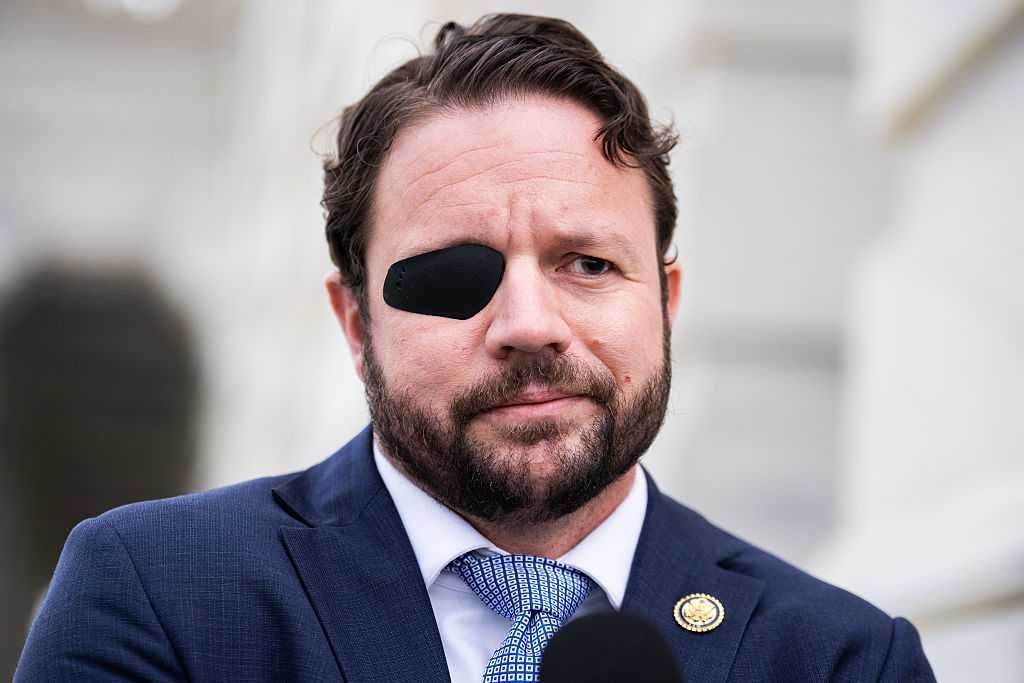
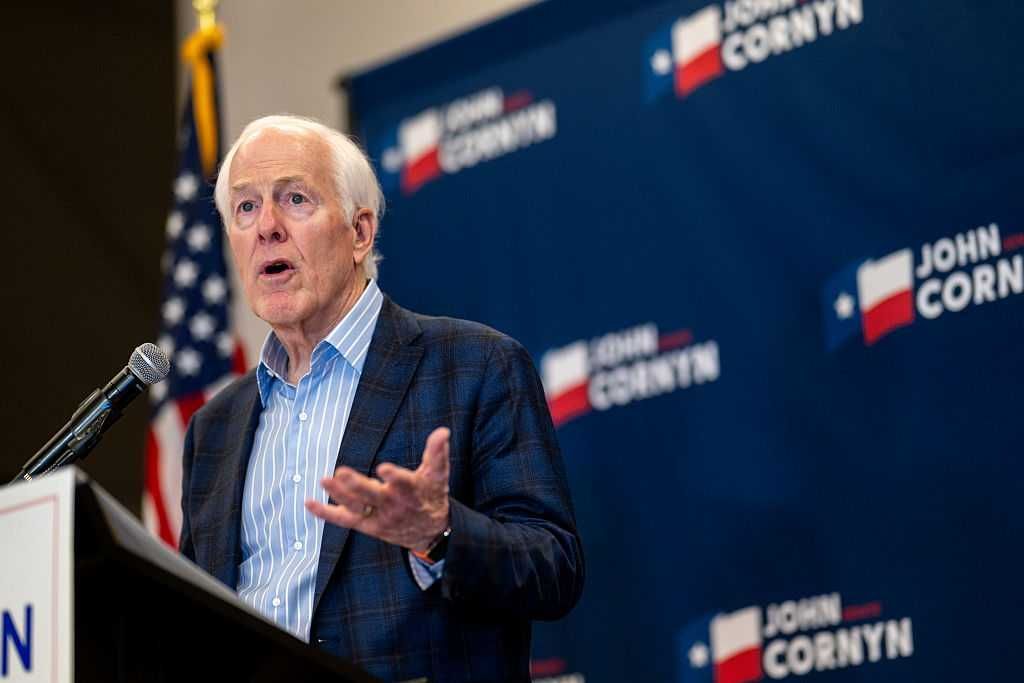
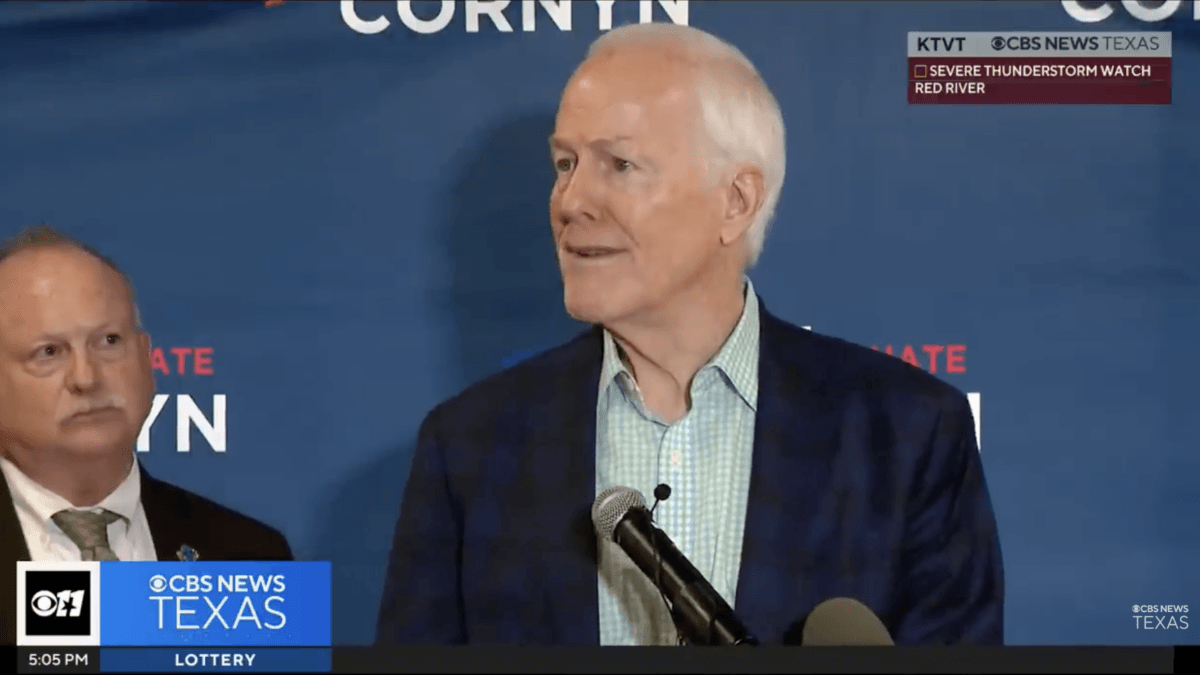 Endorsing John Cornyn, the Senate’s leading RINO, would be disloyal to Texas’ loyal conservative base — and to himself.
 Trump is reportedly mulling an endorsement for Cornyn, so it's time for a reminder of several instance in which Cornyn betrayed conservatives.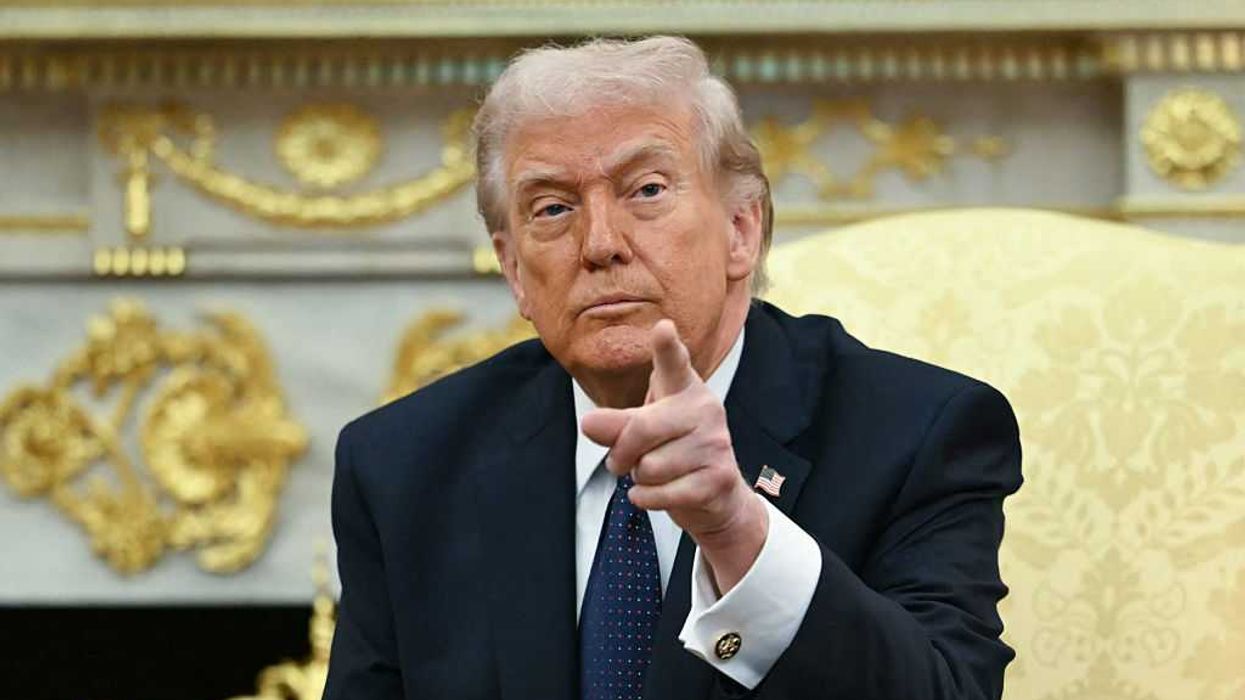
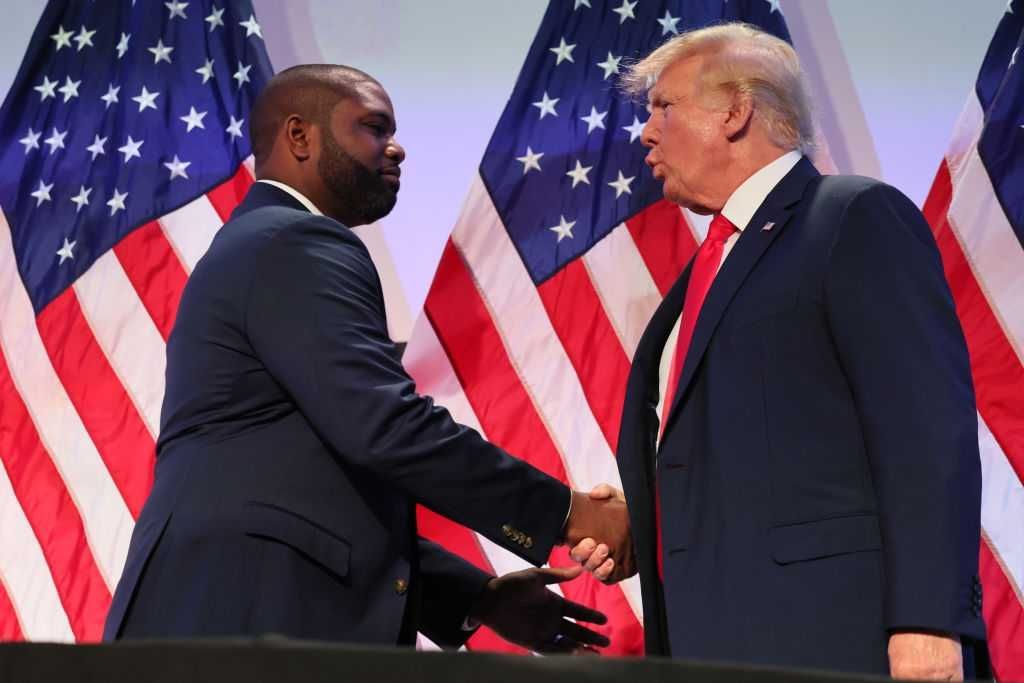
 Whitefish Bay businessman Bill Berrien -- who also had a past dalliance with the disastrously kinky election method known as ranked-choice voting -- has dropped out of the Badger State governor’s race.
 www.theblaze.com
 thefederalist.com